


About this worksheet
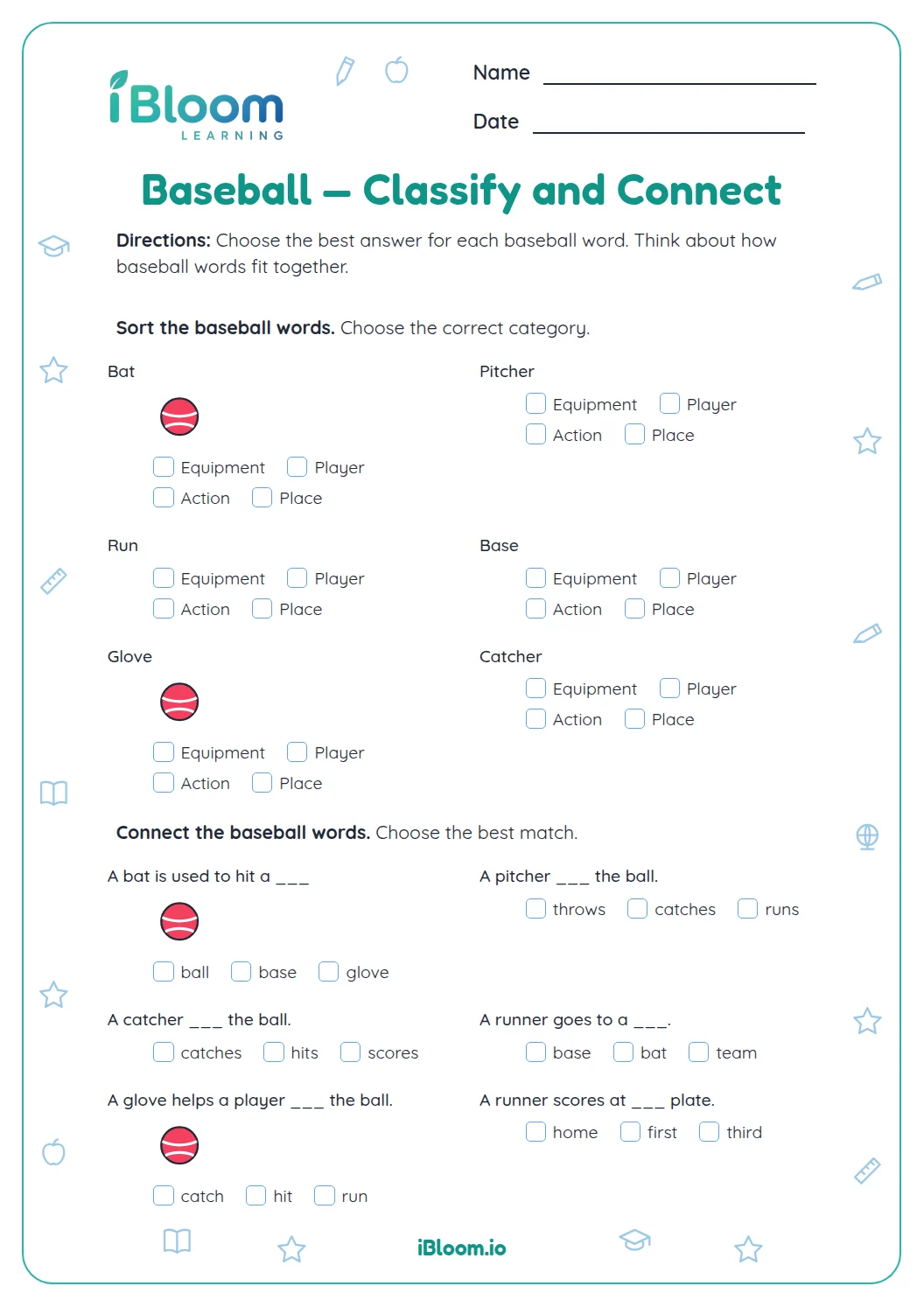
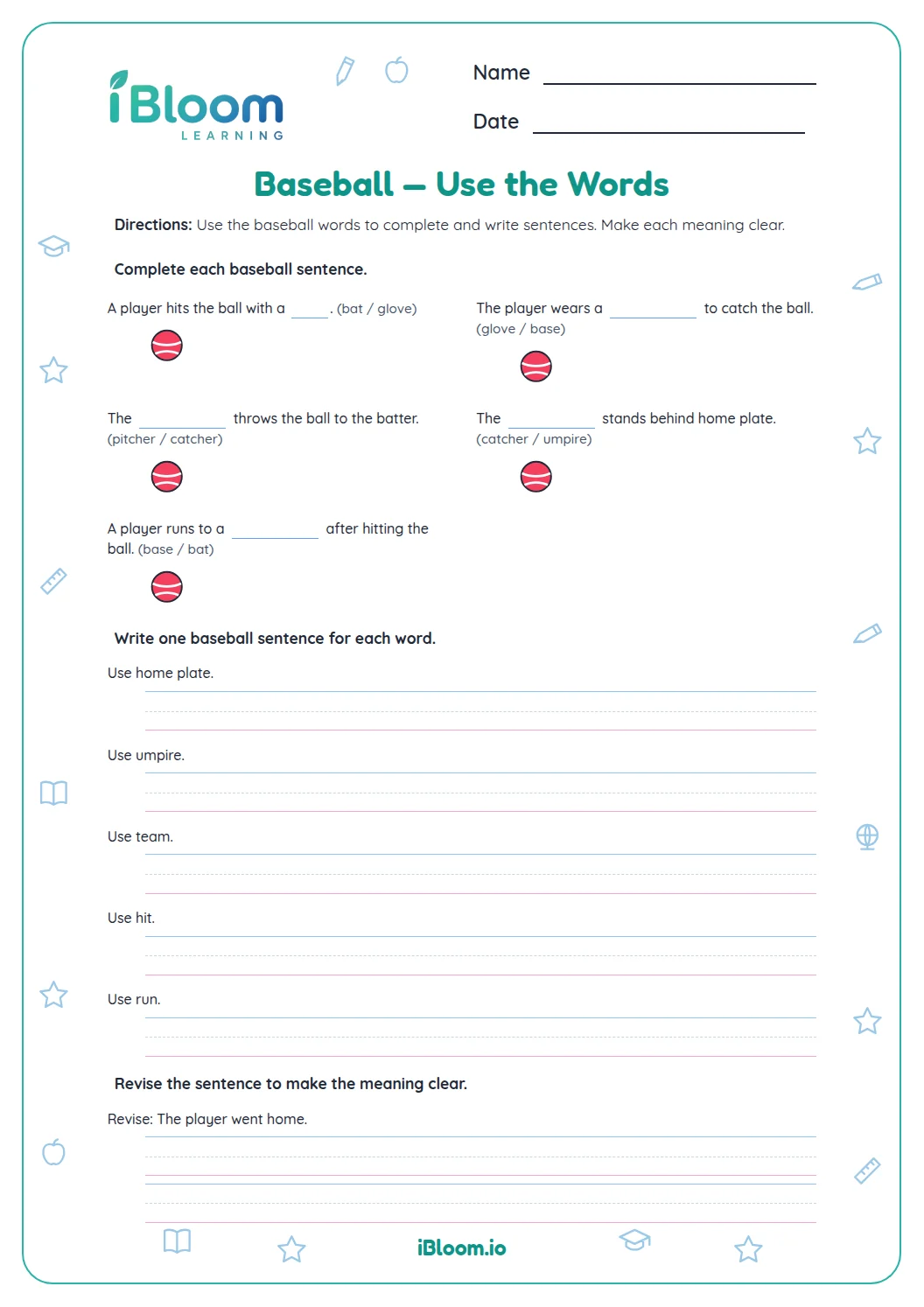
This free printable worksheet gives Grade 1 learners focused practice with museum vocabulary. Children work through the illustrated or written prompts, then check their responses with the answer key. The questions move from recognizing examples to applying the skill in familiar contexts.
Aligned to L.1.4
How can a word search build museum vocabulary?
Look carefully across and down for the letter patterns in the word list. Question 1 asks for FOSSIL; the first row begins with those six letters.
- 1F O S S I L appears at the start of the top row.
How can context help with a museum word?
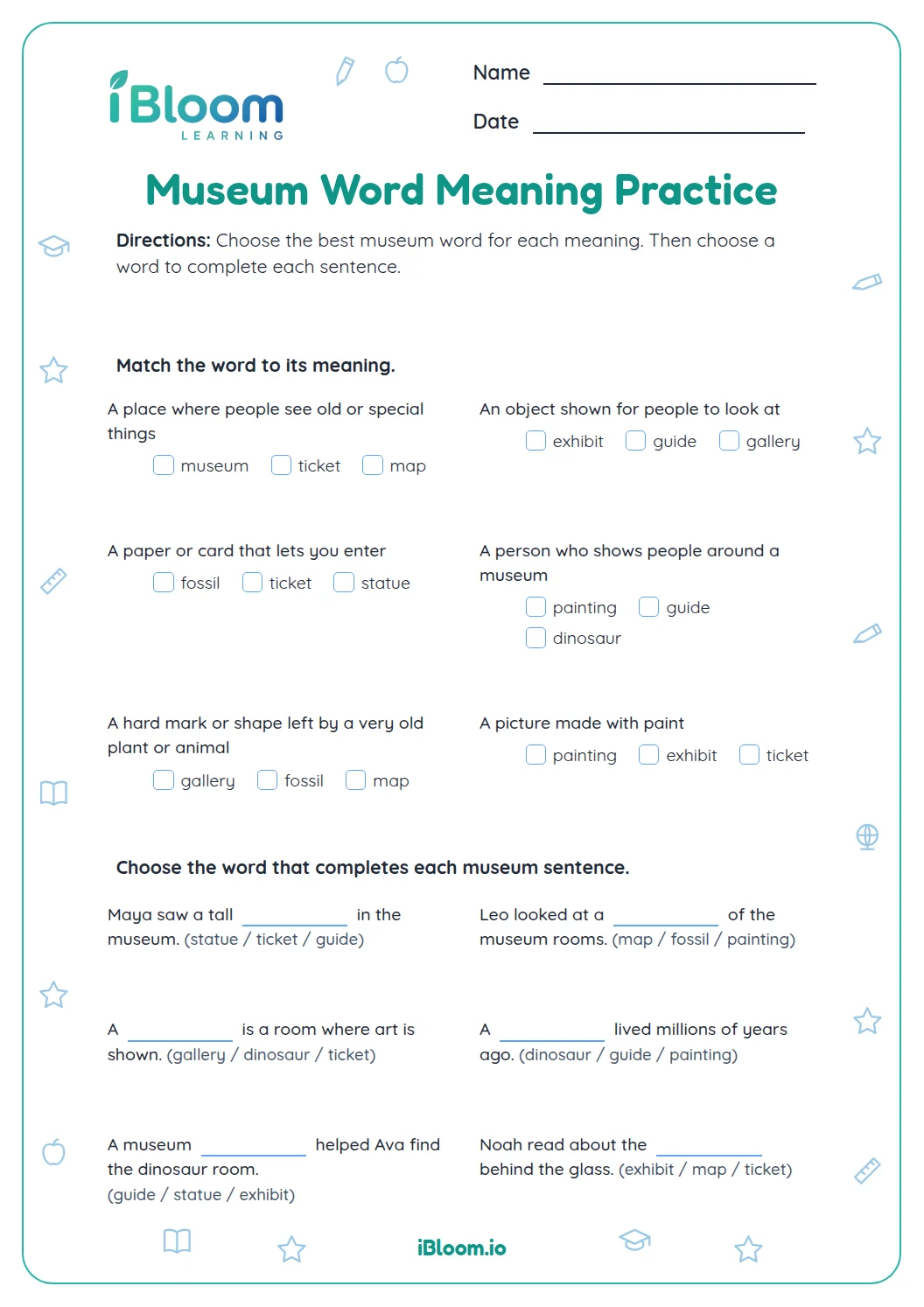
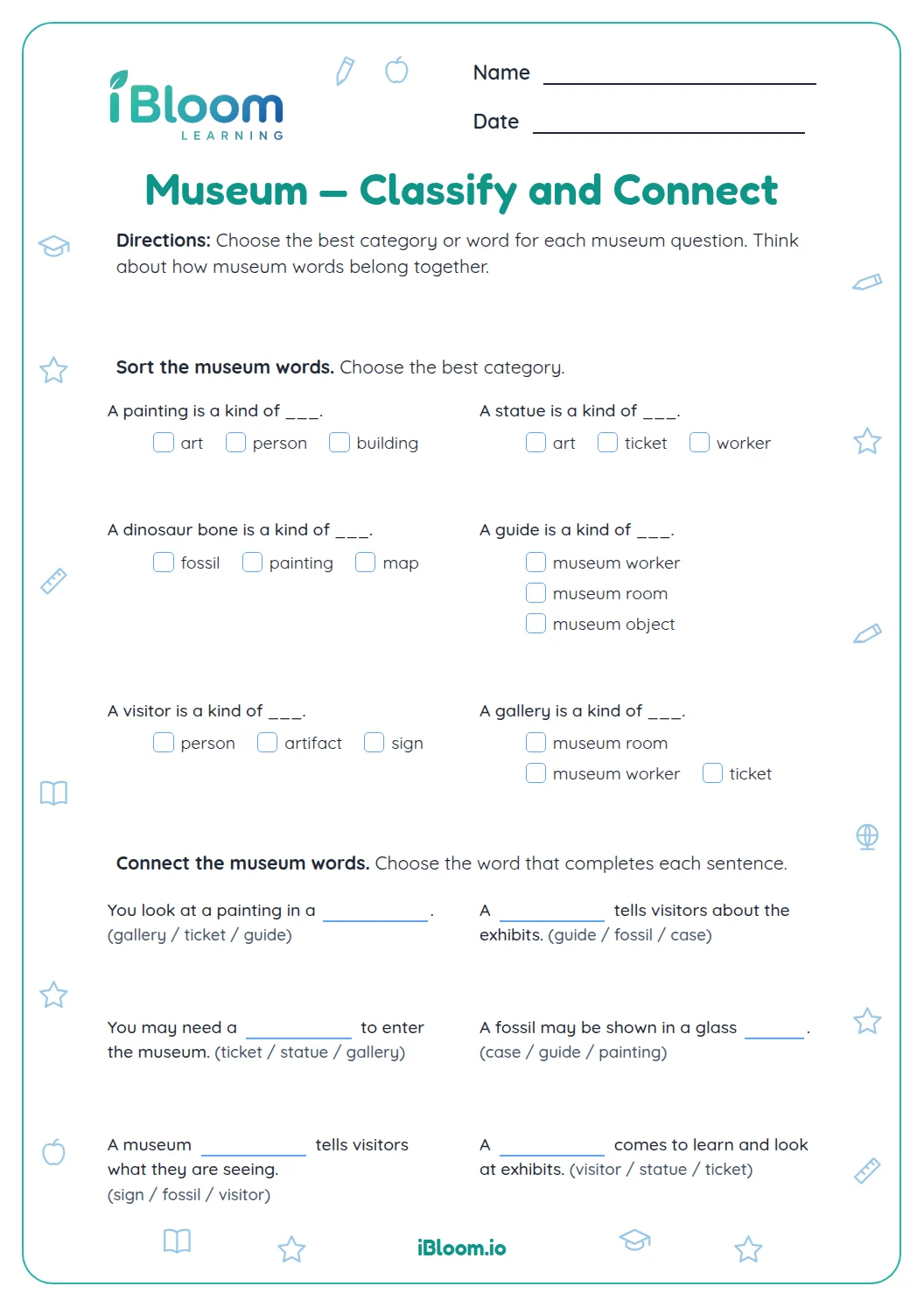
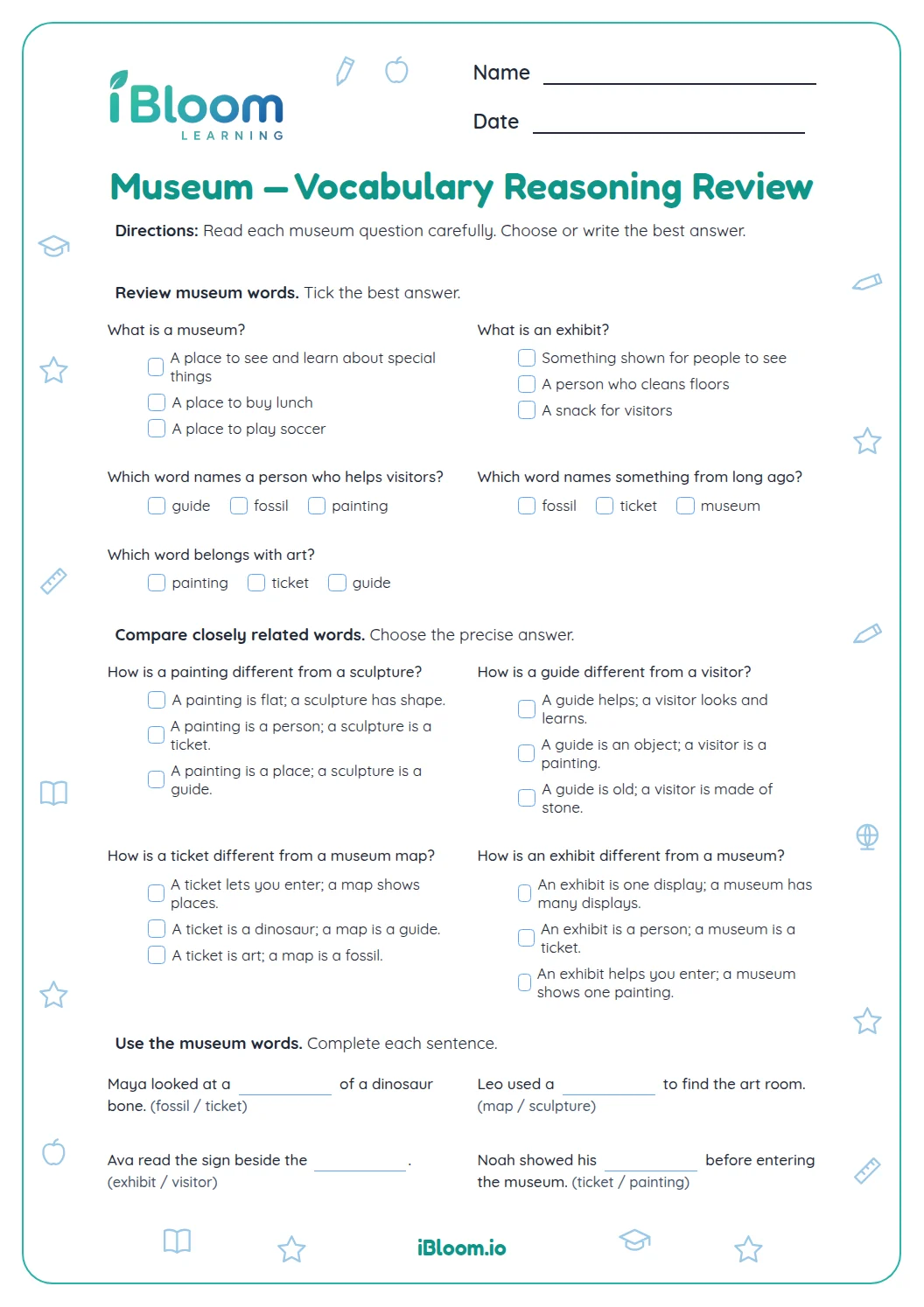
Connect a word to what it names. A ticket lets a visitor enter; a gallery is a room where art is shown; a fossil preserves signs of ancient life.
How can a sentence show a word’s meaning?
Use the word with a detail that makes its meaning clear. “We saw a painting in the gallery” connects the room word to something displayed there.
How to use this worksheet
- 1Read the direction for each part together.
- 2Complete one question at a time, pointing back to the sentence or drawing when useful.
- 3Pause after each part and ask the learner to explain one answer.
- 4Use the answer key to review answers and talk through any changes.
Mistakes to watch for
The mistake
Skipping a letter while scanning the word search.
The fix
Track one row or column at a time and cross off each found word.
The mistake
Mixing up an object with the place that displays it.
The fix
A fossil or painting is an object; a gallery is a room.
The mistake
Writing a sentence that includes the word but not its meaning.
The fix
Add a detail that shows how the museum word is used.
Common Core State Standards for English Language Arts alignment
This worksheet gives children practice with the named skill.
Use sentence context and meaning clues to understand museum words.
On this sheet: Use sentence context and meaning clues to understand museum words.
Show the official wordingHide the official wording
Determine or clarify the meaning of unknown and multiple-meaning words and phrases based on grade 1 reading and content, choosing flexibly from an array of strategies.
What to practice next
Make more practice
Further reading
Questions parents and teachers ask
What does this Grade 1 worksheet include?
The worksheet has 16 questions in three parts, followed by a separate answer key. The prompts move from recognizing examples to using the skill in a familiar context. Review the key after each part and ask the child to explain a response.
Can an adult read the directions aloud?
Yes. An adult may read the directions aloud, then let the child answer each prompt. Pause to ask what clue, picture, or word helped the child decide. This keeps the learner focused on the question while making the sheet usable for early practice.
How should we use the answer key?
Use the key after a section is complete. If an answer differs, return to the prompt and talk through the clue, model, or sentence that supports the correct response. For open responses, the key gives a sample that may be phrased in other clear ways.
Can this be used in a classroom?
Yes. The worksheet can support independent work, a small group, or a brief review with an adult. Its three parts make it easy to pause between kinds of practice and discuss an answer before moving to the next set. together.
What should we do after finishing?
Ask the child to explain one answer in their own words, then revisit any item that felt difficult. A related worksheet from the same skill collection offers another example and gives the learner a chance to apply the same idea again.