




About this worksheet
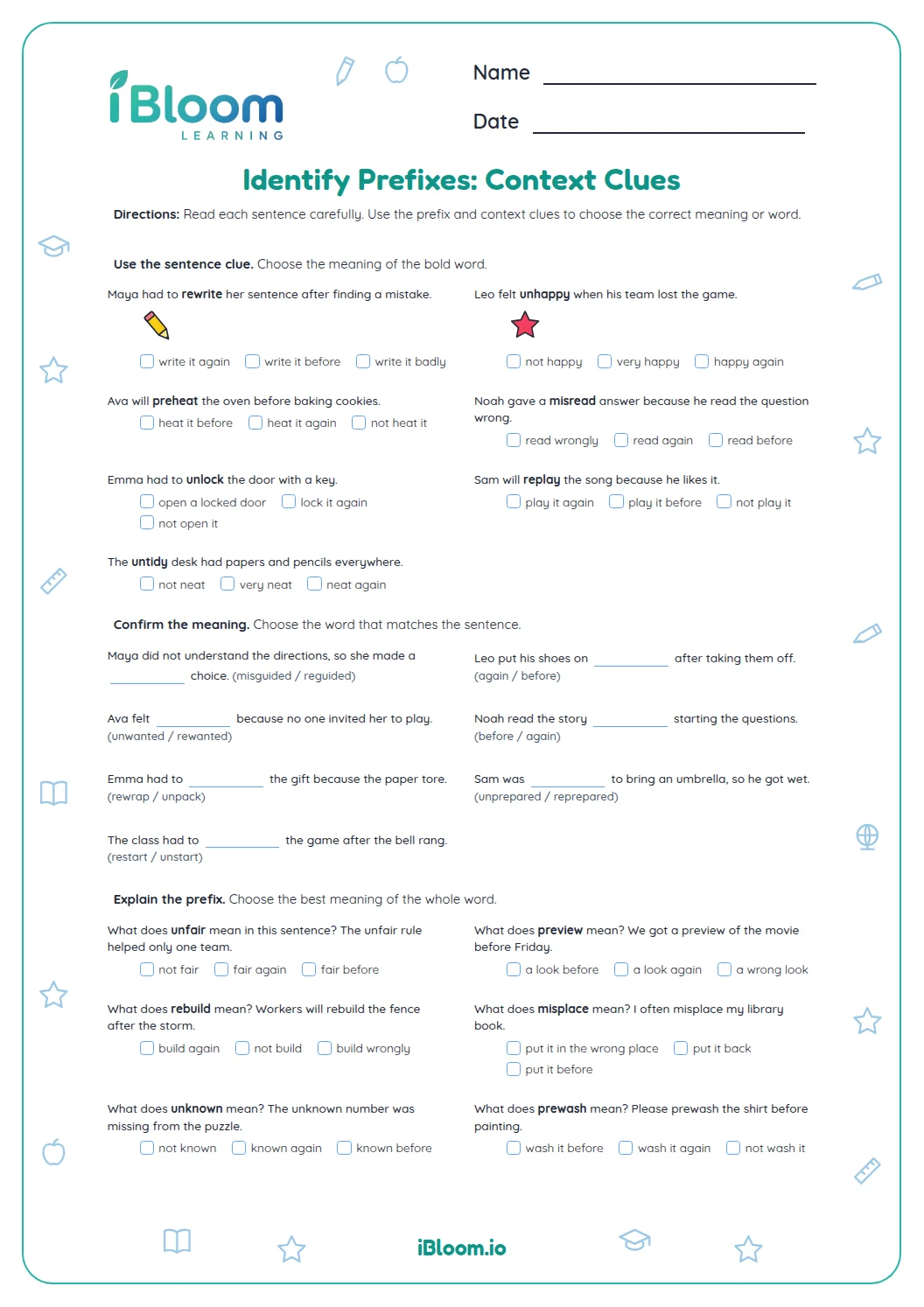
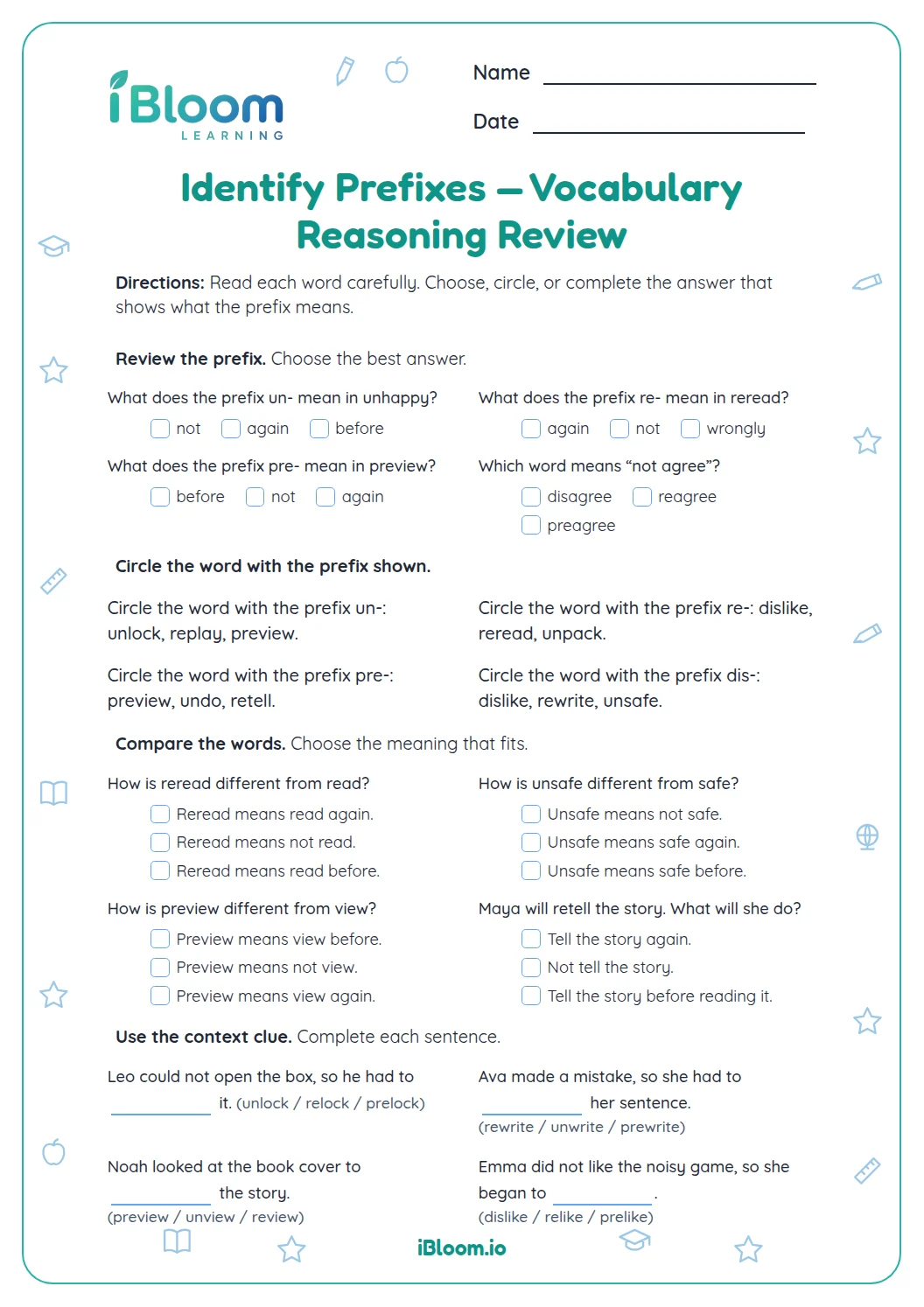
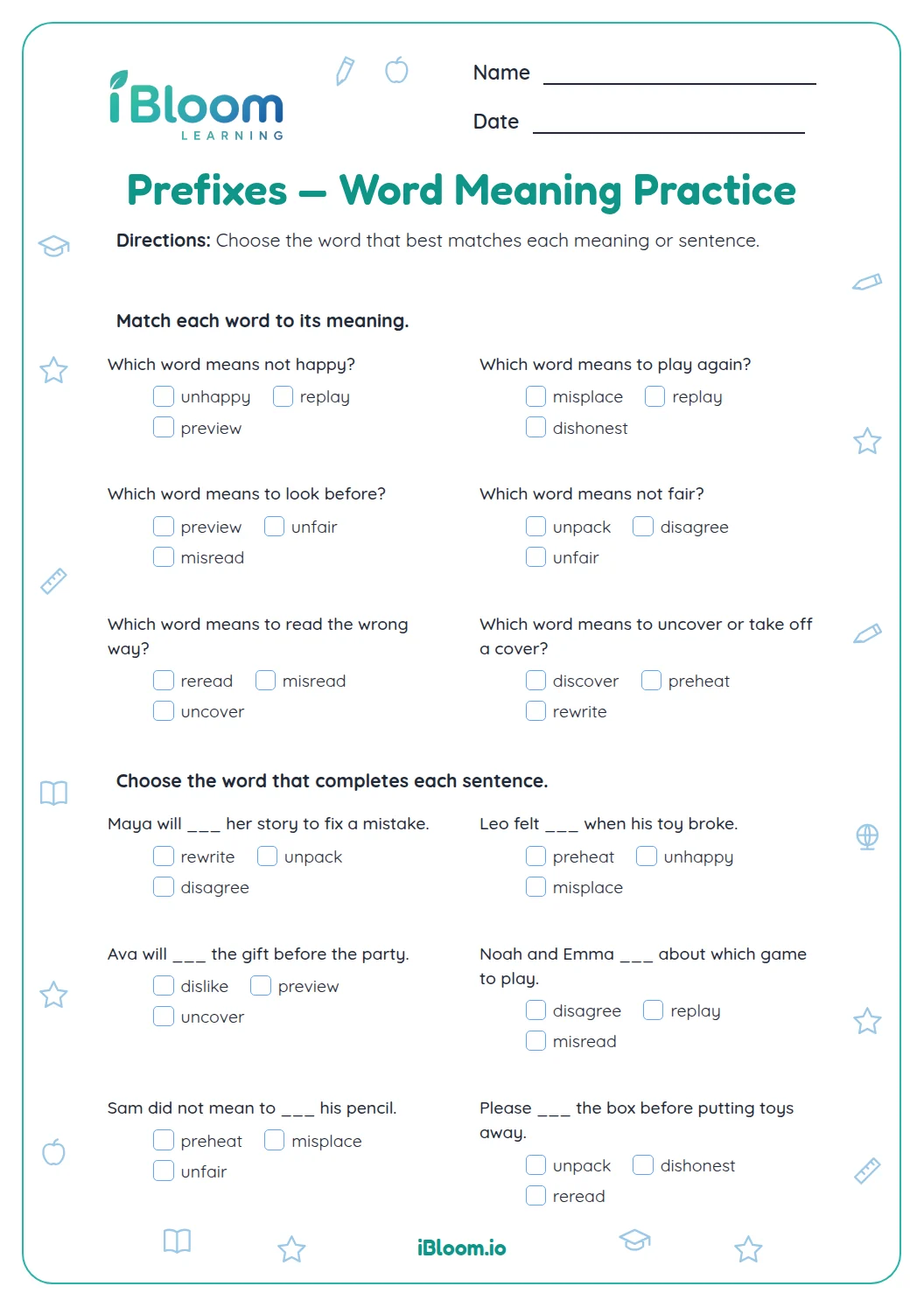
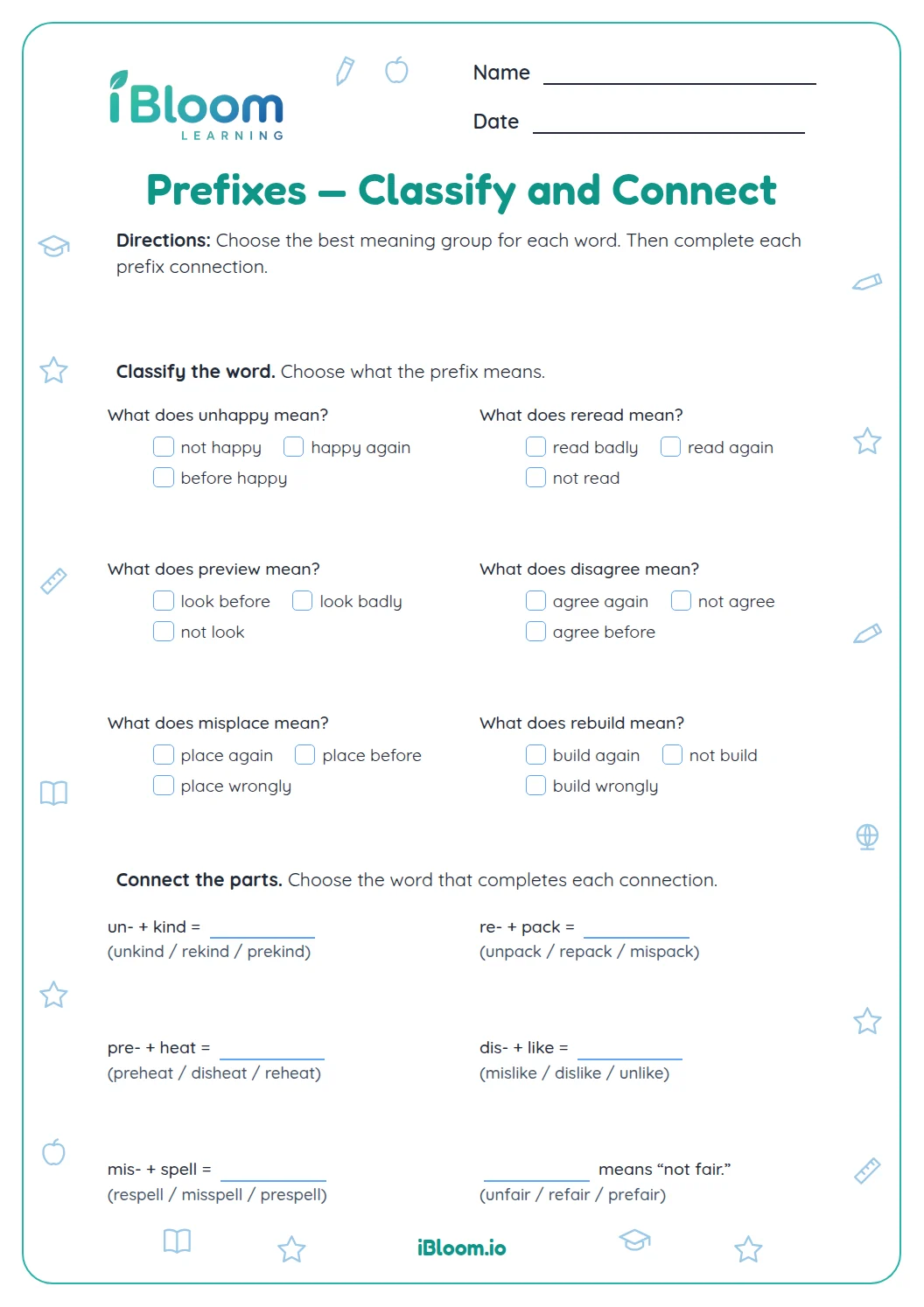
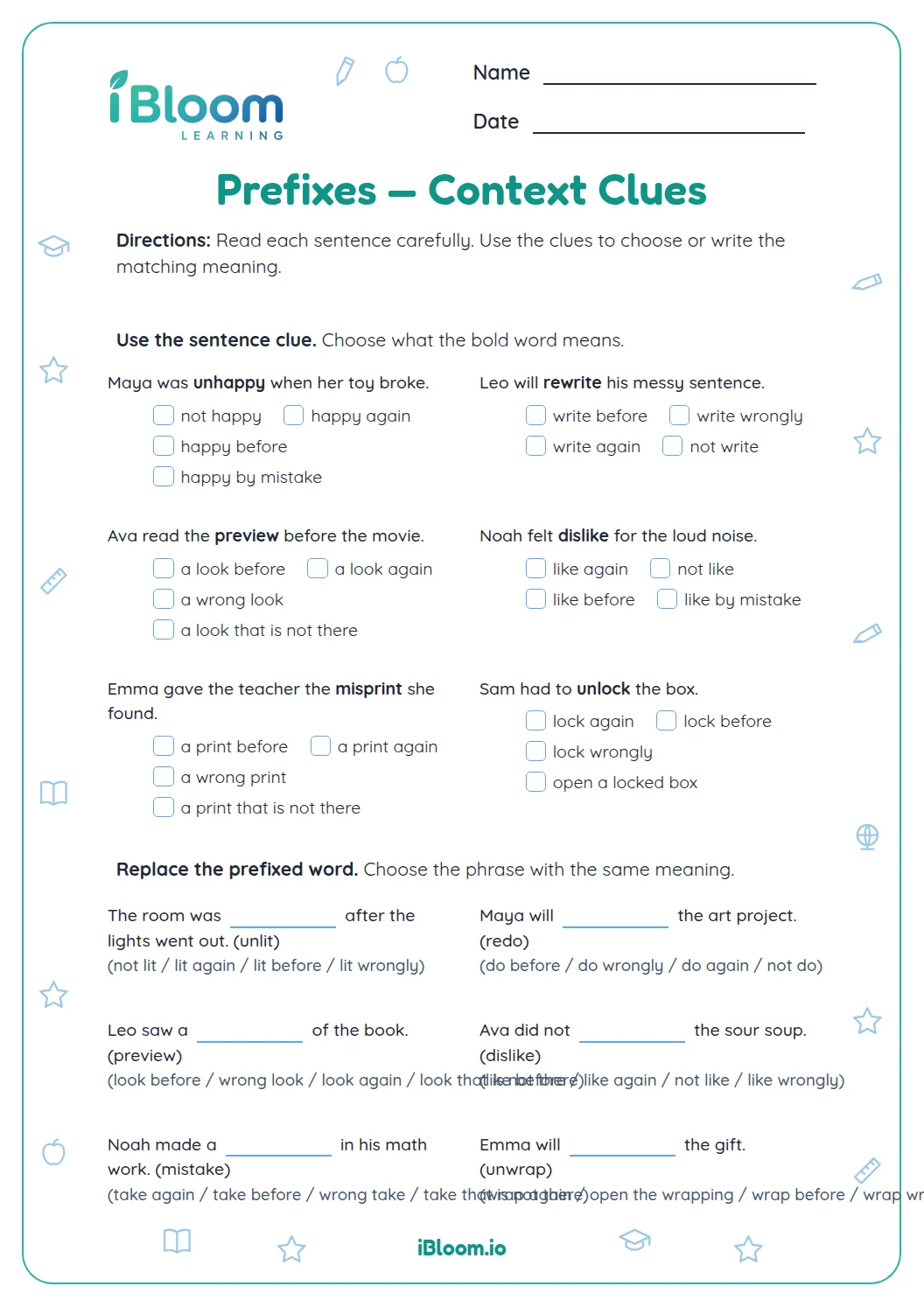
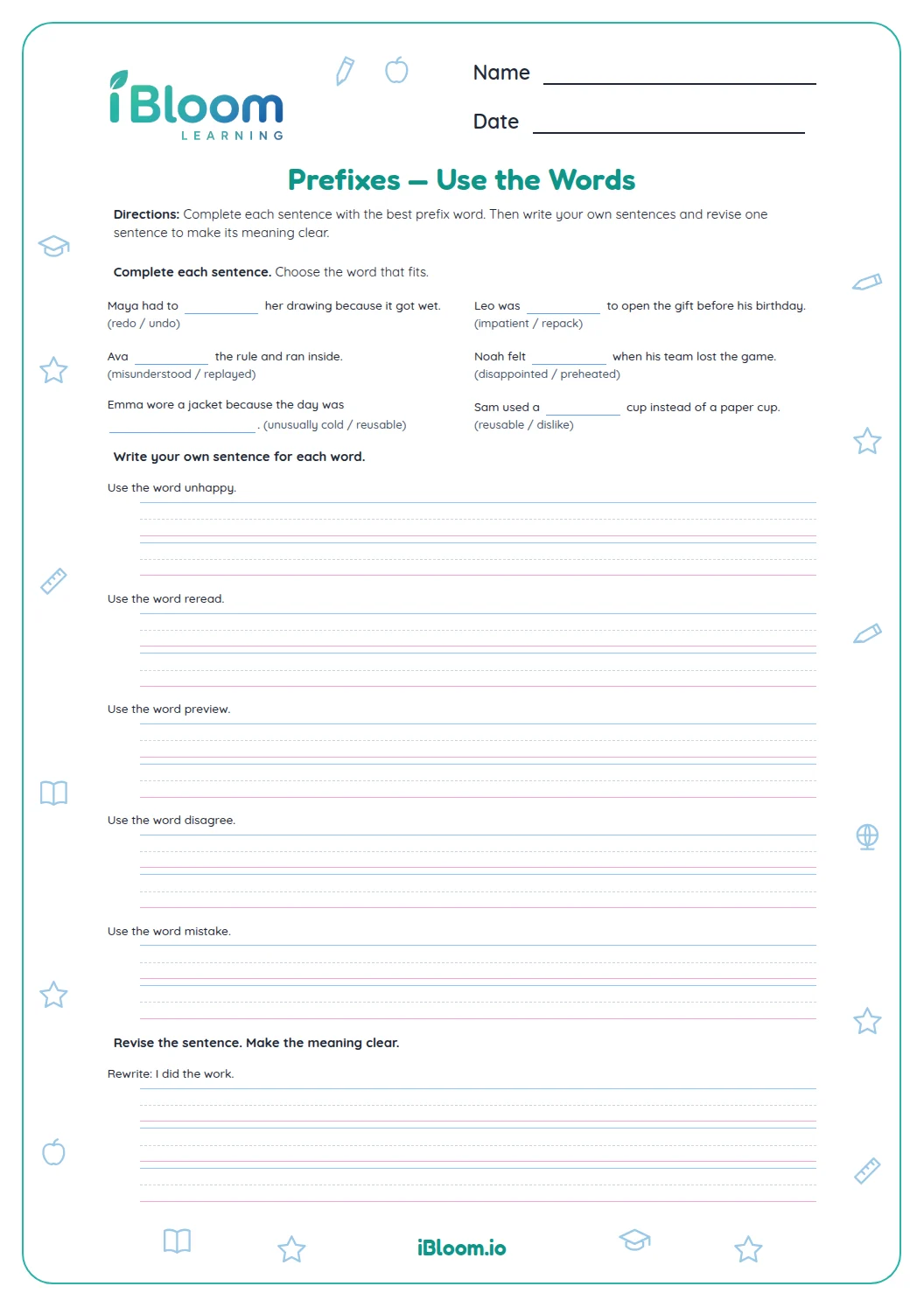
This Grade 2 vocabulary worksheet helps students use the prefixes un-, re-, and pre- to understand and choose familiar words. Sixteen questions move from recognizing a prefix meaning to selecting a word that fits a sentence and writing one in context. The examples include unlock, reread, unsafe, and preview. A separate answer key supports checking the word meanings. The practice aligns with Common Core L.2.4b.
Aligned to L.2.4b
What do un-, re-, and pre- mean?
In the words on this sheet, un- means not, re- means again, and pre- means before. Students use those meanings with known base words.
How do context clues help?
A sentence can confirm which word makes sense. “Milo will reread the page” tells what he will do with the page.
How can students show a word’s meaning?
Question 16 asks students to write a sentence that makes reread’s meaning clear.
- 1Sentence: Milo will reread the page.
- 2Prefix clue: re- means again.
- 3Meaning: Milo will read the page again.
How to use this worksheet
- 1Read the whole word, including its beginning.
- 2Say the prefix meaning and the base word separately.
- 3Put the two meanings together to check the whole word.
- 4Use the sentence to confirm that the word fits.
- 5For the last question, write enough context to show what reread means.
Mistakes to watch for
The mistake
Guessing from the base word and ignoring the prefix.
The fix
Cover the base word briefly and recall what the prefix contributes.
The mistake
Mixing up re- and pre-.
The fix
Remember that reread means do it again; preview means see it before.
The mistake
Choosing a word that does not fit the sentence.
The fix
Read the full sentence with the chosen word and check that it makes sense.
Common Core alignment
This worksheet uses familiar prefixes to work out the meanings of Grade 2 words.
Use a familiar prefix to find a word’s meaning.
On this sheet: Students connect un-, re-, and pre- to the meanings of familiar base words and use them in context.
Show the official wordingHide the official wording
Determine the meaning of the new word formed when a known prefix is added to a known word (e.g., happy/unhappy, tell/retell).
What to practice next
Make more practice
Further reading
Questions parents and teachers ask
What does un- mean in these words?
In words such as unlock, unsafe, and unfair, the prefix un- means “not” or can show that an action is reversed. The worksheet asks students to use familiar base words and sentence clues to connect the prefix with the whole word’s meaning.
What is the difference between re- and pre-?
The prefix re- commonly means “again,” as in reread or rebuild. The prefix pre- means “before,” as in preview or preschool. Students compare these meanings across word choices and short contexts, then write a sentence that shows what reread means.
Why learn what prefixes mean?
A familiar prefix can provide a useful clue about a longer word. If a student knows read and recognizes re-, reread means to read again. The worksheet gives practice with un-, re-, and pre- using familiar words and sentences. The examples keep the base words familiar.
What do students write on the worksheet?
Most items ask students to choose or complete a word using its prefix meaning. The final item asks for a sentence using reread, and the key provides one sample. Students can write another sentence if it clearly shows the meaning “read again.”
How many questions are included?
There are 16 questions in three parts. Students identify prefix meanings, choose words that fit, and use a word in a sentence. The mix gives practice recognizing un-, re-, and pre- in both isolated words and short contexts. Each item targets one of those familiar prefixes.
Is an answer key included?
Yes. The printable has a separate answer-key page with the correct choices and a sample sentence for the open response. Students can compare their own sentence with the sample by checking whether it uses reread to mean reading something again.