Free printable practice
Prefixes Practice Activities
Grade 2 prefix worksheets help children build word meaning with un-, re-, pre-, dis-, and mis- through sorting, matching, and sentence practice.
Free printable worksheet PDFs
Preview every available page, then download the free worksheet PDF for home, homeschool, tutoring, or classroom practice.
Preview the exact activity before downloading it.
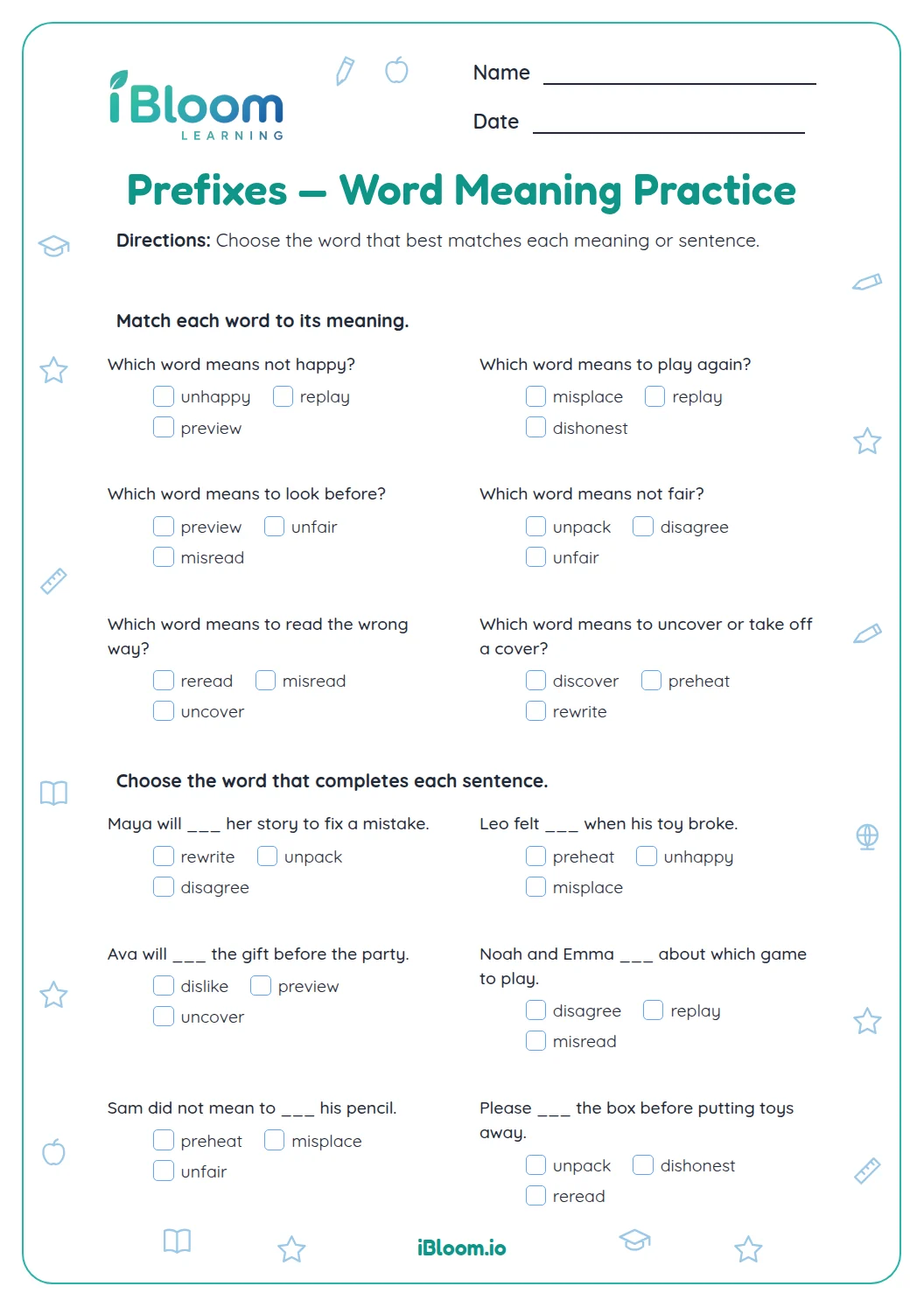 Prefixes — Word Meaning PracticeGrade 2 prefix worksheets help children build word meaning with un-, re-, pre-, dis-, and mis- through sorting, matching, and sentence practice. This word meaning practice worksheet provides a distinct, age-appropriate way to practise the same lesson.Grade 2Free PDF preview
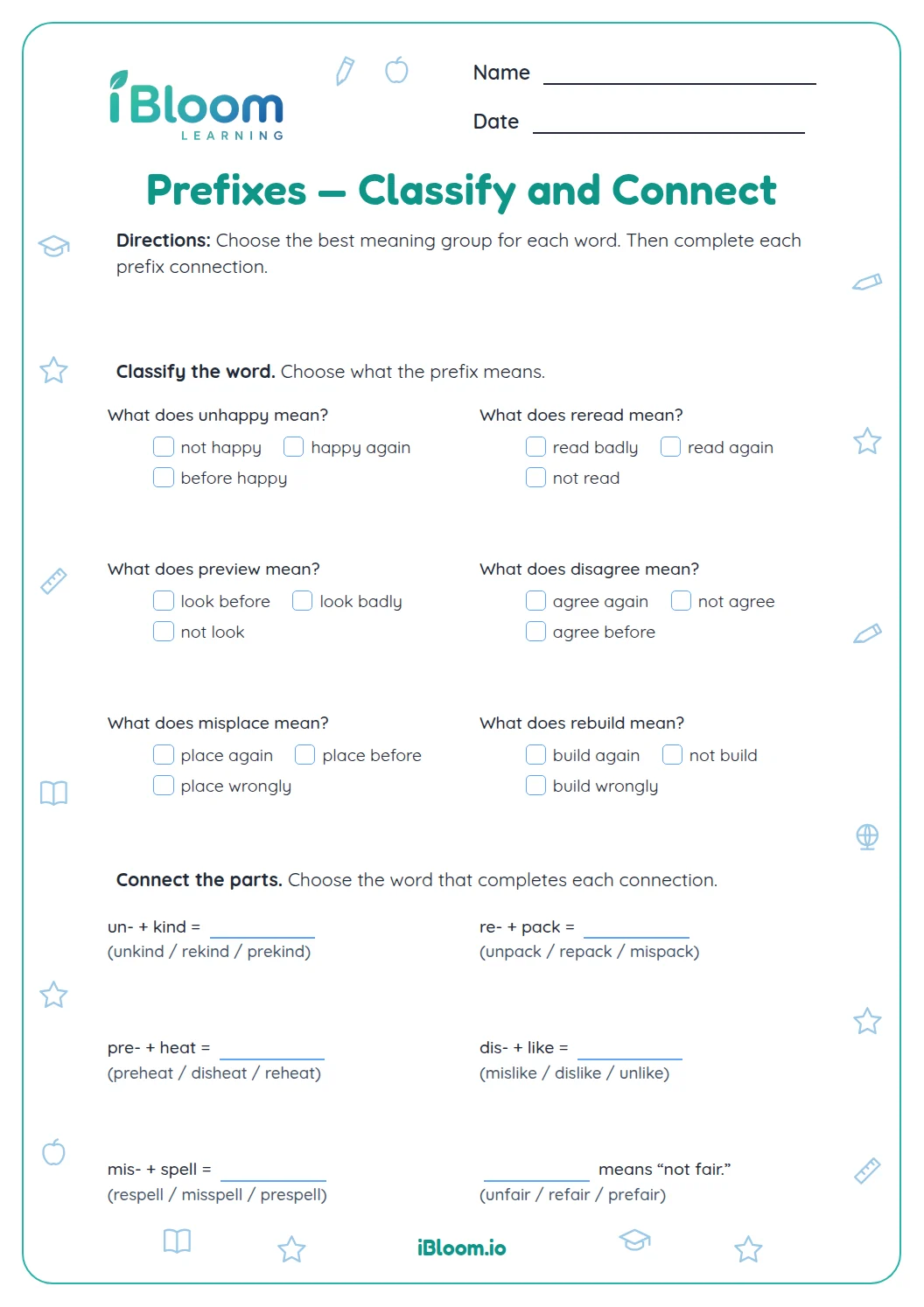 Prefixes — Classify and ConnectGrade 2 prefix worksheets help children build word meaning with un-, re-, pre-, dis-, and mis- through sorting, matching, and sentence practice. This classify and connect worksheet provides a distinct, age-appropriate way to practise the same lesson.Grade 2Free PDF preview
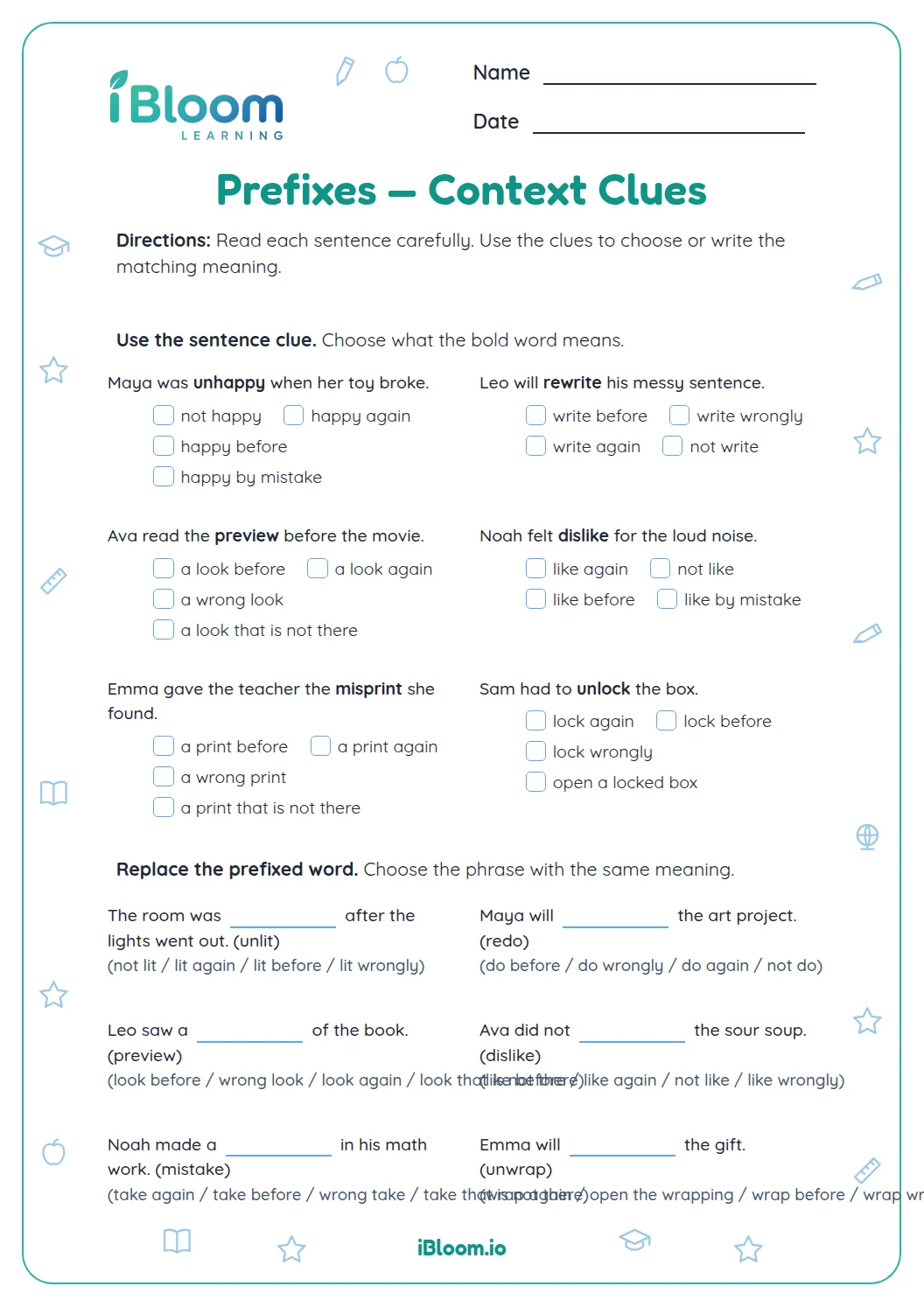 Prefixes — Context CluesGrade 2 prefix worksheets help children build word meaning with un-, re-, pre-, dis-, and mis- through sorting, matching, and sentence practice. This context clues worksheet provides a distinct, age-appropriate way to practise the same lesson.Grade 2Free PDF preview
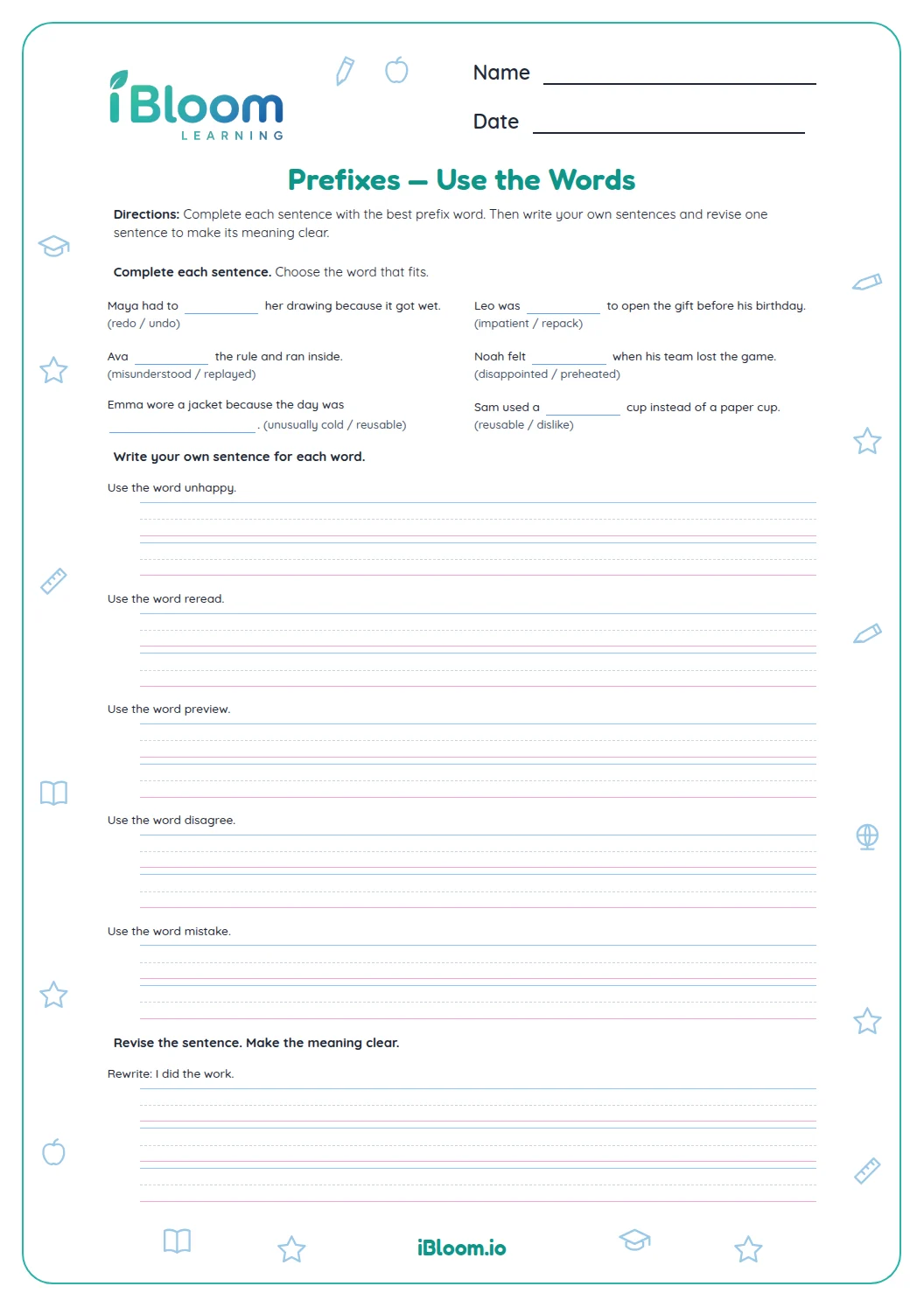 Prefixes — Use the WordsGrade 2 prefix worksheets help children build word meaning with un-, re-, pre-, dis-, and mis- through sorting, matching, and sentence practice. This use the words worksheet provides a distinct, age-appropriate way to practise the same lesson.Grade 2Free PDF preview6 pages
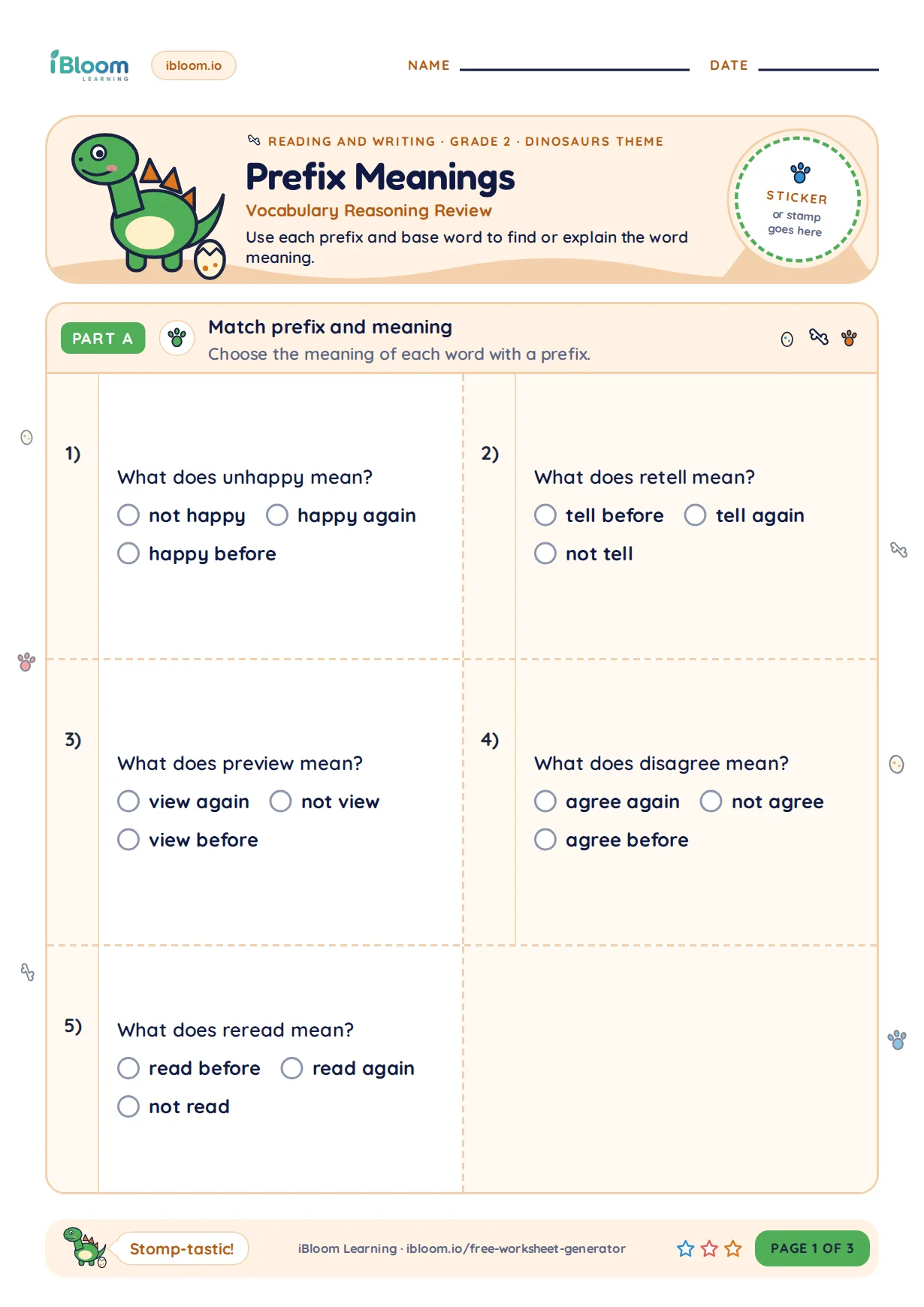 Prefixes — Vocabulary Reasoning ReviewGrade 2 prefix worksheets help children build word meaning with un-, re-, pre-, dis-, and mis- through sorting, matching, and sentence practice. This vocabulary reasoning review worksheet provides a distinct, age-appropriate way to practise the same lesson.Grade 2Free PDF preview
Practice that builds confidence
Understanding prefixes in Grade 2
These Grade 2 vocabulary worksheets help children notice how a prefix changes the meaning of a base word. Students practise reading and using common prefixes such as un-, re-, pre-, dis-, and mis- in clear, age-appropriate word work.
The printable activities include prefix and base word matching, word building, meaning sorts, fill-in-the-blank sentences, and short context clues. Each page encourages children to think about the meaning of the whole word, not just copy a spelling pattern.
A prefix is a word part added to the beginning of a base word. In second grade, children are ready to connect common prefixes with meaning: re- can mean again, pre- can mean before, un- can mean not or opposite, mis- can mean wrongly, and dis- can mean not or away. These worksheets keep the focus on useful everyday words such as reread, preview, unhappy, misplace, and disagree.

How the practice progresses
Activities begin with recognizing the prefix at the start of a word, then move into matching prefixes to meanings and combining a prefix with a base word. Later tasks ask children to choose the correct prefixed word for a sentence, sort words by prefix, or explain how the prefix changes the base word. This progression supports both decoding and vocabulary because students see that word parts carry meaning.
Parent routine for home practice
Choose one prefix for the day. Say its meaning, read three example words together, and ask your child to cover the prefix and read the base word. Then add the prefix back and ask, What changed? Finish with one spoken sentence, such as I will reread the page, and have your child explain why reread makes sense.

Classroom uses for teachers
Teachers can use these printables for vocabulary centers, morning work, small-group reading support, or quick review after a mini lesson on word parts. A prefix sort also works well as partner practice: one student reads the word, and the other explains the meaning. Completed sheets can guide follow-up instruction on which prefixes need reteaching.

Common errors to watch for
Some children treat every beginning letter group as a prefix, such as seeing re in red. Others know the prefix meaning but do not check whether the new word makes sense in the sentence. Watch for spelling changes too: most Grade 2 examples keep the base word, but children may still separate parts incorrectly, such as un happy instead of unhappy.
Free printable PDF download
Use this grade 2 prefixes worksheet page to preview the activity, print it, or download it as a PDF for quick practice. It works well for homework, homeschool lessons, tutoring, morning work, revision, and classroom centers.
Answers and answer key support
After the child completes the worksheet independently, parents and teachers can use the answer support or answer key information to check the work, review mistakes, and choose the next practice step.
Why iBloom worksheets help
The pages combine visual word parts, repeated examples, and sentence context so children learn prefixes as meaningful vocabulary tools. A helpful child-friendly strategy is: find the prefix, read the base word, say the prefix meaning, then test the whole word in the sentence.
Helpful answers
Frequently asked questions
Which prefixes are most useful for Grade 2 students to practise?
Common Grade 2 prefixes include un-, re-, pre-, dis-, and mis-. They are frequent in children’s reading and have clear meanings that students can apply to familiar base words.
How do these worksheets help with reading, not just vocabulary?
Prefix practice helps children break longer words into meaningful parts. When they recognize a prefix and base word, they can decode the word more confidently and use meaning to check if it fits the sentence.
What should I do if my child thinks every word beginning with re has the prefix re-?
Ask your child to cover the beginning and read the remaining letters as a possible base word. In reread, read is a real base word, but in red, d is not. This helps children test whether a prefix is really present.
Can these prefix pages be used in literacy centers?
Yes. The matching, sorting, and sentence activities work well for independent or partner centers. Students can read words aloud, explain prefix meanings, and check each other’s choices.
Should children memorize prefix meanings first?
A little memorization helps, but examples matter more. Children learn best when they connect a prefix meaning to real words and sentences, such as rewash meaning wash again.
Is this grade 2 prefixes worksheet free?
Yes. You can preview it for free and use the printable worksheet for home or classroom practice.
Can I download this grade 2 prefixes worksheet as a PDF?
Yes. Use the worksheet download option to save a printable PDF, or print the worksheet directly from the page.
Does this grade 2 prefixes worksheet include answers or an answer key?
When the activity has fixed answers, iBloom includes answer support so parents and teachers can check the completed worksheet.