




About this worksheet
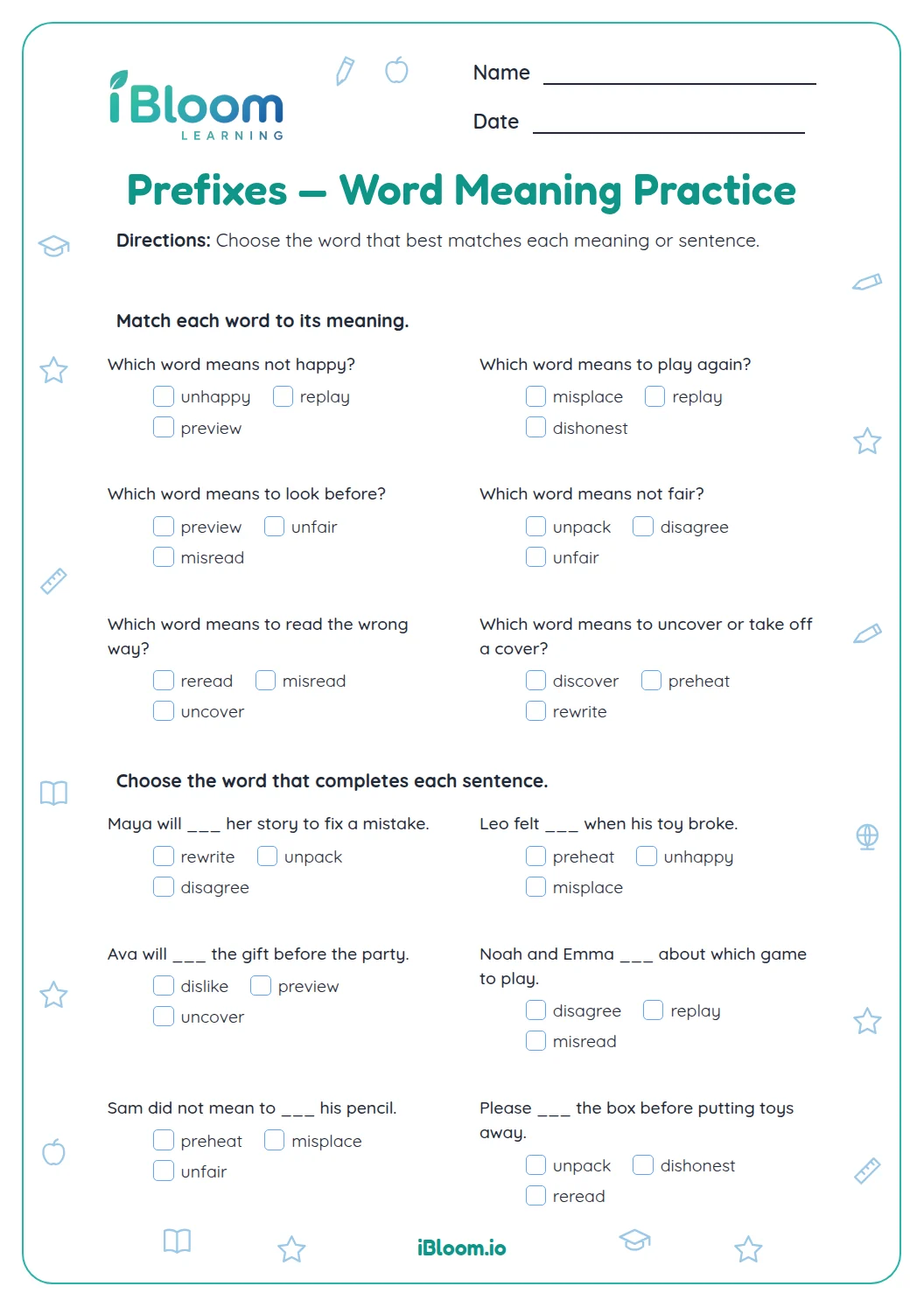
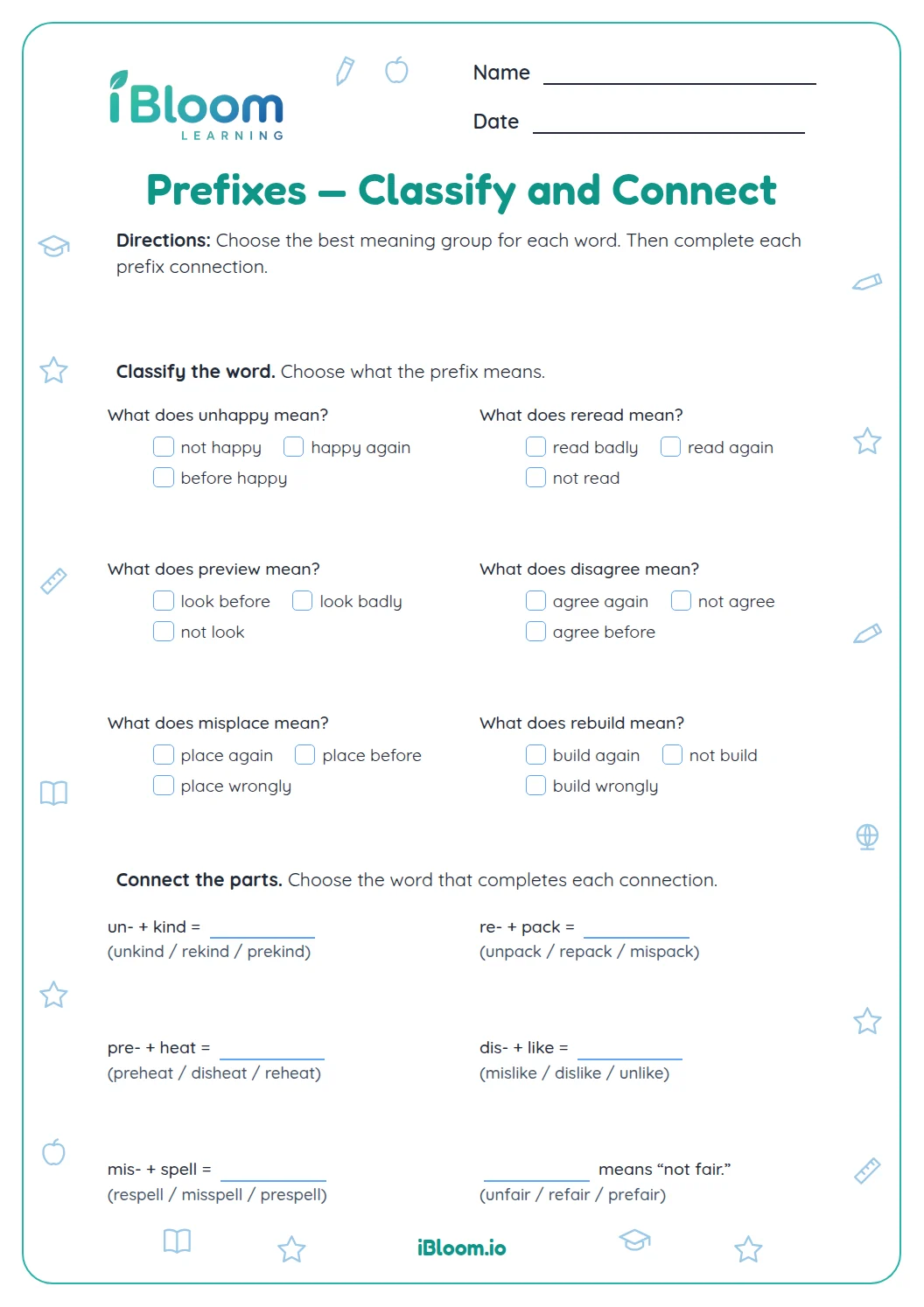
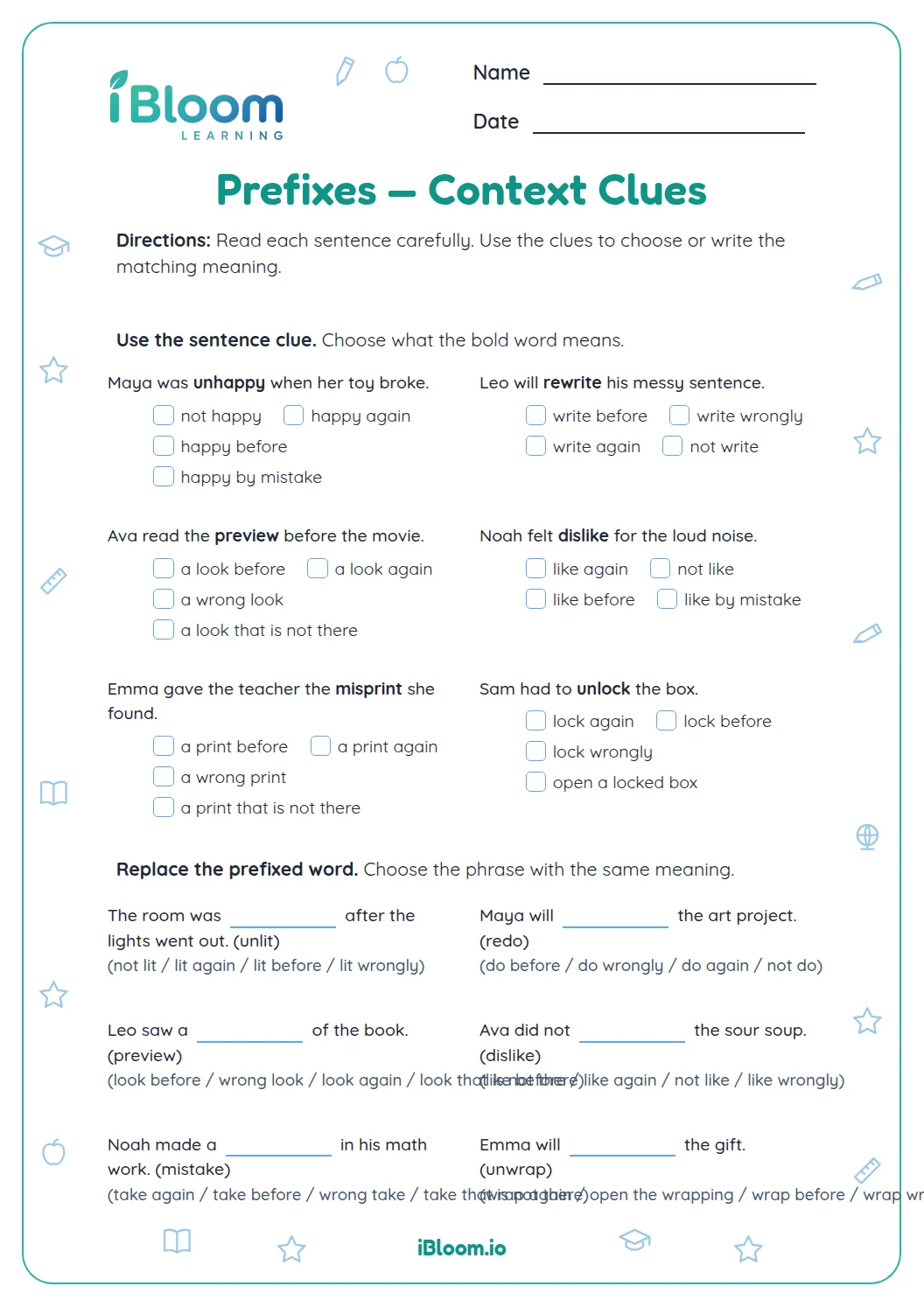
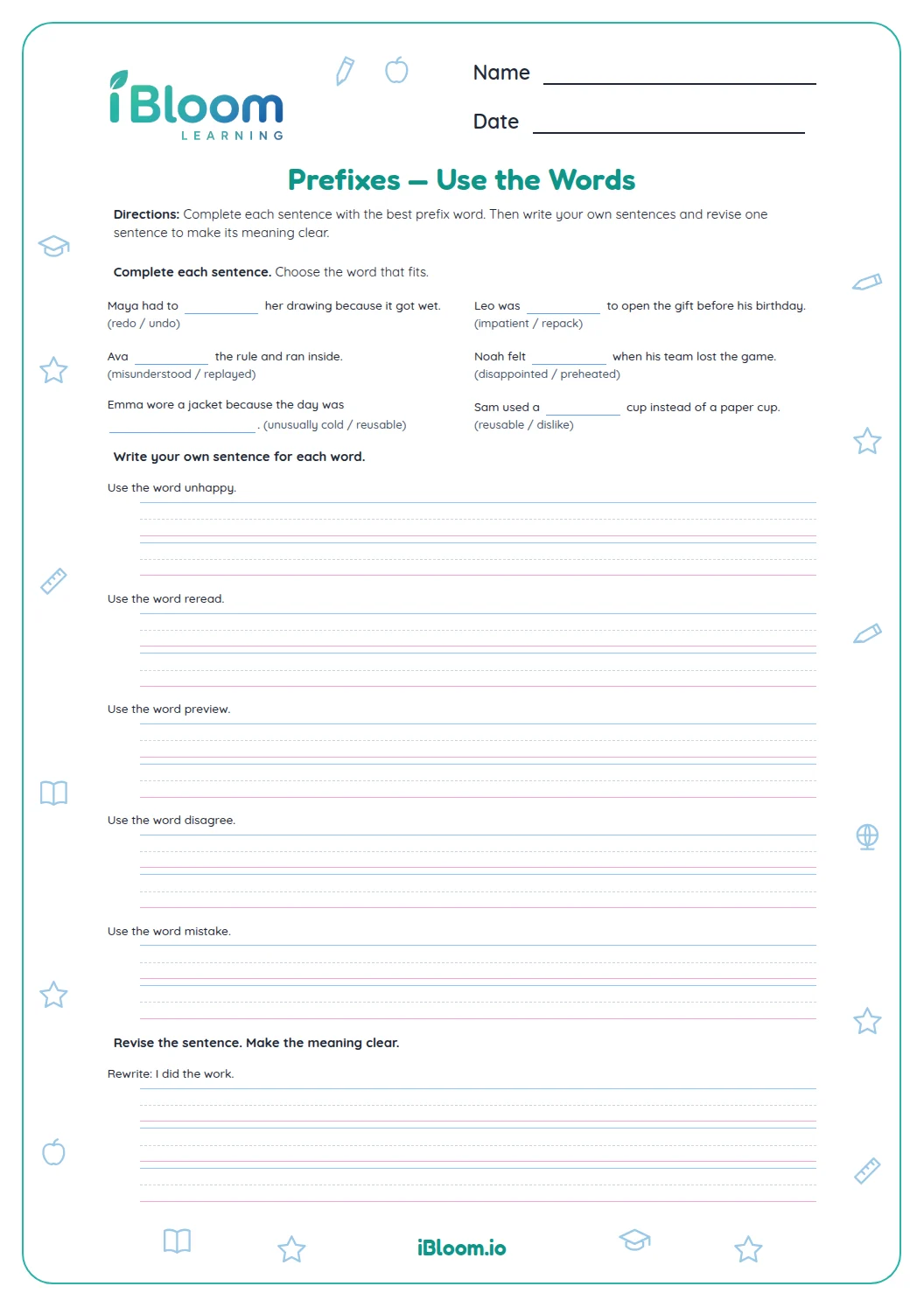
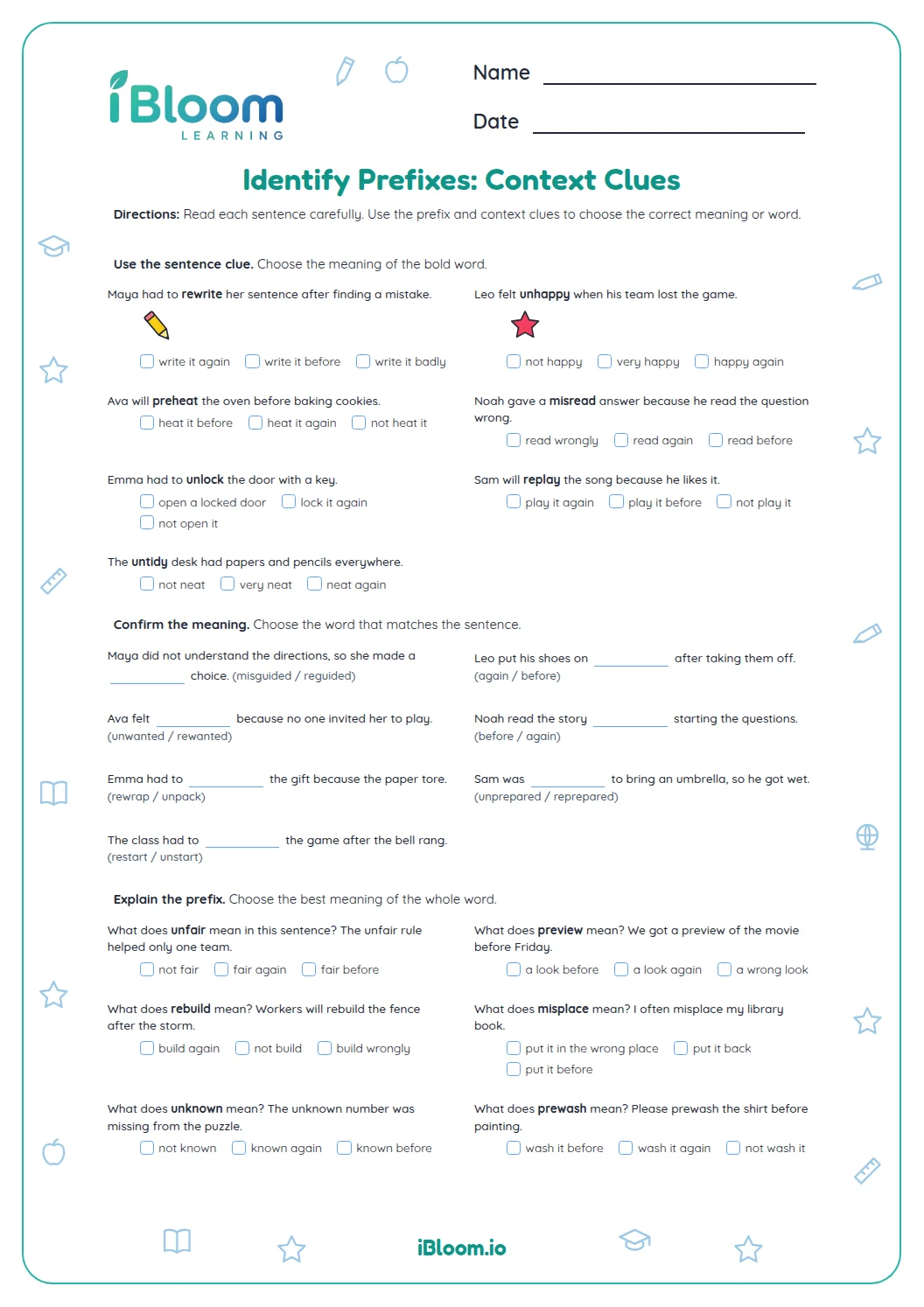
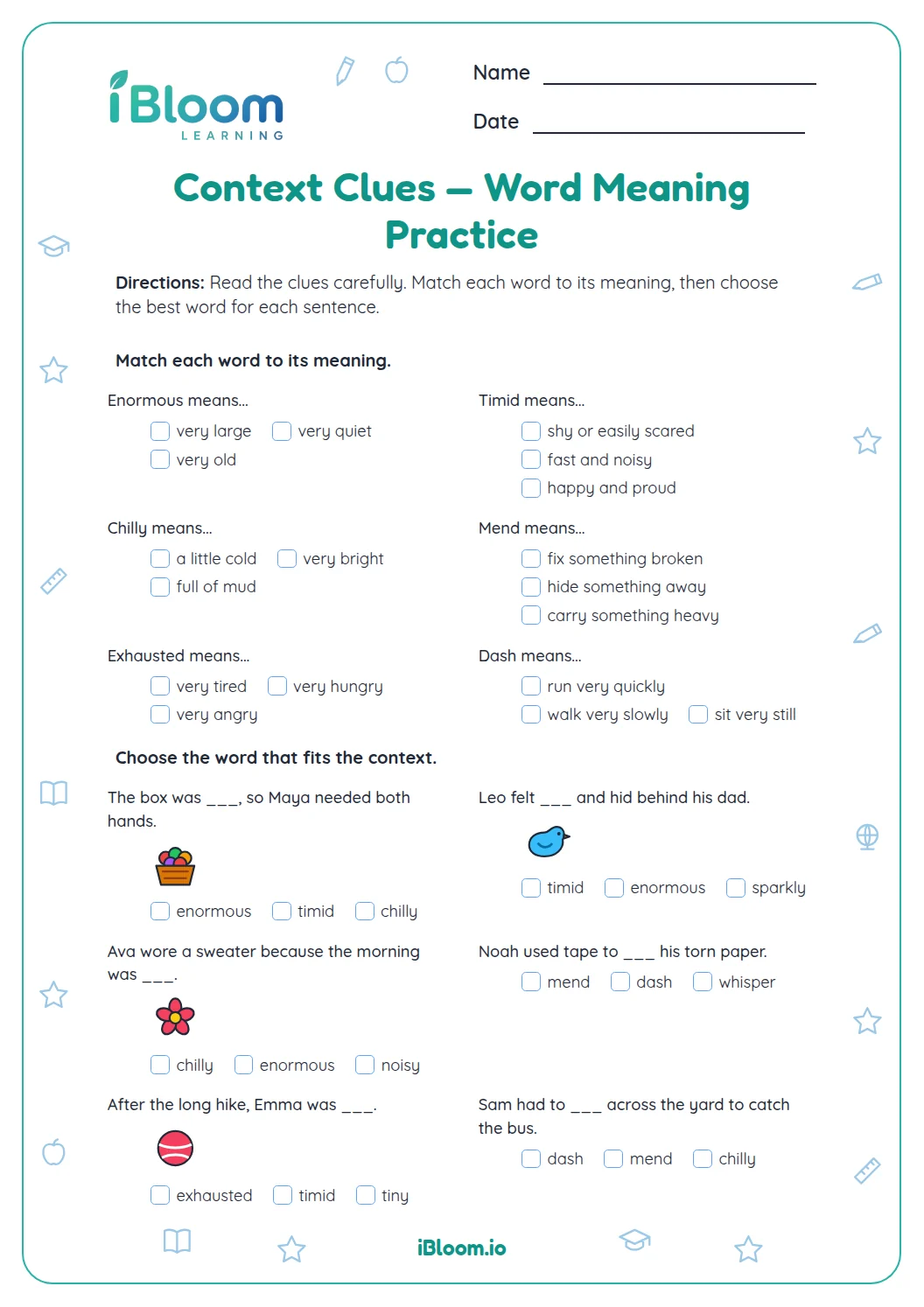
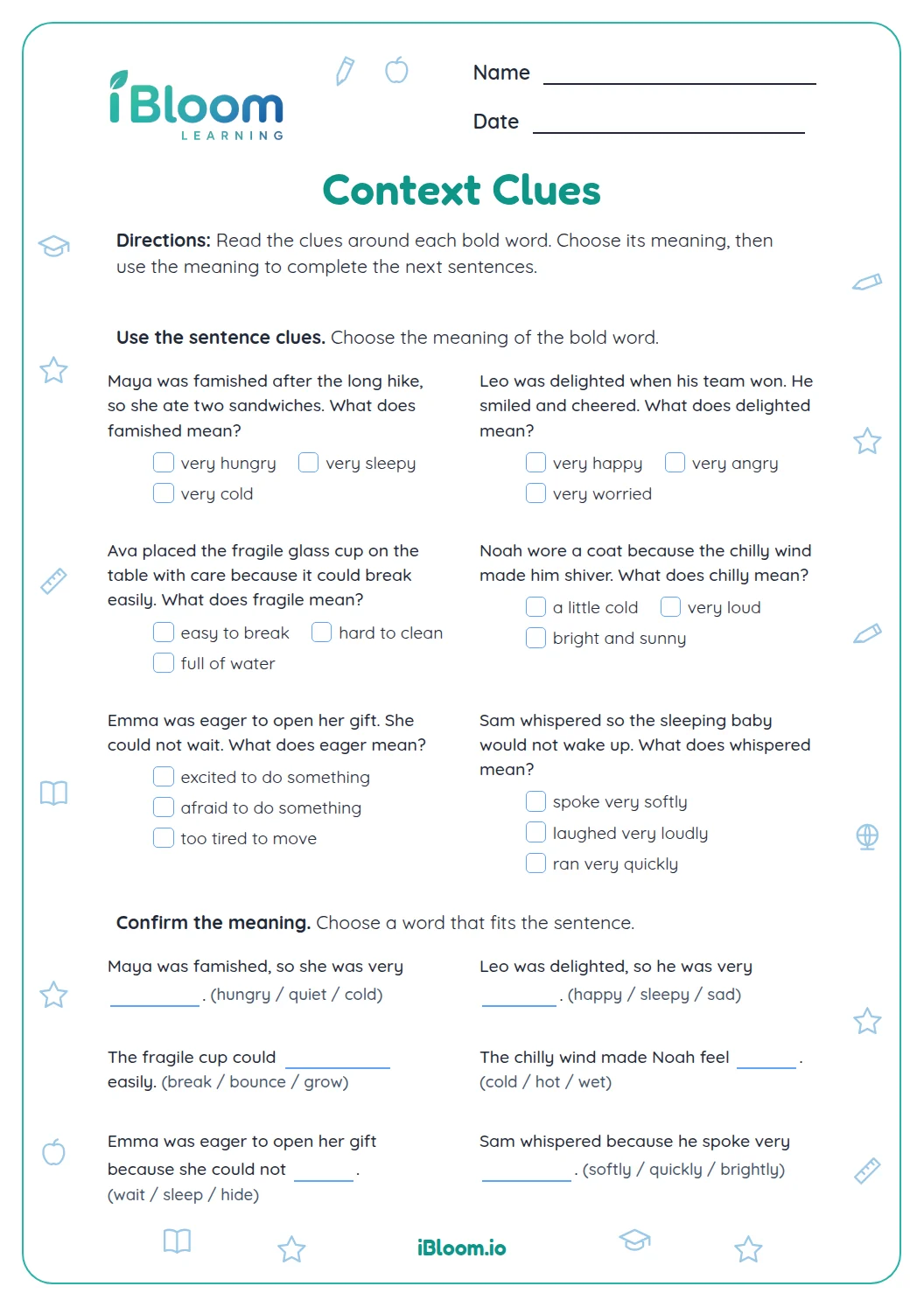
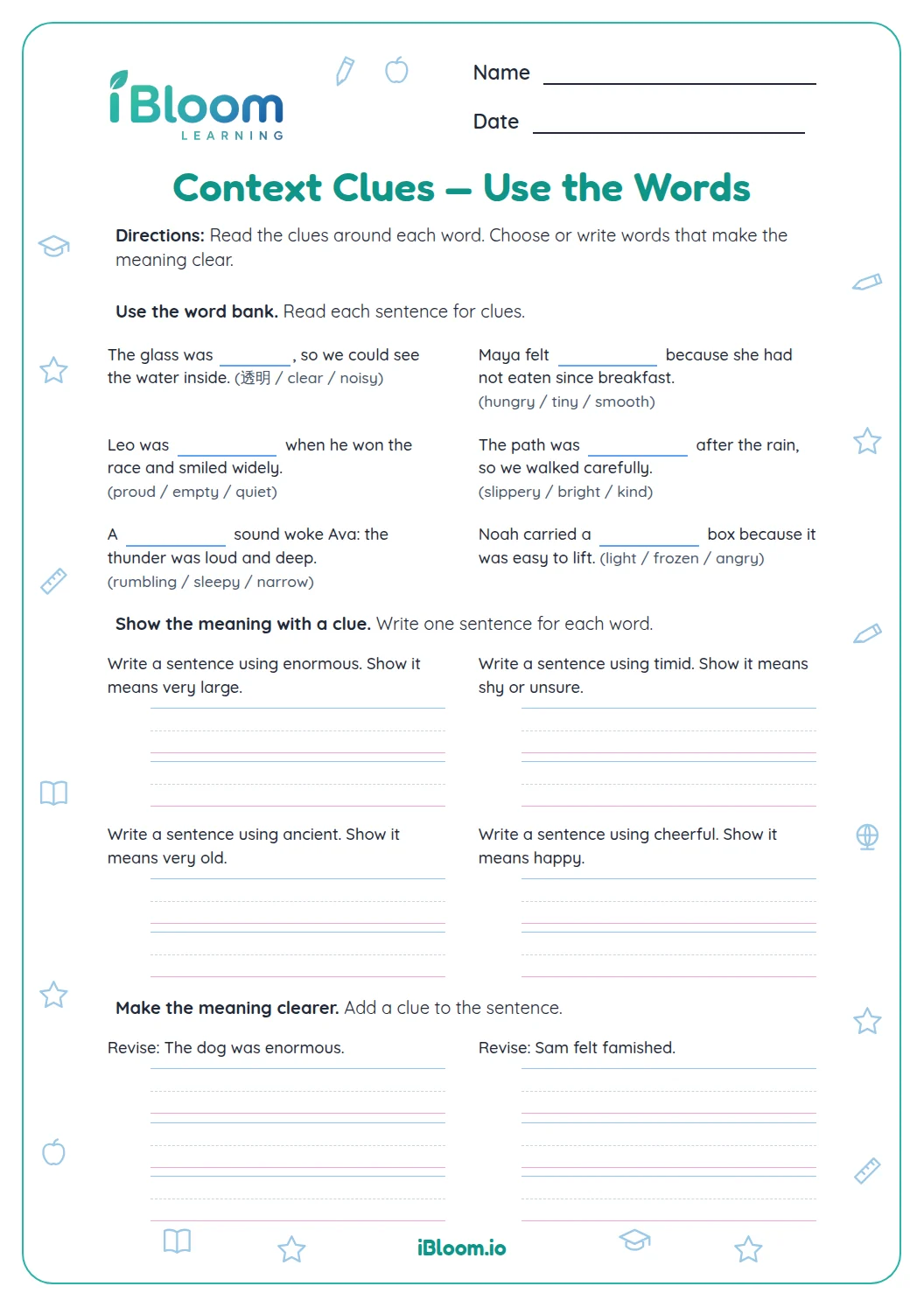
This Grade 2 printable has 15 questions using un-, re-, and pre-. Students connect each prefix to not, again, or before, complete familiar words, and explain how a prefix changes a base word. The examples keep the word meanings concrete. A separate answer key includes sample explanations; the practice aligns with CCSS L.2.4.b.
Aligned to CCSS L.2.4.b
What is the key idea for this skill?
Separate the prefix and base word, then combine their meanings. For example, re- plus read means read again.
- 11) unhappy means not happy.
How can you check your answer?
Use the sentence and base word to check whether the completed word makes sense.
- 16) re- + pack = repack.
What should you look for as you work?
State the prefix meaning, then combine it with the base word meaning.
- 114) unlock means make not locked.
How to use this worksheet
- 1Read the whole word.
- 2Find the prefix at the beginning.
- 3Say what the prefix means.
- 4Combine that meaning with the base word.
- 5Reread the sentence to check.
Common mistakes and quick fixes
The mistake
Treating re- as before.
The fix
Remember re- means again in reread.
The mistake
Forgetting the base word meaning.
The fix
Combine the prefix meaning with the base word.
The mistake
Choosing a prefix because it sounds familiar.
The fix
Reread the completed word in its sentence.
Common Core alignment
This worksheet practices CCSS L.2.4.b through its questions and examples.
Use familiar prefixes to determine the meaning of a new word.
On this sheet: Students interpret words formed with un-, re-, and pre-.
Show the official wordingHide the official wording
Determine the meaning of the new word formed when a known prefix is added to a known word (e.g., happy/unhappy, tell/retell ).
What to practice next
Further reading
Questions parents and teachers ask
Which prefixes are practiced?
The questions use un-, re-, and pre-. On this page, un- means not, re- means again, and pre- means before. Students use these meanings with familiar base words such as happy, read, and view. The examples use the same skill throughout.
What is a prefix?
A prefix is a word part added to the beginning of a base word. It changes the word’s meaning. In reread, re- means again and read names the action, so reread means to read again. The examples use the same skill throughout.
How many questions are included?
There are 15 questions in three parts: meaning choices, completing words, and explaining meanings. The final responses may use different wording, so the answer key includes sample explanations rather than requiring one exact sentence. The examples use the same skill throughout.
How can a child check a new word?
Look for the prefix at the start, say what it means, and combine that with the base word. Then reread the sentence. The combined meaning should fit the sentence, as “repack” means pack again. The examples use the same skill throughout.
What does the answer key show?
The separate answer key lists the correct meaning choices and prefixes for each completion. It also provides sample explanations for open responses, so a parent can check whether the student combined the prefix and base word accurately. The examples use the same skill throughout.