





About this worksheet
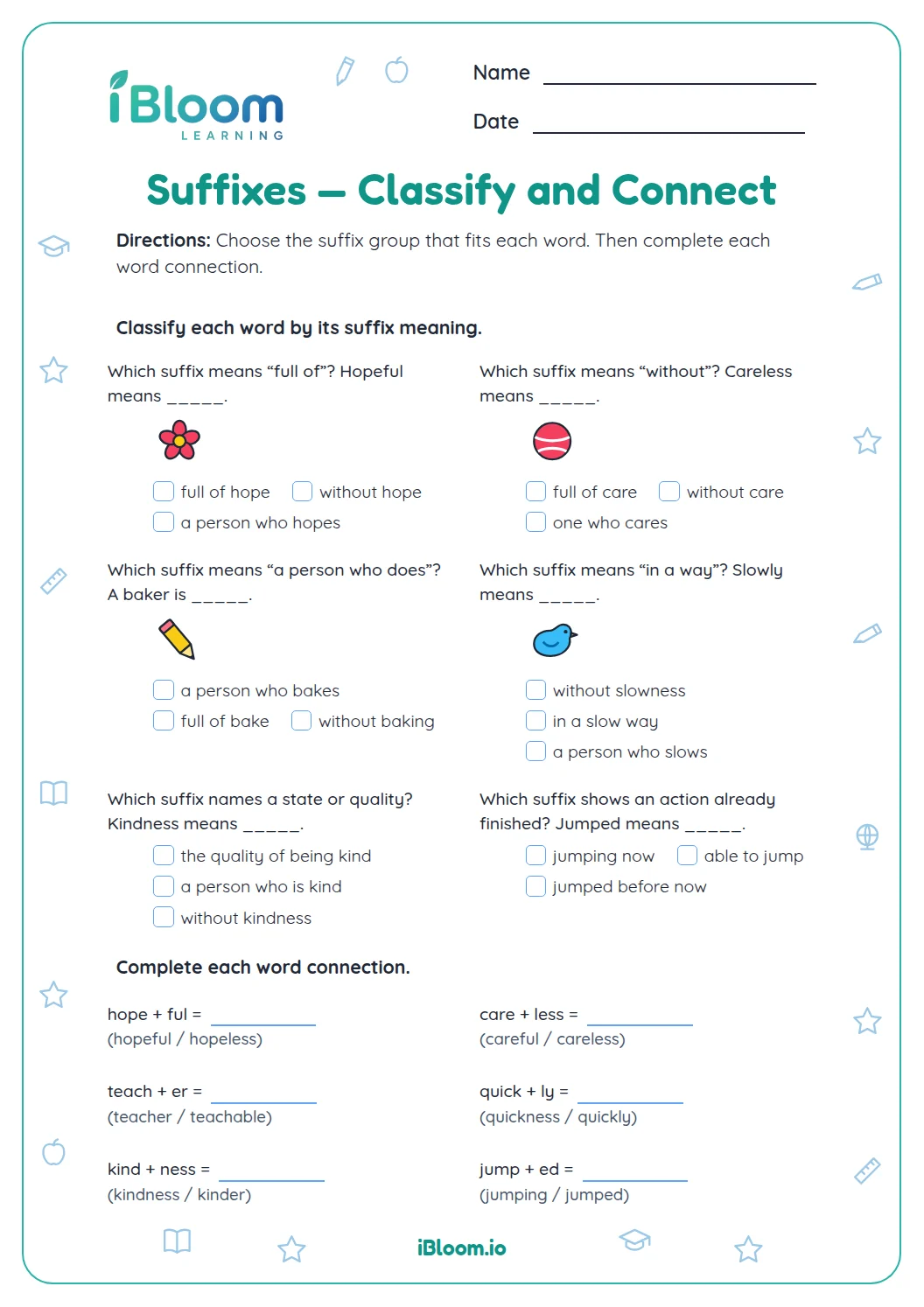
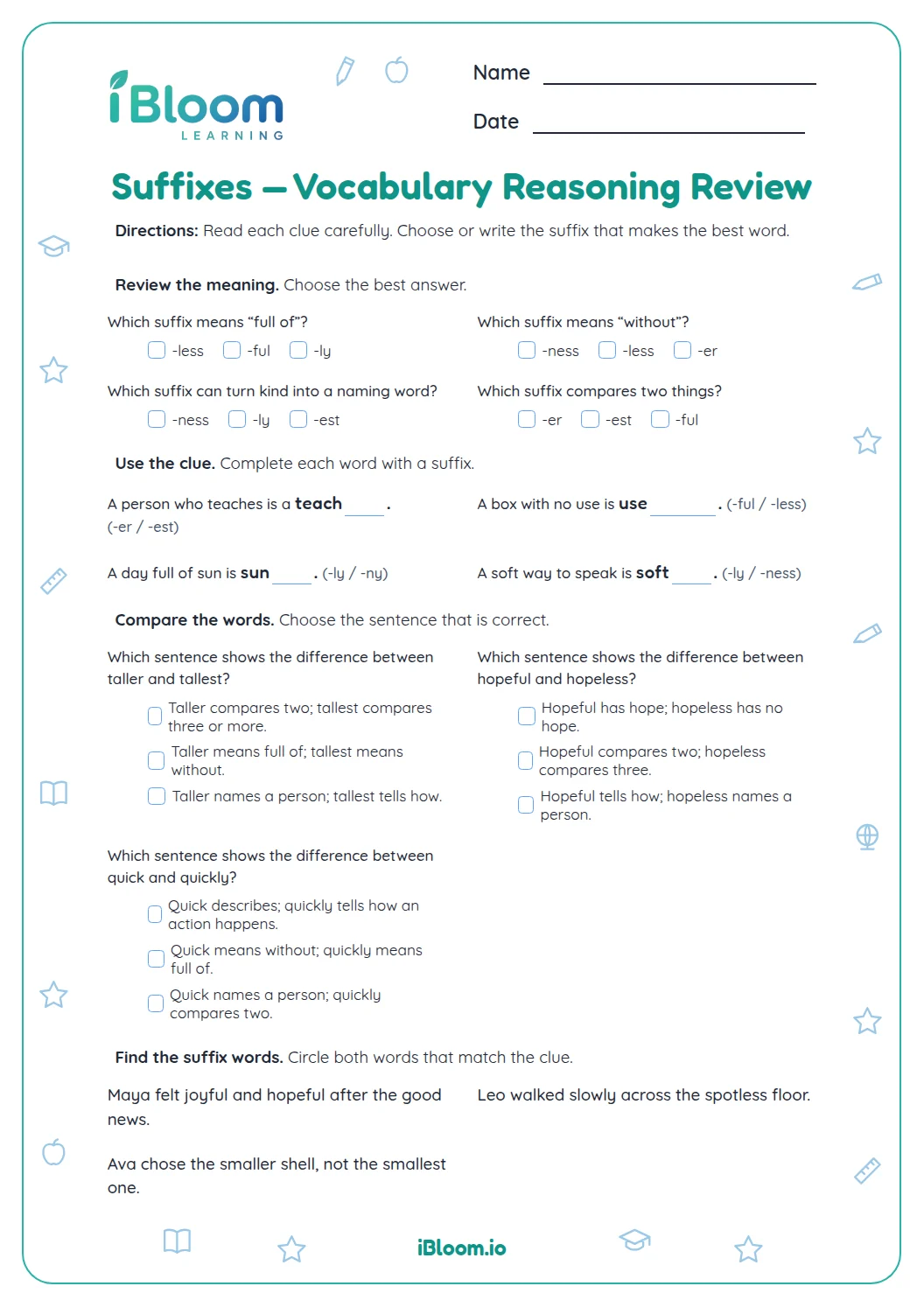
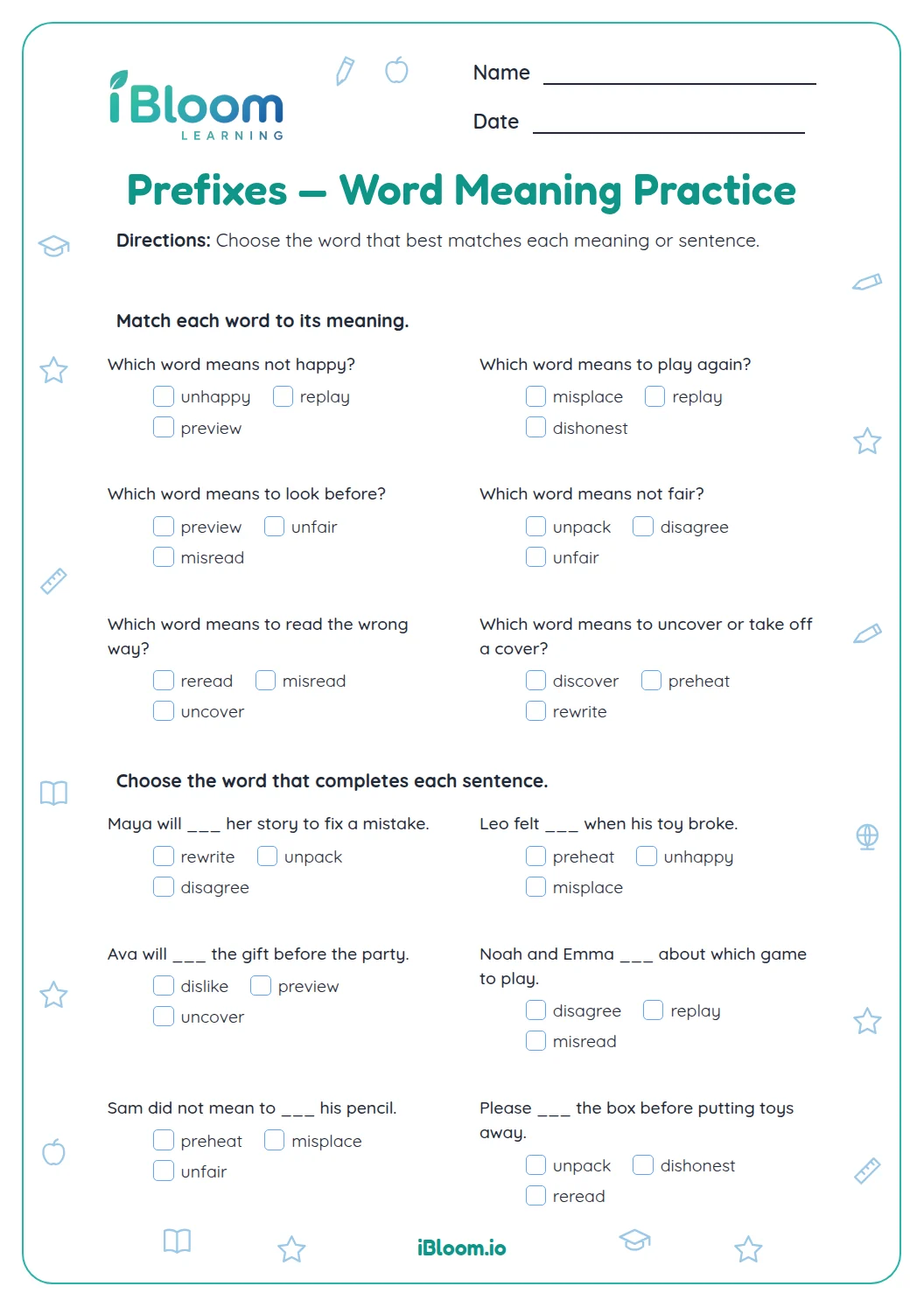
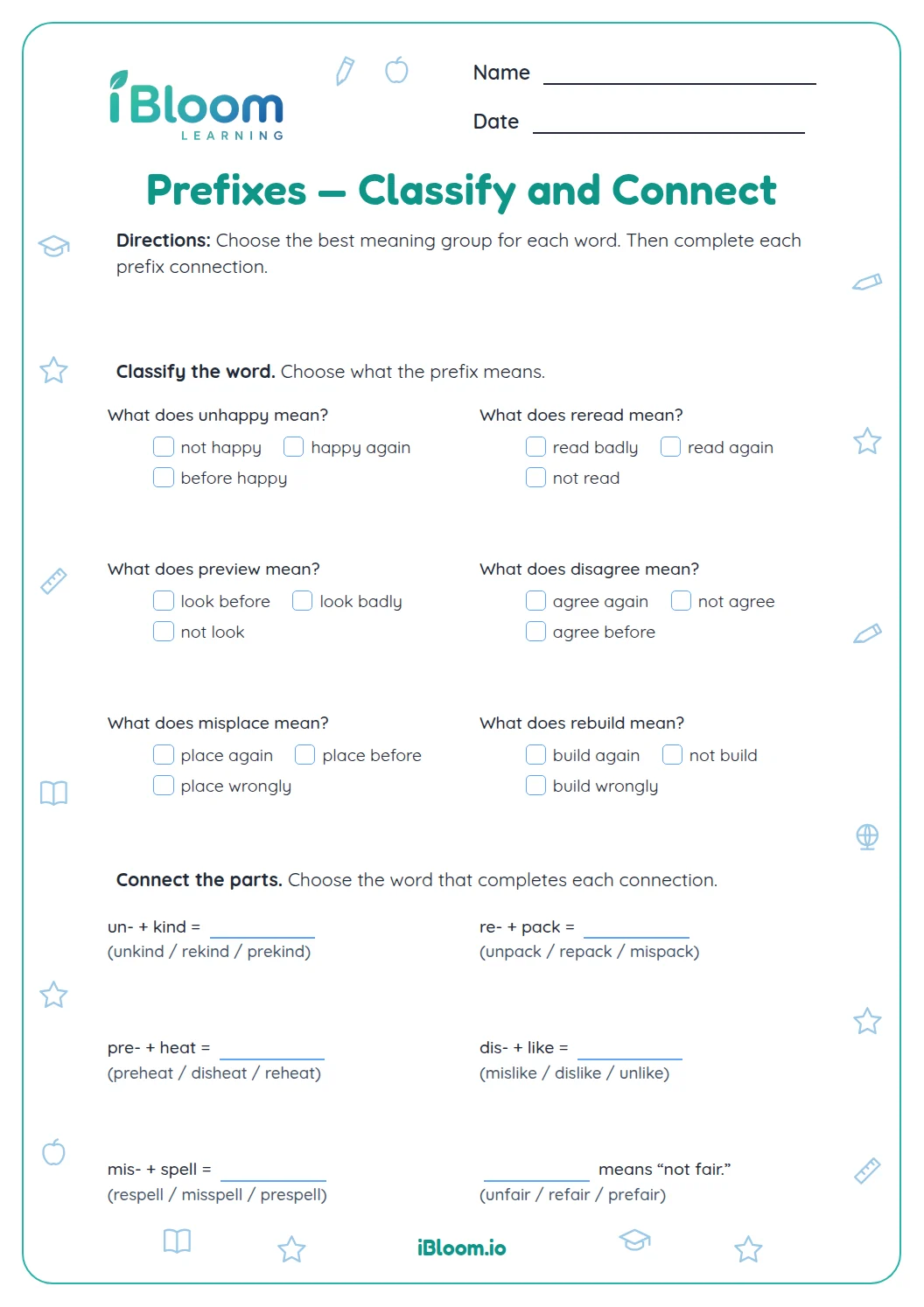
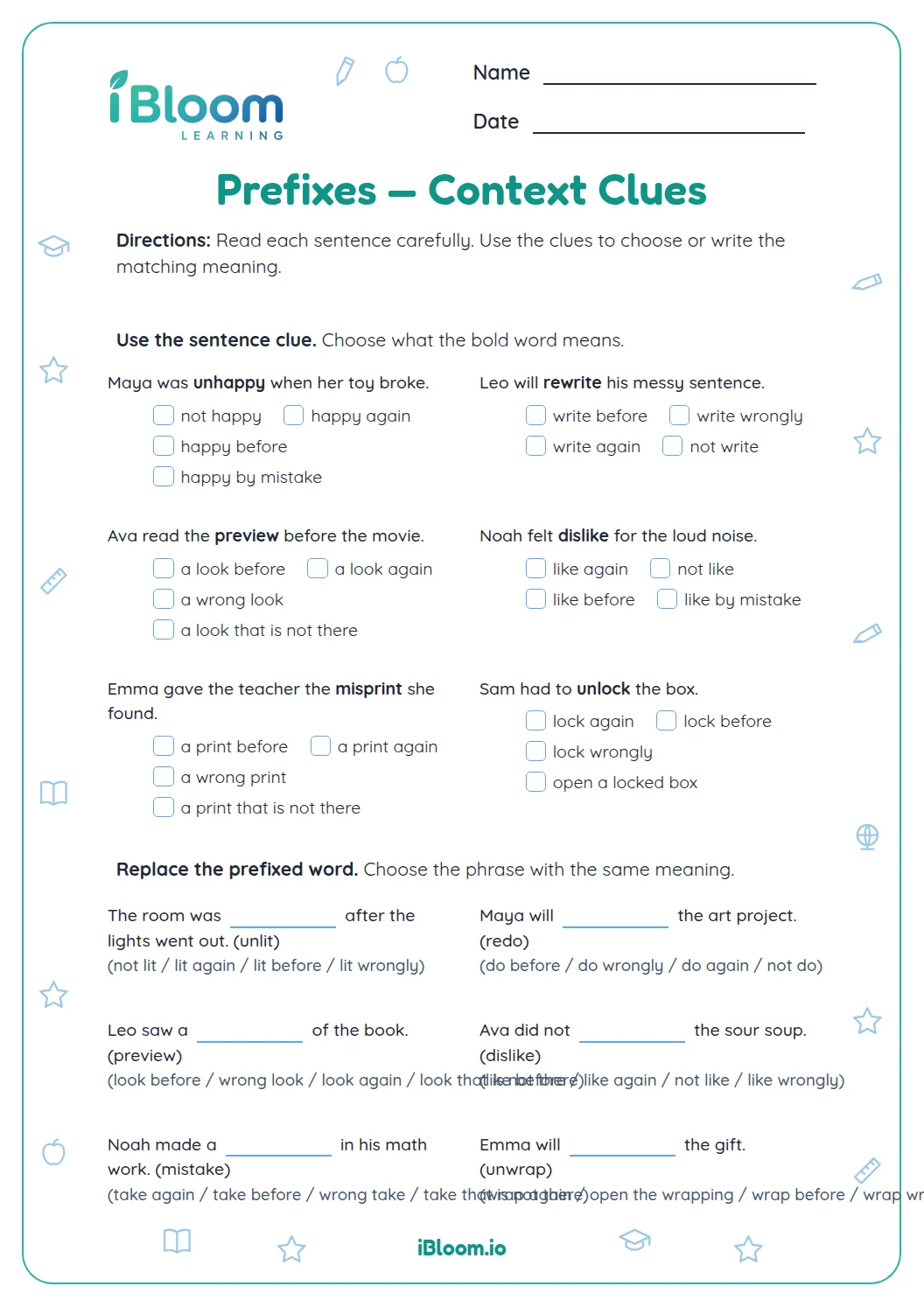
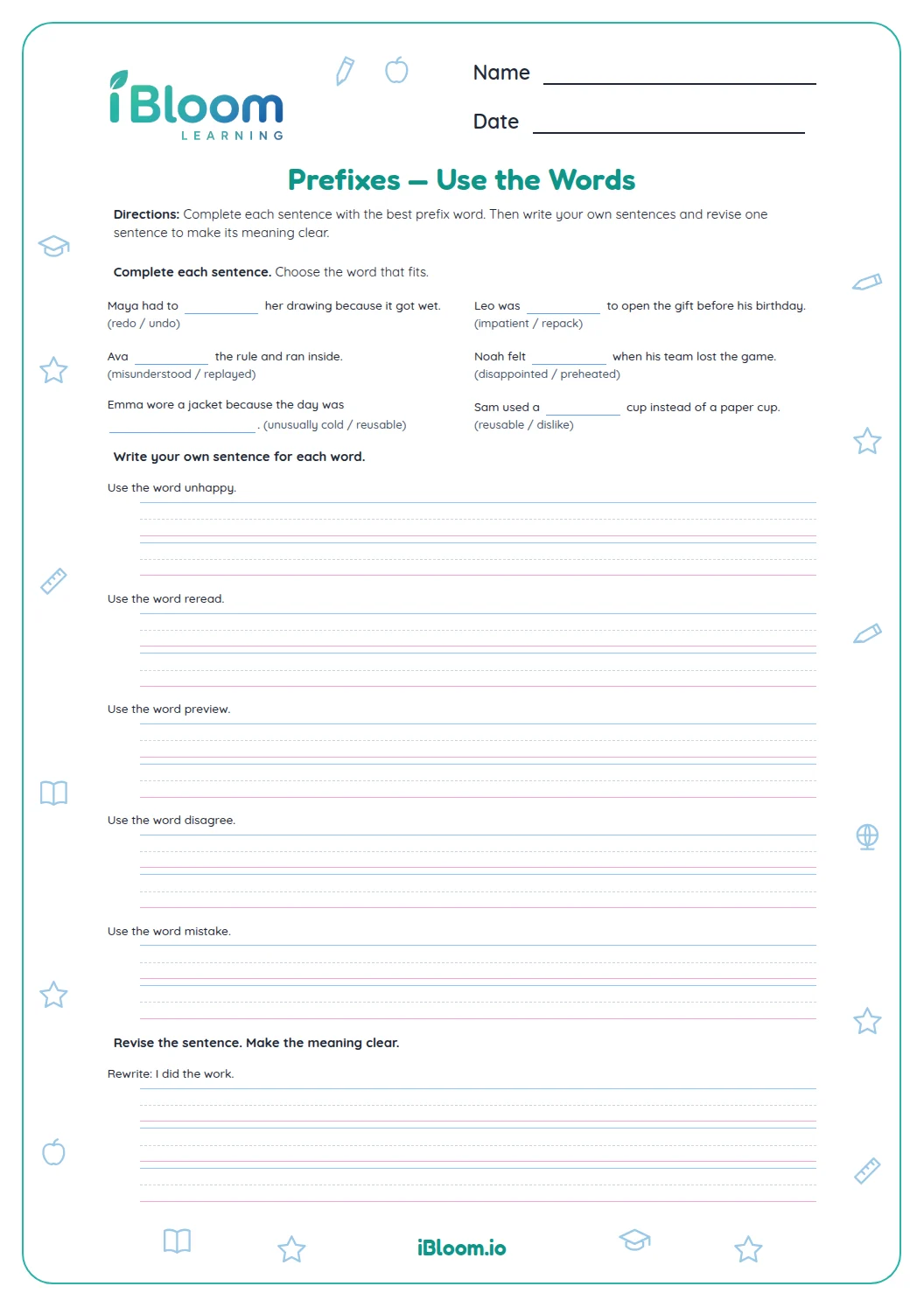
This Grade 2 suffix worksheet moves from choosing a word that fits a sentence to using suffix words in a sentence of your own. Children compare endings such as -ful, -less, -ly, -er, and -ness and use the whole sentence to check meaning. It contains 16 items: 12 word-choice questions and four written responses. The key includes sample sentences for open-ended items.
Aligned to L.2.4
How does a suffix change a word?
A suffix is a word part added to the end of a base word. In thankful, -ful helps form an adjective; in softly, -ly helps form an adverb. The exact meaning depends on the base word and the sentence.
- 1Maya felt ___ when her friend shared a snack.
- 2Choices: thankful, thankless, thankfully
- 3The sentence describes how Maya felt.
- 4Answer: thankful
What does each part ask children to do?
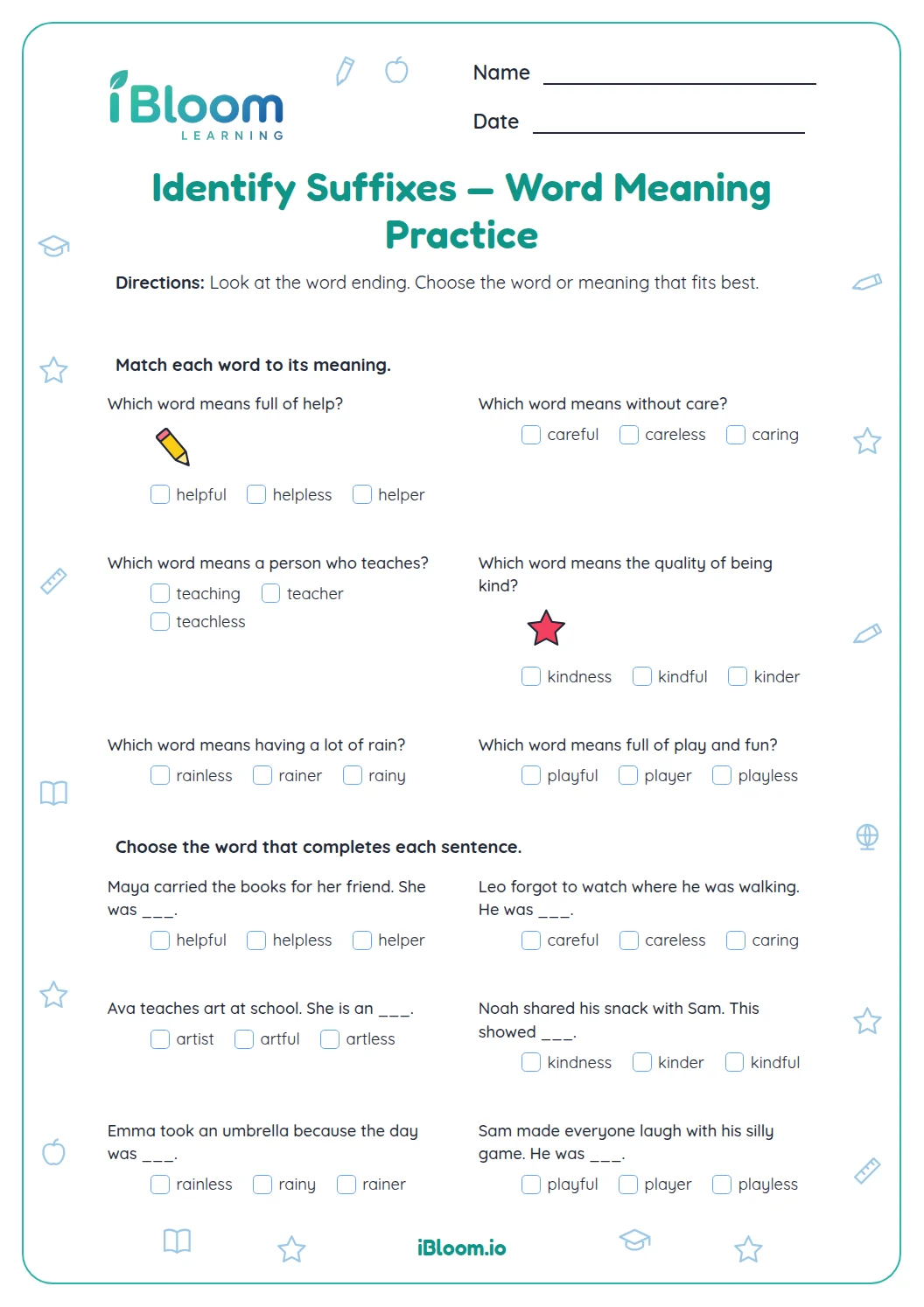
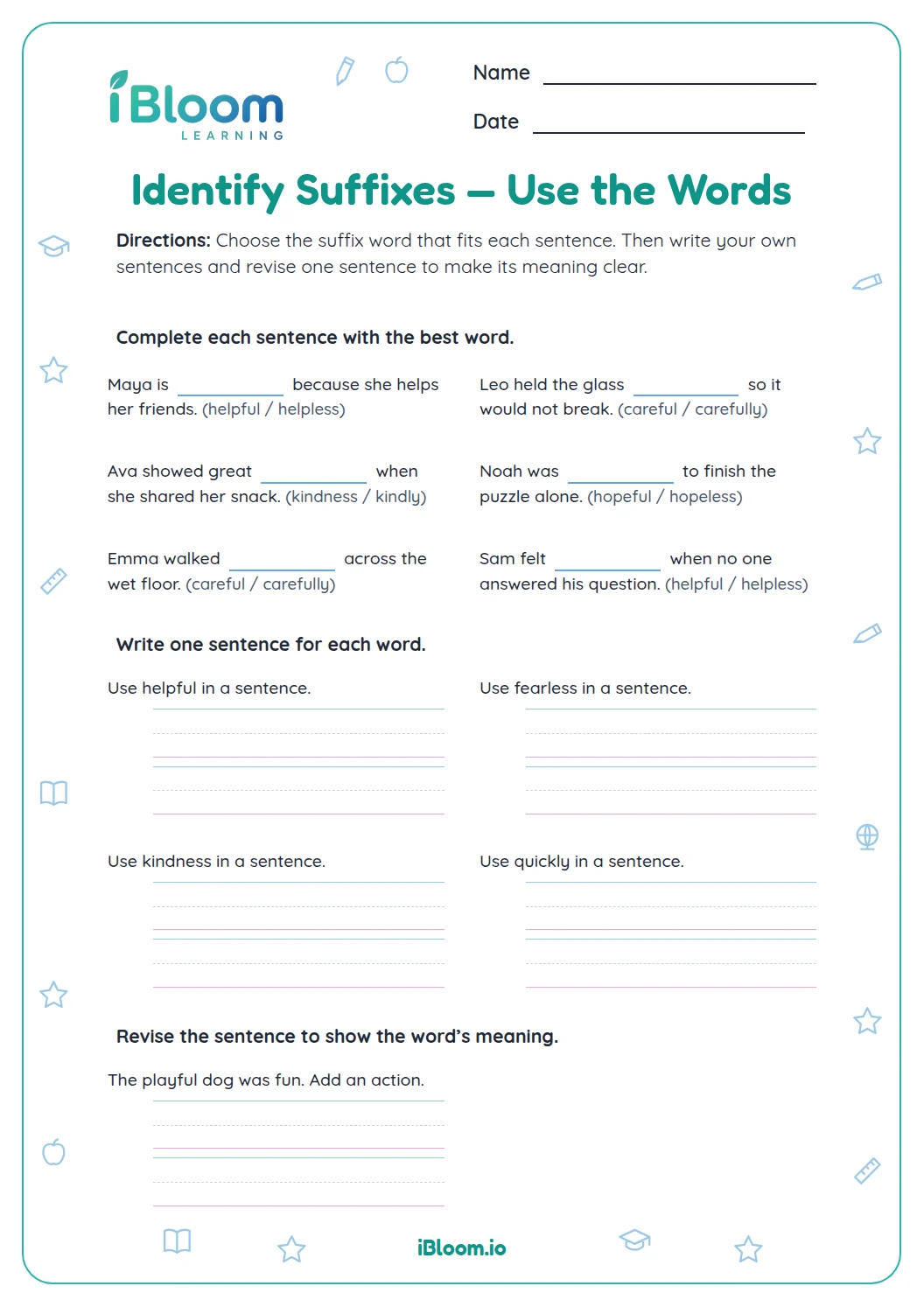
The first eight questions use sentences to distinguish related forms. The next four ask about a word’s meaning directly. The final four require a complete sentence that shows how the suffix word is used.
- Questions 1–8: select the form that fits a sentence
- Questions 9–12: connect a suffix word to its meaning
- Questions 13–16: write a sentence using the given word
How can a sentence show a word’s meaning?
A sentence gives clues about how a word works. “The dog ran playfully” shows that playfully tells how the dog ran. Encourage children to read their sentence back and check whether it demonstrates the target word.
How to use this worksheet
- 1Read each sentence aloud before choosing a word.
- 2Look at the ending and ask what kind of word the sentence needs.
- 3Try the chosen word in the sentence to check that it makes sense.
- 4For the last part, say a complete sentence aloud before writing it.
- 5Use the key to check choices and compare written sentences with the samples.
Common mistakes and quick fixes
The mistake
Choosing a word with the right base but the wrong form, such as thankful instead of thankfully.
The fix
Ask what the sentence needs: a describing word, an action word, or a word naming a quality.
The mistake
Thinking -less means “full of.”
The fix
Compare fearless with fearful and discuss how the endings change the meaning.
The mistake
Writing a sentence that includes the target word but does not show its meaning.
The fix
Add a detail that makes the word’s meaning clear to a reader.
Common Core alignment
The items connect suffix word meaning to sentence context and use.
Use sentence clues and word parts to clarify word meaning.
On this sheet: Children use context and common suffixes to choose and use words with the intended meaning.
Show the official wordingHide the official wording
Determine or clarify the meaning of unknown and multiple-meaning words and phrases based on grade 2 reading and content, choosing flexibly from an array of strategies.
What to practice next
Make more practice
Further reading
Questions parents and teachers ask
What is a suffix?
A suffix is a word part added to the end of a base word. Endings such as -ful, -less, -ly, -er, and -ness can help form a new word or signal how it works in a sentence. Children use examples from the worksheet to notice those changes.
How many questions are included?
There are 16 questions. Twelve are multiple choice: eight use a sentence and four ask directly about meaning. The last four ask children to write a sentence that shows a target suffix word in context. This sequence moves from recognition into independent use.
Are the written answers open ended?
There are 16 questions in three parts: eight sentence choices, four questions about suffix meanings, and four sentence-writing items. The key gives the selected words and sample sentences; children may write other clear examples that use the target word correctly.
Should children memorize every suffix meaning first?
They can begin by looking at the examples and testing how each form fits the sentence. Reading the whole sentence helps them decide whether it needs a describing word, a word naming a person, or a word telling how an action happens.
What can I do if two choices seem possible?
Have the child read each choice in the full sentence and listen for whether it sounds grammatical and makes sense. Each item has one best fit, and the answer key identifies that choice. Comparing the alternatives can help children notice how suffix endings affect meaning.