




About this worksheet
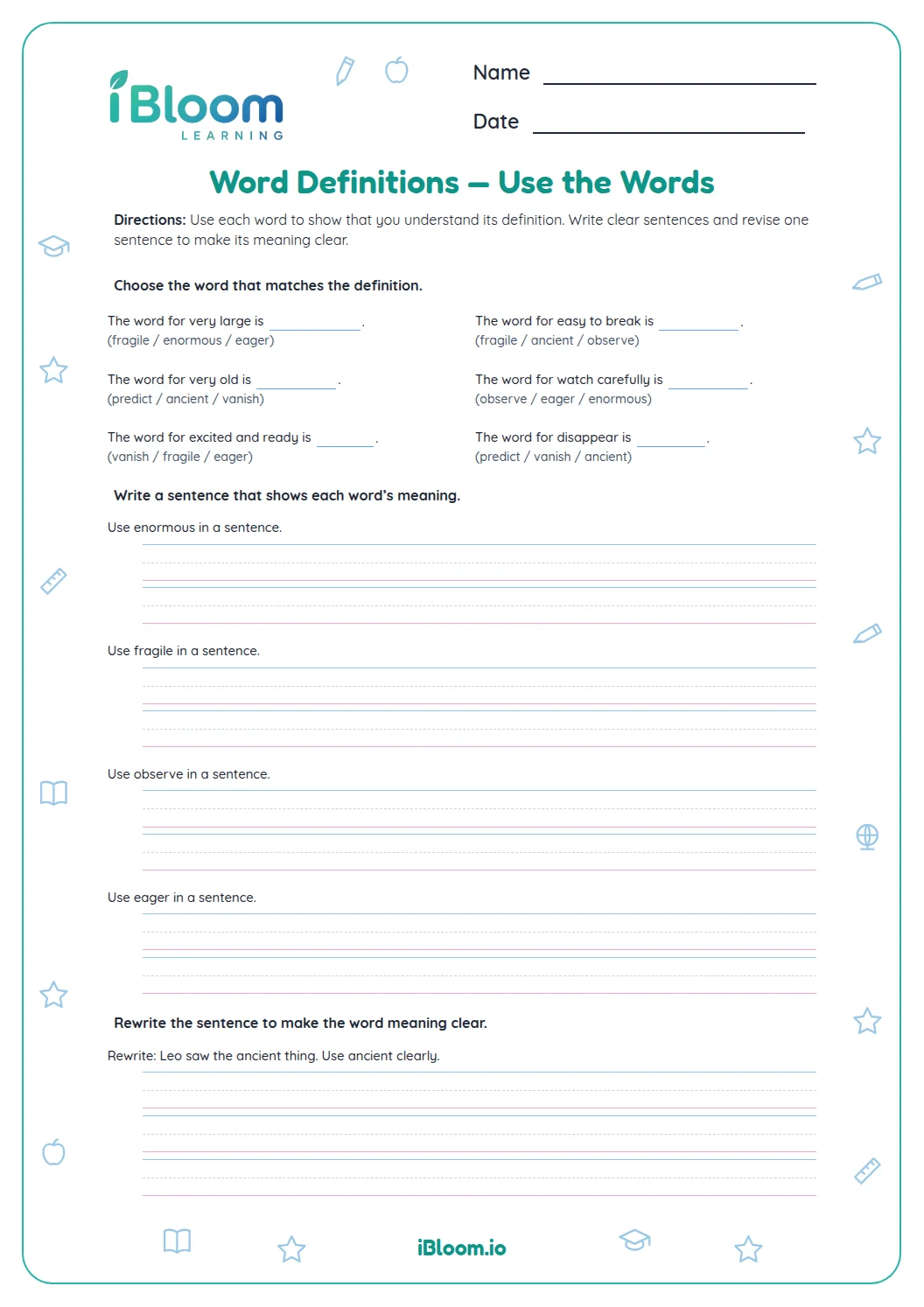
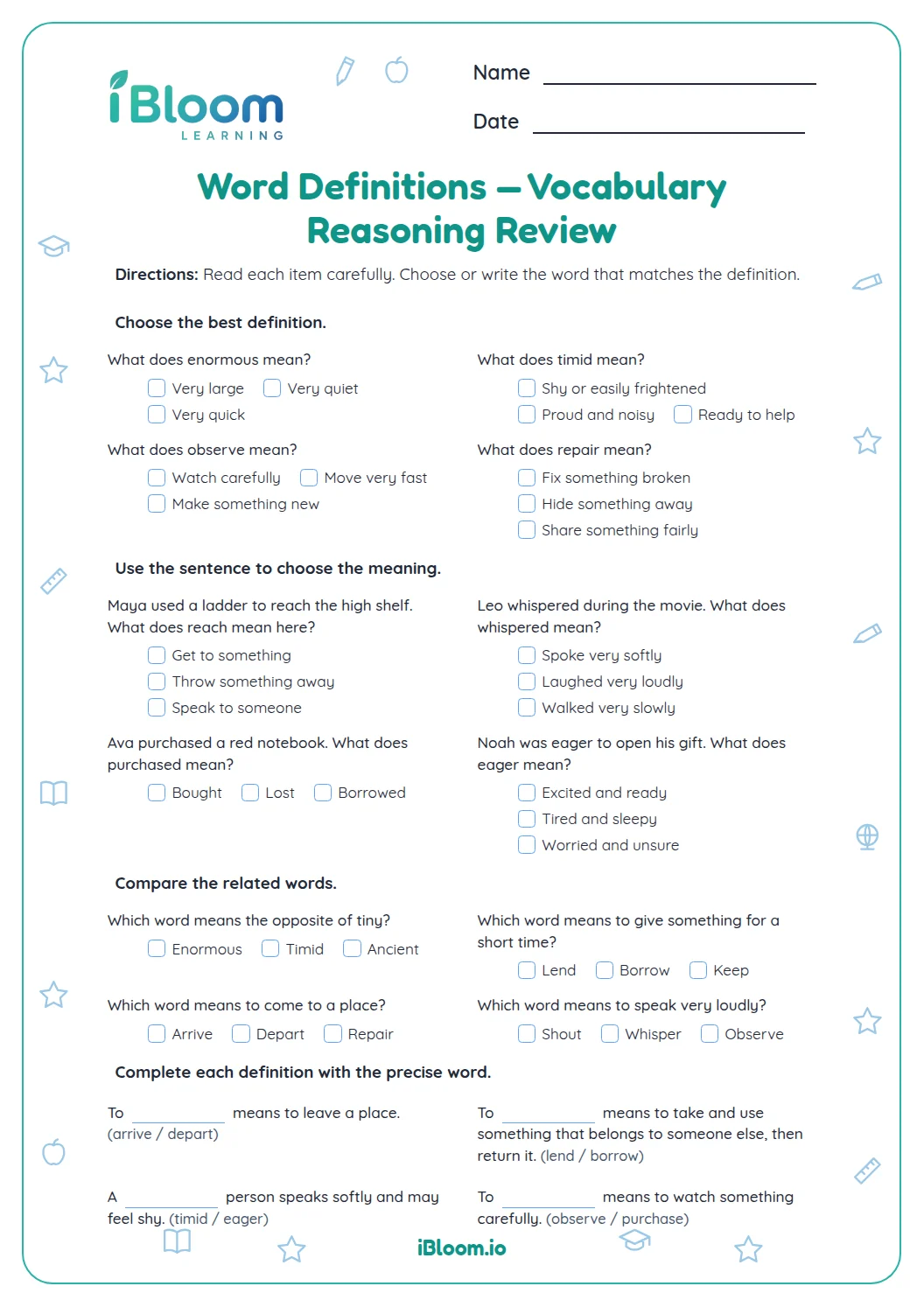
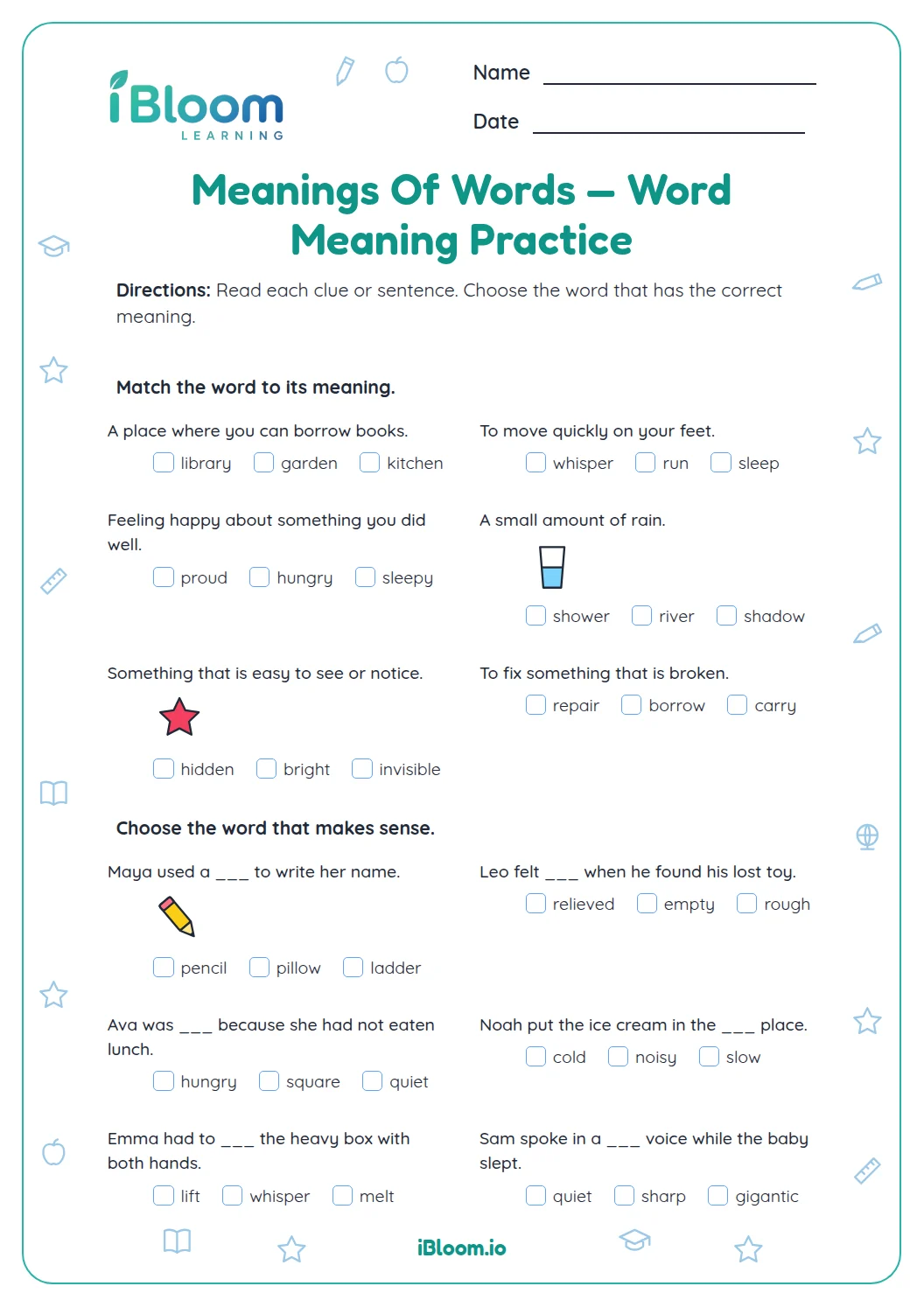
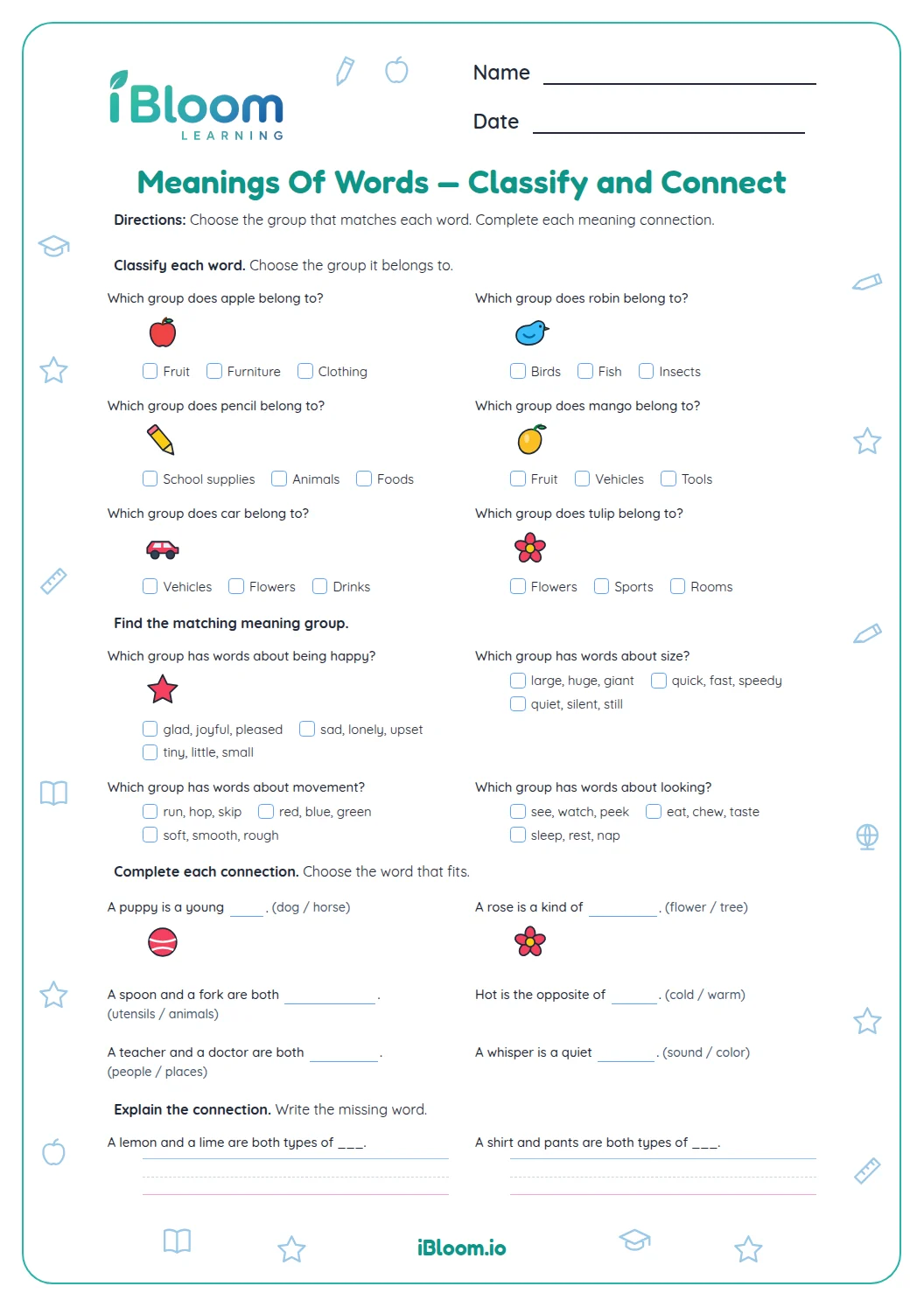
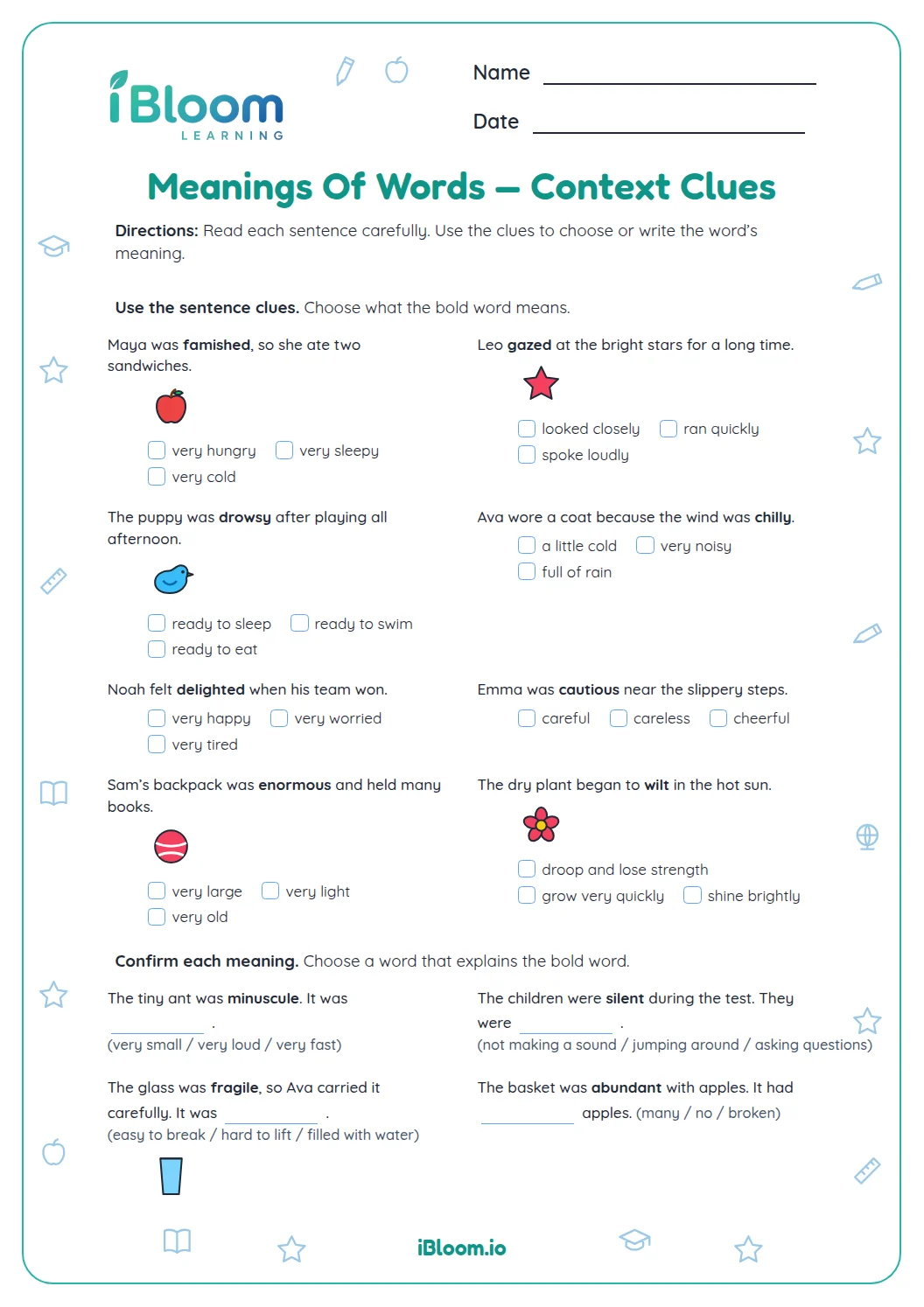
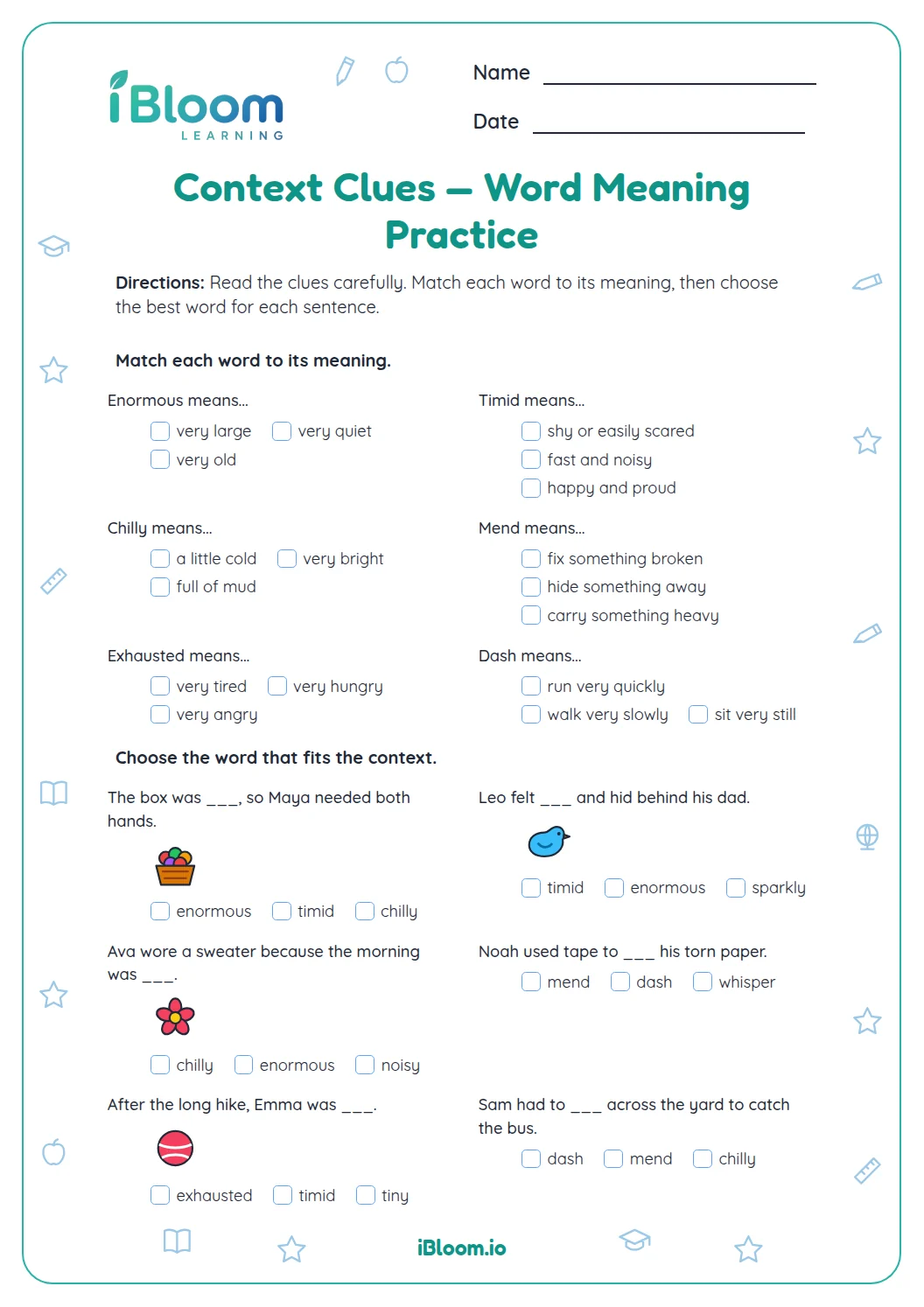
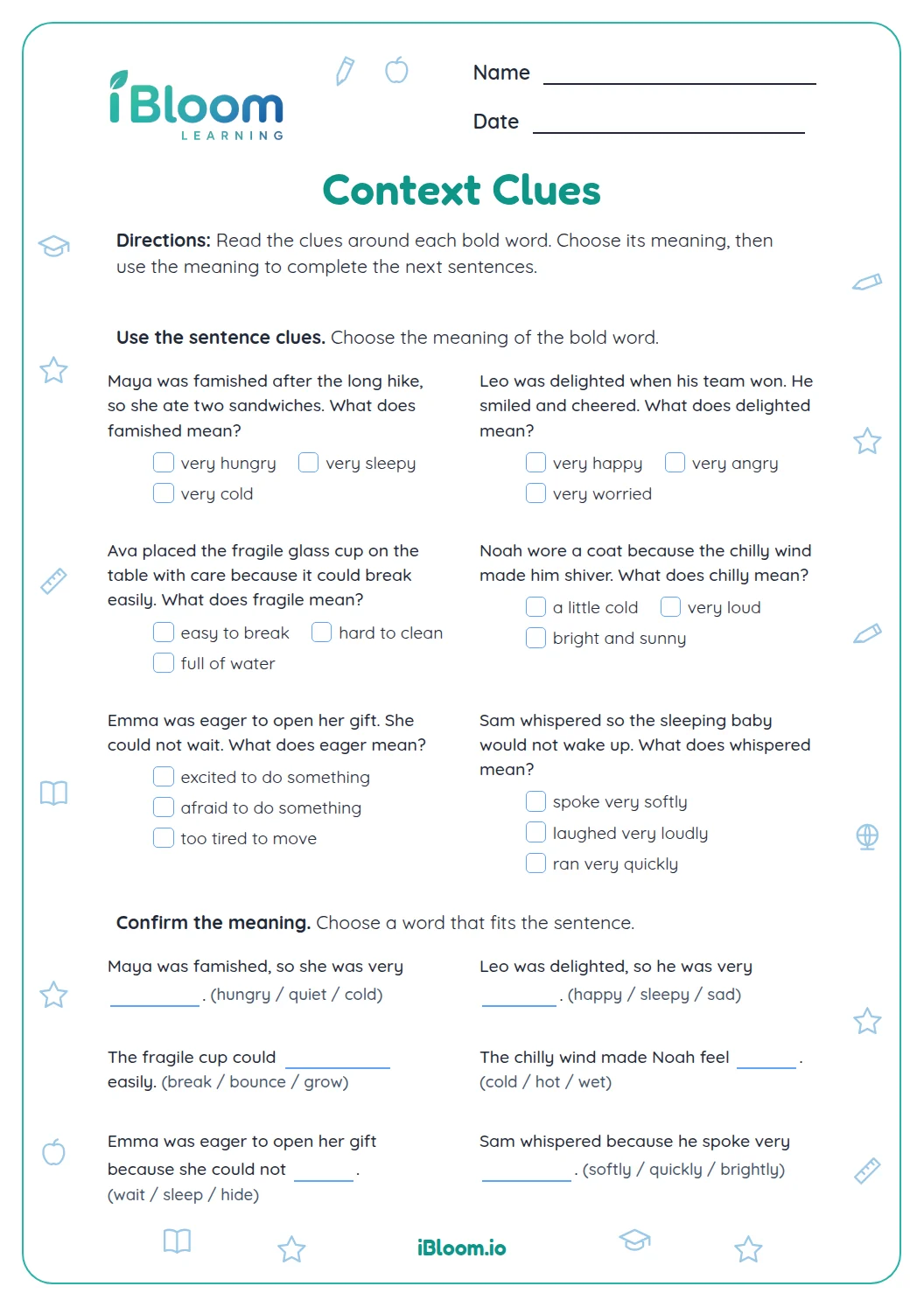
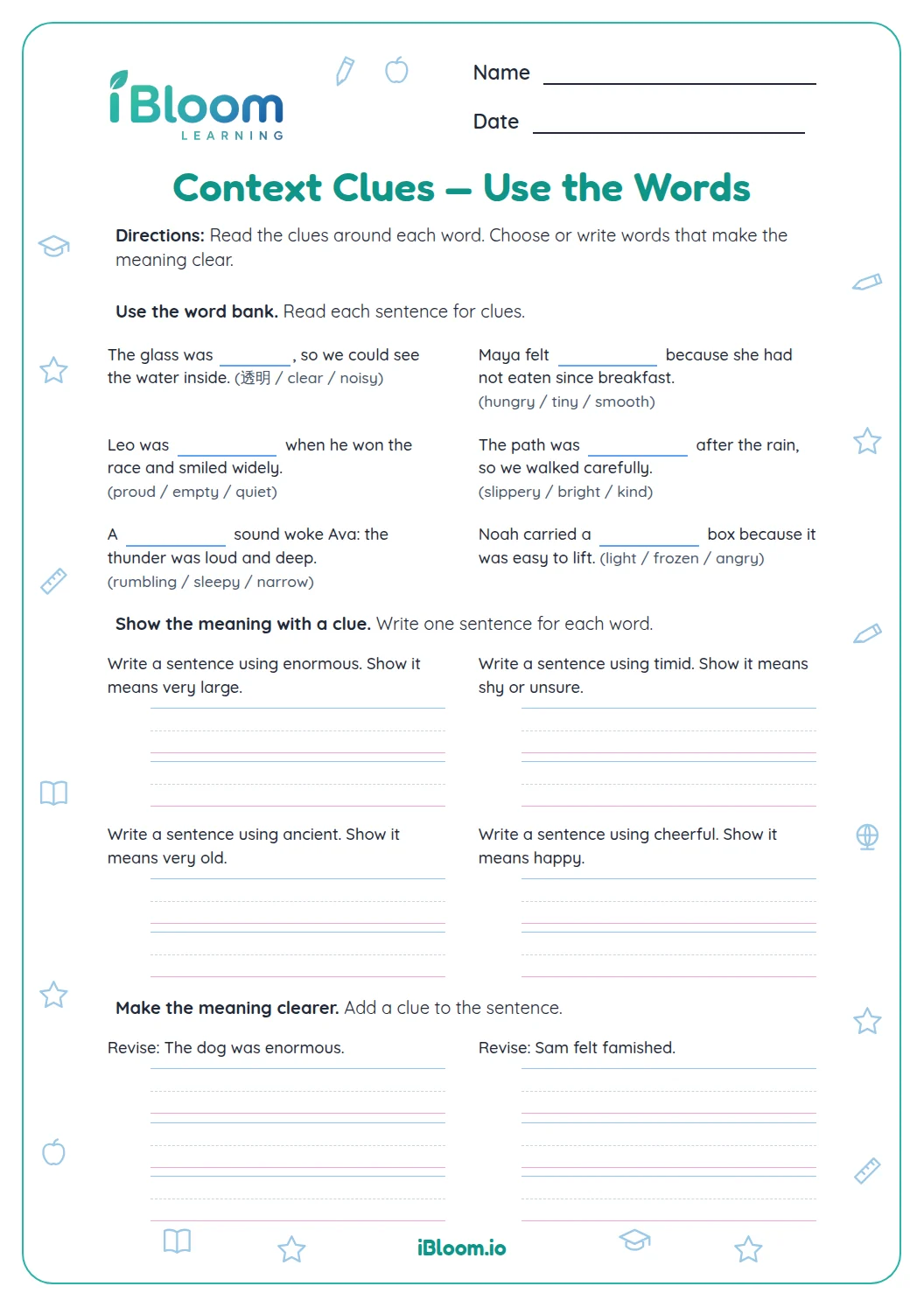
This Grade 2 vocabulary worksheet gives children three ways to connect words with meaning. Part A classifies familiar words such as apple, robin, pencil, and fish. Part B asks for direct definitions, including fragile and ancient. Part C uses short sentence clues to complete definitions. The 18 multiple-choice questions include picture cues in the classification section, and a separate answer key is provided.
Aligned to L.2.4
How can a word fit a category?
A category groups things that share a feature. Apple belongs with fruits, robin with birds, and pencil with school supplies.
How does a definition explain a word?
A definition tells what a word means. Fragile means easy to break, and ancient means very old.
- 1What does fragile mean?
- 2Compare each choice with the word.
- 3Easy to break explains fragile.
How do clues help identify a word?
Read each whole clue and look for the detail that points to the answer. “A young dog” means puppy; a place that bakes and sells bread is a bakery.
How to use this worksheet
- 1Read the target word or complete sentence.
- 2For a category, choose the group that describes the word.
- 3For a definition, check which phrase tells its meaning.
- 4For a blank, use the words around it as clues.
- 5Reread the sentence with your answer inserted.
Common mistakes and quick fixes
The mistake
Choosing a group that is connected but does not describe the word.
The fix
Ask which category the word belongs to, not which one it is near.
The mistake
Picking a definition that sounds familiar but describes another word.
The fix
Say the target word and definition together to check the meaning.
The mistake
Filling a blank from memory without using the sentence.
The fix
Read the clue sentence and test the choice in the blank.
Curriculum alignment
The worksheet gives children direct practice with this standard.
Use word relationships and clues to clarify a word’s meaning.
On this sheet: Children use definitions, categories, and context to determine word meanings.
Show the official wordingHide the official wording
Determine or clarify the meaning of unknown and multiple-meaning words and phrases based on grade 2 reading and content, choosing flexibly from an array of strategies.
What to practice next
Make more practice
Further reading
Questions parents and teachers ask
What does classify mean?
To classify means to put something in a group based on what it is or a feature it shares. Part A asks children to classify six pictured words, including apple, robin, pencil, car, rose, and fish, using the printed category choices.
What kinds of word meanings are practiced?
Part A practices categories, Part B asks for definitions such as fragile, ancient, cheerful, repair, observe, and generous, and Part C uses short clues to identify words. The final section includes library, puppy, full, veterinarian, lend, and bakery.
How do sentence clues help with the final section?
The words around a blank provide details about the answer. “A young dog” points to puppy, while “a person who helps sick animals” points to veterinarian. Children can read the whole sentence, try a choice in the blank, and check whether it fits.
How many questions are included?
There are 18 questions: six category questions, six direct definition questions, and six sentence clues. The page has three parts and a separate answer key, which can be used to check the multiple-choice responses after the child finishes.
Can children use this sheet without a dictionary?
Yes. The answer choices and sentence clues supply the information needed for each item. A child may use what they know first, then compare that idea with the printed definition or category. The pictures support the first six category questions.
What should I do if more than one answer seems possible?
Reread the exact category label, definition, or full sentence. Each item is intended to have one best choice; for example, a place that bakes and sells bread is a bakery. The answer key can help resolve a close choice.