




About this worksheet
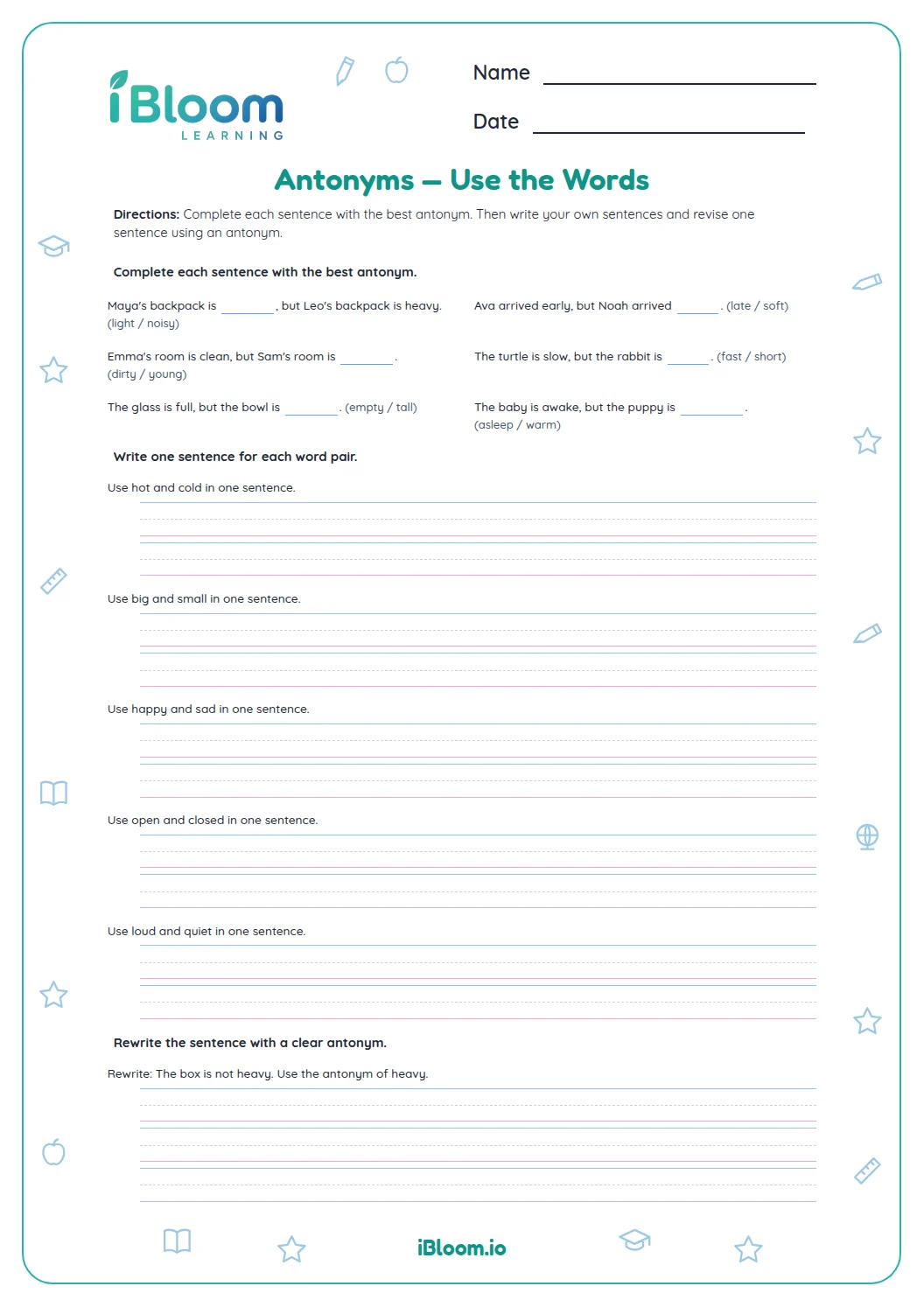
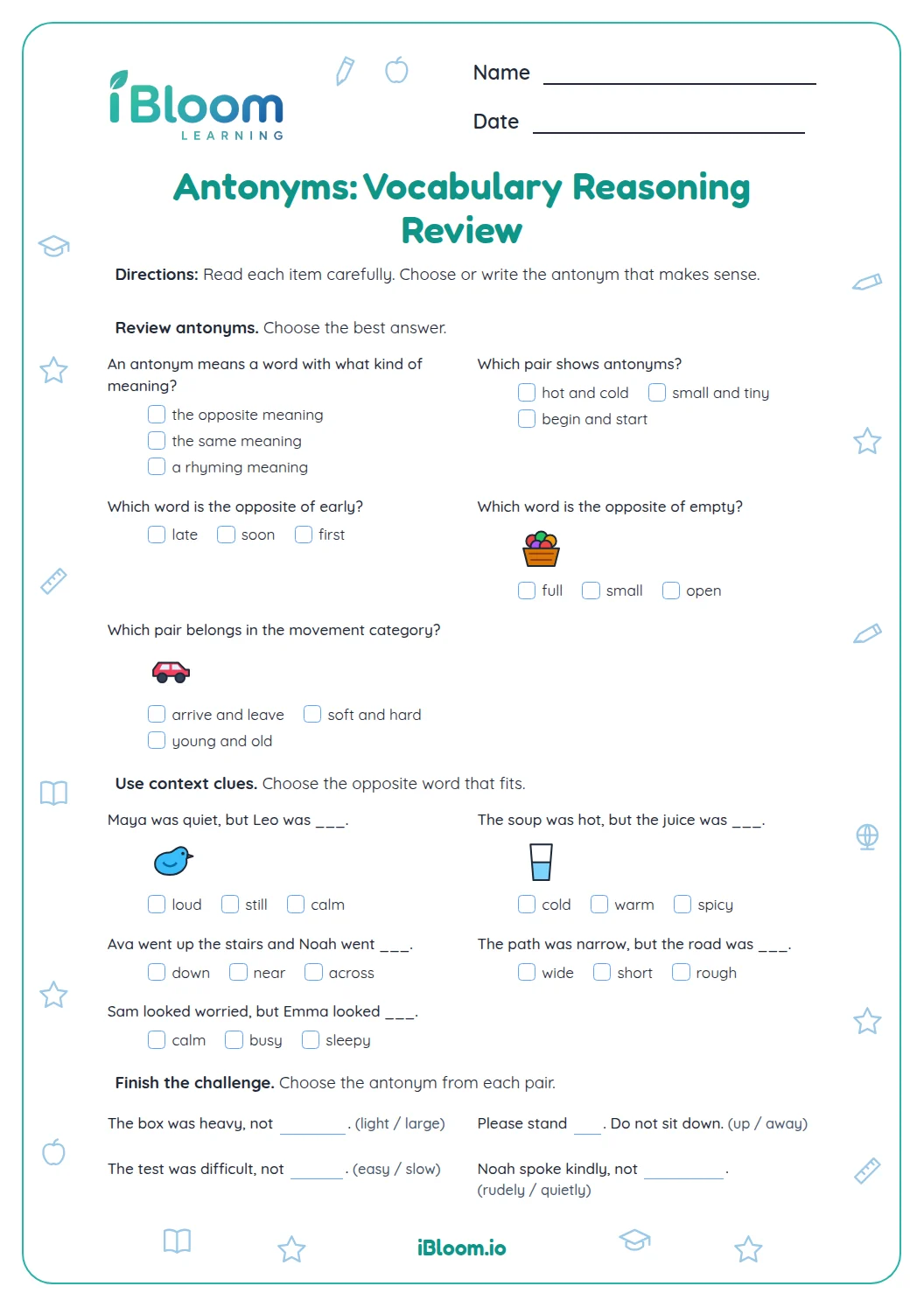
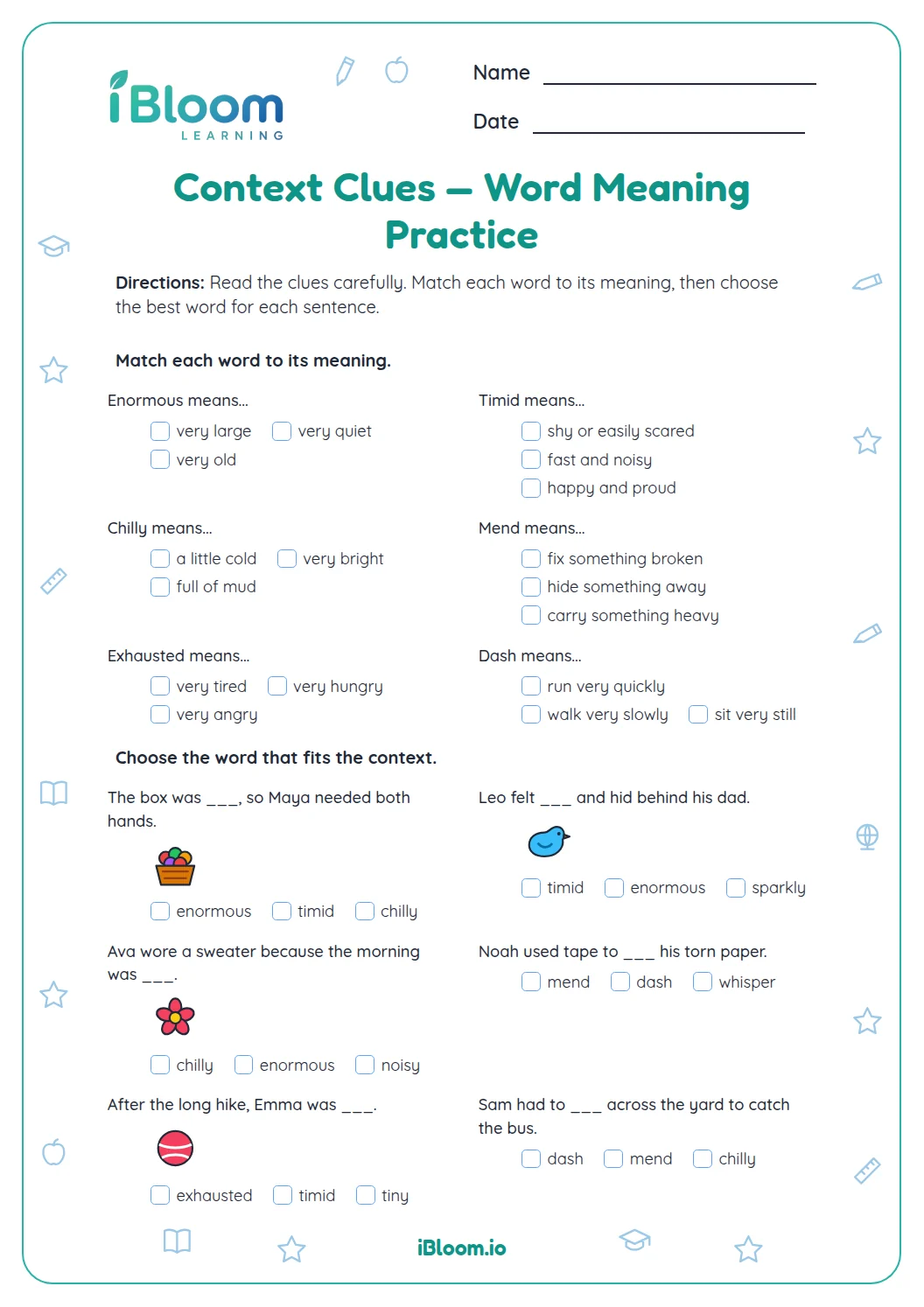
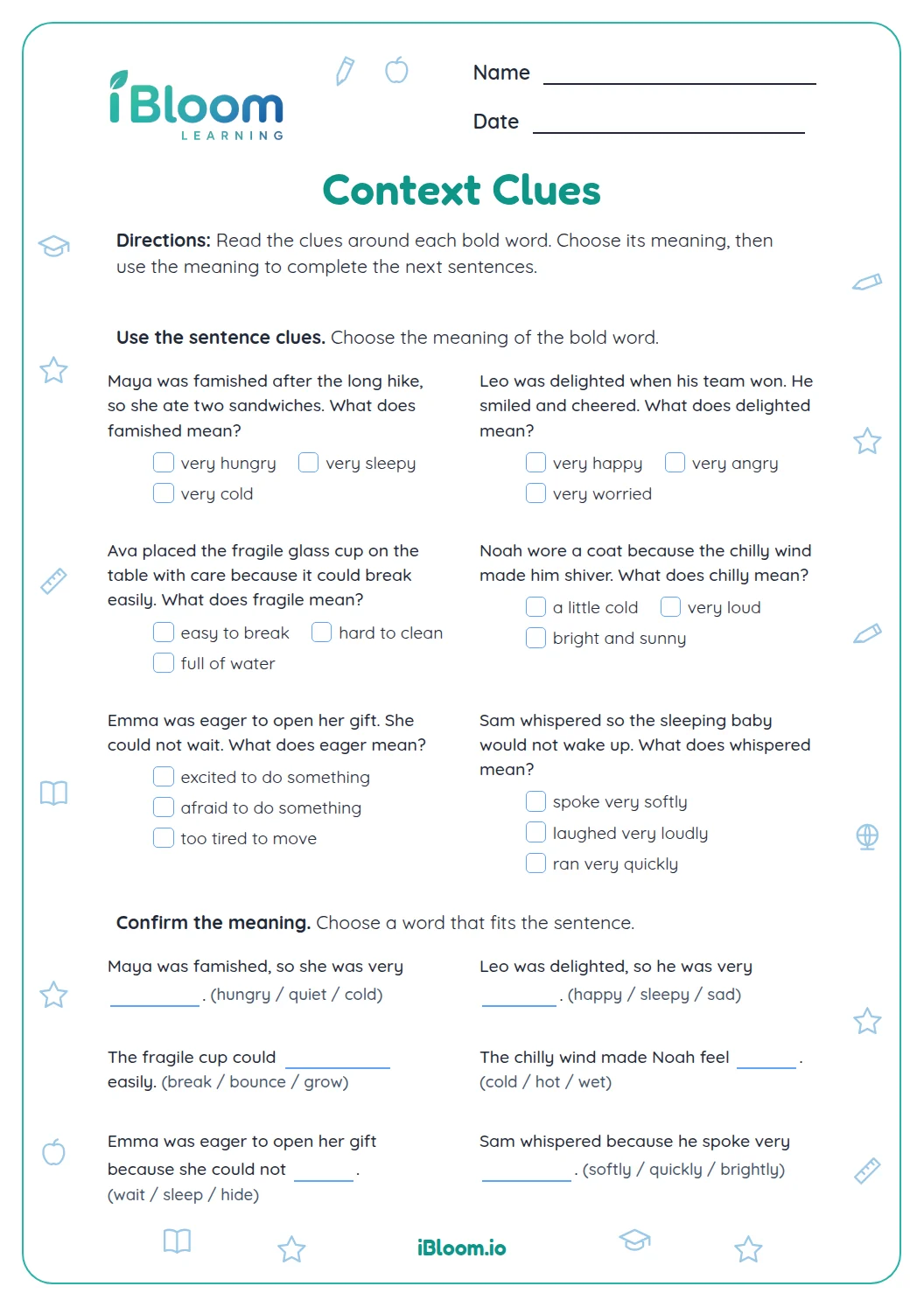
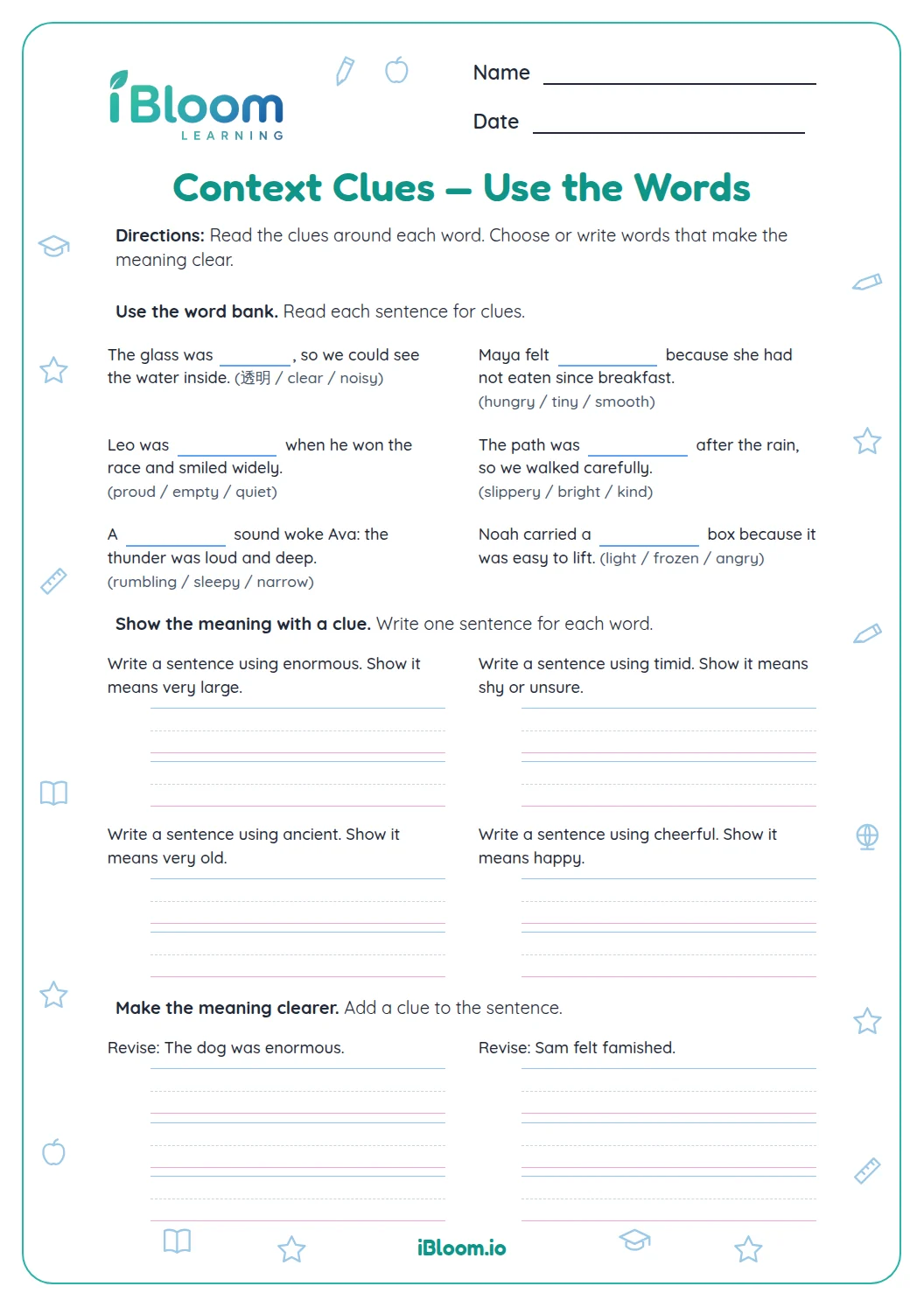
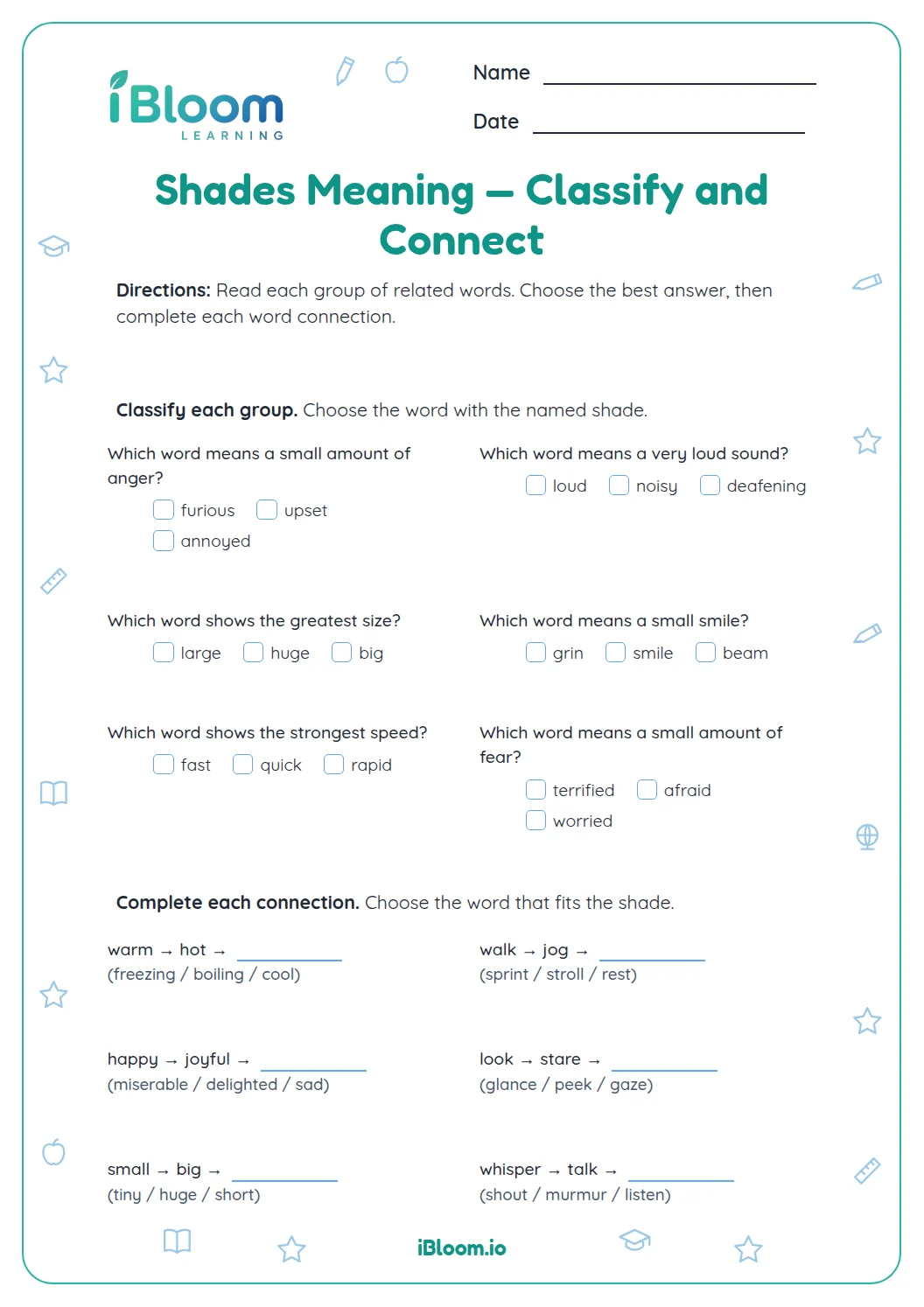
Choose antonyms, use sentence clues, and compare opposite word meanings. Includes 15 questions and a separate answer key. Learners choose opposites for individual words, complete sentences using context clues, and answer a final set of antonym choices. The 15 items use familiar contrasts such as hot and cold, then words such as ancient and modern. This printable practices CCSS L.2.5.
Aligned to L.2.5
What will children do?
Part A has five direct antonym choices, Part B has five sentence completions, and Part C has five more antonym choices.
How do you find an antonym?
Think about what a word means, then look for a word with the contrasting meaning. A warm day is the opposite of a cold day.
- 1The hallway was ___, but the library was quiet.
- 2The sentence contrasts the hallway with the quiet library.
- 3Choose noisy.
Why read the whole sentence?
A word can have more than one meaning, so the sentence helps narrow down the right opposite. Read the words before and after the blank to identify the idea being contrasted.
How to use this worksheet
- 1Read the target word and think of its meaning.
- 2Choose a word with the opposite meaning.
- 3For sentence items, look for contrast words such as but.
- 4Reread the completed sentence to check both ideas.
- 5Use the answer key to review any confusing word pairs.
Common mistakes and quick fixes
The mistake
Choosing a word that is related but not opposite.
The fix
Say both words aloud and check that their meanings contrast.
The mistake
Picking a synonym instead of an antonym.
The fix
Ask whether the pair means nearly the same thing or opposite things.
The mistake
Ignoring a sentence clue such as but.
The fix
Use the contrast in the sentence, then reread it with your choice.
Common Core alignment
This worksheet gives students direct practice with antonyms.
Demonstrate understanding of word relationships and nuances in word meanings.
On this sheet: The numbered activities directly practice this skill.
Show the official wordingHide the official wording
Demonstrate understanding of word relationships and nuances in word meanings.
What to practice next
Further reading
Questions parents and teachers ask
What kind of antonym practice is on the page?
The 15 questions mix direct word opposites with sentence clues. Learners choose opposites for hot, empty, and smooth, complete contrasts in short sentences, and finish with words such as begin, borrow, and wide. Invite learners to explain the contrast in their own words.
Which grade is this antonym worksheet for?
It is designed for Grade 2. Most prompts use familiar everyday words, and short sentences help learners notice how opposite meanings work in context. A few final items extend practice to words such as ancient and modern. Invite learners to explain the contrast in their own words.
How many antonym questions are there?
There are 15 questions in three parts, with five items in each part. The first and third parts ask for a word’s opposite; the middle part asks learners to use a sentence clue. The answer key is two pages. Invite learners to explain the contrast in their own words.
How can a learner use context to choose an antonym?
Look for a contrast in the sentence. In “The hallway was ___, but the library was quiet,” but signals an opposite idea, so noisy completes the sentence. Then reread the sentence to make sure both sides make sense. Invite learners to explain the contrast in their own words.
Does the answer key include the answers?
Yes. The separate key gives the selected word for every question. For the sentence items, learners can reread the full sentence with the chosen word to check that the contrast is clear. Invite learners to explain the contrast in their own words.
How long should the practice take?
About 15 minutes is a useful estimate for these 15 short choices. Reviewing why a pair has opposite meanings, especially when a sentence provides the clue, may take a little longer. Invite learners to explain the contrast in their own words.