




About this worksheet
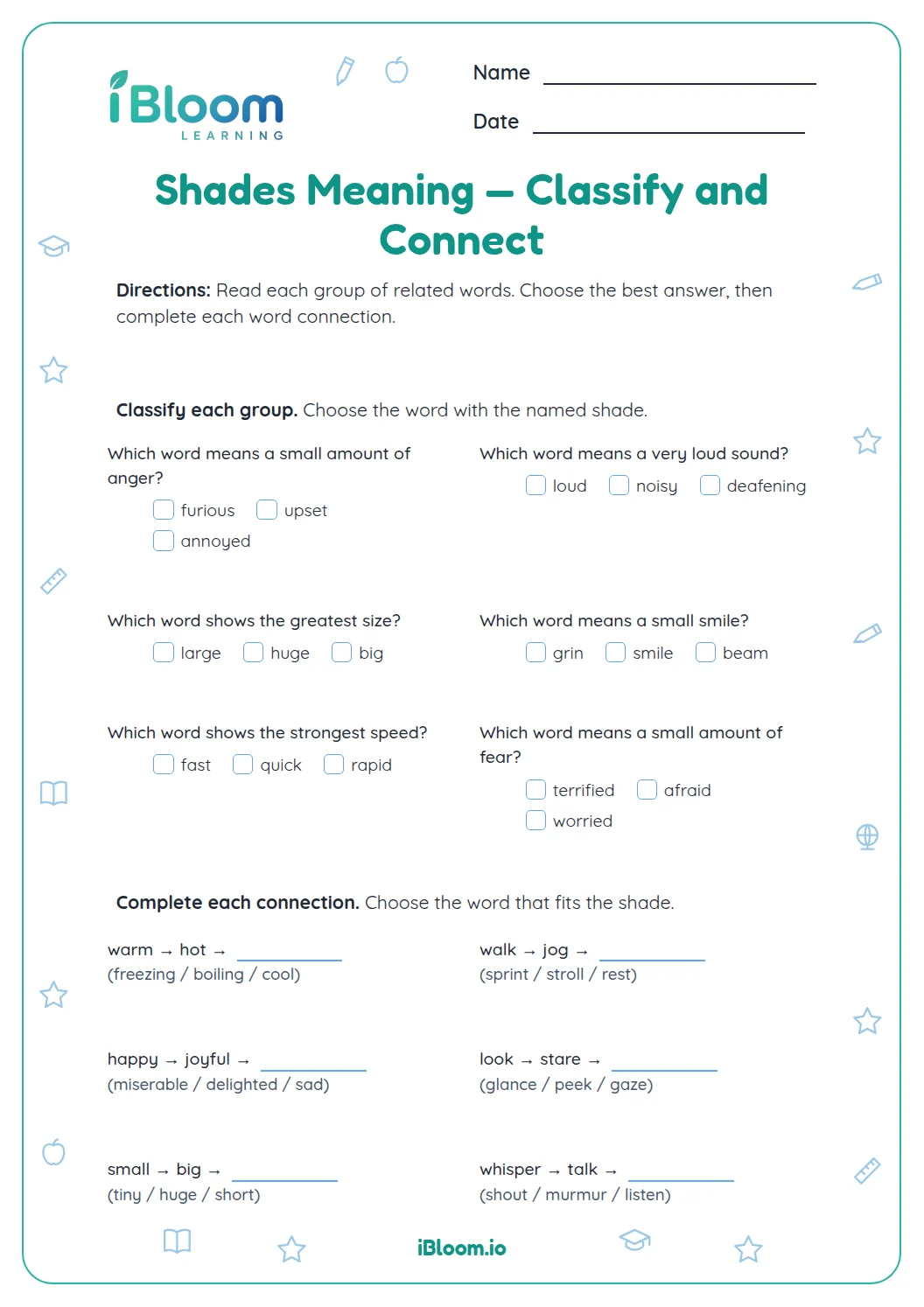
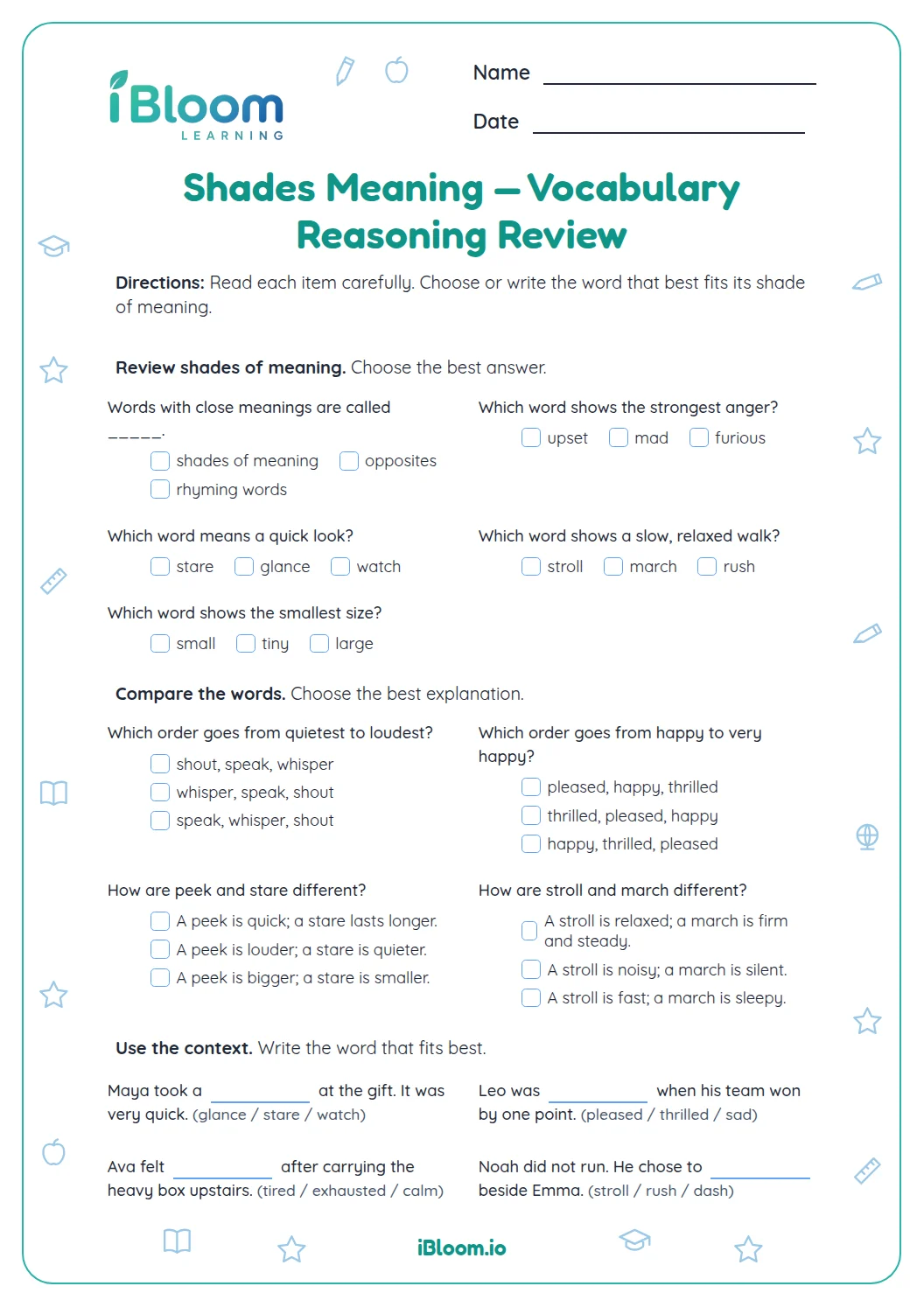
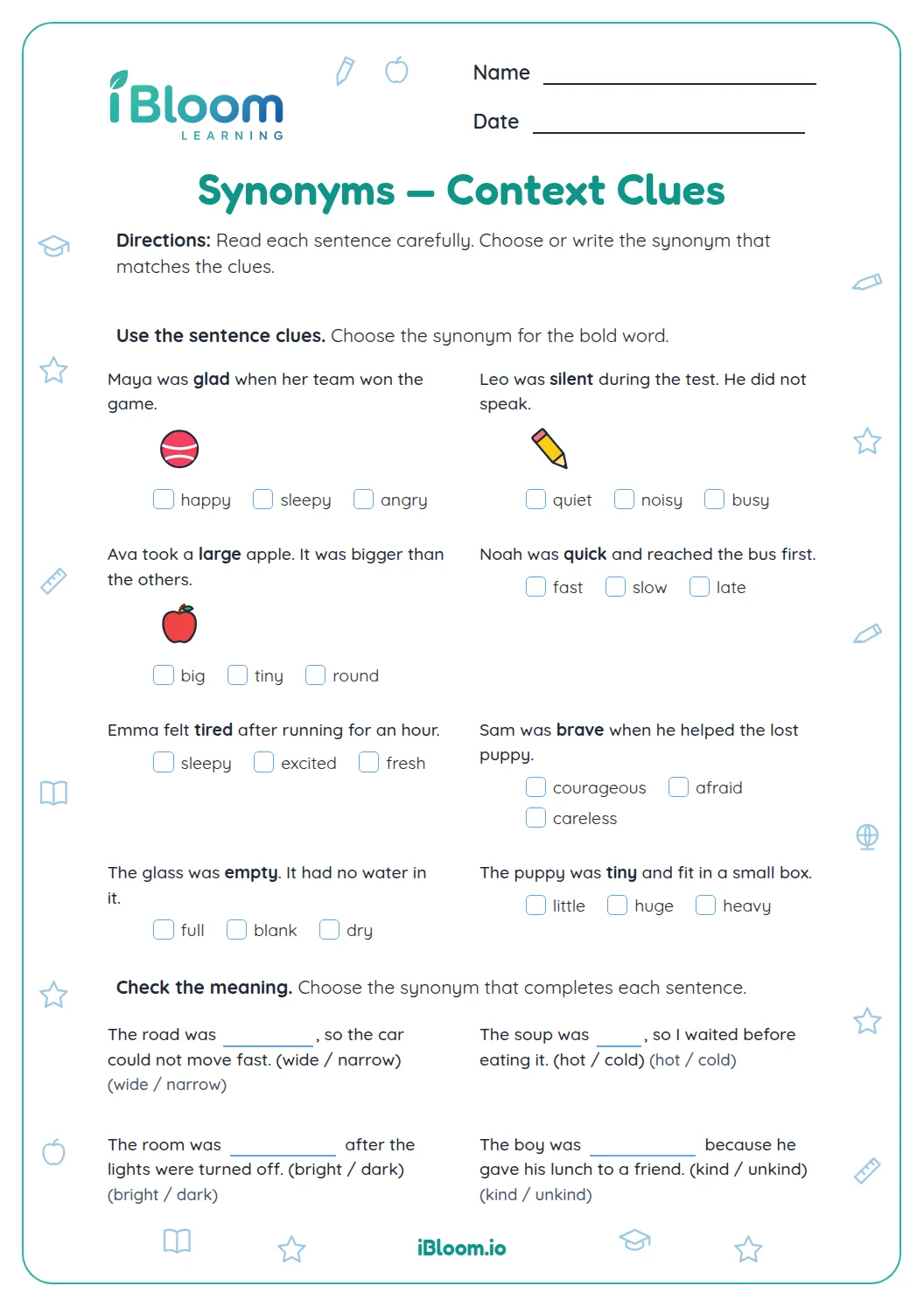
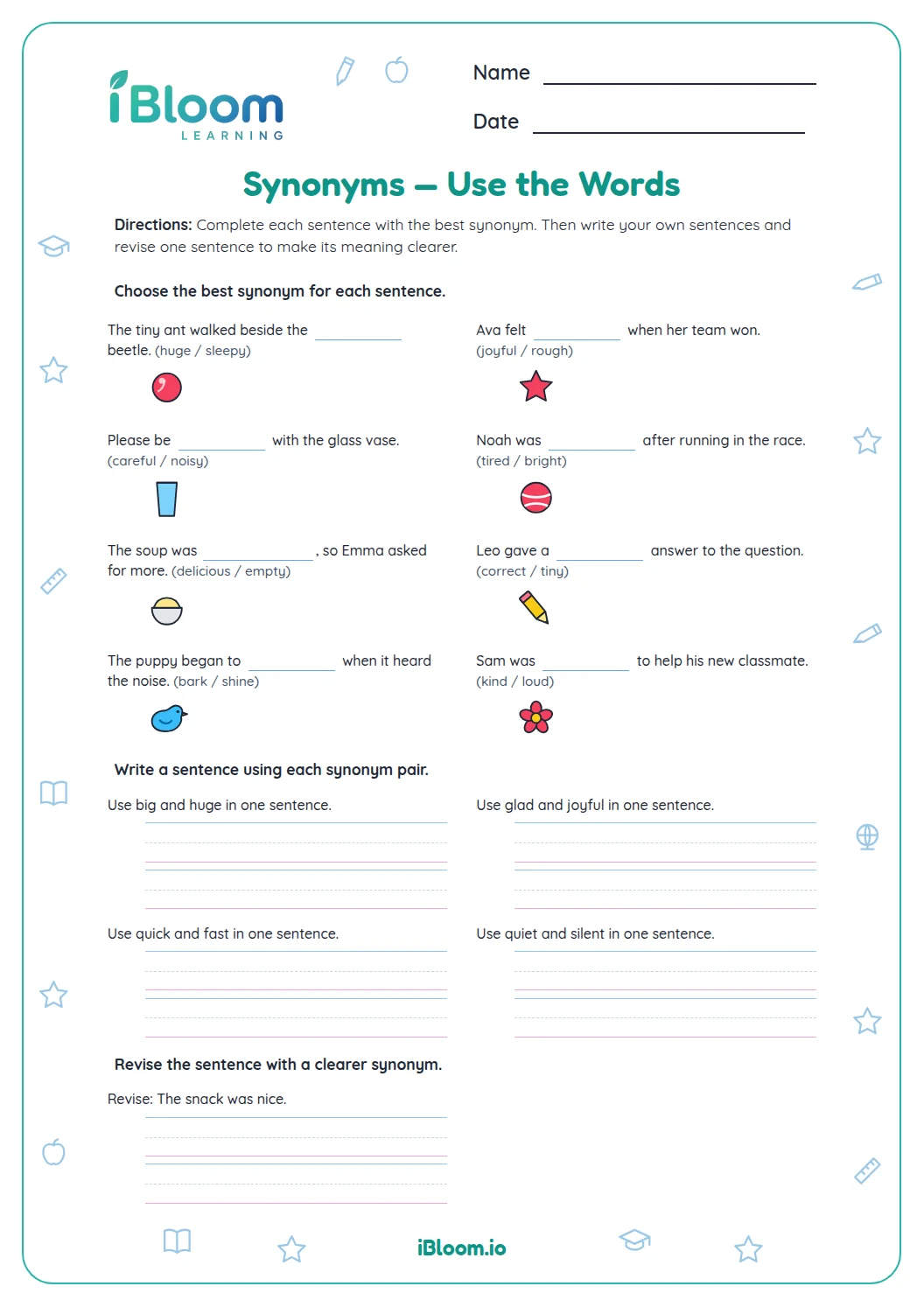
This Grade 2 vocabulary worksheet explores shades of meaning: how related words can express a milder or stronger idea. Students choose words that fit clues, complete comparisons, and generate related words in three short writing prompts. The work aligns with Common Core Language standard L.2.5, understanding word relationships and nuances in meaning. The answer key includes sample responses for open-ended items.
Aligned to L.2.5
What are shades of meaning?
Shades of meaning are small differences in strength among related words. Tiny, small, and little all describe size, but tiny suggests a very small size. Drizzle and pour both describe rain, but they suggest different amounts.
The clues on this worksheet make the intended strength clear, so students can compare words without relying on a single fixed ranking in every situation.
- 1Which word best describes a very small mouse?
- 2The clue very small points to the strongest smallness word.
- 3Answer: tiny
How do students practice word intensity?
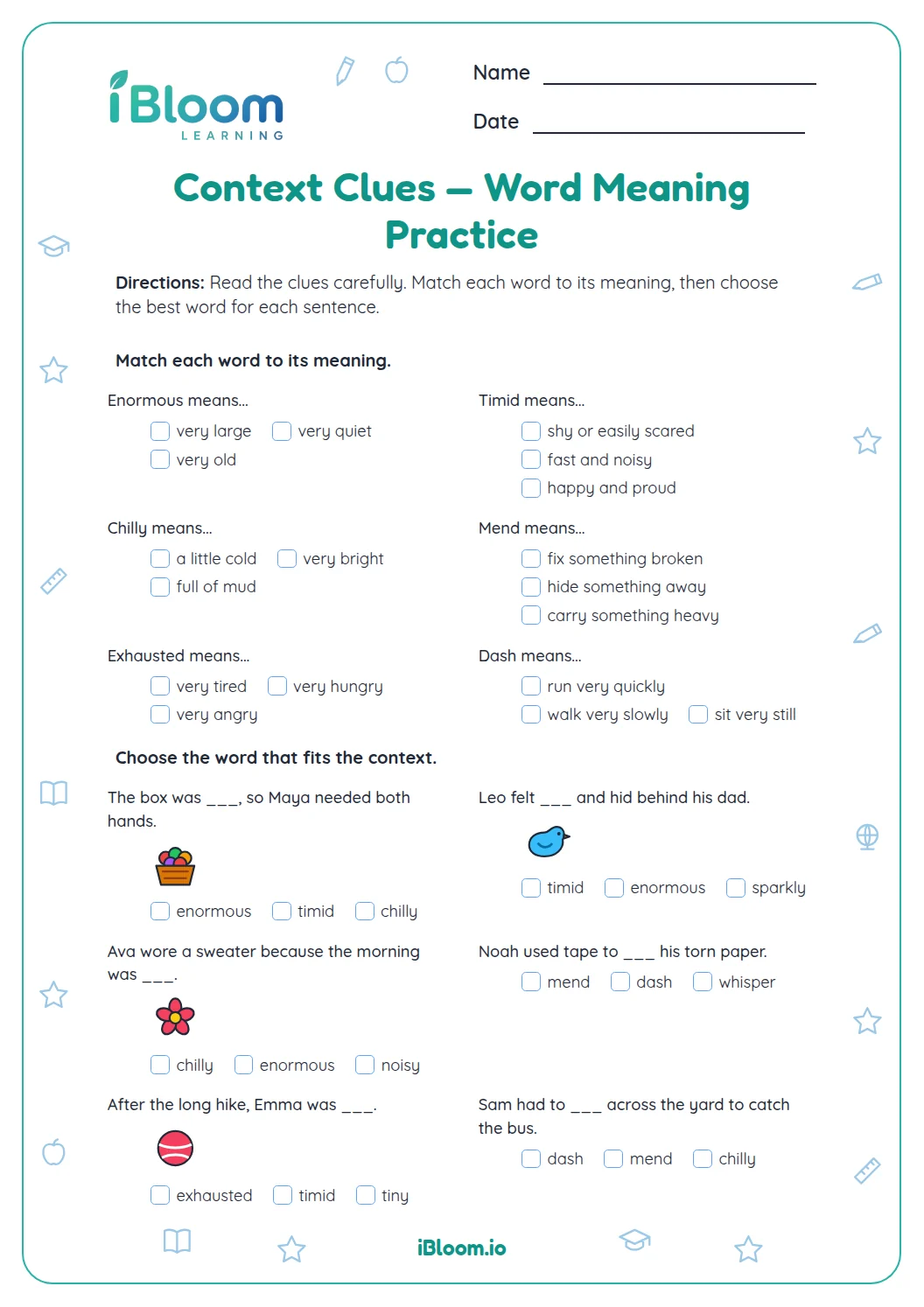
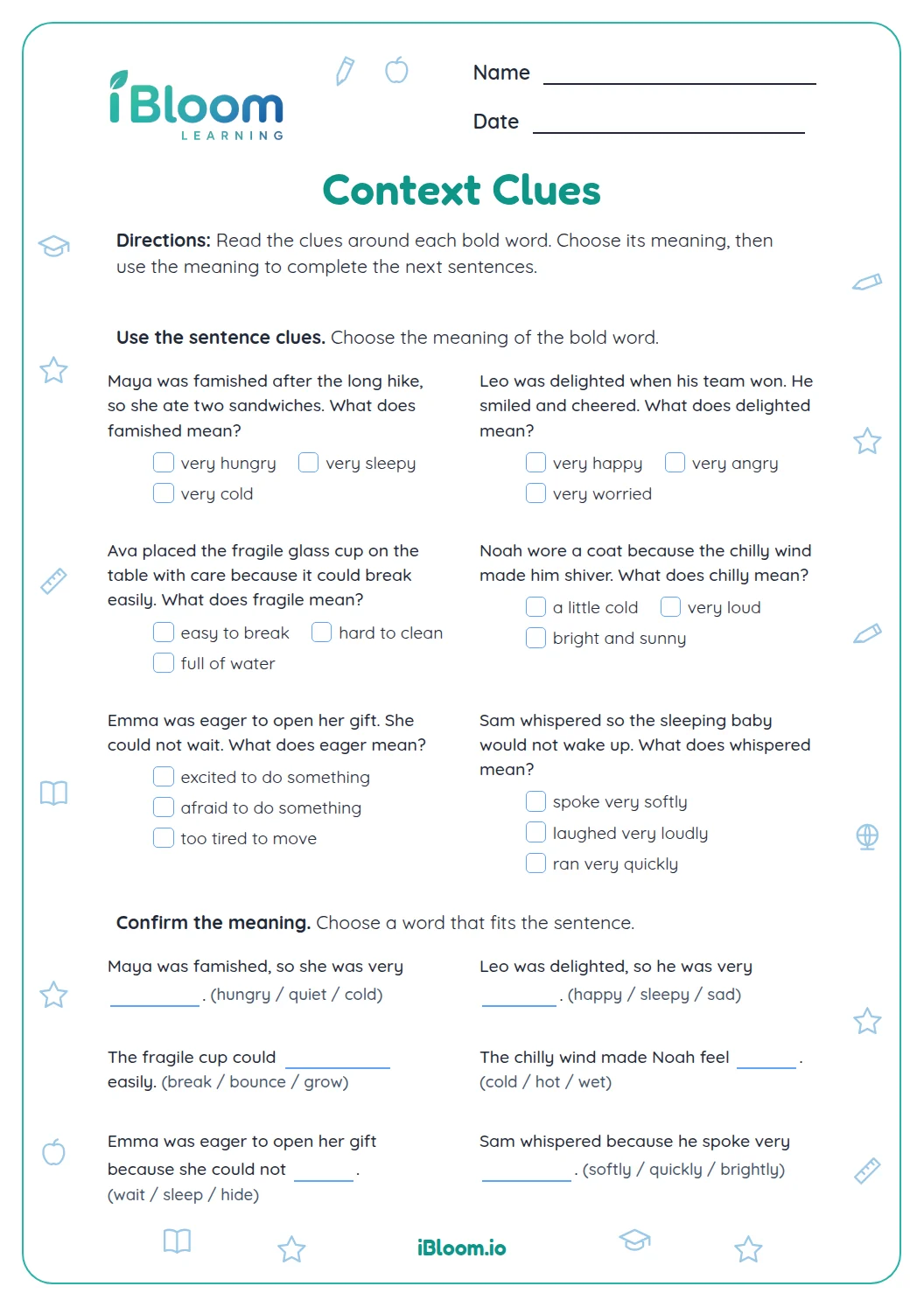
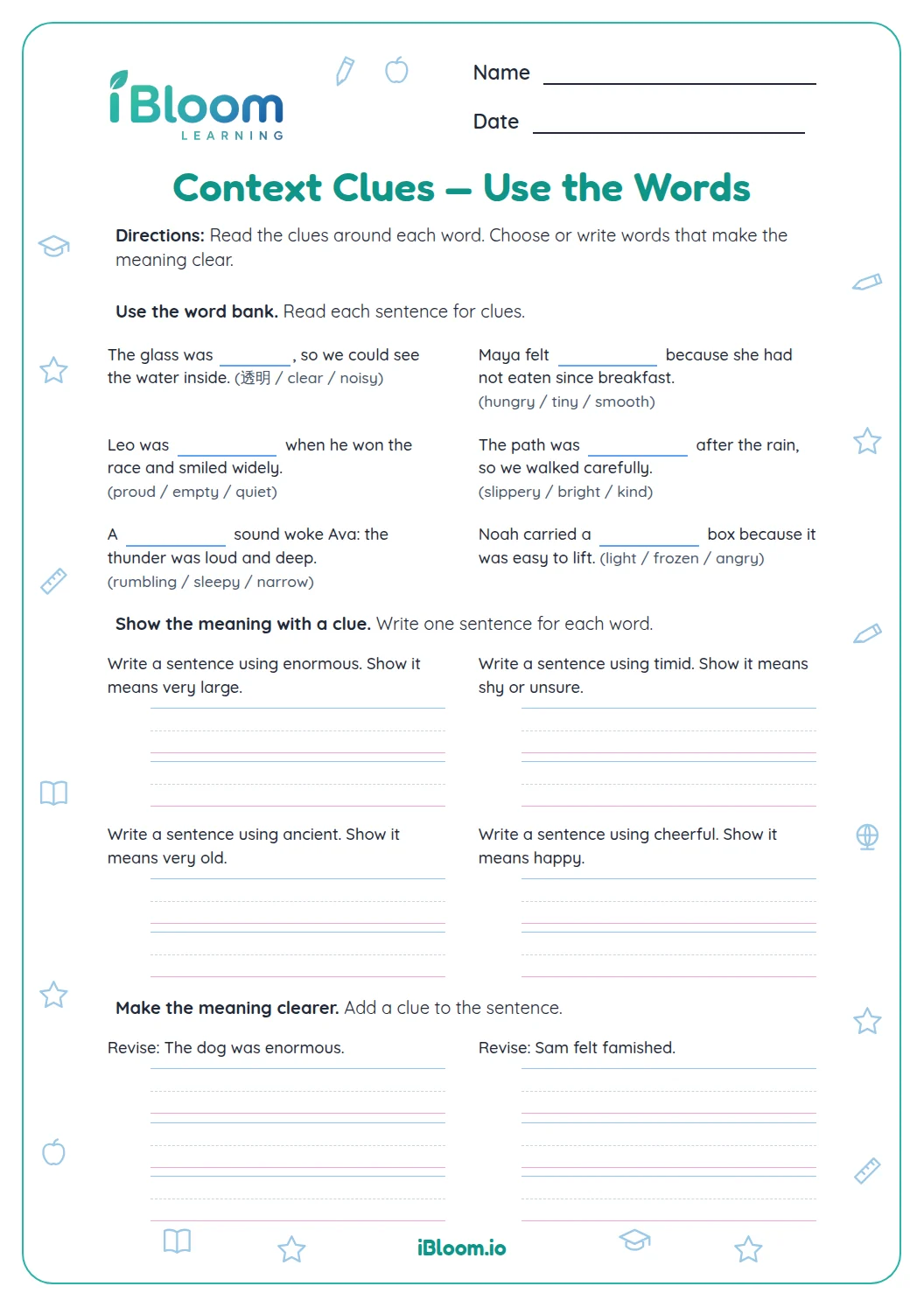
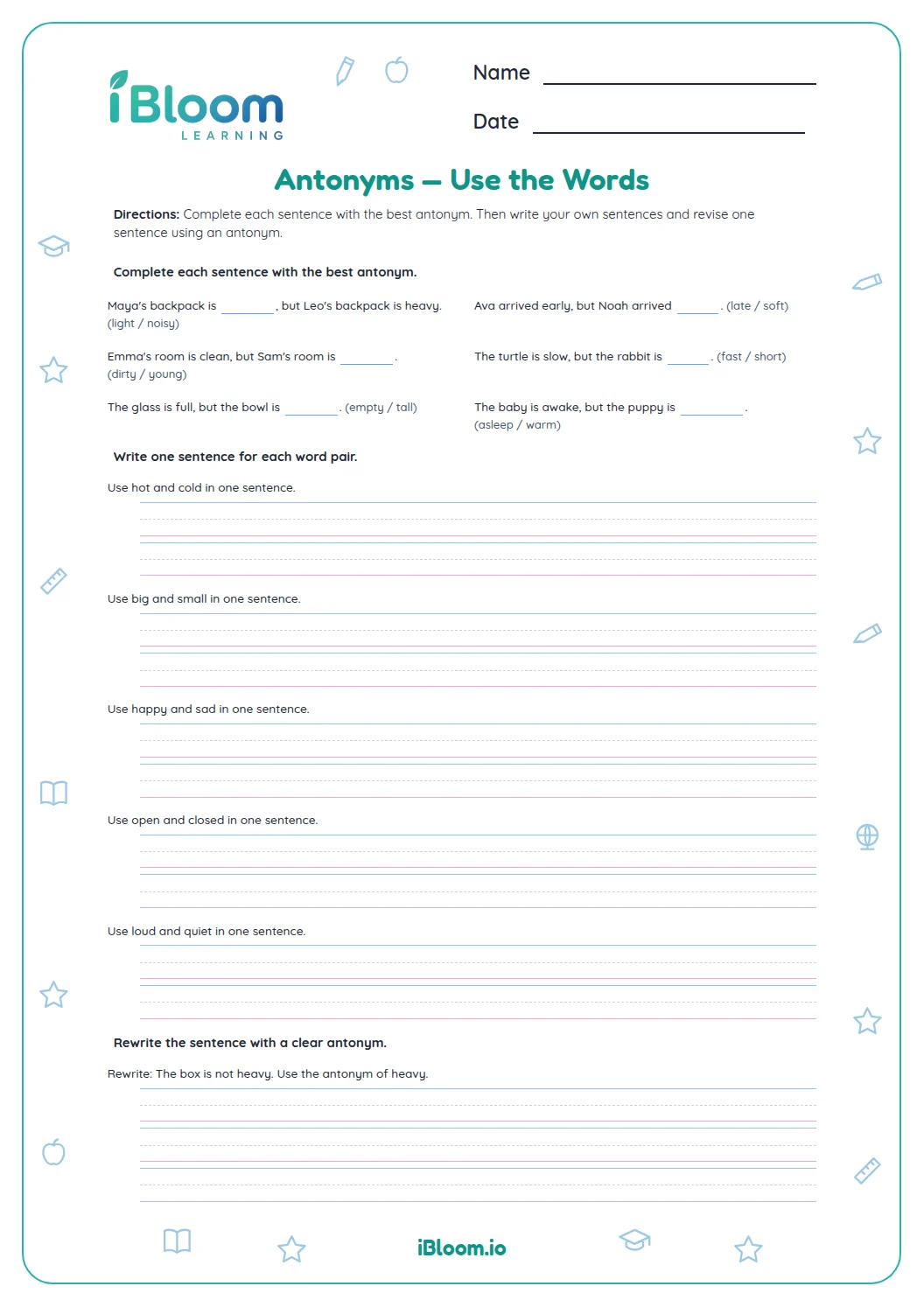
Part A matches six clues to the best word. Part B completes five comparisons with a related word. Part C asks students to make two mild-to-strong word pairs and write one sentence with a stronger shade.
How can families talk about word shades?
Pick familiar related words and place them in a sentence. Ask which word gives the strongest picture and what clue supports that choice. A child can also sort words from mild to strong, while remembering that context can change which word fits best.
How to use this worksheet
- 1Read the clue words carefully.
- 2Think of what each answer choice means.
- 3Choose the word with the strength named in the clue.
- 4For blanks, reread the sentence with your word added.
- 5For writing, give two related words or a sentence that shows a clear shade.
Common mistakes and quick fixes
The mistake
Choosing a word that is related but too mild.
The fix
Look for clues like very, a little, or soft to decide the strength.
The mistake
Assuming related words always have one fixed order.
The fix
Use the sentence clue; context helps decide which shade fits.
The mistake
Writing two unrelated words for a mild-to-strong prompt.
The fix
Choose words about the same quality, such as cool and freezing.
Common Core alignment
This worksheet gives children focused practice with a specific Common Core skill.
Compare related words and notice differences in meaning.
On this sheet: Students compare related words and choose or generate words that express different degrees of meaning.
Show the official wordingHide the official wording
Demonstrate understanding of word relationships and nuances in word meanings.
What to practice next
Make more practice
Further reading
Questions parents and teachers ask
What does “shade of meaning” mean?
A shade of meaning is a difference in strength between related words. Cool and freezing both describe cold, but freezing suggests a much colder feeling. Comparing examples helps children notice how one word can express more intensity. The difference is small, but it changes the picture a word creates.
Do related words always have one correct order?
The clue and sentence context matter. This sheet uses clues such as “very loud” and “a little cold” to help students choose the word with the intended strength. These clues make the comparison clear. Students can say each option aloud and notice the strength of its meaning.
What is an example of a mild and strong word pair?
Cool and freezing both describe cold, but freezing is stronger. Students can make similar pairs for feelings, size, sound, or movement. A sentence can help show which word expresses the stronger idea. For instance, thrilled is stronger than glad when describing happiness.
How many questions are on this worksheet?
There are 14 questions in three parts: six multiple-choice clues, five fill-in comparisons, and three short writing prompts. The key gives direct answers and sample ideas for the open-ended responses. Students should check that each generated pair describes the same idea.
How should I help if my child is unsure?
Read the sentence together and notice degree words such as very, little, or soft. Have the child test a possible word in the sentence and explain how it fits the clue. Comparing choices aloud can make the difference easier to hear.