


About this worksheet
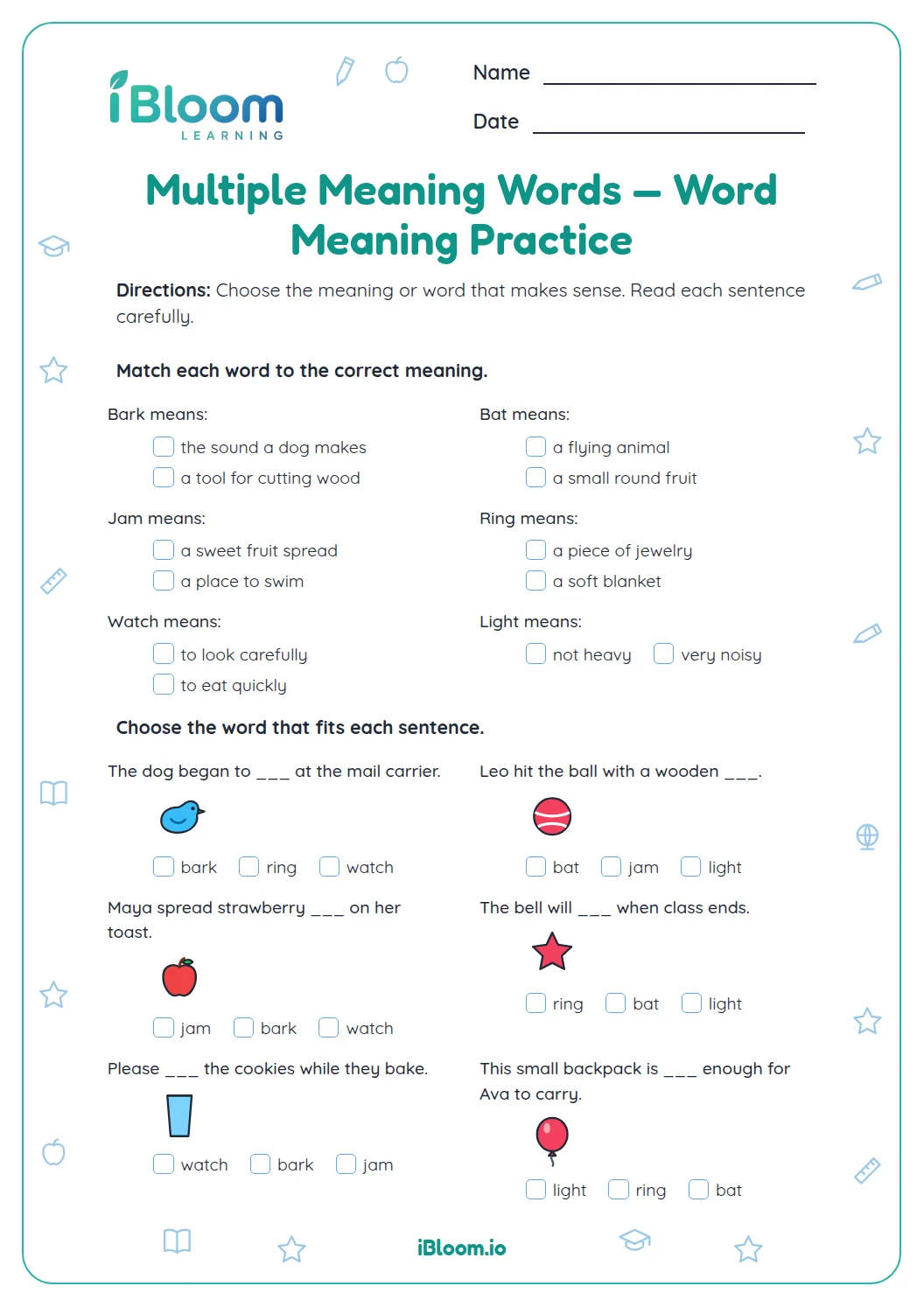
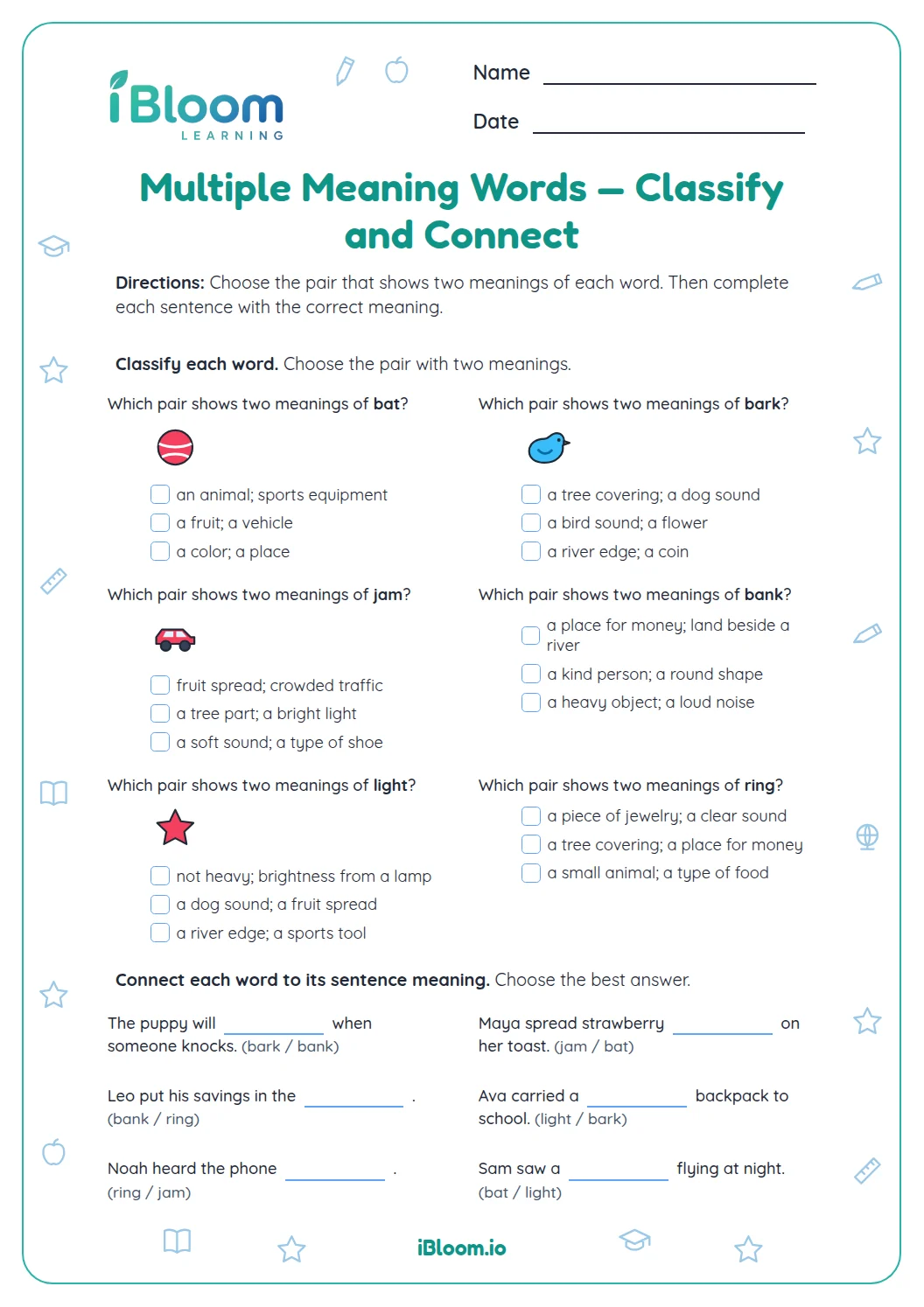
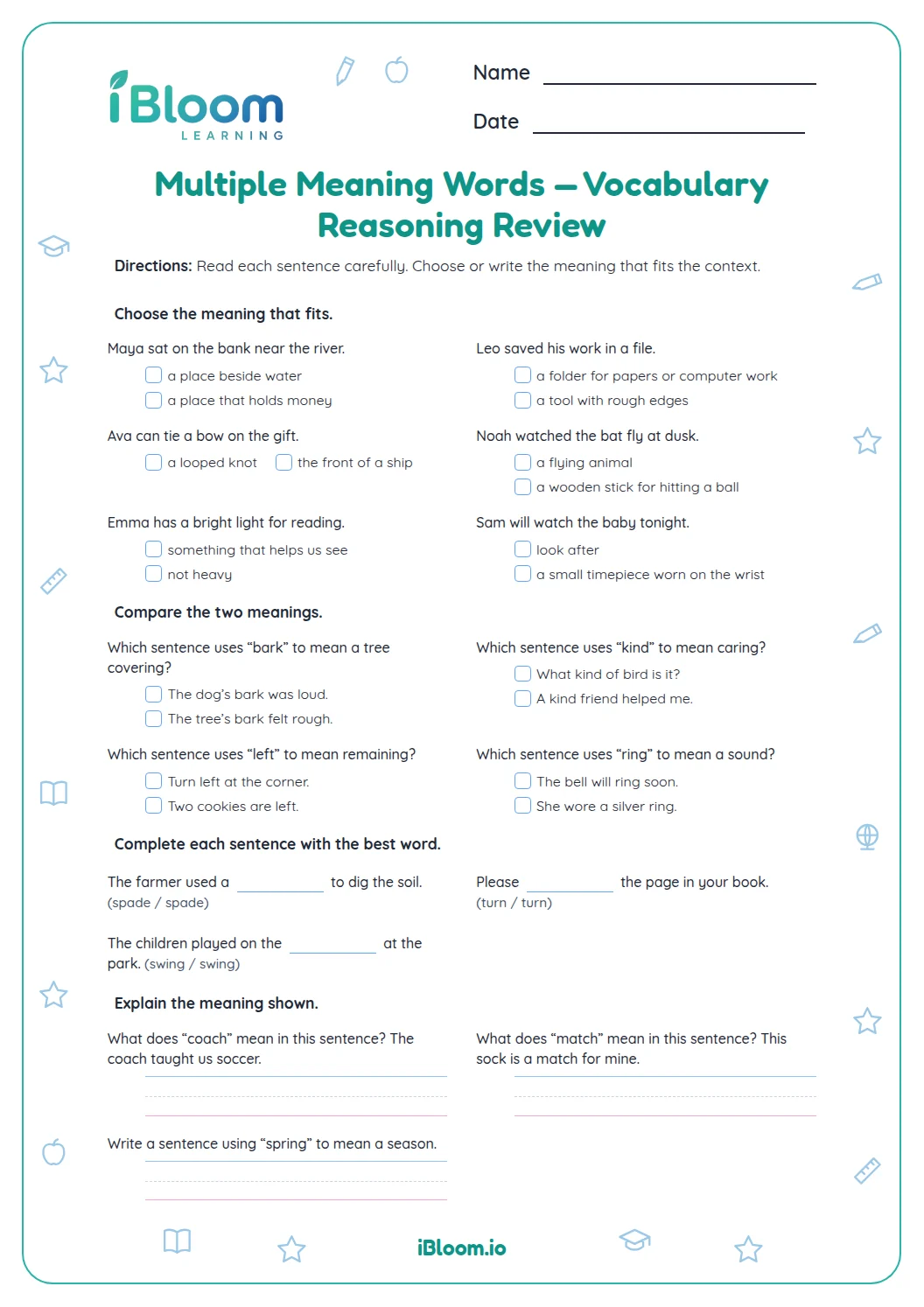
This Grade 2 vocabulary worksheet builds flexible understanding of multiple-meaning words. Children first use sentence clues to choose the meaning that fits, then write pairs of sentences that show two meanings for a word. The practice supports CCSS L.2.4 and includes 16 questions in two parts, followed by a separate answer key.
Aligned to L.2.4
How can a sentence show a word’s meaning?
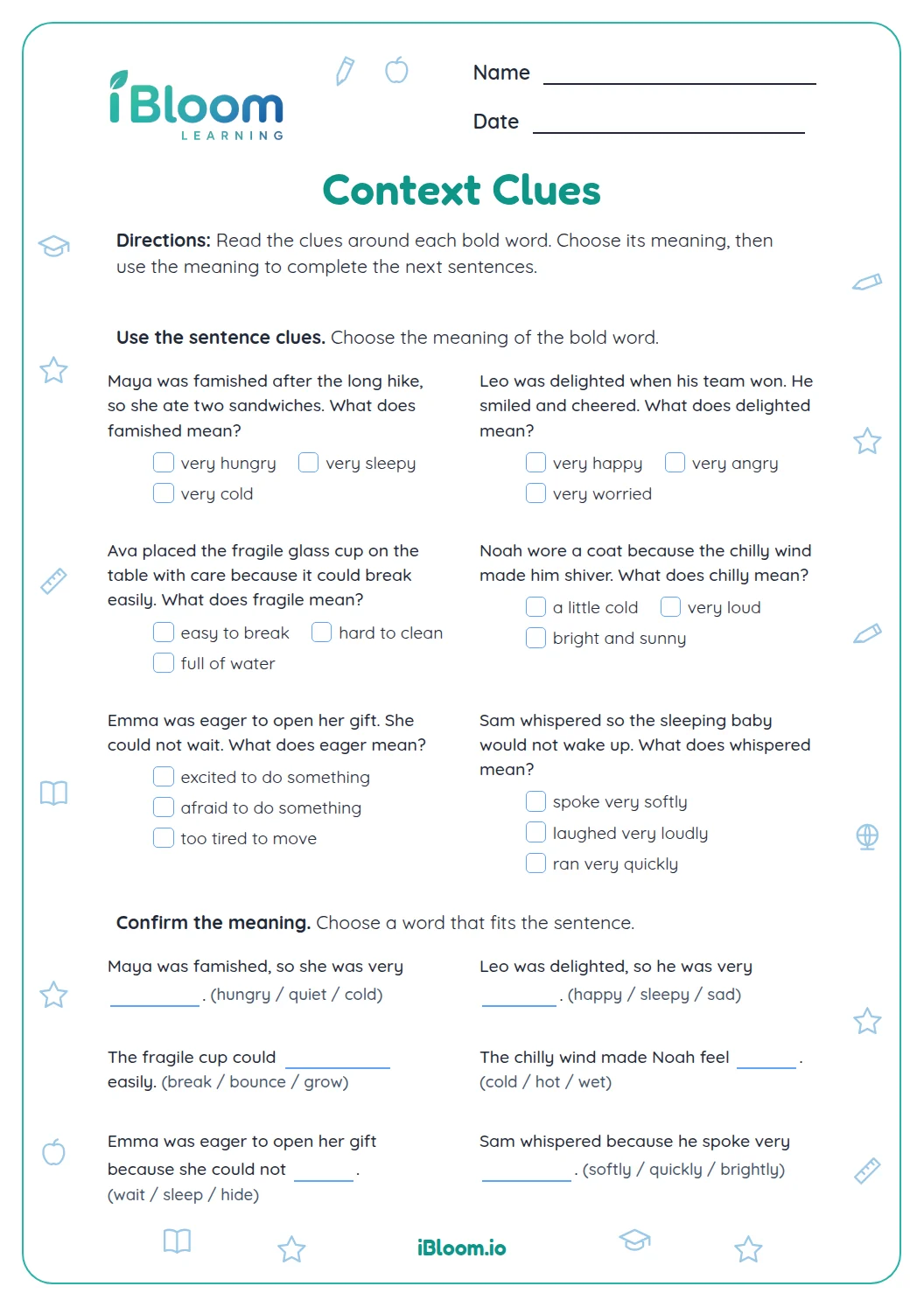
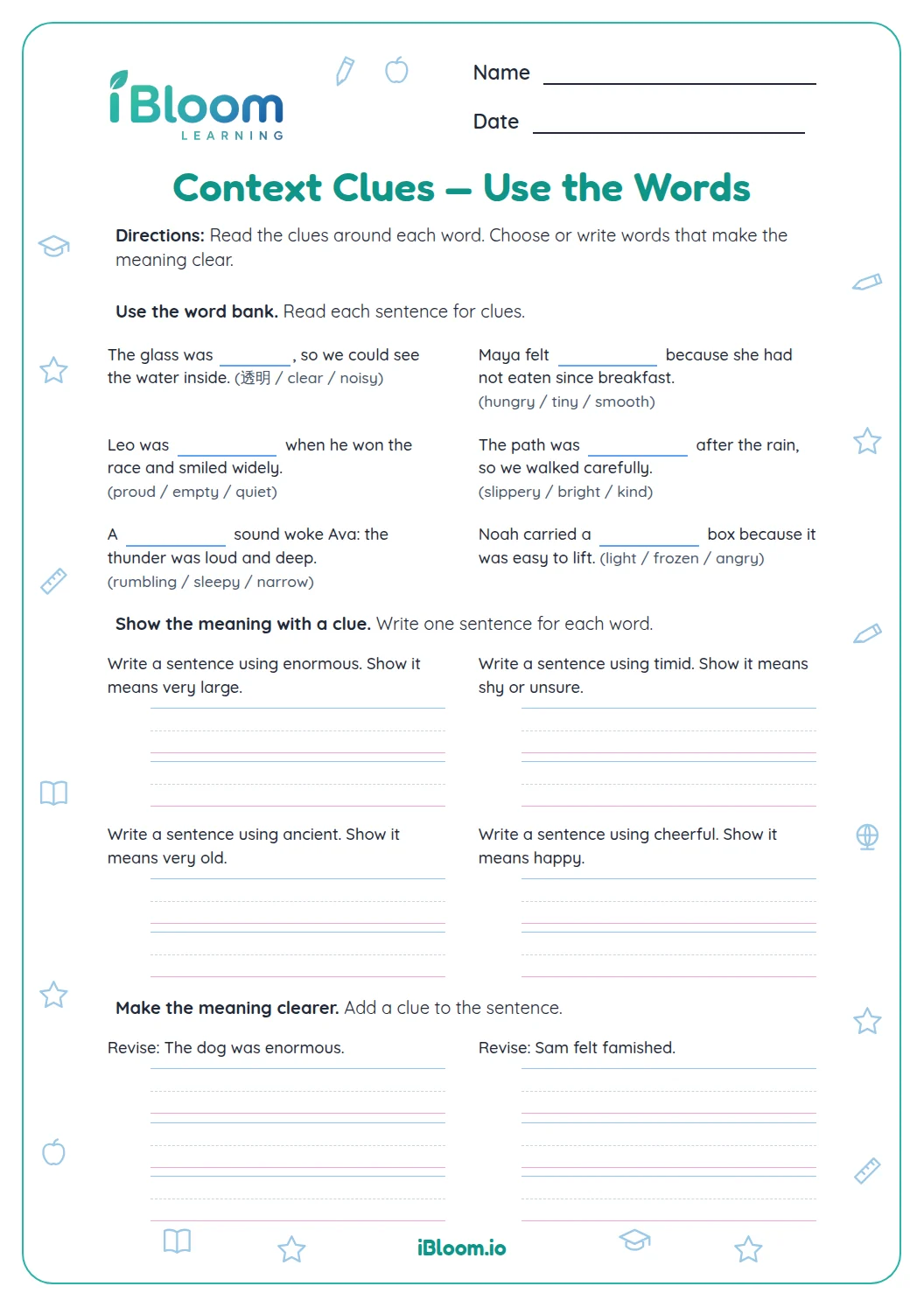
A word can have more than one meaning. Nearby words, actions, and the topic help a reader decide which meaning fits. In “The bird sat on a branch,” bird and sat point to a part of a tree.
Read the entire sentence before choosing. Then test each meaning in context.
How do children show two meanings?
Part A uses ten sentences with a multiple-meaning word in context. Part B asks children to write two short sentences for six words, one sentence for each listed meaning. The answer key gives the Part A choices and sample sentence pairs.
What is one example from the sheet?
For question 3, “We sat by the river bank” gives the clue river. The word bank means the edge of a river in this sentence.
How to use this worksheet
- 1Read the entire sentence aloud.
- 2Underline or say the clue words.
- 3Try each meaning in the sentence.
- 4For Part B, write one clear sentence per meaning.
- 5Use the key to check meanings and discuss sentence choices.
Common mistakes and quick fixes
The mistake
Choosing a familiar meaning without reading context.
The fix
Reread the entire sentence and point to a clue word.
The mistake
Using only one meaning in the Part B pair.
The fix
Check that each sentence shows a different listed meaning.
The mistake
Writing a sentence where the meaning is unclear.
The fix
Add a clue, such as a person or action, that makes the meaning clear.
Common Core alignment
This practice connects each question to a specific grade-level reading or math skill.
Multiple meaning words.
On this sheet: Multiple meaning words is practiced throughout the worksheet.
Show the official wordingHide the official wording
Determine or clarify the meaning of unknown and multiple-meaning words and phrases based on grade 2 reading and content, choosing flexibly from an array of strategies.
What to practice next
Make more practice
Further reading
Questions parents and teachers ask
What is a multiple-meaning word?
It is a word that has more than one meaning. For example, bank can mean land beside a river or a place for money. This worksheet uses sentence clues to choose a meaning in Part A, then asks children to use both meanings in Part B.
How many questions are on the worksheet?
There are 16 questions in two parts. Part A has ten multiple-choice questions about a word in context. Part B has six writing prompts; each asks for two sentences that show different meanings of the same word. The answer key includes flexible sample answers for the writing items.
Does the answer key give sample sentences?
Yes. The key identifies the intended meanings and gives a sample note for each sentence pair. Many different sentences can be correct, so check that each sentence clearly uses the intended meaning and that the two sentences demonstrate different meanings.
Can I read the questions aloud?
Yes. Reading a sentence aloud can help a child focus on meaning and context. Ask the child to explain which words were clues before selecting an answer. Then invite them to try reading the next sentence on their own.
What if both meanings seem possible?
Read the whole sentence again and test each meaning in place of the word. Ask which one fits the subject and action best. The Part A sentences include context such as “river” or “light bag” to make the intended meaning clear.