







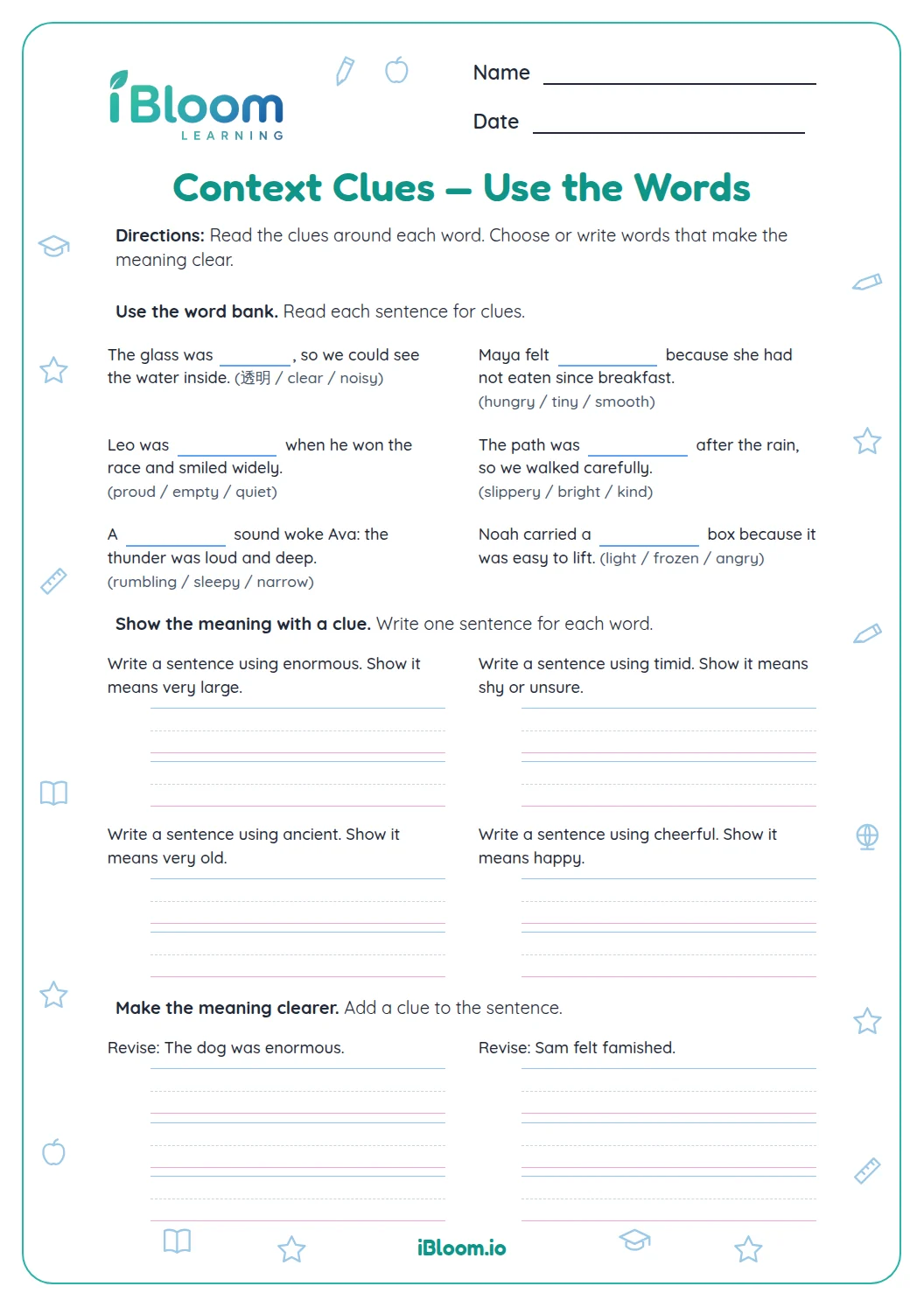


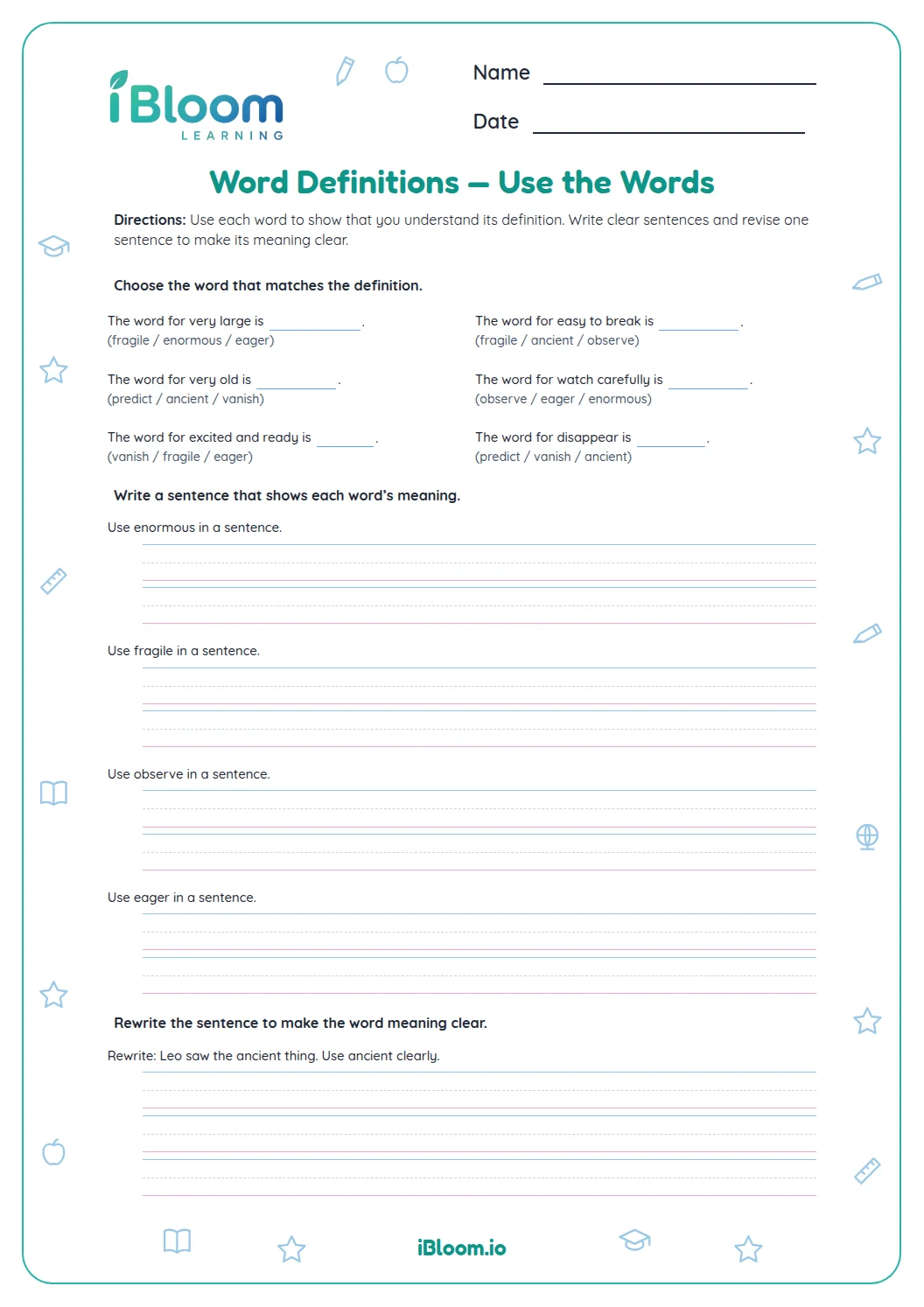
About this worksheet
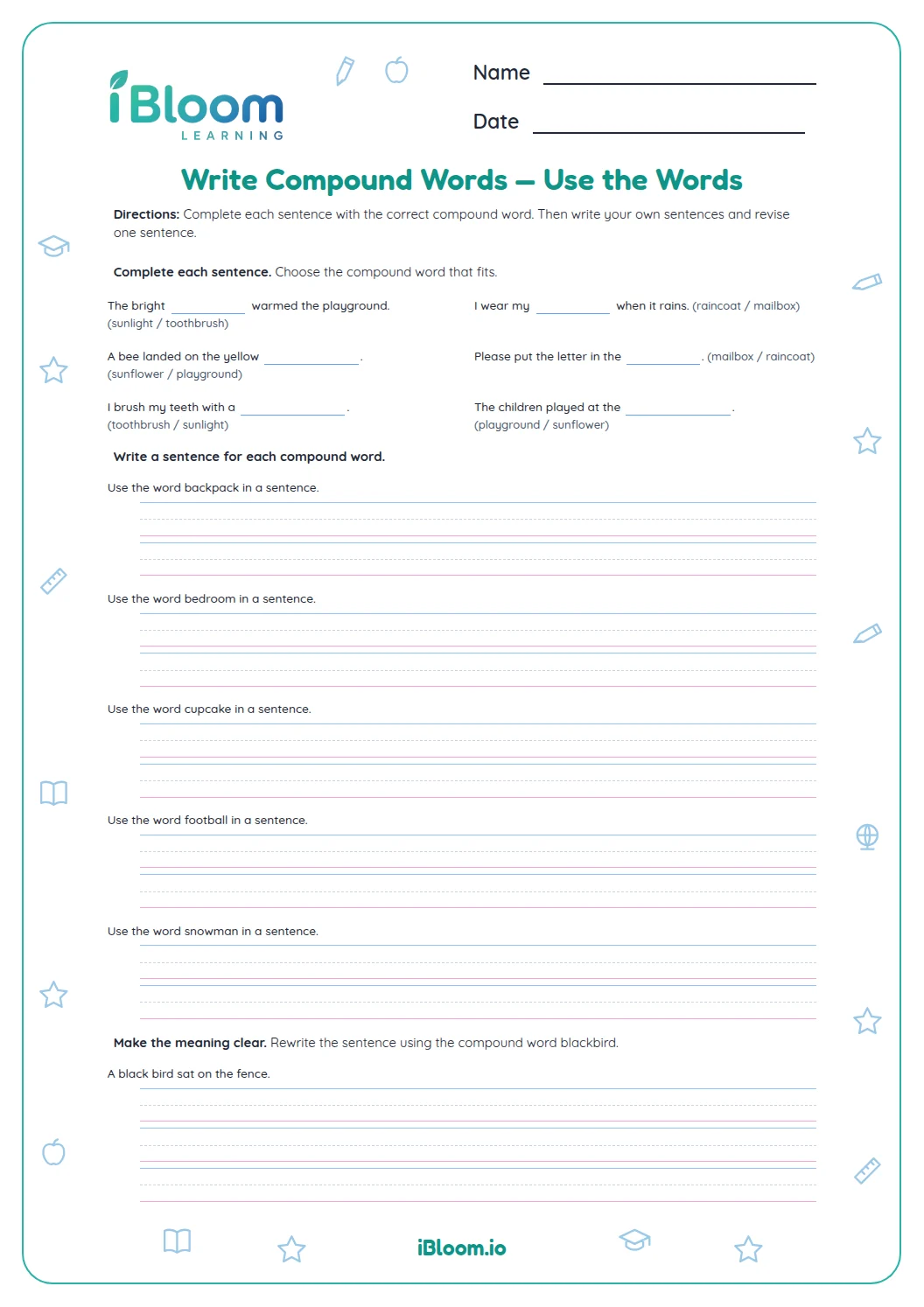
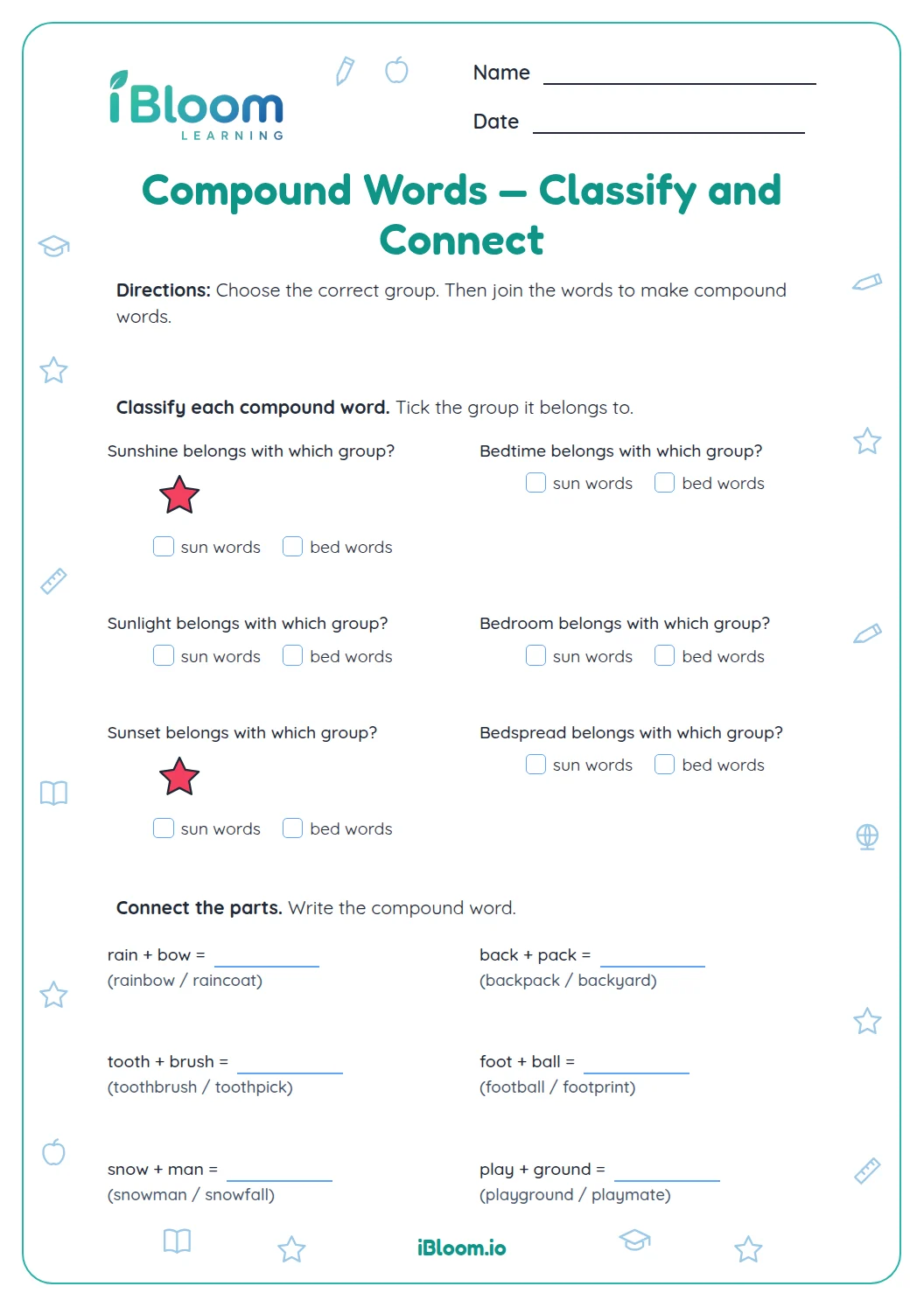
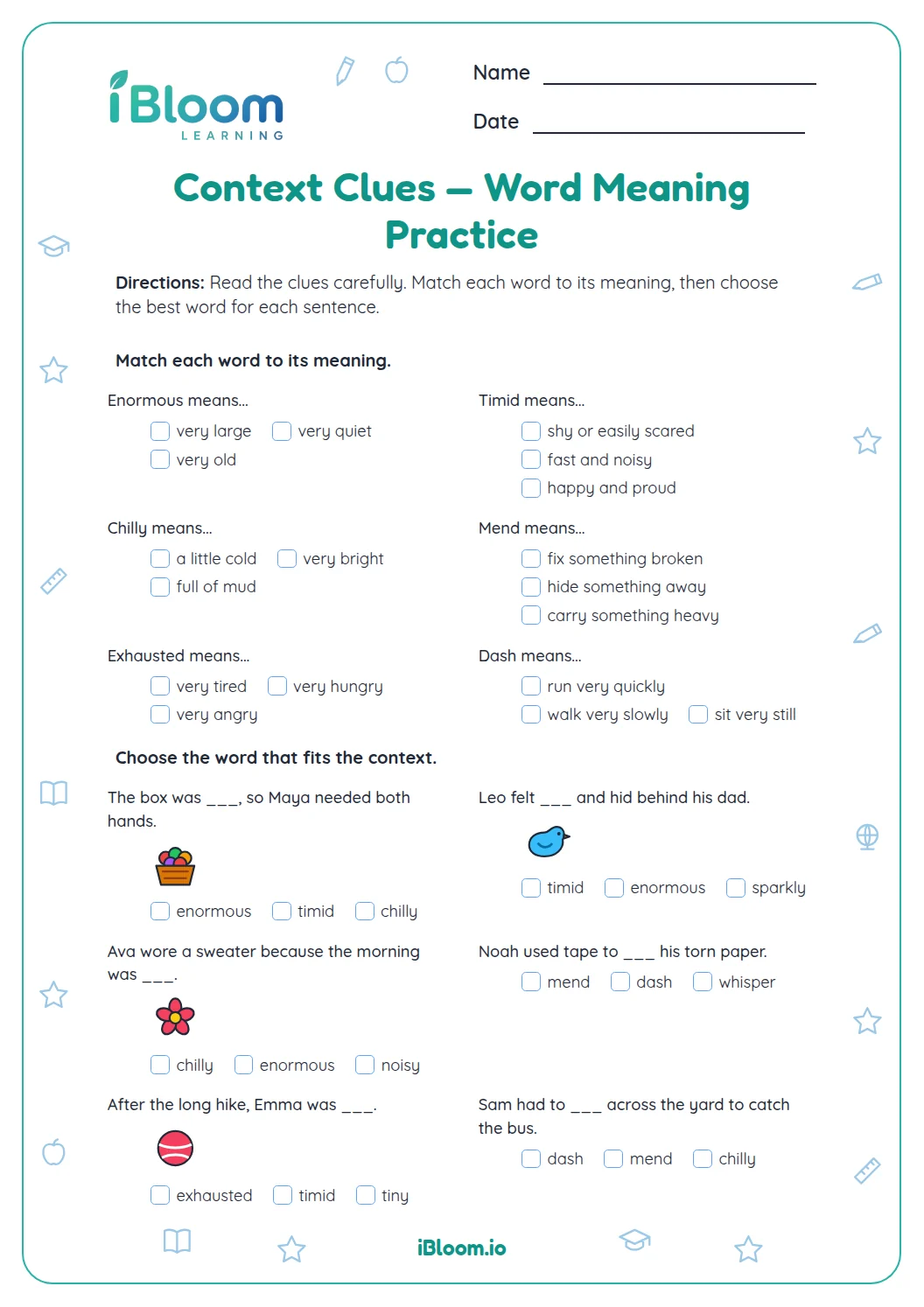
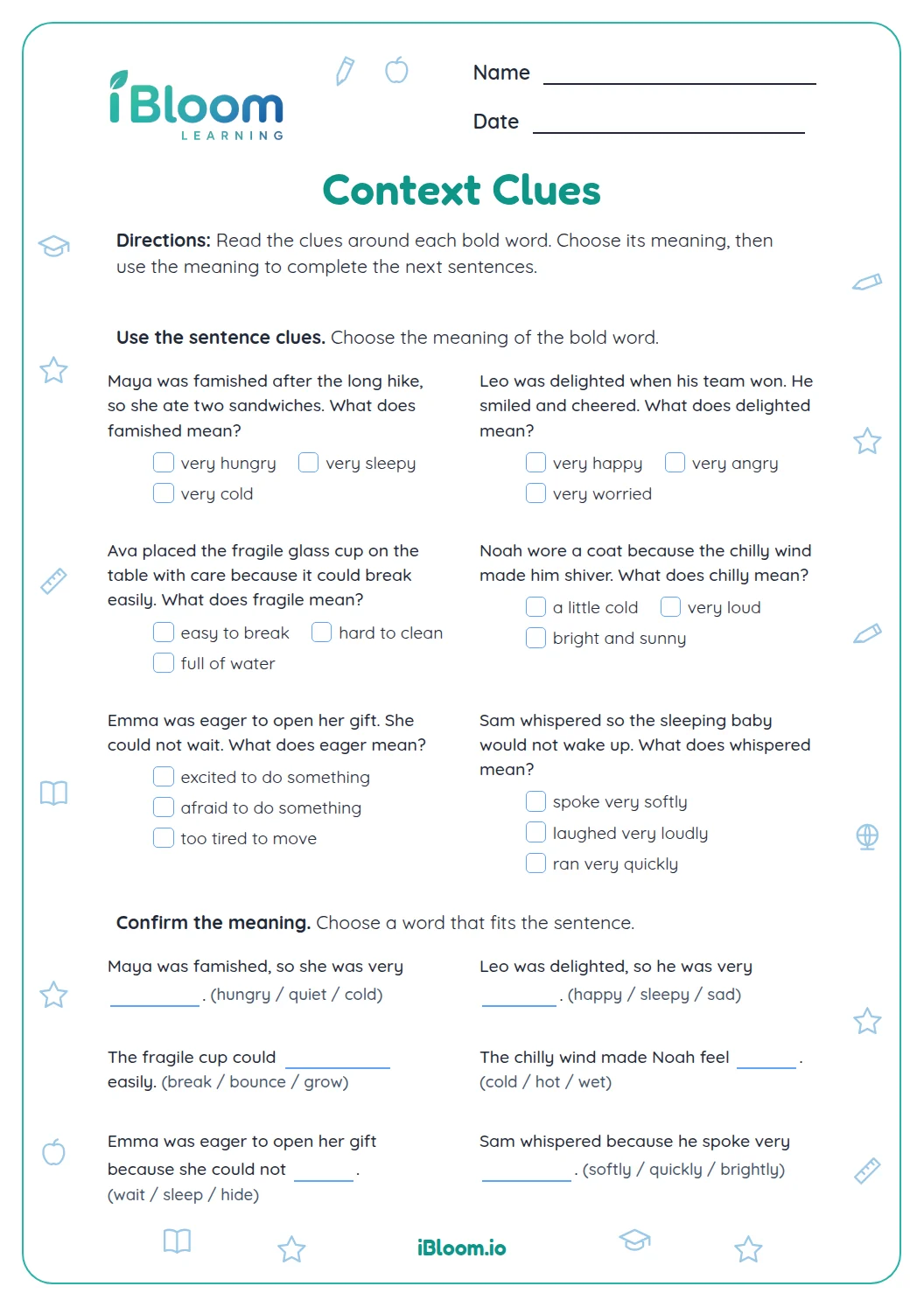
This Grade 2 worksheet practices compound words through sentence clues and word building. Students first choose the word that fits a short context, then join familiar word pairs, and finally complete compounds from meaning clues. The separate key gives the intended words. These activities connect word meaning with strategies named in CCSS L.2.4.
Aligned to L.2.4
What kinds of compound words appear?
Students work with familiar compounds such as rainbow, keyboard, bedroom, and lighthouse. Part A uses sentence context to choose a word, Part B joins two words, and Part C uses a definition or clue to complete a compound.
How does a context clue help?
In “The ___ stood beside the sea and guided ships,” the detail about guiding ships points to lighthouse. The clue narrows the meaning, while the word parts light and house help students recognize how the compound is formed.
- 1The ___ stood beside the sea and guided ships. The clue points to lighthouse.
How can students build a compound?
Say both smaller words, join them as one word, and check that the result names the thing described. For sun + flower, sunflower is one word and names a plant. In the last part, use the whole clue to decide which compound belongs in the blank.
How should the answers be checked?
Ask students to explain which words or details support each answer. If a choice fits the topic but not the sentence, reread the full clue. Then check spelling in the key, especially whether the compound is written as one word.
How to use this worksheet
- 1Read the whole sentence, not just the blank.
- 2Name the clue that suggests a meaning.
- 3For word pairs, say both smaller words aloud.
- 4Check that the completed word fits the sentence.
- 5Use the key to review spelling and meaning.
Common mistakes and quick fixes
The mistake
Choose a word that fits only the topic but not the clue.
The fix
Reread the whole sentence and ask which option explains the specific detail.
The mistake
Leave out one small word when joining a pair.
The fix
Say both words, then write the compound as one word.
The mistake
Guess from the first word alone.
The fix
Check that both parts make sense in the compound word.
Use a sentence clue and the smaller words to identify a compound word.
On this sheet: The questions directly practice compound words from context clues.
Show the official wordingHide the official wording
Determine or clarify the meaning of unknown and multiple-meaning words and phrases based on grade 2 reading and content, choosing flexibly from an array of strategies.
What to practice next
Make more practice
Further reading
Questions parents and teachers ask
What does this worksheet teach?
The 16 questions help Grade 2 students recognize and write compound words. They use sentence details, combine smaller words such as sun and flower, and complete compounds from clues. The answer key lists the intended word for each item so students can check both spelling and meaning.
What is a compound word?
A compound word joins two smaller words to name one thing or idea. Sunflower combines sun and flower, while keyboard combines key and board. On this worksheet, students look at the parts and at the surrounding sentence to see whether the whole word fits.
How should students use the sentence clues?
Read the entire sentence, including details before and after the blank. In the lighthouse item, standing by the sea and guiding ships point to lighthouse. Then reread the sentence with the completed word to confirm that its meaning makes sense.
Are students expected to add a space between the words?
No. The target compounds on this page are written as one word, such as lunchbox, snowman, and football. In the word-building section, say both parts aloud, join them, and check the answer key if spelling is uncertain. The answer choices include related objects, so this distinction also checks whether the clue has been read closely.
How long does the worksheet take?
There are 16 questions across two worksheet pages and a separate key page. About 15 minutes is a useful estimate for reading each clue and completing the word-building items. Students who explain why each compound fits may need a little longer.
What can help when two choices seem related?
Use the detail that makes one answer fit more closely than the others. A keyboard is used to type a message, while a keyhole is an opening and a doorknob turns. After choosing, read the full sentence aloud with the compound word in place.