





About this worksheet
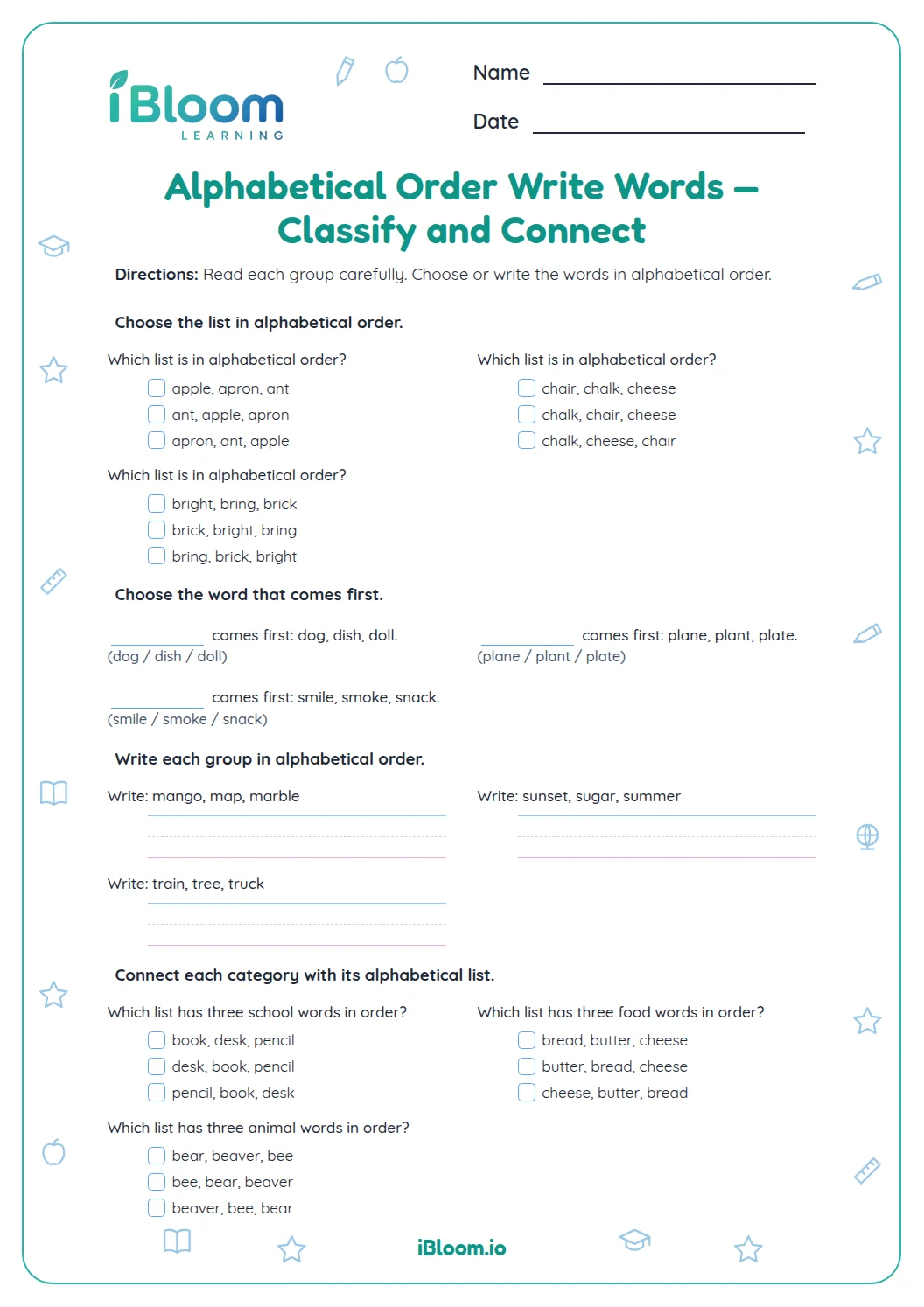
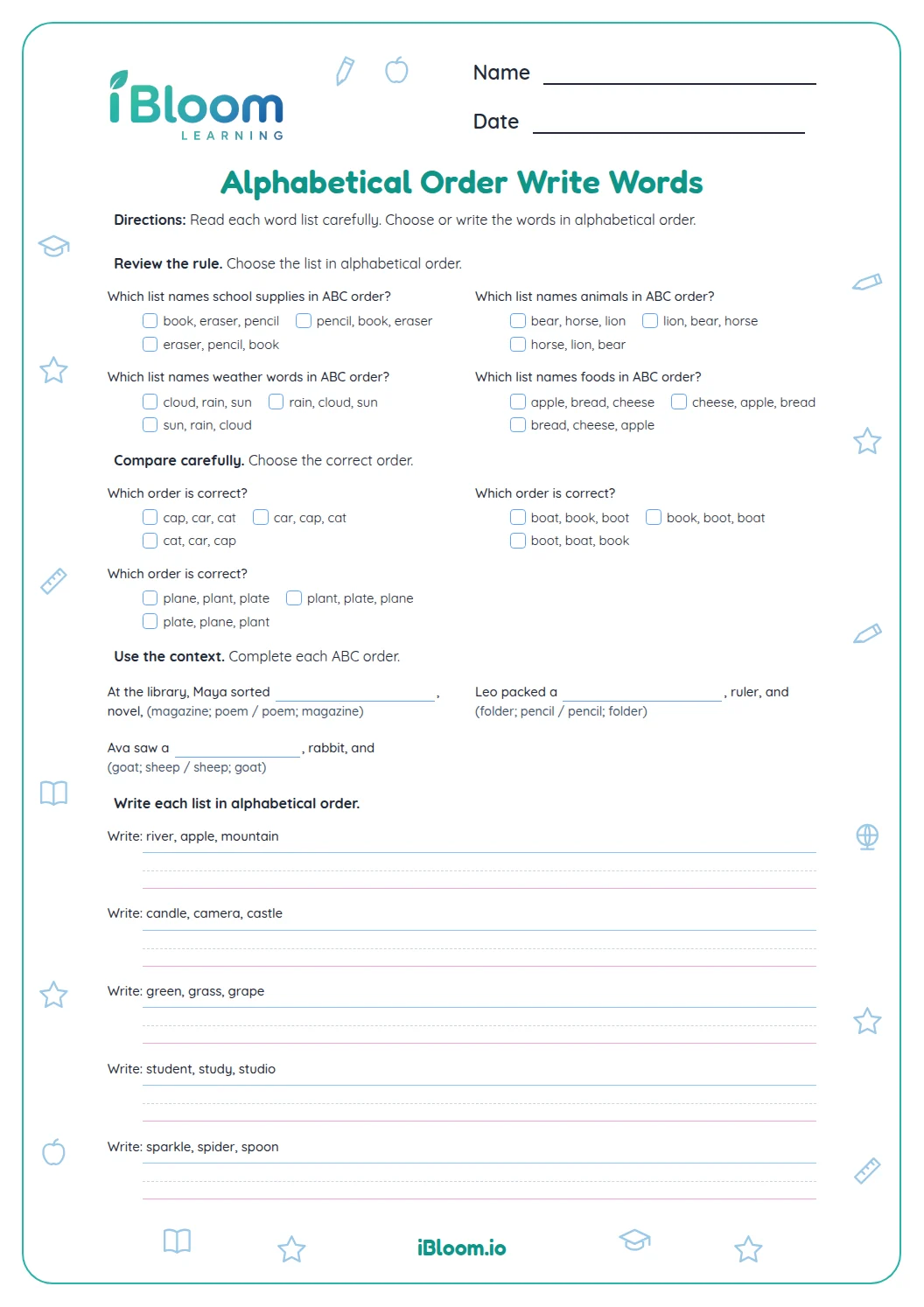
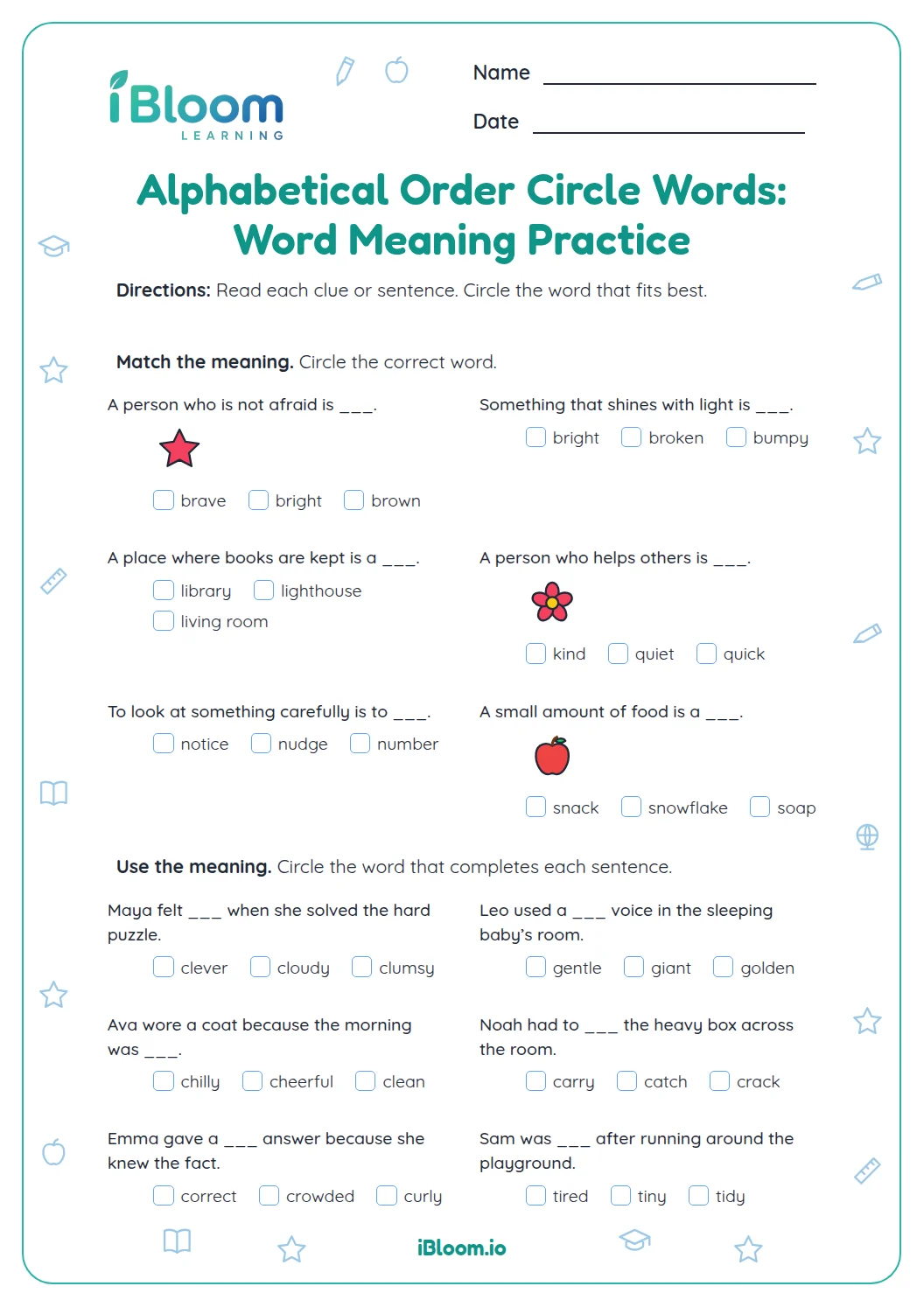
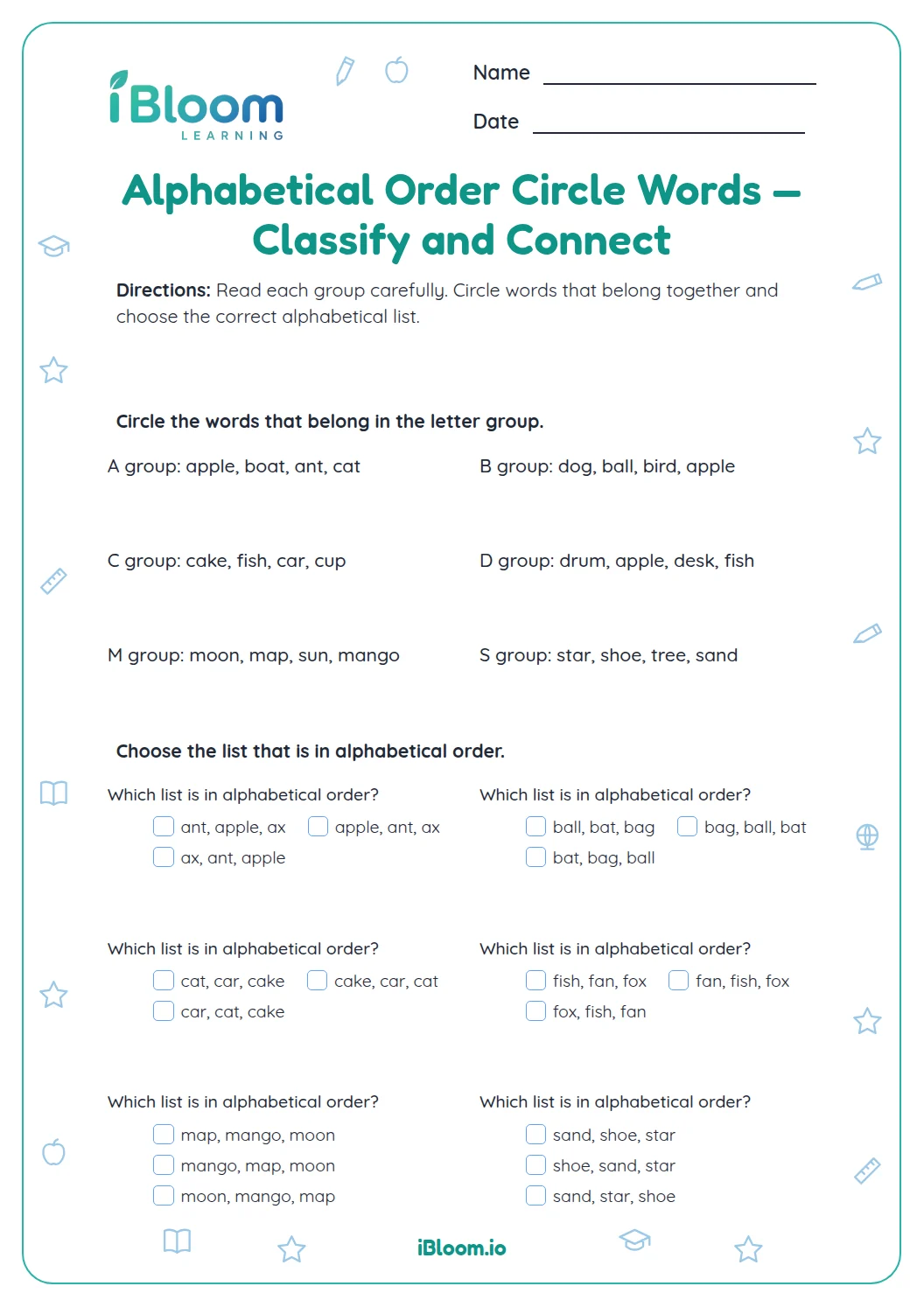
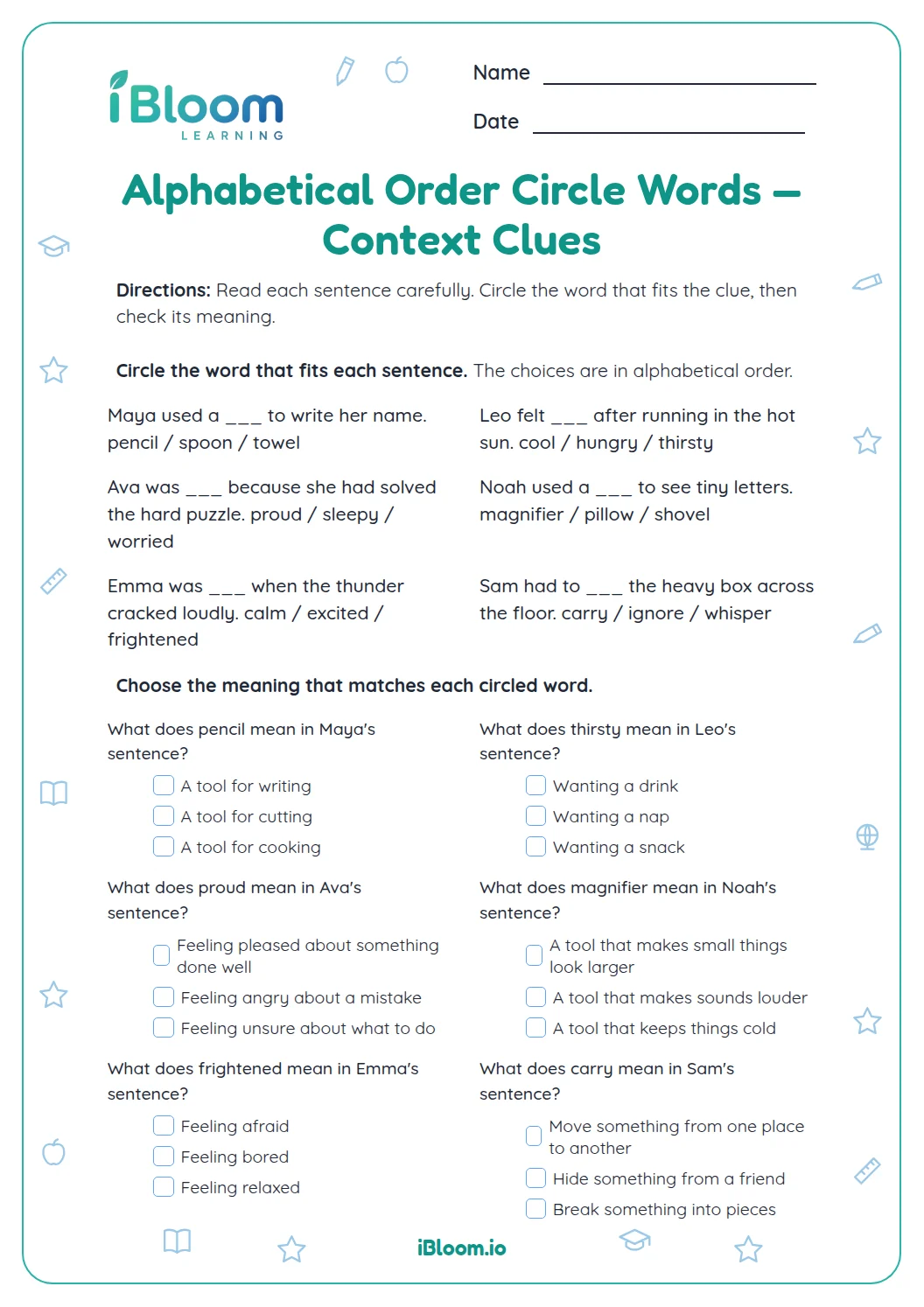
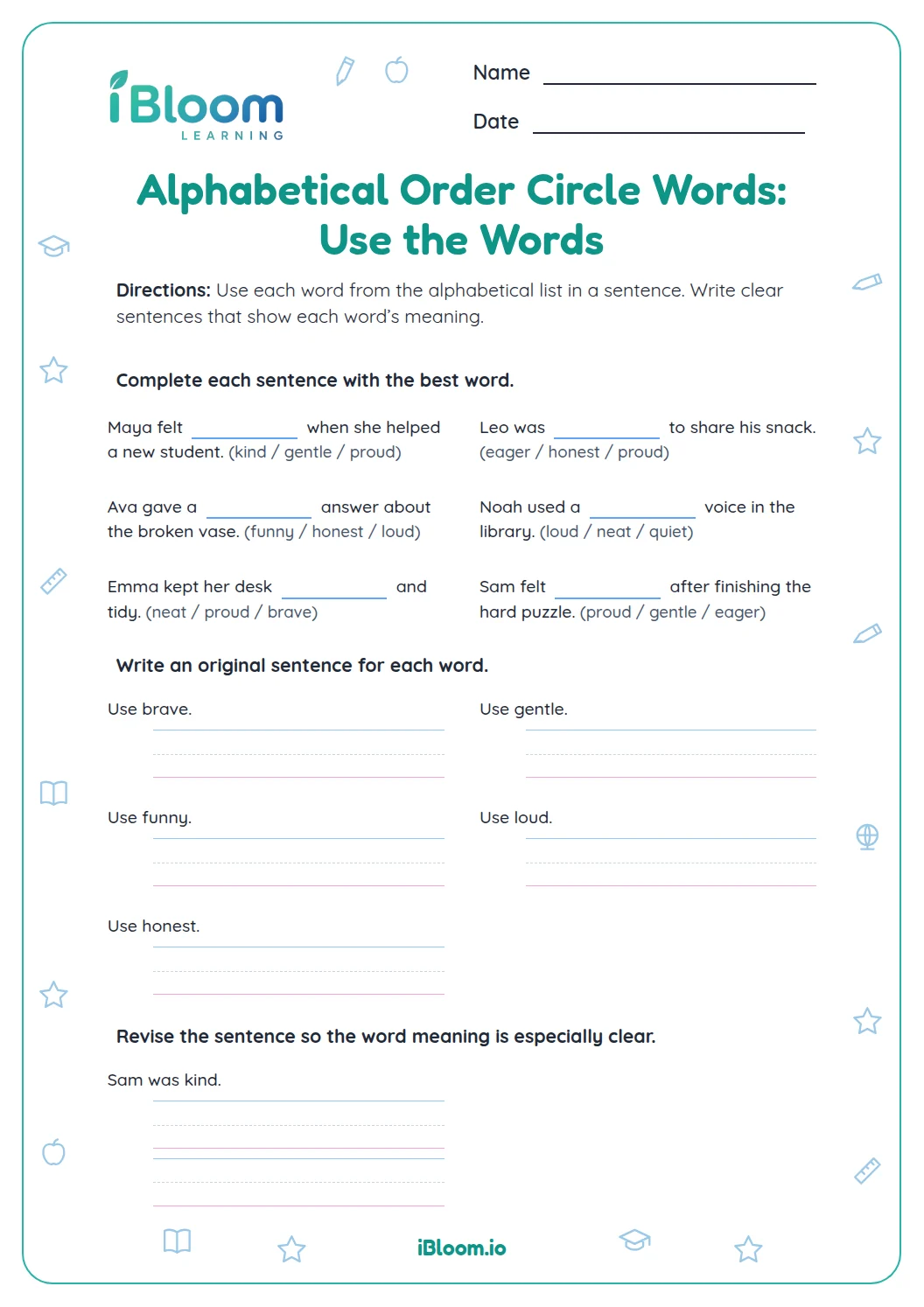
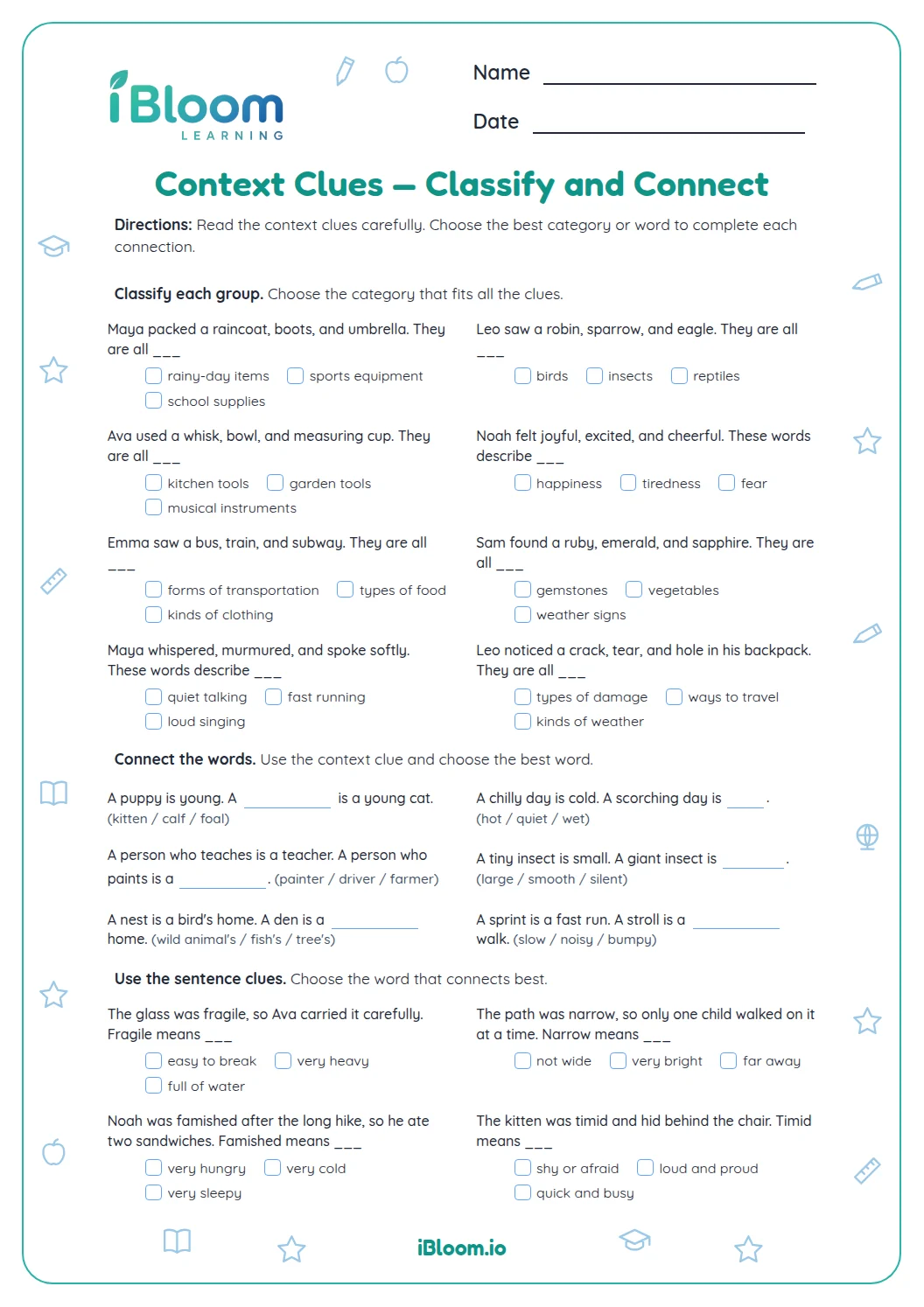
This Grade 3 vocabulary worksheet pairs alphabetical order with context clues. Learners put eight three-word sets in ABC order, then choose meanings for eleven words using clues in sentences. The answer key shows the word orders and meaning choices. The context questions practice Common Core L.3.4.a.
Aligned to L.3.4.a
How do you alphabetize a set of words?
Compare the words from left to right. When two words start alike, move to the next letter until they differ. Part A gives three related-looking words at a time, so the first letter alone will not always settle the order.
- Eight short sets use familiar Grade 3 words.
Which nearby words point to a meaning?
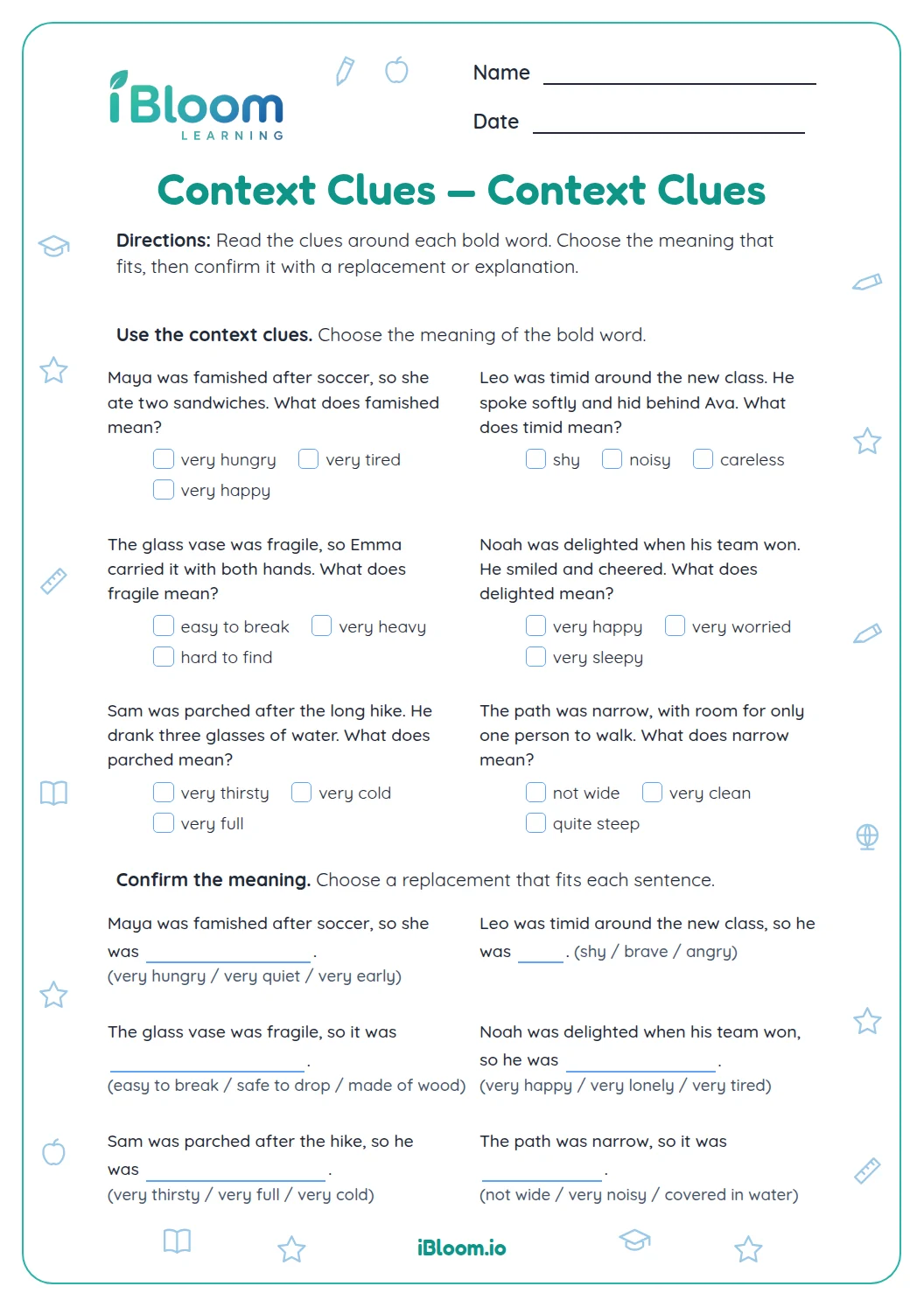
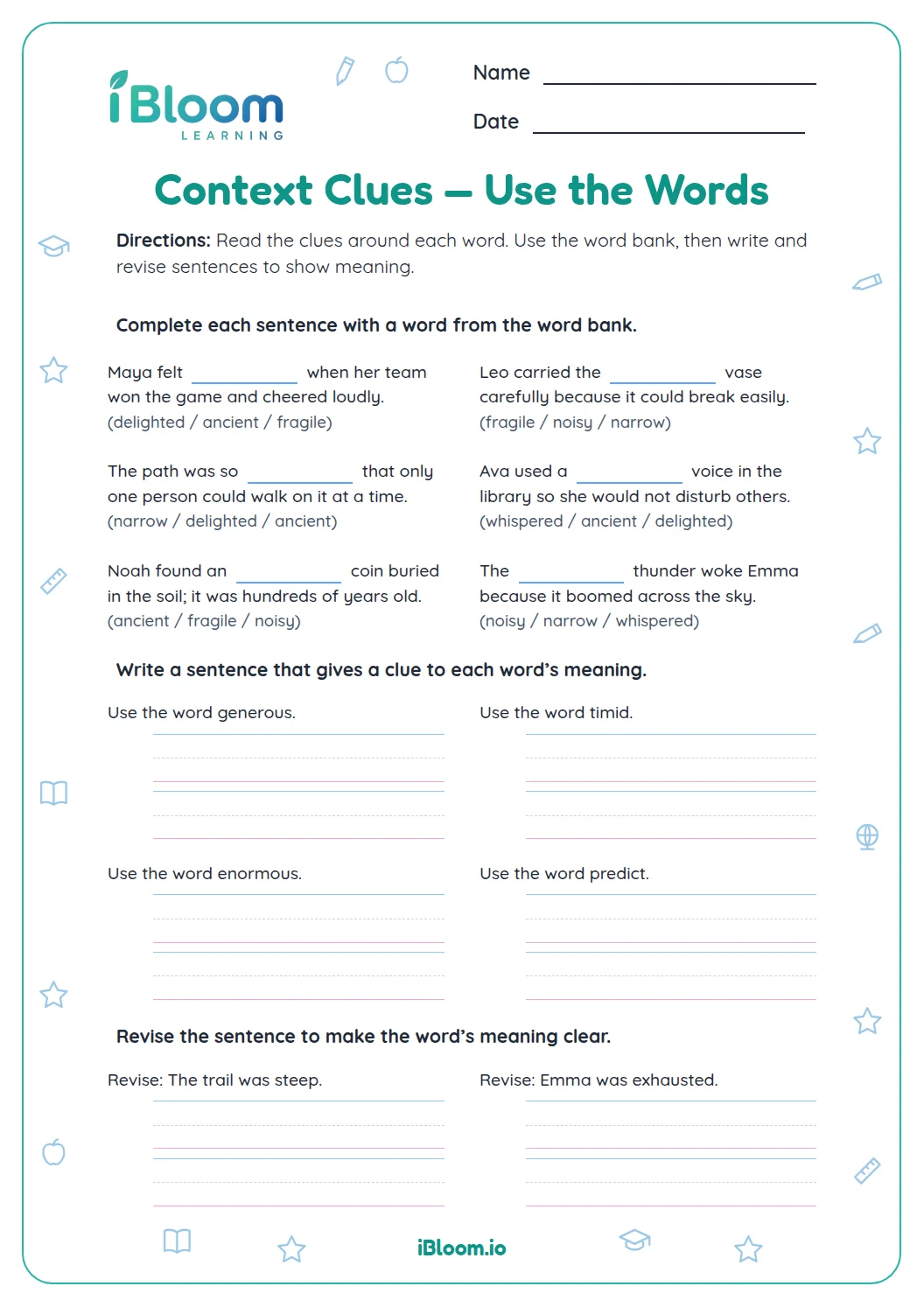
Part B places each target word in a sentence with a clue. A restatement, example, or result narrows the meaning. Eleven questions use clues in nearby phrases.
- 1“The path was narrow, with room for only one person.”
- 2“room for only one person” tells us narrow means “not wide.”
How to use this worksheet at home or in class
- 1For Part A, compare each word from its first letter onward.
- 2Do question 1 together and identify where the words first differ.
- 3Write the full ordered list, keeping every word in the set.
- 4For Part B, reread the entire sentence before choosing a meaning.
- 5Point to the phrase that acts as a clue, then check the answer key.
Common mistakes and quick fixes
The mistake
Sorting only by the first letter when words share it.
The fix
Compare the next letter where the spellings differ.
The mistake
Choosing a familiar meaning that does not fit the sentence.
The fix
Substitute the choice into the sentence and check whether it makes sense.
The mistake
Skipping the clue after the target word.
The fix
Read both before and after the target word for examples or results.
Common Core alignment
This page practices the listed Common Core skill through the questions and responses on the sheet.
Use nearby sentence clues to work out the meaning of each vocabulary word.
On this sheet: Part B uses restatements and examples in sentences to clarify word meanings.
Show the official wordingHide the official wording
Use sentence-level context as a clue to the meaning of a word or phrase.
What to practice next
Make more practice
Further reading
Questions parents and teachers ask
What skills does this Grade 3 worksheet practice?
It has eight word sets to put in alphabetical order and eleven sentence questions about word meanings. The first part asks learners to compare spellings from left to right; the second asks them to use nearby sentence clues. The answer key lists the ordered words and marks each meaning choice.
How do I help with words that begin the same way?
Have your learner compare one letter at a time until the words differ. For example, “marble,” “march,” and “market” all begin with mar, so the next letter decides their order. The key shows the full order for every set, including the first question with picture cues.
What is a context clue on this sheet?
A context clue is a nearby word or phrase that helps explain a target word. In “The map is useful because it helps us find the trail,” the phrase after “because” shows that useful means helpful. Ask the learner to point to the clue before choosing an answer.
How many questions and pages are included?
There are 19 questions: eight alphabetical-order responses and eleven context-clue choices. The worksheet uses four pages, followed by a four-page answer key. The first part requires writing each complete word set in order, so it needs more space than a choice-only activity.
Can we do just one part at a time?
Yes. Complete the eight sorting questions first, then check the order before moving to the context-clue questions. For each meaning choice, reread the entire sentence and explain which phrase helped. The answer key is useful after each part, especially when a word has more than one familiar meaning.