





About this worksheet
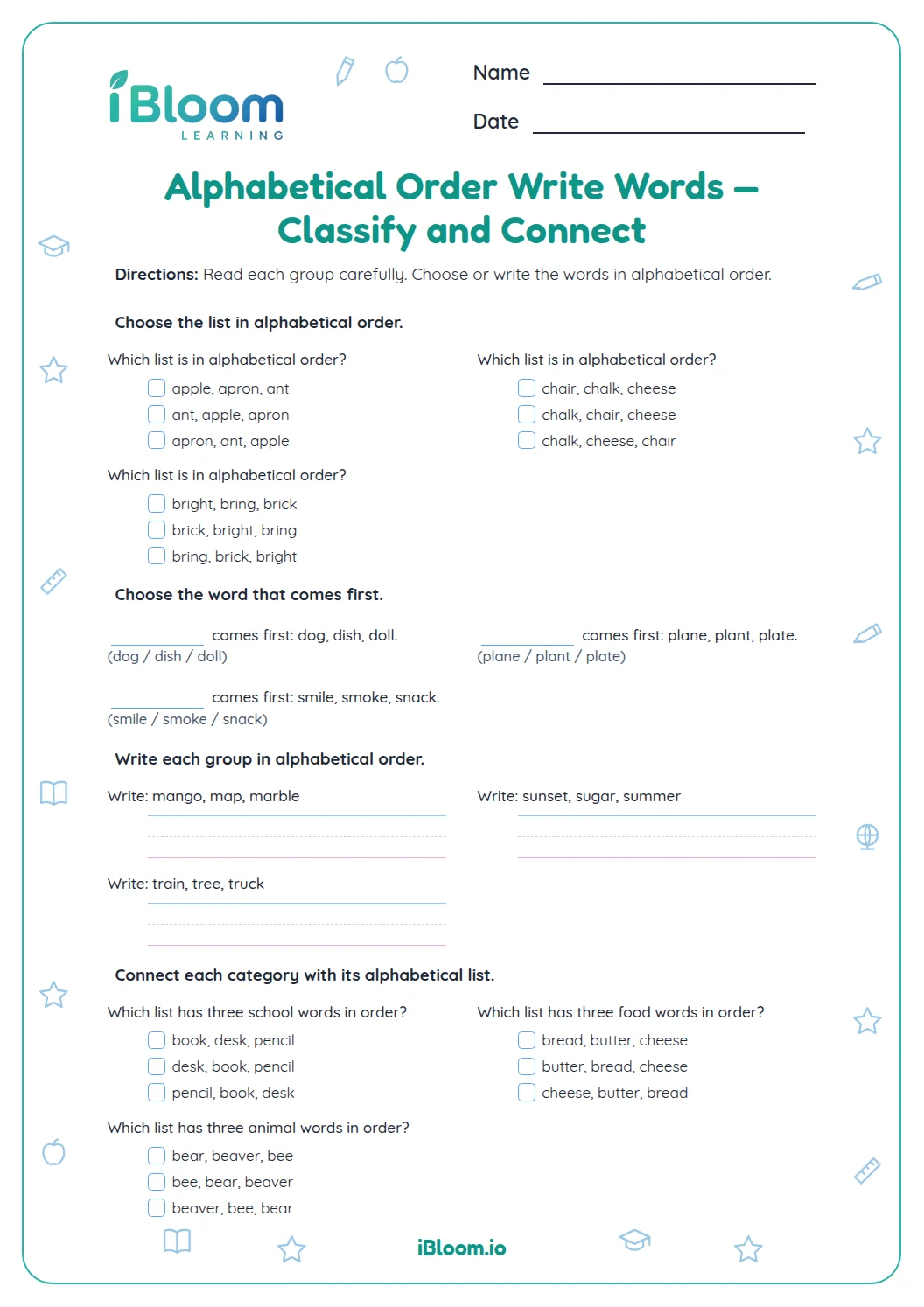
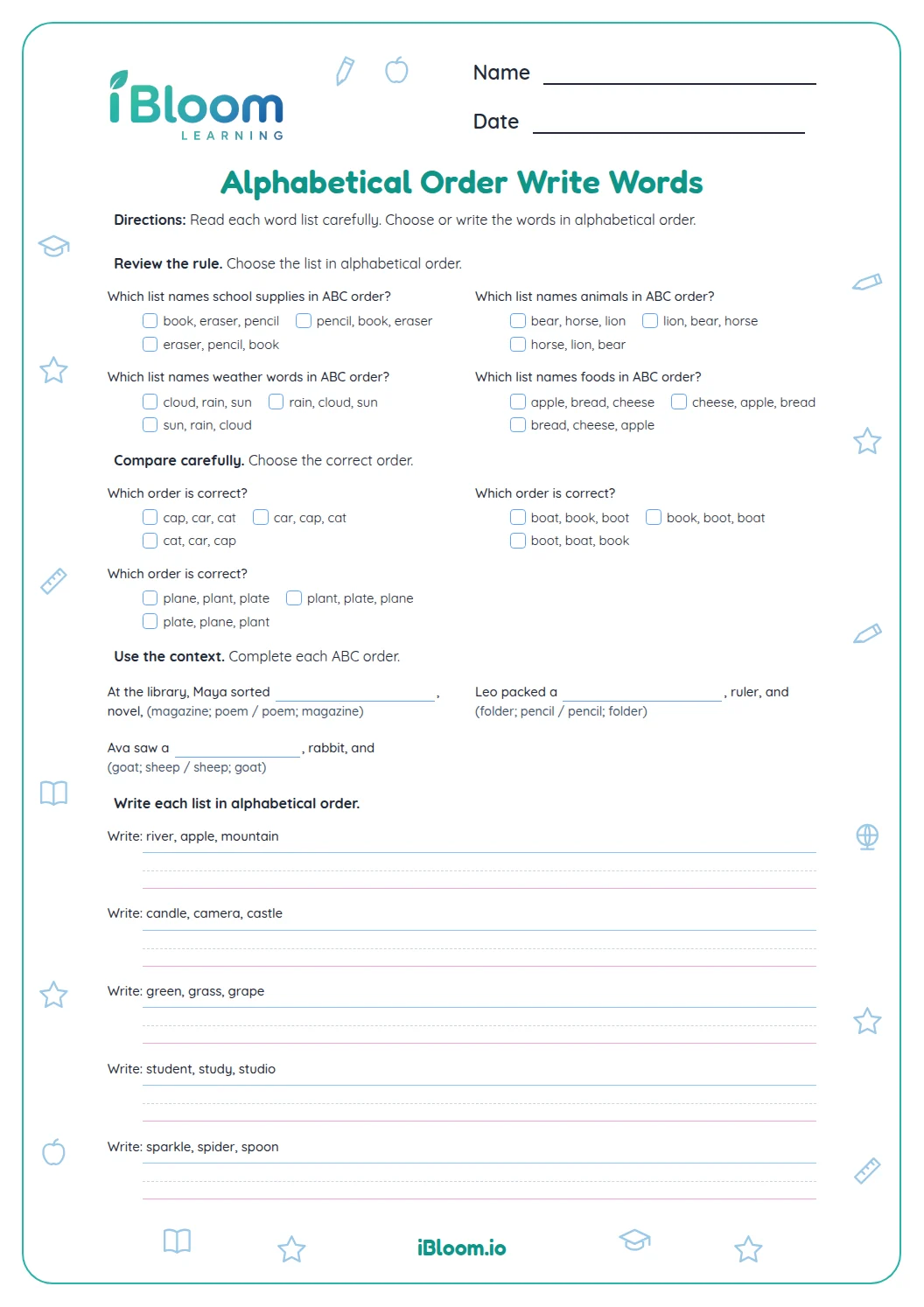
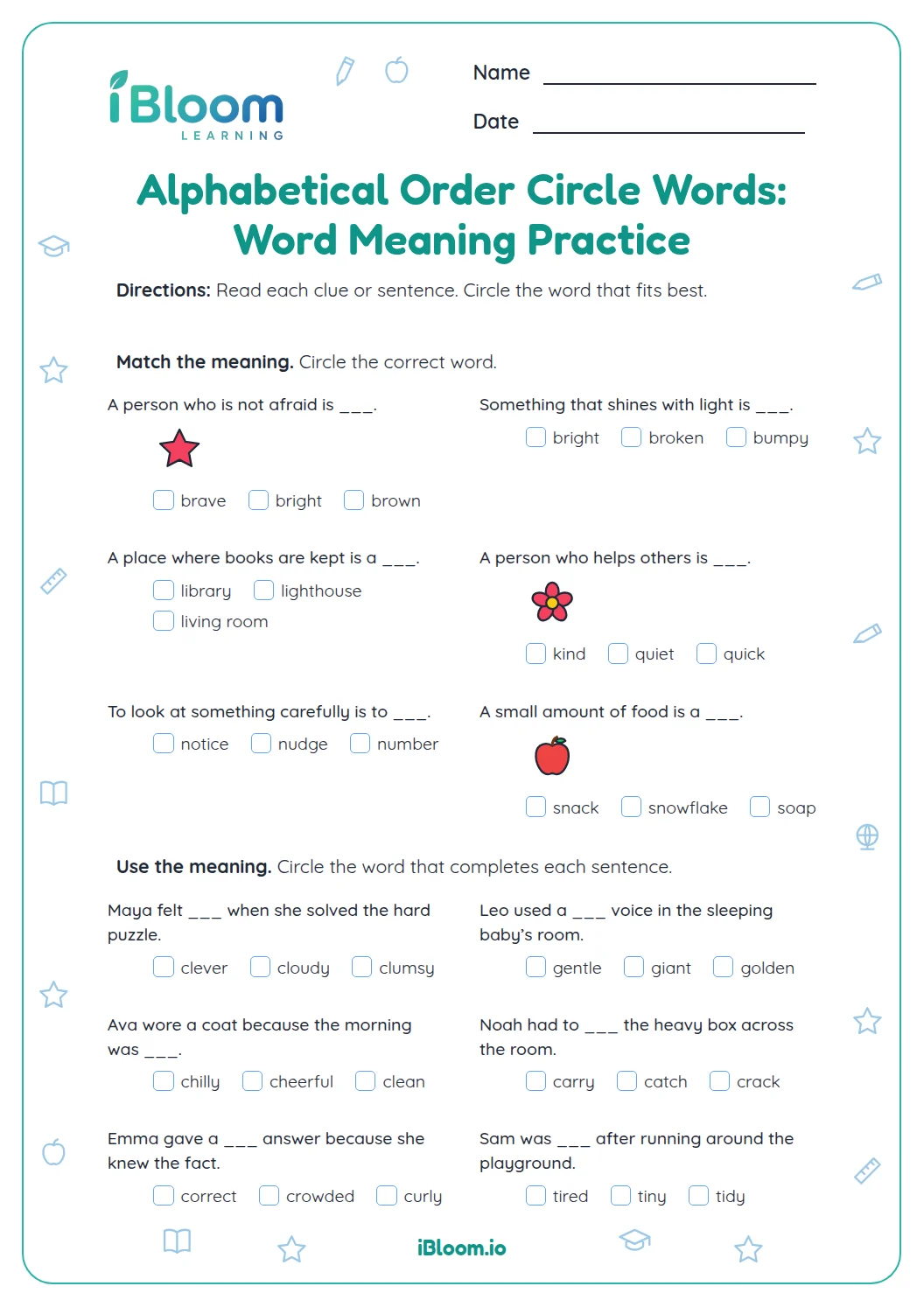
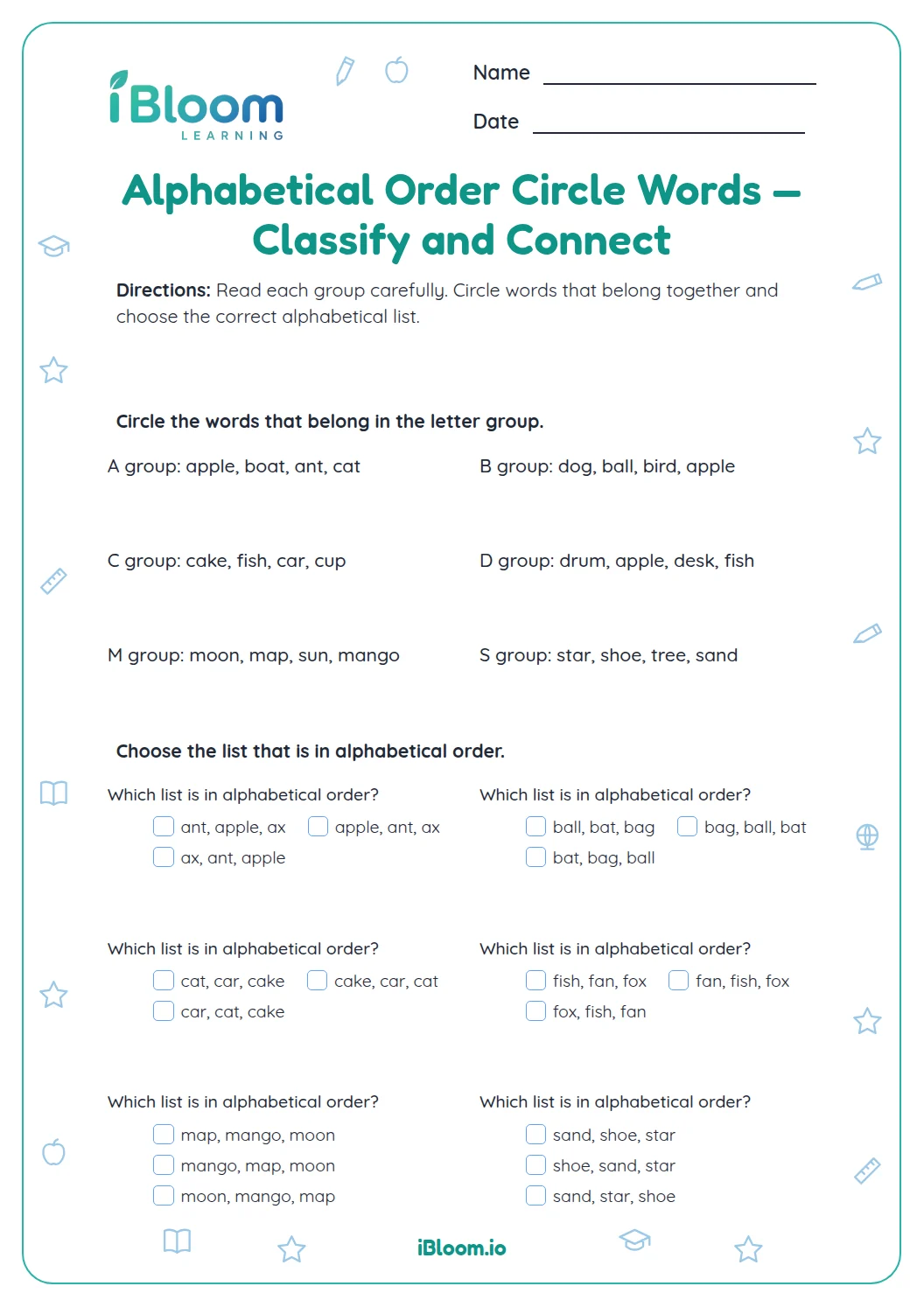
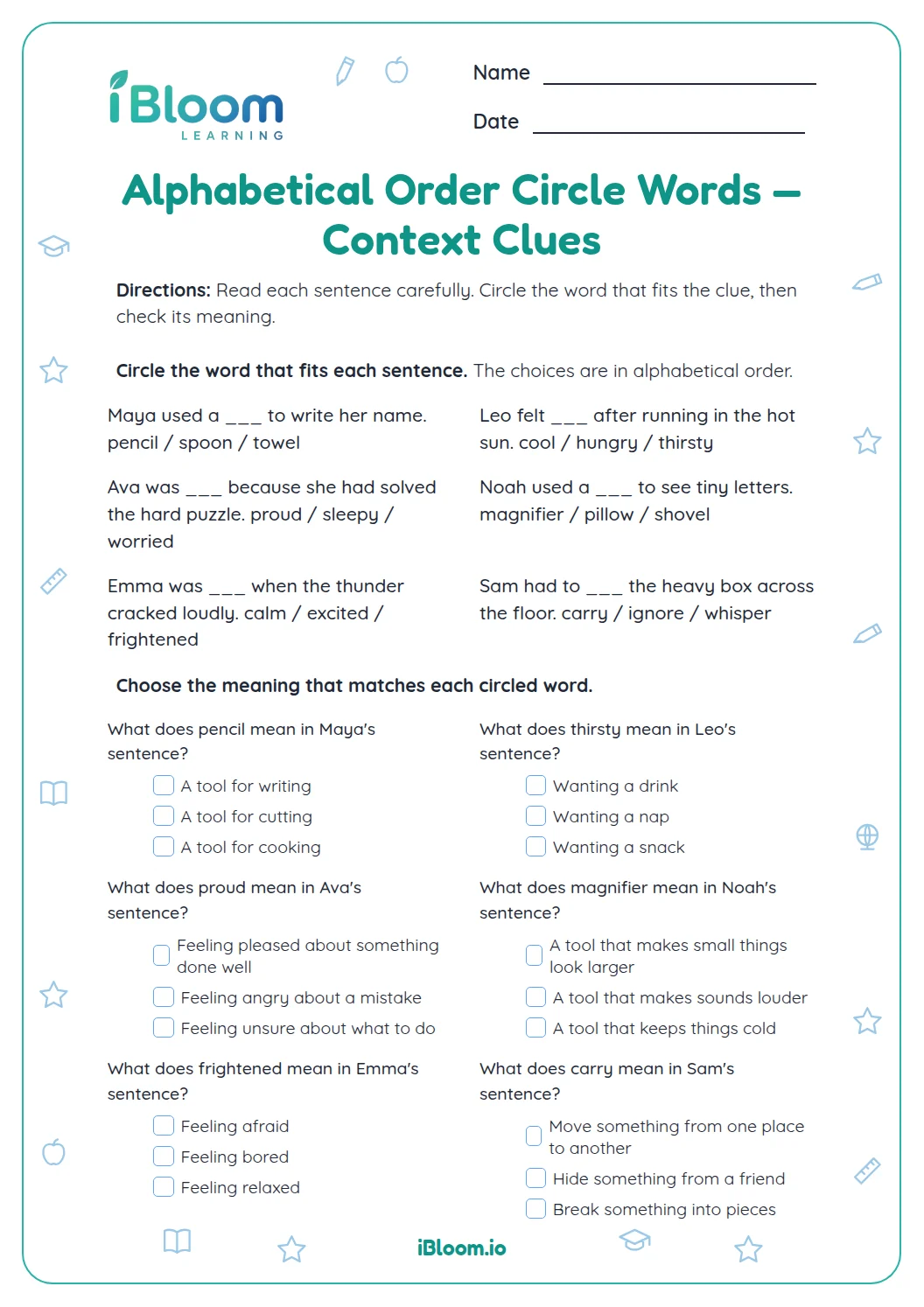
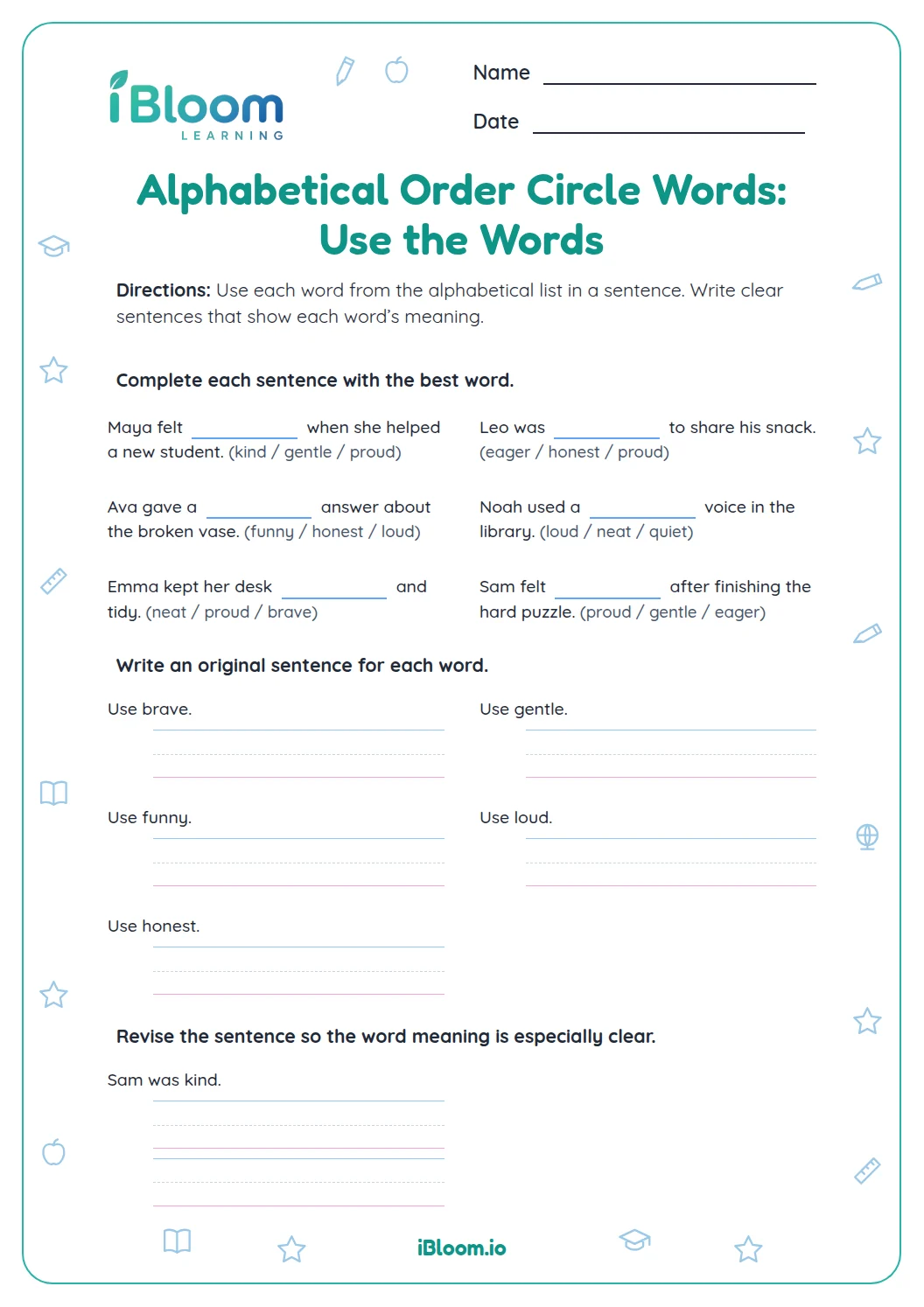
This free Grade 3 vocabulary worksheet combines alphabetizing words with understanding them. In Part A, students write four three-word lists in ABC order using first letters. Part B gives four more lists with shared beginnings, including place, plan and plant. In Part C, four sentences provide clues to narrow, whisper, shelter and eager, words already encountered in Part A. These context questions practice Common Core L.3.4a. The 12 questions have a separate answer key showing each ordered list and the four correct meanings.
Aligned to L.3.4a
How do children put three words in alphabetical order?
Read all three words before writing. Compare their first letters and find which letter comes earliest in the alphabet. Write that word, then compare the two remaining words. Each answer should contain every word from the original list exactly once.
Part A begins with pond, trail and cabin. Compare p, t and c: c comes first, then p, then t. The resulting word order is cabin, pond, trail. Have students point to each first letter before copying the whole word.
What happens when words share the same beginning?
Keep moving one letter at a time until the spellings differ. In branch and brave, b, r and a match, so the fourth letters decide the order. If one complete word is the beginning of another, the shorter word comes first: plan precedes plant.
- 1brave, branch, breeze
- 2All three words begin with br.
- 3a comes before e, so breeze is last.
- 4branch and brave differ at n and v; n comes first.
- 5Answer: branch, brave, breeze
How do sentence clues connect with ABC order practice?
Part C revisits four words from the earlier lists in short sentences. The narrow path fits only one person, and the children whisper so only a partner hears. Students choose the meaning that agrees with those details.
Ask students to point to the clue before choosing. Knowing how to locate a word alphabetically and knowing how to read it in context give two useful ways to work with a growing vocabulary.
How to use this worksheet
- 1Read the three words in question 1 and compare their first letters.
- 2Write each Part A list in order, checking that no word was left out.
- 3For Part B, point to matching letters and move right to the first difference.
- 4Use plan and plant to discuss why a complete shorter word comes first.
- 5Read each Part C sentence and identify the detail that explains the capitalized word.
- 6Check the key and reread any reordered list from the first letter onward.
Mistakes to check and how to help
The mistake
Leaving brave before branch because both begin with bra.
The fix
Compare the fourth letters: n in branch comes before v in brave.
The mistake
Putting plant before plan because it has more letters.
The fix
When one word is the complete beginning of another, put the shorter word first.
The mistake
Choosing very loud for narrow without using the sentence.
The fix
Reread the clue only wide enough for one person; it describes width, so choose not wide.
Common Core alignment
Use clues in four sentences to choose the meanings of words from the ABC lists.
On this sheet: Part C uses sentence details to clarify narrow, whisper, shelter and eager.
Show the official wordingHide the official wording
Use sentence-level context as a clue to the meaning of a word or phrase.
What to practice next
Make more practice
Further reading
Questions parents and teachers ask
How many words do students put in ABC order?
Students order eight lists of three words, for 24 word entries altogether. Four lists use different first letters; four require attention to later letters or word length. The final four questions ask for meanings of words from the earlier lists, using clues in complete sentences.
Which letters decide the order of branch and brave?
The fourth letters decide: branch has n and brave has v after the shared beginning bra. Since n comes before v, branch comes first. Question 6 also includes breeze, whose third letter e places it after both words with a in the third position.
Why does plan come before plant?
Plan comes first because it is a complete word before plant adds another letter. Compare p, l, a and n; all match. Plan then ends, while plant continues with t. In question 7, place comes before both because c comes before n at the fourth letter.
How do students find the meaning of shelter on this sheet?
They read that a tree gave shelter from rain and kept the people dry. Those details show that shelter means protection in this sentence. Ask students to identify the clue kept us dry before selecting the answer, then try the chosen meaning back in the sentence.
Can I read the vocabulary sentences aloud?
Yes, reading the sentences and choices aloud can help students focus on meaning. Keep the printed words visible so they can connect each word with its spelling. For the ordering parts, have students look closely at the letters themselves, since alphabetical order depends on the written sequence.