

About this worksheet
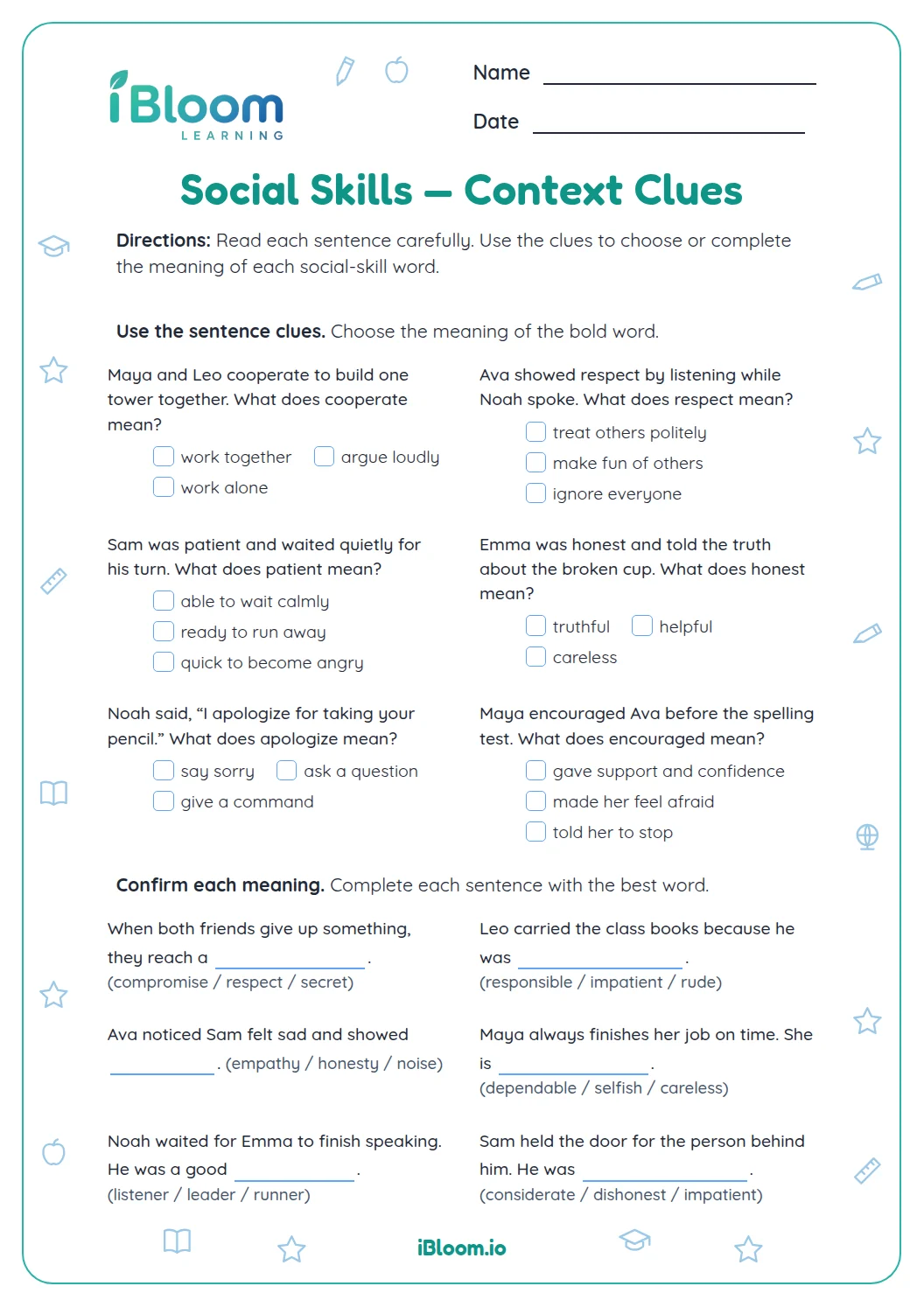
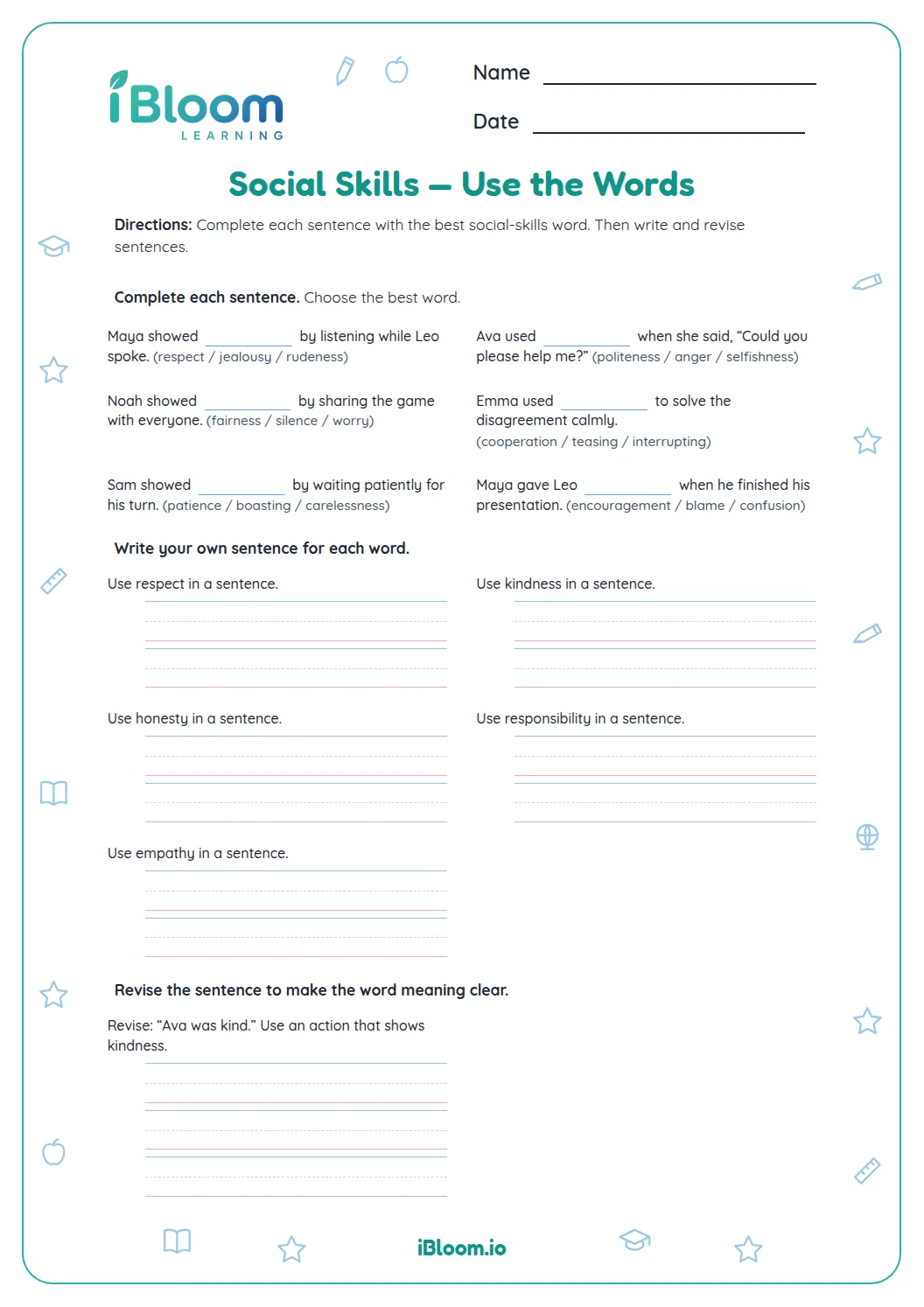
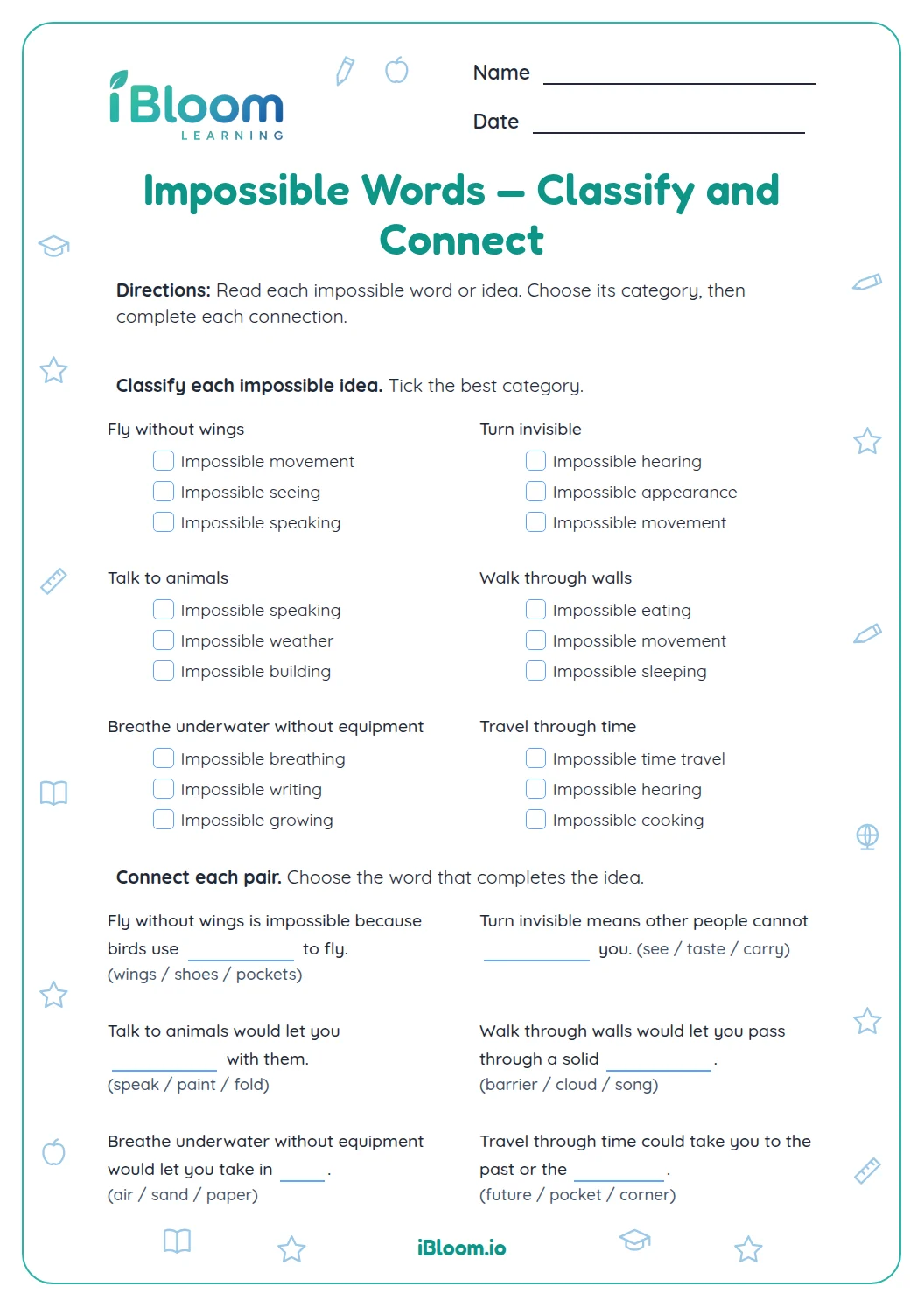
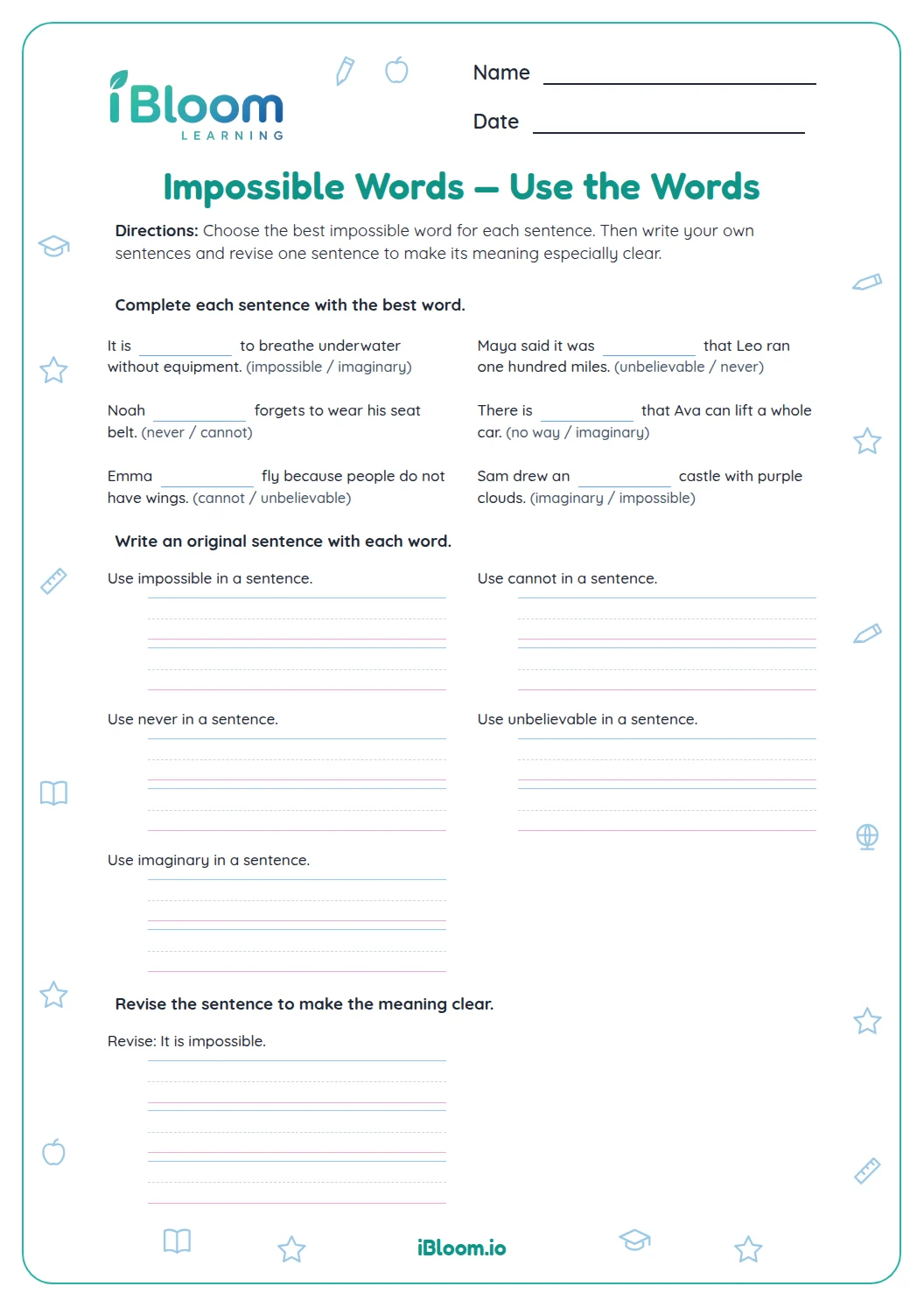
This Grade 3 vocabulary worksheet turns a word search into meaning practice. Students start with clue sentences, then locate six words in the grid and connect each word to its meaning. A final set asks them to supply a vocabulary word from a clear definition. The answer key gives the search words and expected meanings, with a separate key page.
Aligned to L.3.4a and L.3.4
How do context clues help with word meaning?
A clue sentence gives information around a word. In “A sturdy chair held the heavy stack,” sturdy means strong and solid because the chair holds weight. Read the full sentence before choosing a meaning.
What should students do after finding a word?
A word search helps students notice spelling, but the meaning work happens when they define or use the word. On this page, the grid words are paired with short clues, and later prompts ask for a word that matches a definition.
- 1A room is dim.
- 2Clue: the room is not very bright.
- 3dim means not very bright.
What is included on this worksheet?
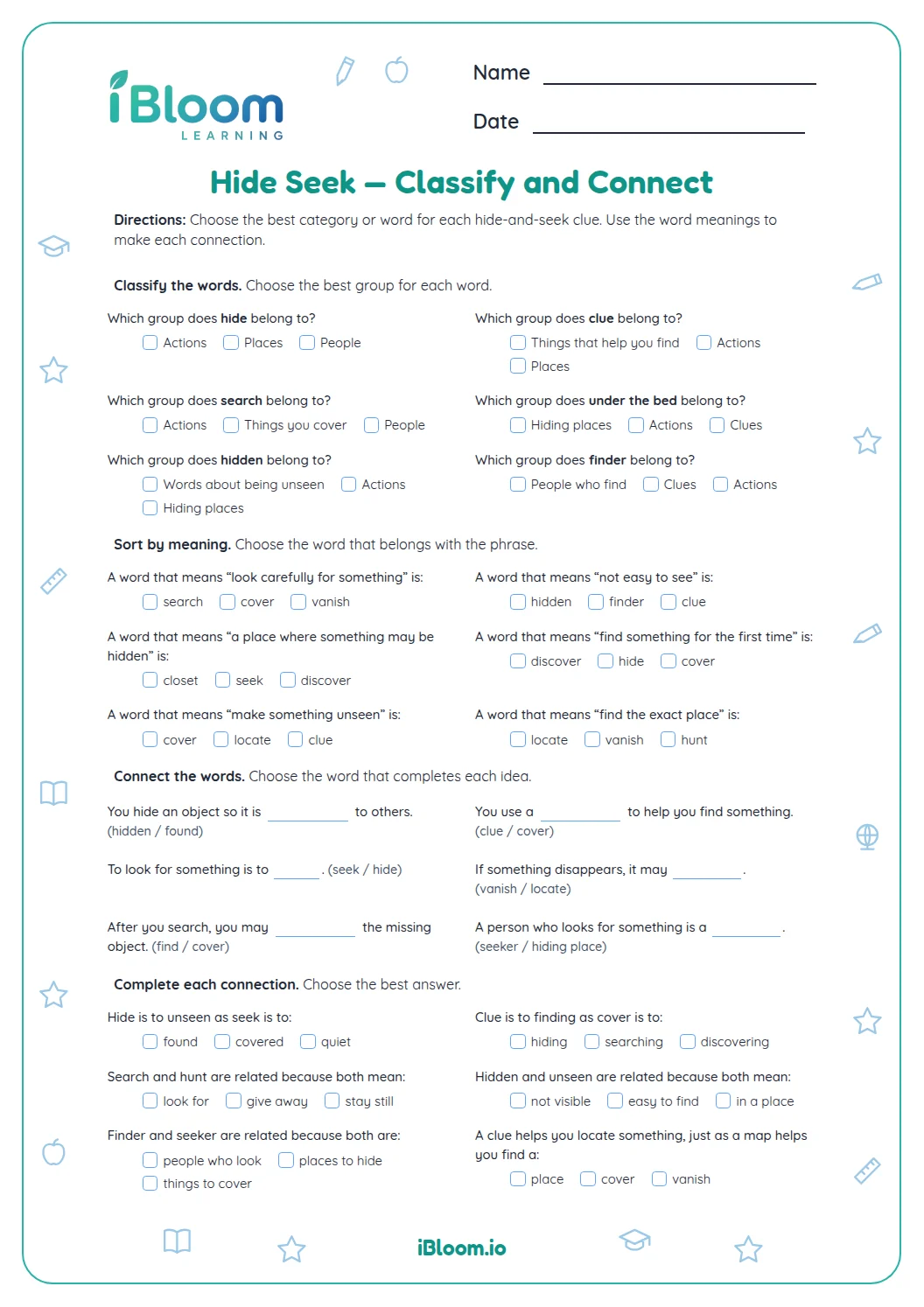
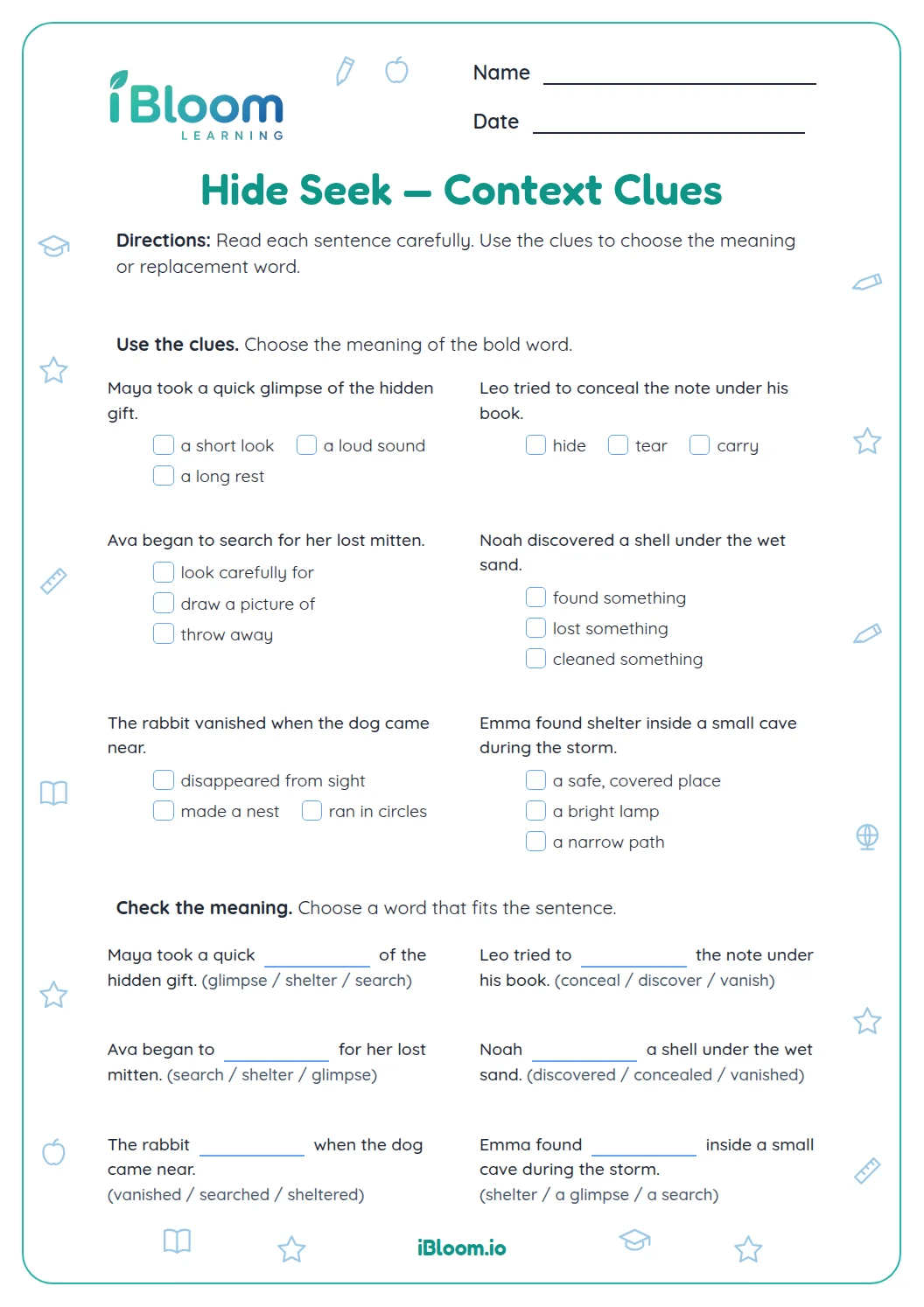
Part A has six meaning clues. Part B has one six-word search followed by eight definition prompts. Students can use the answer key to review both spelling and meaning.
How to use the page
- 1Read the entire clue sentence before choosing.
- 2Say each possible meaning in the sentence and check which one fits.
- 3Scan the word-search grid row by row and mark each target word.
- 4After finding a word, say or write what it means.
- 5Use the definitions in the last part to retrieve a fitting vocabulary word.
Common vocabulary slips
The mistake
Choosing a meaning from one familiar word instead of the whole clue.
The fix
Read the sentence again and point to the clue that supports the choice.
The mistake
Finding the letters but skipping the word meaning.
The fix
After circling a search word, say a synonym or a short definition.
The mistake
Writing a related word that does not match the definition exactly.
The fix
Check each part of the definition against the word before writing it.
Common Core alignment
The activities connect word meanings to clues and require students to use familiar vocabulary precisely.
Use sentence context to work out the meaning of a word or phrase.
On this sheet: Students choose meanings that match short clue sentences.
Show the official wordingHide the official wording
Use sentence-level context as a clue to the meaning of a word or phrase.
Determine or clarify word meanings using grade-level clues.
On this sheet: The worksheet pairs word meanings, clue sentences, and a word-search vocabulary set.
Show the official wordingHide the official wording
Determine or clarify the meaning of unknown and multiple-meaning word and phrases based on grade 3 reading and content, choosing flexibly from a range of strategies.
What to practice next
Make more practice
Further reading
Questions parents and teachers ask
Are the search words also used in meaning questions?
Yes. The word-search set includes curve, generous, dim, simple, sturdy, and whisper. The first part supplies context for meaning, and the search helps children notice these spellings. The remaining definitions give additional word-meaning retrieval practice. Students also retrieve meanings from definitions, so the activity checks both recognition and understanding.
Can my child look up the words?
Try the context sentence or the wording of the definition first. If a word is unfamiliar, a dictionary can be used afterward to compare the student’s idea with a fuller definition. Talking through the clue helps children explain how they chose.
What counts as a correct definition?
A short explanation that preserves the main meaning is enough. For example, sturdy can be described as strong and solid. The answer key gives a concise meaning for each target word, and equivalent phrasing can show the same understanding.
Why are some answers written instead of chosen?
Writing the word or its meaning asks students to retrieve vocabulary on their own. The answer key lists the expected word; equivalent wording can be accepted when a prompt asks for a definition. This gives practice beyond recognizing a word in choices.
How can I make the search a family activity?
Take turns locating a word, then use it in a new sentence. Ask the other person to explain which clue makes the word fit. That keeps the focus on meaning as well as spelling and gives children another chance to use each new word.