





About this worksheet
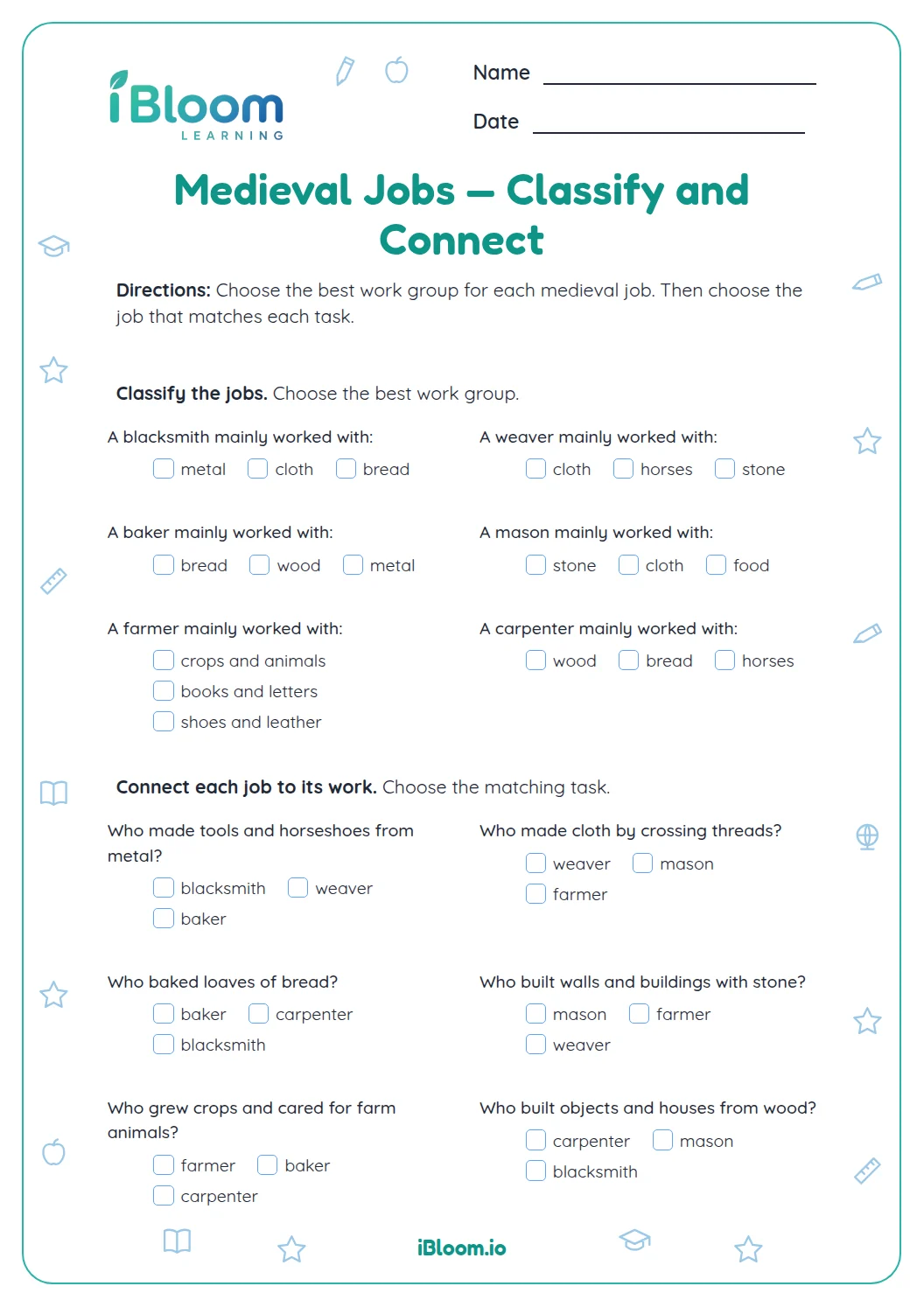
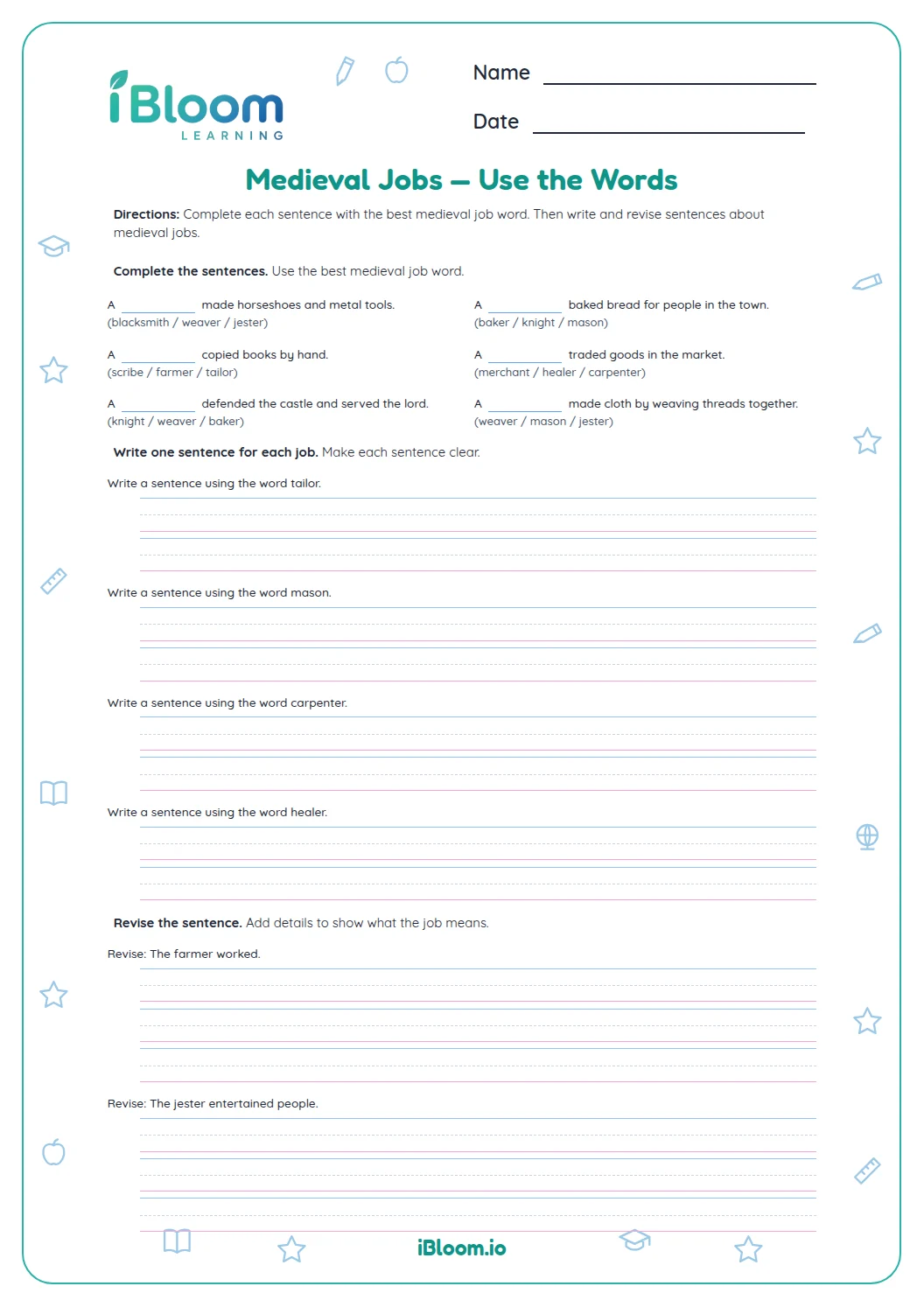
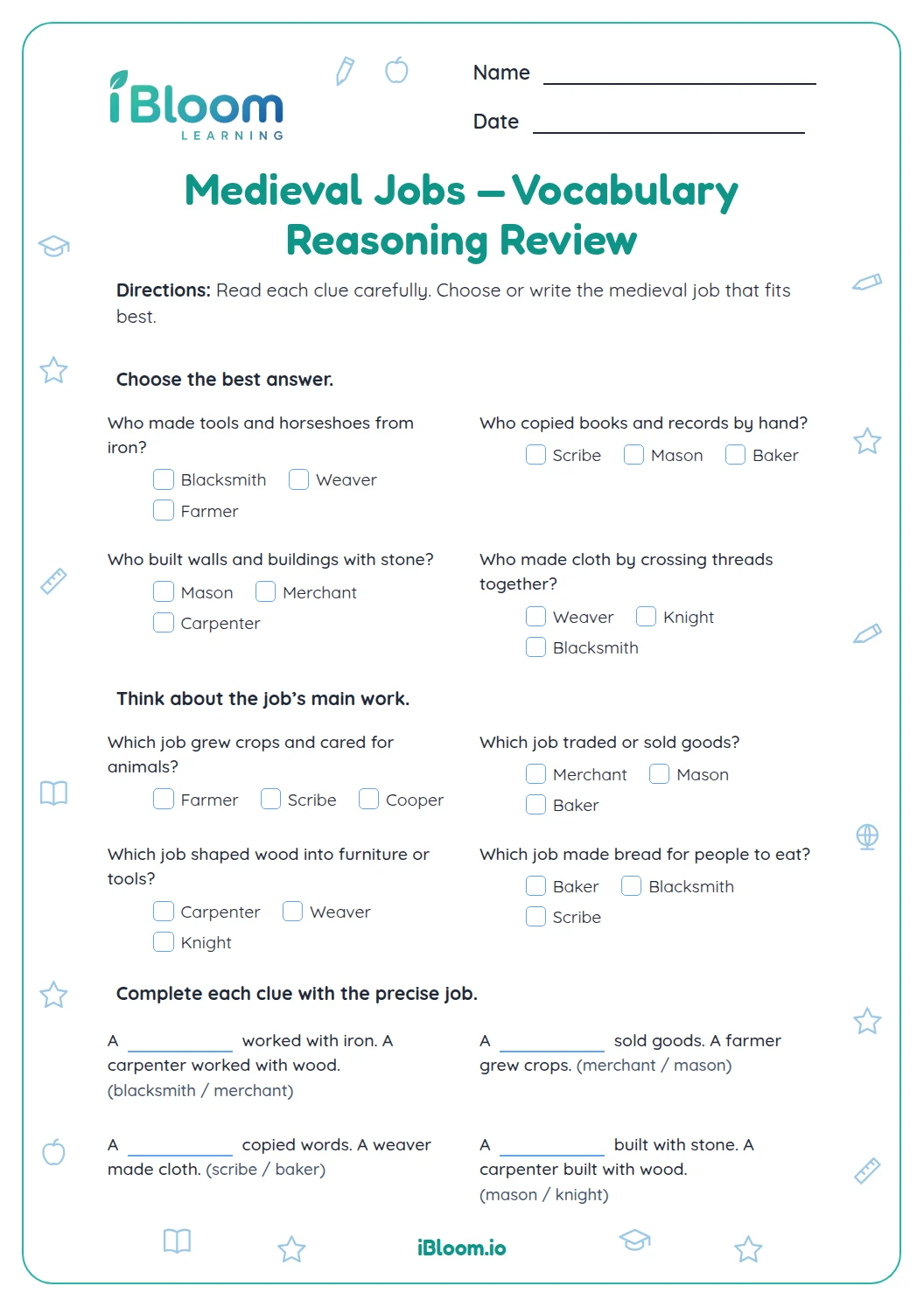
Grade 3 students connect medieval job names with clues about the tools, materials, and tasks each worker uses. The worksheet has 14 questions in two parts, with a separate answer key.
Aligned to L.3.4.a
Which medieval jobs appear on the sheet?
Students connect eight medieval job names with the tasks, tools, and materials that define each role. Questions revisit a few roles from different angles, such as a blacksmith’s anvil and a weaver’s threads.
The worksheet keeps the focus on meaning: each clue gives a concrete detail that helps distinguish workers with different jobs.
- 1An anvil is used to shape metal.
- 2That tool points to a blacksmith.
- Part A: match familiar job names with their work
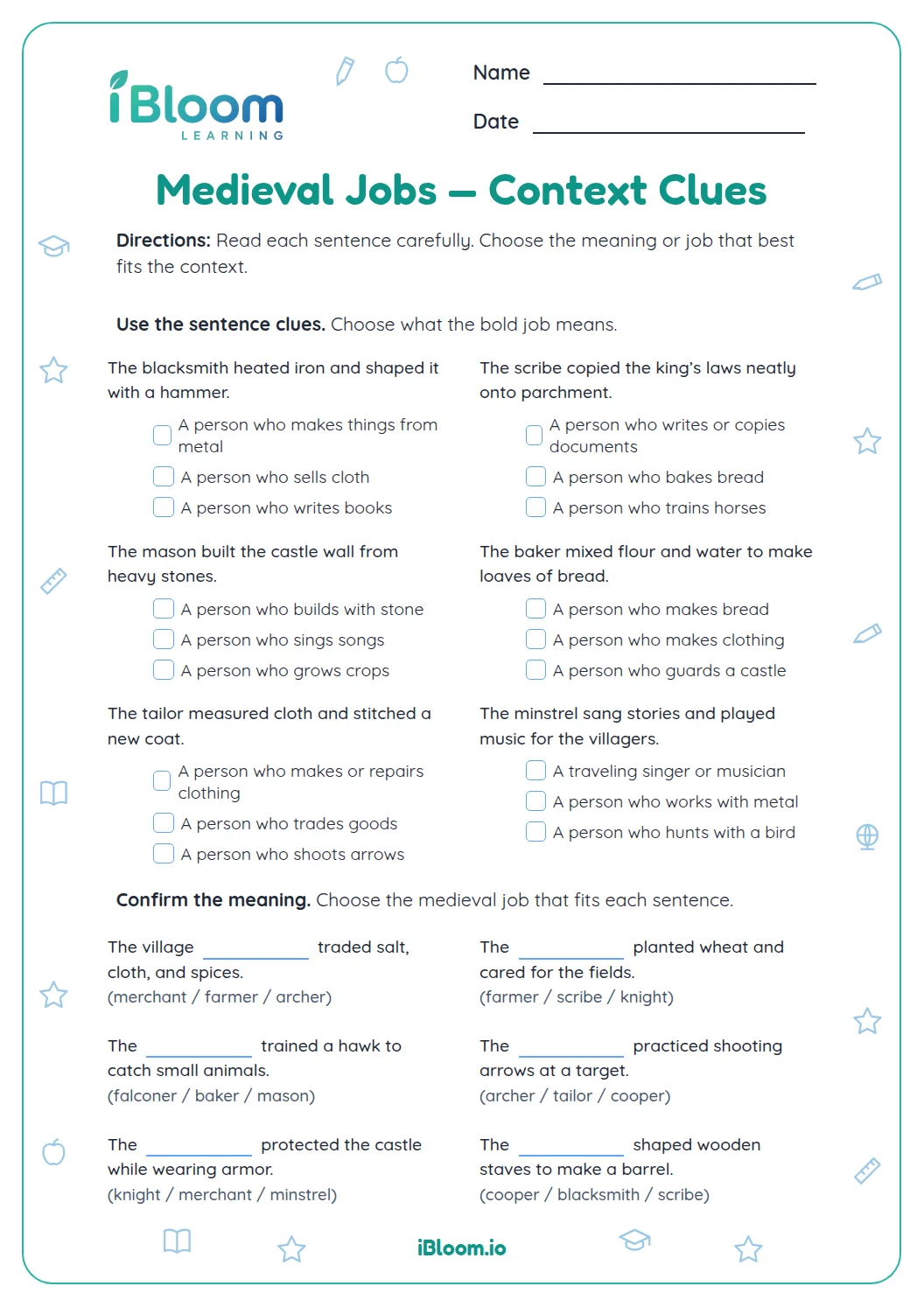
- Part B: use tools and tasks to identify a worker
How do context clues help?
A useful clue names an action, tool, or material. An anvil points to a blacksmith, crossed threads point to a weaver, and stone building points to a mason. Check that the full clue fits the job you choose.
How do tools help identify a job?
Match a tool or material to the work: an anvil points to a blacksmith, while crossed threads point to a weaver. The clue gives a concrete reason for choosing the job name.
How to use this worksheet
- 1Read the short direction at the start of each part.
- 2Solve each item and keep units or operation signs with the values.
- 3For reasoning questions, use the evidence named in the prompt.
- 4Check calculations against the separate answer key.
Common mistakes and quick fixes
The mistake
Mixing up a tailor and a weaver because both work with cloth.
The fix
A weaver makes cloth by crossing threads; a tailor sews cloth into clothing.
The mistake
Choosing a scribe for a building task because the word is unfamiliar.
The fix
A scribe copies or records writing. A mason builds with stone or brick.
The mistake
Mixing up a blacksmith and a mason.
The fix
A blacksmith shapes metal; a mason builds with stone or brick.
Curriculum alignment
This worksheet gives students practice with the cited Common Core skill.
Use sentence-level context as a clue to the meaning of a word or phrase.
On this sheet: Parts B and C use descriptions of tools and tasks as context clues to job vocabulary.
Show the official wordingHide the official wording
Use sentence-level context as a clue to the meaning of a word or phrase.
What to practice next
Make more practice
Further reading
Questions parents and teachers ask
How do the clues help students identify a medieval job?
Students choose the worker whose task or tool matches each clue. The page has 14 questions across two parts, including clues about a baker, scribe, knight, weaver, blacksmith, mason, farmer, and tailor. The separate answer key lists the intended answer for each item.
What is the difference between a tailor and a weaver?
A weaver crosses threads to make cloth. A tailor takes cloth that is already made and stitches it into clothing, such as a coat. Both jobs involve cloth, but their actions differ. The words in the clue help students tell which worker is being described.
What does a scribe do in these vocabulary questions?
A scribe copies or records writing by hand. A clue about recording a message or a ruler’s orders fits a scribe. The worksheet uses the surrounding sentence to make this less familiar word understandable, rather than asking children to memorize a historical definition.
Why include a word search with meaning questions?
Finding each word gives students a first encounter with all eight job names. The later clues revisit those same words with details about tasks and tools. This sequence supports recognition and meaning together, while the answer key makes it possible to check each clue independently.
How can a student check an answer on this sheet?
Return to the clue’s tool, material, or action and check that it fits the chosen job. An anvil points to a blacksmith, while a weaver works with threads. The answer key lists the intended job or word for every clue so students can check their reasoning.