





About this worksheet
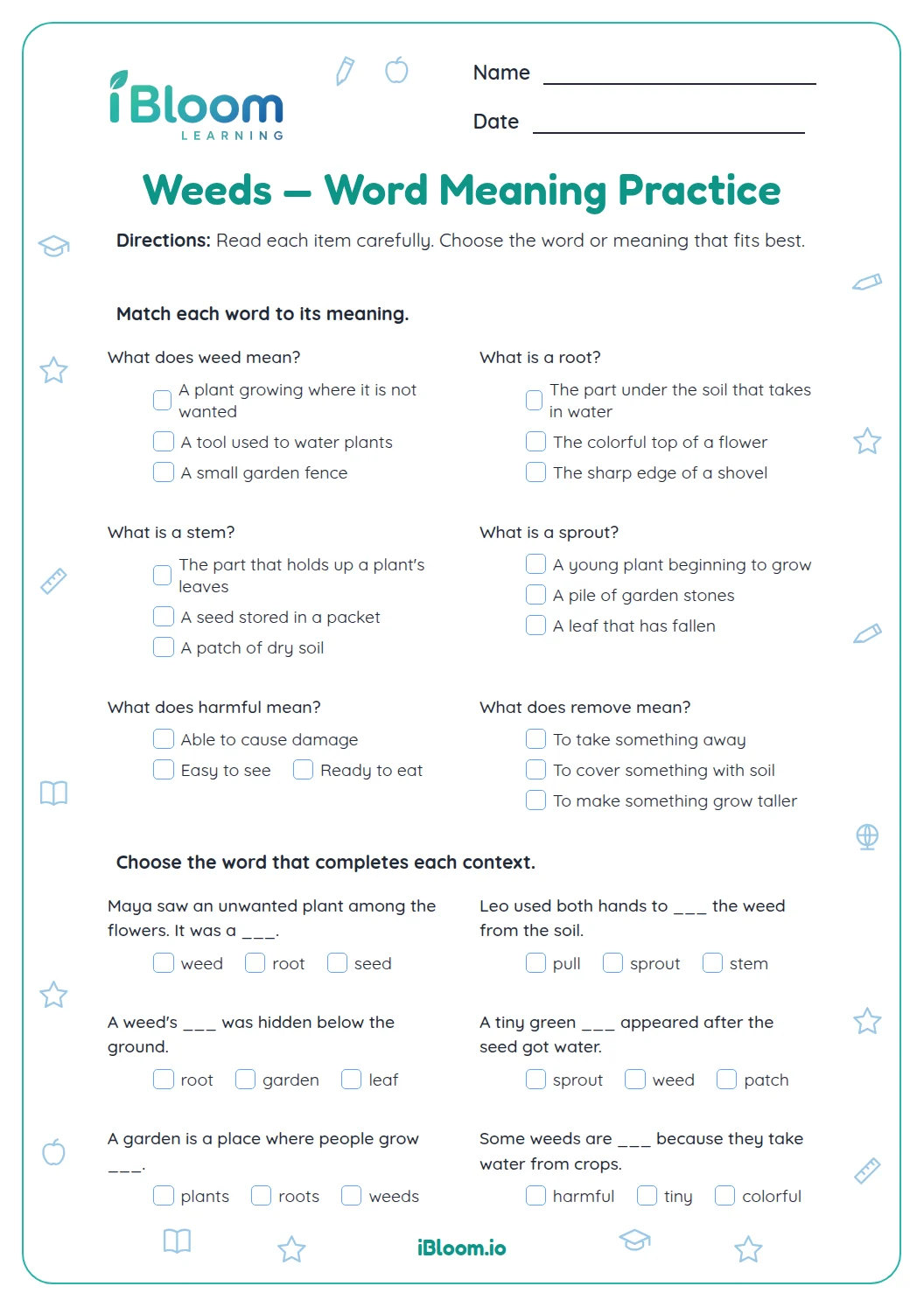
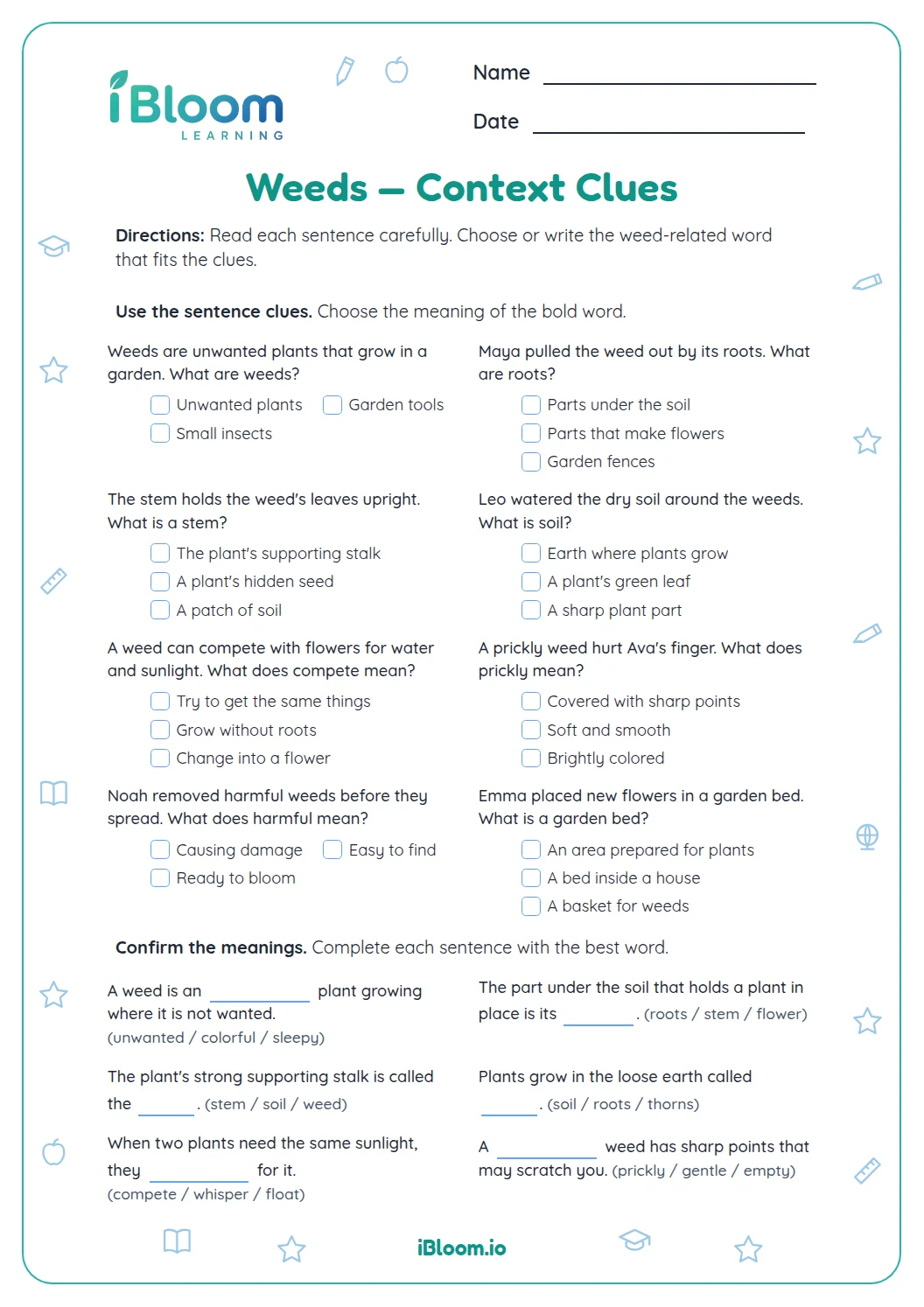
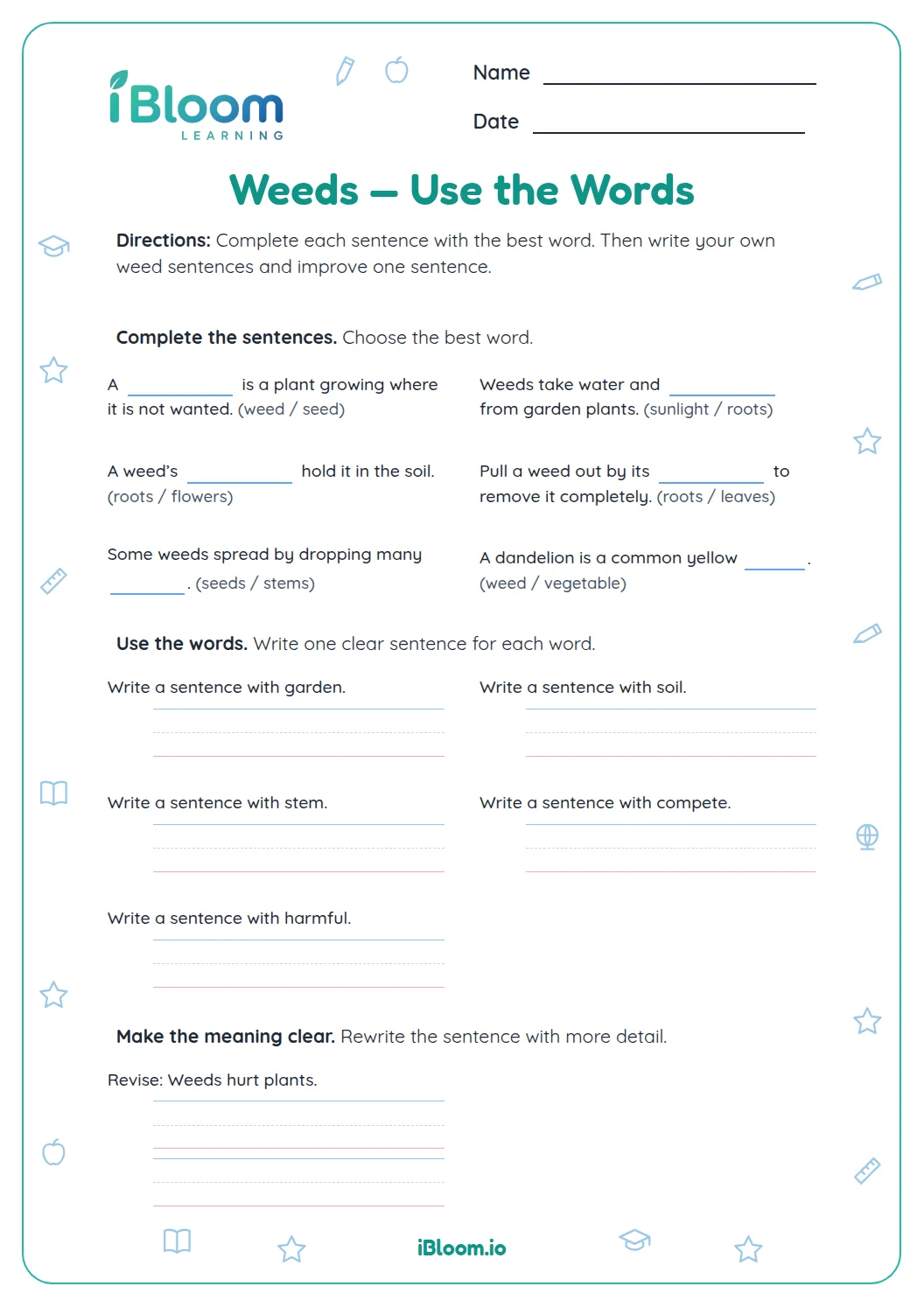
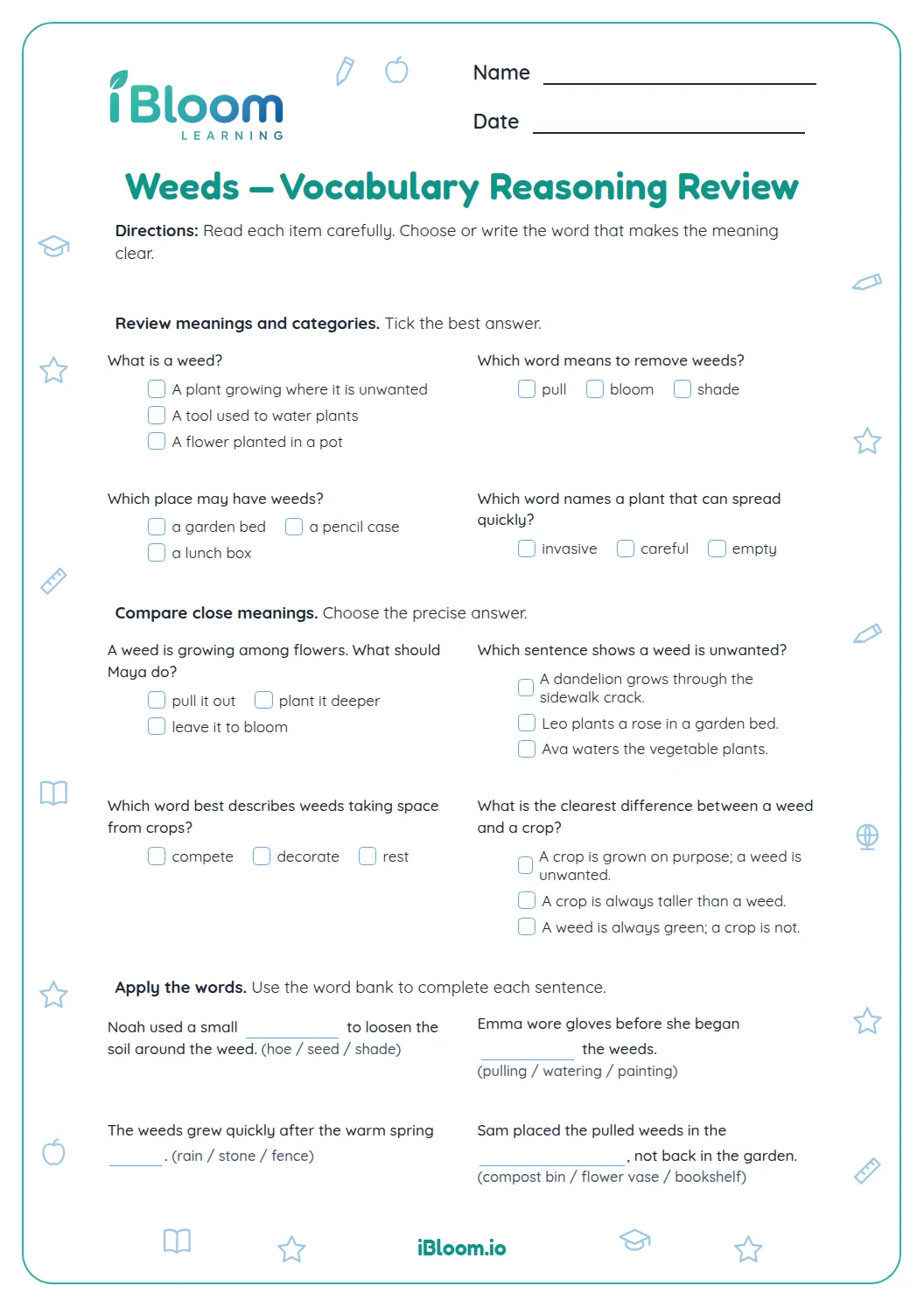
This Grade 3 vocabulary sheet gives 14 short questions about weed features and plant words. Learners sort grass-like, broadleaf, vine, and prickly weeds, then use garden context to connect roots, seeds, and growth. A separate answer key is included.
Aligned to L.3.5
Which garden words appear in the search?
Part A asks learners to find eight words, including root, seed, garden, and thistle. The remaining questions use the same plant topic in short contexts.
How can a feature identify a weed group?
In Part B, use a stated feature to sort an example. Crabgrass and foxtail have narrow blades, so both are grass-like weeds.
How do plant words connect?
Part C links roots with water, seeds with new plants, and weeds with the space and resources they use. Read the whole clue before choosing.
How to use this worksheet
- 1Circle each listed word in Part A.
- 2Underline the feature named in each weed clue.
- 3Match the feature to the weed group.
- 4Read each plant sentence through to its end.
- 5Check the choices with the separate key.
Common mistakes and quick fixes
The mistake
Calling every weed grass-like.
The fix
Sort by the stated feature: broad leaves, narrow blades, climbing stems, or prickles.
The mistake
Mixing up roots and seeds.
The fix
A root takes in water; a seed can grow into a plant.
The mistake
Choosing a word that fits only part of a sentence.
The fix
Read the full sentence with the choice in place.
Curriculum alignment
This worksheet gives learners focused practice with the skill shown on the sheet.
Understand figurative language, word relationships, and nuances in word meanings.
On this sheet: Learners classify weed words by features and connect related words in context.
Show the official wordingHide the official wording
Demonstrate understanding of figurative language, word relationships and nuances in word meanings.
What to practice next
Make more practice
Further reading
Questions parents and teachers ask
How many words are in the search?
There are eight: weed, root, seed, stem, leaf, pull, garden, and thistle. Learners circle each one in Part A, then use plant vocabulary in the follow-up classification and context questions. The answer key lists all eight search words. The learner can point to the clue and explain how it supports the chosen term.
What makes a weed grass-like?
A grass-like weed has narrow, blade-shaped leaves. The worksheet uses crabgrass and foxtail as examples. Learners compare that feature with broad leaves, climbing stems, and prickles to choose a group. The learner can point to the clue and explain how it supports the chosen term.
What does a root do?
A root helps a plant take in water from the soil. One question asks learners to use that relationship in a short sentence completion. The key gives the expected word. The learner can point to the clue and explain how it supports the chosen term.
What does pulling weeds before they make seeds do?
It can help prevent more weeds from growing in that area. The worksheet asks learners to connect seed production with what may happen next, using a garden context. The learner can point to the clue and explain how it supports the chosen term.
Is the answer key included?
Yes. The printable includes a separate answer key for the word search and the 13 follow-up questions. Learners can complete the sheet first, then compare each response with the key. The learner can point to the clue and explain how it supports the chosen term.