


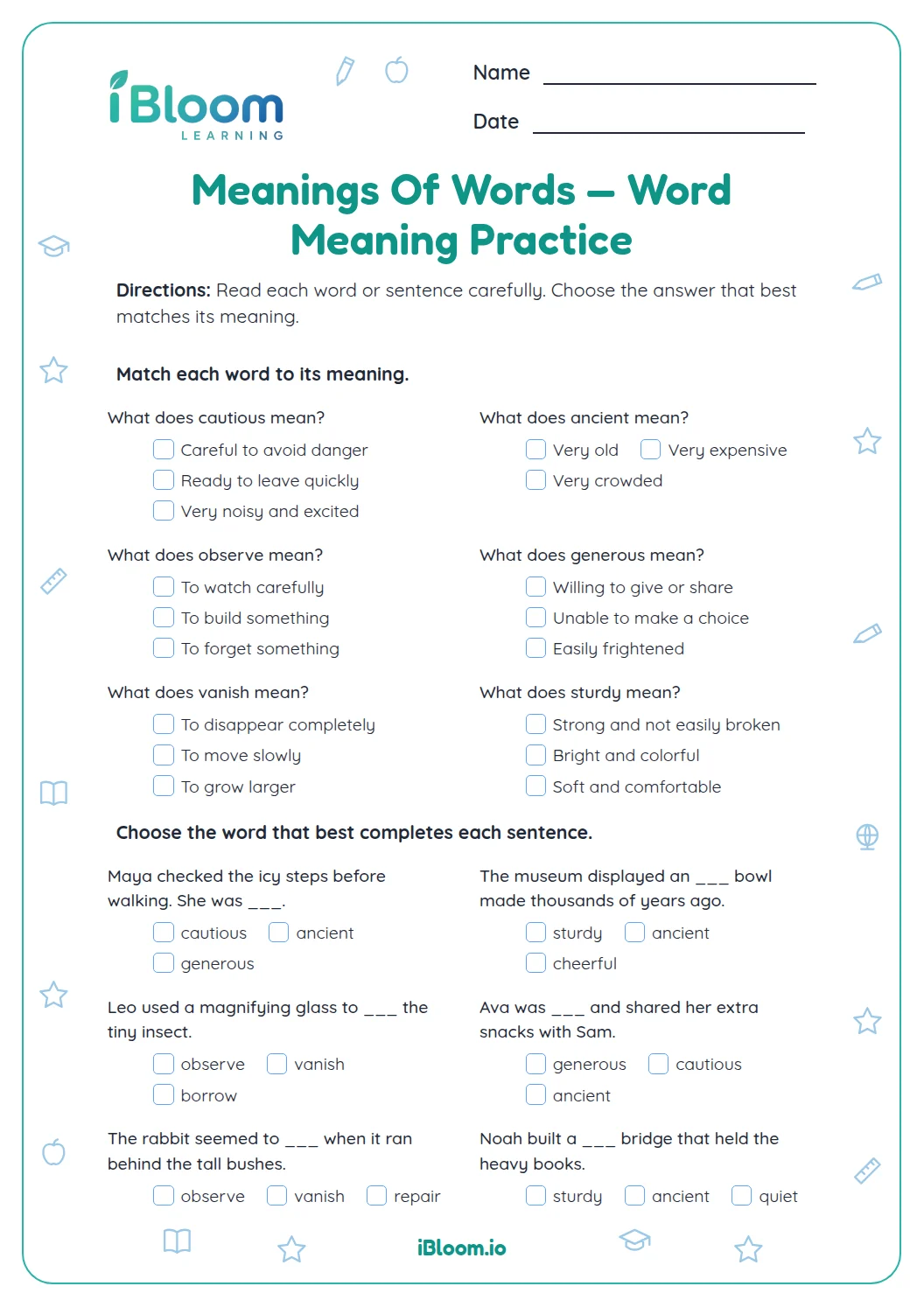
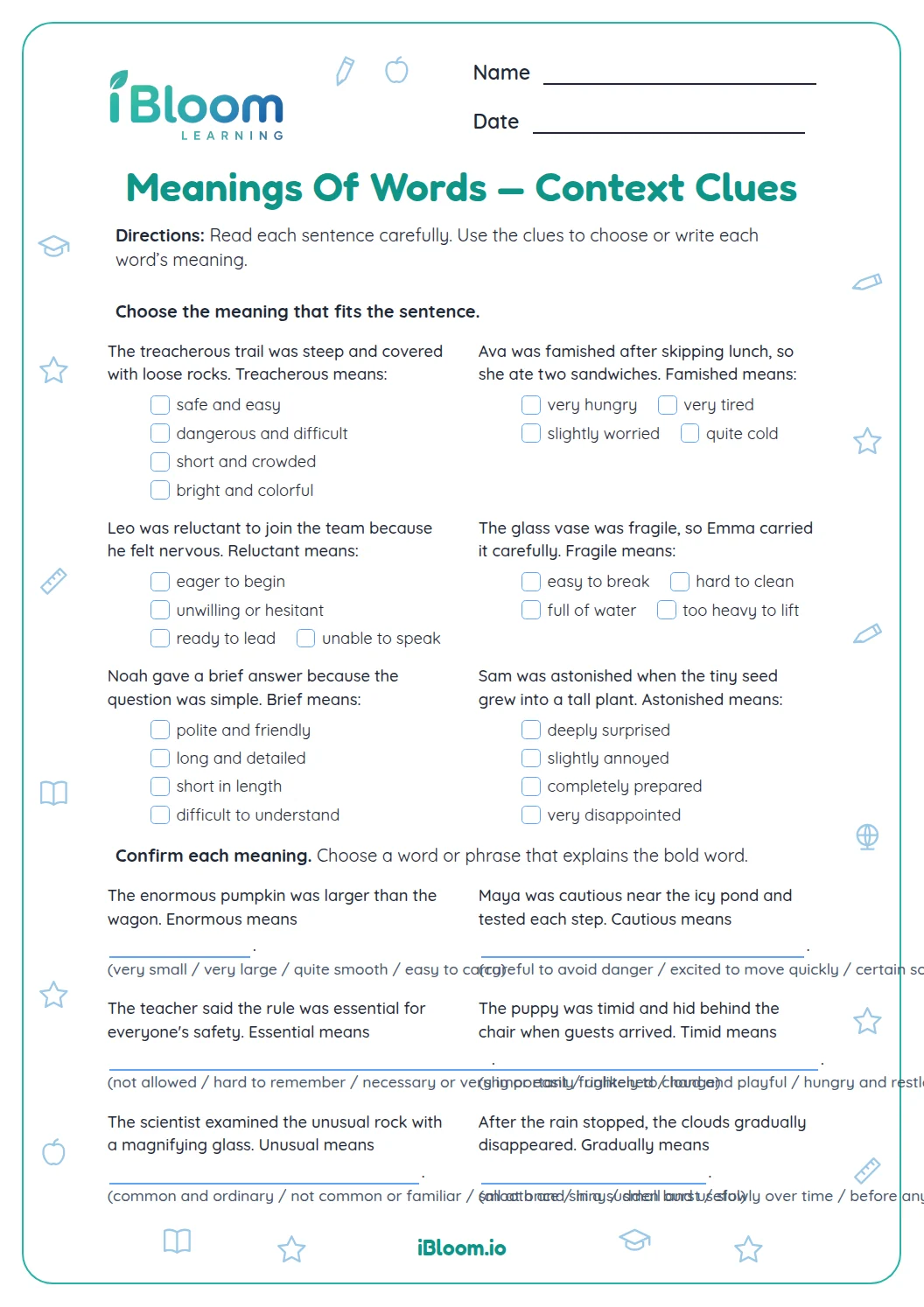
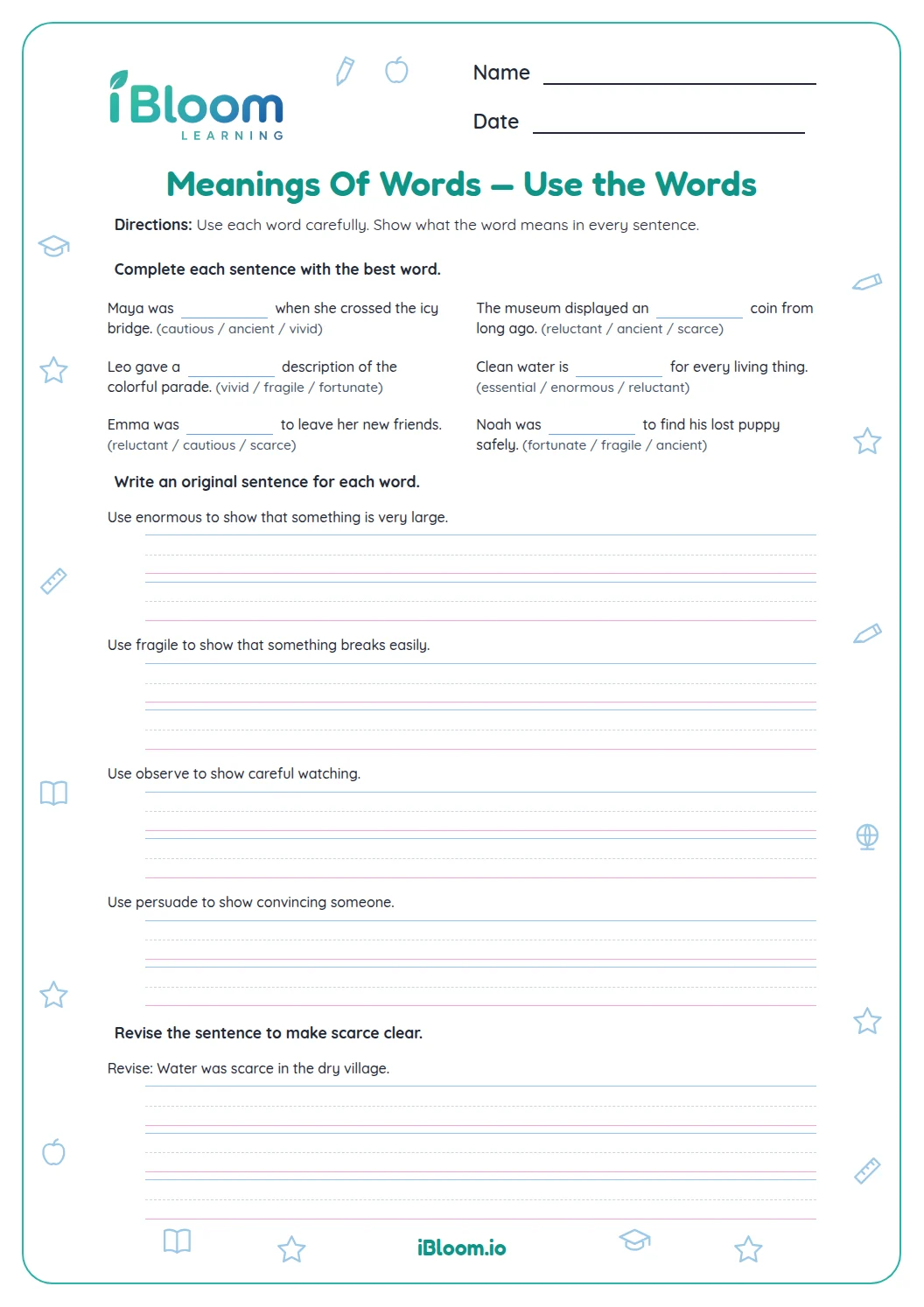
About this worksheet
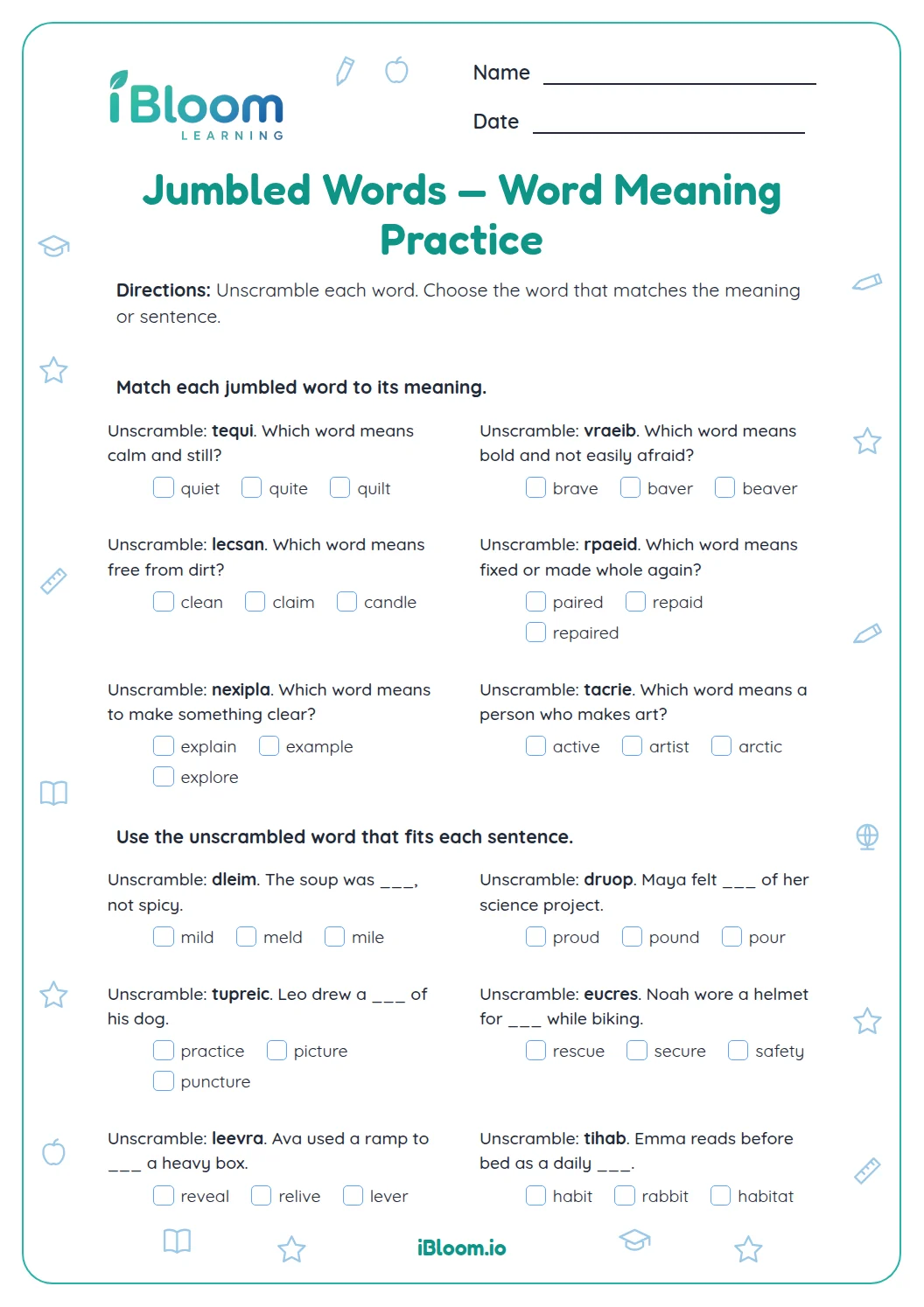
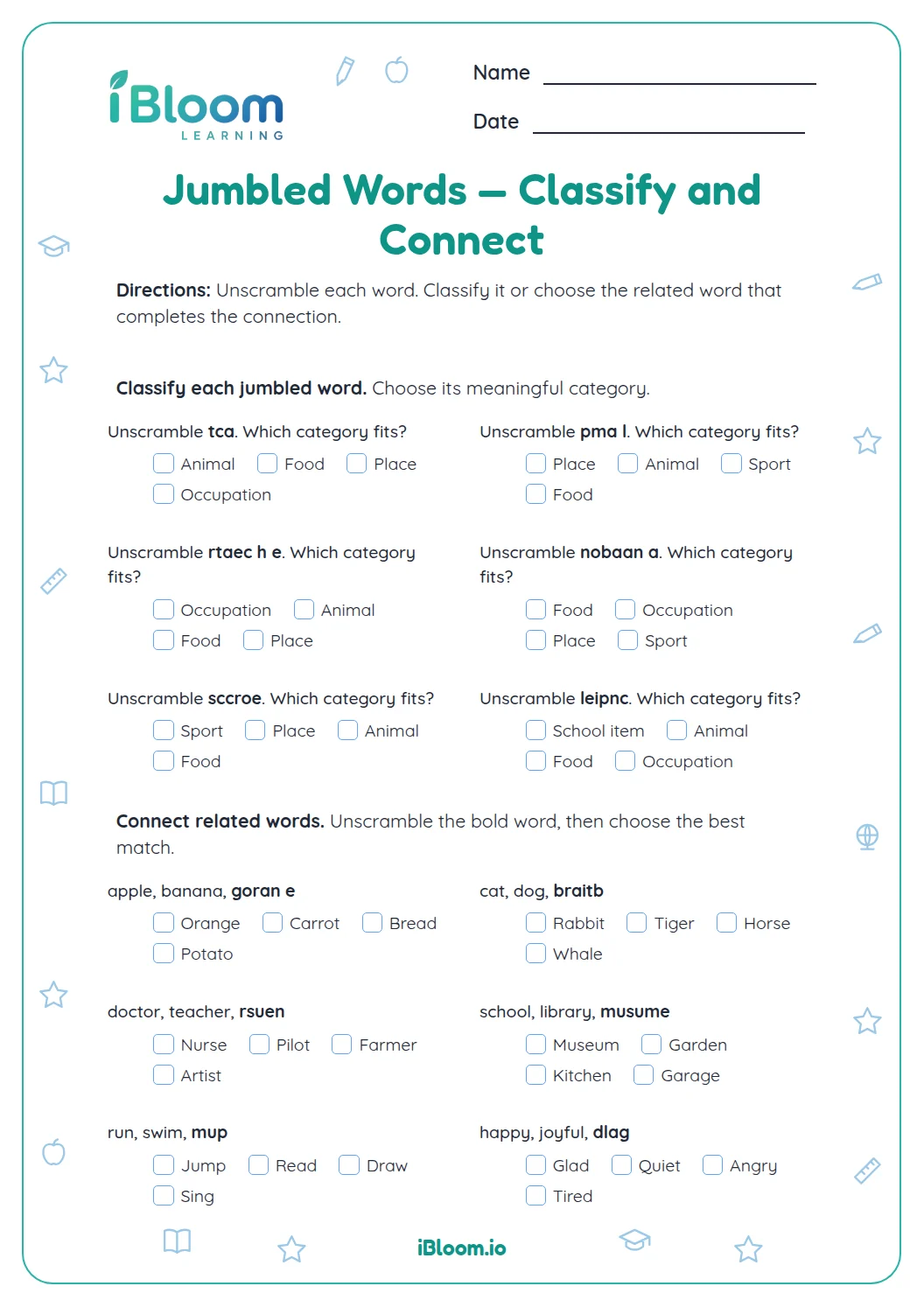
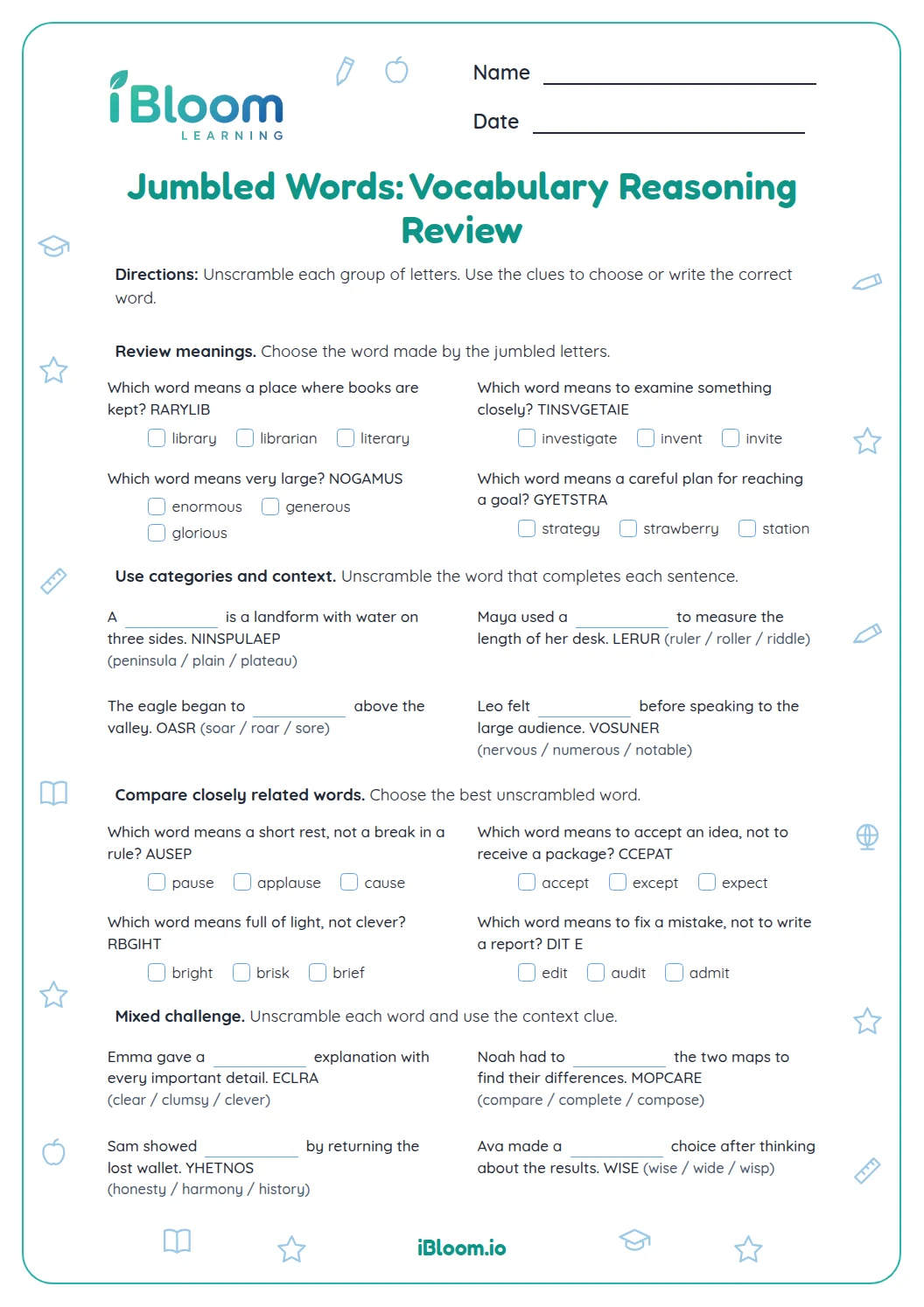
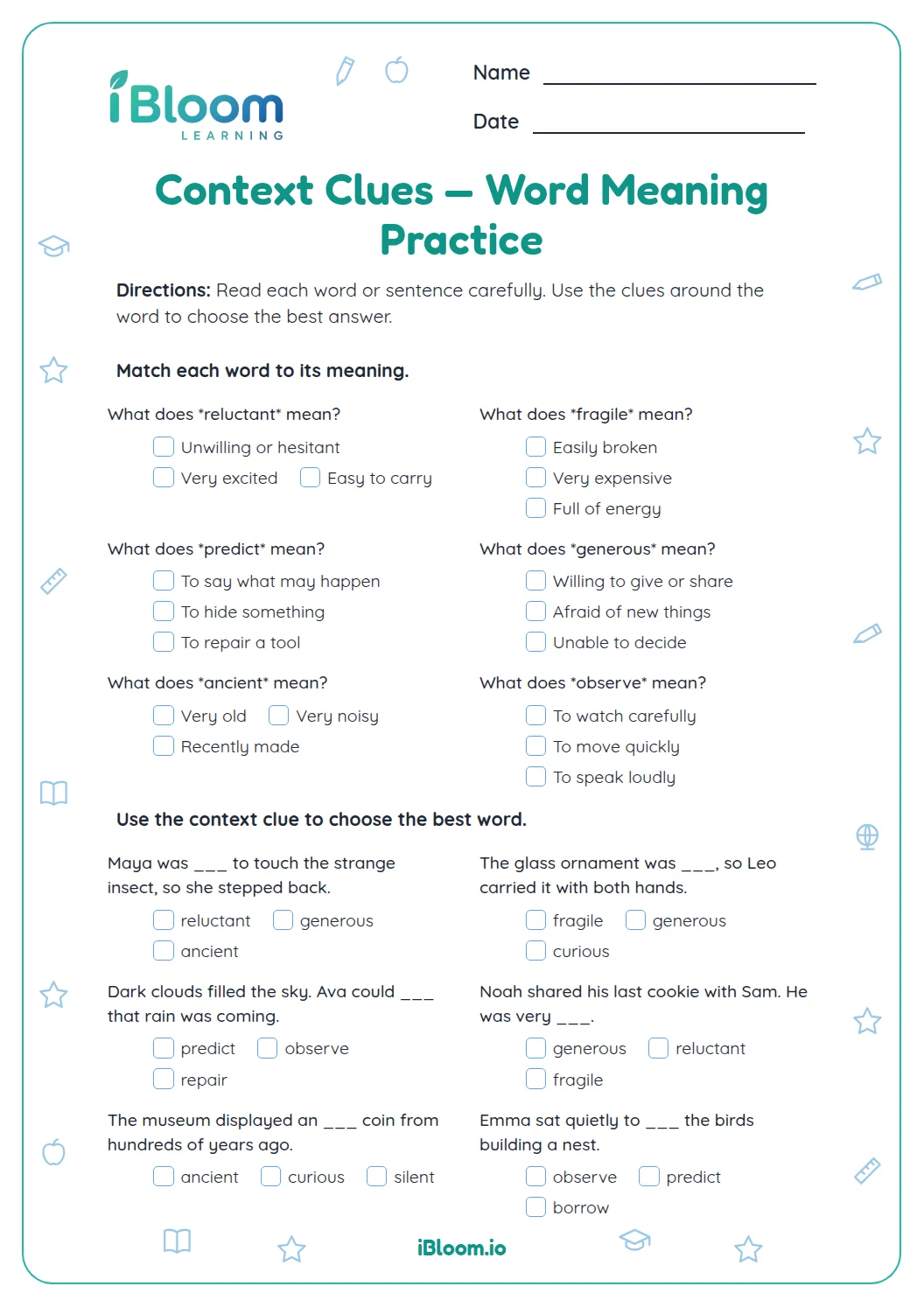
This free Grade 5 worksheet pairs 14 jumbled vocabulary words with sentence clues. In each item, unscramble the letters, then use the sentence to confirm the word fits: “PEEST” becomes “steep” in a sentence about a sharply rising ridge. The activity gives direct practice with context as a clue to word meaning and includes a separate answer key. It connects to Common Core L.5.4a.
Aligned to L.5.4a
How do context clues help solve a jumbled word?
A jumbled word supplies the letters, while the rest of its sentence confirms which arrangement makes sense. For PEEST, the clue “ridge that rose sharply” points to steep. Children should use both the letters and the sentence rather than guessing from either alone.
How can a learner check an answer?
Unscramble the letters, read the completed sentence aloud, and ask whether the word fits the details. For q1, “The hikers climbed a steep ridge that rose sharply” is sensible; a different arrangement would not use all the letters and fit the clue.
- 1PEEST: The hikers climbed a ___ ridge that rose sharply.
- 2Answer: steep
What words and clues are on the sheet?
Part A has eight sentence blanks, including a steep ridge, a weary runner, and arid soil. Part B has six more, including a curious child, abundant harvest, and a transparent window. Each answer is a single word formed from the displayed letters.
How to use this Grade 5 vocabulary sheet
- 1Ask the learner to rearrange all the letters before writing.
- 2Read the full sentence and identify the detail that signals the word.
- 3Try the completed word in the blank to check its meaning.
- 4Work through Part A, then continue to Part B.
- 5Compare responses with the key and revisit any sentence that does not sound right.
Common context-clue mistakes
The mistake
Leaving out a letter while unscrambling.
The fix
Count the letters in the proposed answer and match them to the jumble.
The mistake
Choosing a word that fits the sentence but not the letters.
The fix
Check both constraints: every letter must be used once, and the sentence must make sense.
The mistake
Using only the word pattern and ignoring the clue.
The fix
Read the whole sentence after unscrambling; details such as “rose sharply” confirm steep.
Common Core alignment
This worksheet gives focused practice connected to the following Common Core standard.
This sheet practices grade 5 vocabulary context clues through its questions.
On this sheet: Each question gives practice connected to grade 5 vocabulary context clues.
Show the official wordingHide the official wording
Use context (e.g., cause/effect relationships and comparisons in text) as a clue to the meaning of a word or phrase.
What to practice next
Further reading
Questions parents and teachers ask
Does the sentence give away every answer?
The sentence gives a meaning clue, but the learner still has to rearrange the letters to find the matching word. For example, “rose sharply” points toward steep, and PEEST contains exactly the letters needed. Reading the completed sentence is the final check.
How many words are included?
There are 14 jumbled words, each used in a sentence blank. The first eight form Part A, and the next six form Part B. A separate answer key lists the word for every item, so an adult can check the work after the learner finishes.
What should a learner do if two words seem possible?
Check the letters first: the answer must use every given letter exactly once. Then test that word in the full sentence. A word may fit the general topic but still be wrong if it does not match the jumble or the specific clue.
What skill does the worksheet practice?
It practices using sentence context to confirm a word’s meaning while solving a letter jumble. Learners use clues such as a sharply rising ridge or a window that lets sunlight pass through, then check the answer against the printed letters.
Is the answer key included?
Yes. The printable includes a separate answer key page with the completed words. Encourage the learner to try each jumble first, then use the key to check and correct responses. For a missed item, reread its sentence and explain which clue supports the word.