Free printable practice
Similes Metaphors Practice Activities
Grade 5 vocabulary worksheets for identifying, interpreting, and writing similes and metaphors in meaningful sentences.
Free printable worksheet PDFs
Preview every available page, then download the free worksheet PDF for home, homeschool, tutoring, or classroom practice.
Preview the exact activity before downloading it.
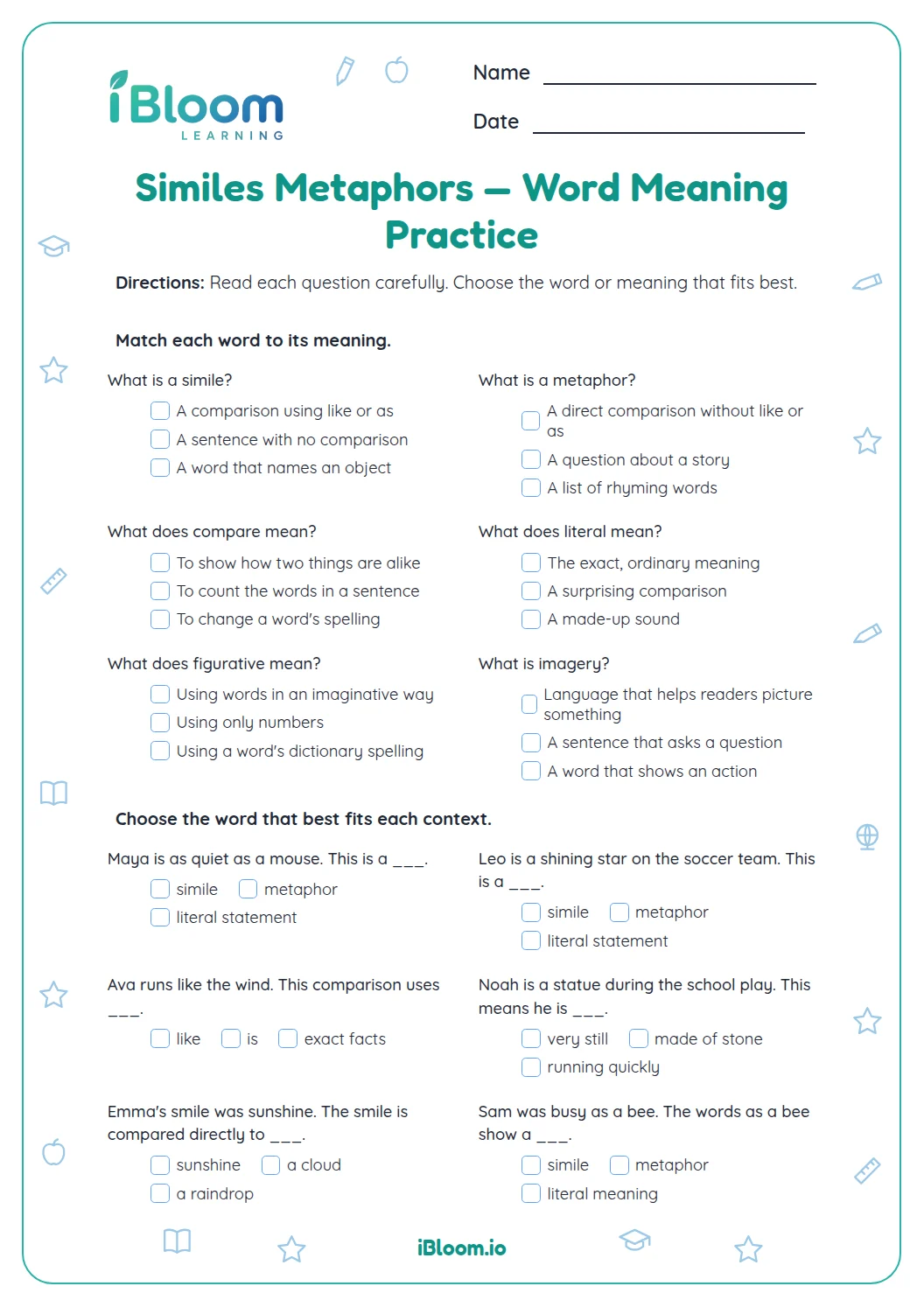 Similes Metaphors — Word Meaning PracticeGrade 5 vocabulary worksheets for identifying, interpreting, and writing similes and metaphors in meaningful sentences. This word meaning practice worksheet provides a distinct, age-appropriate way to practise the same lesson.Grade 5Free PDF preview
 Similes Metaphors — Classify and ConnectGrade 5 vocabulary worksheets for identifying, interpreting, and writing similes and metaphors in meaningful sentences. This classify and connect worksheet provides a distinct, age-appropriate way to practise the same lesson.Grade 5Free PDF preview
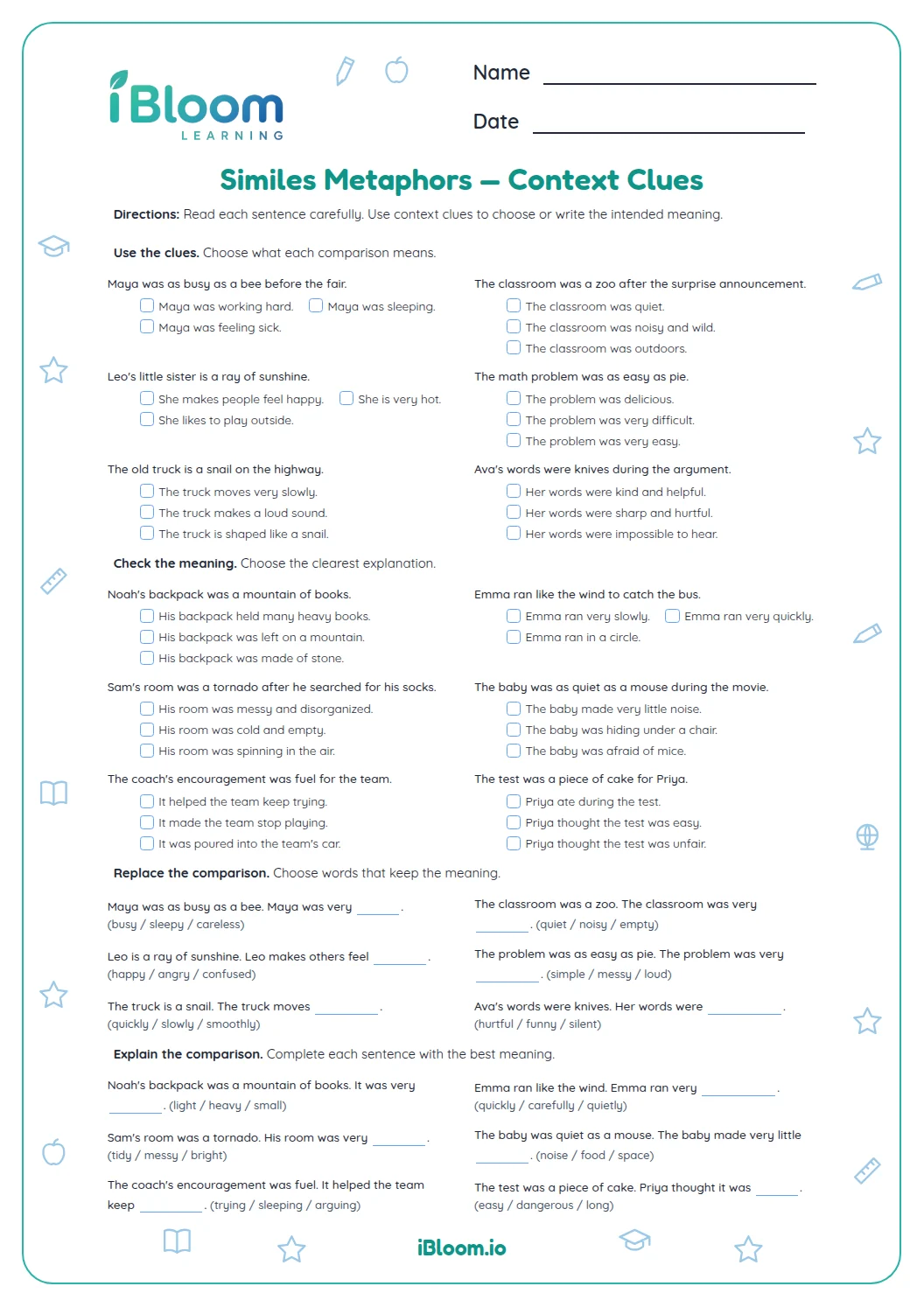 Similes Metaphors — Context CluesGrade 5 vocabulary worksheets for identifying, interpreting, and writing similes and metaphors in meaningful sentences. This context clues worksheet provides a distinct, age-appropriate way to practise the same lesson.Grade 5Free PDF preview
 Similes Metaphors — Use the WordsGrade 5 vocabulary worksheets for identifying, interpreting, and writing similes and metaphors in meaningful sentences. This use the words worksheet provides a distinct, age-appropriate way to practise the same lesson.Grade 5Free PDF preview
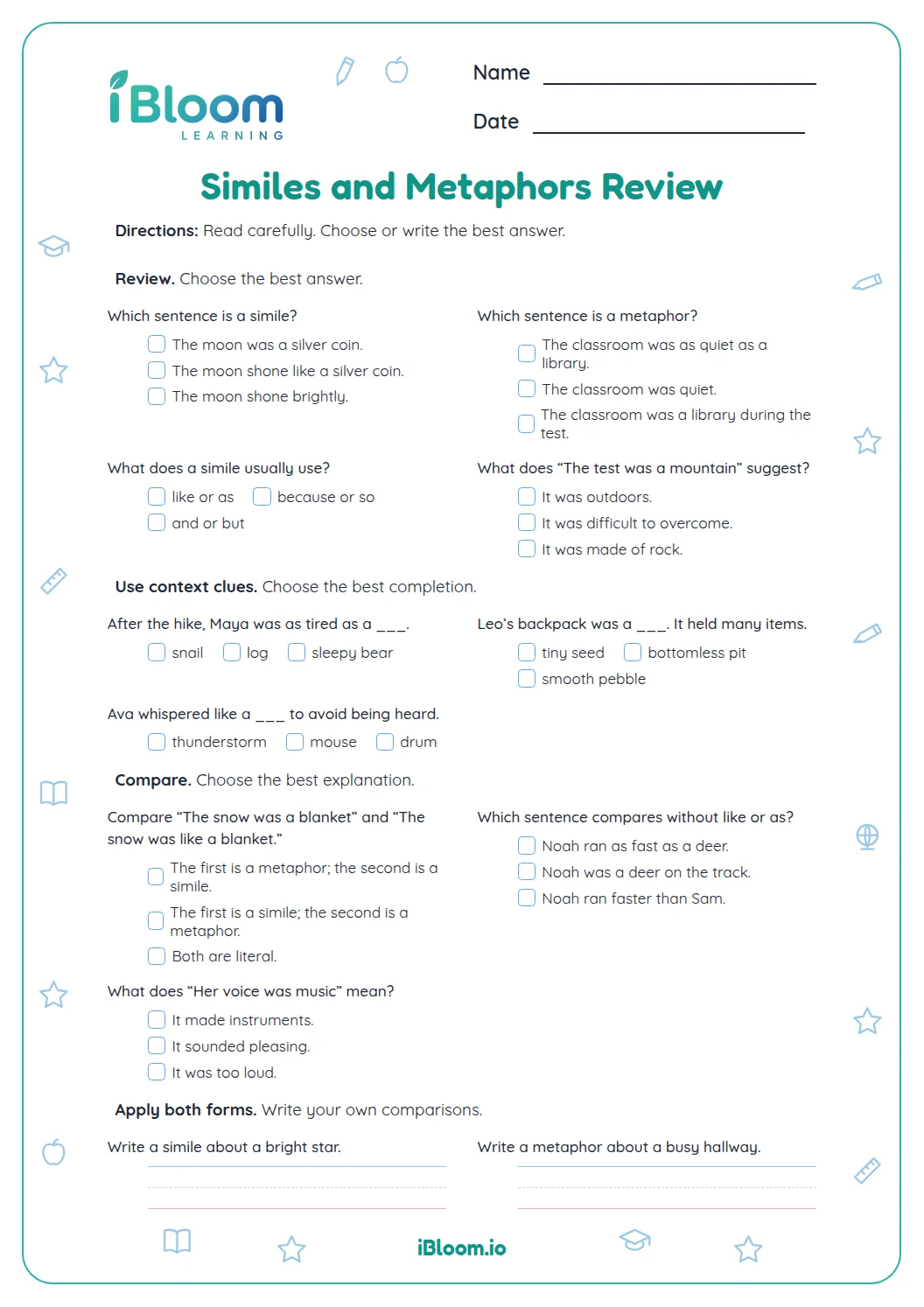 Similes Metaphors — Vocabulary Reasoning ReviewGrade 5 vocabulary worksheets for identifying, interpreting, and writing similes and metaphors in meaningful sentences. This vocabulary reasoning review worksheet provides a distinct, age-appropriate way to practise the same lesson.Grade 5Free PDF preview
Practice that builds confidence
What Grade 5 Learners Need to Notice
These Grade 5 vocabulary worksheets help children understand how similes and metaphors make writing more vivid. Learners practise spotting comparisons, telling whether a sentence uses a simile or a metaphor, and explaining the meaning behind figurative language.
The printable activities include sentence analysis, sorting tasks, short written responses, and opportunities to create original comparisons. Children move from recognizing signal words such as “like” and “as” to explaining images such as “the classroom was a beehive.”
Similes and metaphors both compare unlike things, but they do it in different ways. A simile uses words such as “like” or “as,” as in “as quiet as a mouse.” A metaphor says one thing is another, as in “her smile was sunshine.” These worksheets keep the focus on meaning, not just labels.

From Identification to Interpretation
Children first decide whether a sentence is literal or figurative, then identify the type of comparison. The next step is explaining what the comparison suggests: speed, brightness, noise, fear, kindness, or another quality. This progression helps Grade 5 students move beyond circling answers and toward thoughtful vocabulary understanding.
A Simple Home Routine
Parents can choose one worksheet sentence and ask three questions: What two things are being compared? Is it a simile or a metaphor? What does the writer want us to imagine? After that, invite your child to improve a plain sentence, such as “The room was noisy,” by writing a simile or metaphor of their own.

Classroom Uses for Teachers
Teachers can use these printables for vocabulary centers, morning work, small-group review, or a quick figurative language check after a reading lesson. Students can sort examples, annotate signal words, discuss the author’s meaning with a partner, and then apply the same skill in a short writing task.

Common Mix-Ups to Watch For
Some children mark every sentence with “like” as a simile, even when no comparison is being made, such as “I like apples.” Others identify the type correctly but give a literal explanation. A helpful child-friendly strategy is: “Find the two things, name the picture in your mind, then say what quality they share.”
Free printable PDF download
Use this grade 5 similes and metaphors worksheet page to preview the activity, print it, or download it as a PDF for quick practice. It works well for homework, homeschool lessons, tutoring, morning work, revision, and classroom centers.
Answers and answer key support
After the child completes the worksheet independently, parents and teachers can use the answer support or answer key information to check the work, review mistakes, and choose the next practice step.
Why iBloom Worksheets Help
iBloom worksheets give Grade 5 learners repeated, varied practice with clear examples and age-appropriate sentences. The activities balance recognition, explanation, and original writing so children build vocabulary, reading comprehension, and stronger descriptive writing at the same time.
Helpful answers
Frequently asked questions
What is the main skill in these Grade 5 similes and metaphors worksheets?
The main skill is understanding figurative comparisons. Students identify similes and metaphors, explain what they mean, and use them to make writing more descriptive.
How can my child tell a simile from a metaphor?
A simile compares two unlike things using words such as “like” or “as.” A metaphor makes a direct comparison by saying one thing is another, without using “like” or “as.”
Do these worksheets include writing practice?
Yes. Along with identifying and explaining examples, children practise creating their own similes and metaphors from simple ideas or sentences.
What common mistake should Grade 5 students avoid?
A common mistake is treating every sentence with “like” as a simile. Students should check whether two unlike things are actually being compared.
How do similes and metaphors support reading comprehension?
They help students understand the images and feelings an author creates. When children can explain a comparison, they often understand the passage more deeply.
Is this grade 5 similes and metaphors worksheet free?
Yes. You can preview it for free and use the printable worksheet for home or classroom practice.
Can I download this grade 5 similes and metaphors worksheet as a PDF?
Yes. Use the worksheet download option to save a printable PDF, or print the worksheet directly from the page.
Does this grade 5 similes and metaphors worksheet include answers or an answer key?
When the activity has fixed answers, iBloom includes answer support so parents and teachers can check the completed worksheet.