Free printable practice
Proverb Practice Activities
Grade 5 proverb worksheets help students interpret common sayings, explain their lessons, and use them meaningfully in reading and writing.
Free printable worksheet PDFs
Preview every available page, then download the free worksheet PDF for home, homeschool, tutoring, or classroom practice.
Preview the exact activity before downloading it.
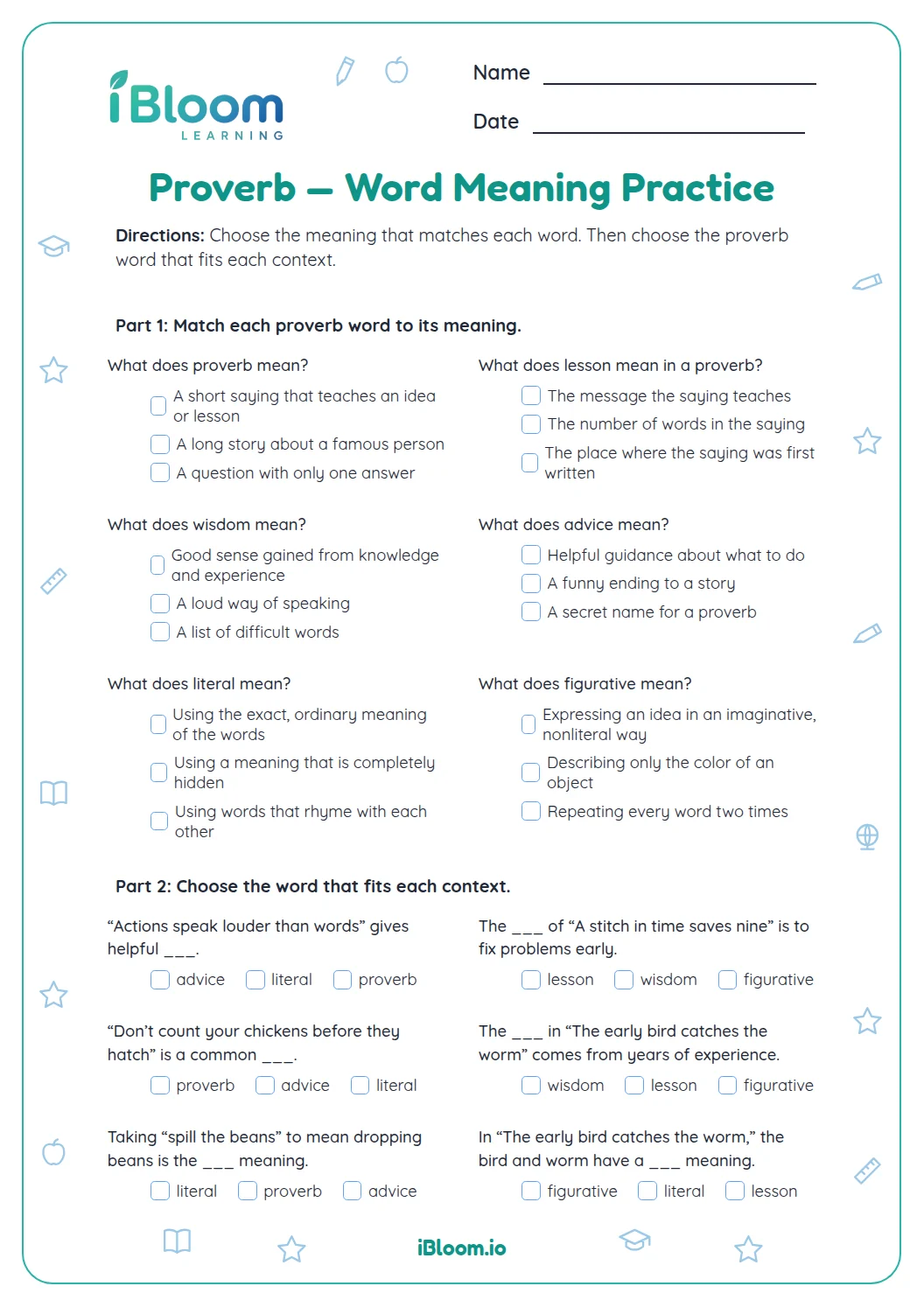 Proverb — Word Meaning PracticeGrade 5 proverb worksheets help students interpret common sayings, explain their lessons, and use them meaningfully in reading and writing. This word meaning practice worksheet provides a distinct, age-appropriate way to practise the same lesson.Grade 5Free PDF preview
 Proverb — Classify and ConnectGrade 5 proverb worksheets help students interpret common sayings, explain their lessons, and use them meaningfully in reading and writing. This classify and connect worksheet provides a distinct, age-appropriate way to practise the same lesson.Grade 5Free PDF preview
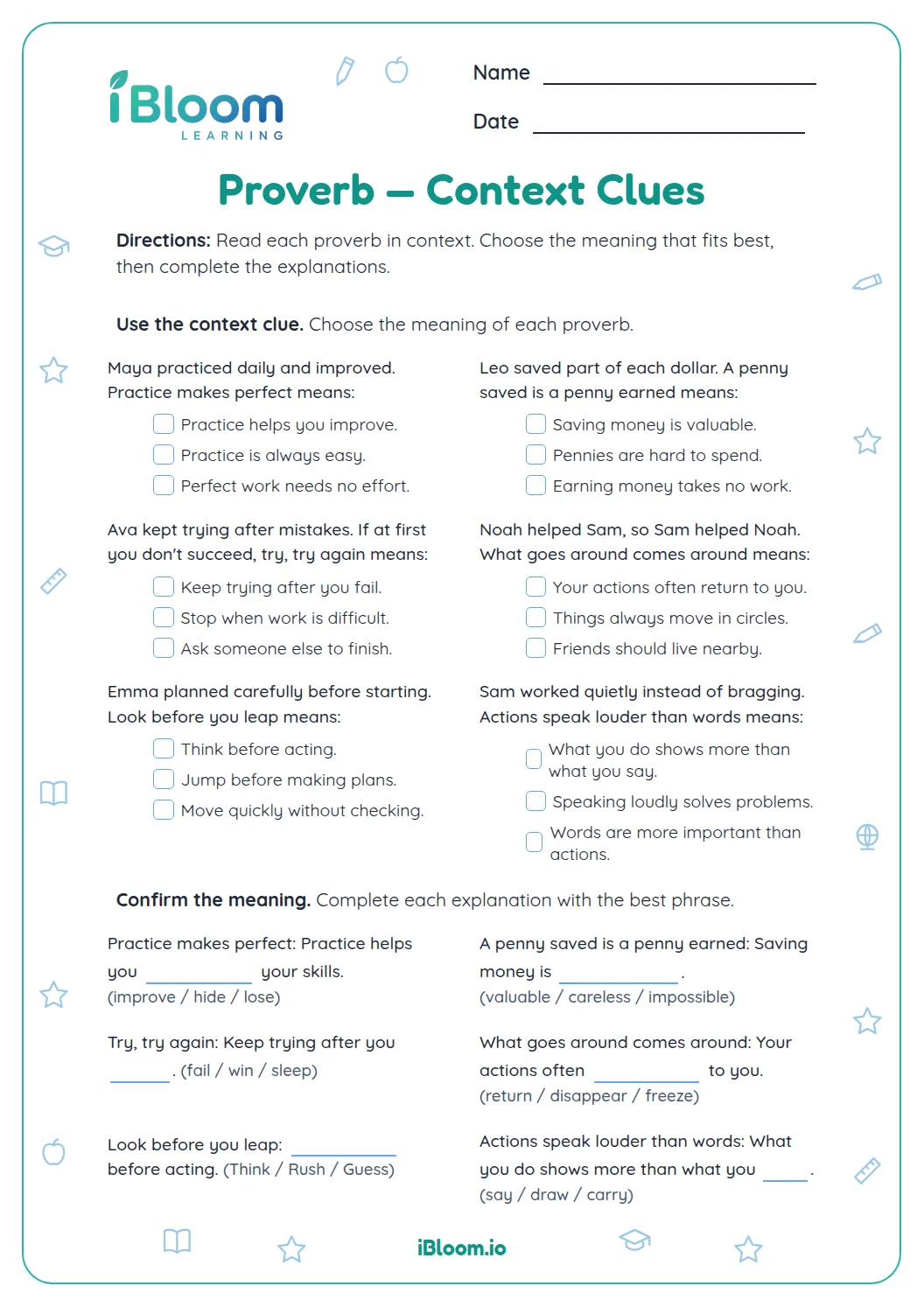 Proverb — Context CluesGrade 5 proverb worksheets help students interpret common sayings, explain their lessons, and use them meaningfully in reading and writing. This context clues worksheet provides a distinct, age-appropriate way to practise the same lesson.Grade 5Free PDF preview
 Proverb — Use the WordsGrade 5 proverb worksheets help students interpret common sayings, explain their lessons, and use them meaningfully in reading and writing. This use the words worksheet provides a distinct, age-appropriate way to practise the same lesson.Grade 5Free PDF preview4 pages
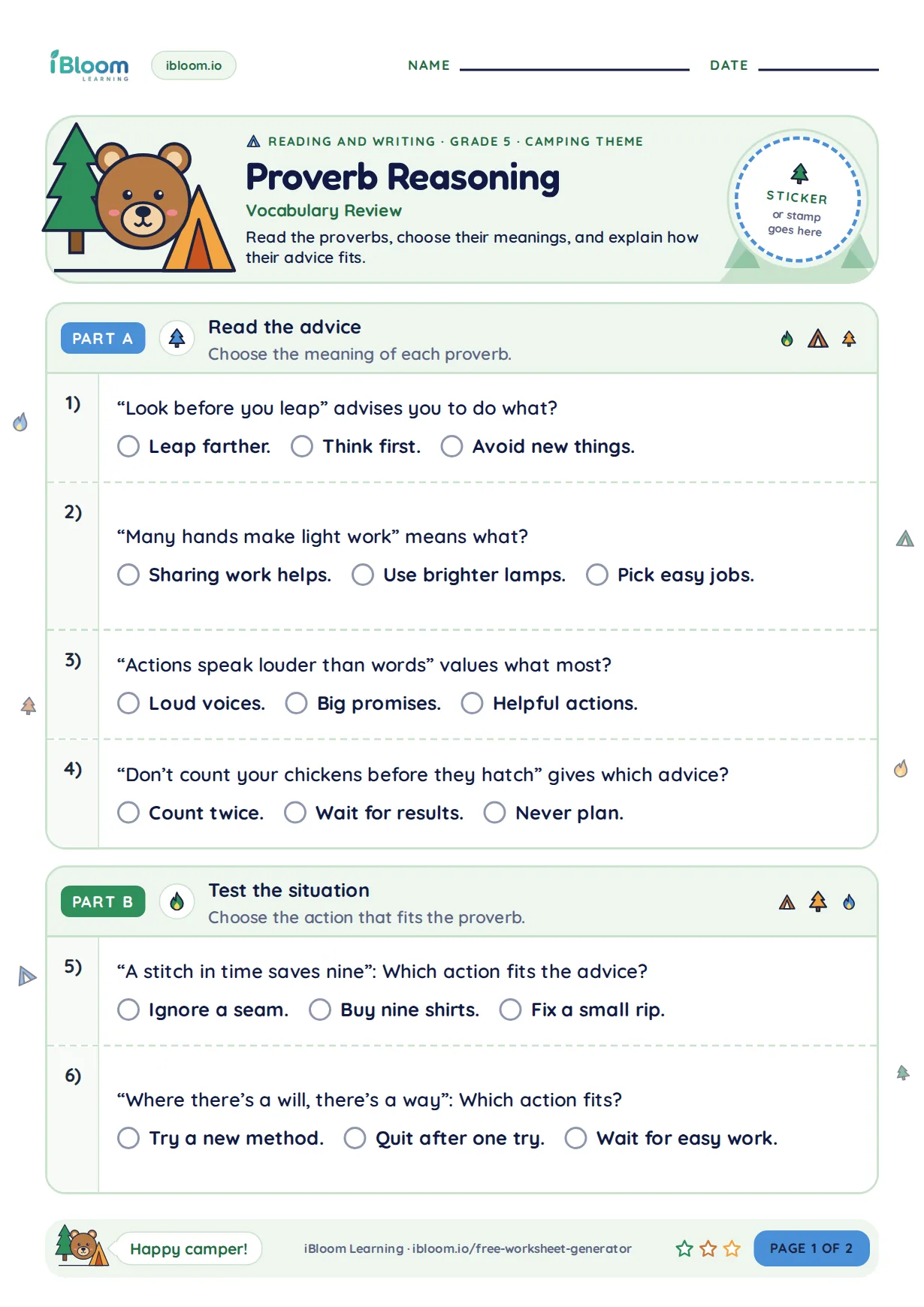 Proverb — Vocabulary Reasoning ReviewGrade 5 proverb worksheets help students interpret common sayings, explain their lessons, and use them meaningfully in reading and writing. This vocabulary reasoning review worksheet provides a distinct, age-appropriate way to practise the same lesson.Grade 5Free PDF preview
Practice that builds confidence
Understanding figurative wisdom
These Grade 5 vocabulary worksheets give students focused practice with proverbs: short, memorable sayings that teach a lesson or offer practical wisdom. Children learn to move beyond the literal words and explain what a proverb means in everyday situations.
The printable activities include matching proverbs to meanings, choosing the best proverb for a short scenario, completing sentences, and writing brief explanations. Students practise careful reading, inference, context clues, and precise word choice while building a richer vocabulary.
Proverbs can be tricky because the surface meaning is often not the real message. In these activities, students may meet sayings such as "Actions speak louder than words," "The early bird catches the worm," or "Don't count your chickens before they hatch." The goal is not memorising a list; it is understanding the advice behind each expression and recognising when it fits a situation.

Skill progression for Grade 5
The practice moves from recognition to application. Students first connect a proverb with a plain-language meaning. Then they read short contexts and decide which saying best matches the lesson. Stronger learners can explain why a proverb fits, compare two similar sayings, or write a sentence that uses the proverb naturally. This builds vocabulary, comprehension, and flexible thinking.
A simple parent routine
At home, choose one proverb from the worksheet and ask your child three questions: What do the words literally say? What lesson does it teach? When might someone use it? Connect the saying to a real event, such as practising before a game, saving money, or apologising after a mistake. Keeping the discussion conversational helps children see proverbs as useful language, not just test items.

Classroom uses for teachers
Teachers can use these pages for vocabulary centers, morning work, small-group reading support, or quick discussion starters. Students can sort proverbs by theme, such as patience, honesty, effort, or caution. Pairs can defend their answers by pointing to evidence in a scenario, which encourages accountable talk and deeper comprehension.

Common errors to watch for
Some students explain only the literal picture, such as imagining actual birds or chickens. Others choose a proverb because one word seems to match the story, even when the lesson does not. Encourage them to ask, "What is the person learning?" and "What advice would this proverb give?" This helps separate wording from meaning.
Free printable PDF download
Use this Grade 5 proverb worksheet page to preview the activity, print it, or download it as a PDF for quick practice. It works well for homework, homeschool lessons, tutoring, morning work, revision, and classroom centers.
Answers and answer key support
After the child completes the worksheet independently, parents and teachers can use the answer support or answer key information to check the work, review mistakes, and choose the next practice step.
Why iBloom worksheets help
The worksheets give repeated, varied practice without overwhelming students. Clear prompts, familiar examples, and short writing tasks help Grade 5 learners interpret figurative language with confidence. A child-friendly strategy is: read it, picture it, translate it, then test it in a real-life situation.
Helpful answers
Frequently asked questions
What is a proverb for Grade 5 students?
A proverb is a short, well-known saying that gives advice or teaches a lesson, such as "Practice makes perfect" or "Honesty is the best policy." Grade 5 students learn to explain the meaning, not just repeat the words.
How do these worksheets help with reading comprehension?
Students must infer the lesson behind a saying and match it to a situation. That strengthens the same skills used when reading stories, articles, and dialogue with figurative language.
Should students memorize every proverb?
Memorizing can help, but understanding is more important. Students should be able to explain the proverb in their own words and give an example of when it would apply.
What is a common mistake children make with proverbs?
Many children focus on the literal image, such as birds, worms, or chickens, instead of the lesson. Asking them to restate the proverb as advice helps correct this.
Can these proverb worksheets be used for writing practice?
Yes. Students can write a short paragraph, story ending, or personal example that shows the meaning of a proverb. This helps them use the expression accurately in context.
Is this Grade 5 proverb worksheet free?
Yes. You can preview it for free and use the printable worksheet for home or classroom practice.
Can I download this Grade 5 proverb worksheet as a PDF?
Yes. Use the worksheet download option to save a printable PDF, or print the worksheet directly from the page.
Does this Grade 5 proverb worksheet include answers or an answer key?
When the activity has fixed answers, iBloom includes answer support so parents and teachers can check the completed worksheet.