
Grade 1 Subtraction Word Problems Lesson
Preparing your worksheet
Modeling Subtraction Word Problems with Ten Frames (Numbers Up to 10) Lesson for First Grade: targeted lesson practice for subtraction word problems grade 1 lesson
Modeling Subtraction Word Problems with Ten Frames (Numbers Up to 10) Lesson for First Grade is designed for children who need focused math practice with modeling subtraction word problems with ten frames numbers up to 10. Use Modeling Subtraction Word Problems with Ten Frames (Numbers Up to 10) Lesson for First Grade as the main page, then move to the paired worksheet for Modeling Subtraction Word Problems with Ten Frames (Numbers Up to 10) Lesson for First Grade when the child needs the same skill in another format.
This expanded guide is written for parents, teachers, tutors, homeschool families, and children. It directly supports searches like subtraction word problems grade 1 lesson by giving clear examples, answer-checking language, and a practical routine. parents and teachers searching for subtraction word problems usually need printable-style examples, model choices, answer-checking language, and a short teaching routine. In the United States, it can support pre-K, kindergarten, Grade 1, Grade 2, Grade 4, Grade 5, homeschool, California, Texas, Florida, New York, Illinois, Pennsylvania, Ohio, Georgia, North Carolina, Michigan, Los Angeles, Houston, Chicago, Dallas, Seattle, Boston, Denver, Atlanta, and Miami. In the UAE, it can support Dubai, Abu Dhabi, Sharjah, Ajman, Al Ain, Ras Al Khaimah, Fujairah, Umm Al Quwain, and British, American, IB, and Indian curriculum schools. In India, this can support CBSE, ICSE, state-board, LKG, UKG, Class 1, Class 2, Delhi, Mumbai, Bengaluru, Chennai, Hyderabad, Pune, Kolkata, Ahmedabad, Jaipur, Kerala, Tamil Nadu, Karnataka, Maharashtra, Telangana, Gujarat, Rajasthan, and West Bengal.
What the child should be able to do
The child should be able to read the story, find what is being taken away, choose a model, subtract, and explain the answer. A strong answer is not only a selected option. It includes a short reason, a pointed clue, a model, a sound, a drawing, or a counted group that shows how the child knows.
For adults, the most useful check is the explanation. If the explanation is missing, slow down before adding more items. If the child can explain one answer clearly, the page is doing more than filling time; it is building usable understanding.
Quick start routine
- Read the title and name the skill in child-friendly language.
- Do one example together while pointing to the clue, model, sound, object, or number.
- Let the child complete one item independently.
- Ask, "How did you know?" before moving to the next item.
- Use one related iBloom page for review after a short break.
For nearby support, connect this page with the related iBloom guide for this skill, another supporting practice guide, and a second related iBloom resource. These links help children move from explanation to practice without searching from scratch.
Examples children can try
- There are 9 crayons. 3 crayons roll away. How many crayons are left?
- A child has 10 blocks. 4 blocks are used in a tower. How many blocks are not used?
- Draw a ten-frame, cross out the taken-away objects, and write the subtraction sentence.
- Use a number line to jump back and say what each jump means.
Ask the child to compare two strategies and choose the clearer one. This creates deeper practice without making the session too long. Children who can create or compare an example usually understand the skill better than children who only mark answers quickly.
Parent practice plan
Parents can use this lesson for five to ten minutes. Start with one item, ask the child to say the direction aloud, and keep the page open while the child explains. If the child guesses, use a real object, a drawing, a sound prompt, or a simpler sentence before returning to the page.
- Use one short round on a school night instead of a long worksheet packet.
- Let the child point, touch, say, draw, or count before writing.
- Ask for one complete sentence: "I know because..."
- Return to the same page after two or three days for review.
If homework focus is difficult, pair this page with Homework Focus Routine for Kids. A clear start, short timer, and one explanation often help more than repeating a broad reminder to concentrate.
Teacher and tutor practice plan
Teachers can use this page as a warm-up, small group station, guided practice page, exit ticket, intervention task, or homework follow-up. Tutors can use the first two items diagnostically: watch whether the child struggles with vocabulary, directions, background knowledge, visual scanning, counting, decoding, or explanation.
In class, model the first item aloud. Then ask children to finish one item and share the clue or model with a partner. This keeps the practice active and gives the teacher fast information about who needs support.
Common mistakes to watch for
- Finishing the page without reading or saying the direction.
- Choosing an answer from memory instead of using the clue or model.
- Skipping the explanation step.
- Moving to a harder page before the child can explain this one.
- Using the same strategy for every question even when another strategy would be clearer.
When this happens, reduce the task to one item. Adult planning resources such as this education guidance page can support instruction, while the child should continue with direct iBloom practice.
How to make the practice stronger
Use the page in three passes. First, complete a few items for accuracy. Second, explain one answer in detail. Third, create or discuss a similar example. This three-pass method helps the page compete with shallow worksheet practice because the child is learning the skill, not just finishing the screen.
For internal practice flow, use supporting iBloom guide for this skill, related iBloom support page 1, and related iBloom support page 2. These pages are connected because they help the same child move from explanation to independent practice.
Location and curriculum notes
Search words differ by country and school system. A parent may search for worksheets, a teacher may search for a lesson, a tutor may search for practice with answers, and a child may simply need the next page. This content supports those real uses without hiding keywords or adding irrelevant text.
For India, terms such as class, worksheet, answers, CBSE, ICSE, and school practice are common. For the United States, parents and teachers often use grade, worksheet, lesson, standard, and homeschool language. For the UAE, many families move between British, American, IB, and Indian curriculum terms, so clear examples and simple explanations matter.
Answer guidance and differentiation
Use the answer as a conversation, not only a mark. If the child answers correctly, ask for the clue, model, sound, number, or word that proved it. If the child answers incorrectly, cover the extra choices and return to the first step. The adult can say, "Show me the part that helped," or "Can you make this answer with objects?" This keeps the practice calm and specific.
For children who need support, reduce the number of items and add more oral practice. For children who are ready for a challenge, ask them to explain two methods, write a new example, or teach the first item to someone else. A teacher can use the same page for mixed groups by changing the expectation: one group may point and say, another group may write a sentence, and another group may create a new question.
- Support level: complete one item with adult modeling and real objects or spoken clues.
- Core level: complete three to five items and explain one answer.
- Challenge level: create a similar item, compare two strategies, or write a full explanation.
- Review level: return after two days and check whether the child still remembers the routine.
This differentiation matters for rankings and for real classroom use because the same page must help a parent at home, a teacher with a small group, and a child who wants to know exactly what to do next.
Simple weekly practice sequence
Use this page across a week instead of trying to finish everything in one sitting. On day one, model the first item and talk through the clue or strategy. On day two, let the child complete a small set independently. On day three, ask the child to explain one answer without help. On day four, connect the page to the paired lesson or worksheet. On day five, review one missed item and one successful item.
This weekly rhythm is especially useful for busy homes and classrooms because it gives repeated exposure without making the page feel repetitive. Parents can use it after school, teachers can use it in centers, and tutors can use it for review. The child sees the same skill several times, but each pass has a different purpose: understand, practise, explain, connect, and review.
- Day 1: adult model with one clear example.
- Day 2: child completes a small independent set.
- Day 3: child explains one answer in detail.
- Day 4: child uses the paired iBloom page for transfer.
- Day 5: child reviews one hard item and one strong item.
Connected iBloom practice
- Modeling Subtraction Word Problems with Ten Frames (Numbers Up to 10) Lesson for First Grade
- paired worksheet for Modeling Subtraction Word Problems with Ten Frames (Numbers Up to 10) Lesson for First Grade
- supporting iBloom guide for this skill
- related iBloom support page 1
- related iBloom support page 2
- related iBloom support page 3
- Free Subtraction Word Problems Using Frames (Numbers 1 to 10) Worksheets for Class 1
- Free Subtraction Word Problems Using Number Line (Numbers 1 to 10) Worksheets for Class 1
- Free Subtraction Word Problems Using Objects (Numbers 1 to 10) Worksheets for Class 1
- Subtraction Word Problems Using Frames (Numbers 1 to 10) Lesson for Class 1
Frequently asked questions
Who is this page best for?
It is best for a First Grade child who needs targeted math practice for modeling subtraction word problems with ten frames numbers up to 10, especially when adults want a short routine with clear explanation.
How long should one session take?
Most children do well with five to ten minutes. Stop after one accurate answer and one clear explanation if attention is fading.
Should children complete every item at once?
No. It is better to complete a smaller set carefully than to rush through the full page without explaining.
What should we do next?
Use the paired lesson or worksheet linked above, then choose one related iBloom guide or practice page for review.
Why was this page prioritized?
Children, parents, and teachers are already finding related iBloom pages for this topic. Supports grade 1 subtraction worksheet rankings. The page now gives deeper examples and clearer next steps for that same audience.
More practice for this grade
More Math lessons
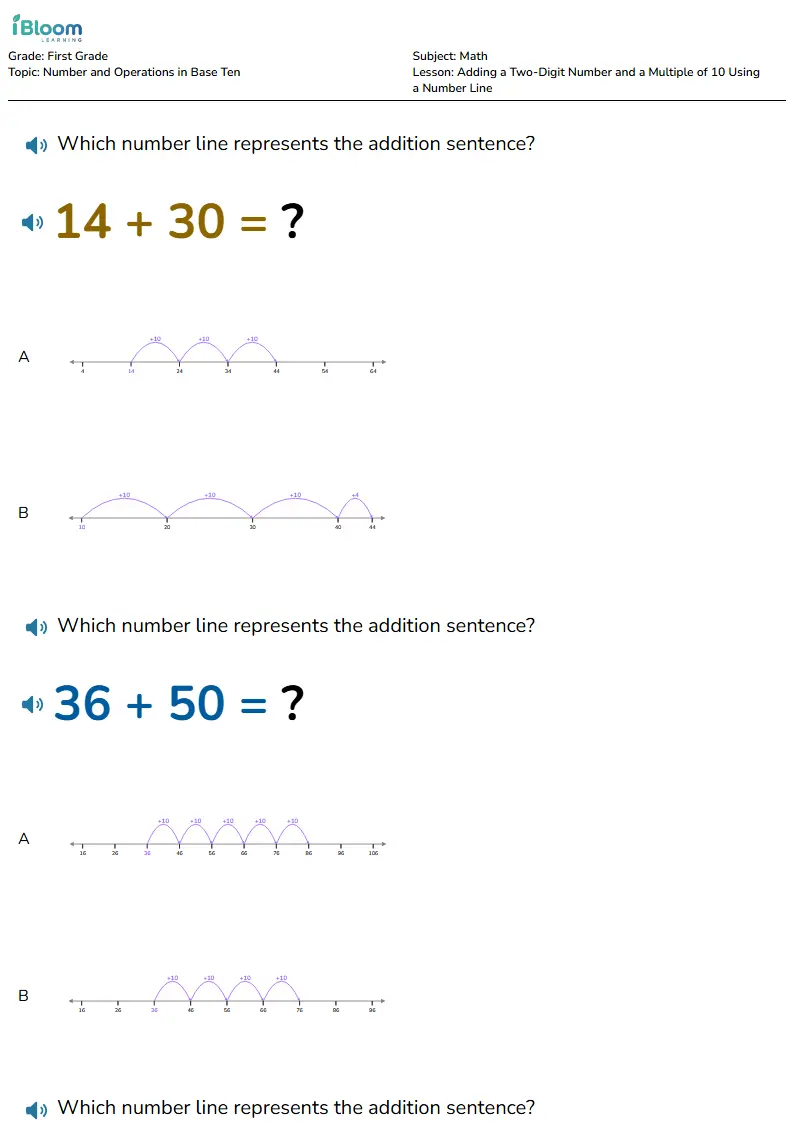
Adding a Two-Digit Number and a Multiple of 10 Using a Number Line Lesson for First Grade
Explore a free interactive math lesson for first grade: Adding a Two-Digit Number and a Multiple of 10 Using a Number Line. AI-personalized, Common Core-aligned, and built for kids.
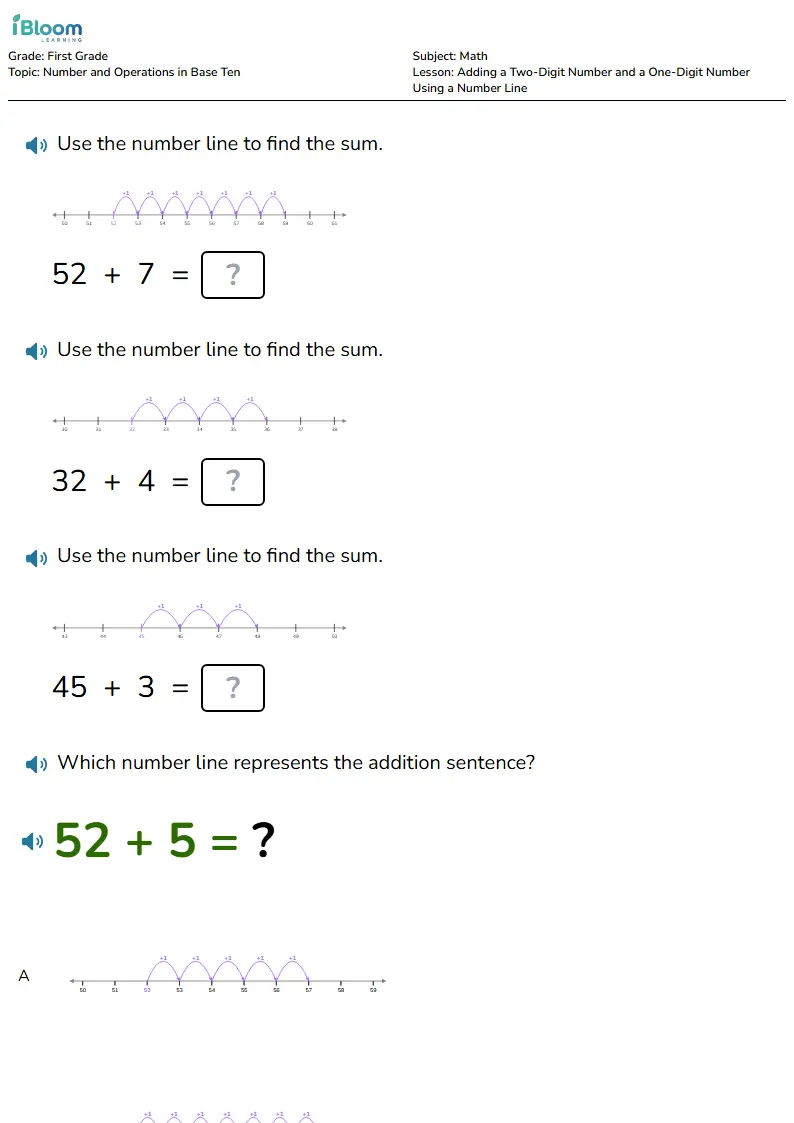
Adding a Two-Digit Number and a One-Digit Number Using a Number Line Lesson for First Grade
Explore a free interactive math lesson for first grade: Adding a Two-Digit Number and a One-Digit Number Using a Number Line. AI-personalized, Common Core-aligned, and built for kids.
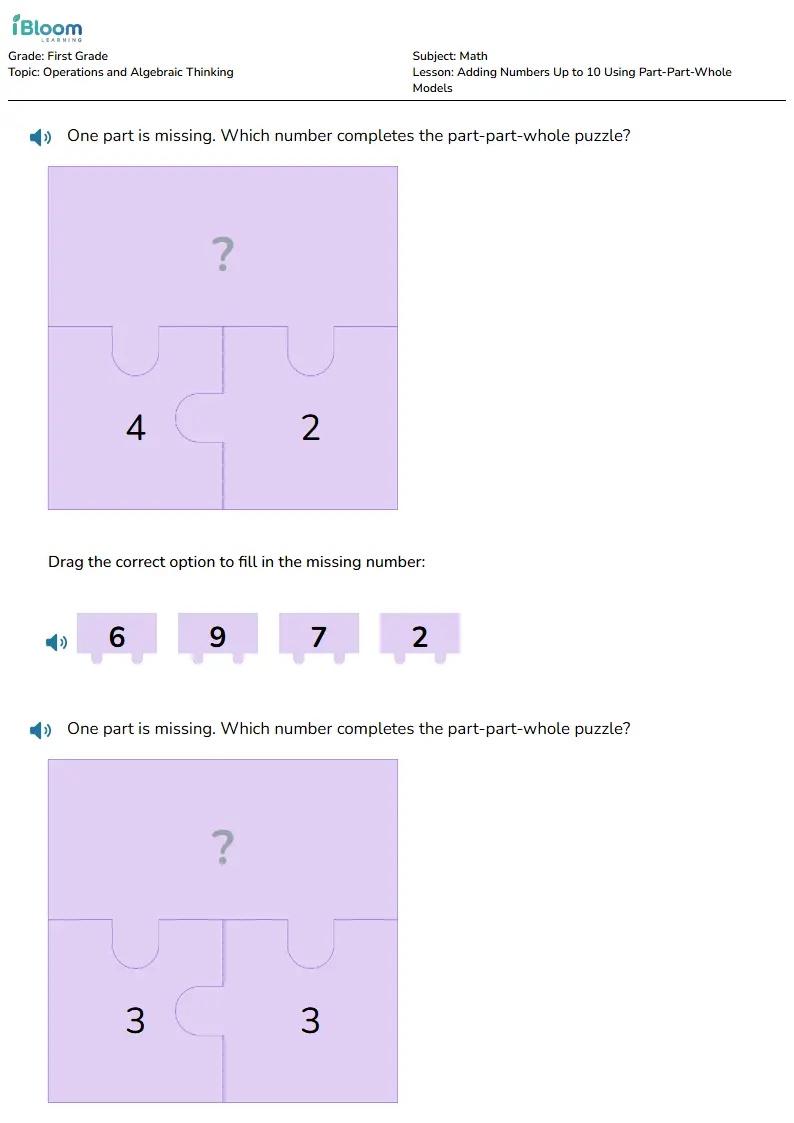
Adding Numbers Up to 10 Using Part-Part-Whole Models Lesson for First Grade
Explore a free interactive math lesson for first grade: Adding Numbers Up to 10 Using Part-Part-Whole Models. AI-personalized, Common Core-aligned, and built for kids.
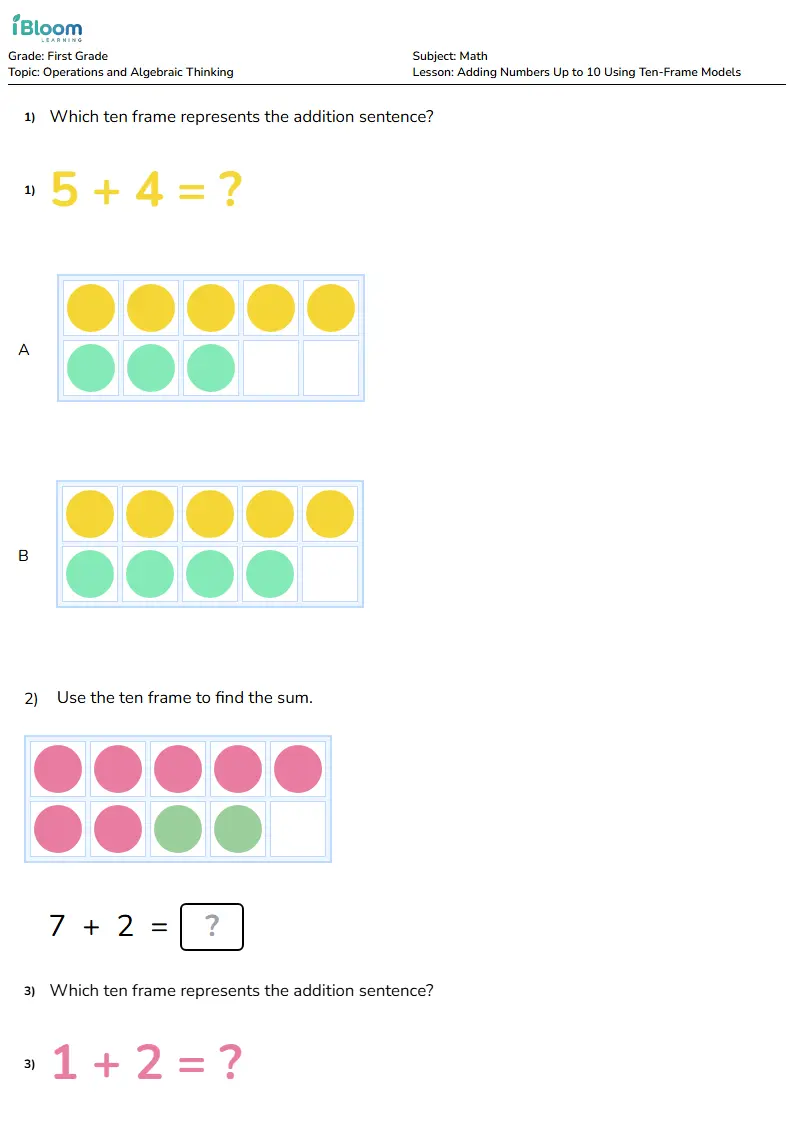
Adding Numbers Up to 10 Using Ten-Frame Models Lesson for First Grade
Explore a free interactive math lesson for first grade: Adding Numbers Up to 10 Using Ten-Frame Models. AI-personalized, Common Core-aligned, and built for kids.
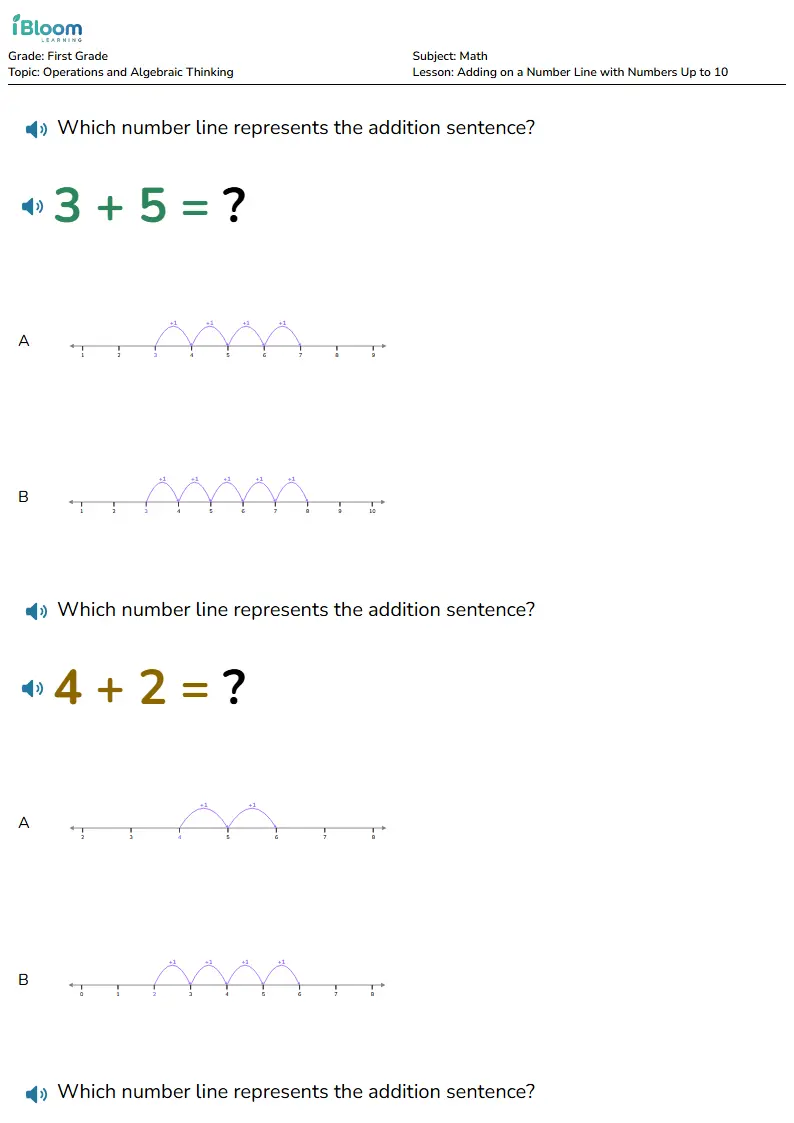
Adding on a Number Line with Numbers Up to 10 Lesson for First Grade
Explore a free interactive math lesson for first grade: Adding on a Number Line with Numbers Up to 10. AI-personalized, Common Core-aligned, and built for kids.
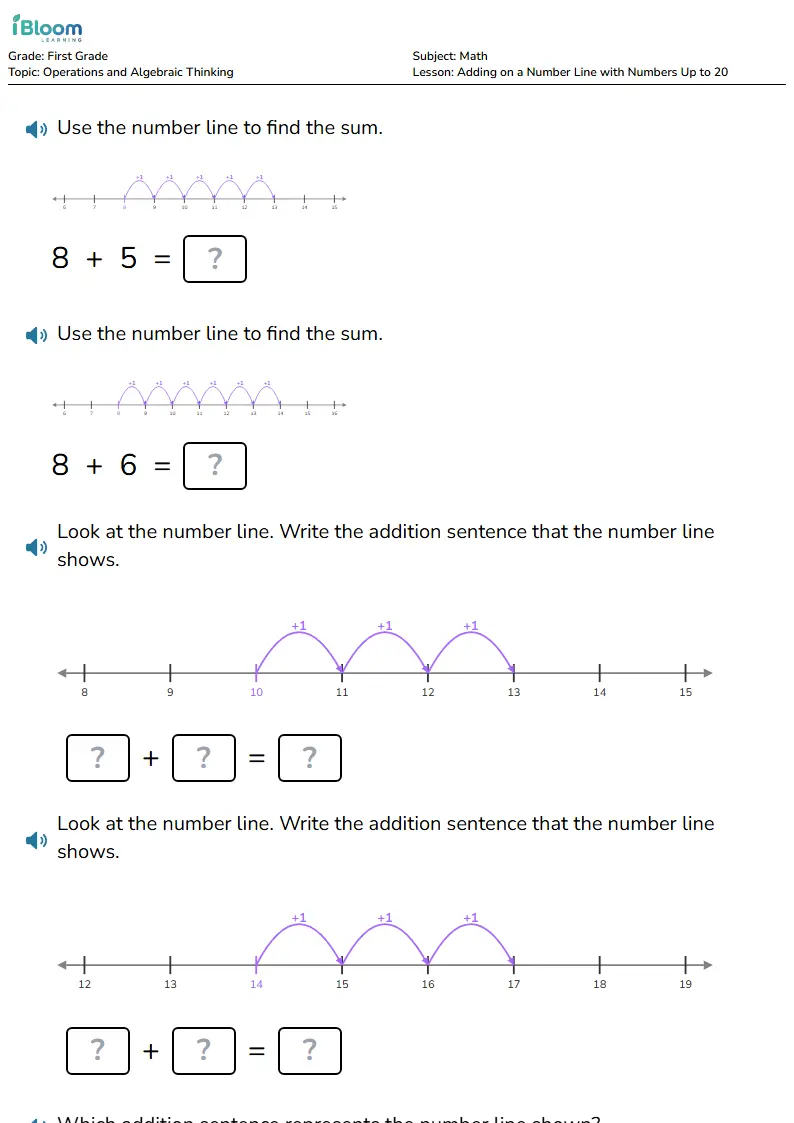
Adding on a Number Line with Numbers Up to 20 Lesson for First Grade
Explore a free interactive math lesson for first grade: Adding on a Number Line with Numbers Up to 20. AI-personalized, Common Core-aligned, and built for kids.
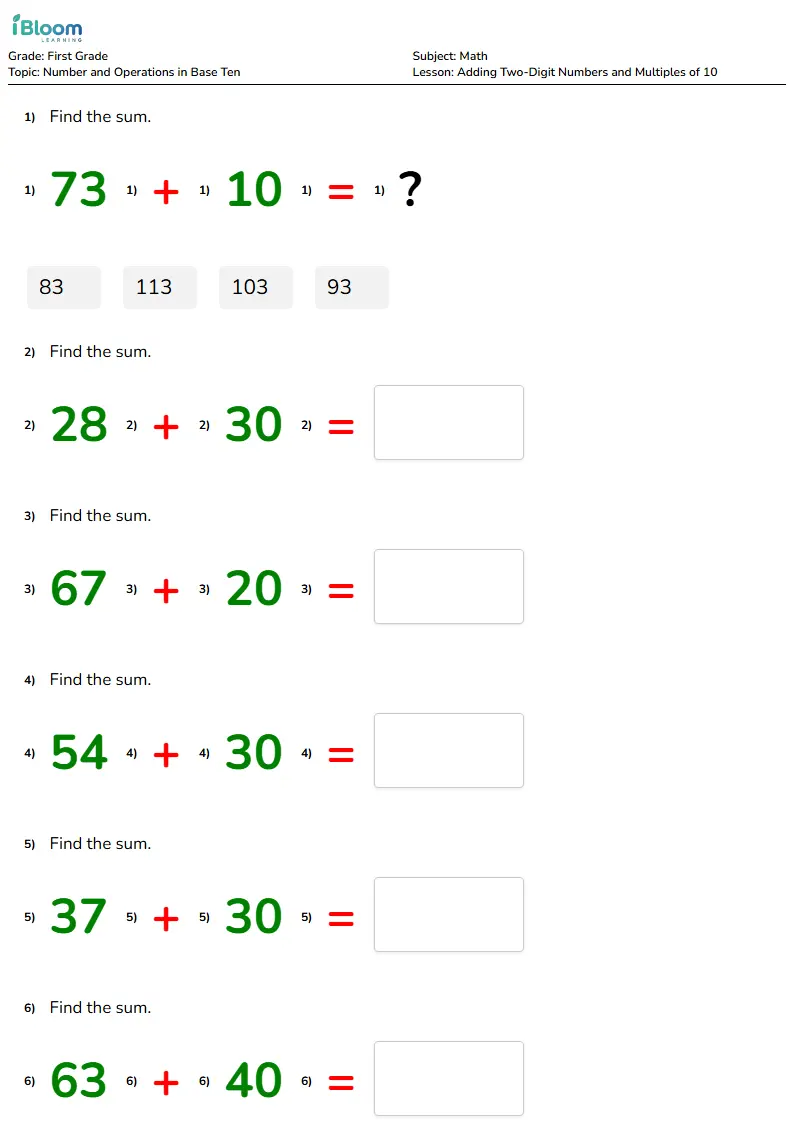
Adding Two-Digit Numbers and Multiples of 10 Lesson for First Grade
Explore a free interactive math lesson for first grade: Adding Two-Digit Numbers and Multiples of 10. AI-personalized, Common Core-aligned, and built for kids.
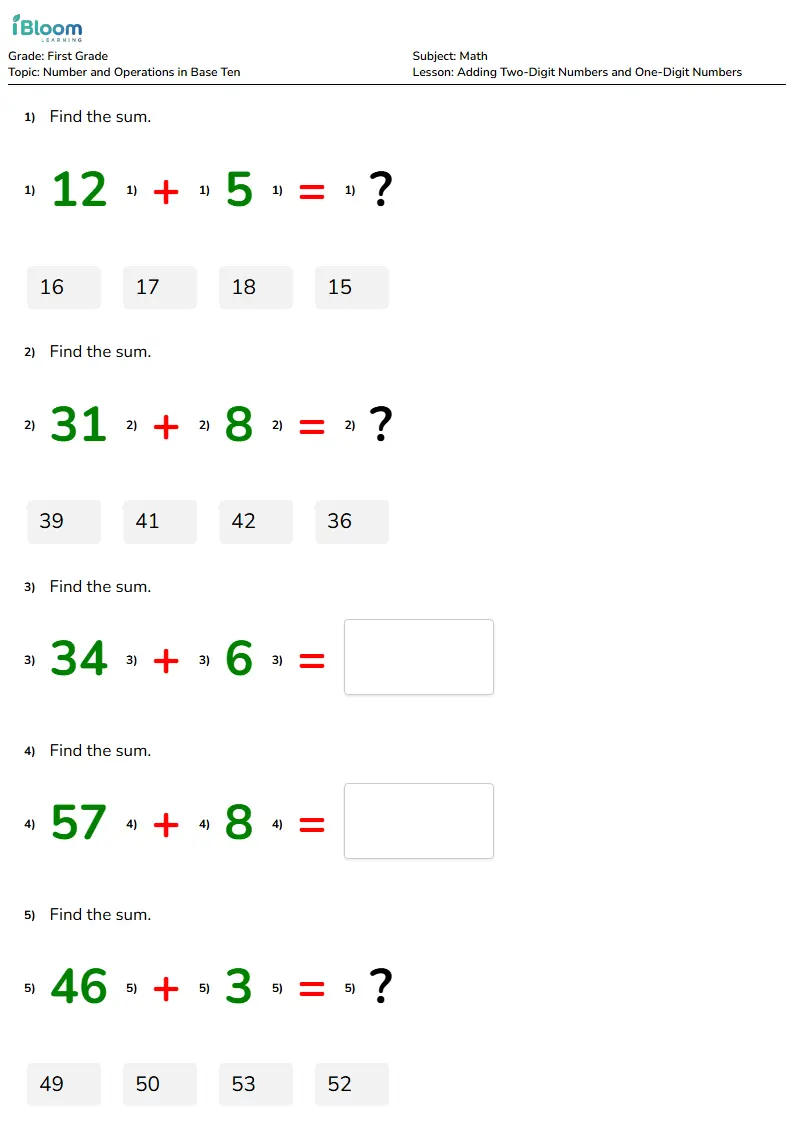
Adding Two-Digit Numbers and One-Digit Numbers Lesson for First Grade
Explore a free interactive math lesson for first grade: Adding Two-Digit Numbers and One-Digit Numbers. AI-personalized, Common Core-aligned, and built for kids.
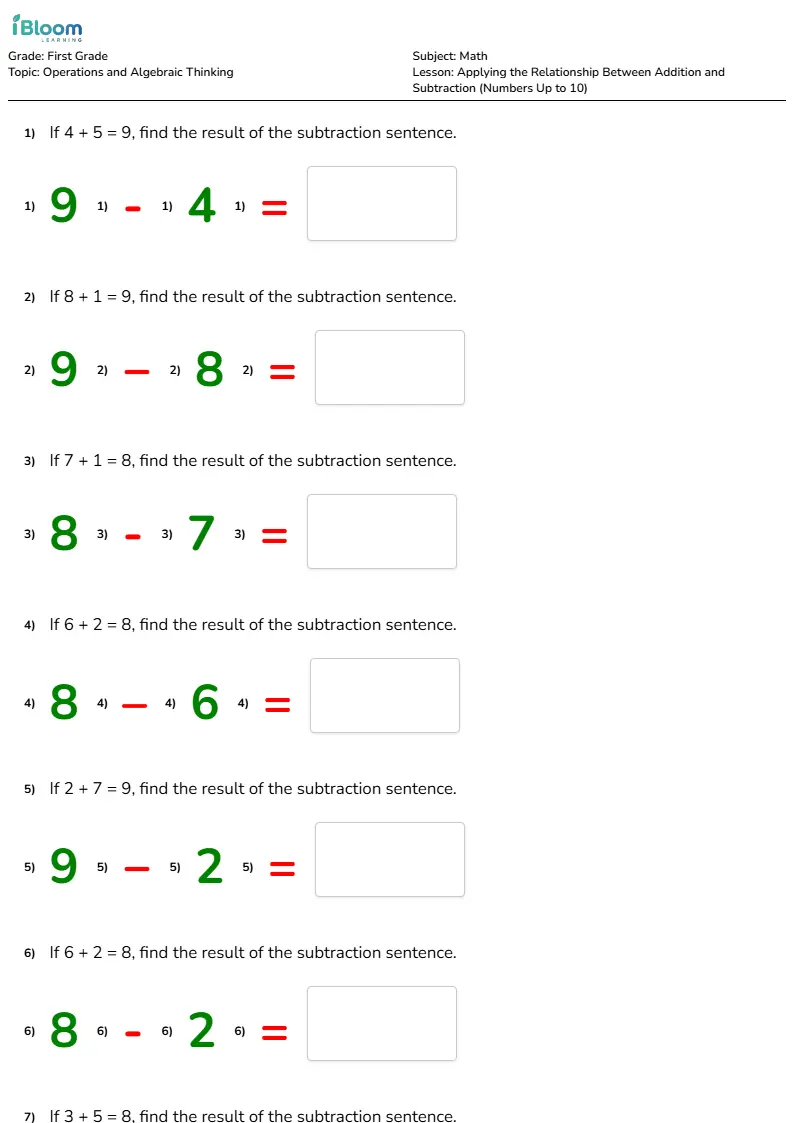
Applying the Relationship Between Addition and Subtraction (Numbers Up to 10) Lesson for First Grade
Explore a free interactive math lesson for first grade: Applying the Relationship Between Addition and Subtraction (Numbers Up to 10). AI-personalized, Common Core-aligned, and built for kids.
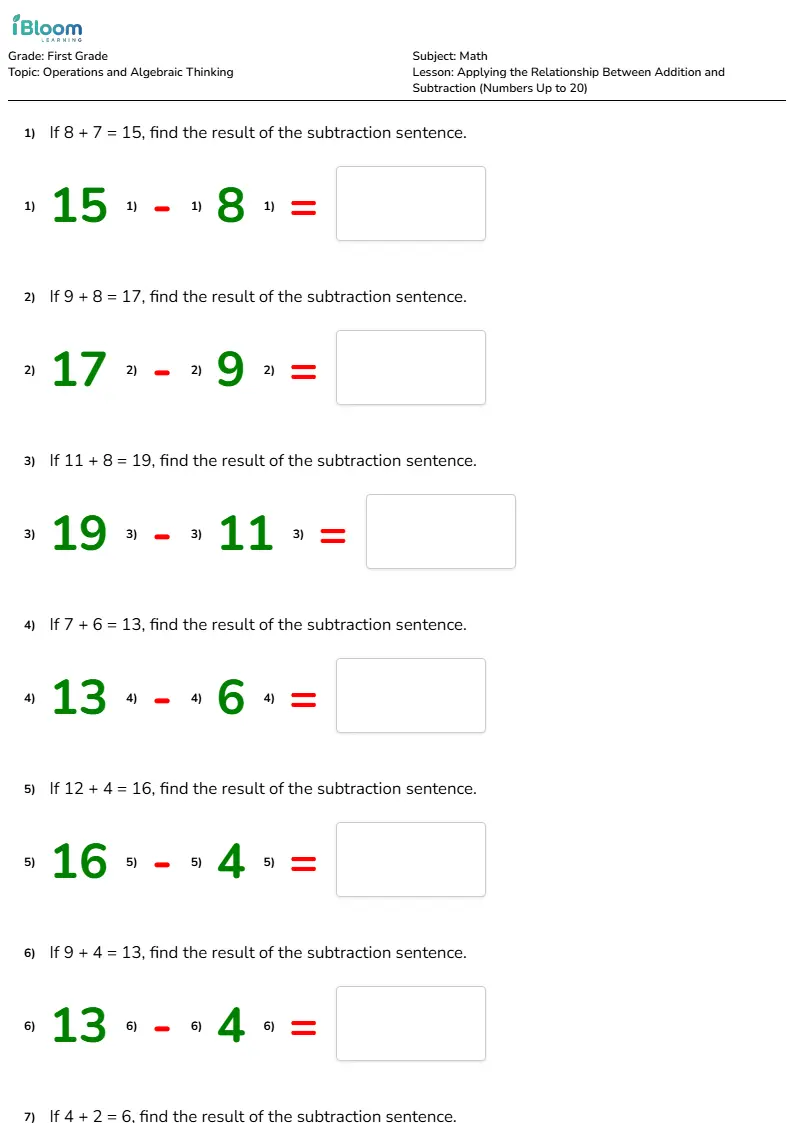
Applying the Relationship Between Addition and Subtraction (Numbers Up to 20) Lesson for First Grade
Explore a free interactive math lesson for first grade: Applying the Relationship Between Addition and Subtraction (Numbers Up to 20). AI-personalized, Common Core-aligned, and built for kids.
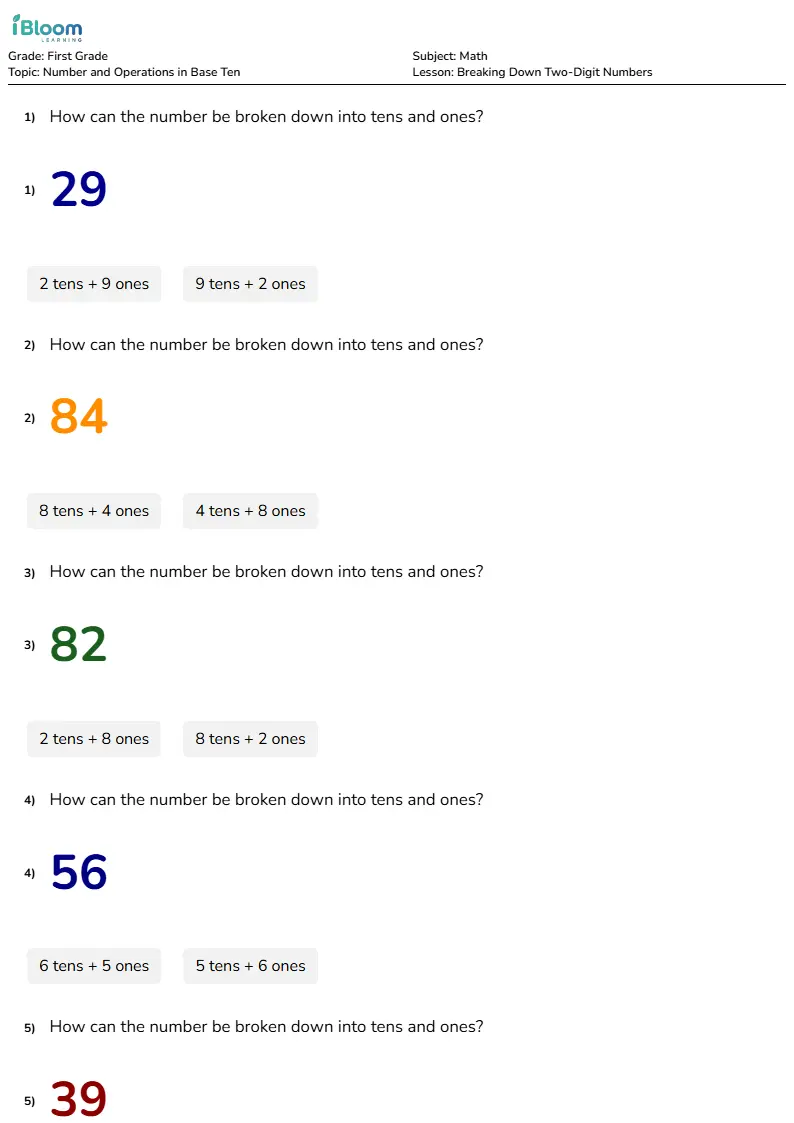
Breaking Down Two-Digit Numbers Lesson for First Grade
Explore a free interactive math lesson for first grade: Breaking Down Two-Digit Numbers. AI-personalized, Common Core-aligned, and built for kids.
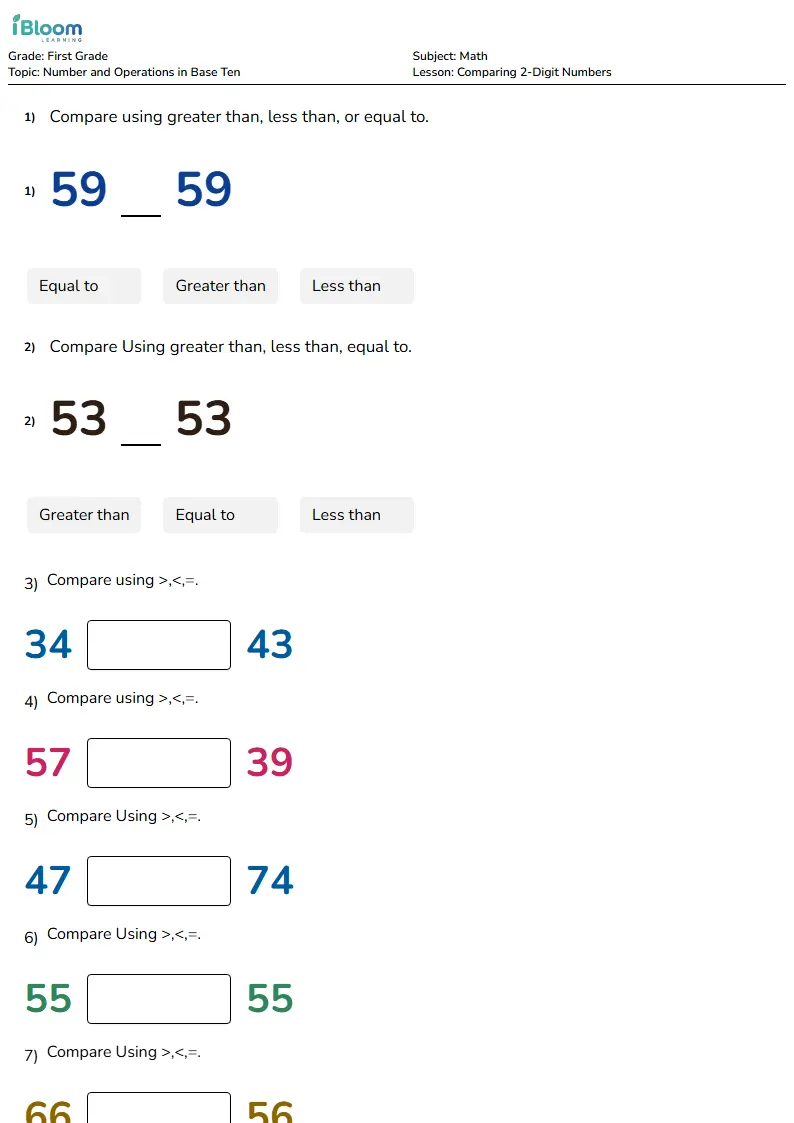
Comparing 2-Digit Numbers Lesson for First Grade
Explore a free interactive math lesson for first grade: Comparing 2-Digit Numbers. AI-personalized, Common Core-aligned, and built for kids.
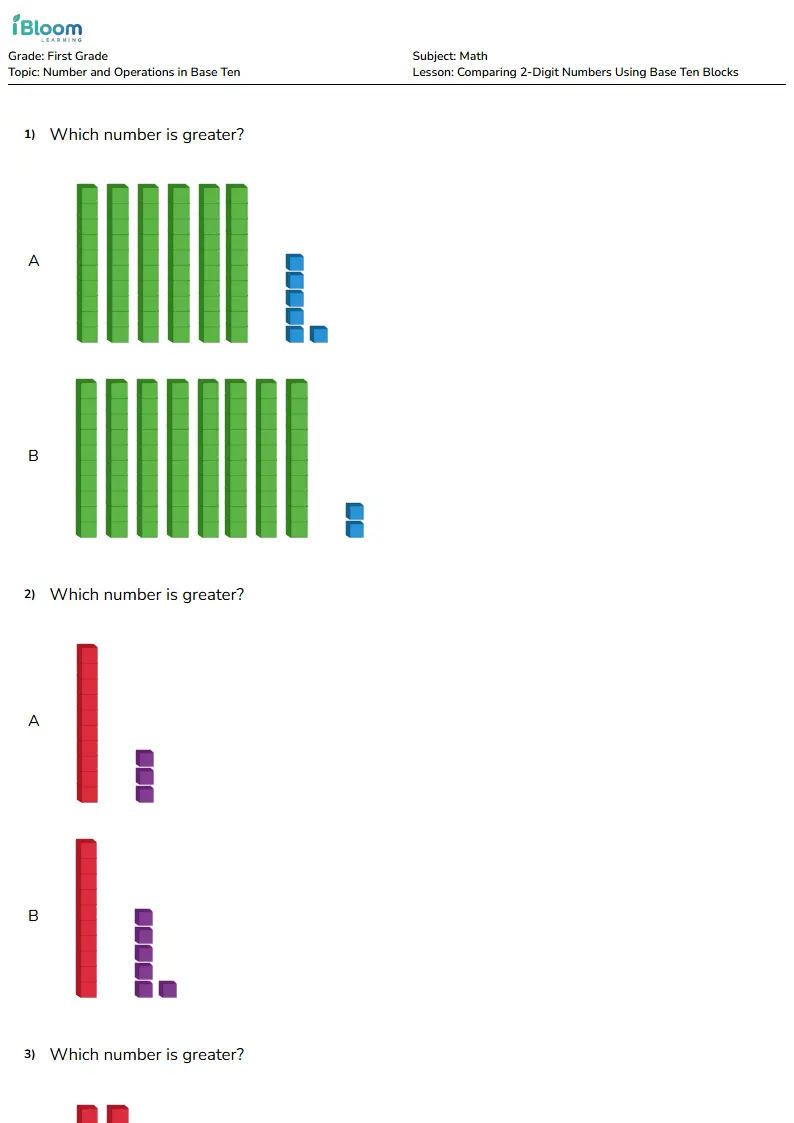
Comparing 2-Digit Numbers Using Base Ten Blocks Lesson for First Grade
Explore a free interactive math lesson for first grade: Comparing 2-Digit Numbers Using Base Ten Blocks. AI-personalized, Common Core-aligned, and built for kids.
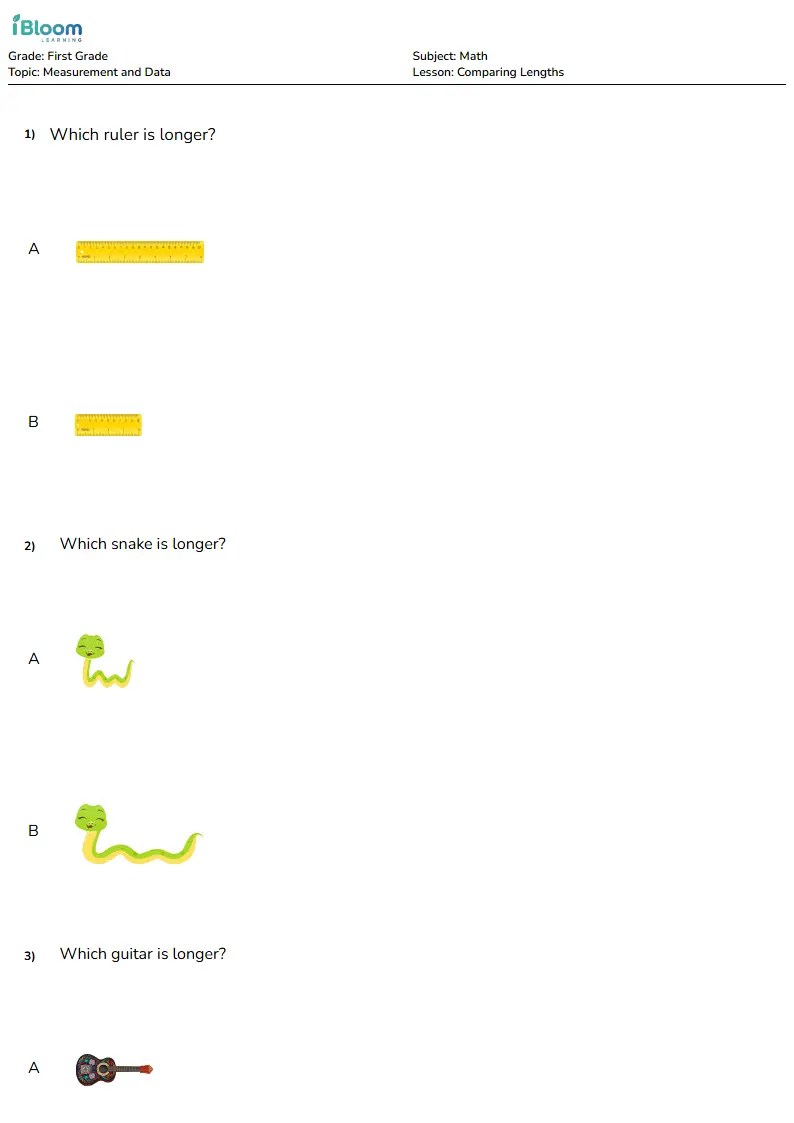
Comparing Lengths Lesson for First Grade
Explore a free interactive math lesson for first grade: Comparing Lengths. AI-personalized, Common Core-aligned, and built for kids.
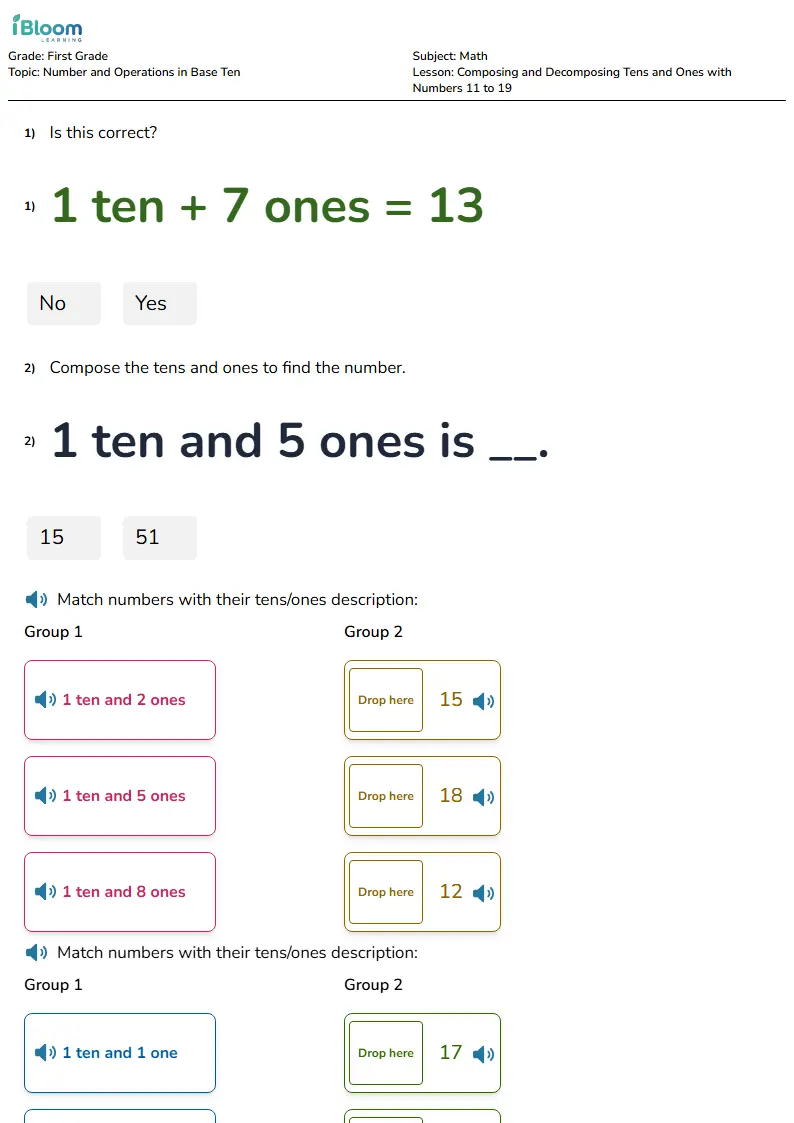
Composing and Decomposing Tens and Ones with Numbers 11 to 19 Lesson for First Grade
Explore a free interactive math lesson for first grade: Composing and Decomposing Tens and Ones with Numbers 11 to 19. AI-personalized, Common Core-aligned, and built for kids.
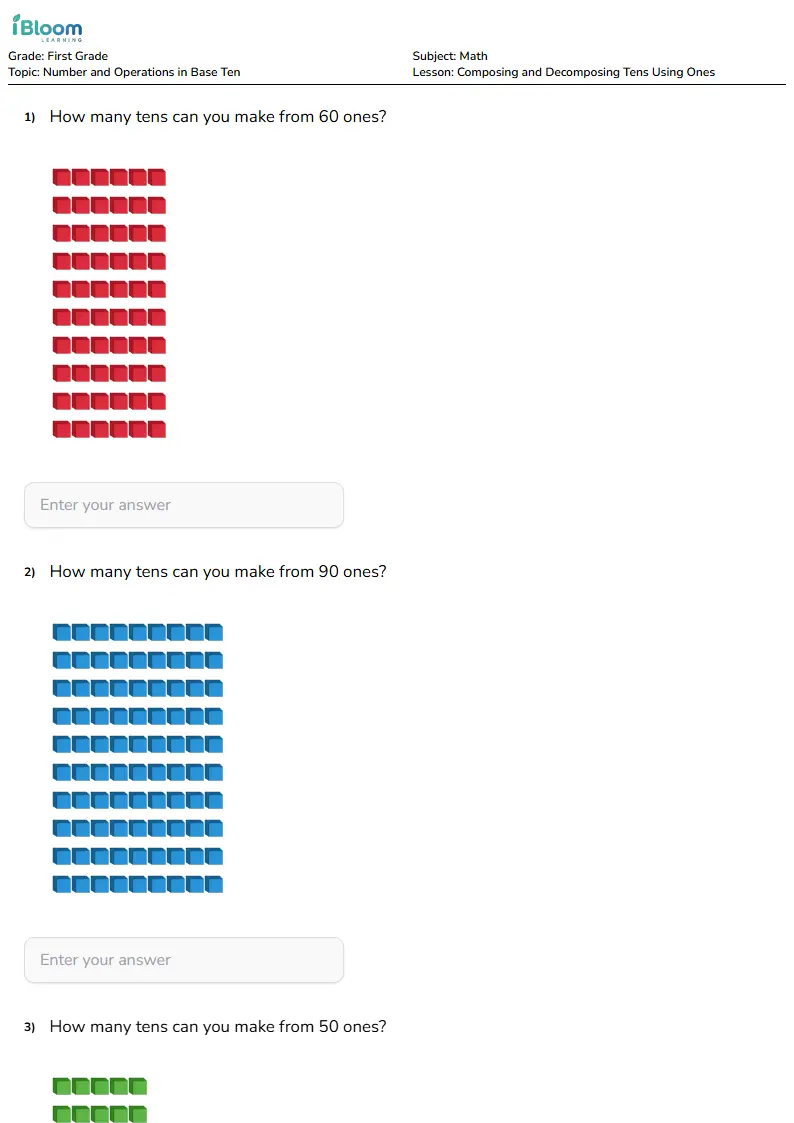
Composing and Decomposing Tens Using Ones Lesson for First Grade
Explore a free interactive math lesson for first grade: Composing and Decomposing Tens Using Ones. AI-personalized, Common Core-aligned, and built for kids.
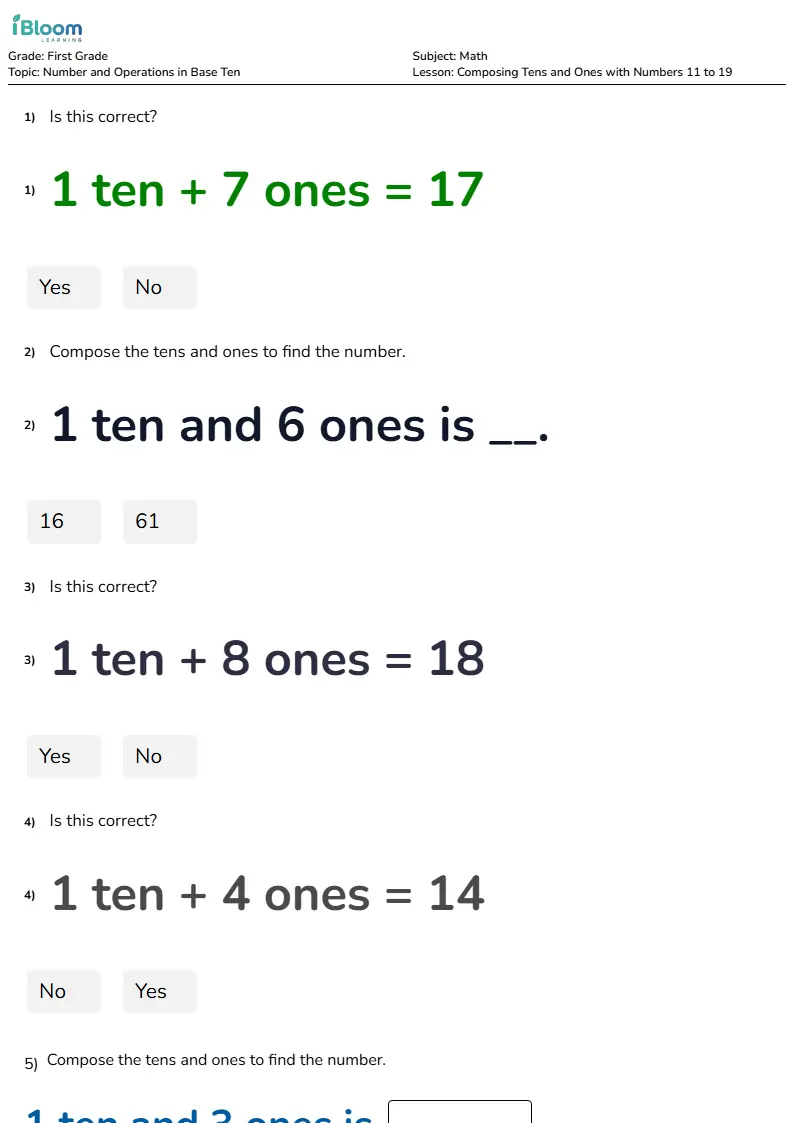
Composing Tens and Ones with Numbers 11 to 19 Lesson for First Grade
Explore a free interactive math lesson for first grade: Composing Tens and Ones with Numbers 11 to 19. AI-personalized, Common Core-aligned, and built for kids.
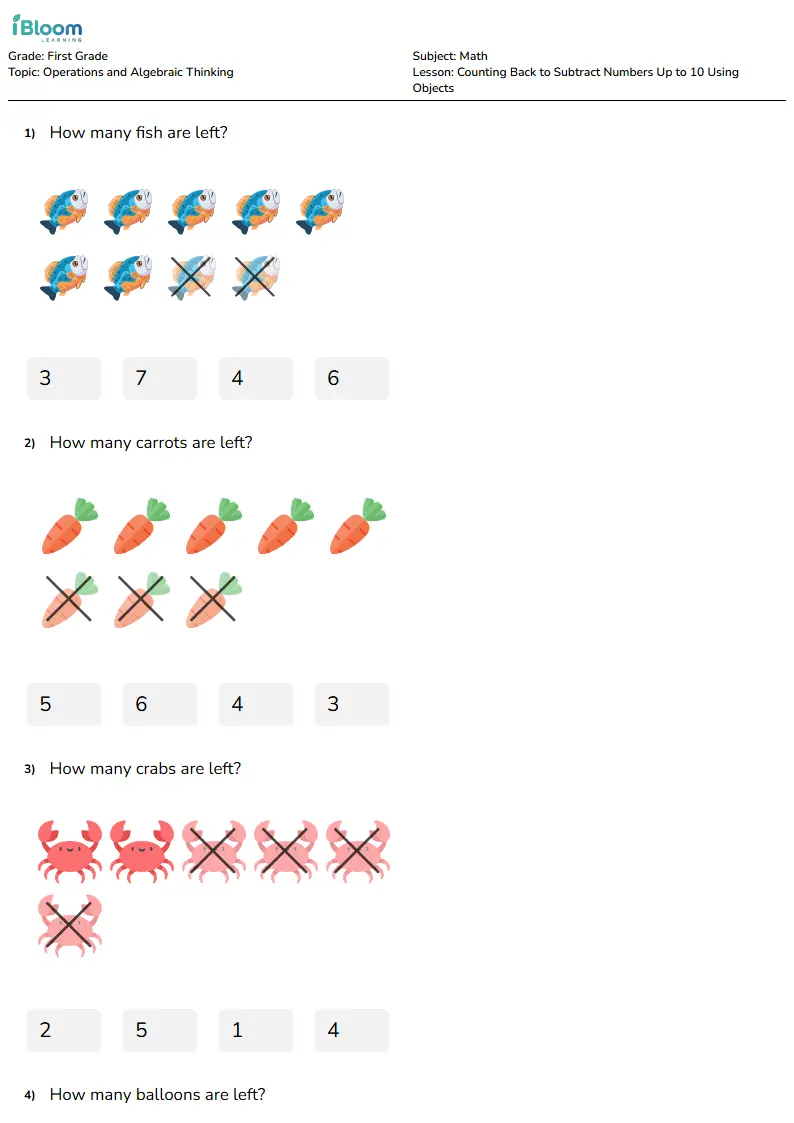
Counting Back to Subtract Numbers Up to 10 Using Objects Lesson for First Grade
Explore a free interactive math lesson for first grade: Counting Back to Subtract Numbers Up to 10 Using Objects. AI-personalized, Common Core-aligned, and built for kids.
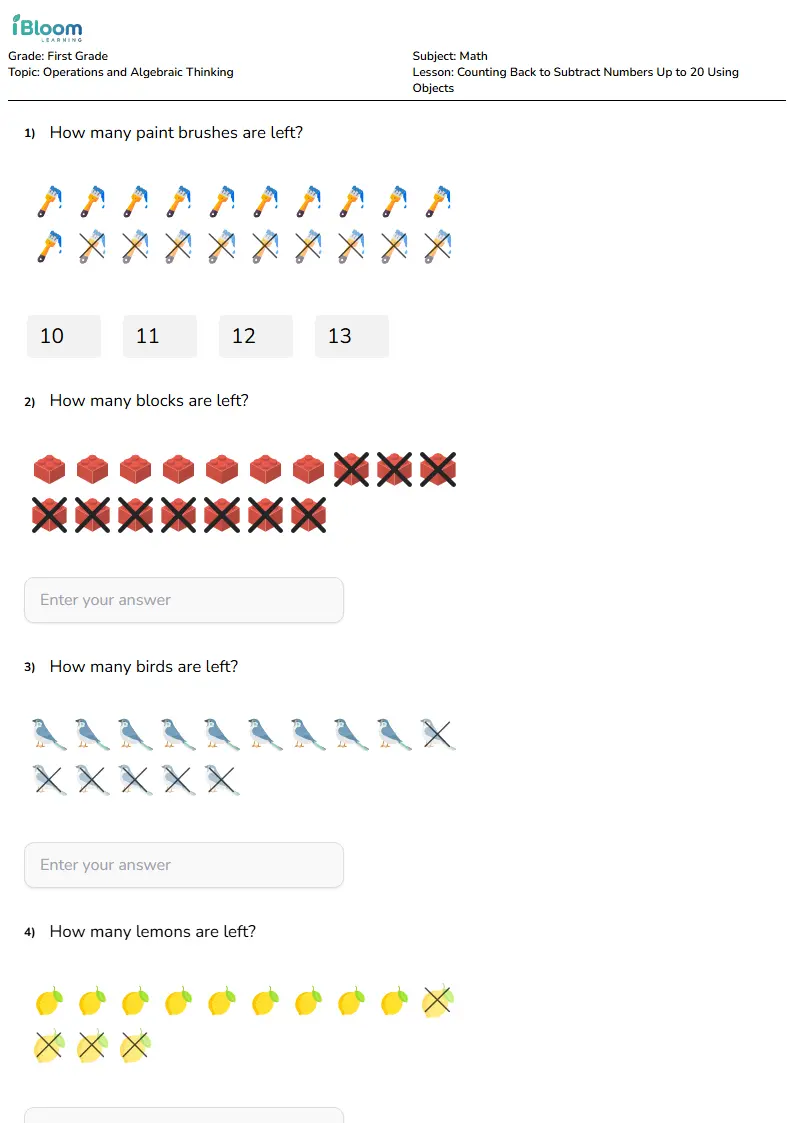
Counting Back to Subtract Numbers Up to 20 Using Objects Lesson for First Grade
Explore a free interactive math lesson for first grade: Counting Back to Subtract Numbers Up to 20 Using Objects. AI-personalized, Common Core-aligned, and built for kids.
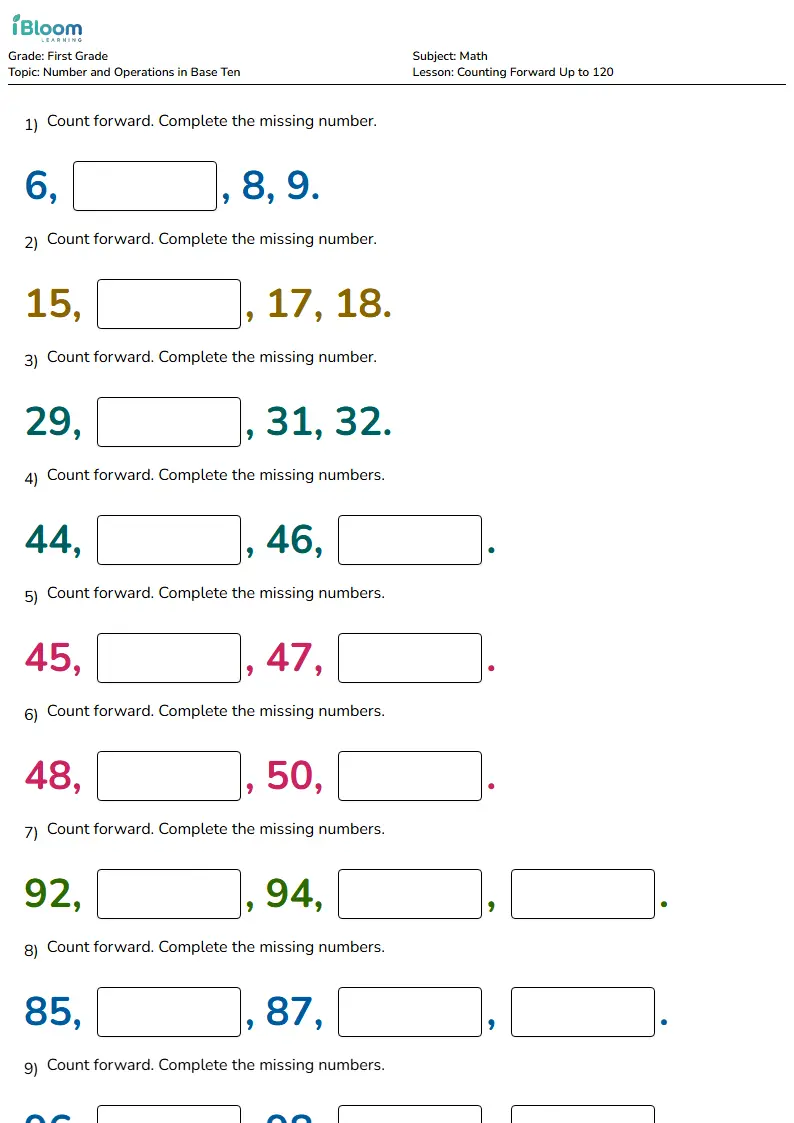
Counting Forward Up to 120 Lesson for First Grade
Explore a free interactive math lesson for first grade: Counting Forward Up to 120. AI-personalized, Common Core-aligned, and built for kids.
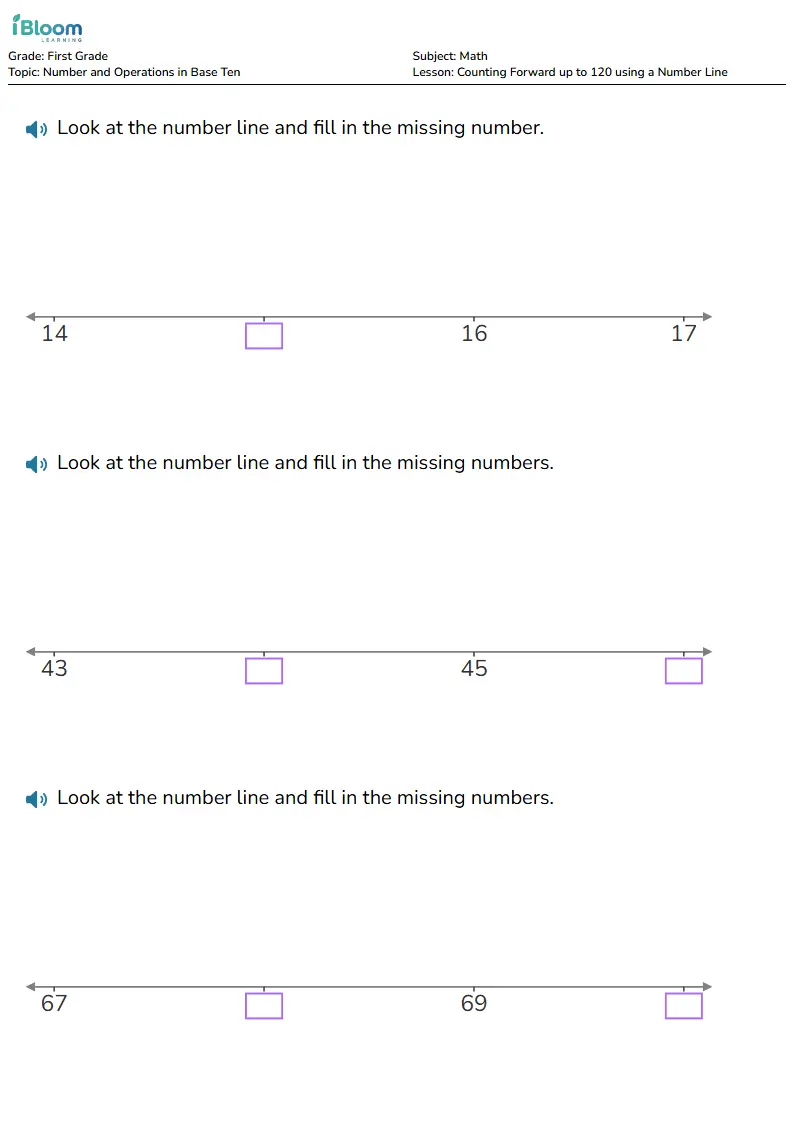
Counting Forward up to 120 using a Number Line Lesson for First Grade
Explore a free interactive math lesson for first grade: Counting Forward up to 120 using a Number Line. AI-personalized, Common Core-aligned, and built for kids.
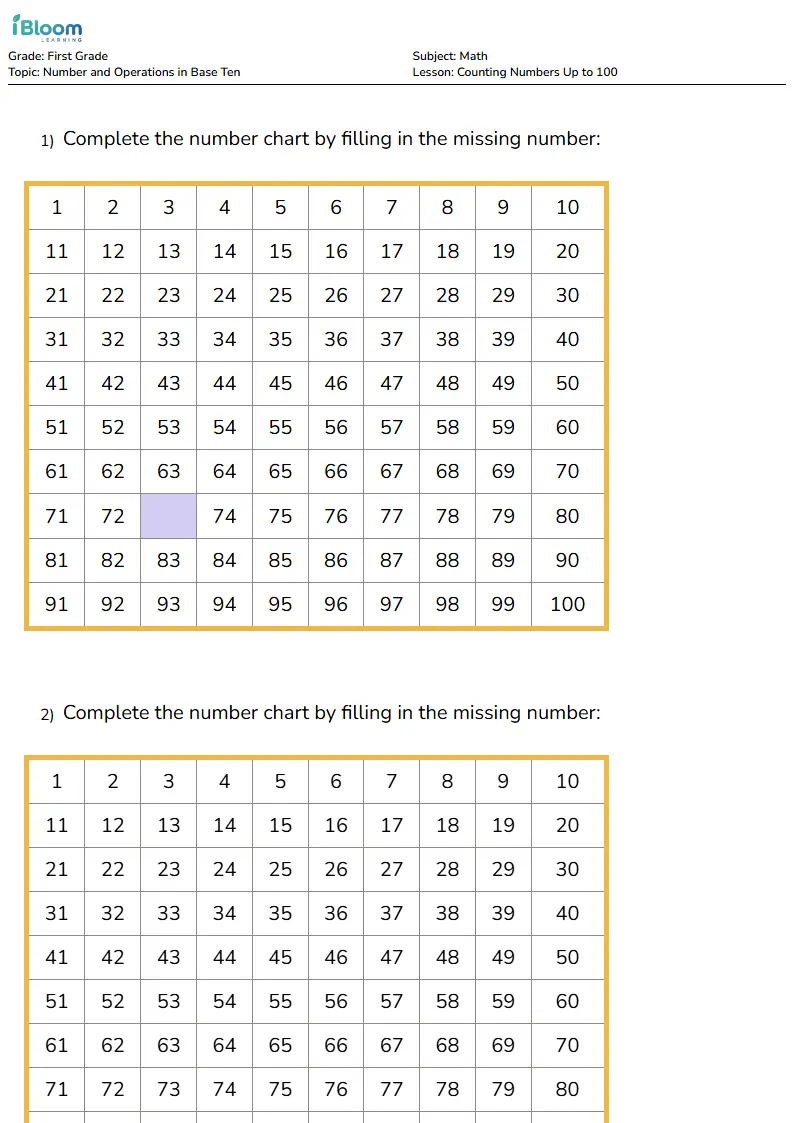
Counting Numbers Up to 100 Lesson for First Grade
Explore a free interactive math lesson for first grade: Counting Numbers Up to 100. AI-personalized, Common Core-aligned, and built for kids.
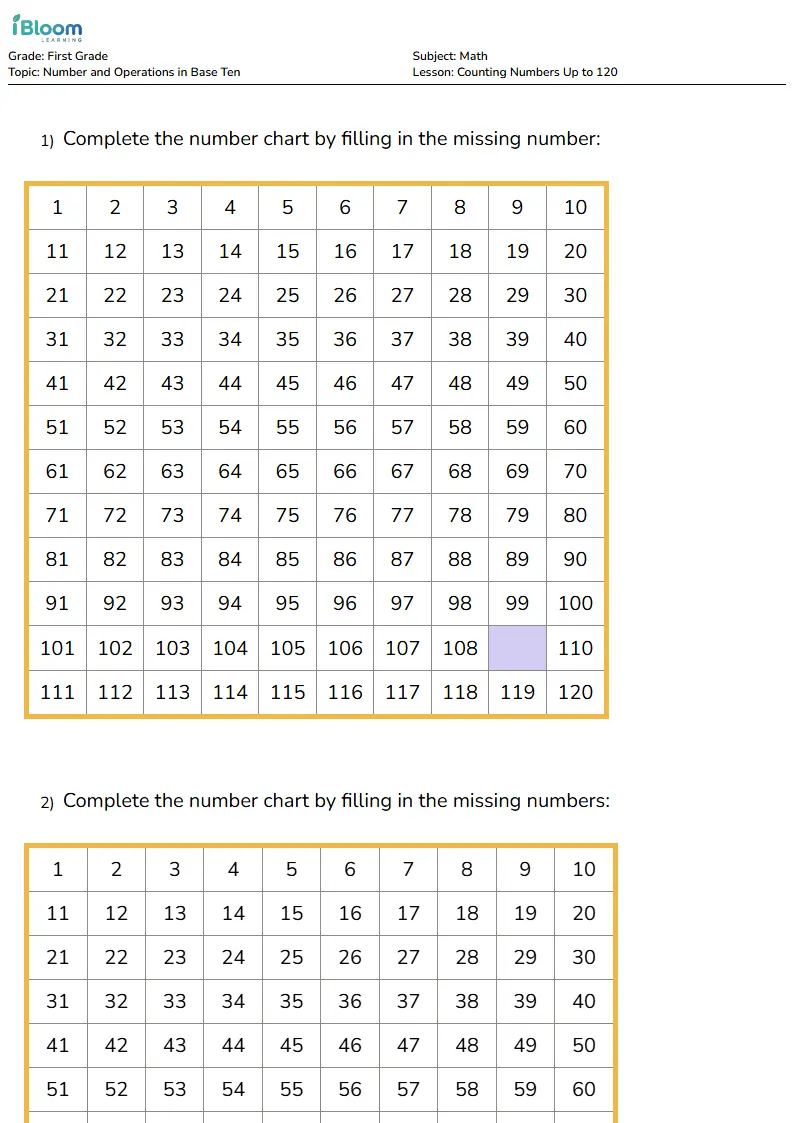
Counting Numbers Up to 120 Lesson for First Grade
Explore a free interactive math lesson for first grade: Counting Numbers Up to 120. AI-personalized, Common Core-aligned, and built for kids.
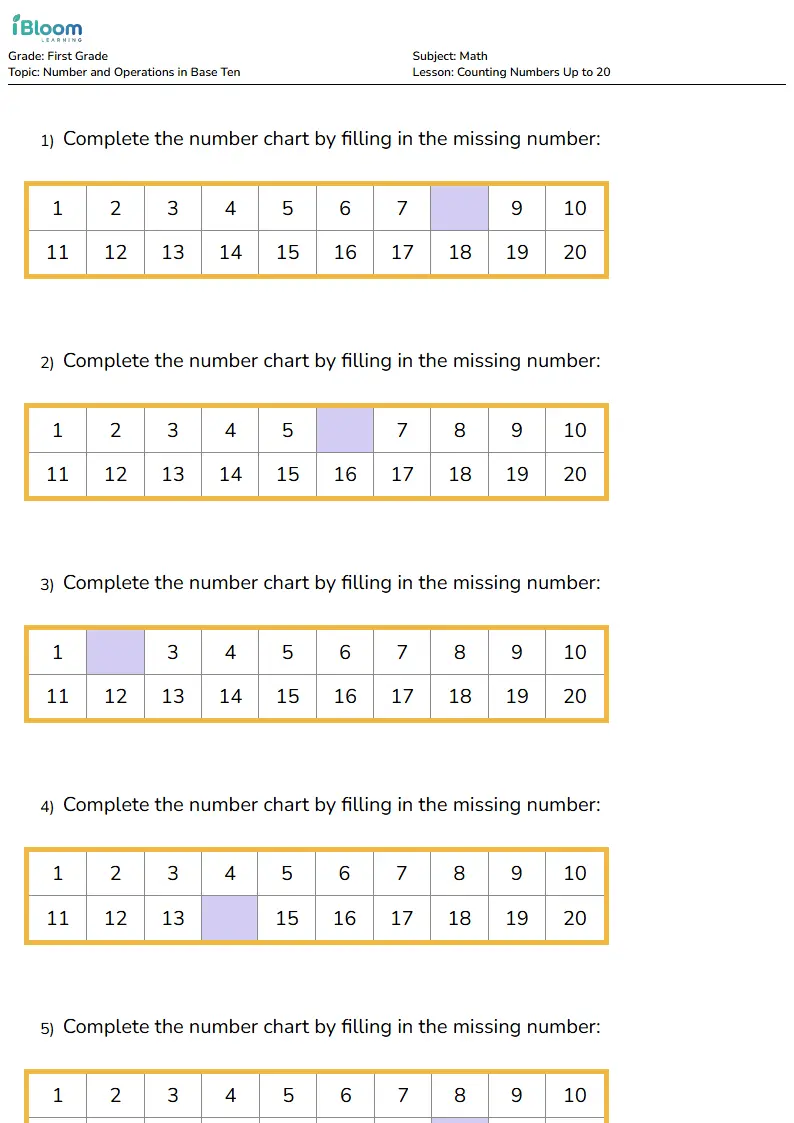
Counting Numbers Up to 20 Lesson for First Grade
Explore a free interactive math lesson for first grade: Counting Numbers Up to 20. AI-personalized, Common Core-aligned, and built for kids.