
Ask and answer questions using text evidence Lesson for Second Grade
Preparing your worksheet
Ask and answer questions using text evidence Lesson for Second Grade: Second Grade practice for ask and answer questions using text evidence
Ask and answer questions using text evidence Lesson for Second Grade helps children practise reading evidence, main idea, details, paragraph understanding, and explanation. Start with Ask and answer questions using text evidence Lesson for Second Grade, then use the paired worksheet when the child needs the same skill in another format.
This page is written for parents, teachers, tutors, homeschool families, and intervention groups who need a clear way to practise ask and answer questions using text evidence. It works for short home review, classroom centers, small-group reteaching, homework support, and skill checks.
What children learn
Children learn to notice the important clue or model, complete one item carefully, and explain why the answer makes sense. That explanation is the important part because it shows whether the child can use the skill again on a new page.
Start with a short routine
- Name the skill in simple words.
- Model one item slowly.
- Ask the child what to notice first.
- Let the child try two items.
- Ask, "How do you know?"
- Review one missed item before assigning more.
Example prompt
If the question asks for proof, ask the child to point to the exact words in the paragraph before writing the answer.
Use the same structure even when the exact question changes: look first, choose a strategy, answer carefully, and prove the answer with a model, sentence, clue, or rule.
Parent use
Parents can use this page in five to ten minutes. Open the lesson if the skill is new. Open the worksheet if the child is ready for practice. Stop after one accurate explanation rather than pushing through a long page when attention is fading.
Teacher use
Teachers can use this page as a warm-up, station, intervention check, exit ticket, or homework link. Model one example, listen to two student explanations, and then decide whether the group needs more modelling or independent practice.
Differentiation
For support, reduce the number of choices and add a visual model. For challenge, ask the child to write a similar item, explain a common mistake, or connect the skill to a word problem, paragraph, or classroom example.
Common mistakes
- The child guesses without pointing to evidence or a model.
- The child copies the adult's words without understanding.
- The child completes too many items after fatigue begins.
- The adult checks answers but does not ask for reasoning.
Related iBloom practice
- Ask and answer questions using text evidence Lesson for Second Grade
- Paired worksheet for Ask and answer questions using text evidence Lesson for Second Grade
- Related iBloom guide
- Identify the main idea and key details Lesson for First Grade
- Determine the main idea from story events Lesson for First Grade
- Identify the main idea and sequence events Lesson for First Grade
- Answer literal and inferential questions Lesson for First Grade
Planning reference
Adults can compare this routine with a relevant standards or instructional reference, then keep the child-facing task short, concrete, and easy to repeat.
Frequently asked questions
Who should use this page?
Use it when a Second Grade learner needs practice with ask and answer questions using text evidence.
How long should practice take?
Five to ten minutes is enough for most home sessions. Teachers can use the same routine as a short station.
What if the child guesses?
Ask the child to point to the clue, model, sentence, number relationship, or rule before moving on.
When should we use the paired page?
Use the paired page when the child needs another format, another short round, or a lesson before returning to the worksheet.
Three-day practice plan
Day one is for modelling. Day two is for a small independent set. Day three is for review and transfer. This rhythm gives the child repeated practice without turning the skill into a long packet.
Keep notes on the exact mistake pattern. For ask and answer questions using text evidence, the next step may be rereading the direction, drawing a model, saying the rule aloud, finding text evidence, or checking the answer with a related fact. Those notes make the next practice session more precise.
More practice for this grade
More English Language Arts lessons
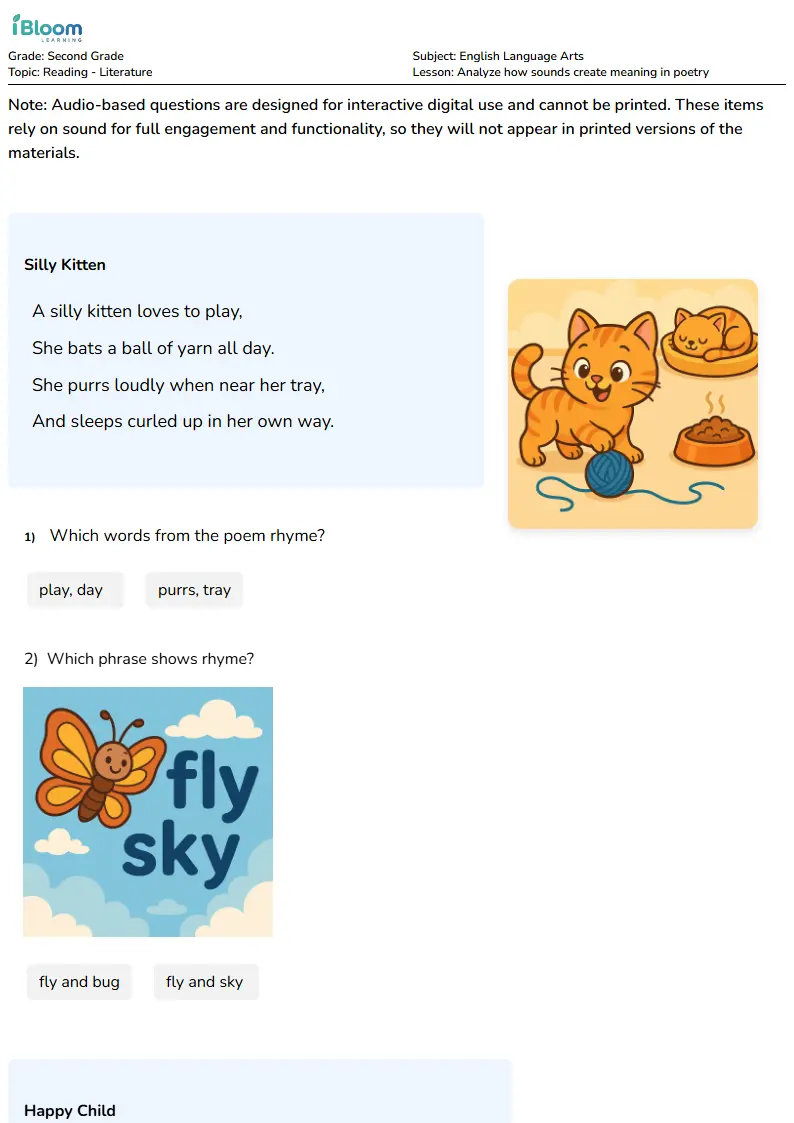
Analyze how sounds create meaning in poetry Lesson for Second Grade
Explore a free interactive english language arts lesson for second grade: Analyze how sounds create meaning in poetry. AI-personalized, Common Core-aligned, and built for kids.
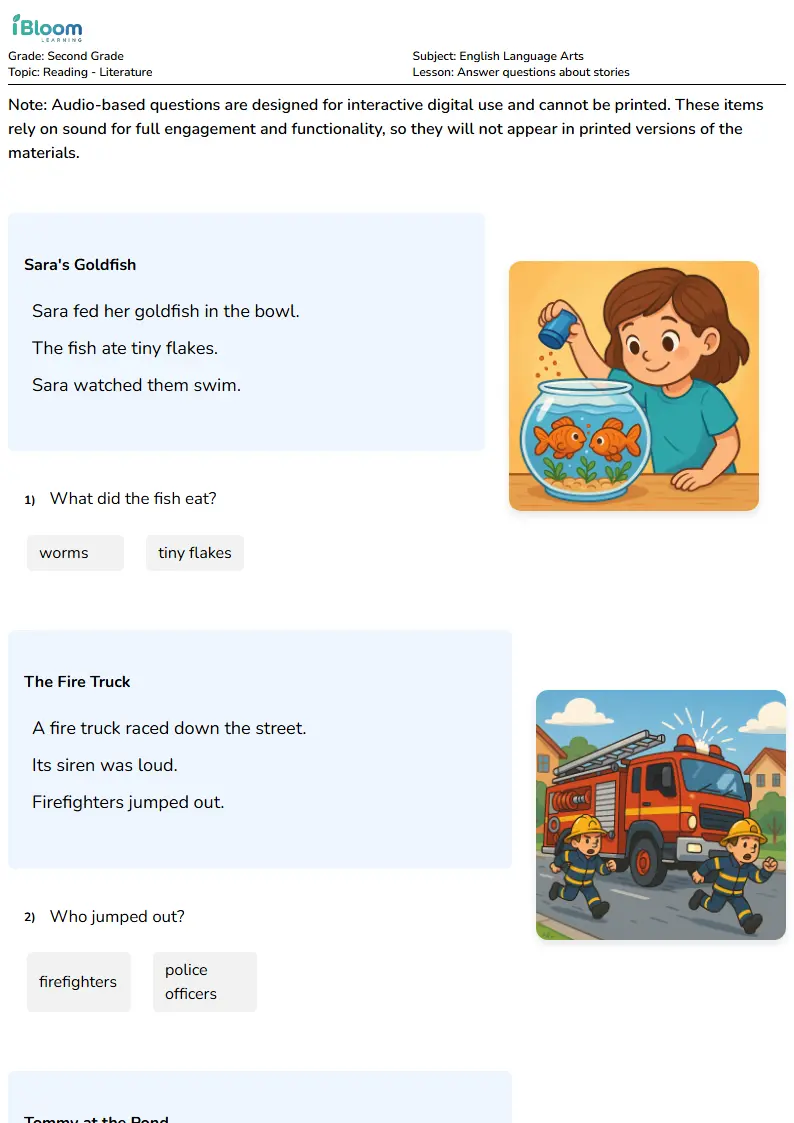
Answer questions about stories Lesson for Second Grade
Explore a free interactive english language arts lesson for second grade: Answer questions about stories. AI-personalized, Common Core-aligned, and built for kids.
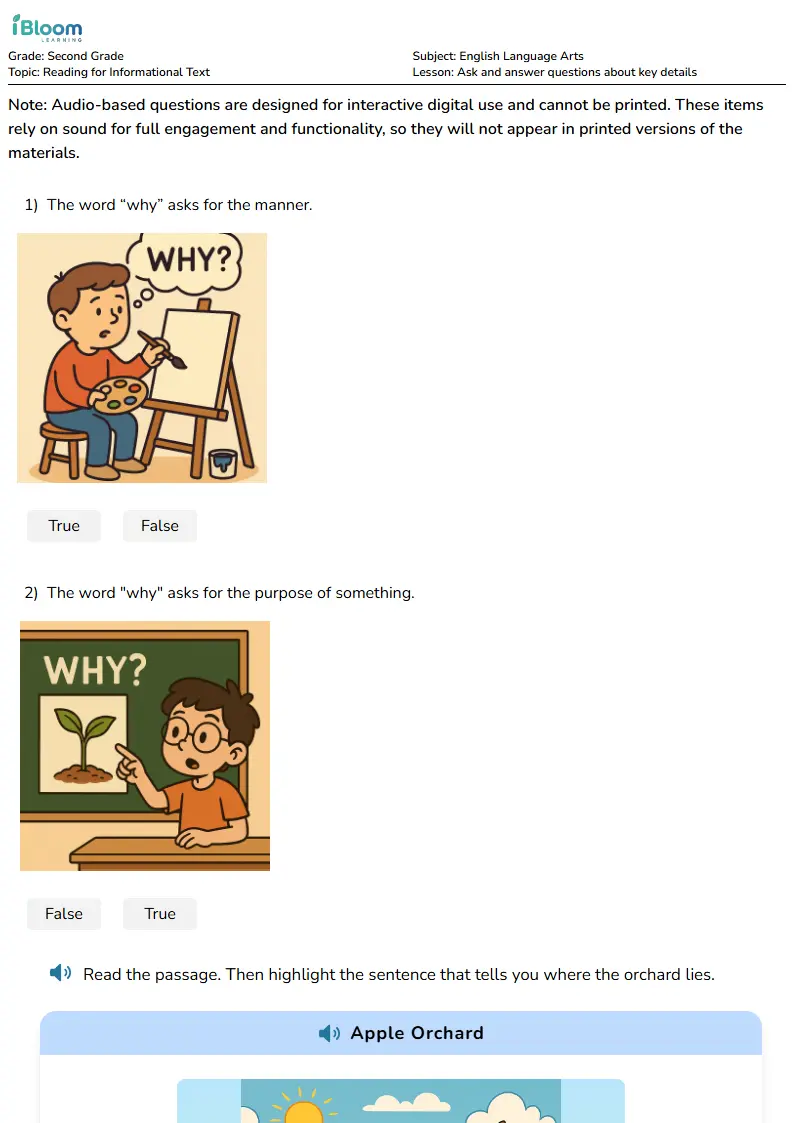
Ask and answer questions about key details Lesson for Second Grade
Explore a free interactive english language arts lesson for second grade: Ask and answer questions about key details. AI-personalized, Common Core-aligned, and built for kids.
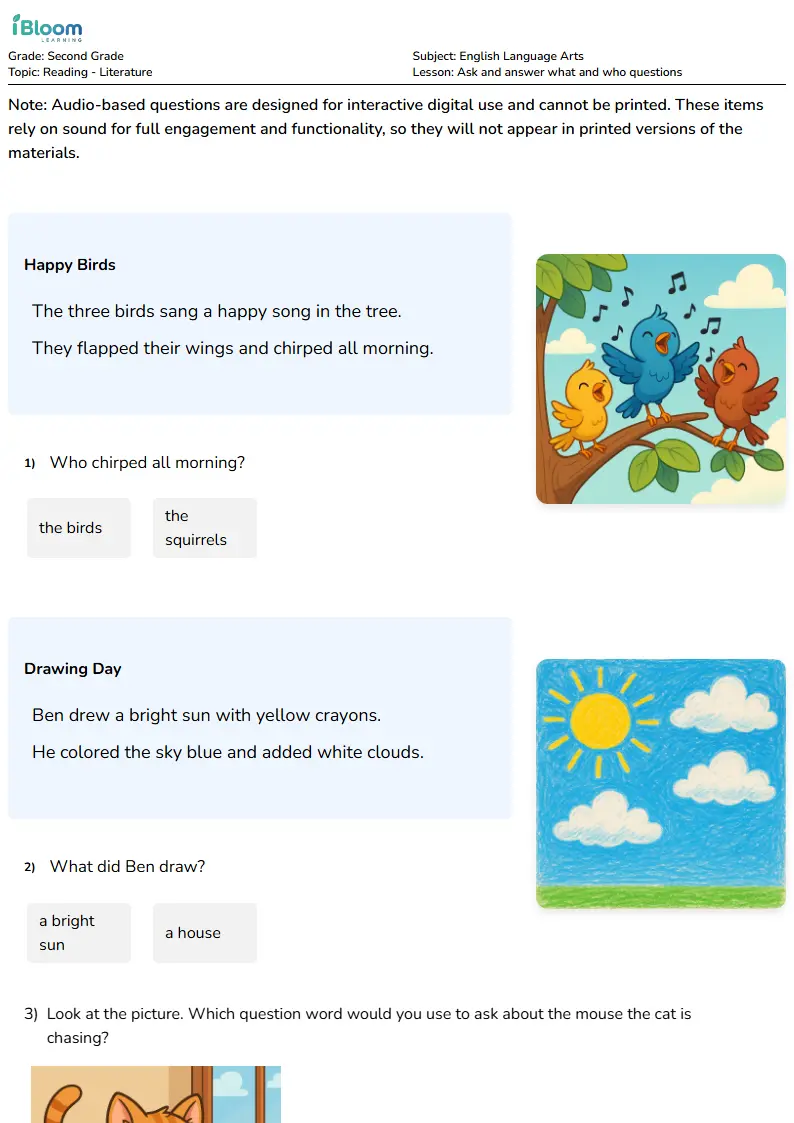
Ask and answer what and who questions Lesson for Second Grade
Explore a free interactive english language arts lesson for second grade: Ask and answer what and who questions. AI-personalized, Common Core-aligned, and built for kids.
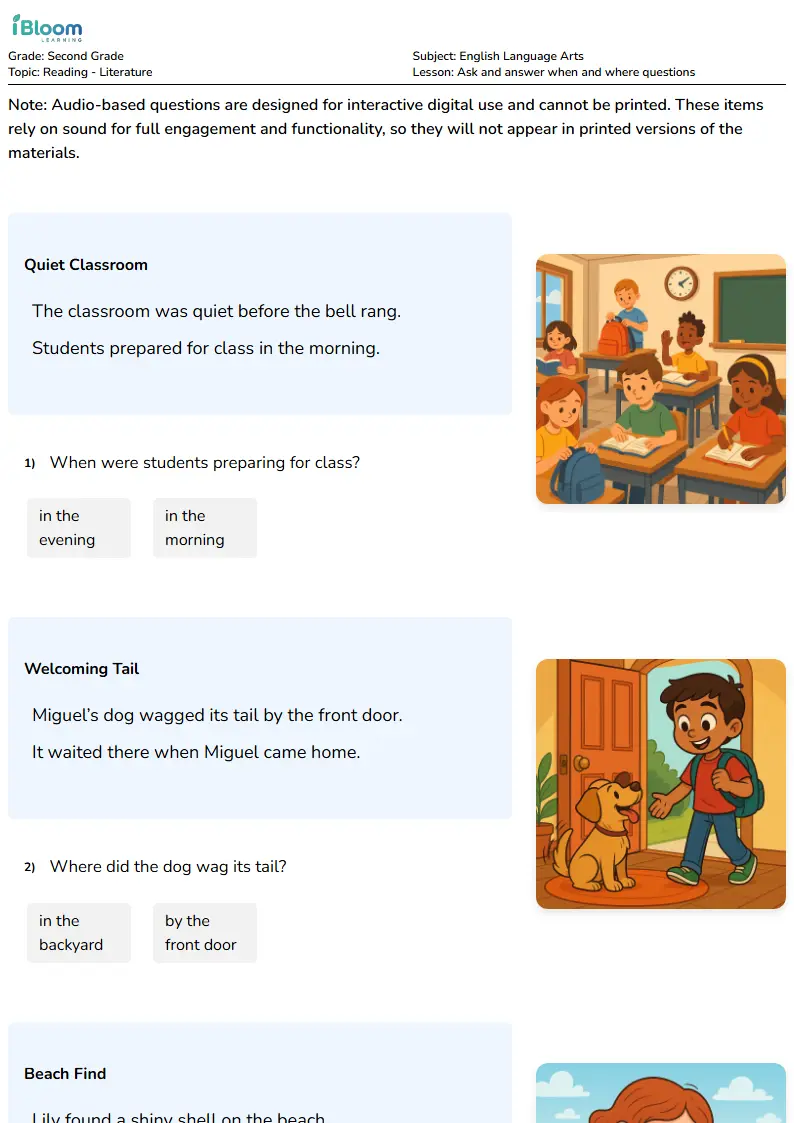
Ask and answer when and where questions Lesson for Second Grade
Explore a free interactive english language arts lesson for second grade: Ask and answer when and where questions. AI-personalized, Common Core-aligned, and built for kids.
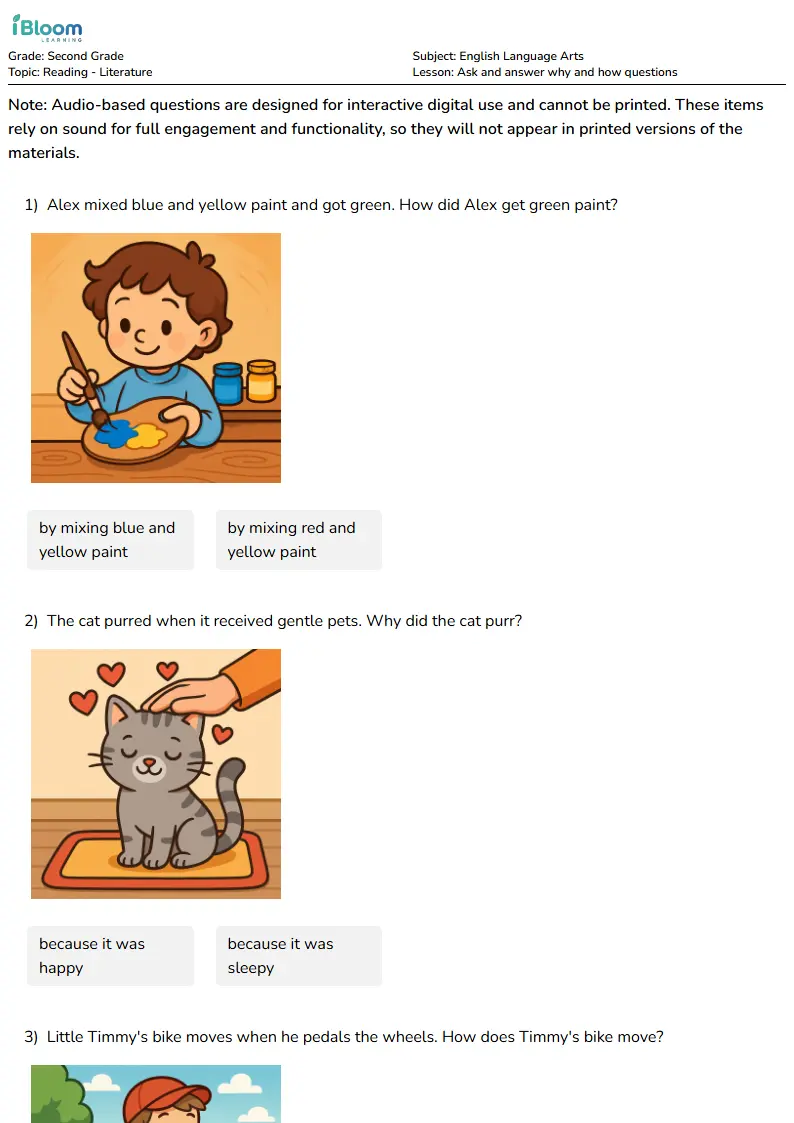
Ask and answer why and how questions Lesson for Second Grade
Explore a free interactive english language arts lesson for second grade: Ask and answer why and how questions. AI-personalized, Common Core-aligned, and built for kids.
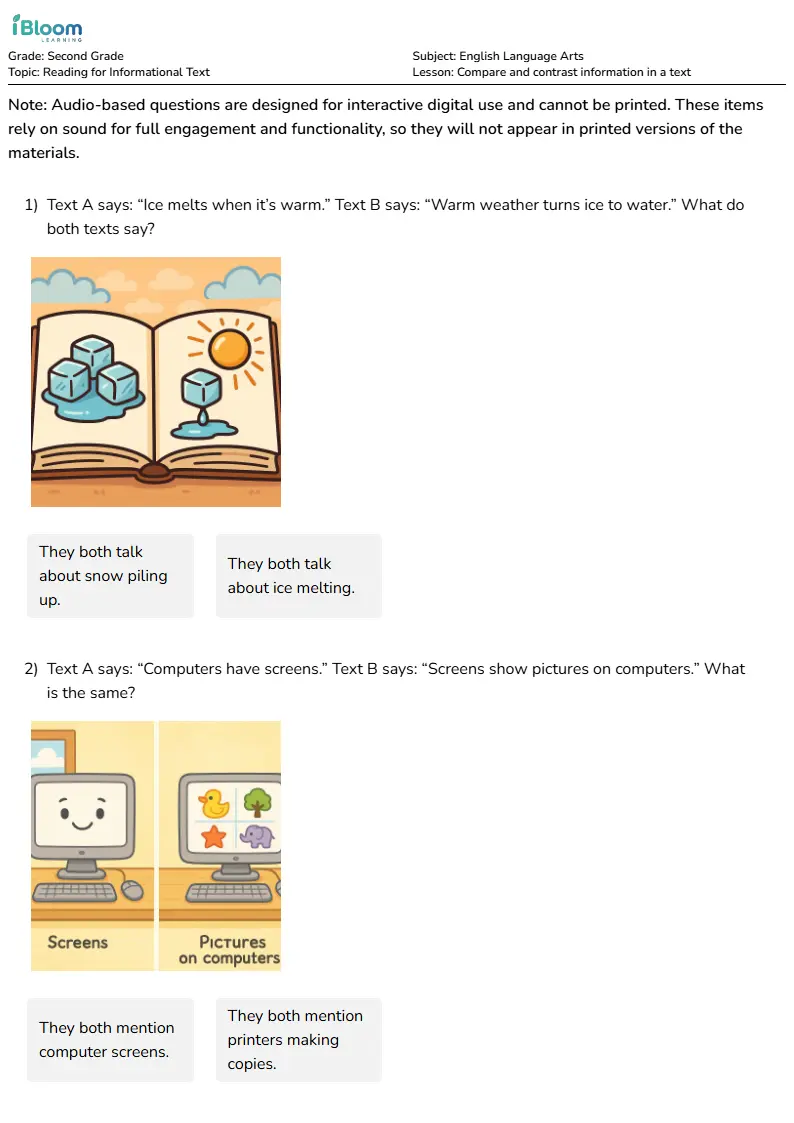
Compare and contrast information in a text Lesson for Second Grade
Explore a free interactive english language arts lesson for second grade: Compare and contrast information in a text. AI-personalized, Common Core-aligned, and built for kids.
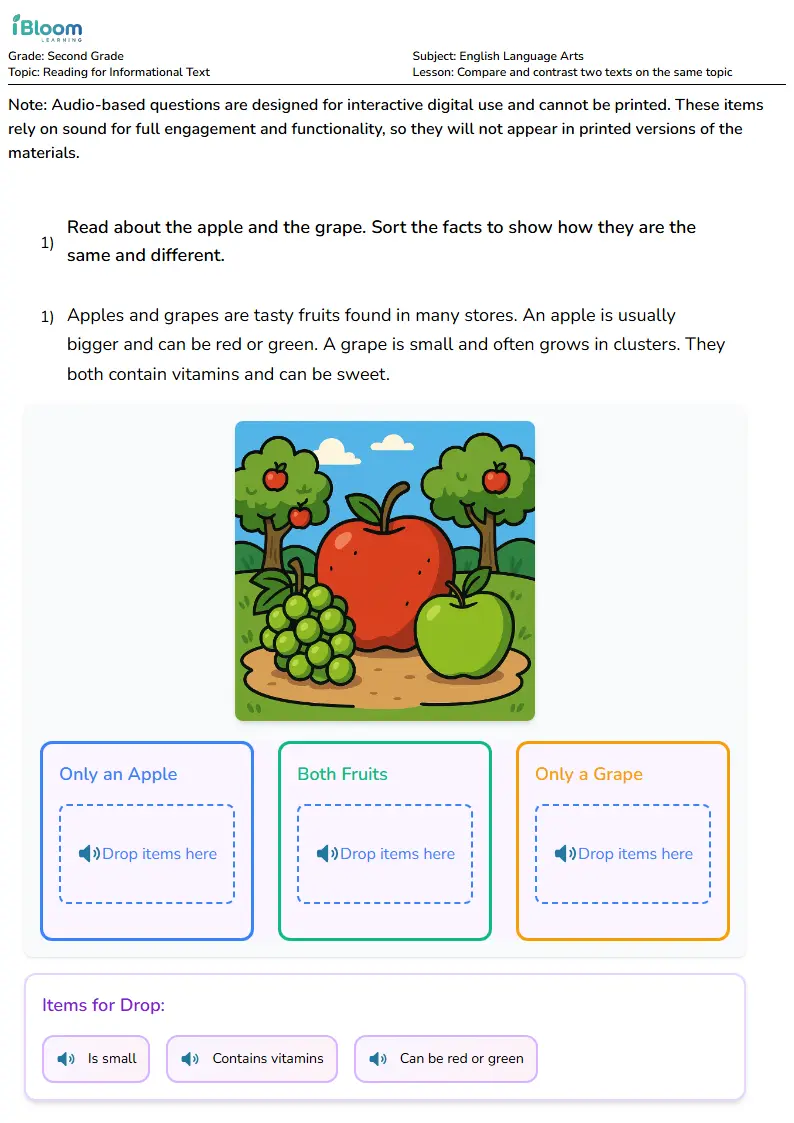
Compare and contrast two texts on the same topic Lesson for Second Grade
Explore a free interactive english language arts lesson for second grade: Compare and contrast two texts on the same topic. AI-personalized, Common Core-aligned, and built for kids.
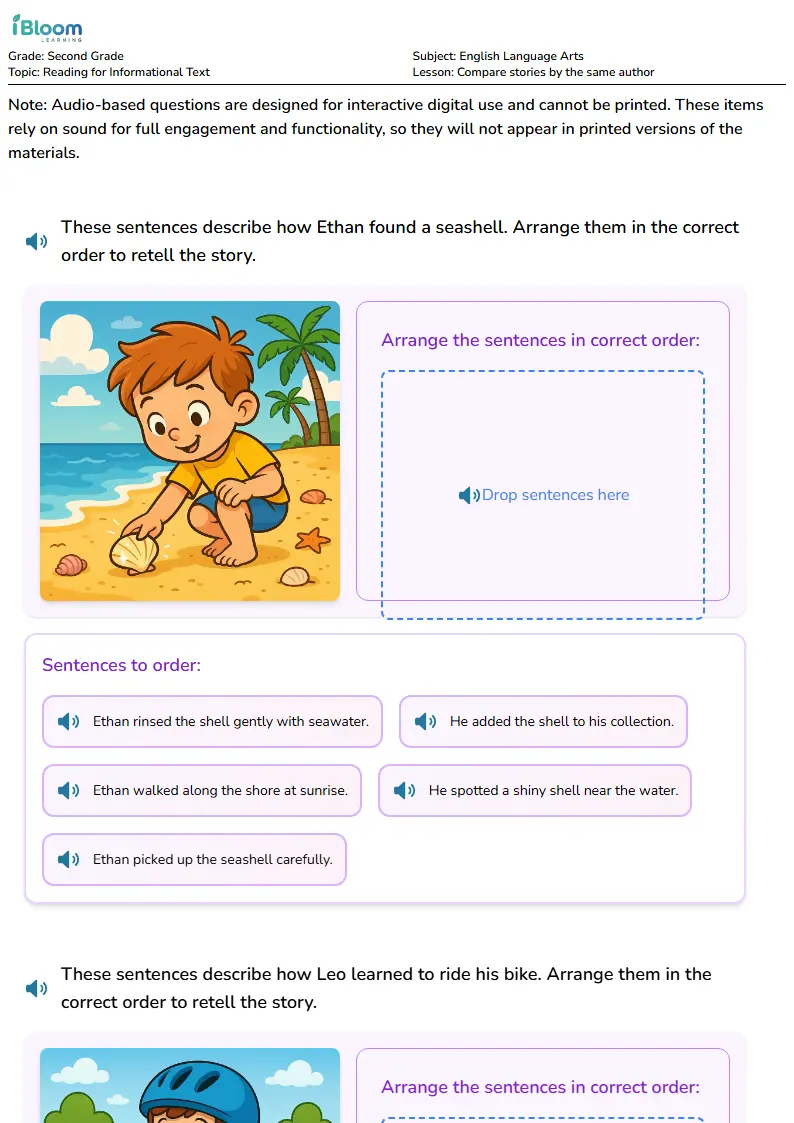
Compare stories by the same author Lesson for Second Grade
Explore a free interactive english language arts lesson for second grade: Compare stories by the same author. AI-personalized, Common Core-aligned, and built for kids.
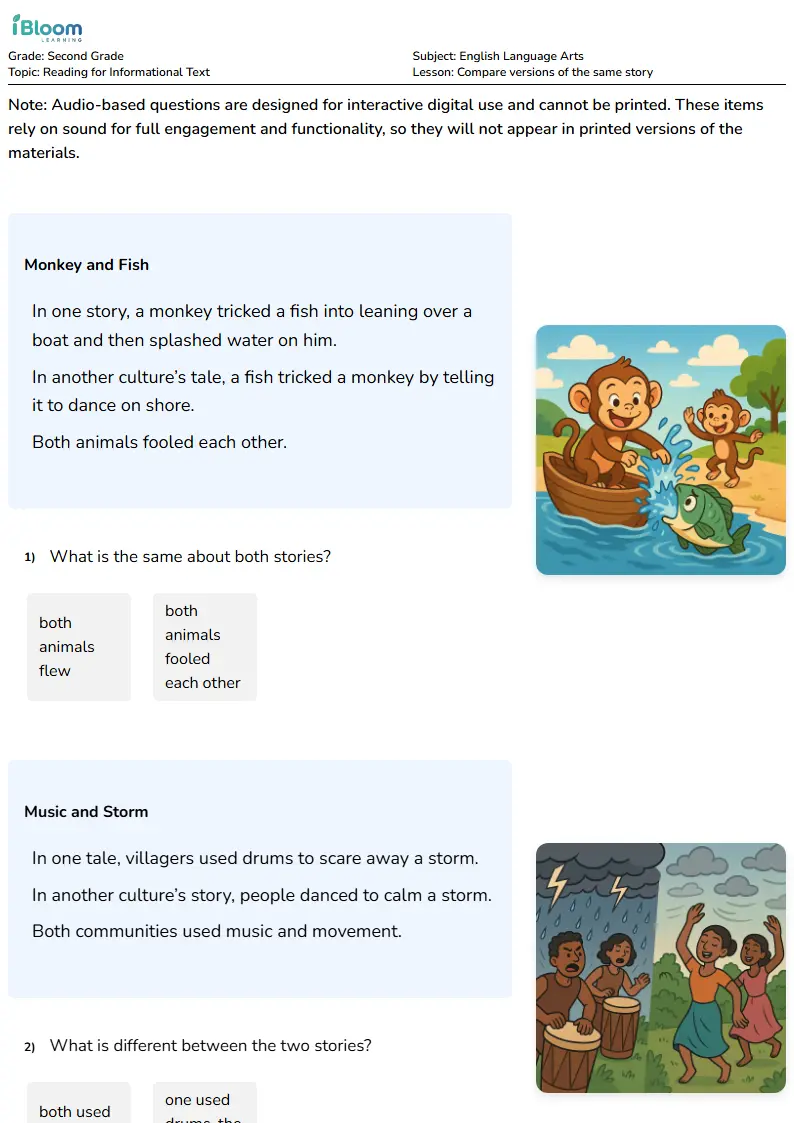
Compare versions of the same story Lesson for Second Grade
Explore a free interactive english language arts lesson for second grade: Compare versions of the same story. AI-personalized, Common Core-aligned, and built for kids.
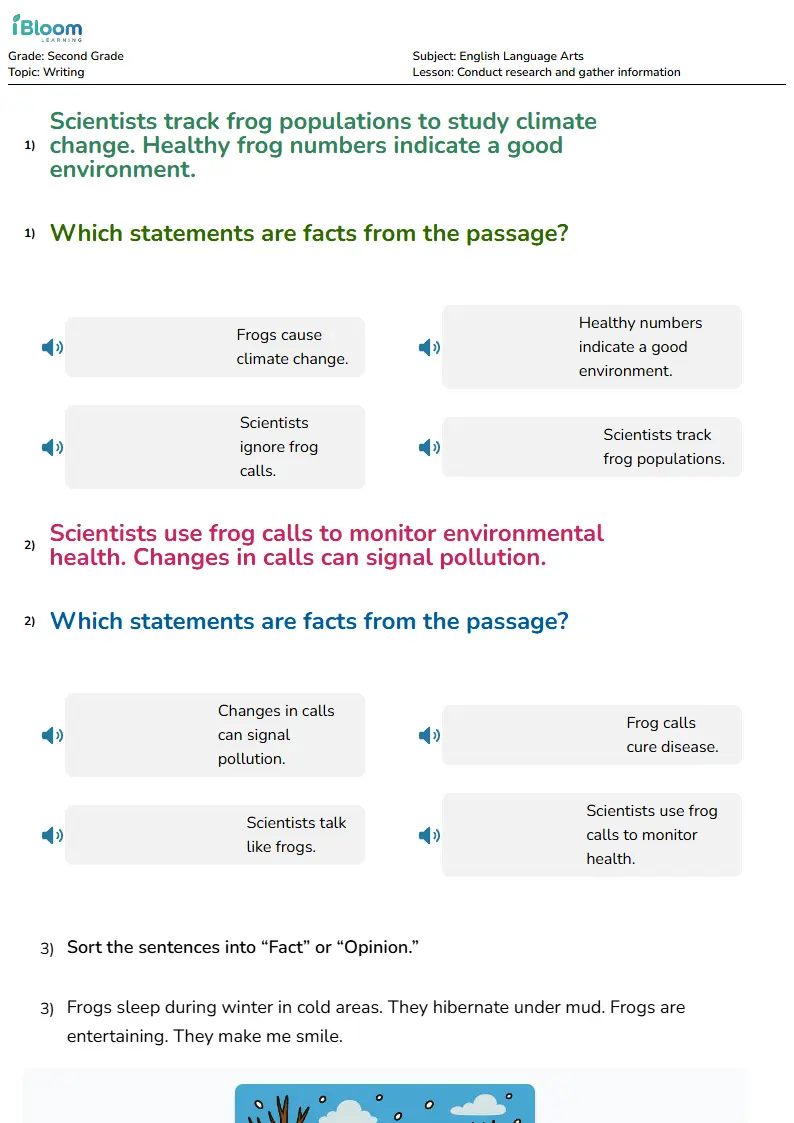
Conduct research and gather information Lesson for Second Grade
Explore a free interactive english language arts lesson for second grade: Conduct research and gather information. AI-personalized, Common Core-aligned, and built for kids.
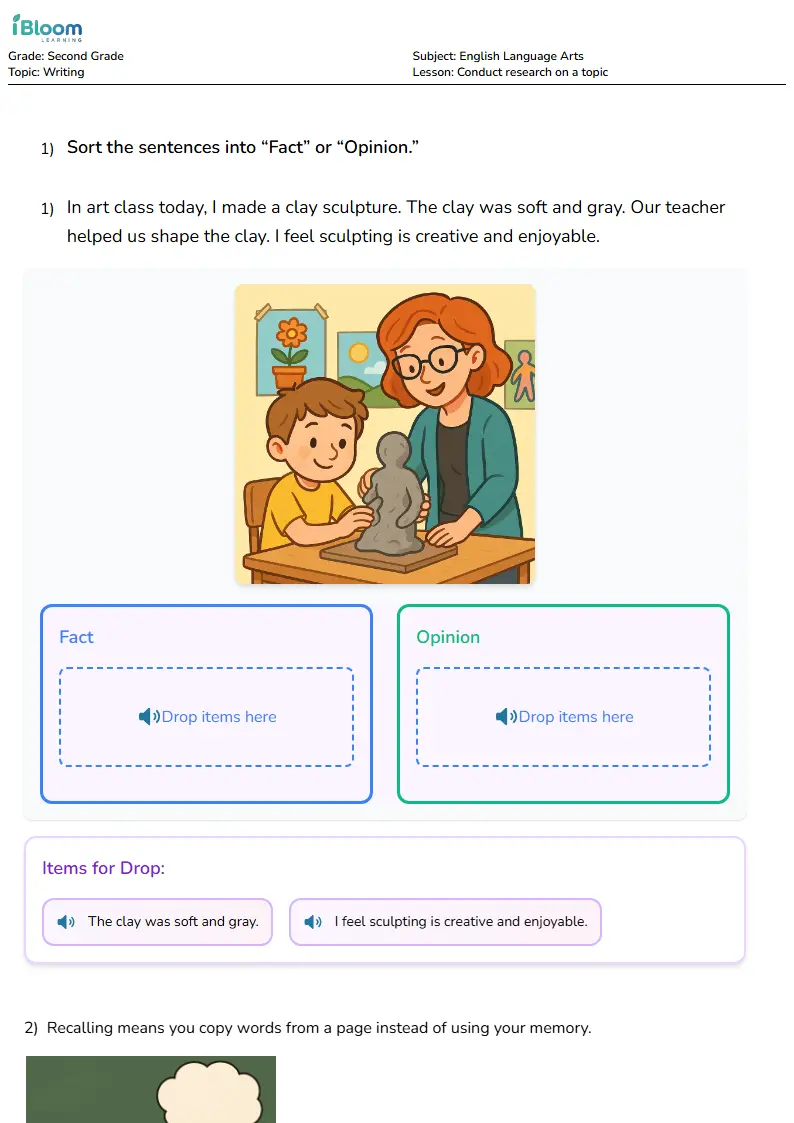
Conduct research on a topic Lesson for Second Grade
Explore a free interactive english language arts lesson for second grade: Conduct research on a topic. AI-personalized, Common Core-aligned, and built for kids.
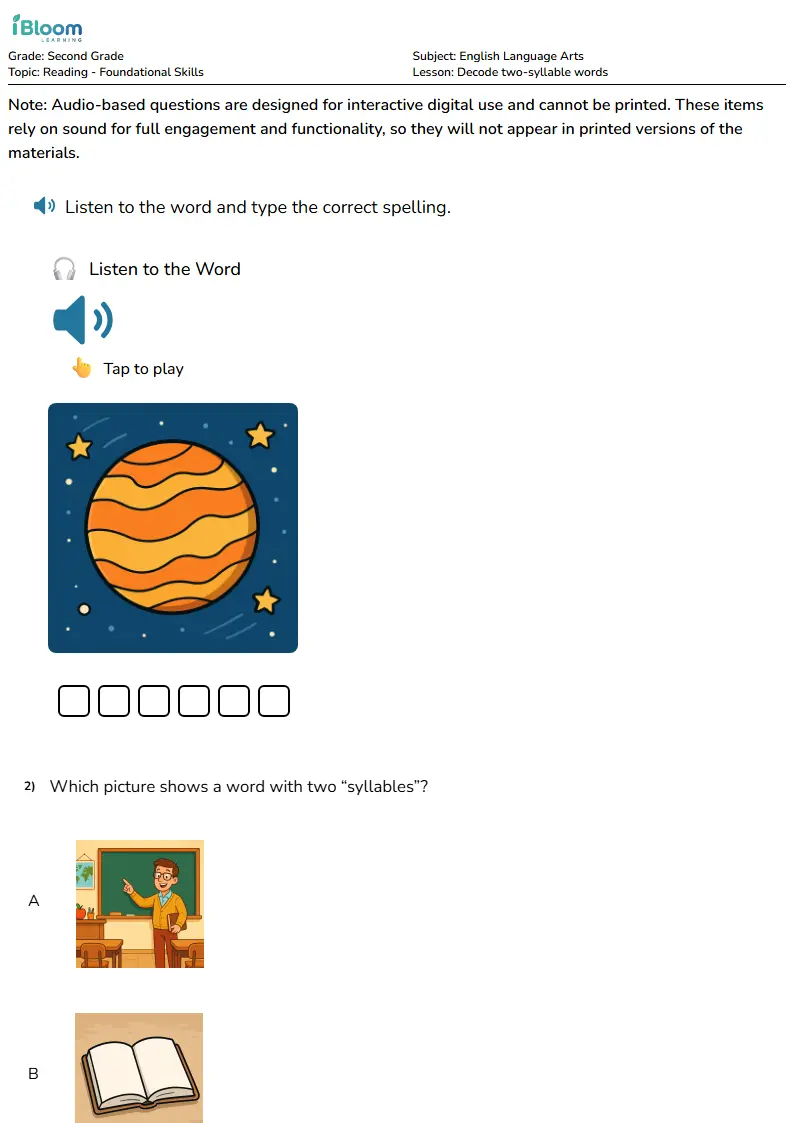
Decode two-syllable words Lesson for Second Grade
Explore a free interactive english language arts lesson for second grade: Decode two-syllable words. AI-personalized, Common Core-aligned, and built for kids.
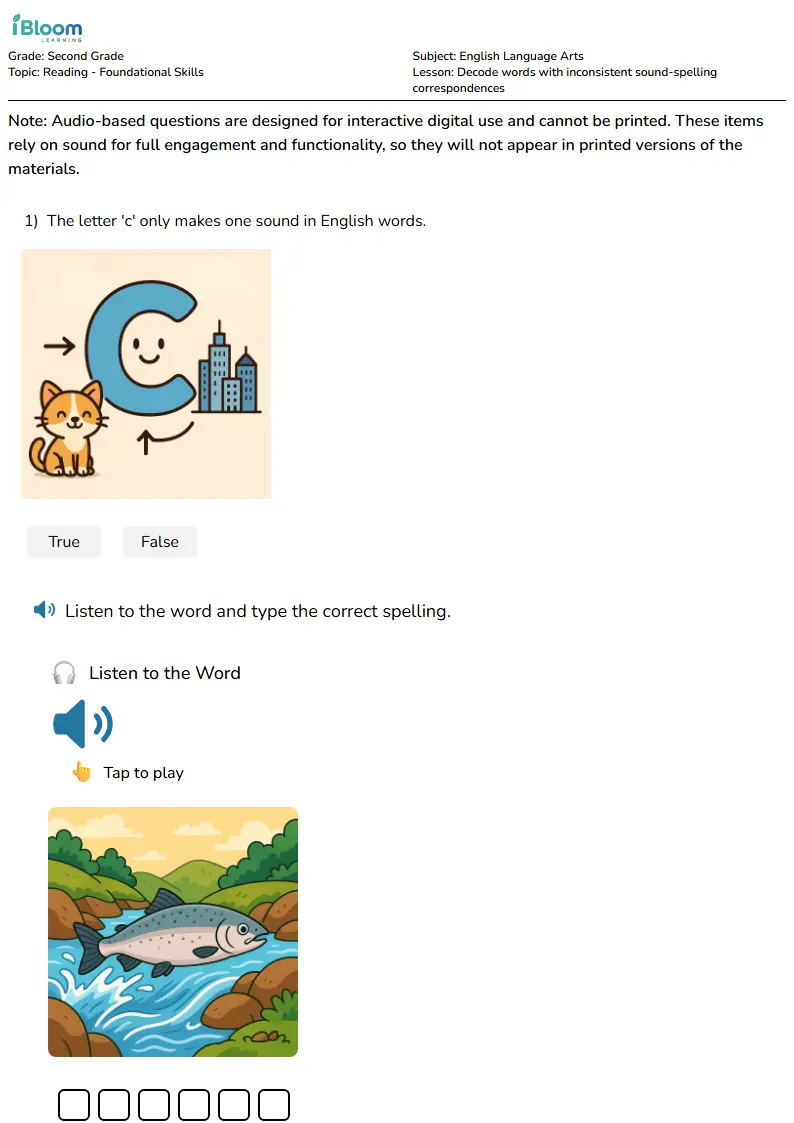
Decode words with inconsistent sound-spelling correspondences Lesson for Second Grade
Explore a free interactive english language arts lesson for second grade: Decode words with inconsistent sound-spelling correspondences. AI-personalized, Common Core-aligned, and built for kids.
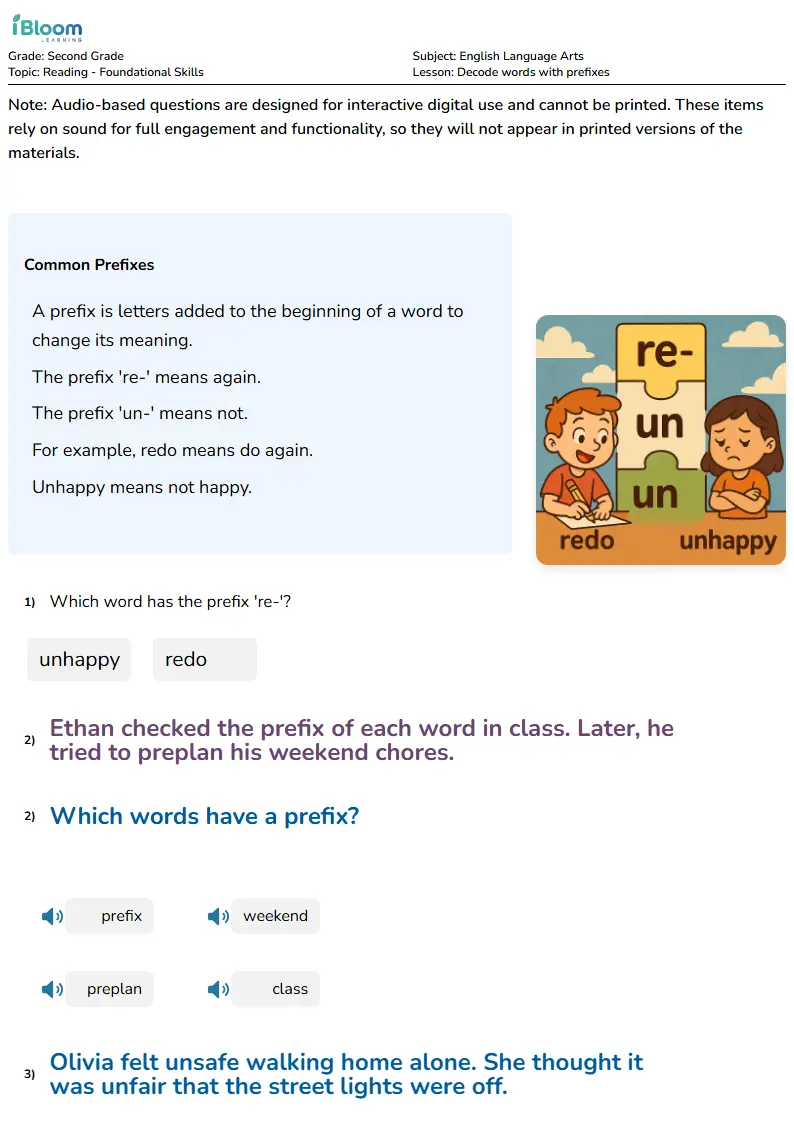
Decode words with prefixes Lesson for Second Grade
Explore a free interactive english language arts lesson for second grade: Decode words with prefixes. AI-personalized, Common Core-aligned, and built for kids.
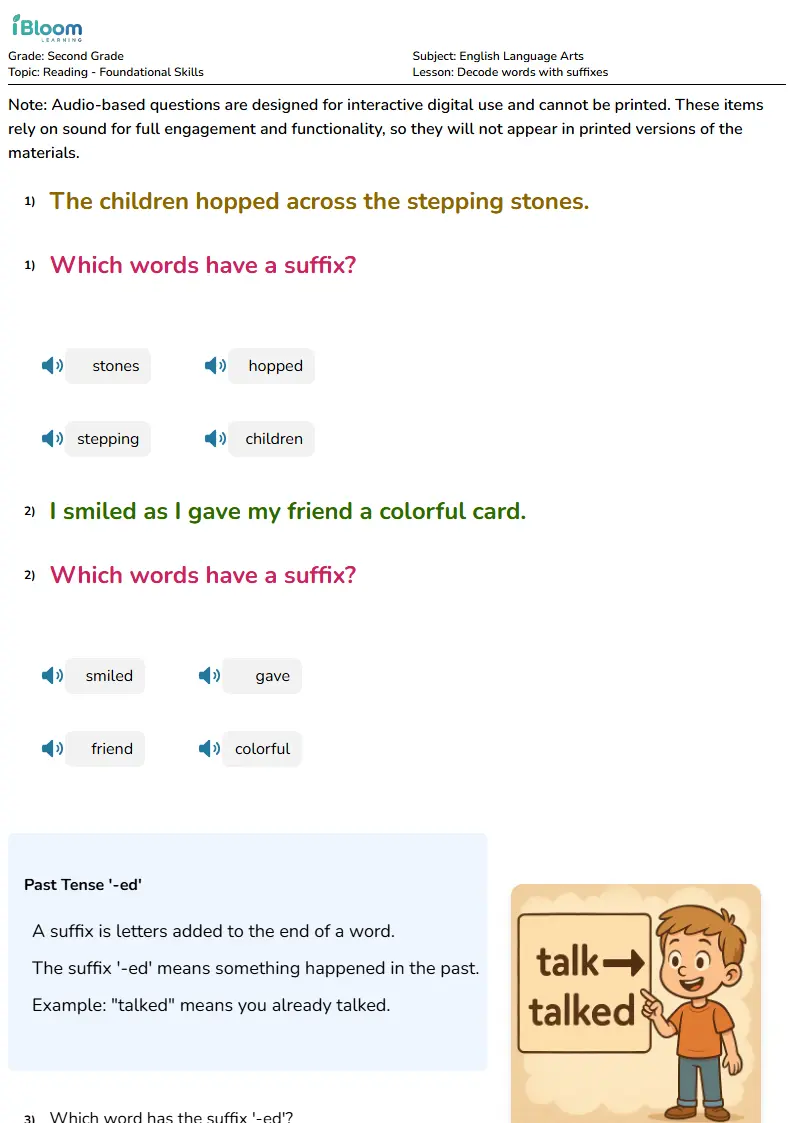
Decode words with suffixes Lesson for Second Grade
Explore a free interactive english language arts lesson for second grade: Decode words with suffixes. AI-personalized, Common Core-aligned, and built for kids.
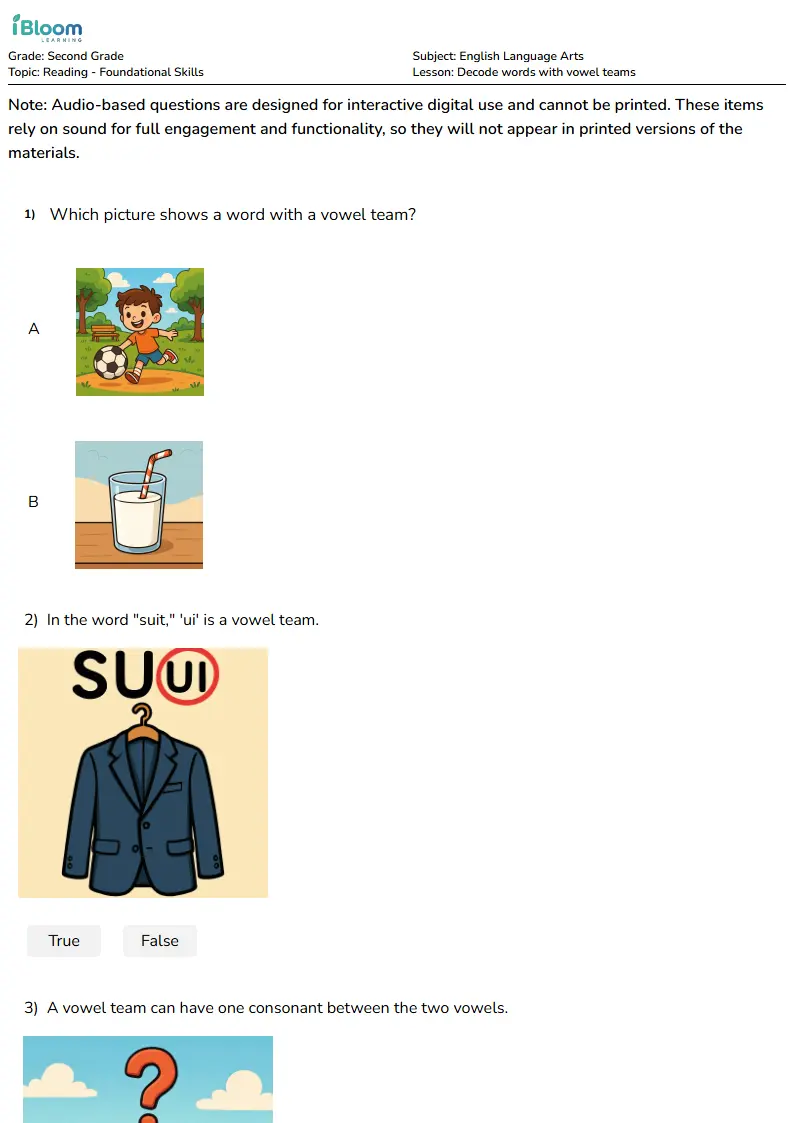
Decode words with vowel teams Lesson for Second Grade
Explore a free interactive english language arts lesson for second grade: Decode words with vowel teams. AI-personalized, Common Core-aligned, and built for kids.
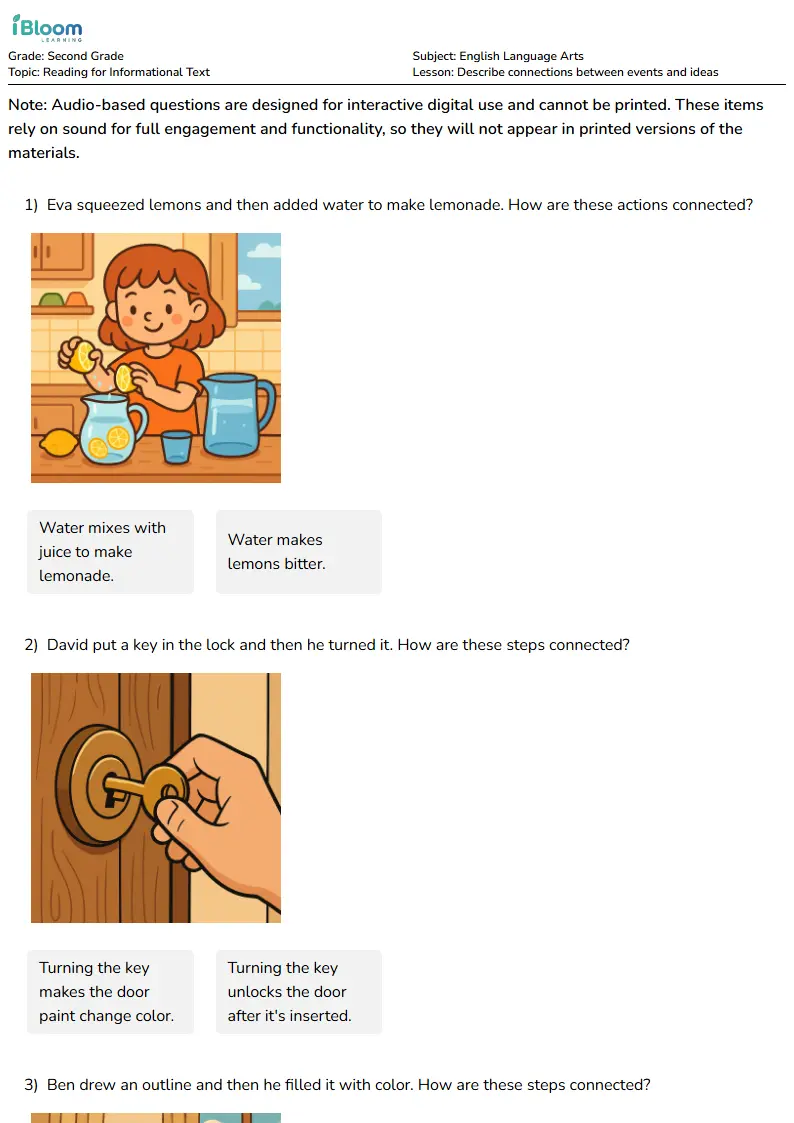
Describe connections between events and ideas Lesson for Second Grade
Explore a free interactive english language arts lesson for second grade: Describe connections between events and ideas. AI-personalized, Common Core-aligned, and built for kids.
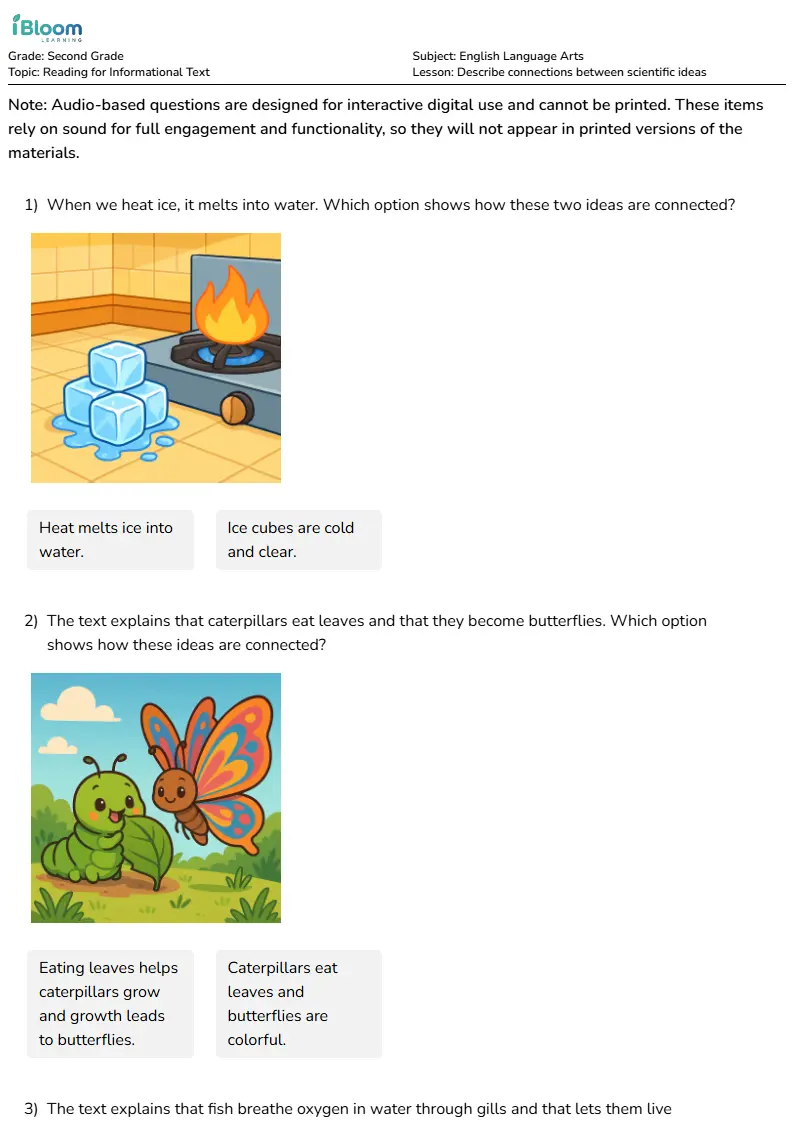
Describe connections between scientific ideas Lesson for Second Grade
Explore a free interactive english language arts lesson for second grade: Describe connections between scientific ideas. AI-personalized, Common Core-aligned, and built for kids.
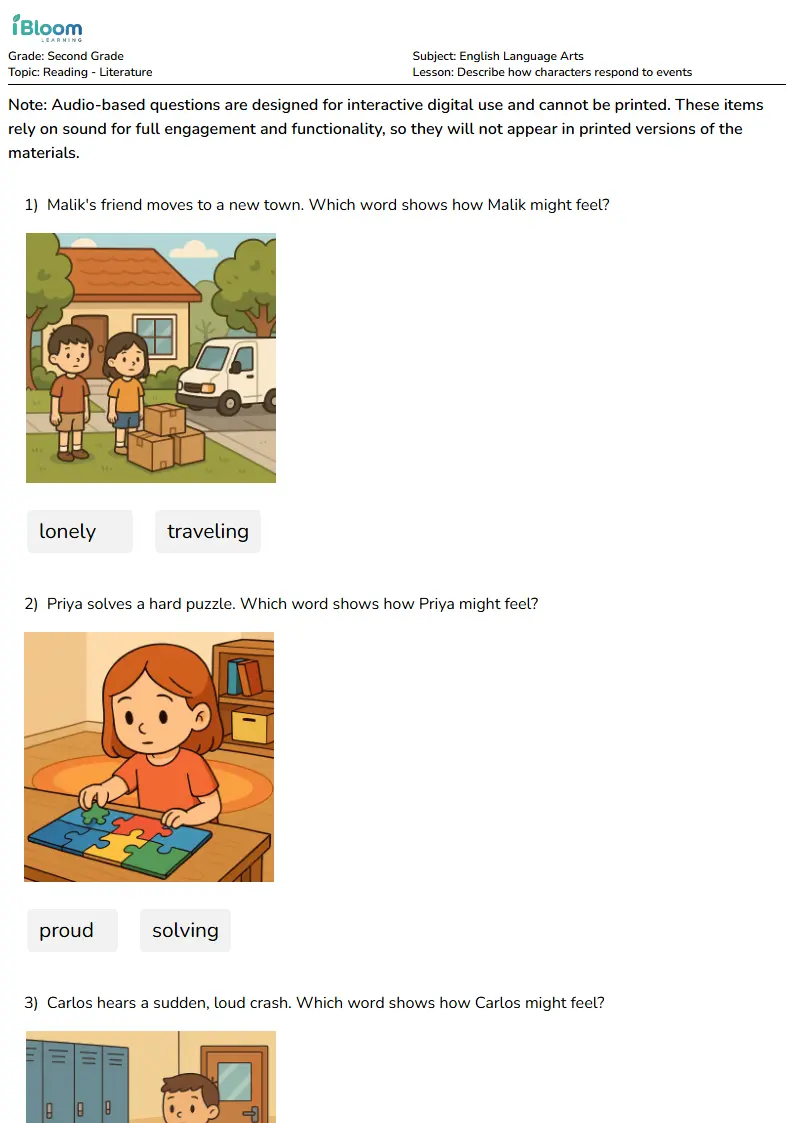
Describe how characters respond to events Lesson for Second Grade
Explore a free interactive english language arts lesson for second grade: Describe how characters respond to events. AI-personalized, Common Core-aligned, and built for kids.
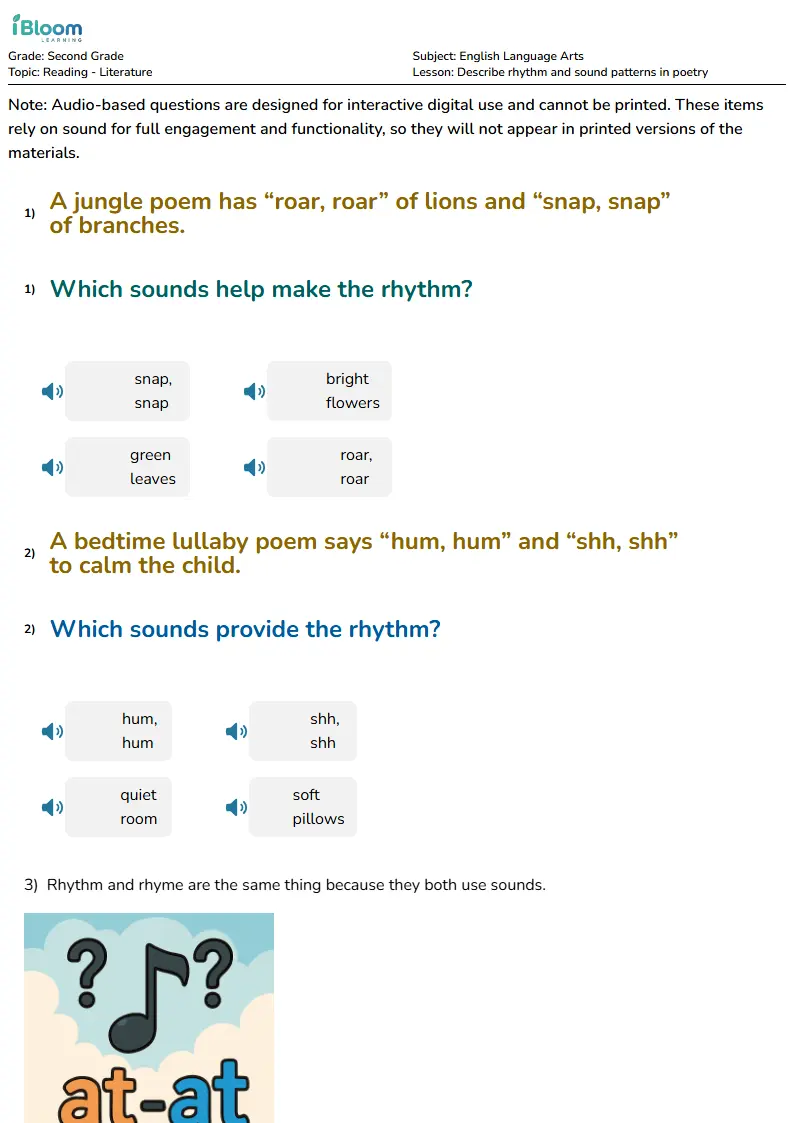
Describe rhythm and sound patterns in poetry Lesson for Second Grade
Explore a free interactive english language arts lesson for second grade: Describe rhythm and sound patterns in poetry. AI-personalized, Common Core-aligned, and built for kids.
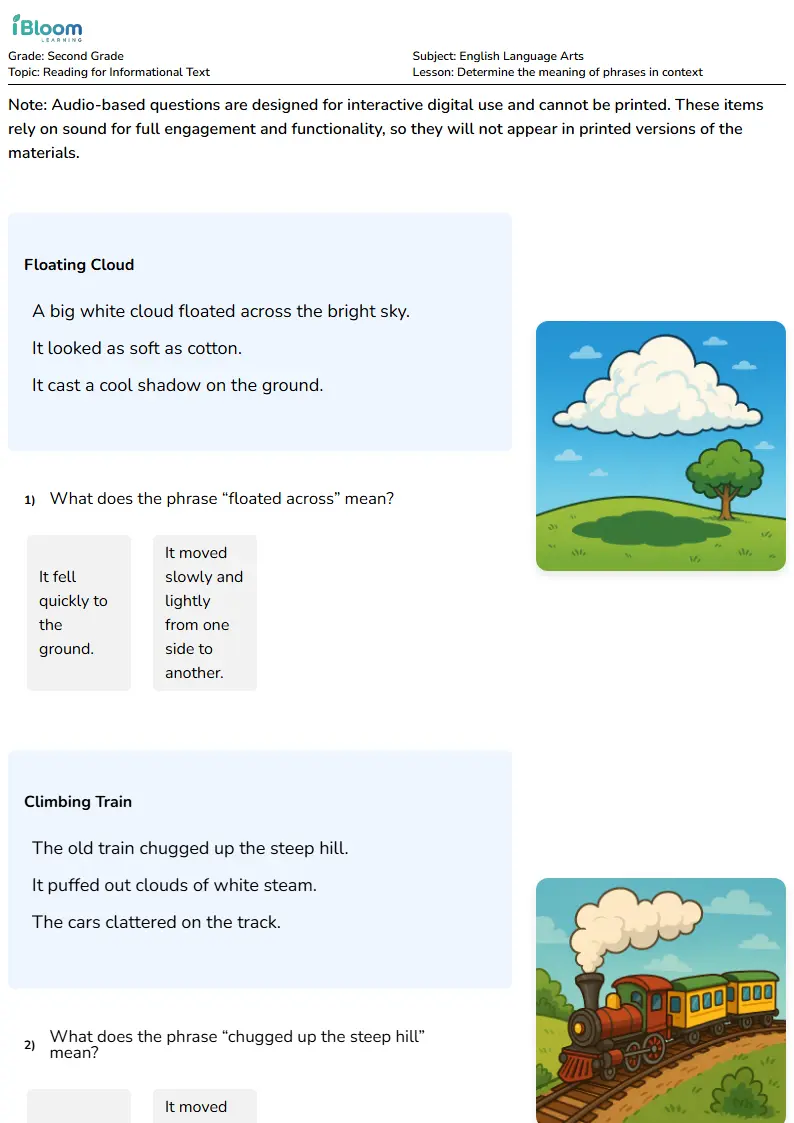
Determine the meaning of phrases in context Lesson for Second Grade
Explore a free interactive english language arts lesson for second grade: Determine the meaning of phrases in context. AI-personalized, Common Core-aligned, and built for kids.
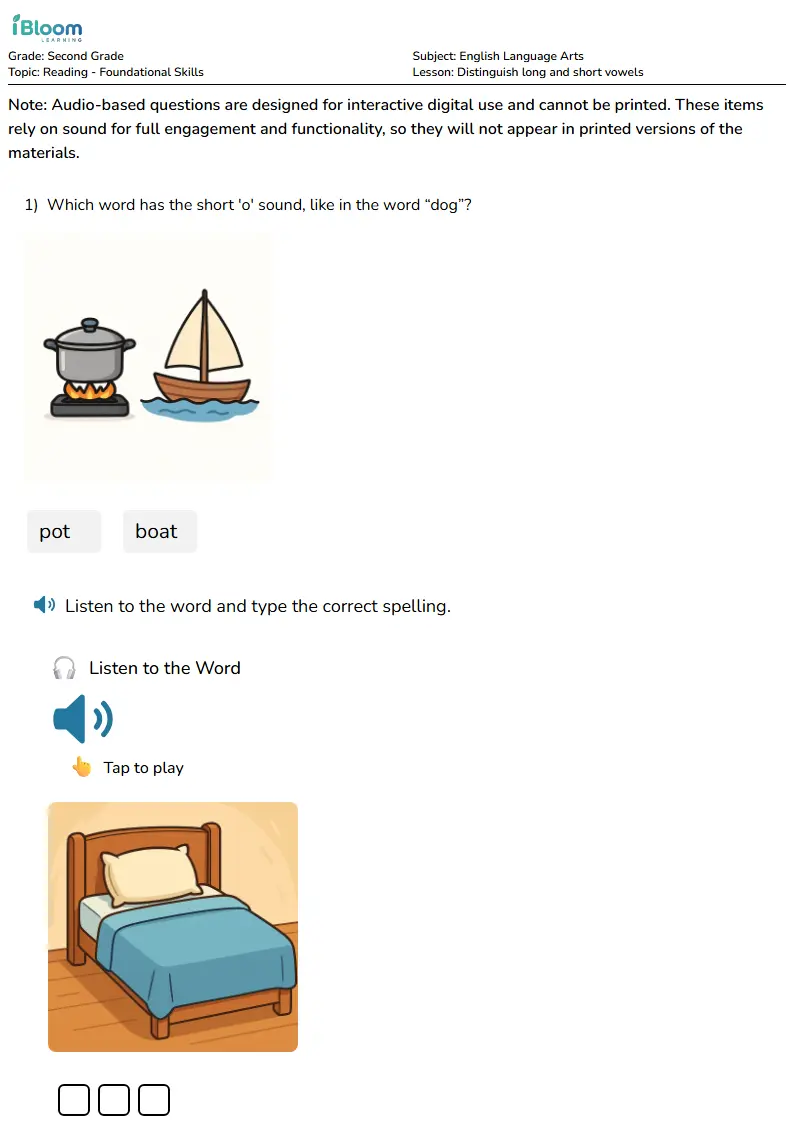
Distinguish long and short vowels Lesson for Second Grade
Explore a free interactive english language arts lesson for second grade: Distinguish long and short vowels. AI-personalized, Common Core-aligned, and built for kids.
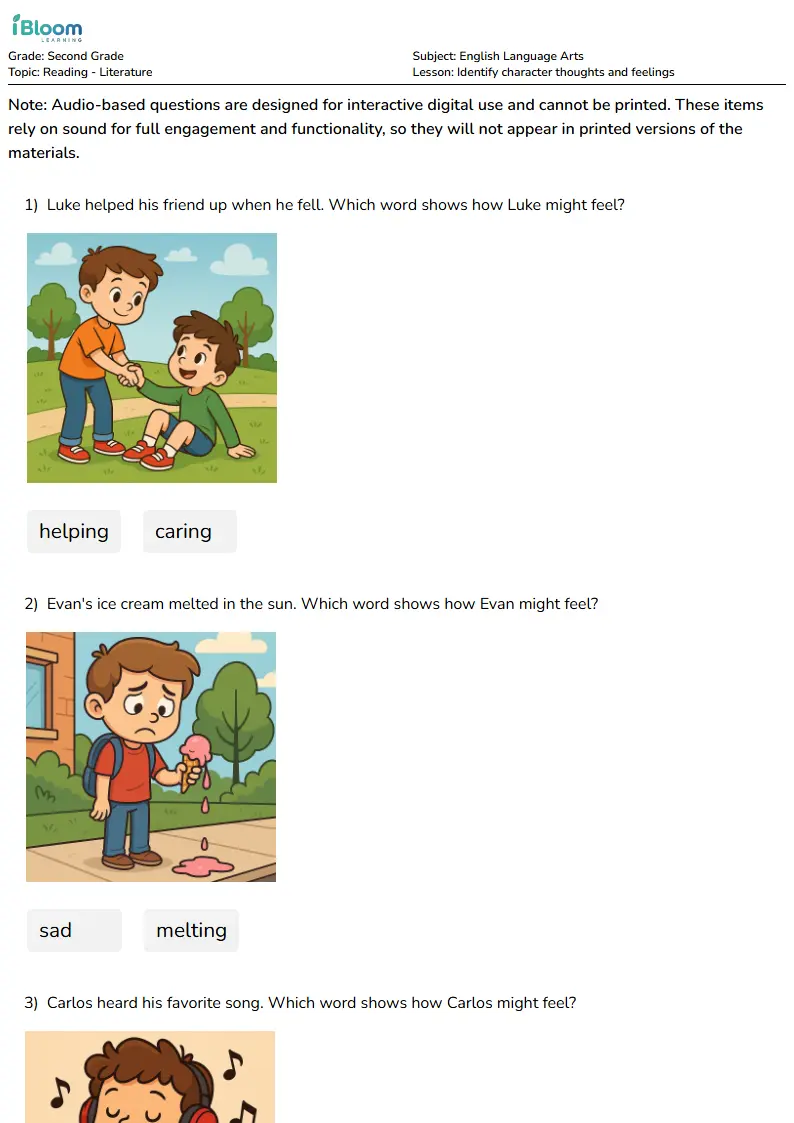
Identify character thoughts and feelings Lesson for Second Grade
Explore a free interactive english language arts lesson for second grade: Identify character thoughts and feelings. AI-personalized, Common Core-aligned, and built for kids.