
Decode words with suffixes Lesson for Second Grade
Preparing your worksheet
Decode words with suffixes for Second Grade Word Practice
Decode words with suffixes helps children hear sounds, notice spelling patterns, check word parts, and practise words in sentences. Begin with this iBloom practice page, then use the paired iBloom activity when the child needs the same word skill in another format. Good spelling and vocabulary practice is not only copying a list. Children should hear the word, understand it, notice its parts, use it in speech, and write it in a sentence.
This page is useful for parents, teachers, tutors, and children. It can support weekly spelling tests, spelling bee preparation, vocabulary review, phonics practice, reading fluency, and homework. The routine is simple: say the word, listen for sounds, look for a pattern, write the word, use it in a sentence, and review mistakes calmly.
What Children Learn
Children build spelling patterns and word study by connecting sound, spelling, meaning, and sentence use. A word becomes easier to remember when a child can explain why it is spelled that way or where it fits in a sentence. That is why iBloom practice should be paired with oral review and short written examples.
- Listen carefully to every sound or syllable in the word.
- Look for a spelling pattern, prefix, suffix, root, vowel team, or tricky part.
- Use the word in a spoken sentence before writing it.
- Correct mistakes by finding the part that changed the sound or meaning.
- Review older words so they stay strong after the weekly test.
Examples to Try
Use three quick prompts before the worksheet. First, ask the child to explain played has the suffix -ed. Then ask them to use team has a vowel team that makes a long sound in a sentence. Finally, use ship begins with the /sh/ sound as a mistake-checking prompt. This keeps practice active and prevents the child from only memorizing letter order.
If the child misses a word, avoid simply saying "wrong." Ask what part was hard. Was it the first sound, a vowel team, a silent letter, a suffix, a doubled letter, or the meaning of the word? The answer tells the adult what to practise next.
Parent Routine
Parents can use a ten-minute routine: read five words aloud, ask the child to repeat each word, use two words in sentences, write the words, then correct one mistake together. For more support, connect this page with spelling dictation sentences, spelling mistake correction worksheets, and weekly spelling test practice.
Families preparing for a competition can also use spelling bee practice schedules, spelling bee words by grade level, and iBloom SpellBee for connected practice.
Teacher and Tutor Routine
Teachers can use this page as a warm-up, word-study center, dictation station, small-group lesson, or exit ticket. Model one word aloud. Ask students to identify the pattern. Let partners use the word in a sentence. Then ask students to complete iBloom practice independently.
Helpful resources from Scripps Word Club, Merriam-Webster word resources, and Reading Rockets vocabulary guidance support regular word exposure, meaning-based practice, and vocabulary-rich reading. Children remember words better when spelling is tied to meaning, speech, and reading.
Regional Learning Notes
This routine can fit India, the United States, and the UAE. In India, families in Mumbai can use it for CBSE, ICSE, state-board, and spelling bee practice. In the United States, it supports classroom word study, weekly spelling tests, and home review in places such as Texas. In the UAE, families in Abu Dhabi can use the same routine across British, American, IB, and Indian curriculum settings.
In Indian homes, this can fit English homework, dictation tests, and school spelling bees. In US classrooms, it supports phonics, word study, vocabulary, and weekly spelling review. In UAE schools and homes, it helps multilingual learners practise English words with a consistent routine across different curricula.
Common Mistakes to Watch
- Copying without listening: Say the word aloud and ask the child to repeat it before writing.
- Forgetting meaning: Ask for a sentence so the word is not only a spelling pattern.
- Repeating the same mistake: Circle the tricky part and practise only that part before rewriting the whole word.
- Reviewing only new words: Mix old words with new words so learning stays strong.
- Rushing correction: Ask the child to compare their spelling with the correct spelling and name what changed.
Practice Path
Start with Decode words with suffixes. Continue with the paired lesson or worksheet. Then choose the closest support guide: spelling patterns and word study guide. Add word study games for variety, online spelling practice for digital review, and SpellBee for adaptive word practice.
Frequently Asked Questions
How often should children practise spelling? Short daily review works better than one long session before a test.
Should children write each word many times? Rewriting can help, but it should include sound, meaning, and sentence practice.
What if my child keeps missing the same word? Find the tricky part, practise that part, then use the word in a sentence.
Can this help spelling bee preparation? Yes. Spelling bee practice improves when children hear the word, ask about meaning, notice patterns, and review older words.
More practice for this grade
More English Language Arts lessons
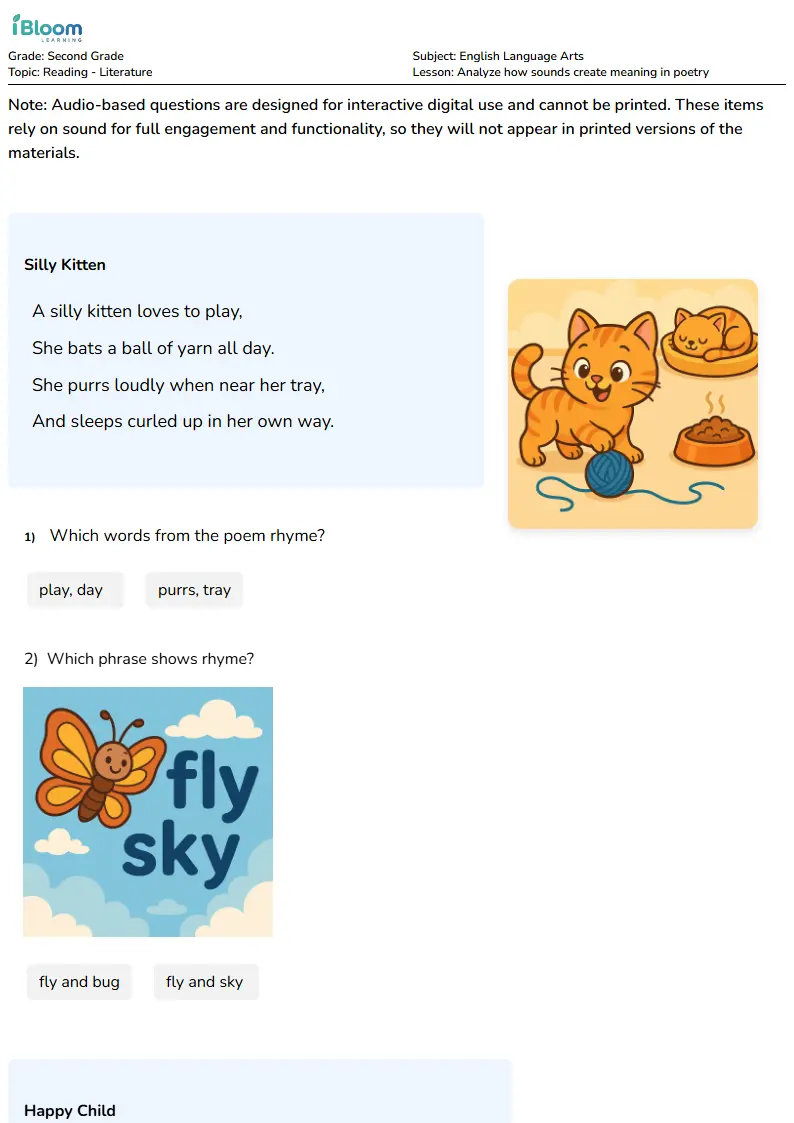
Analyze how sounds create meaning in poetry Lesson for Second Grade
Explore a free interactive english language arts lesson for second grade: Analyze how sounds create meaning in poetry. AI-personalized, Common Core-aligned, and built for kids.
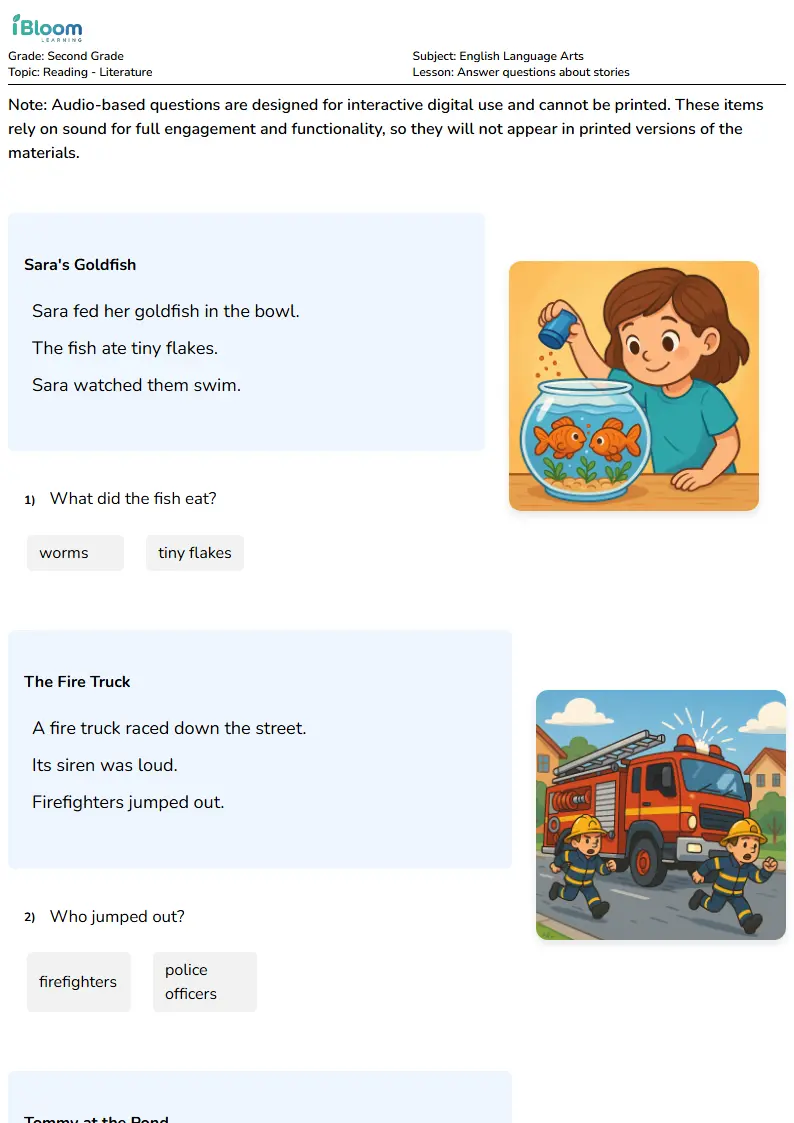
Answer questions about stories Lesson for Second Grade
Explore a free interactive english language arts lesson for second grade: Answer questions about stories. AI-personalized, Common Core-aligned, and built for kids.
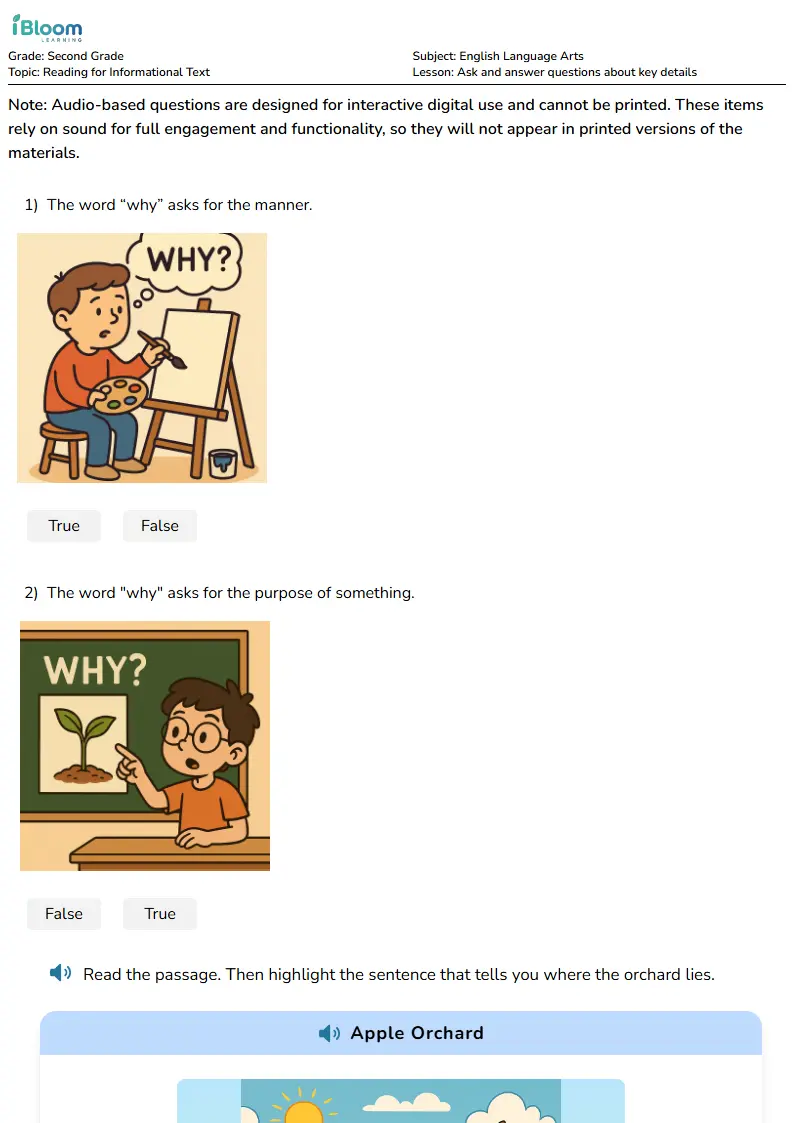
Ask and answer questions about key details Lesson for Second Grade
Explore a free interactive english language arts lesson for second grade: Ask and answer questions about key details. AI-personalized, Common Core-aligned, and built for kids.
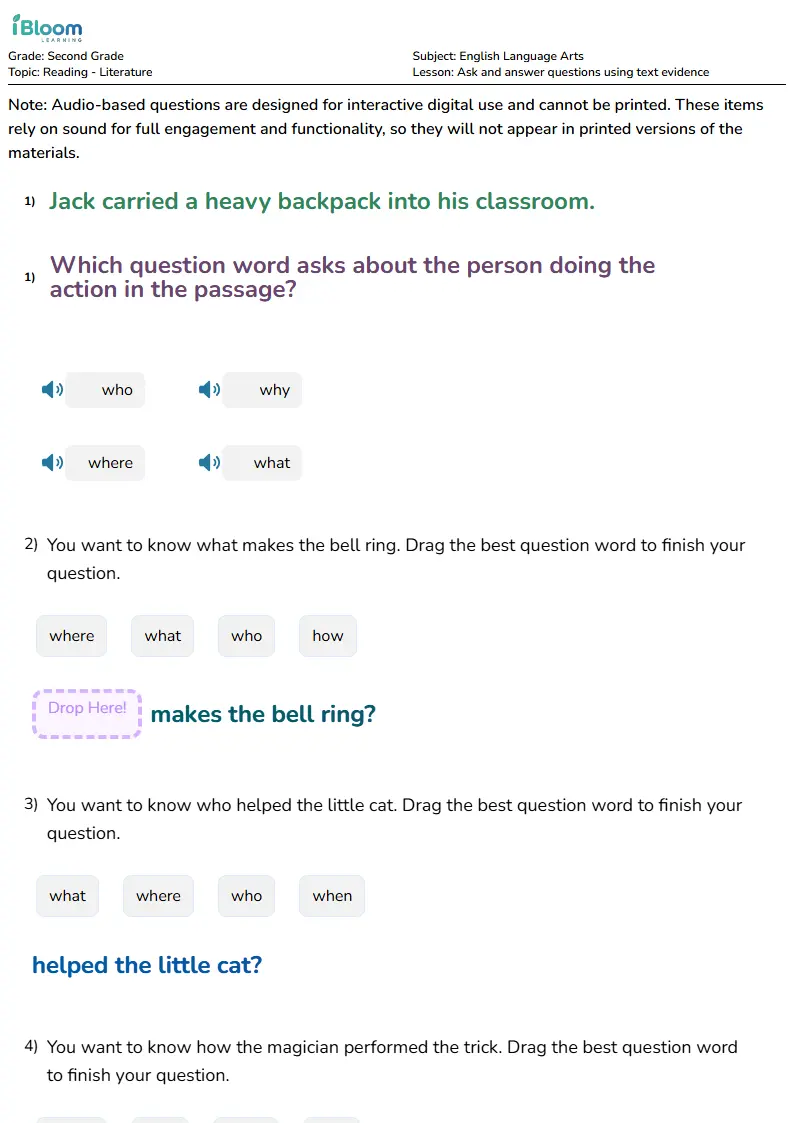
Ask and answer questions using text evidence Lesson for Second Grade
Explore a free interactive english language arts lesson for second grade: Ask and answer questions using text evidence. AI-personalized, Common Core-aligned, and built for kids.
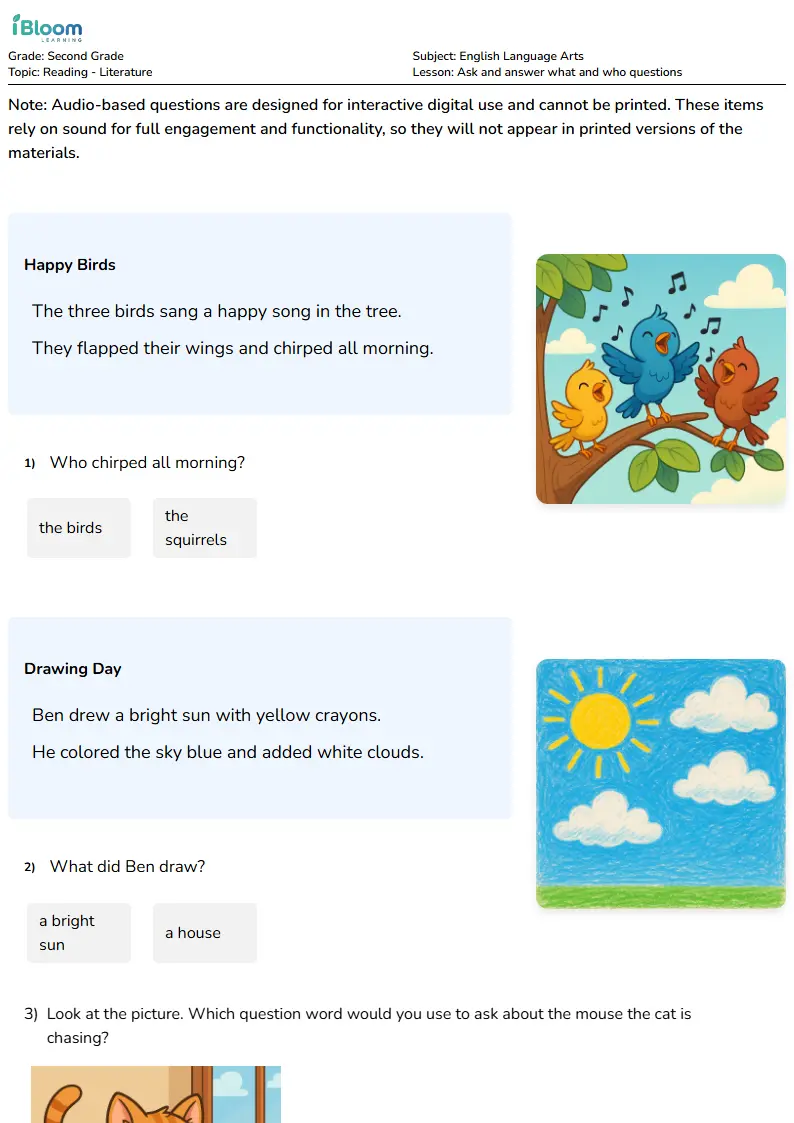
Ask and answer what and who questions Lesson for Second Grade
Explore a free interactive english language arts lesson for second grade: Ask and answer what and who questions. AI-personalized, Common Core-aligned, and built for kids.
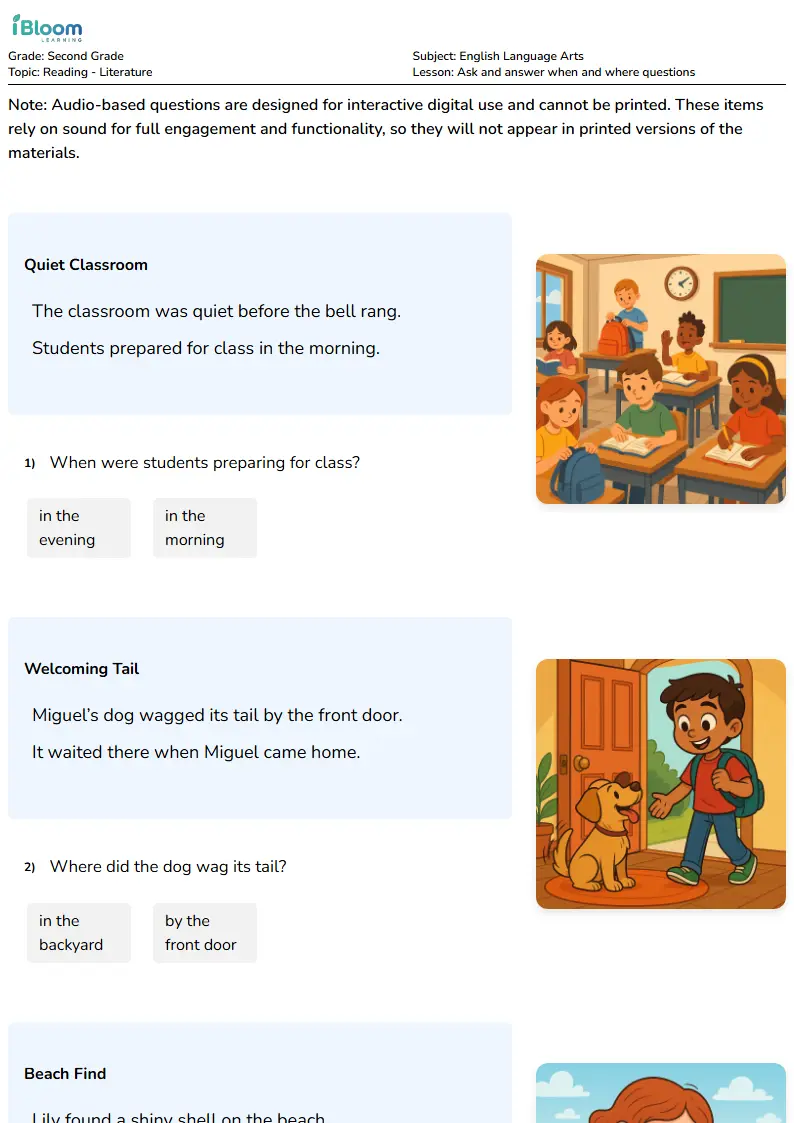
Ask and answer when and where questions Lesson for Second Grade
Explore a free interactive english language arts lesson for second grade: Ask and answer when and where questions. AI-personalized, Common Core-aligned, and built for kids.
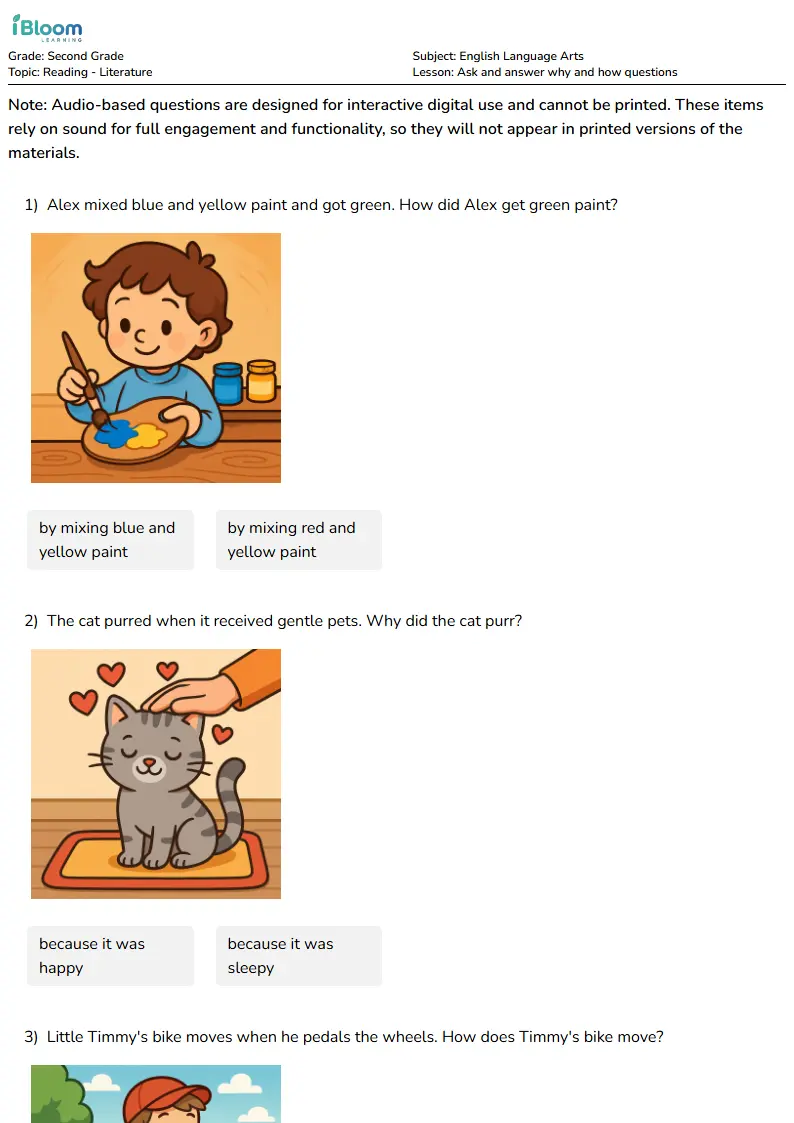
Ask and answer why and how questions Lesson for Second Grade
Explore a free interactive english language arts lesson for second grade: Ask and answer why and how questions. AI-personalized, Common Core-aligned, and built for kids.
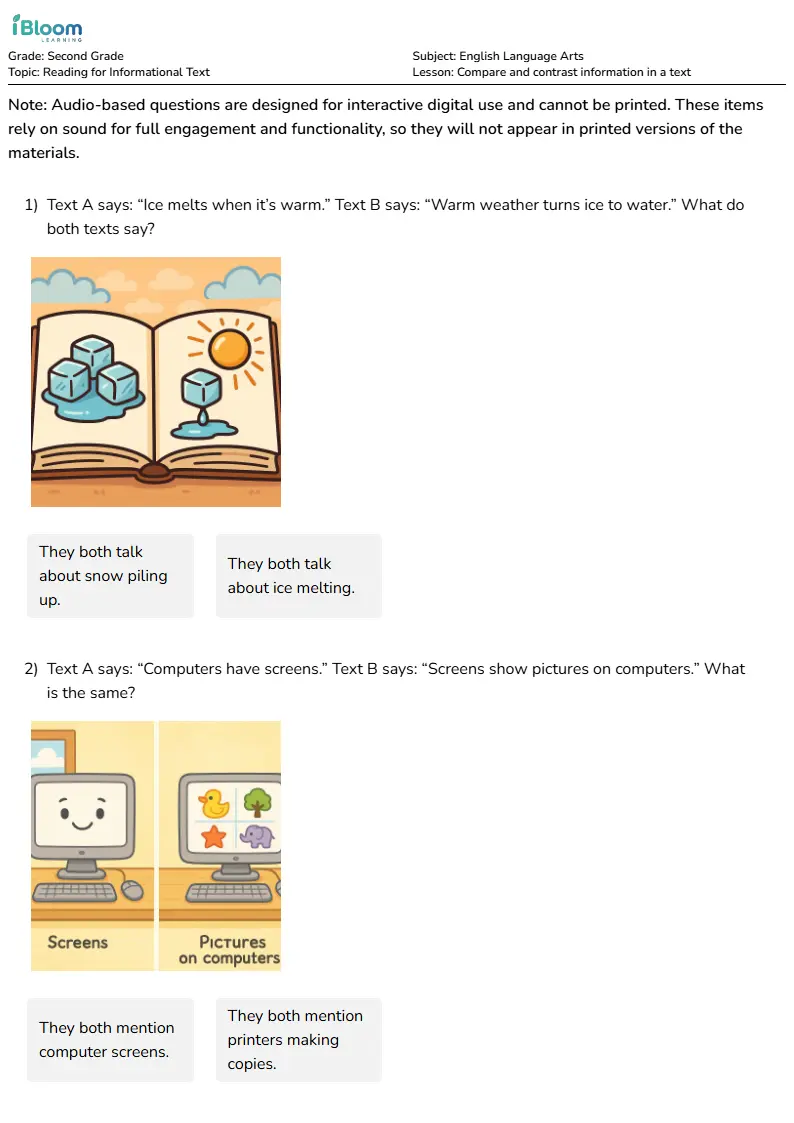
Compare and contrast information in a text Lesson for Second Grade
Explore a free interactive english language arts lesson for second grade: Compare and contrast information in a text. AI-personalized, Common Core-aligned, and built for kids.
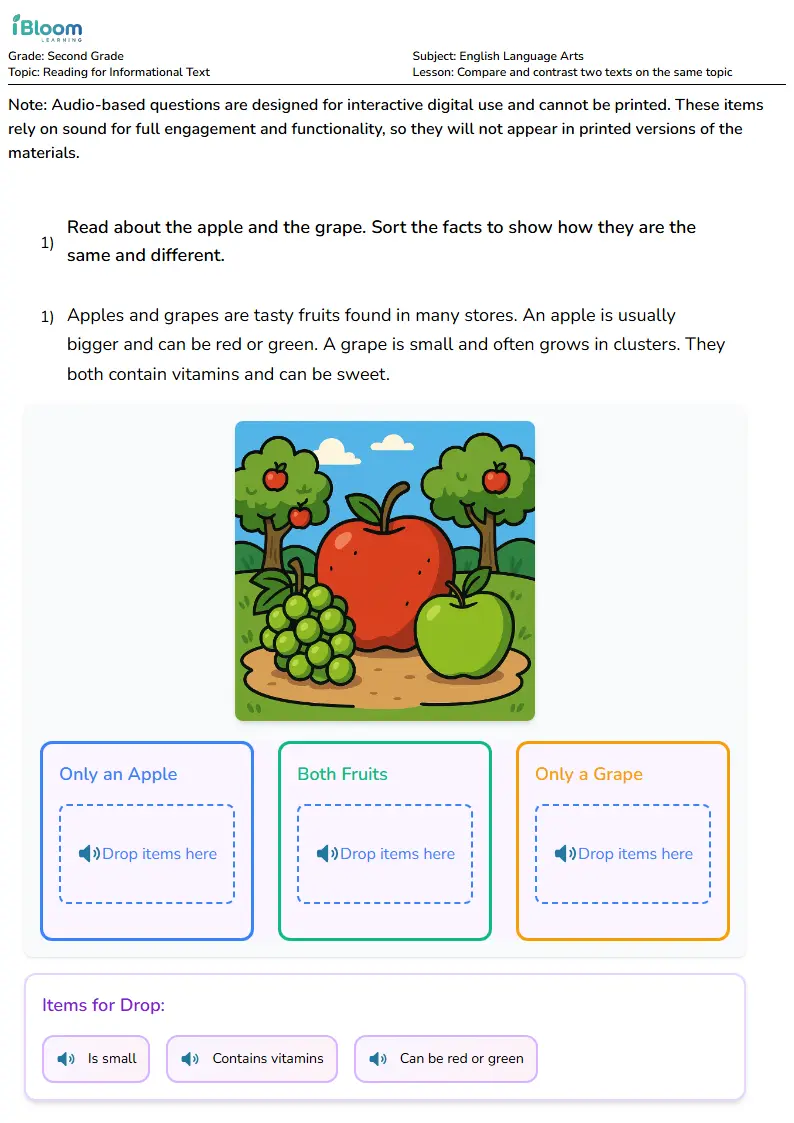
Compare and contrast two texts on the same topic Lesson for Second Grade
Explore a free interactive english language arts lesson for second grade: Compare and contrast two texts on the same topic. AI-personalized, Common Core-aligned, and built for kids.
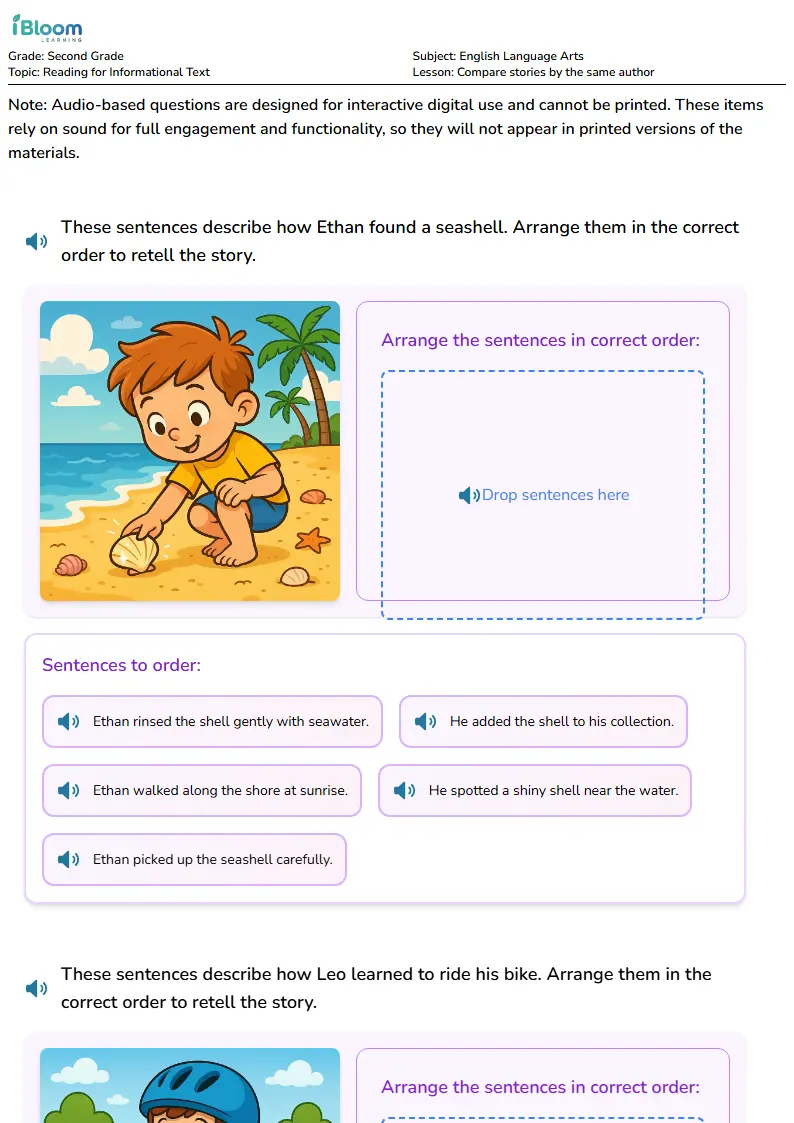
Compare stories by the same author Lesson for Second Grade
Explore a free interactive english language arts lesson for second grade: Compare stories by the same author. AI-personalized, Common Core-aligned, and built for kids.
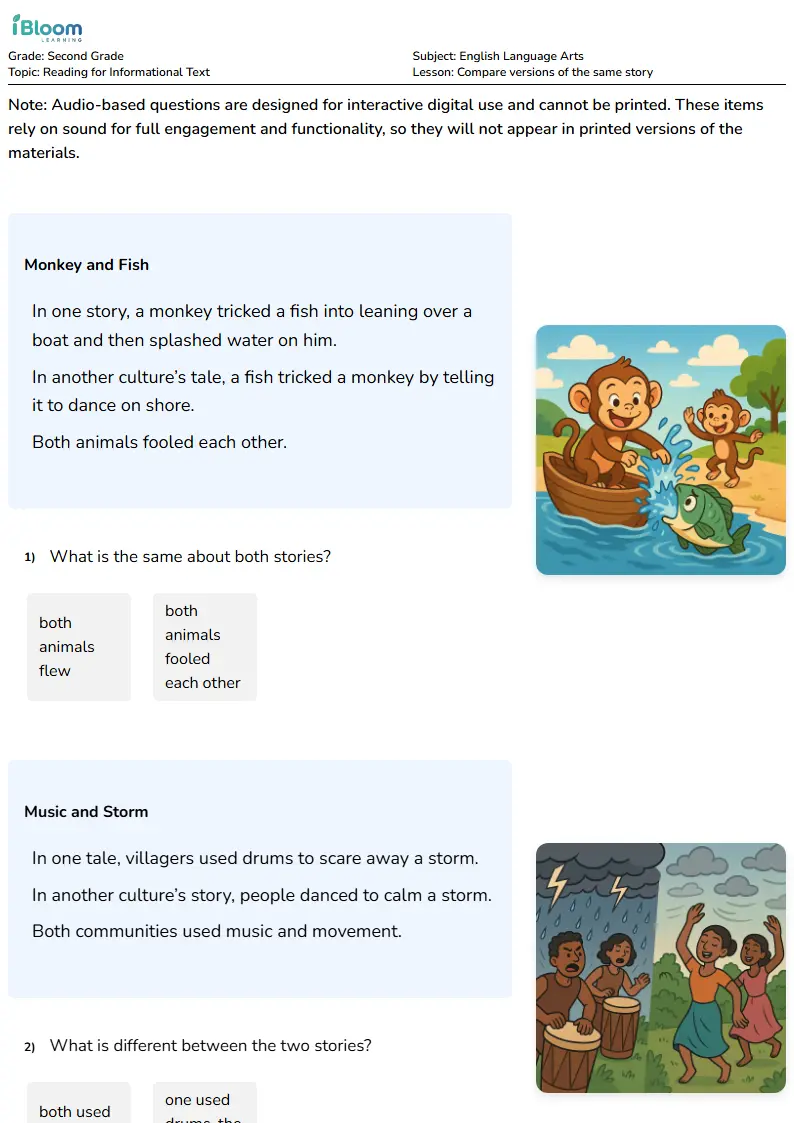
Compare versions of the same story Lesson for Second Grade
Explore a free interactive english language arts lesson for second grade: Compare versions of the same story. AI-personalized, Common Core-aligned, and built for kids.
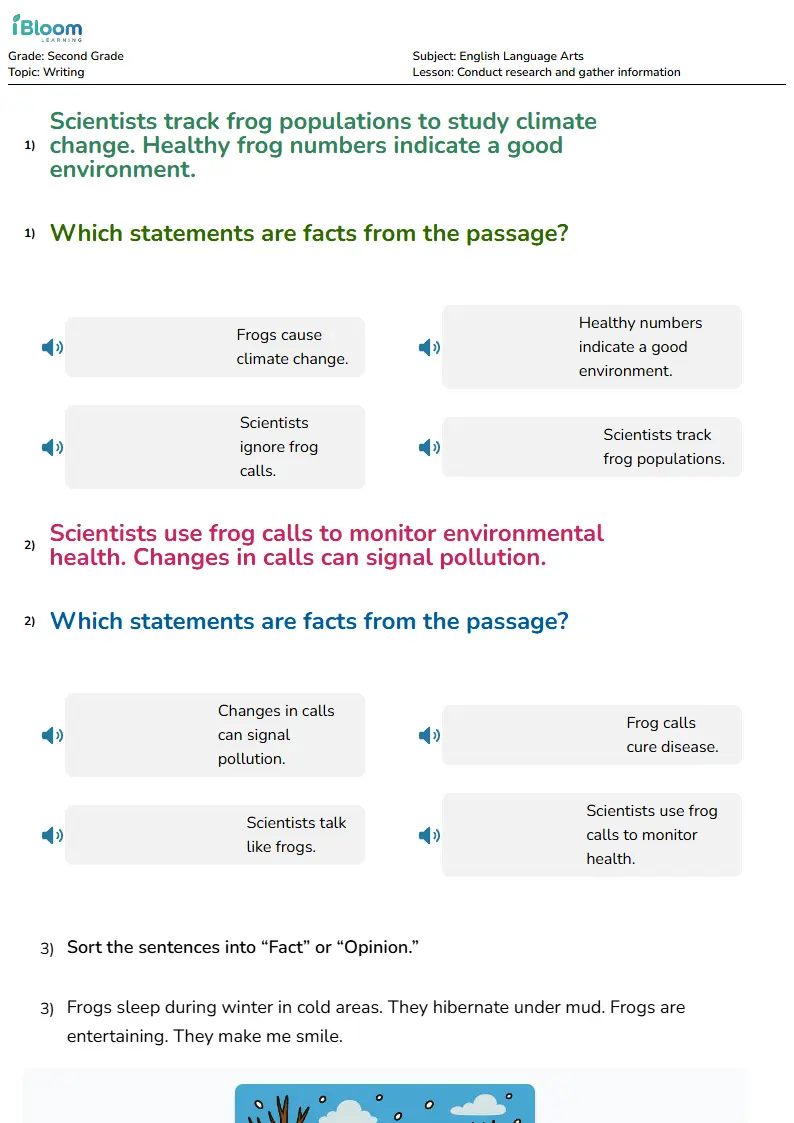
Conduct research and gather information Lesson for Second Grade
Explore a free interactive english language arts lesson for second grade: Conduct research and gather information. AI-personalized, Common Core-aligned, and built for kids.
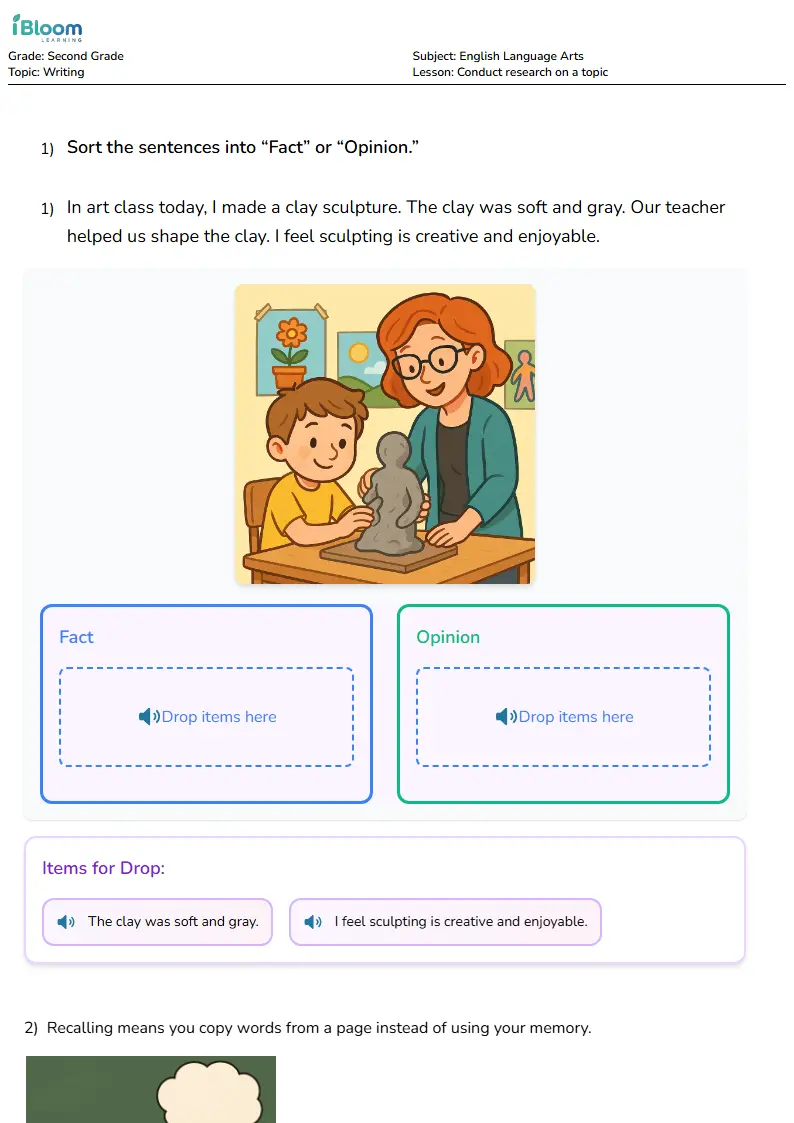
Conduct research on a topic Lesson for Second Grade
Explore a free interactive english language arts lesson for second grade: Conduct research on a topic. AI-personalized, Common Core-aligned, and built for kids.
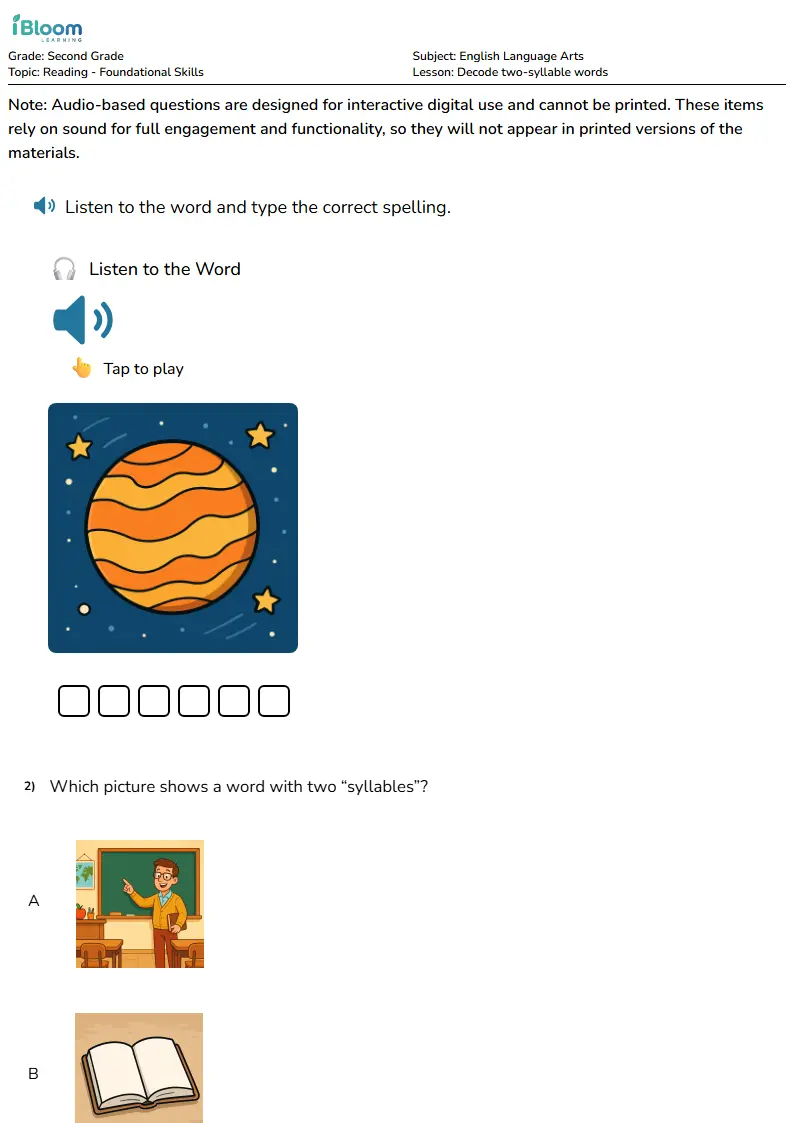
Decode two-syllable words Lesson for Second Grade
Explore a free interactive english language arts lesson for second grade: Decode two-syllable words. AI-personalized, Common Core-aligned, and built for kids.
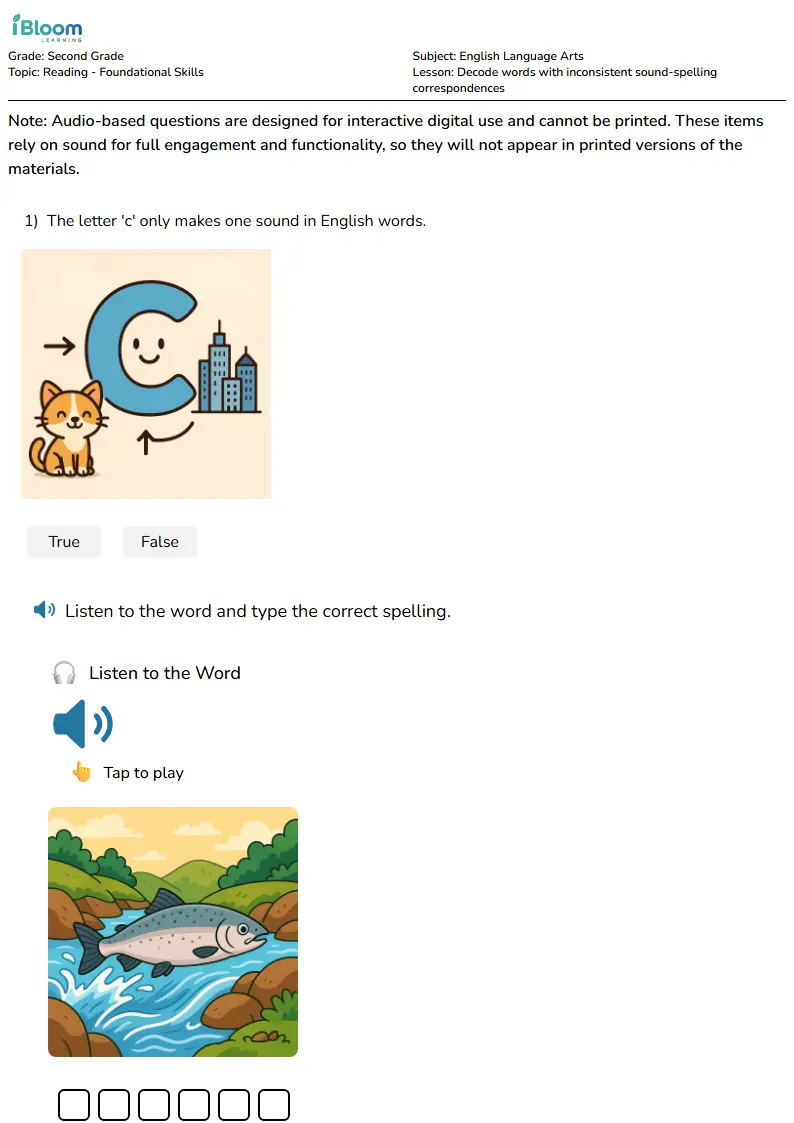
Decode words with inconsistent sound-spelling correspondences Lesson for Second Grade
Explore a free interactive english language arts lesson for second grade: Decode words with inconsistent sound-spelling correspondences. AI-personalized, Common Core-aligned, and built for kids.
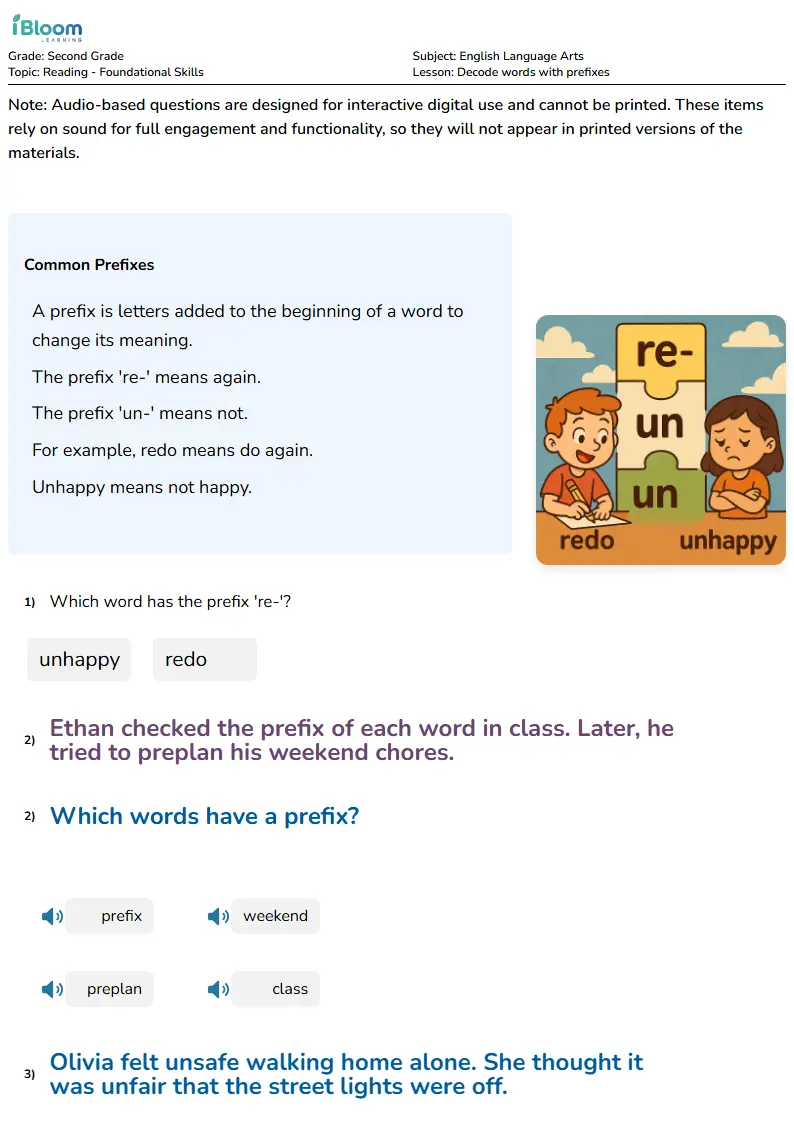
Decode words with prefixes Lesson for Second Grade
Explore a free interactive english language arts lesson for second grade: Decode words with prefixes. AI-personalized, Common Core-aligned, and built for kids.
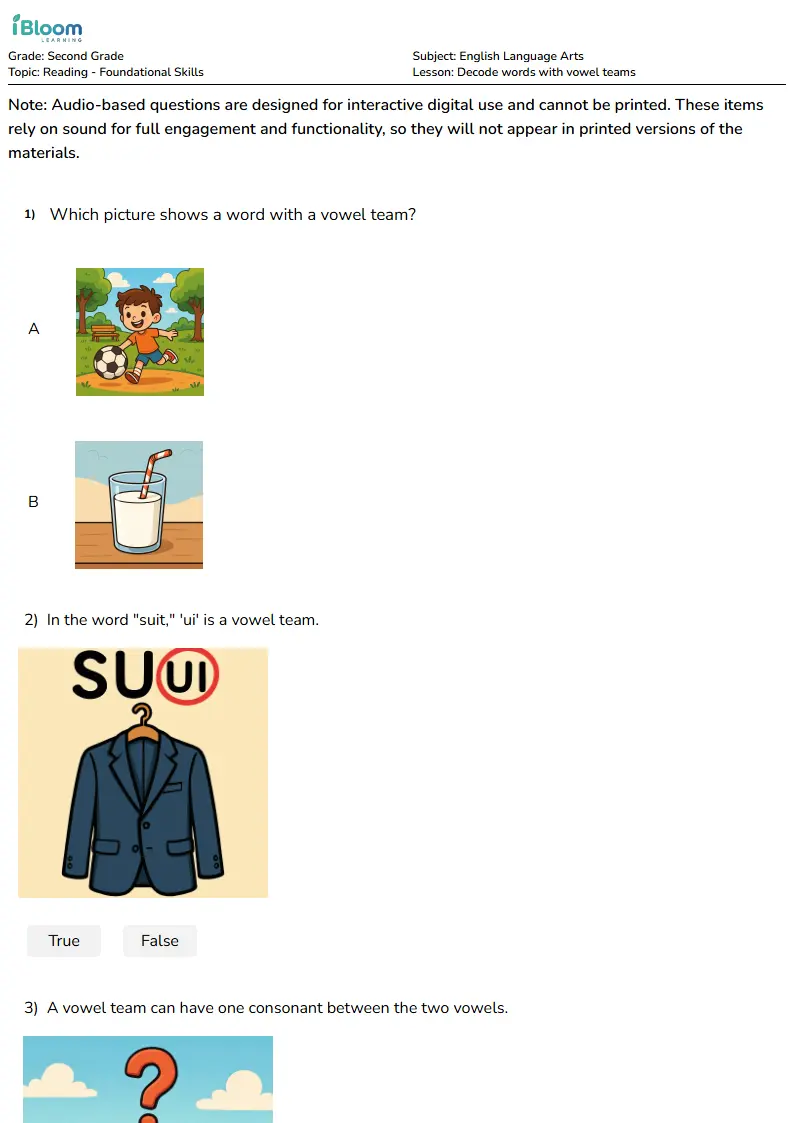
Decode words with vowel teams Lesson for Second Grade
Explore a free interactive english language arts lesson for second grade: Decode words with vowel teams. AI-personalized, Common Core-aligned, and built for kids.
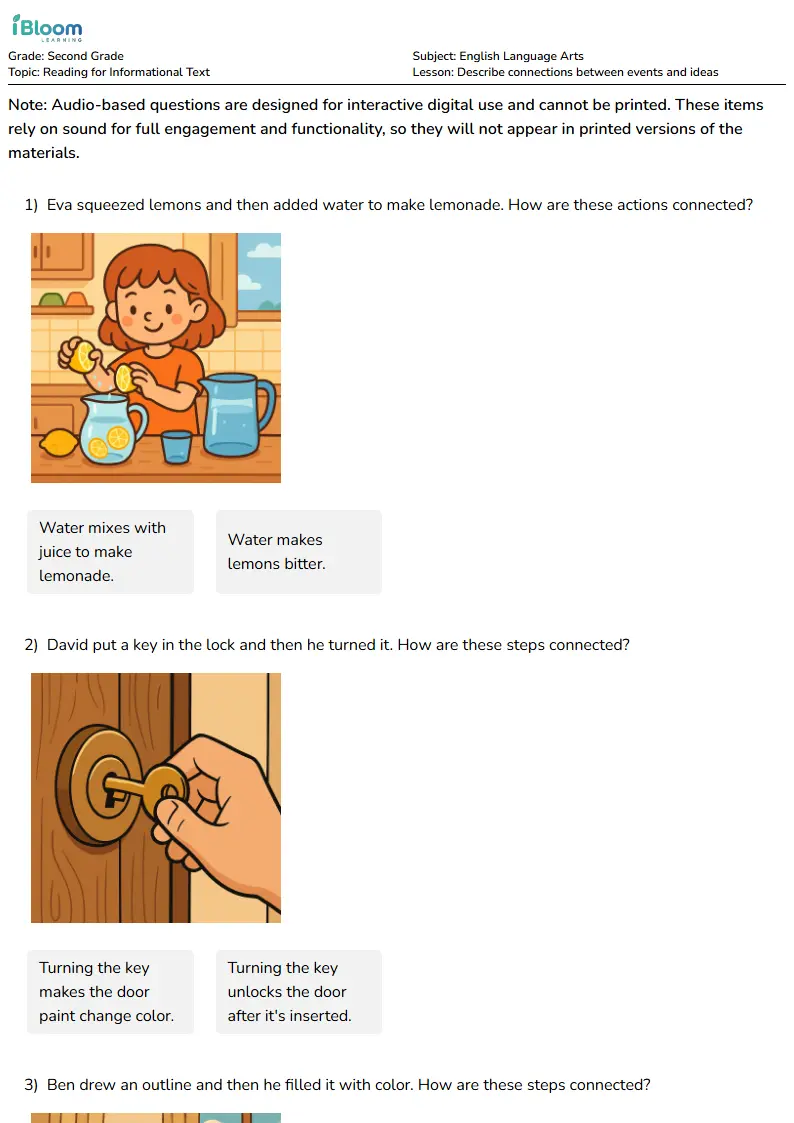
Describe connections between events and ideas Lesson for Second Grade
Explore a free interactive english language arts lesson for second grade: Describe connections between events and ideas. AI-personalized, Common Core-aligned, and built for kids.
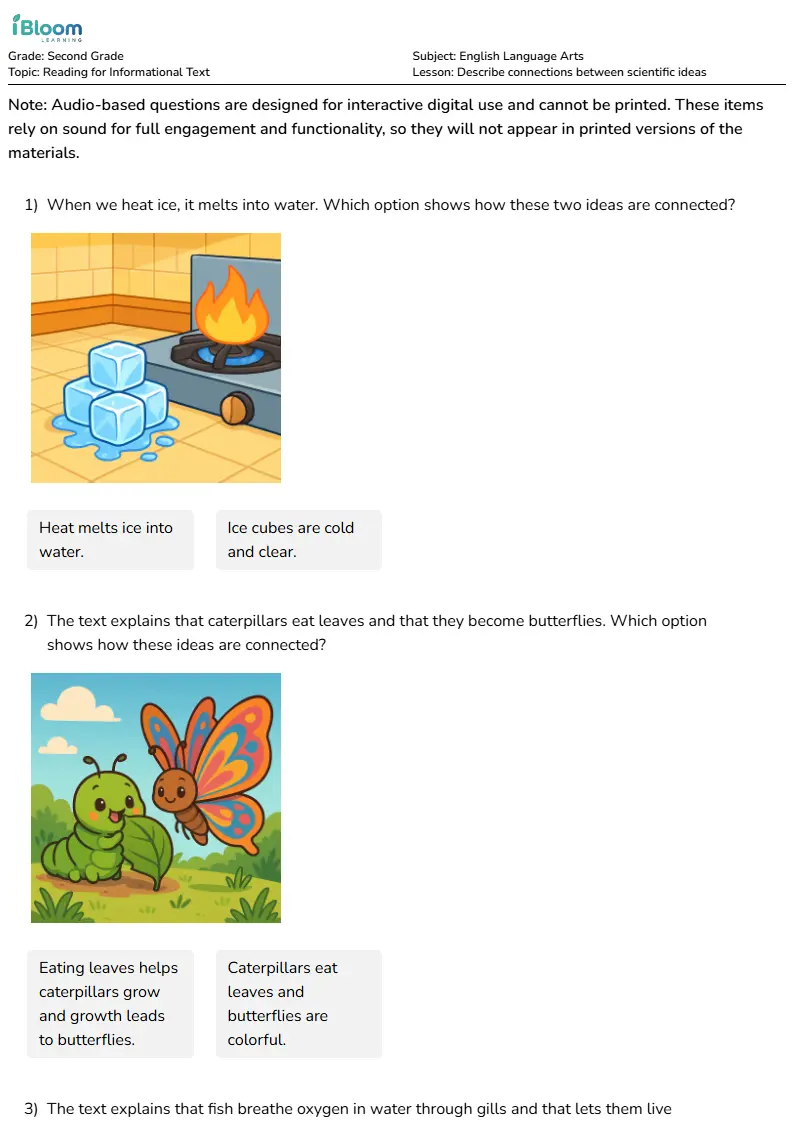
Describe connections between scientific ideas Lesson for Second Grade
Explore a free interactive english language arts lesson for second grade: Describe connections between scientific ideas. AI-personalized, Common Core-aligned, and built for kids.
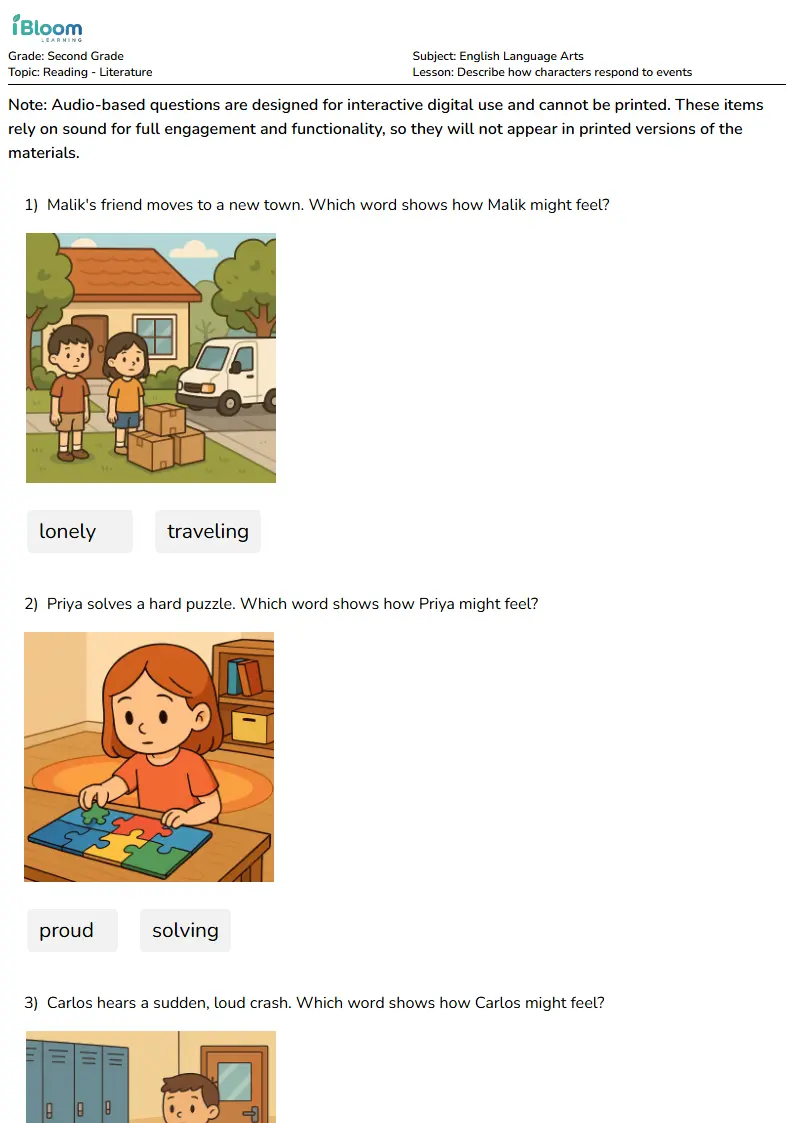
Describe how characters respond to events Lesson for Second Grade
Explore a free interactive english language arts lesson for second grade: Describe how characters respond to events. AI-personalized, Common Core-aligned, and built for kids.
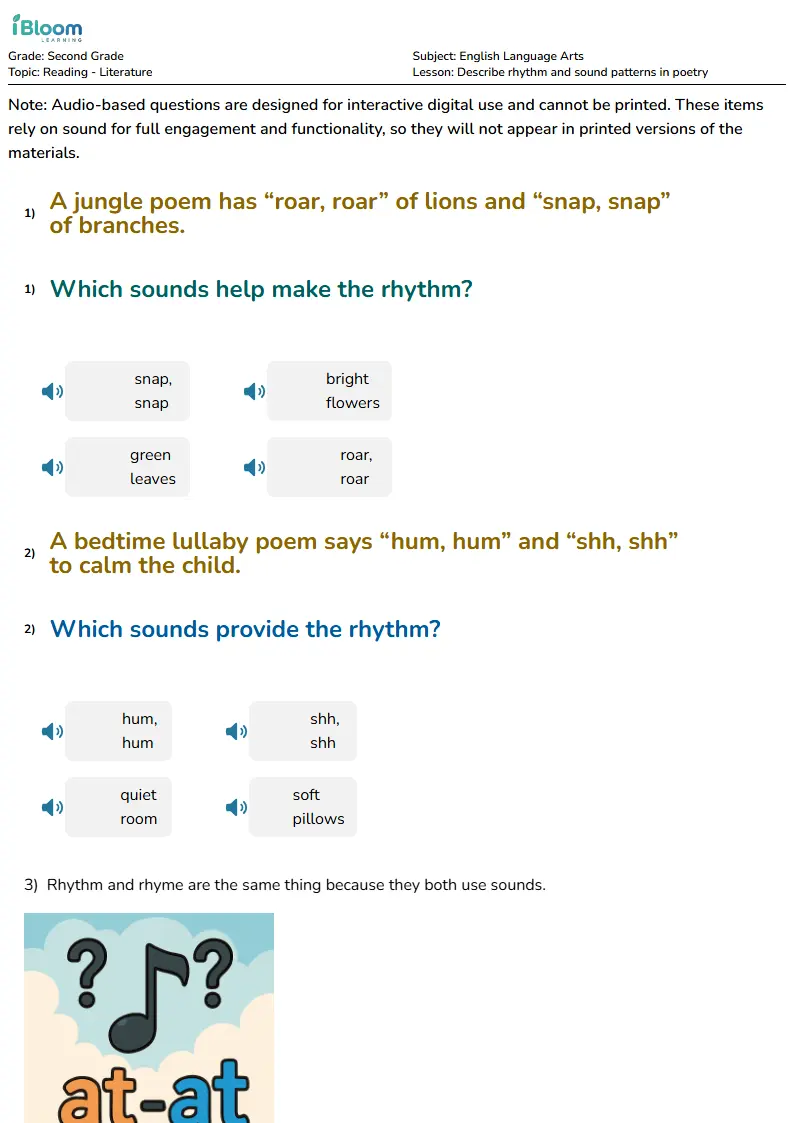
Describe rhythm and sound patterns in poetry Lesson for Second Grade
Explore a free interactive english language arts lesson for second grade: Describe rhythm and sound patterns in poetry. AI-personalized, Common Core-aligned, and built for kids.
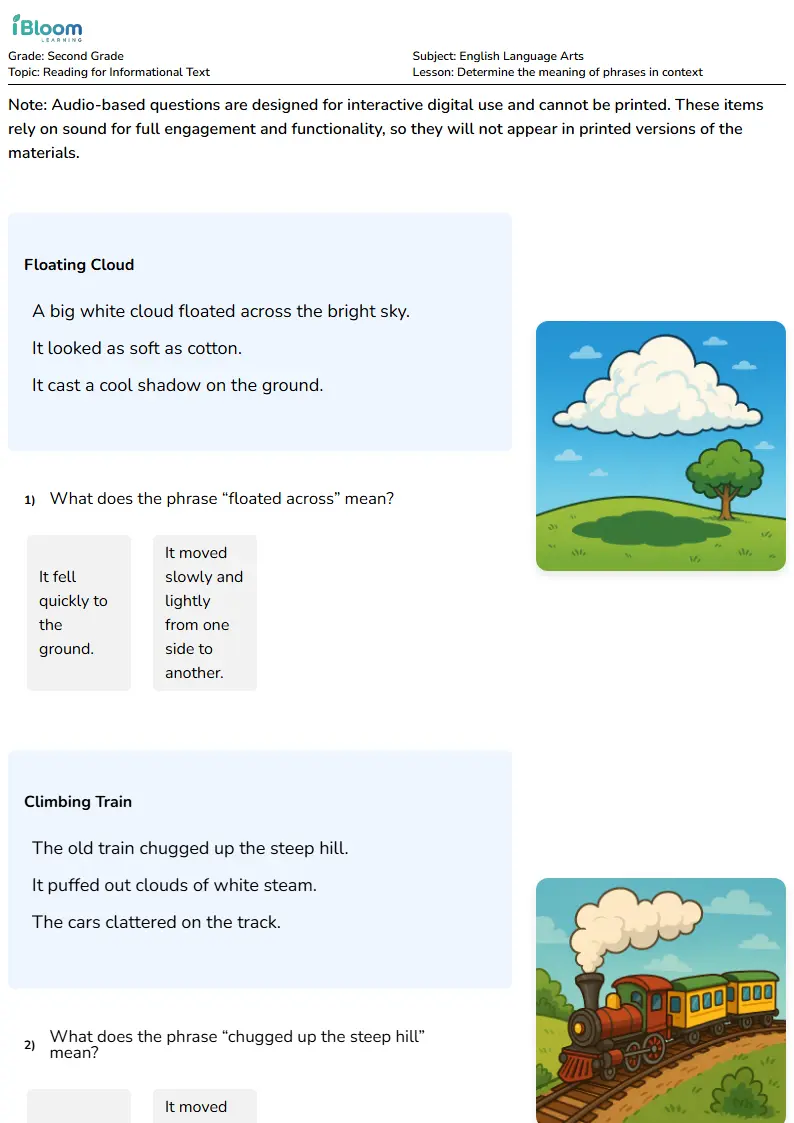
Determine the meaning of phrases in context Lesson for Second Grade
Explore a free interactive english language arts lesson for second grade: Determine the meaning of phrases in context. AI-personalized, Common Core-aligned, and built for kids.
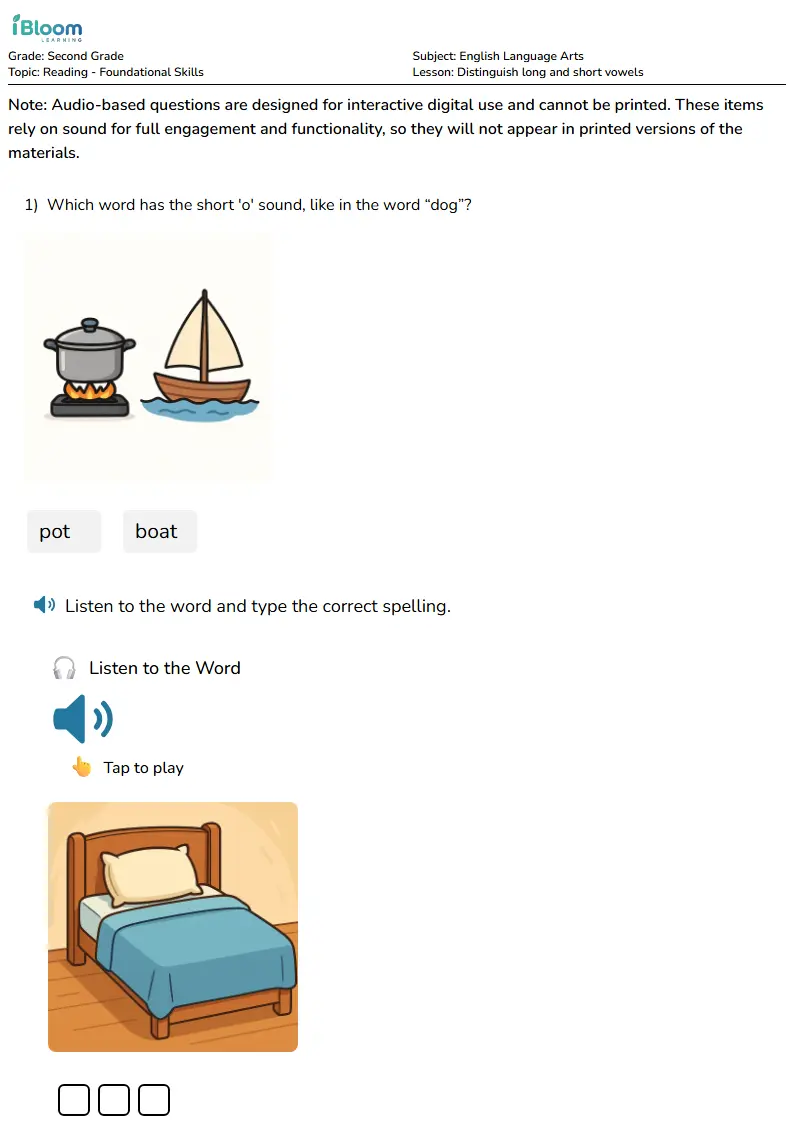
Distinguish long and short vowels Lesson for Second Grade
Explore a free interactive english language arts lesson for second grade: Distinguish long and short vowels. AI-personalized, Common Core-aligned, and built for kids.
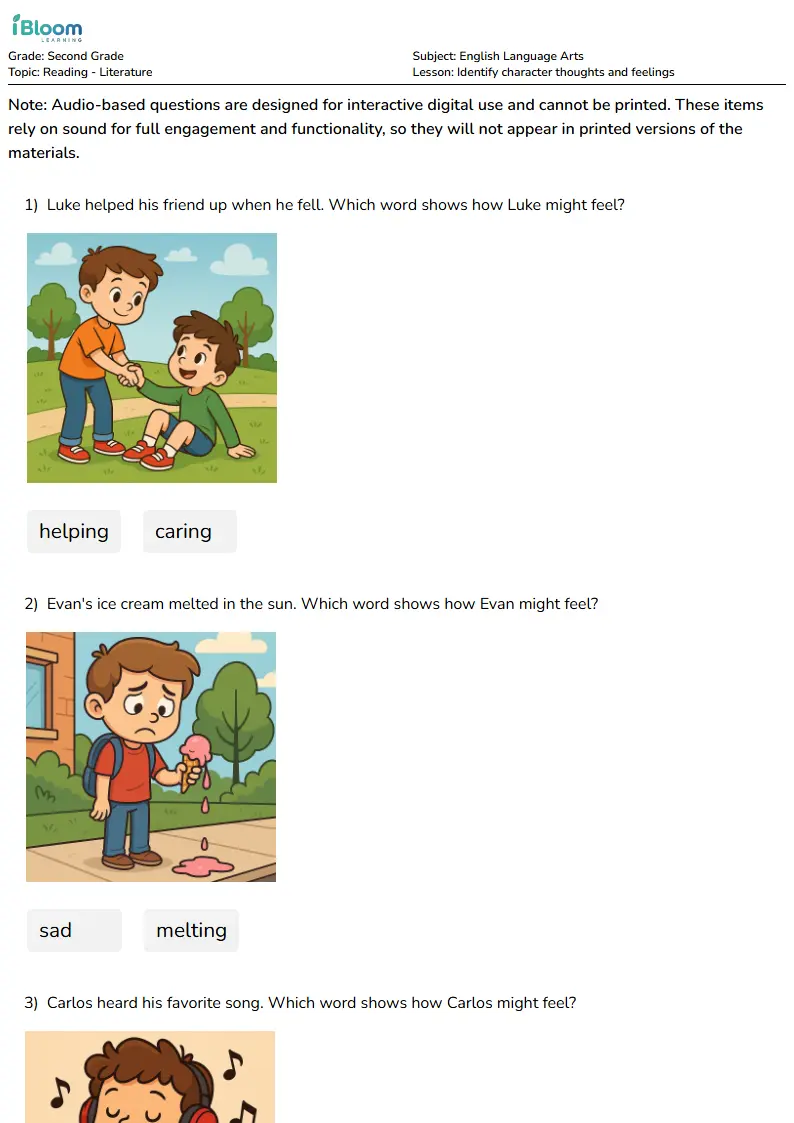
Identify character thoughts and feelings Lesson for Second Grade
Explore a free interactive english language arts lesson for second grade: Identify character thoughts and feelings. AI-personalized, Common Core-aligned, and built for kids.