





About this worksheet
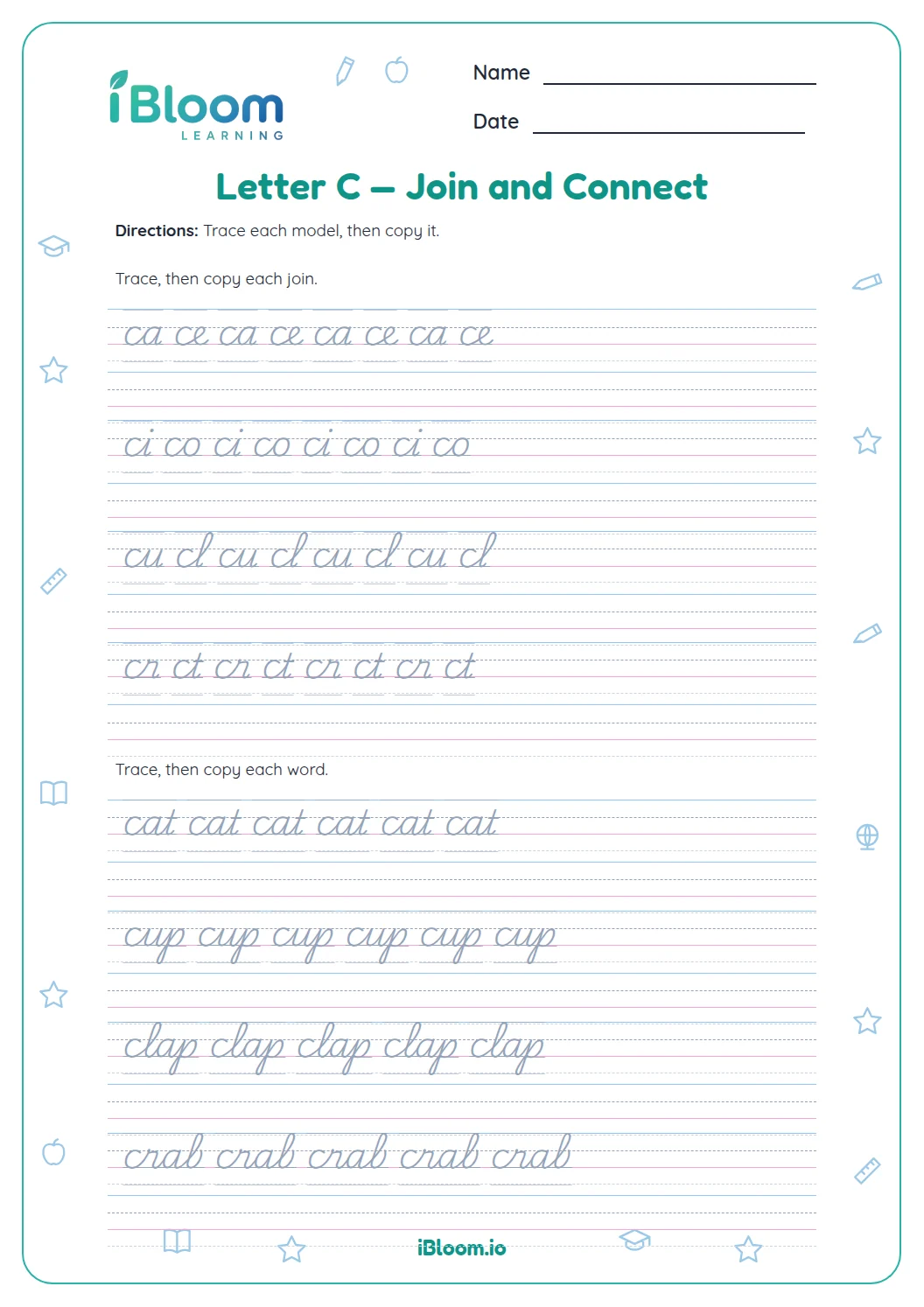
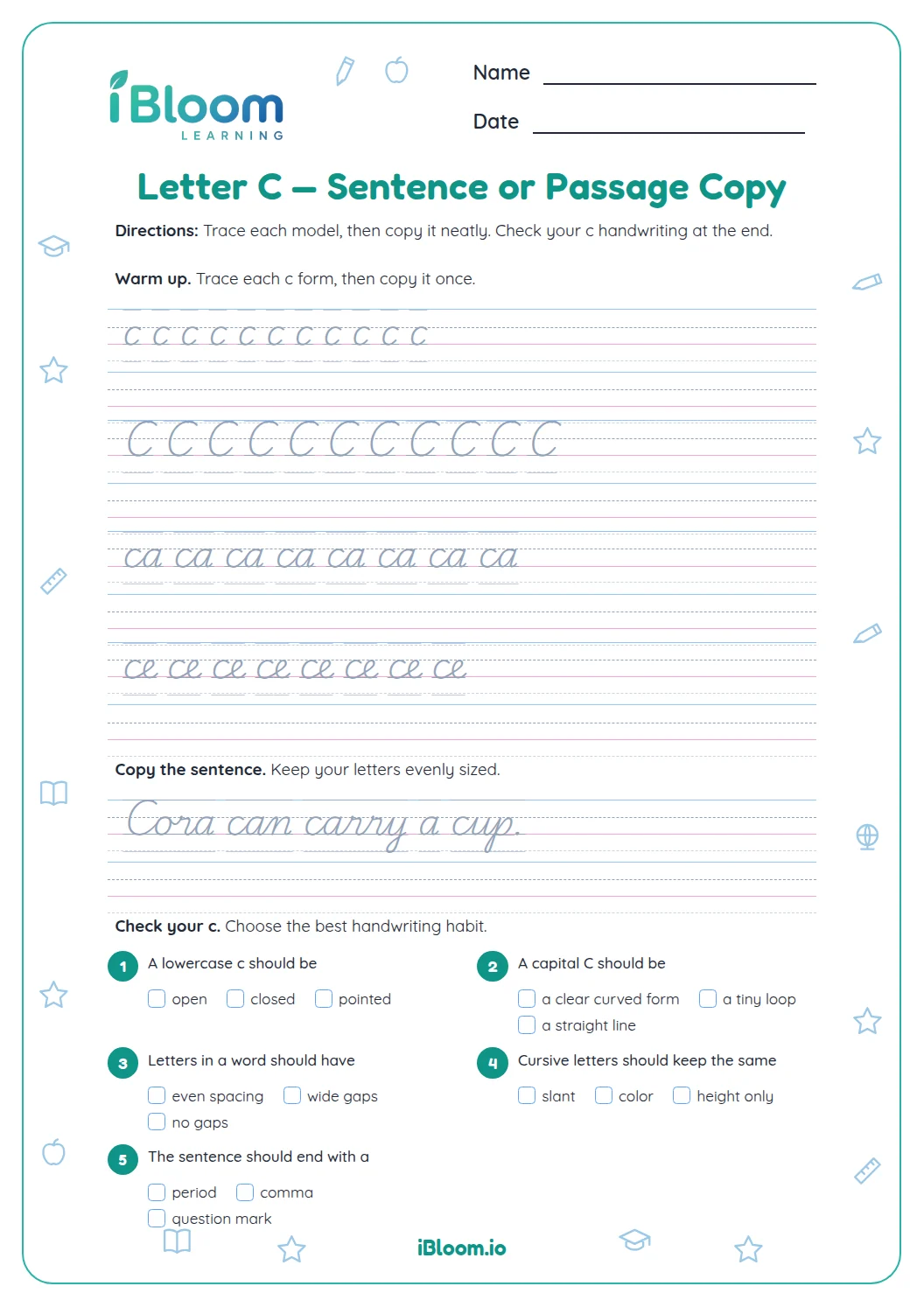
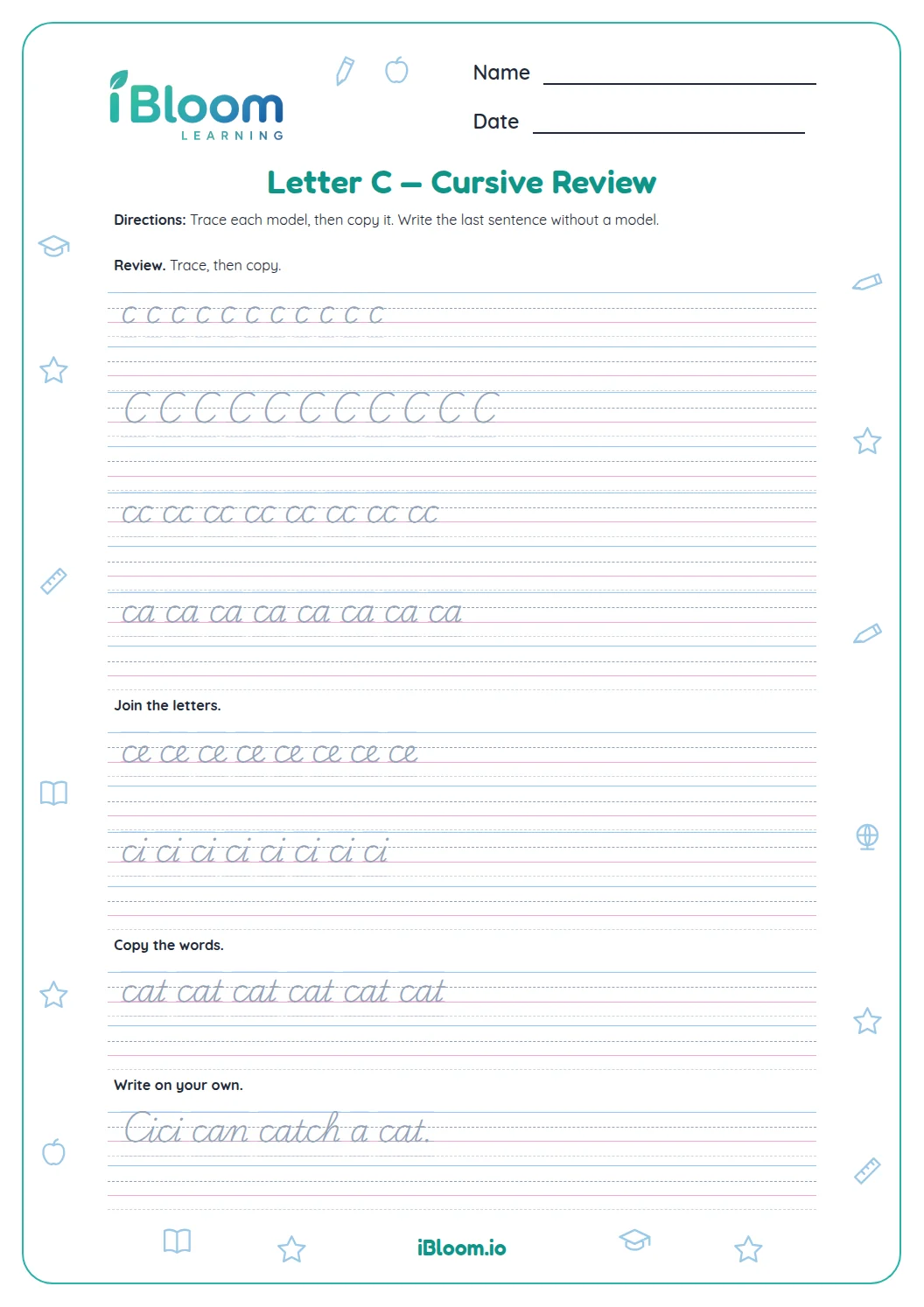
This cursive worksheet is for learners in Grades 2–5 who are practicing capital C and lowercase c. It moves from letter forms to C words and complete sentences, with a trace model and a copy line for every item. A separate key shows the target text.
How does the practice build?
Part A begins with letter forms. Later parts ask learners to apply the same skill with less support.
- 1C c
- 2Work carefully, then check the answer key.
What will learners do on the page?
The worksheet has 16 items arranged in 3 parts: letter forms, C words, sentence copy.
How can an adult support practice?
Read the direction once, then let the learner work independently. Ask how they checked one answer.
How to use this worksheet
- 1Read the page direction together.
- 2Complete Part A carefully.
- 3Continue to each new part in order.
- 4Check answers with the separate key.
Mistakes to watch for
The mistake
Rushing through a prompt.
The fix
Read each item aloud and name what it asks.
The mistake
Skipping a check.
The fix
Use the model or answer key to review one response.
The mistake
Changing an answer without a reason.
The fix
Explain the evidence or computation before revising.
What to practice next
Questions parents and teachers ask
What does this cursive C worksheet practice?
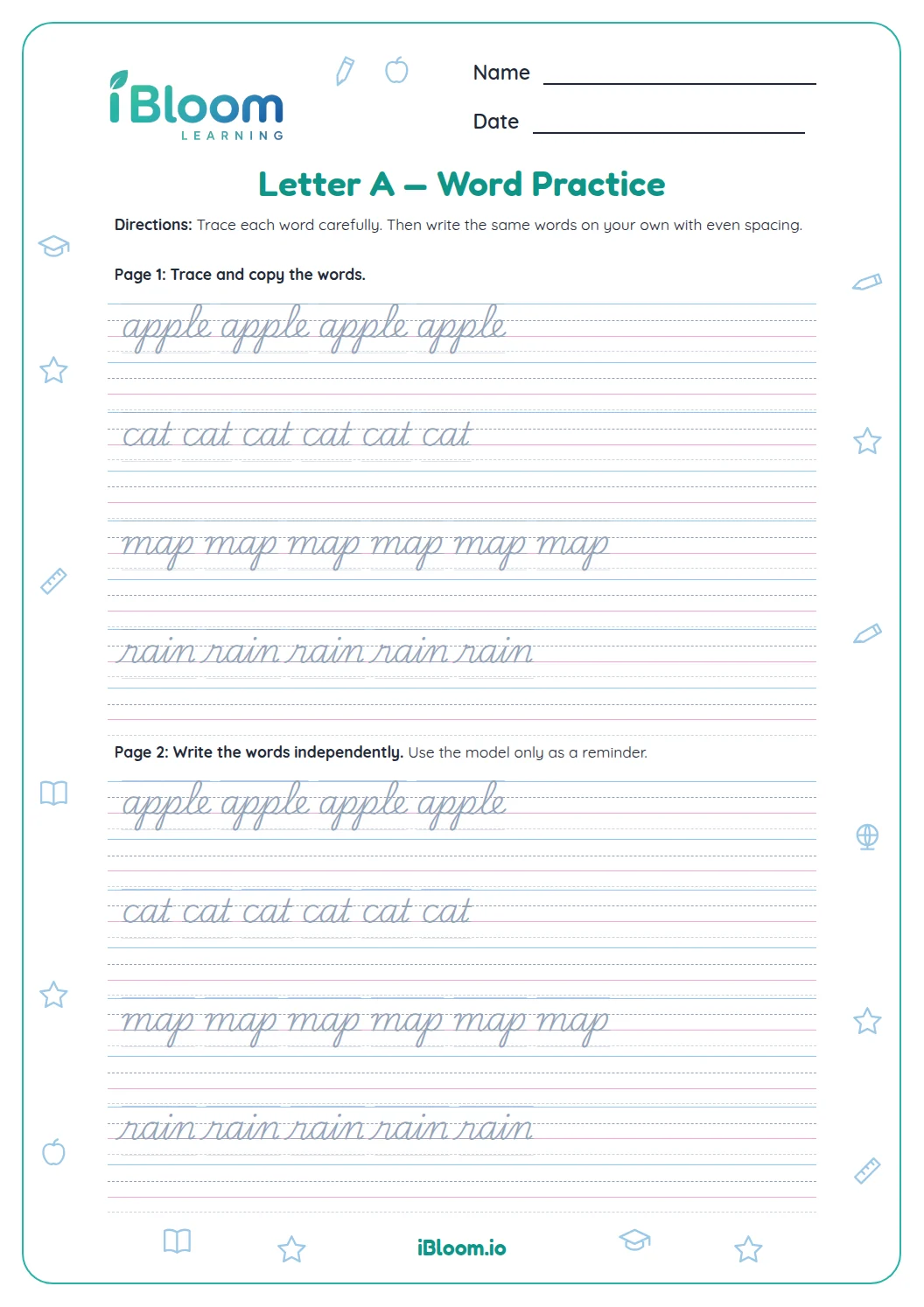
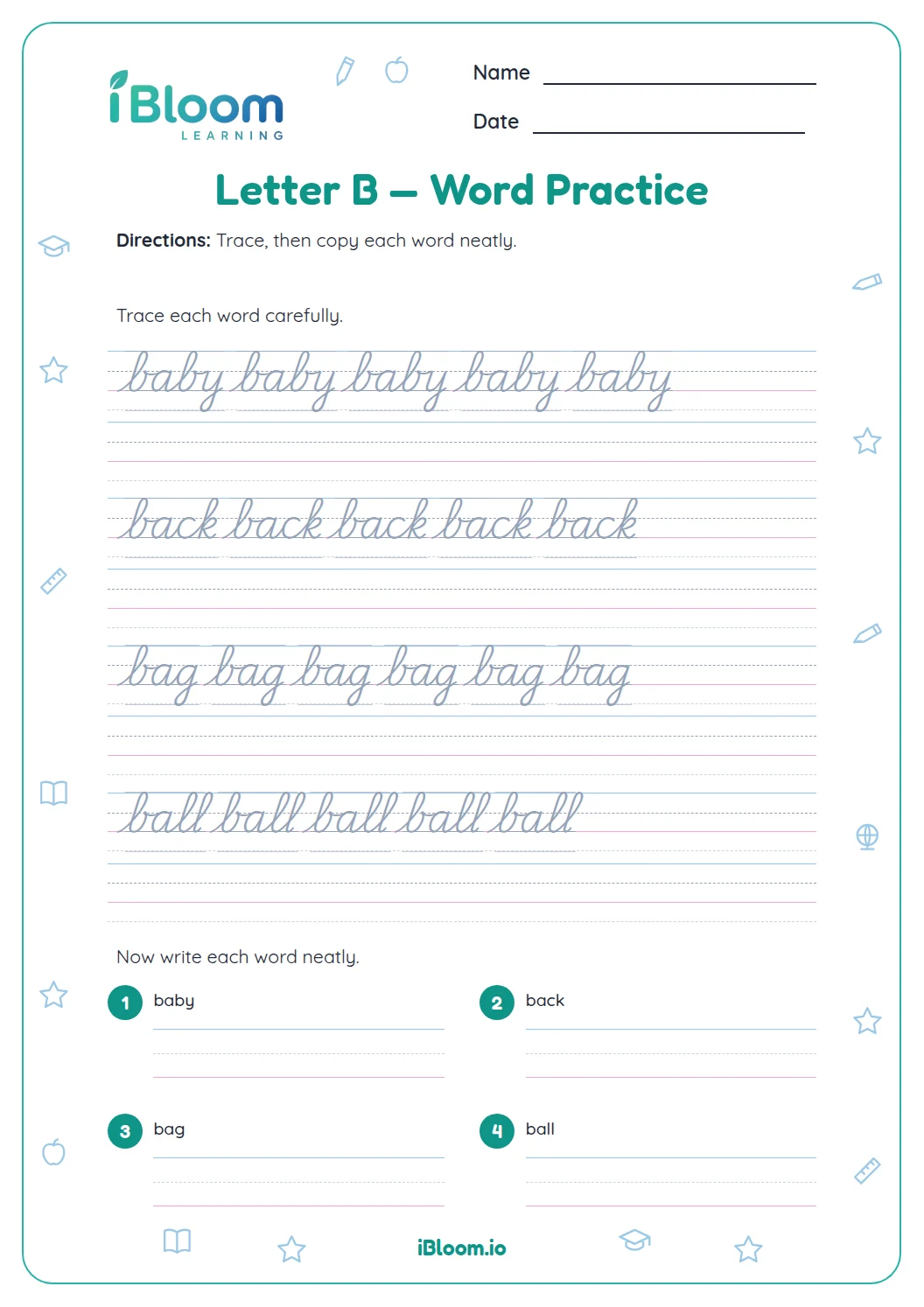
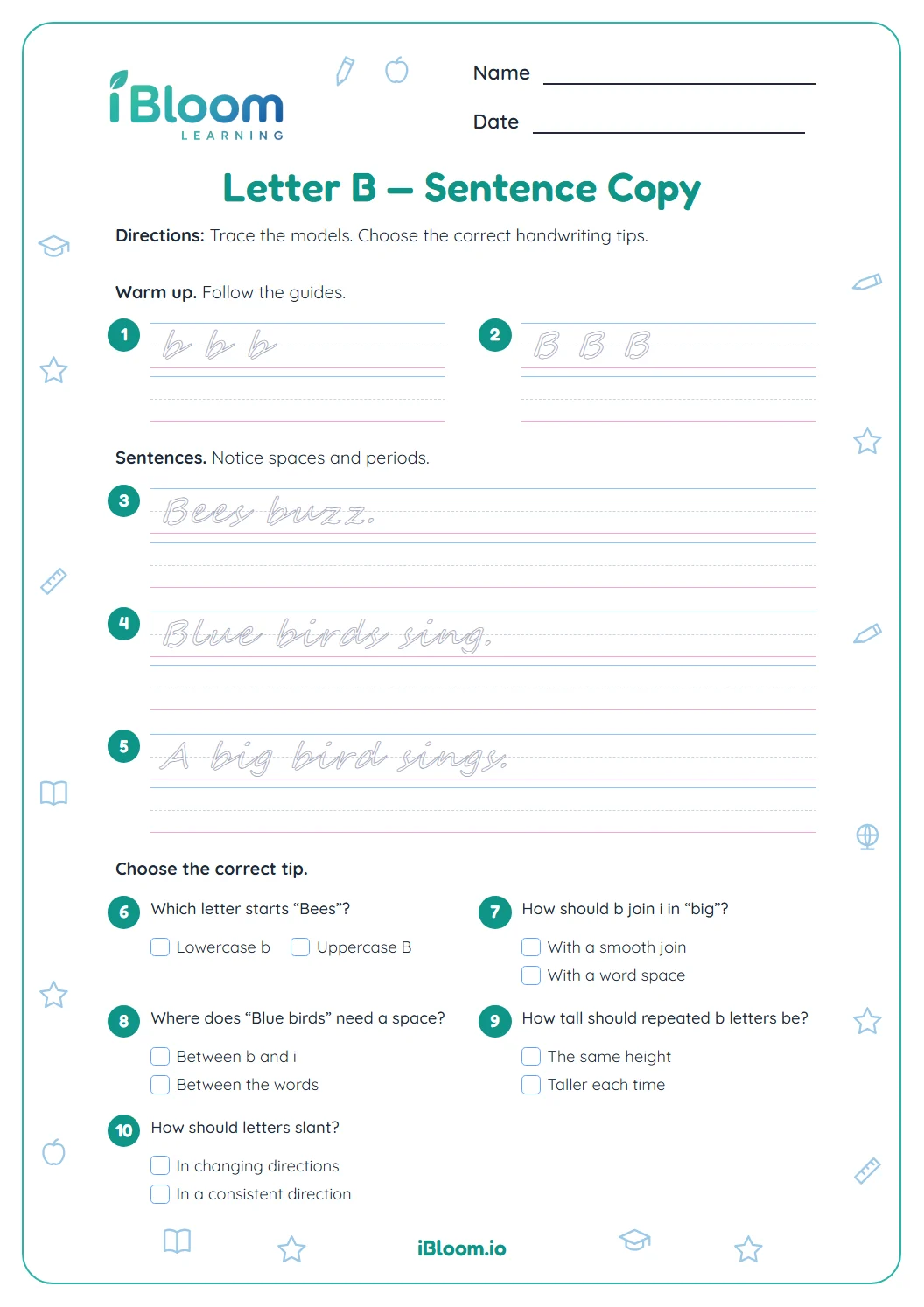
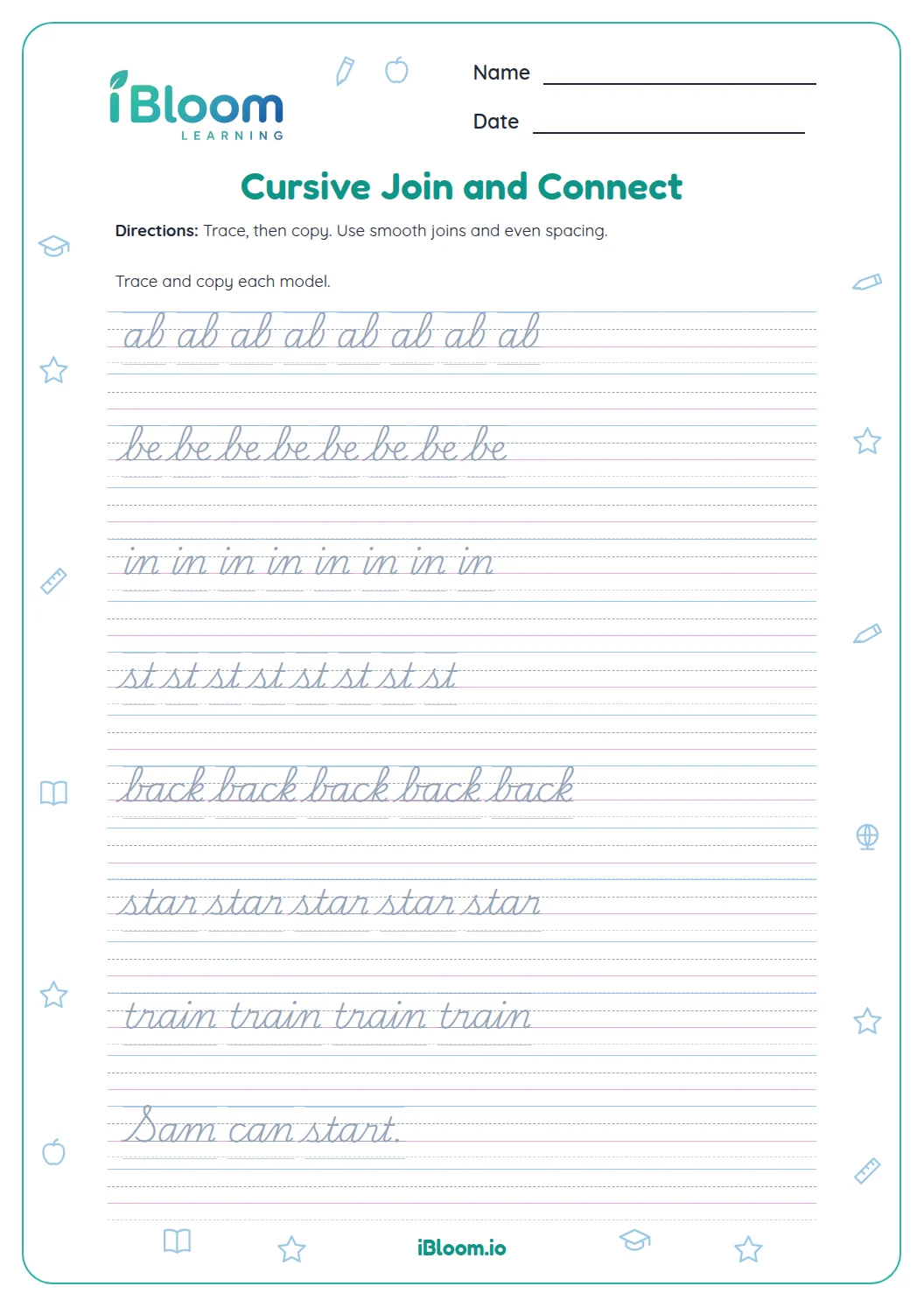
The worksheet gives repeated practice tracing and copying capital C, lowercase c, words containing c, and complete sentences. Each item uses cursive handwriting lines, so learners practice letter shape and connections in context, from single forms to connected writing. Adults can use this prompt for another short review after the page is complete.
What grades can use this page?
This page is labeled for Grades 2–5 and can be used when a learner is beginning or reviewing cursive C. An adult can model the starting point and direction once, then let the learner trace before copying independently. Adults can use this prompt for another short review after the page is complete.
Why practice both capital C and lowercase c?
Names and sentence beginnings use a capital C, while most other words use lowercase c. Practicing both forms helps learners recognize and write each shape. The word and sentence items then give the letter a natural place in connected cursive.
Should the learner trace every line first?
Yes. Trace the gray model first, then copy it on the empty row. Encourage a smooth, controlled stroke and comfortable spacing; legibility matters more than speed. The answer key shows the target text for checking each letter, word, and sentence.
Is an answer key useful for handwriting?
The key shows the target text for each item rather than judging handwriting style. Compare the copied letters with the model for recognizable C forms, clear joins, and readable spacing. The learner’s own writing remains the work to review. Adults can use this prompt for another short review after the page is complete.