




About this worksheet
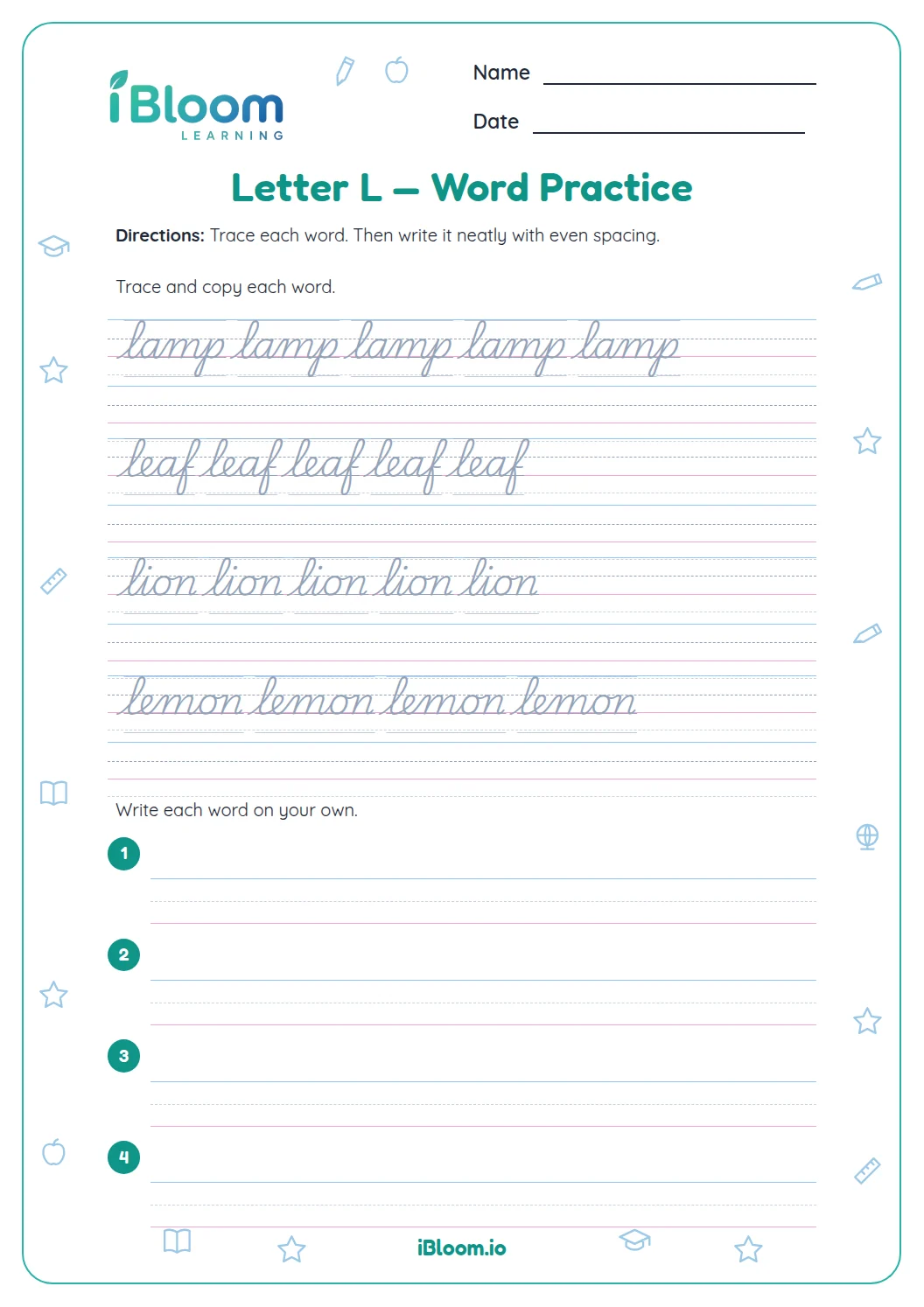
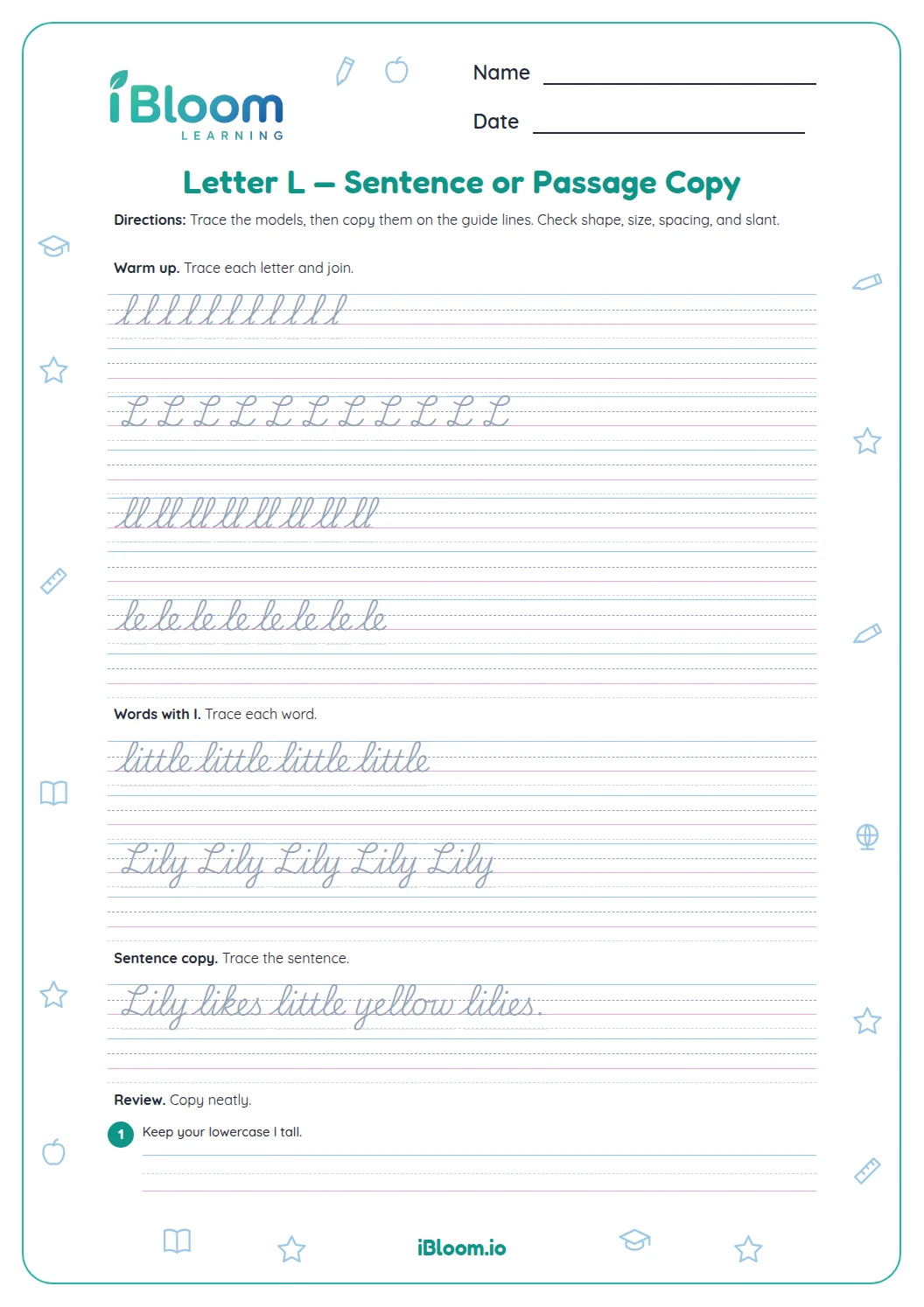
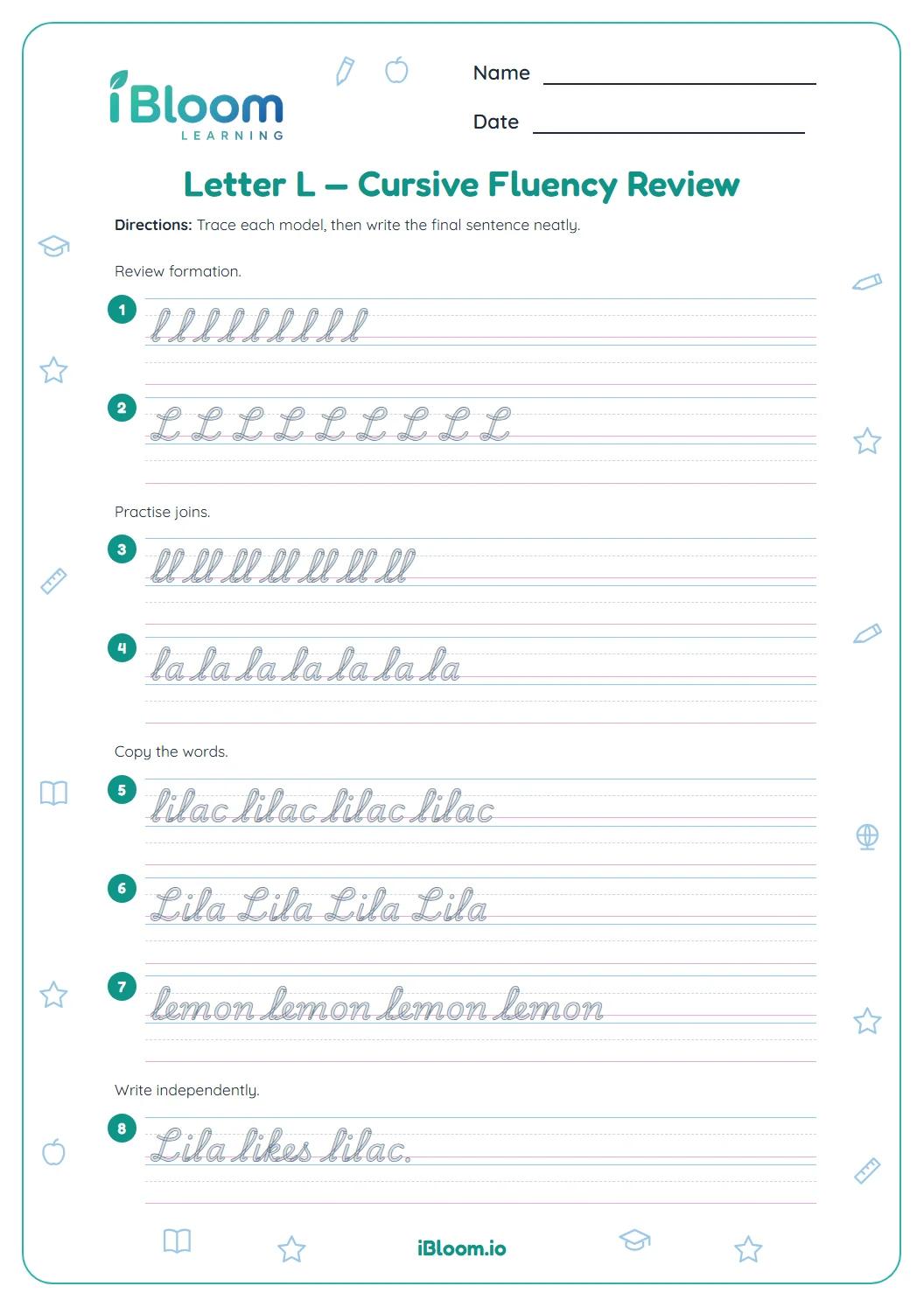
This printable gives learners in Grades 2–5 focused cursive practice with the letter L. They trace and copy lowercase and uppercase forms, practice common joins, then write L words and complete sentences. The worksheet uses 16 short models that keep attention on the letter’s formation and readable connections.
How should a cursive L begin?
Follow the gray model with a steady motion, watching the letter’s height and loop. Practice lowercase l and capital L separately before joining them to another letter.
How do joins help words stay readable?
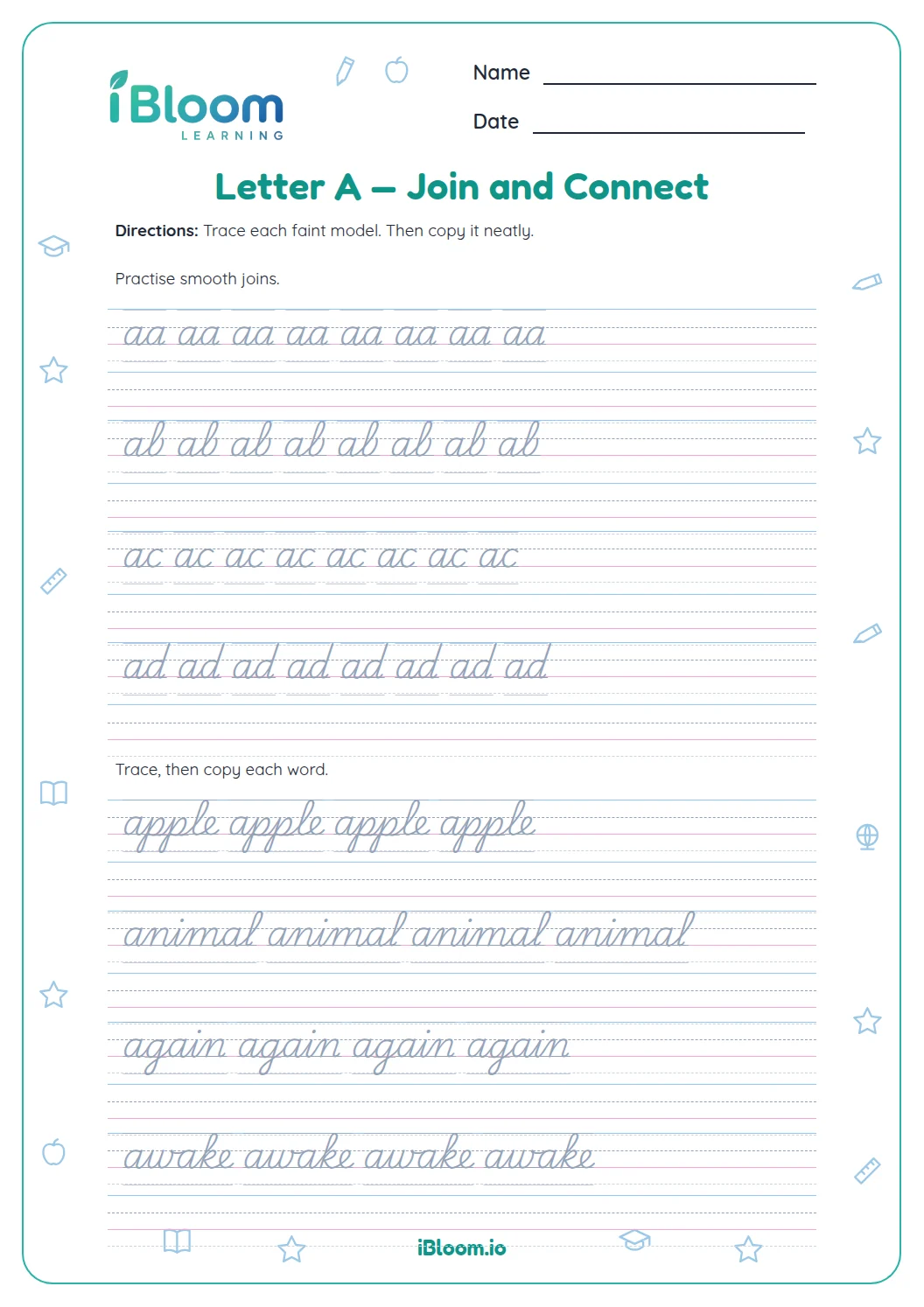
A join connects letters without lifting the pencil at every letter. Practice the short groups ll, le, la, li, lo, and lu as individual patterns before moving into whole words.
What comes after letter drills?
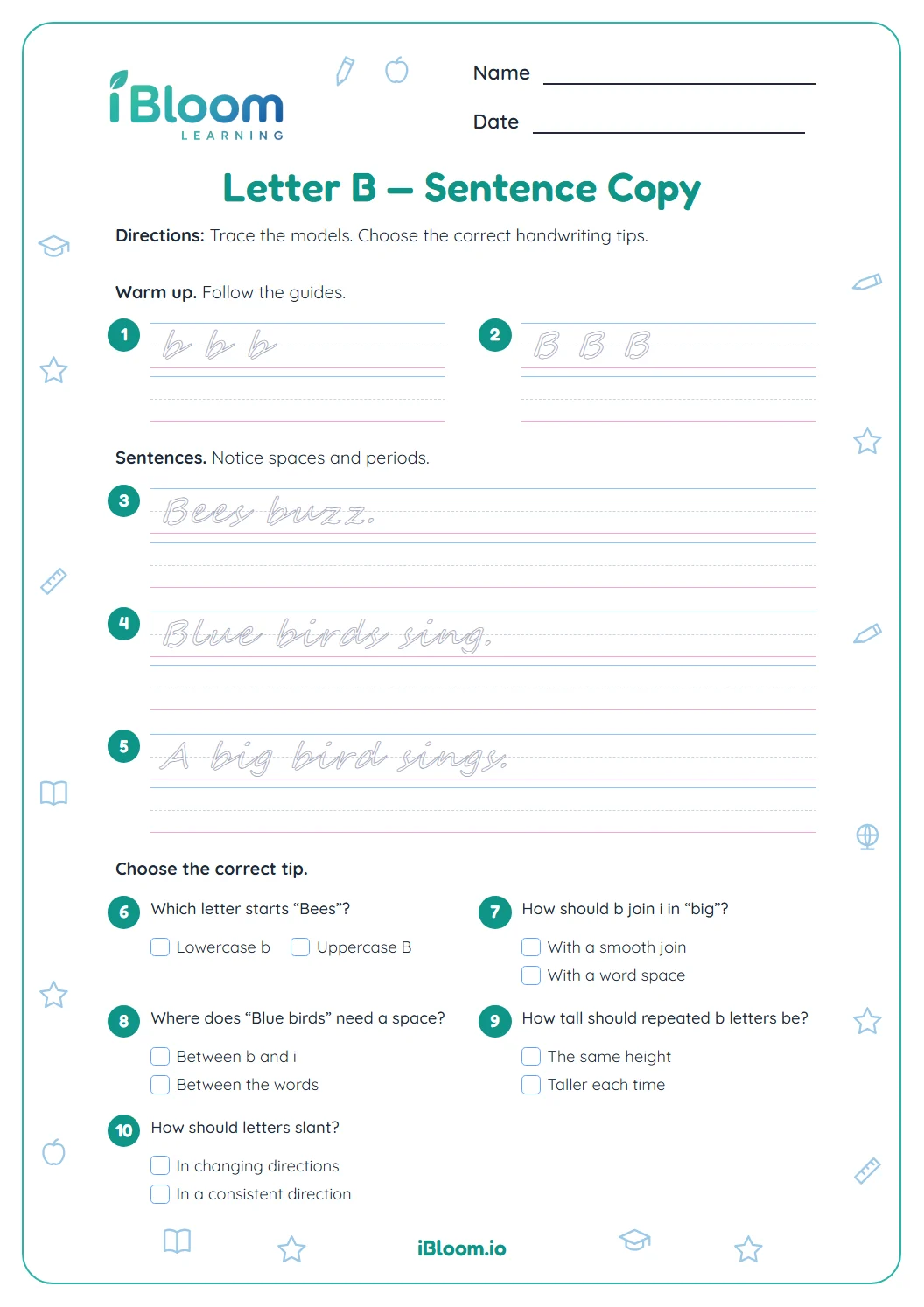
The last items move from isolated forms to names, familiar words, and short sentences. Copy the whole phrase with spaces between words.
- 1Trace: Lena likes lemons.
- 2Copy the complete sentence on the empty handwriting row.
- 3Check that the capital L begins the name and the words remain separated.
How can you use this worksheet?
- 1Sit with the paper angled comfortably and use a relaxed grip.
- 2Trace lowercase l and uppercase L slowly.
- 3Practice each join group with small spaces between groups.
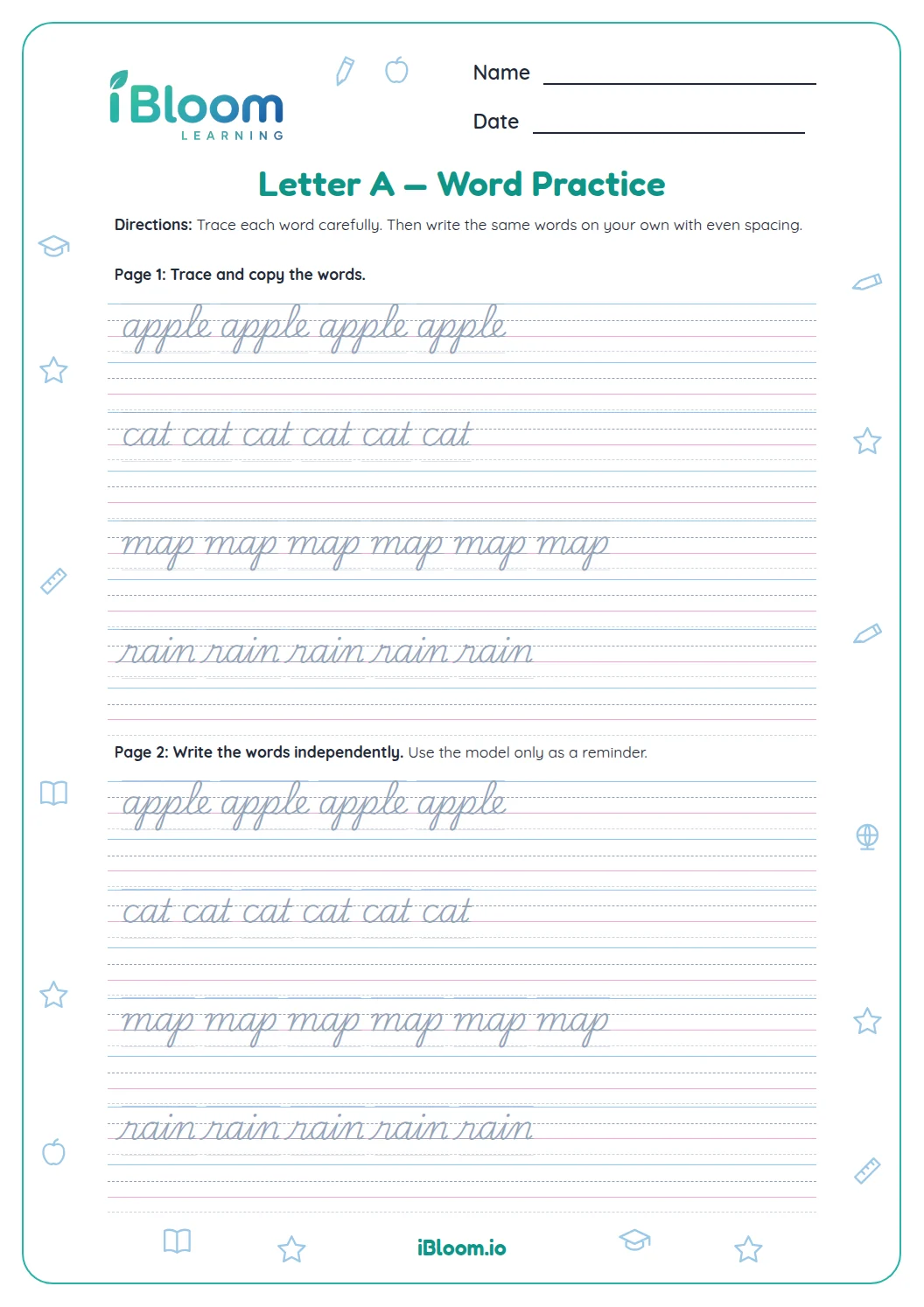
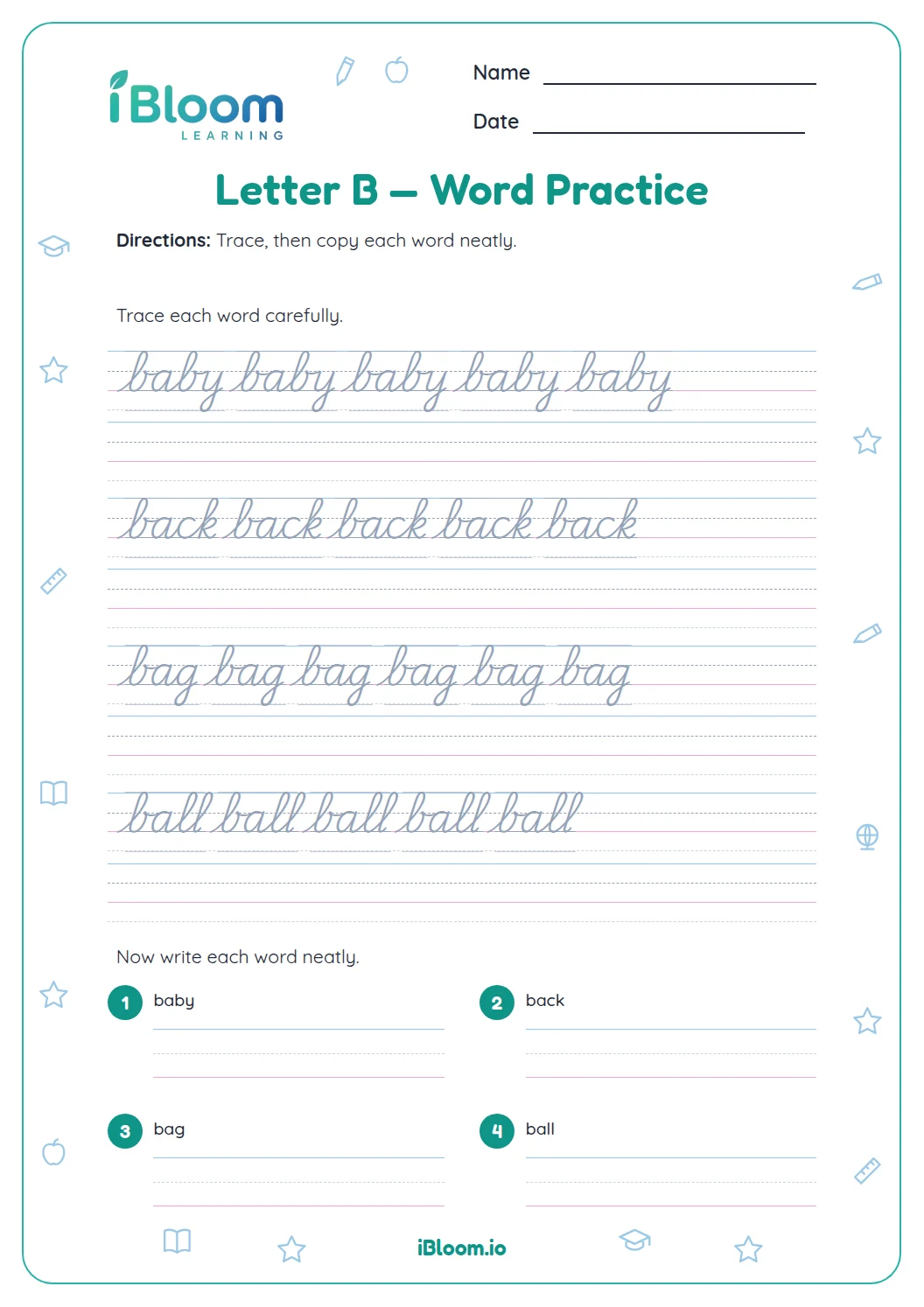
- 4Copy the words without changing the letter shape.
- 5Write each full sentence with clear spaces between words.
What mistakes should learners watch for?
The mistake
Making lowercase l too short.
The fix
Compare its tall stem with the handwriting line guide.
The mistake
Lifting the pencil between every joined letter.
The fix
Keep the pencil moving through each short join group.
The mistake
Copying a sentence as one long string.
The fix
Leave a clear space between words while keeping letters within each word connected.
What to practice next
Make more practice
Questions parents and teachers ask
Which forms of L are practiced?
The worksheet includes lowercase l and uppercase L, followed by repeated-letter and vowel joins, names, words, and two complete sentences. It moves from a single letter toward connected writing practice. A caregiver can compare the child’s copy with the gray model on the key.
Why practice both lowercase and uppercase L?
Both forms appear in everyday writing. Lowercase l is used within words, while uppercase L begins names and sentences such as Lena and Liam. Practicing both helps learners recognize the forms in context. Short, relaxed practice helps keep the letter shapes clear.
Should learners trace first or copy first?
Trace the gray model first, moving slowly enough to notice the letter shape. Then copy it on the empty row while keeping a similar size, direction, and connection between letters. The target text is printed for each item on the separate key pages.
How many items are on the worksheet?
There are 16 cursive practice items across five worksheet pages, followed by a separate answer-key page. Each key answer shows the exact letter, join, word, or sentence to copy. Praise steady control and legibility as the learner copies each model.
What should caregivers check?
Look for a clear tall lowercase l, a recognizable capital L, connected letters within words, and spaces between words. Comfortable, controlled writing matters more than speed during letter practice. Learners can pause between lines and shake out their writing hand.