


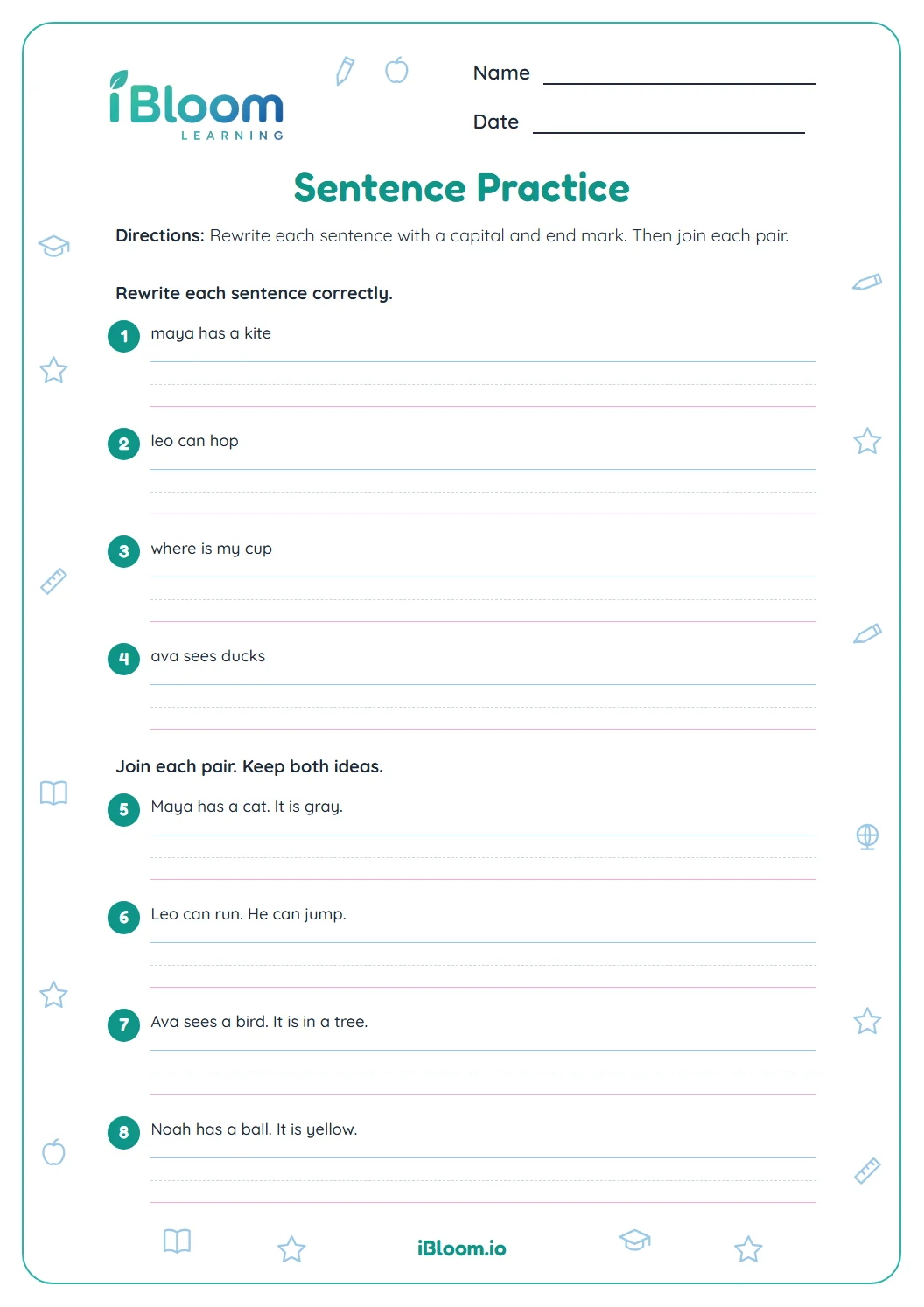
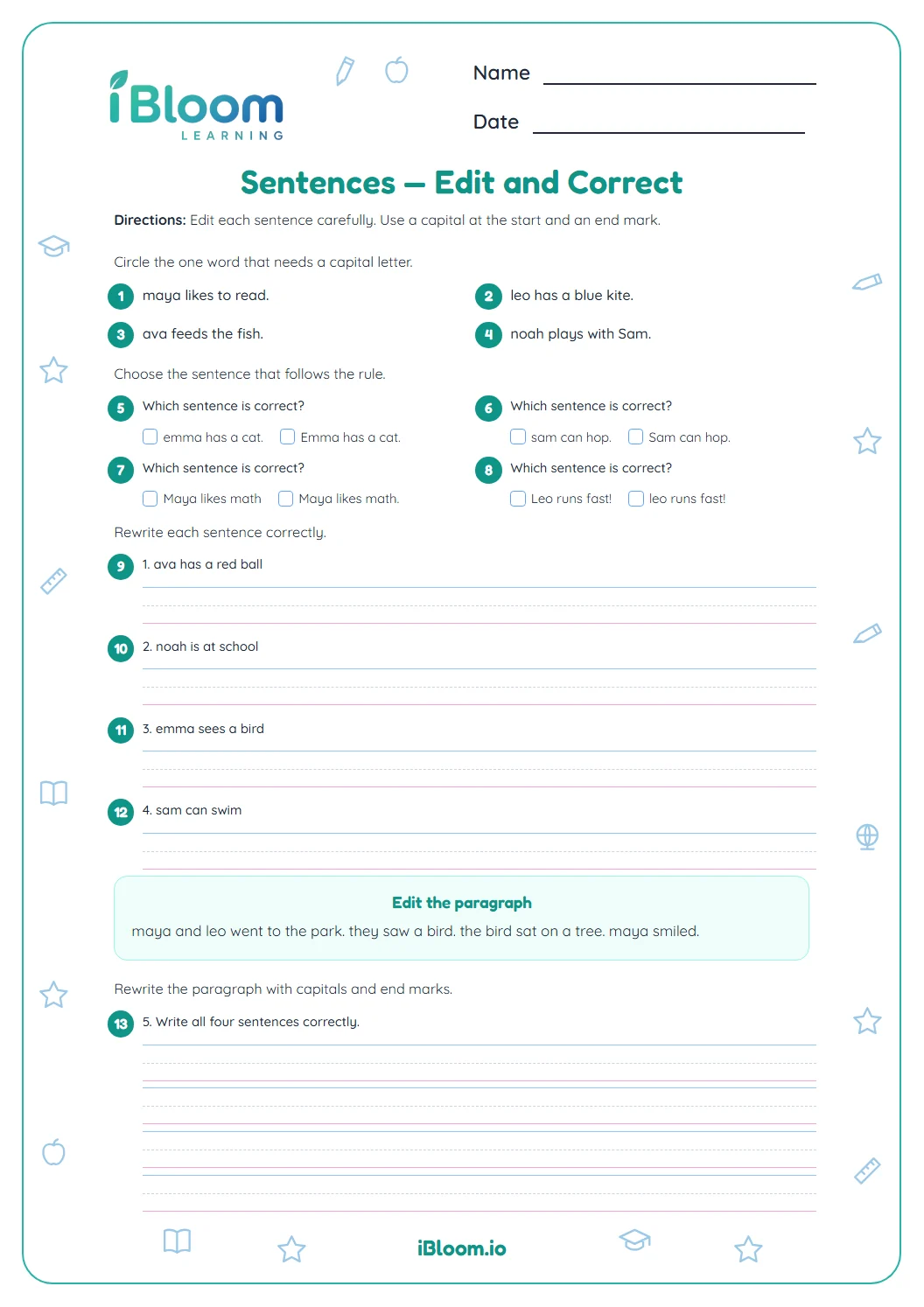
About this worksheet
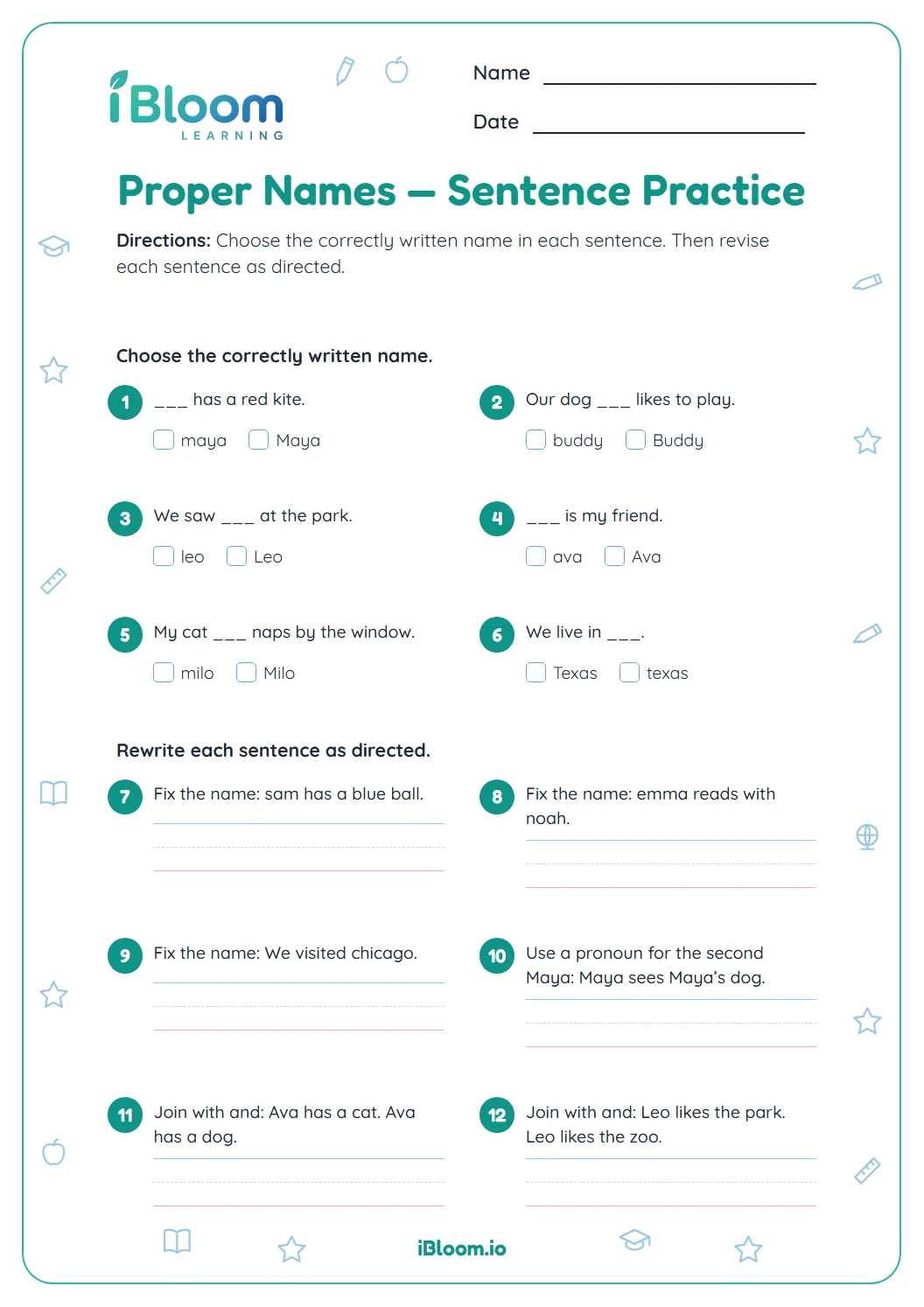
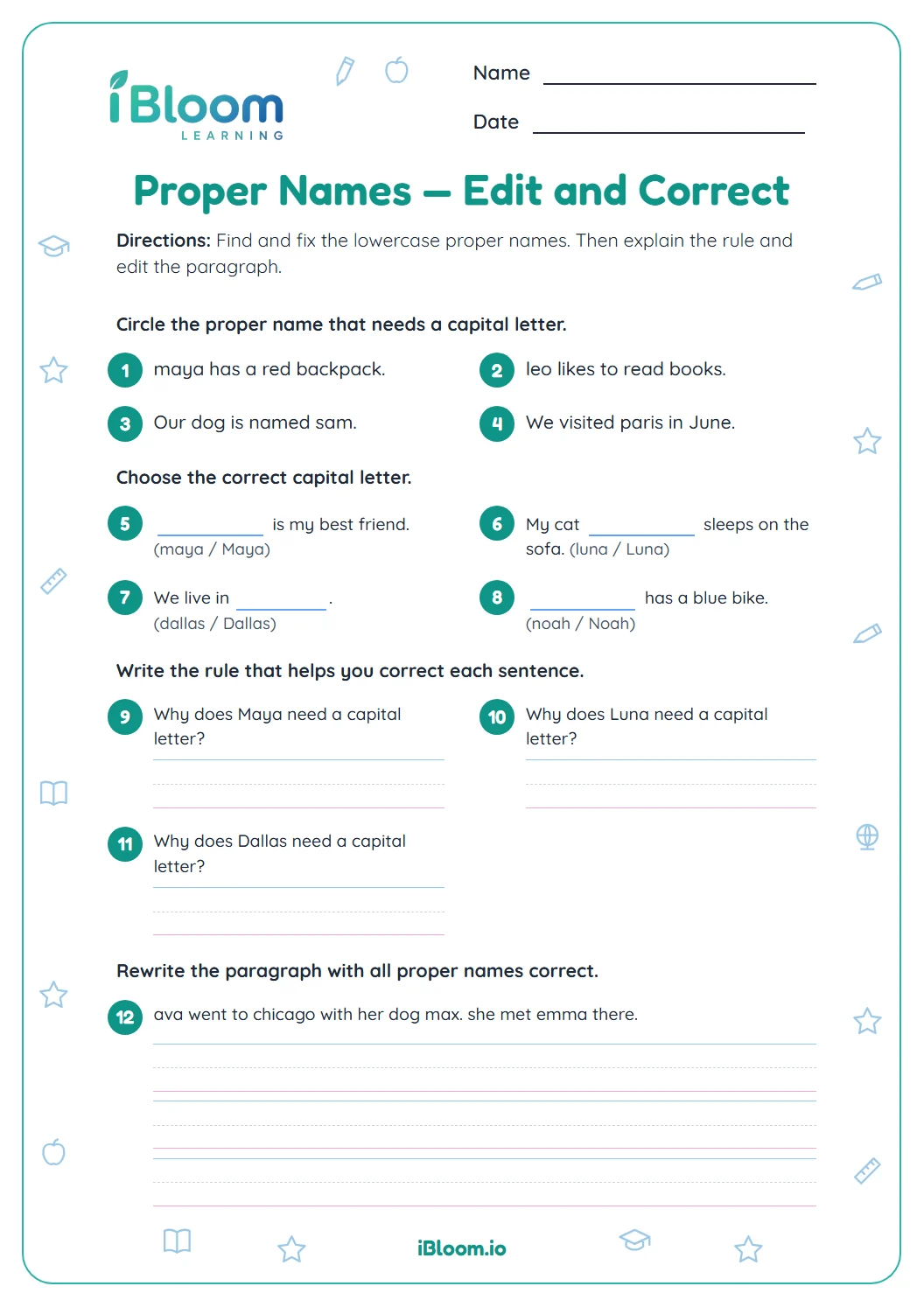
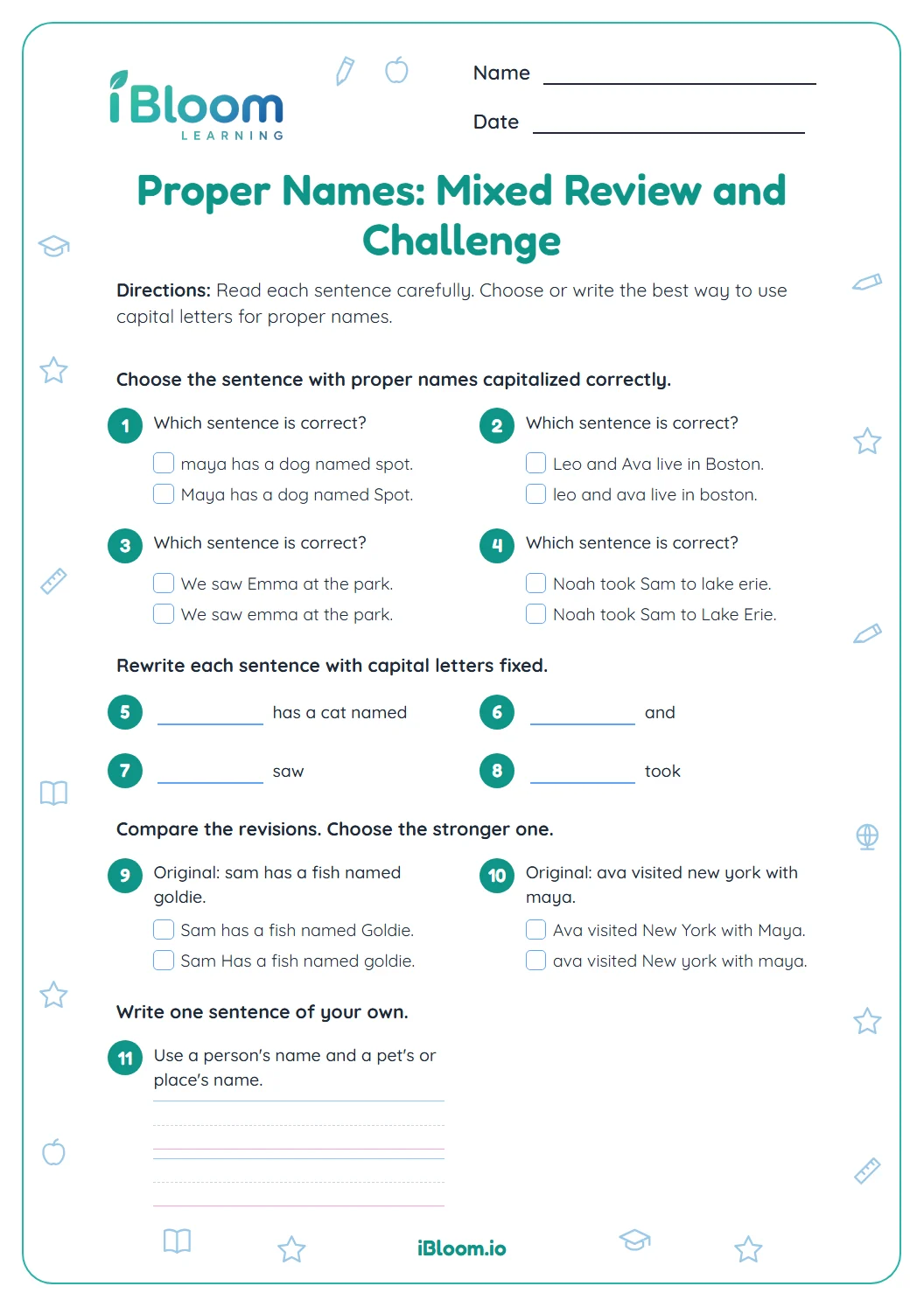
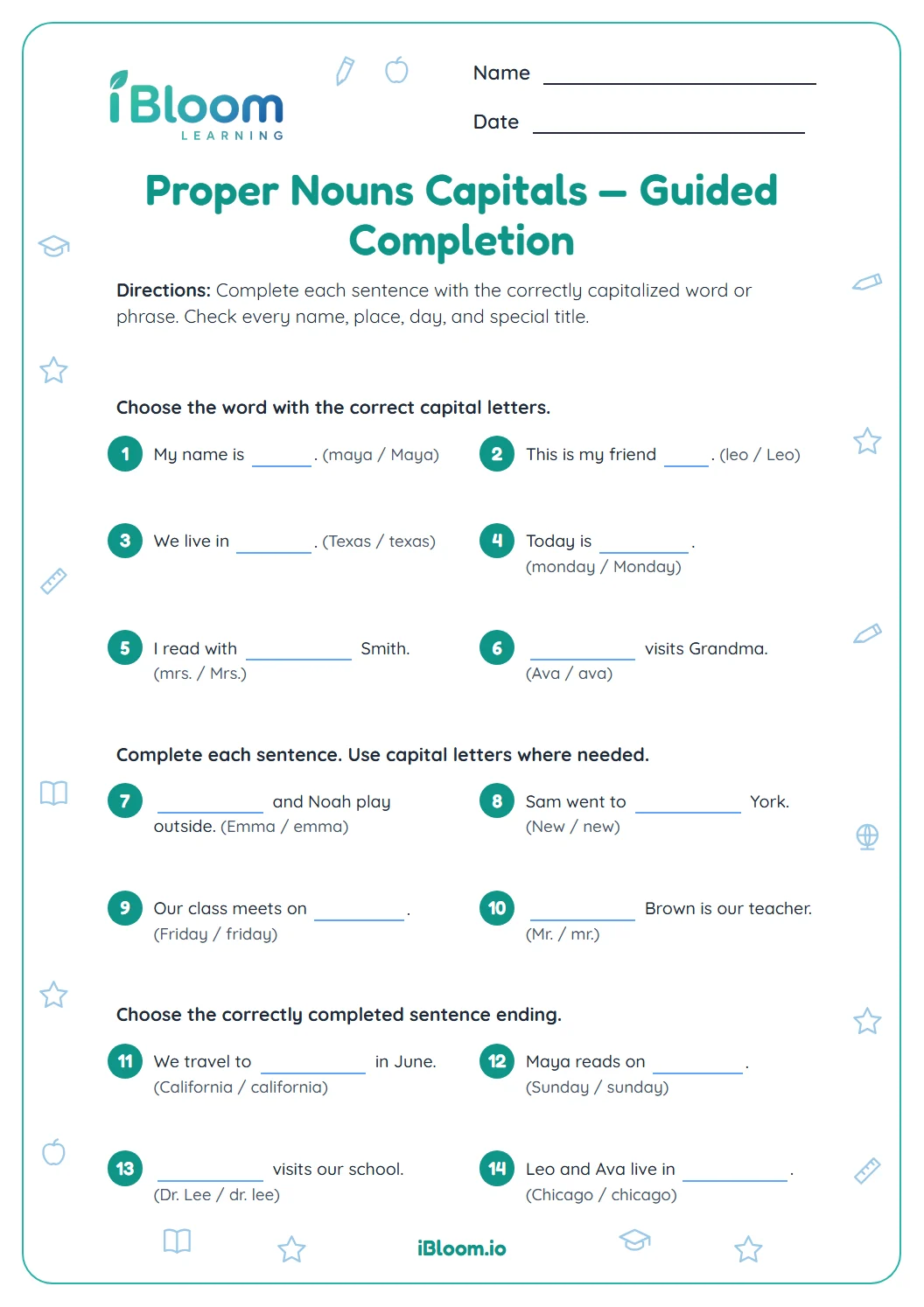
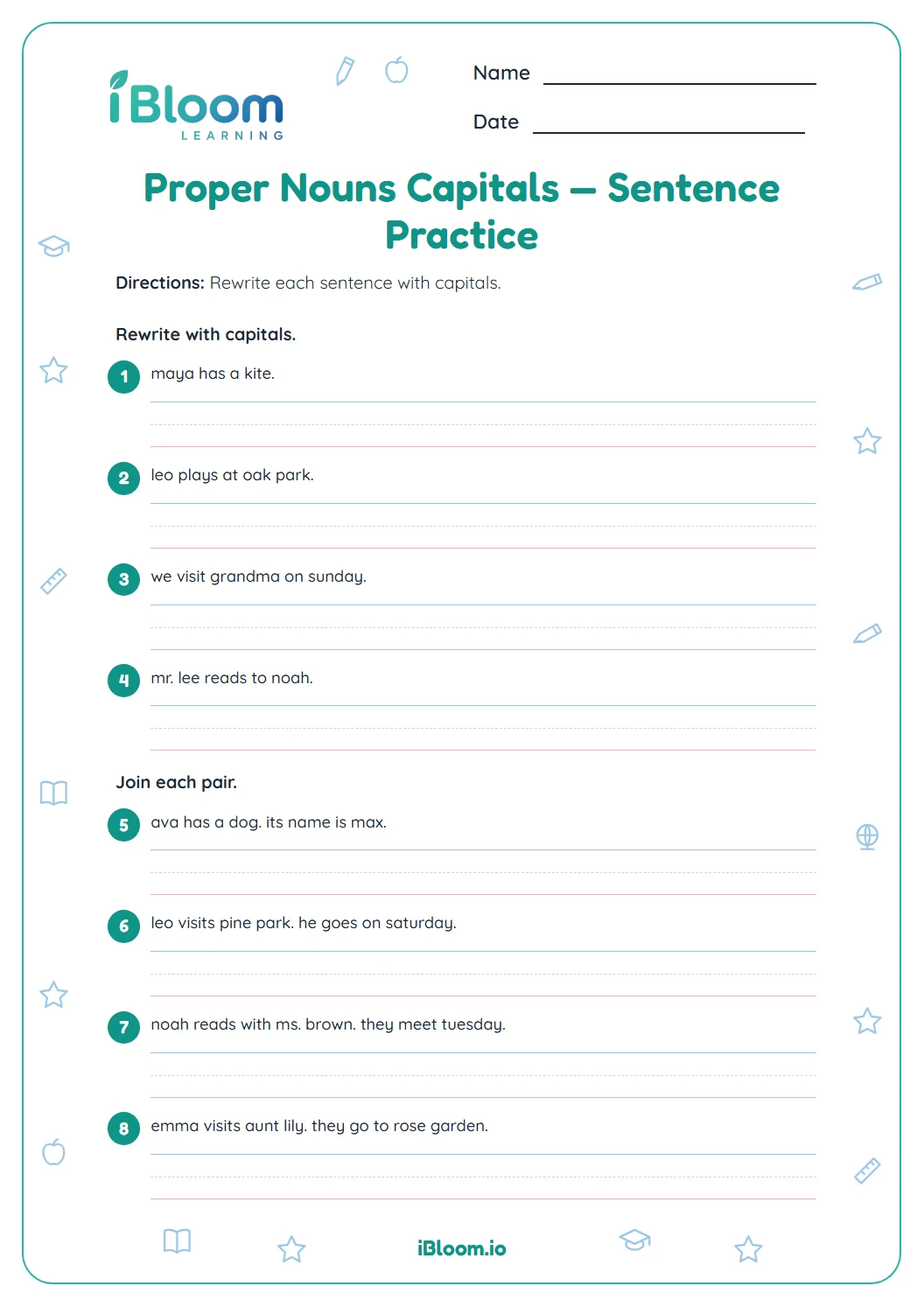
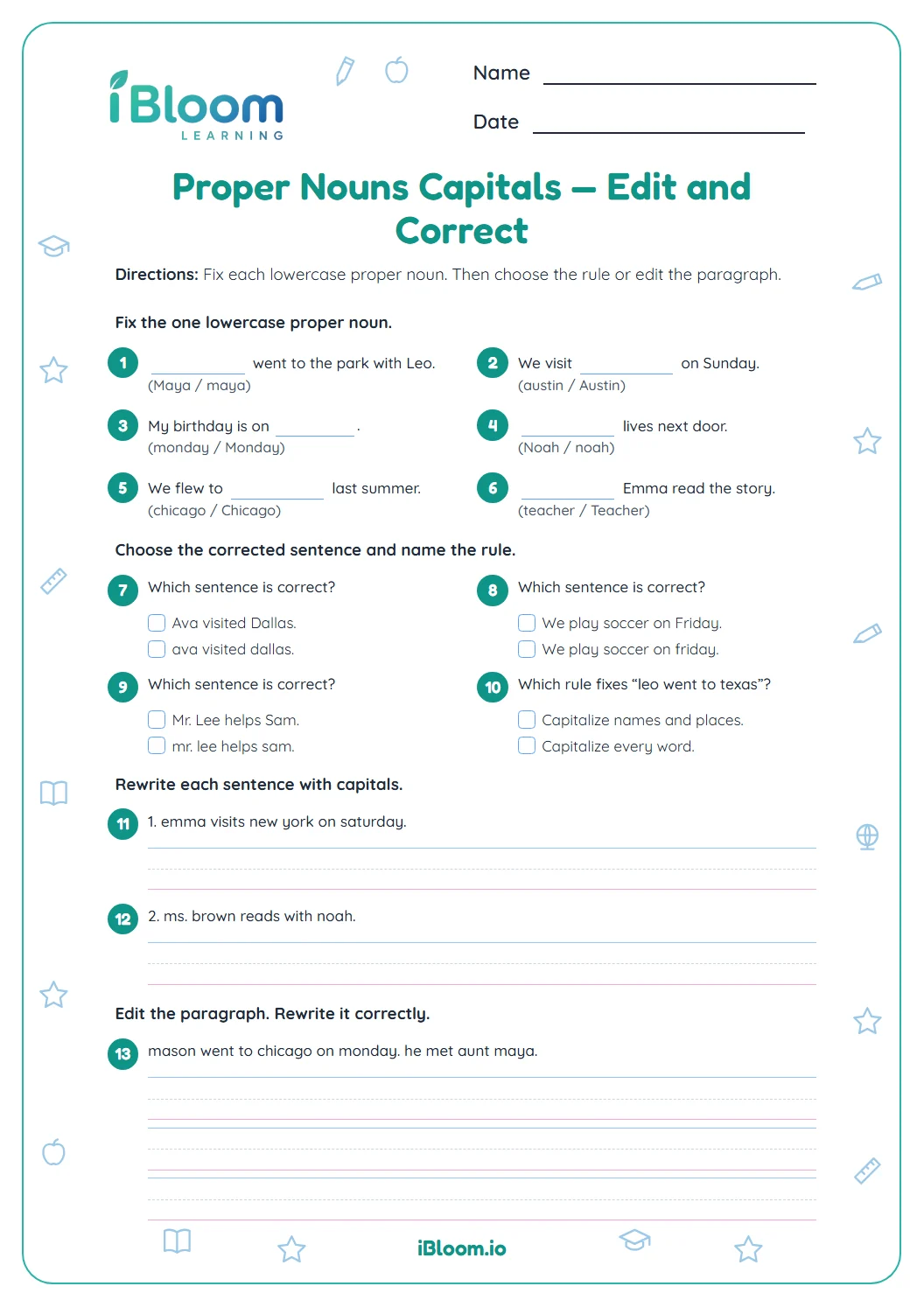
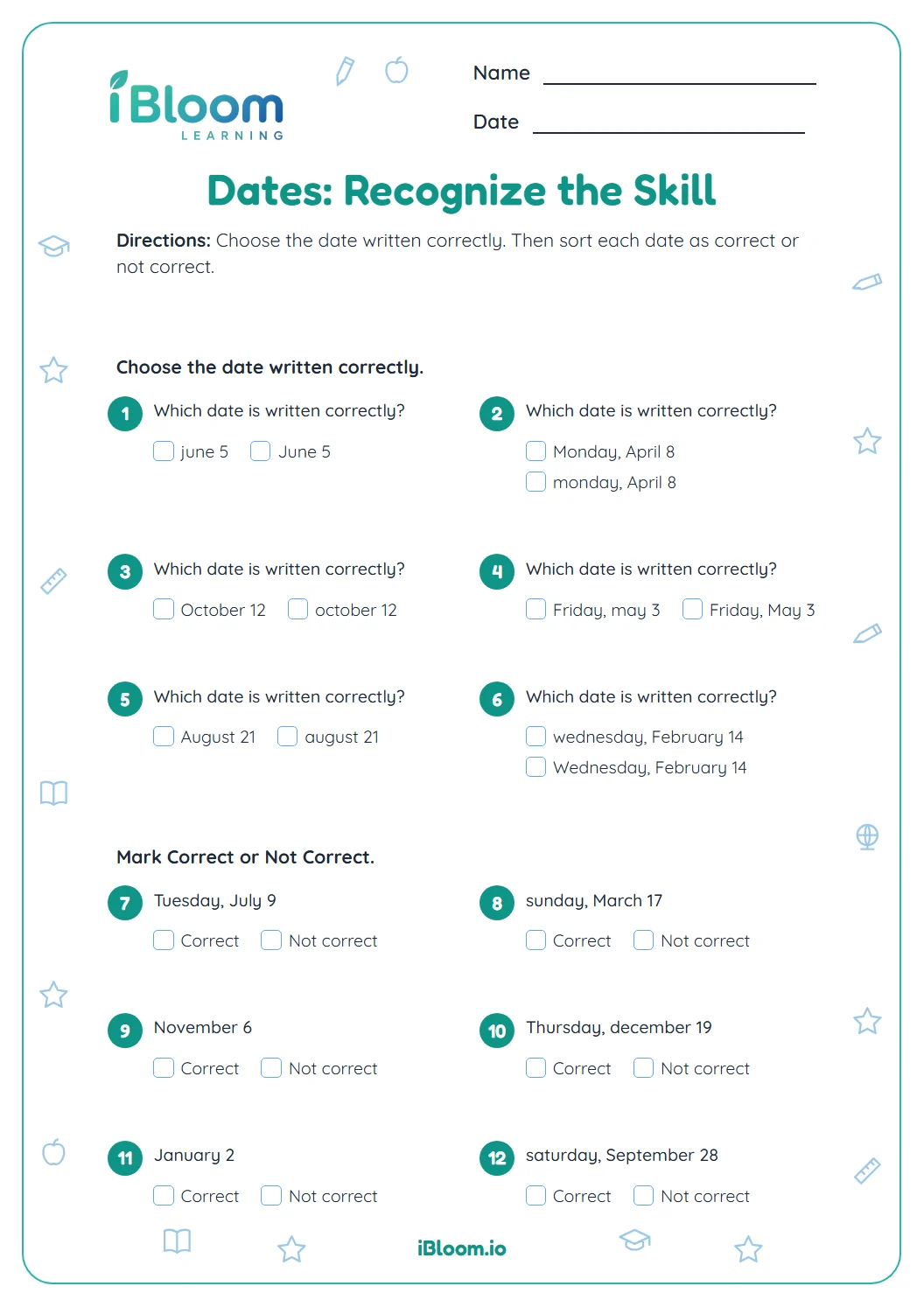
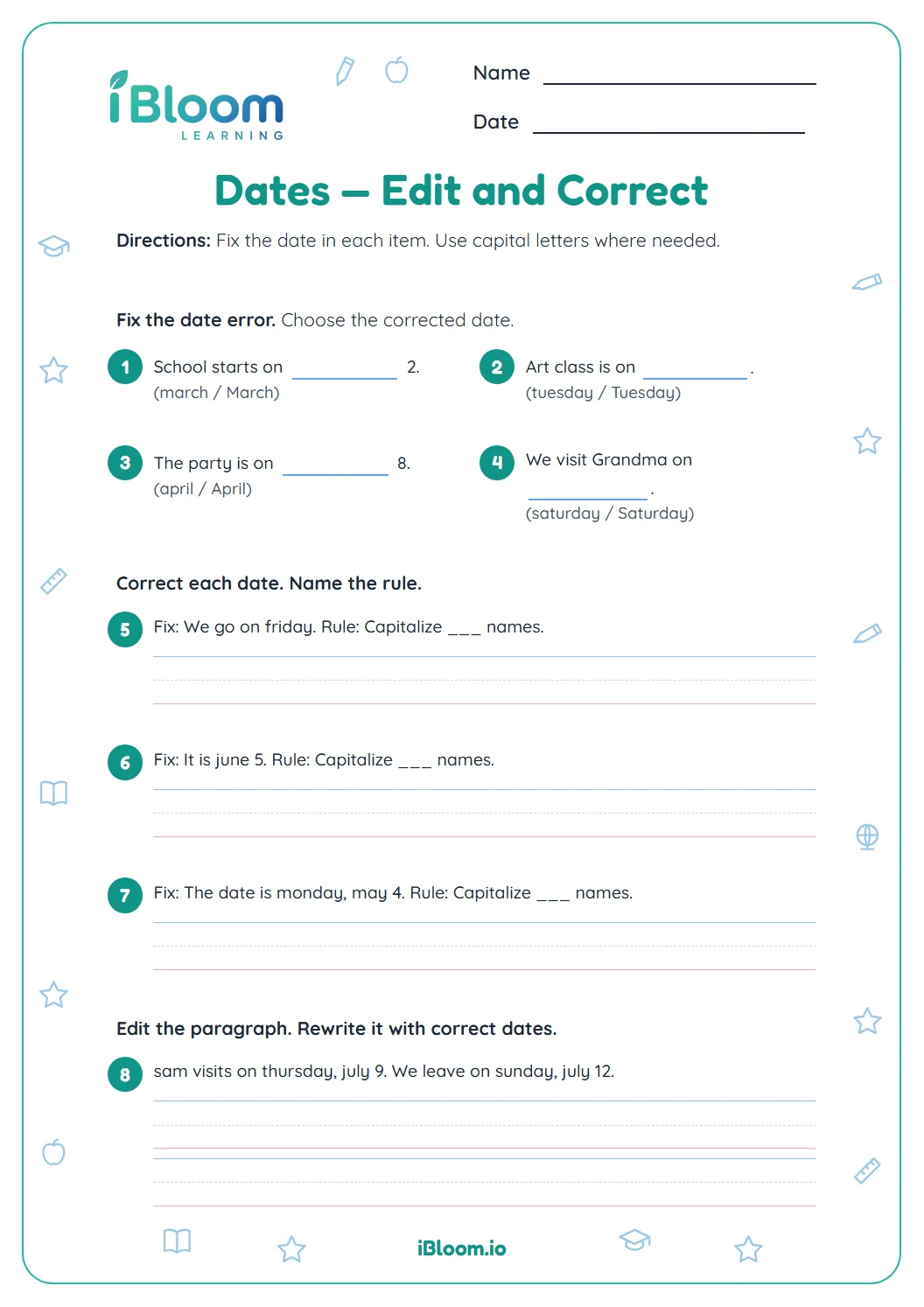
This Grade 1 printable builds capitalization of proper names in three steps: children find names and calendar words in sentences, choose a correctly capitalized form, then complete sentences by filling in correctly capitalized words. The examples include first names, family titles with names, weekdays, and months. A separate answer key supports quick checking. The practice connects to CCSS.ELA-Literacy.L.1.2.a, which names capitalization of dates and people’s names.
Aligned to CCSS.ELA-Literacy.L.1.2.a
What does this worksheet practice?
The 15 questions use familiar people and calendar words. Part A asks children to circle every person’s name and day or month. Part B asks them to select the correctly capitalized choice. Part C provides sentence blanks so learners apply the rule in context.
How can a child spot a proper name?
A person’s name identifies a particular person, such as Lena or Mr. Park. The names of weekdays and months also begin with capitals. Ordinary family words such as aunt are lowercase unless they begin a sentence or appear as part of a name.
How do you fix a sentence?
Read the sentence once for meaning, then scan for proper names and calendar words. Rewrite the whole sentence with each needed capital.
- 1we see mr. park in october.
- 2Names: Mr. Park; month: October.
- 3We see Mr. Park in October.
How can this rule carry into everyday writing?
Use the same quick scan on a note, a calendar entry, or a sentence about a friend. Ask whether each capital begins a sentence or names a particular person or date.
How to use this worksheet
- 1Read the full sentence before circling.
- 2In Part A, say each name aloud and look for the weekday or month.
- 3For Part B, compare the choices letter by letter.
- 4Rewrite the whole Part C sentence, keeping its meaning.
- 5Use the answer key to check every capital.
Common mistakes and quick fixes
The mistake
Making every family word uppercase, such as aunt
The fix
Capitalize it when it begins the sentence or is used with a name; otherwise write aunt.
The mistake
Leaving weekday names lowercase
The fix
Treat Monday through Sunday as names and capitalize the first letter.
The mistake
Changing only the lowercase word in a rewrite
The fix
Copy the full sentence and check its first word, people, weekdays, and months.
These activities connect the practice to the listed learning goals.
Capitalize names of people and dates in sentences.
On this sheet: Students correct and complete sentences by capitalizing people’s names and days/months.
Show the official wordingHide the official wording
Capitalize dates and names of people.
What to practice next
Make more practice
Further reading
Questions parents and teachers ask
Which words count as proper names here?
The worksheet focuses on people’s names and weekday or month names. Examples include Mia, Leo, Friday, and June. In Part A, children circle every person’s name and calendar word in each short sentence. Later parts ask them to select or supply correctly capitalized forms.
Should “aunt” always have a capital?
No. A family word such as aunt is lowercase when it stands alone, as in “My aunt is here.” When it is part of a name or title, as in “Aunt Rose,” capitalize it. The worksheet includes examples to help children notice that difference. It gives children a concrete scan routine they can reuse when editing their own writing.
Why do days and months begin with capitals?
Names of weekdays and months identify particular calendar words, so they begin with capital letters. Part A asks children to find them in sentences, and later parts ask them to choose or write the correct form. The key helps a parent or teacher check the target words without needing to infer the intended rule.
How many questions are on the worksheet?
There are 15 questions in three parts: five circle-words items, five multiple-choice items, and five sentence blanks. The sequence starts with spotting words and ends with completing sentences in context. A separate answer key is included for checking the proper capitalization.
How should I check a sentence rewrite?
Compare the meaning first, then check every proper name and date word. The key gives a complete model sentence. Accept handwriting differences, but make sure each required capital appears in the right place. The key lists every corrected sentence in full.