


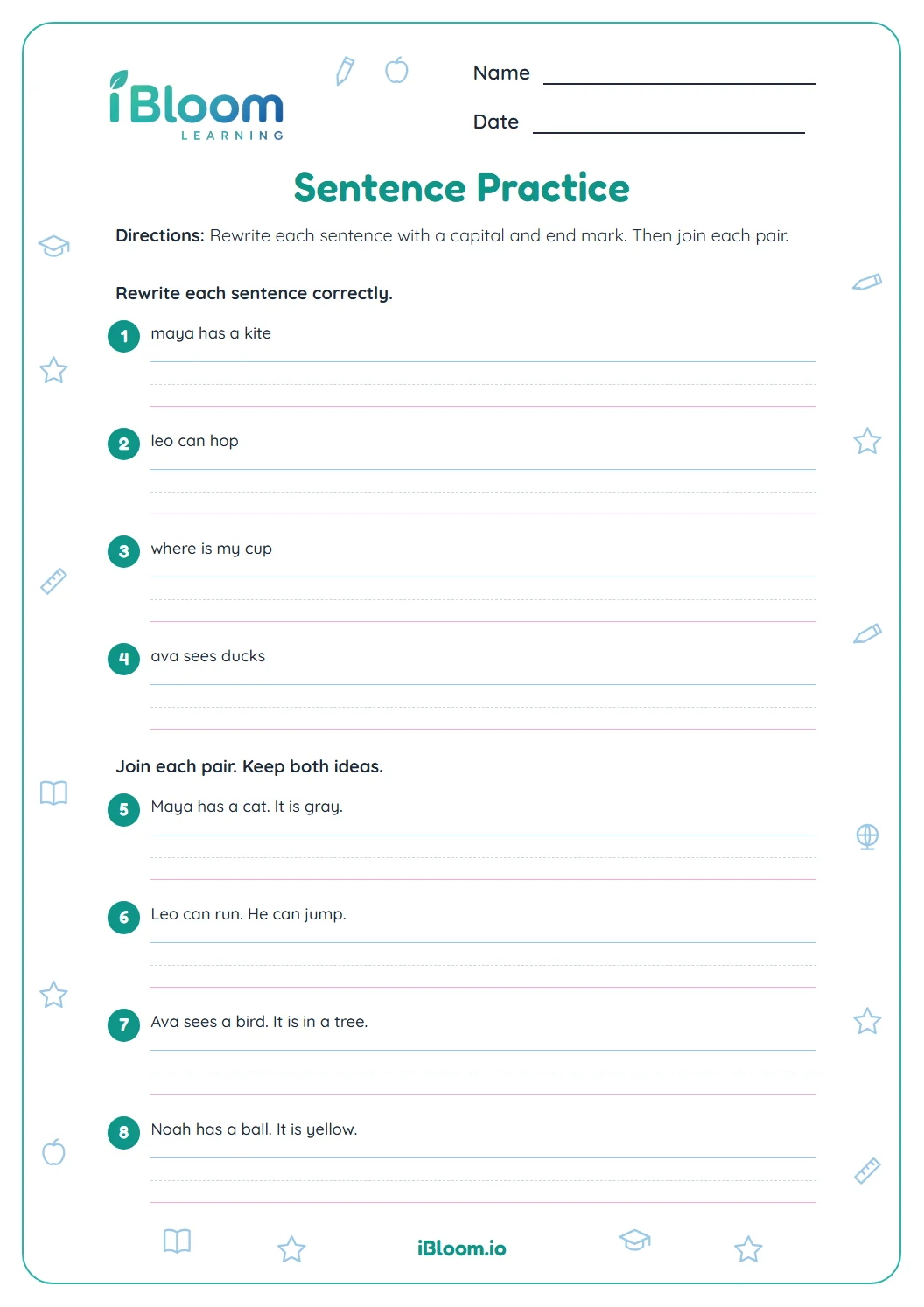
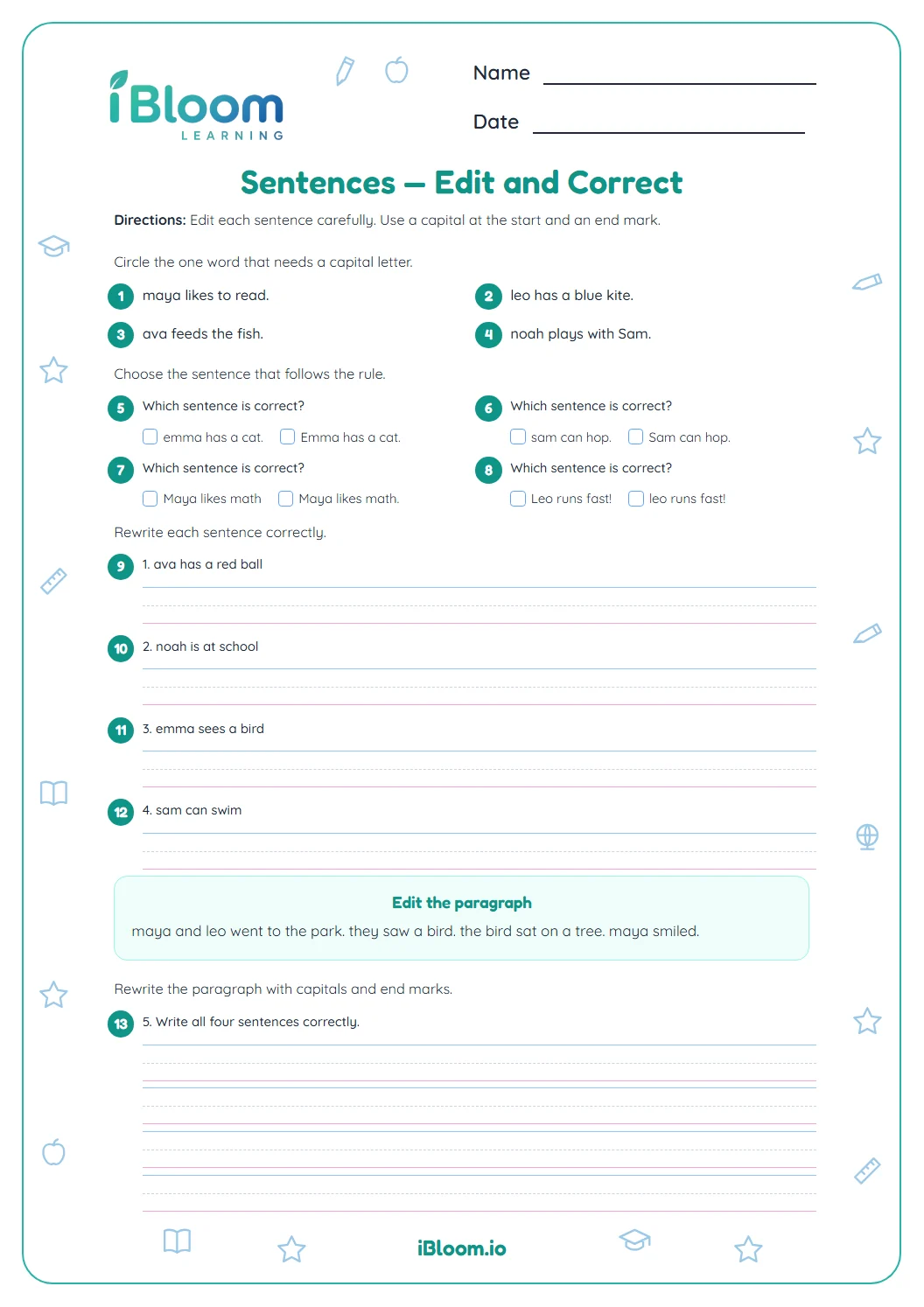
About this worksheet
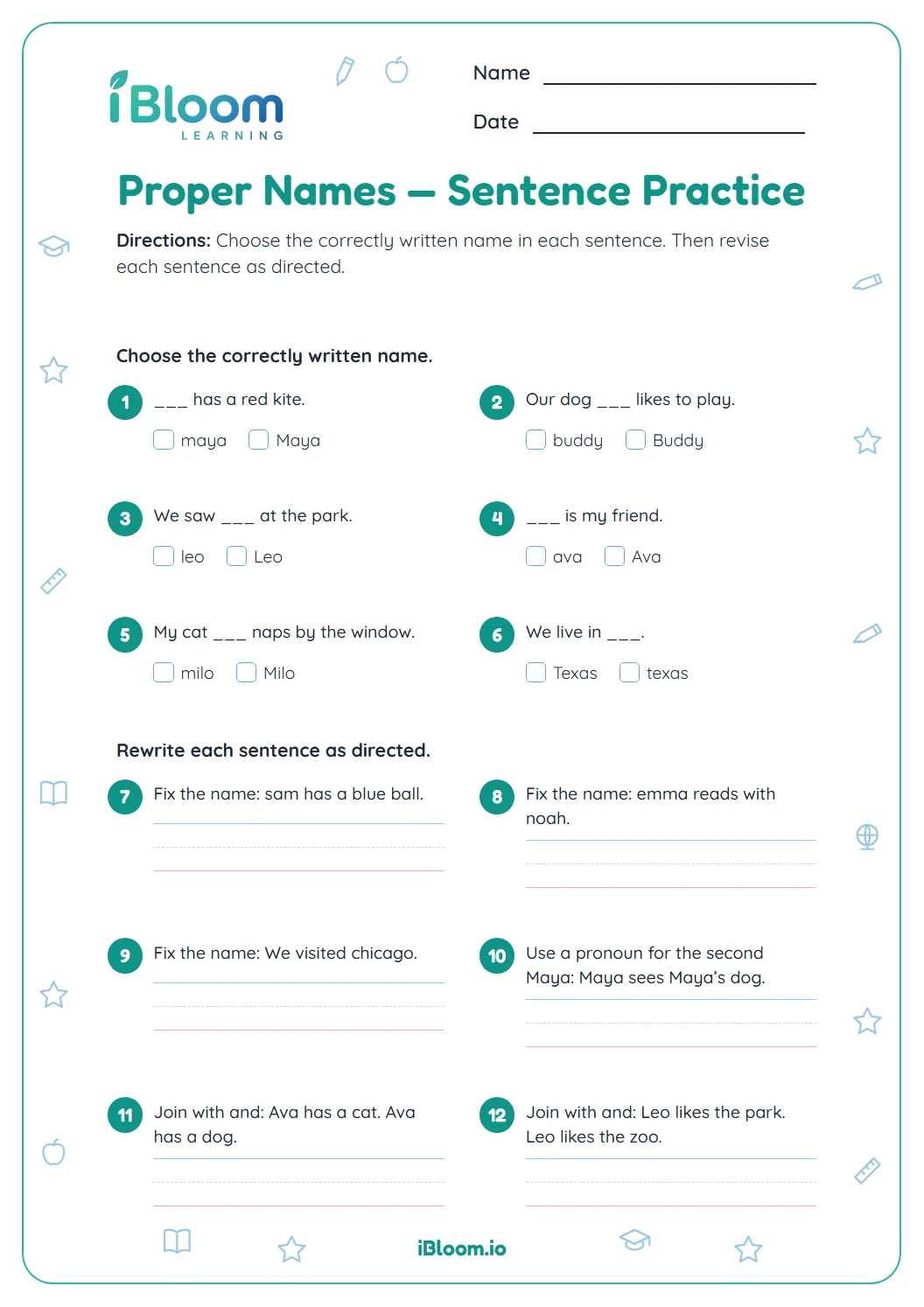
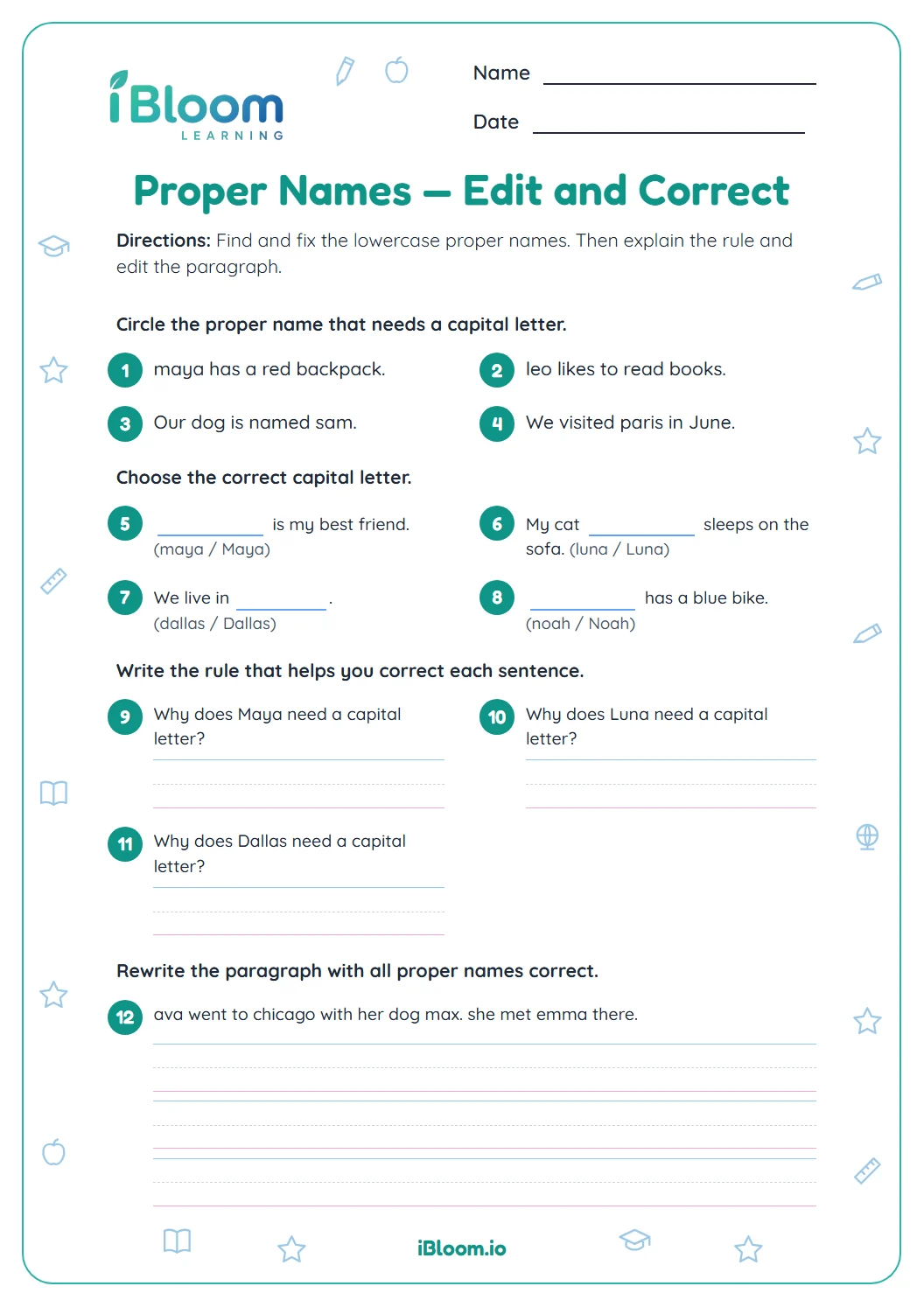
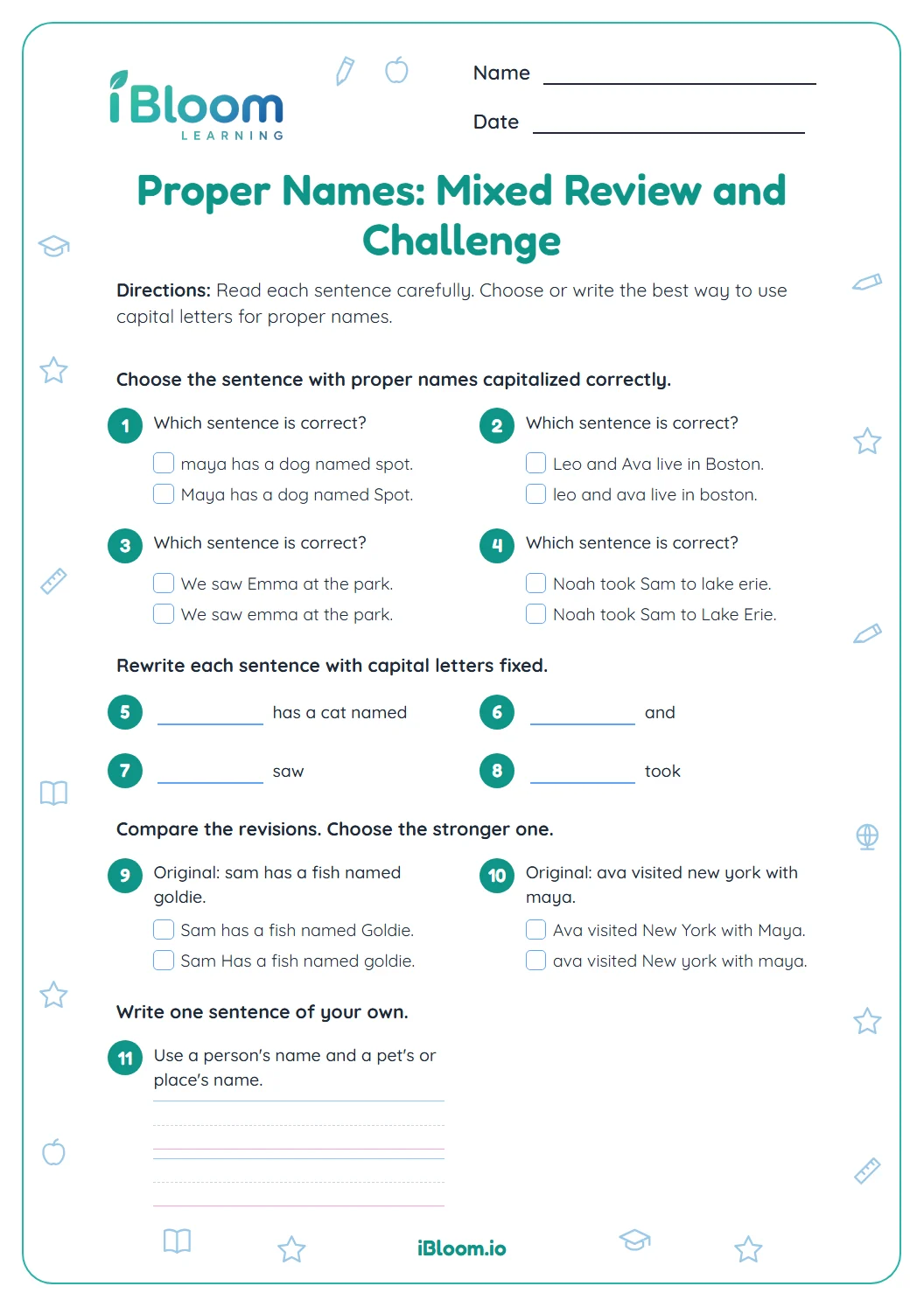
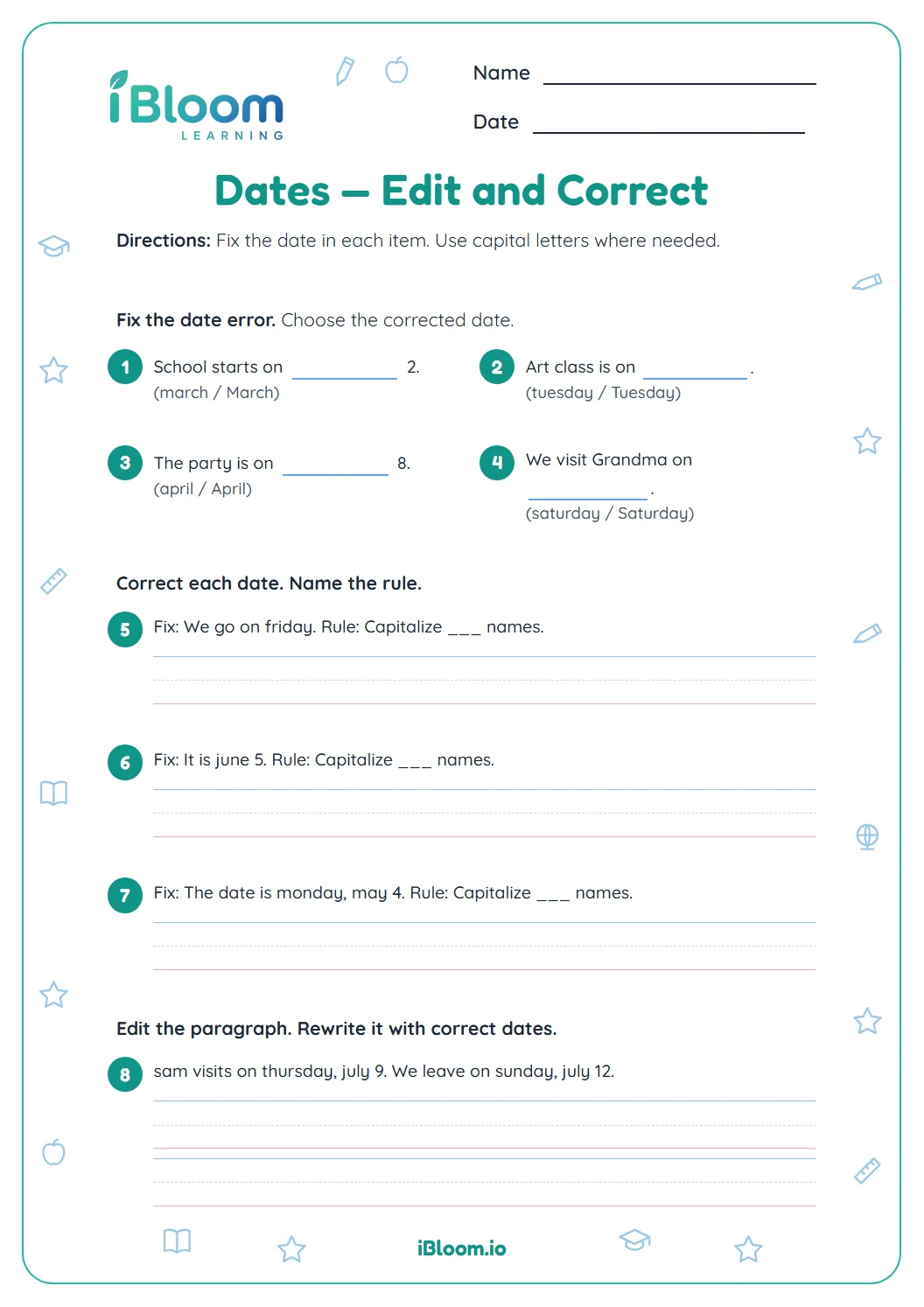
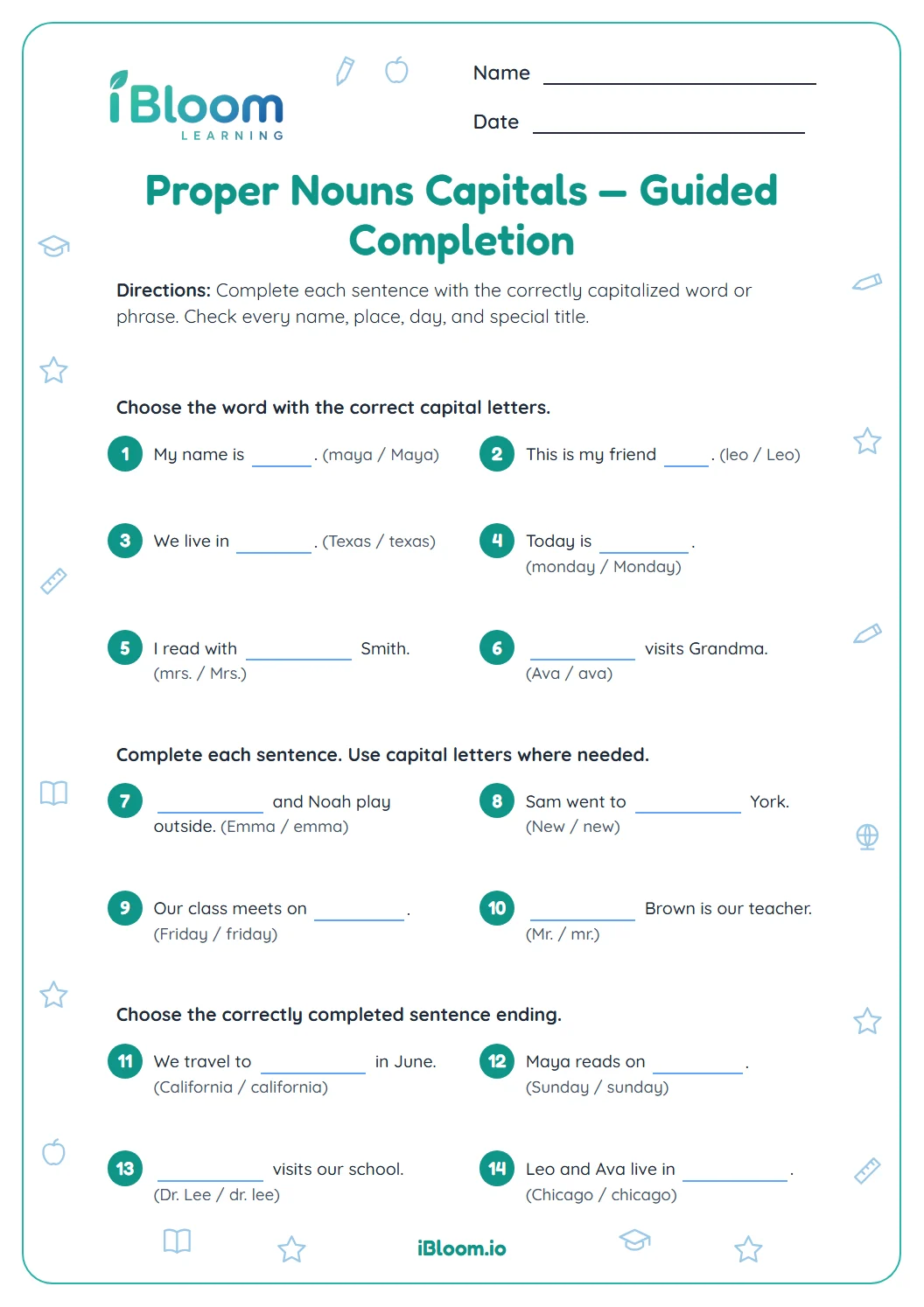
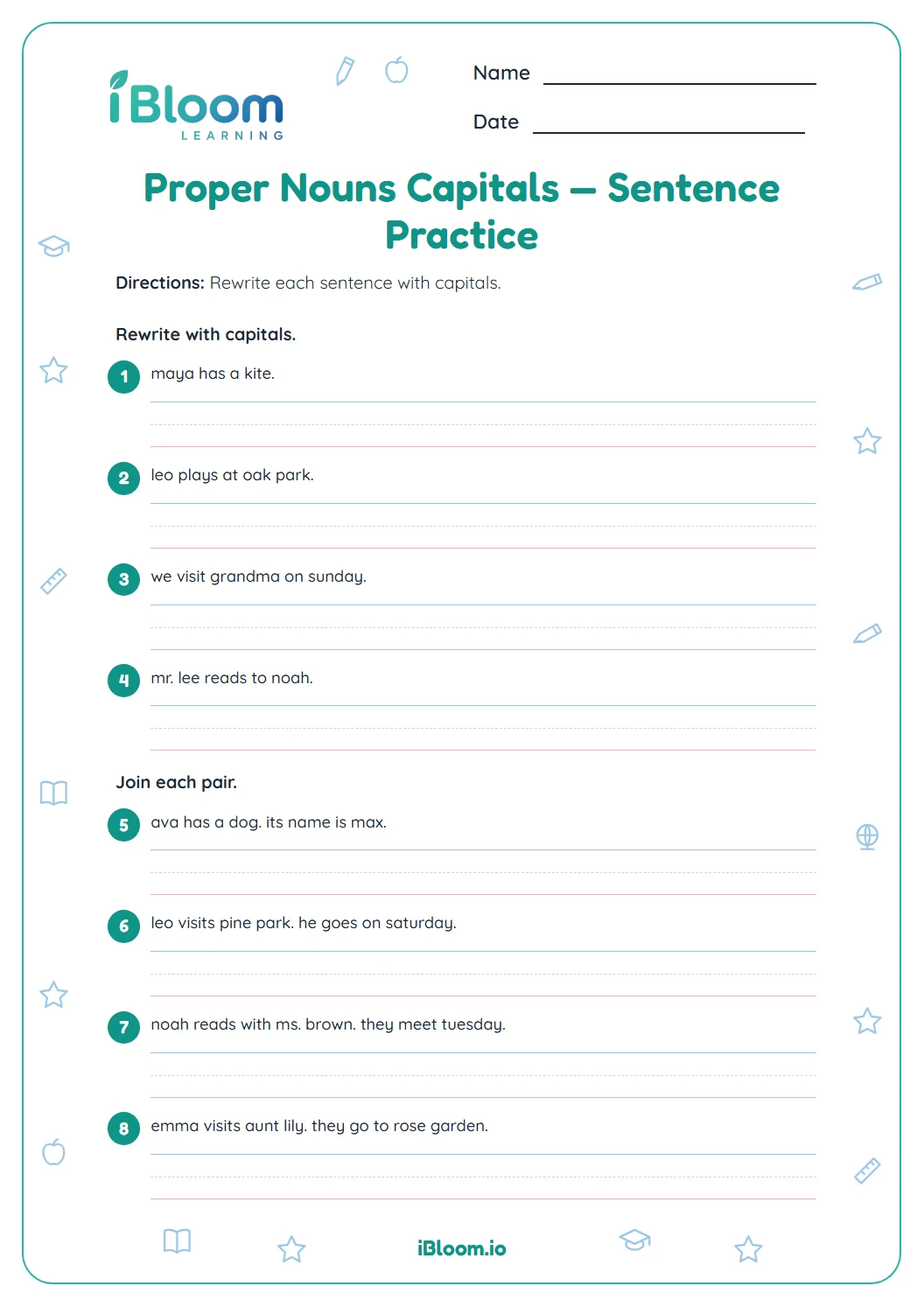
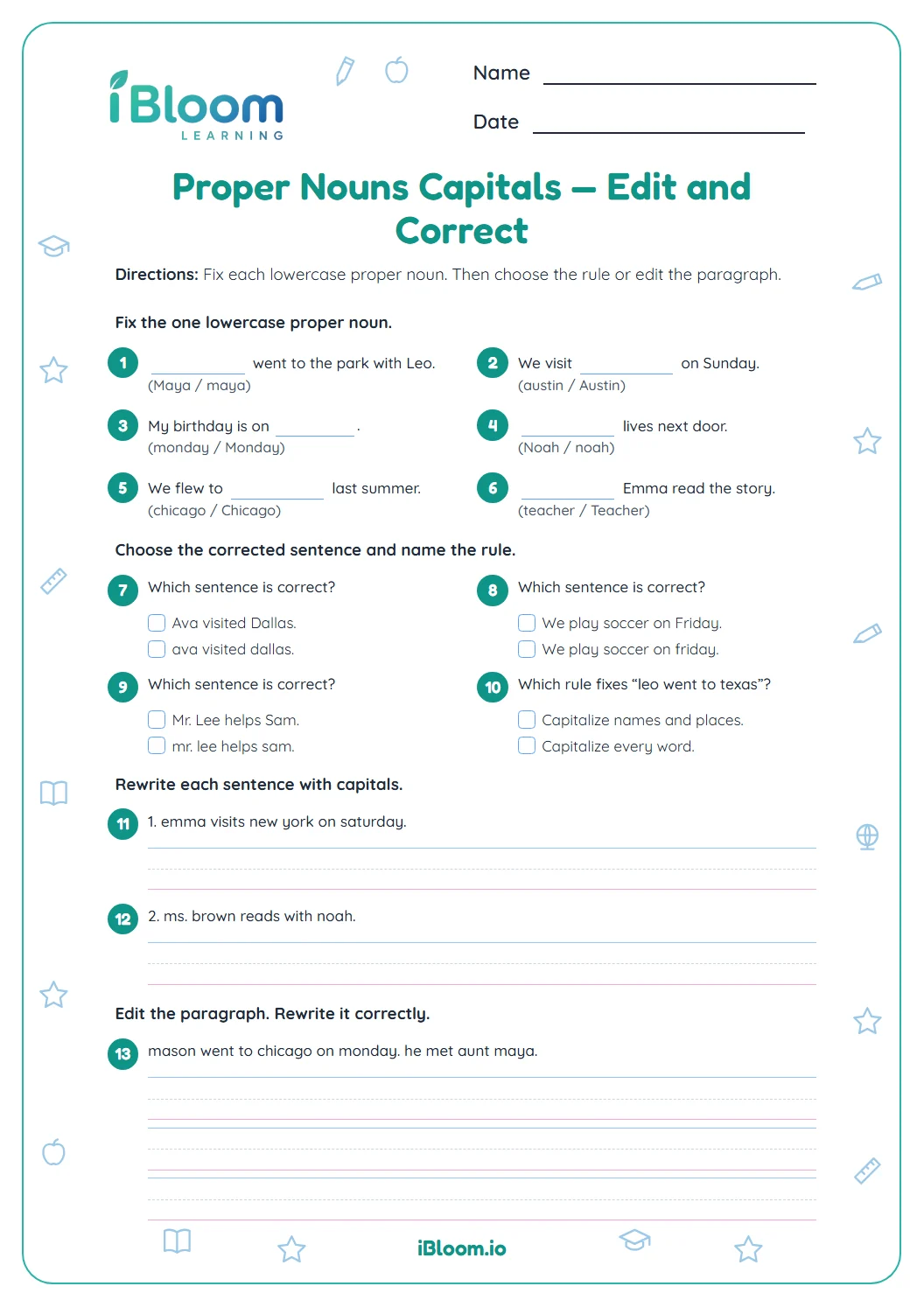
This Grade 1 worksheet helps children recognize proper names and use capital letters for people, pets, and places. Children circle names in short sentences, then correct lowercase names and sentences. The 14 items practice CCSS L.1.2.a, which specifically addresses capitalizing people’s names.
Aligned to L.1.2.a
How can a reader recognize a name?
A name points to a particular person or place. Look for the word that identifies someone or somewhere, then check its first letter.
- 1I sat by Leo.
- 2Leo names one person.
- 3The L is a capital even though Leo is not first.
Where does a name need a capital?
A person’s name begins with a capital anywhere in a sentence. Titles used with a name, such as Mr. or Ms., also begin with capitals. Ordinary words such as friend do not become names.
How can children check a sentence?
Read the whole sentence and look at each name. Fix a lowercase first letter in the name, then check that other words have not been capitalized without a reason.
How to use this worksheet
- 1Read the whole choice before deciding.
- 2Ask whether the word names a particular person or place.
- 3Check the first letter of that name.
- 4Remember a name needs its capital even in the middle of a sentence.
- 5Rewrite each correction neatly and reread it.
Common mistakes and quick fixes
The mistake
Capitalizing every important-looking word.
The fix
Capitalize names, not ordinary words like friend or cap.
The mistake
Leaving a name lowercase in the middle of a sentence.
The fix
Check every name, not only the first word.
The mistake
Changing a name into all capitals.
The fix
Use a capital first letter and lowercase letters for the rest.
Common Core alignment
This sheet gives focused practice with the standard below.
Capitalize people’s names in short sentences.
On this sheet:
Show the official wordingHide the official wording
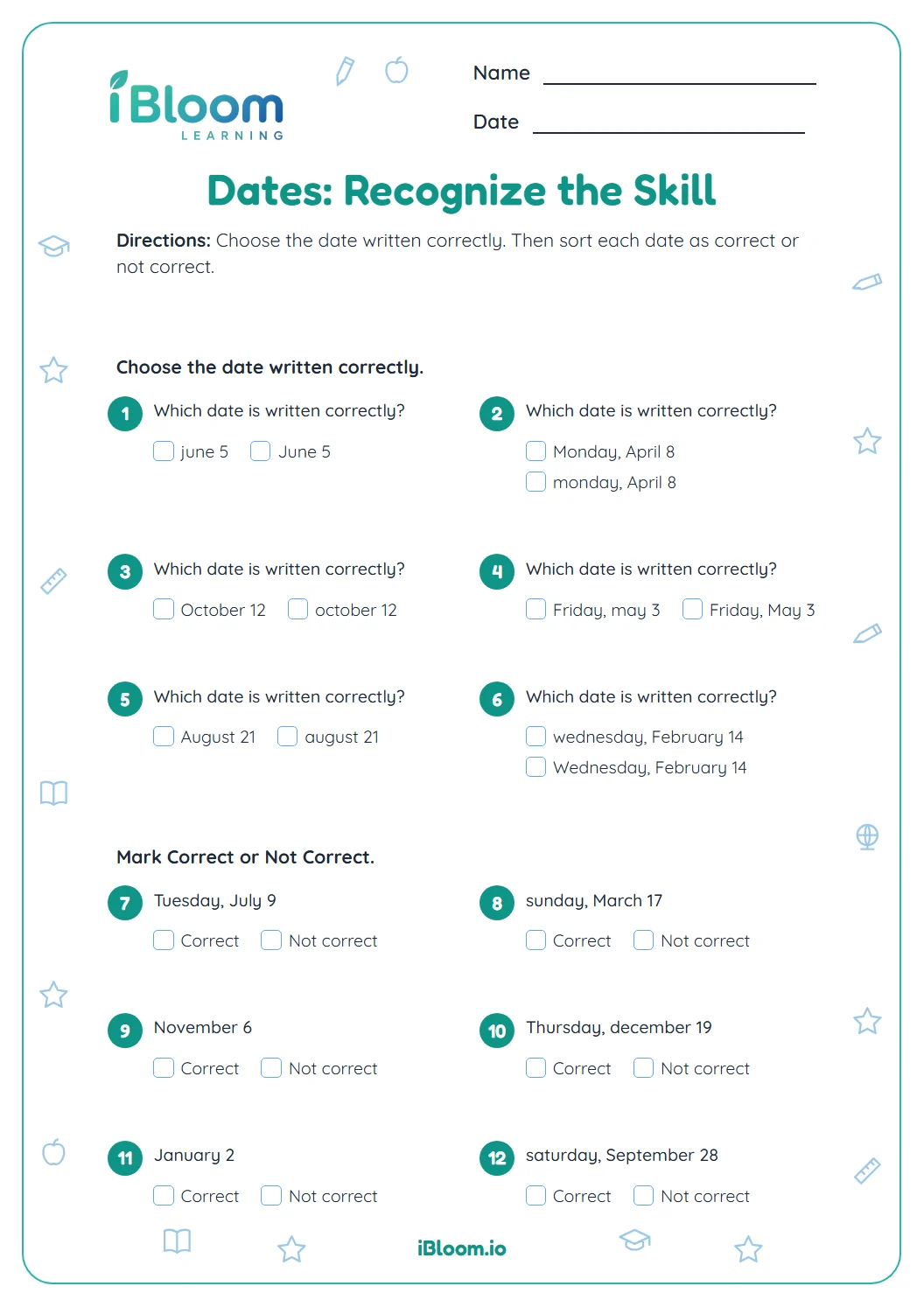
Capitalize dates and names of people.
What to practice next
Make more practice
Further reading
Questions parents and teachers ask
What names should a child circle?
Circle a specific name, such as Maya, Biscuit, or Boston, rather than an ordinary word such as cap. The first ten items include people, a pet, and places in short sentences; the final four ask children to capitalize a name or correct a sentence.
Does the worksheet include sentence corrections?
Yes. After recognizing names in sentences, children rewrite a lowercase name or sentence with the needed capitals. The key shows the expected correction. In the last item, capitalize both the title abbreviation “Mr.” and the person’s name “Park.” The final prompts apply the same rule.
How can I explain a proper name?
A proper name identifies a specific person, pet, or place. In “Biscuit naps on the rug,” Biscuit names one pet, while rug names an ordinary object. Ask the child which word tells exactly who or where the sentence means, then check that its first letter is capitalized.
Should a name stay capitalized in the middle of a sentence?
Yes. A person’s name keeps its capital even when it appears after the first word, as in “We met Leo at school.” The sentence-correction items reinforce that a name’s capitalization does not depend on where it appears. A name stays capitalized throughout.
How many parts are on this worksheet?
There are 14 items in four parts. Children circle names in three groups of sentences, then apply the rule by rewriting a name and correcting full sentences. The separate answer key lists the circled words and corrected forms. The answer key follows the worksheet order.