
About this worksheet
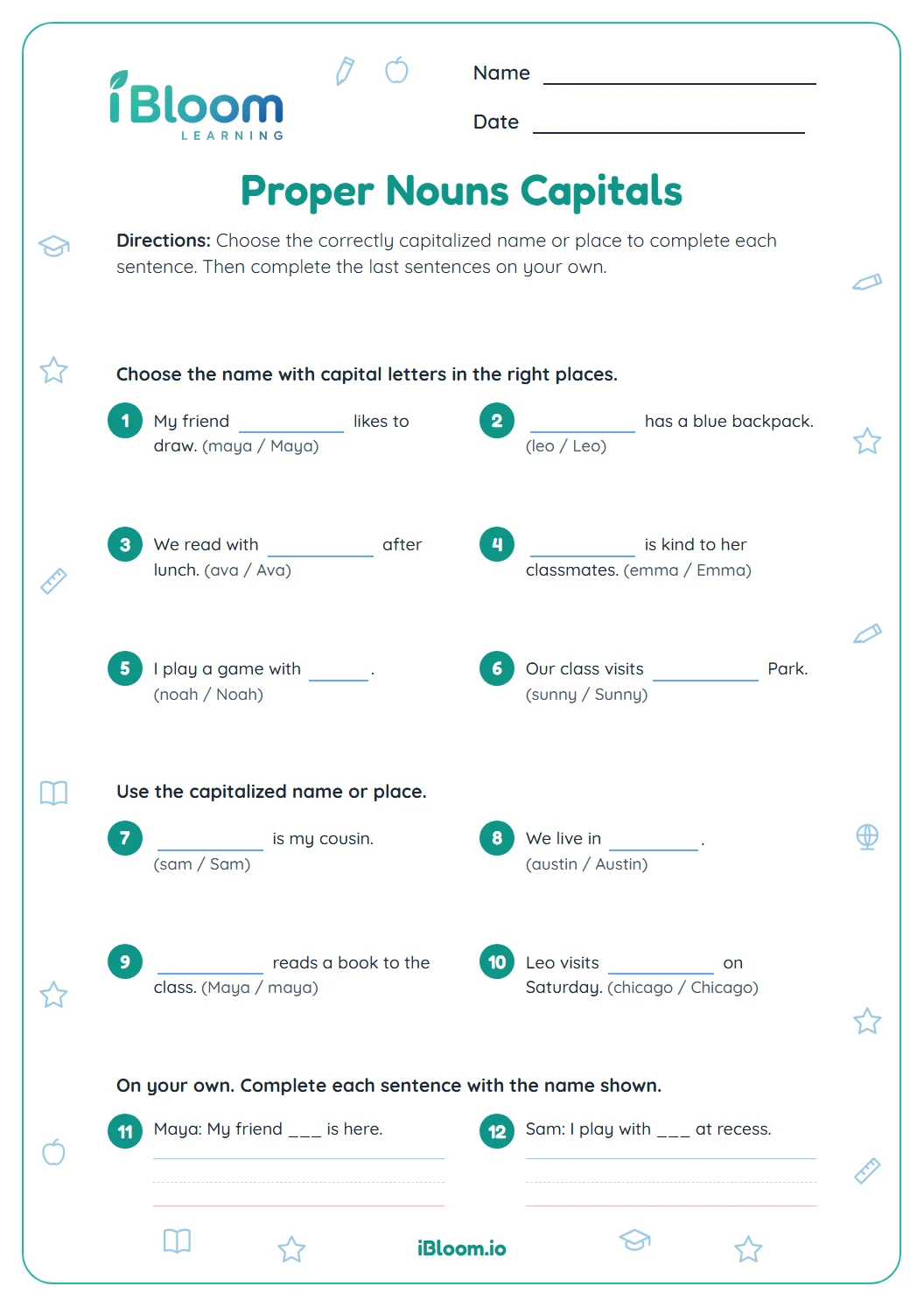
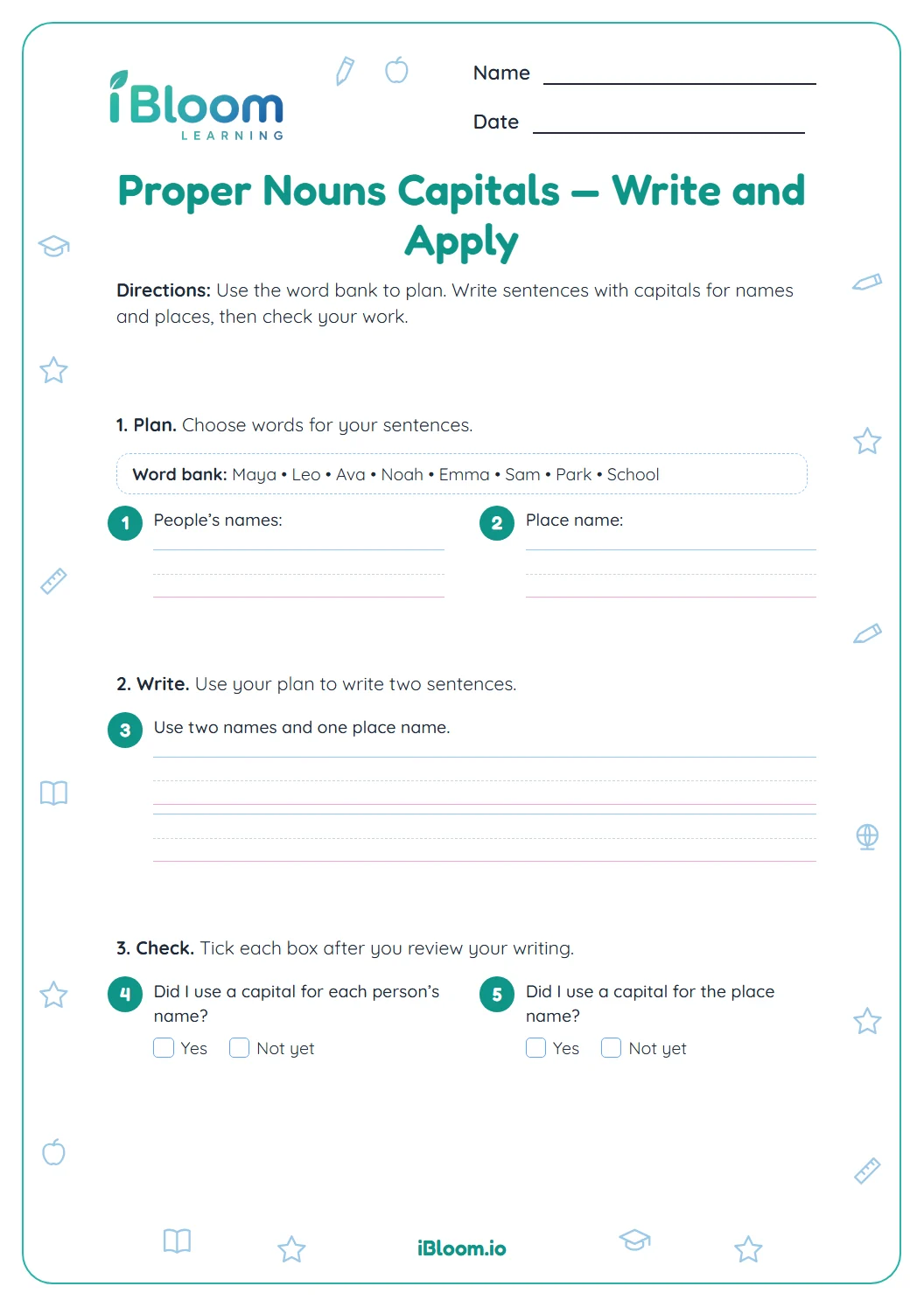
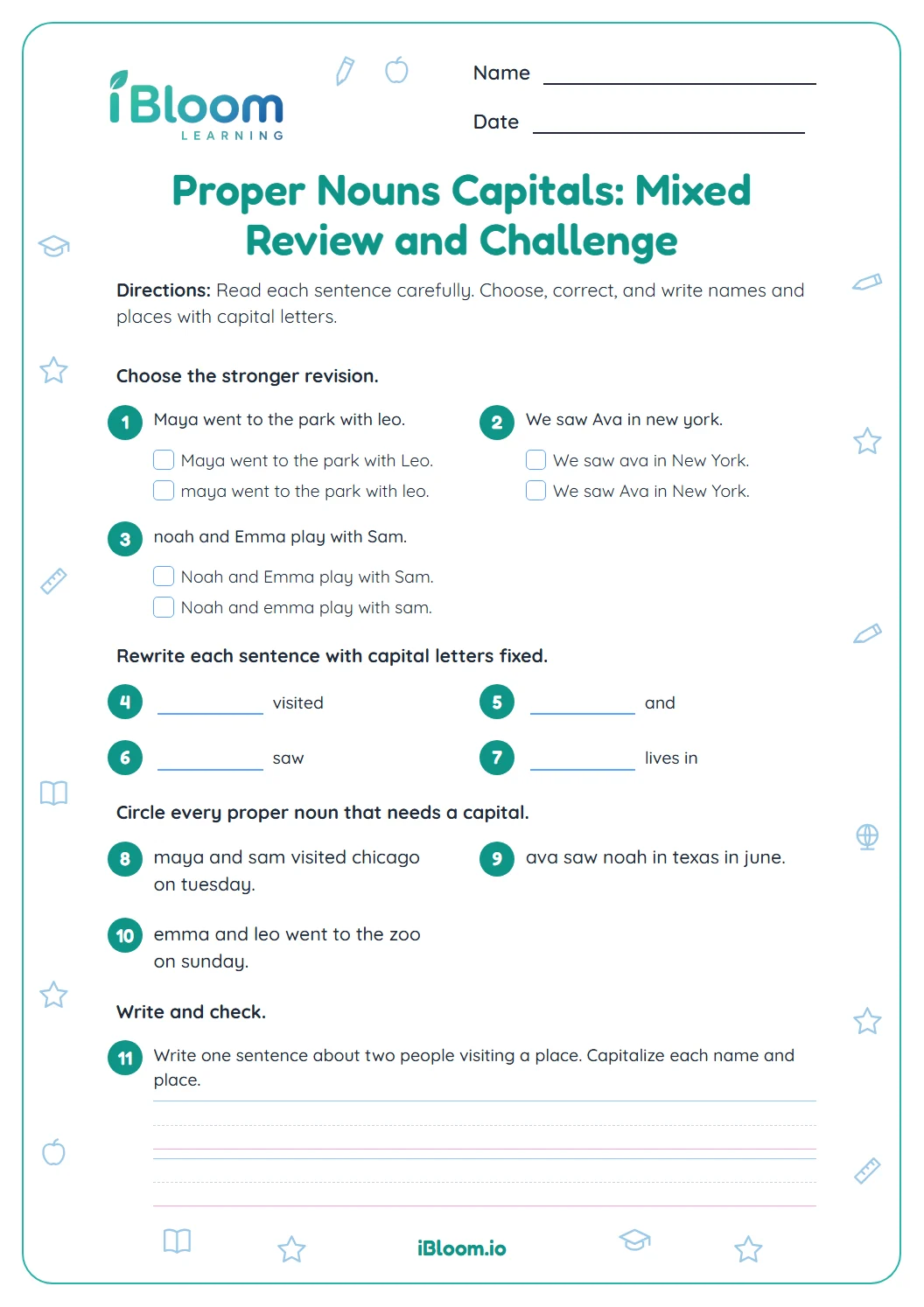
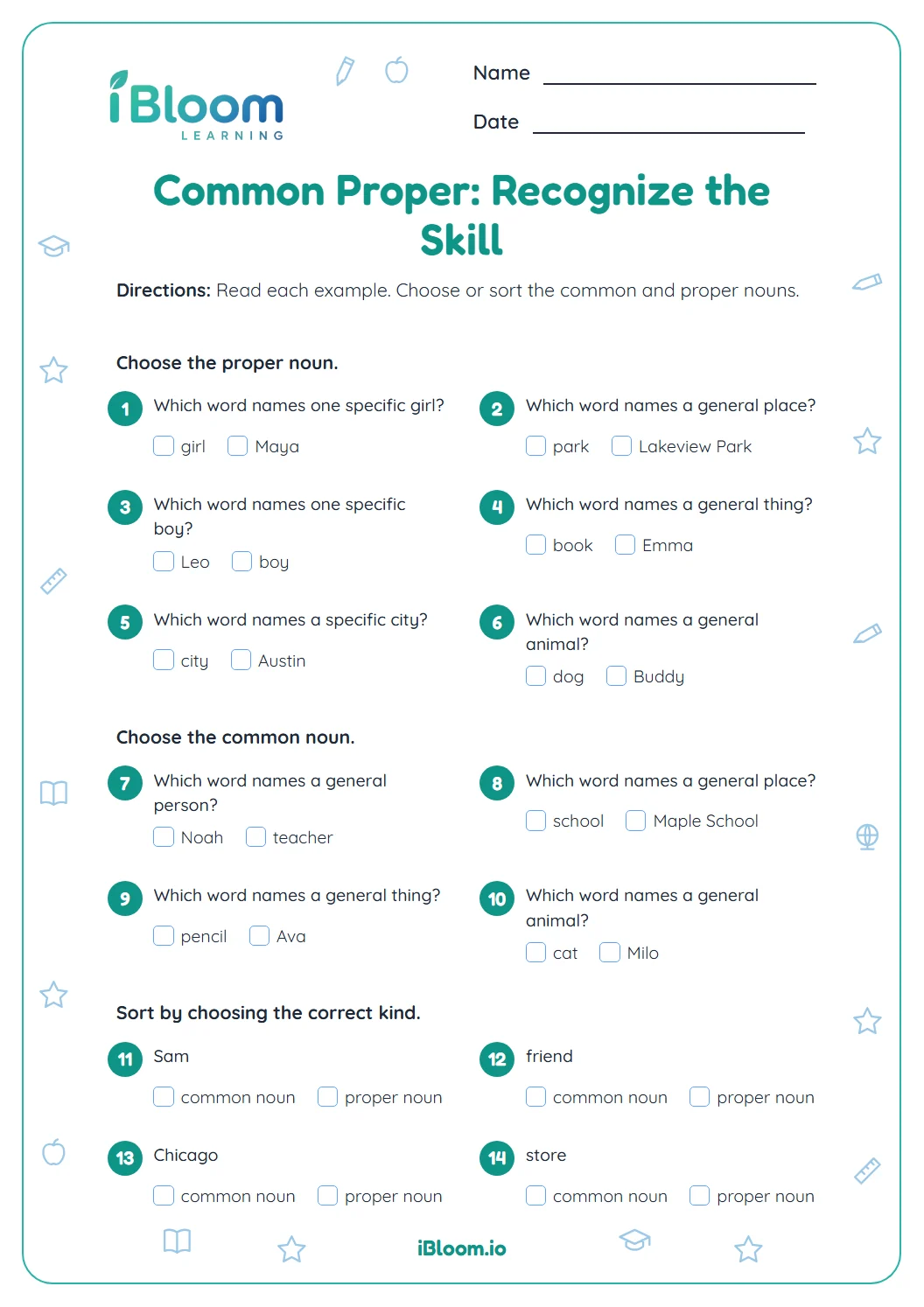
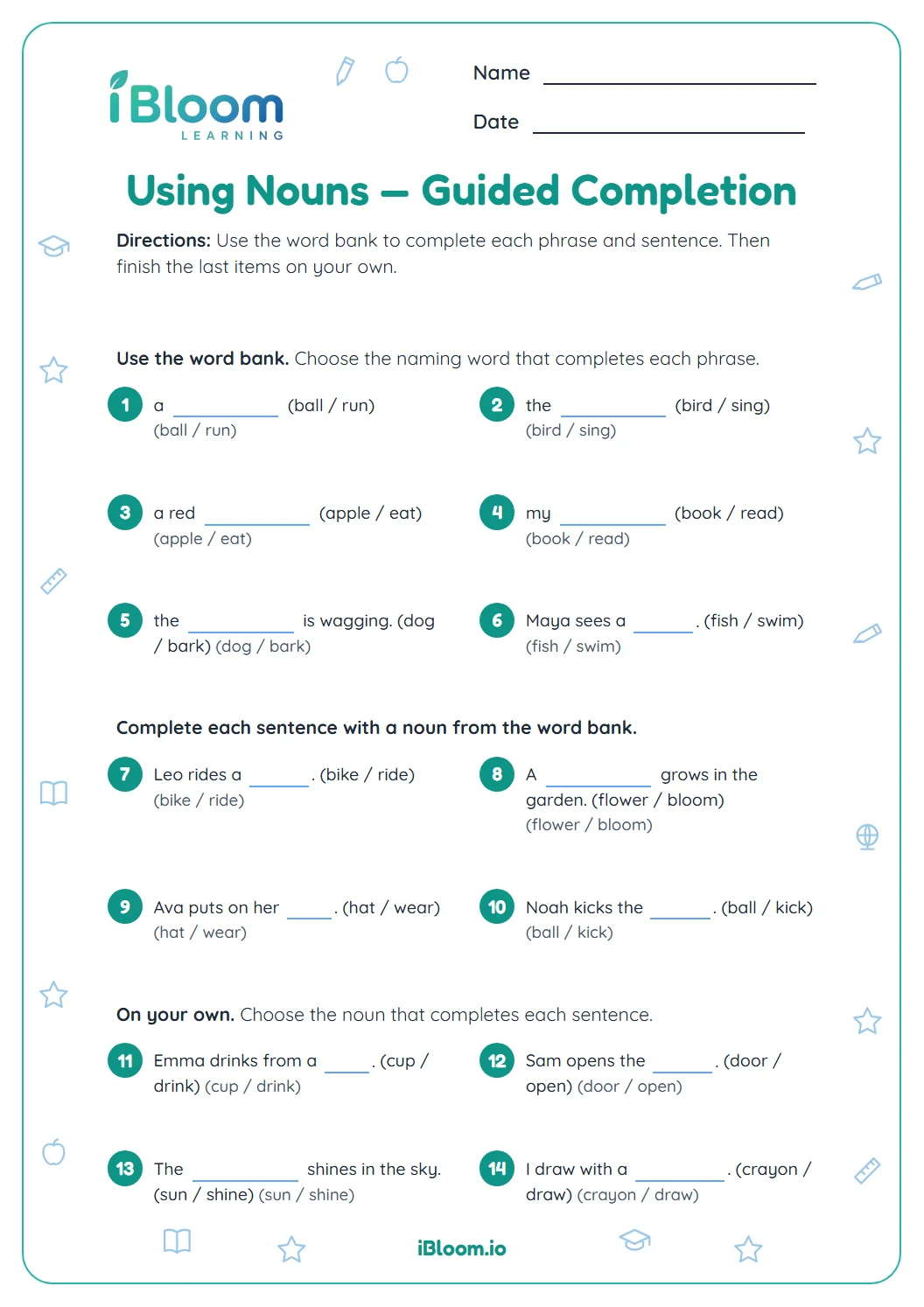
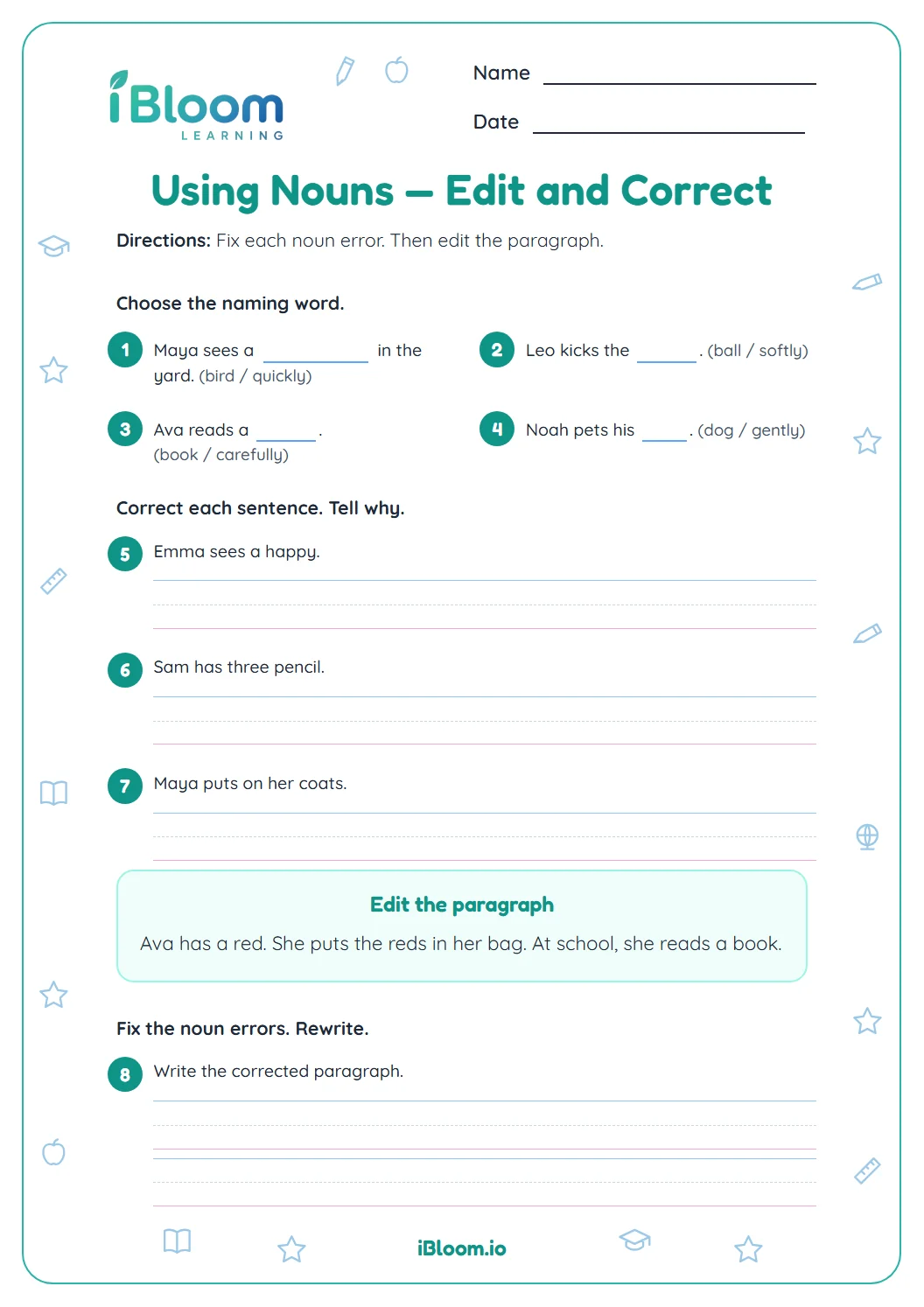
This free printable Grade 1 worksheet builds proper noun capitals through short, focused practice. Children work through 16 questions in 3 parts, beginning with clear examples and moving toward independent decisions. The page uses garden artwork and includes a separate answer key for checking each response. The practice aligns with Common Core State Standards for English Language Arts L.1.2.a: capitalize dates and names of people.
Aligned to L.1.2.a
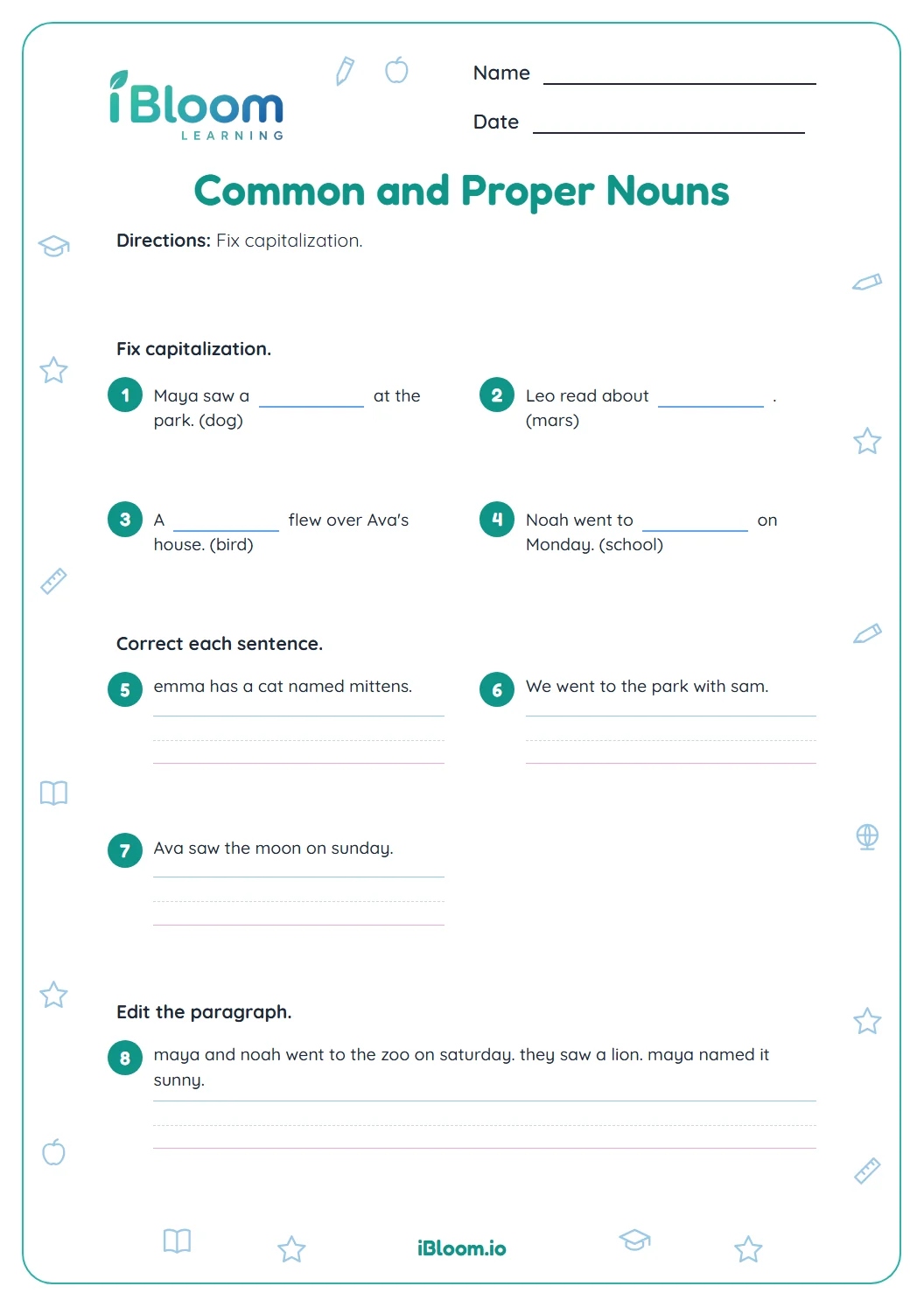
Which words need capitals?
Choose the sentence with correct capitals for a sentence start and a person’s name.
Look for names of people and places, plus the day name in Part B.
- 1Choose the corrected sentence: we saw maya at the park. → We saw Maya at the park.
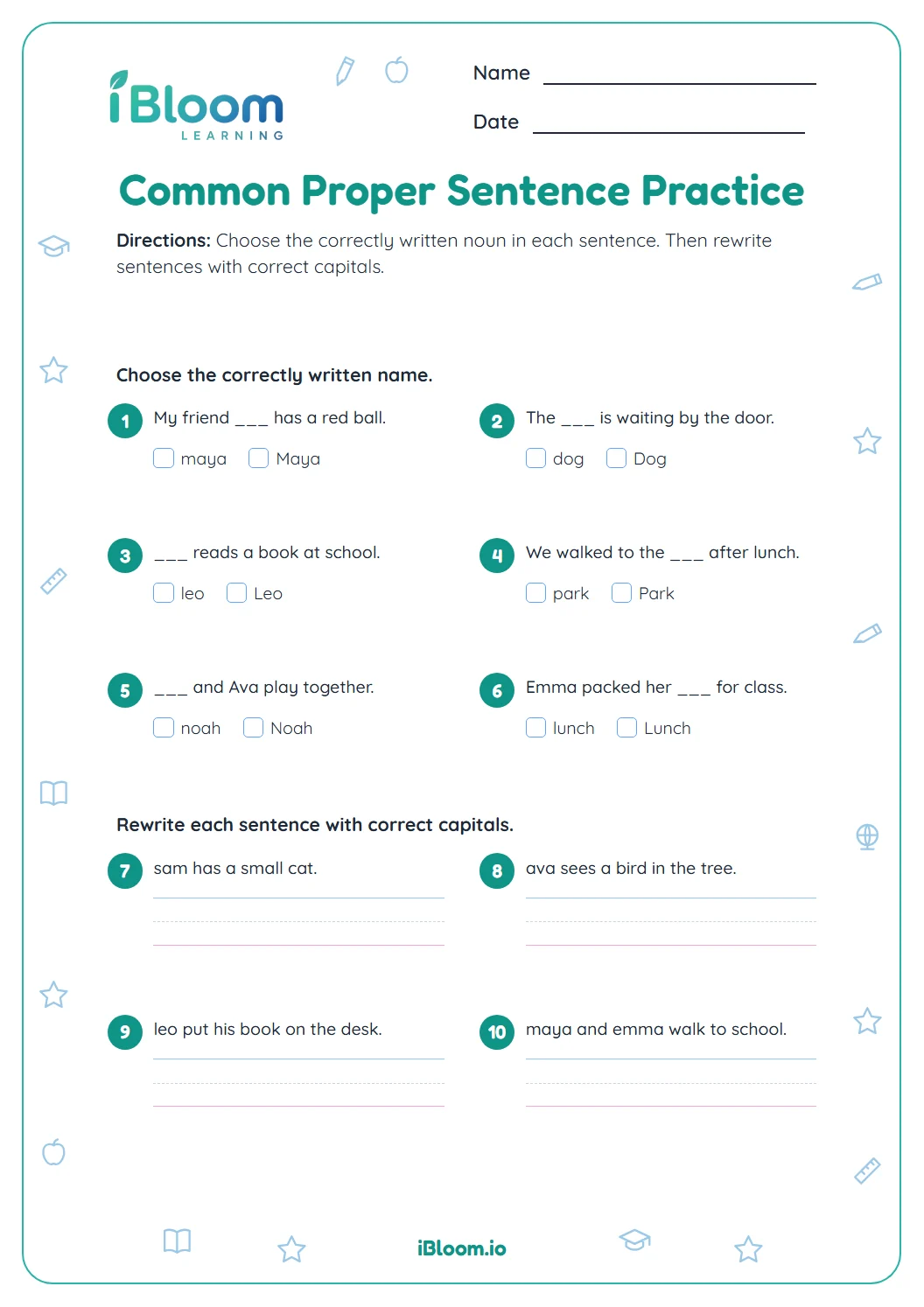
How do you edit a whole sentence?
Rewrite people’s names, titles, and a day name with capitals.
Capitalize each word in a person’s full name; keep the period in “Mr.”
- 1Write this name with capitals: nina → Nina
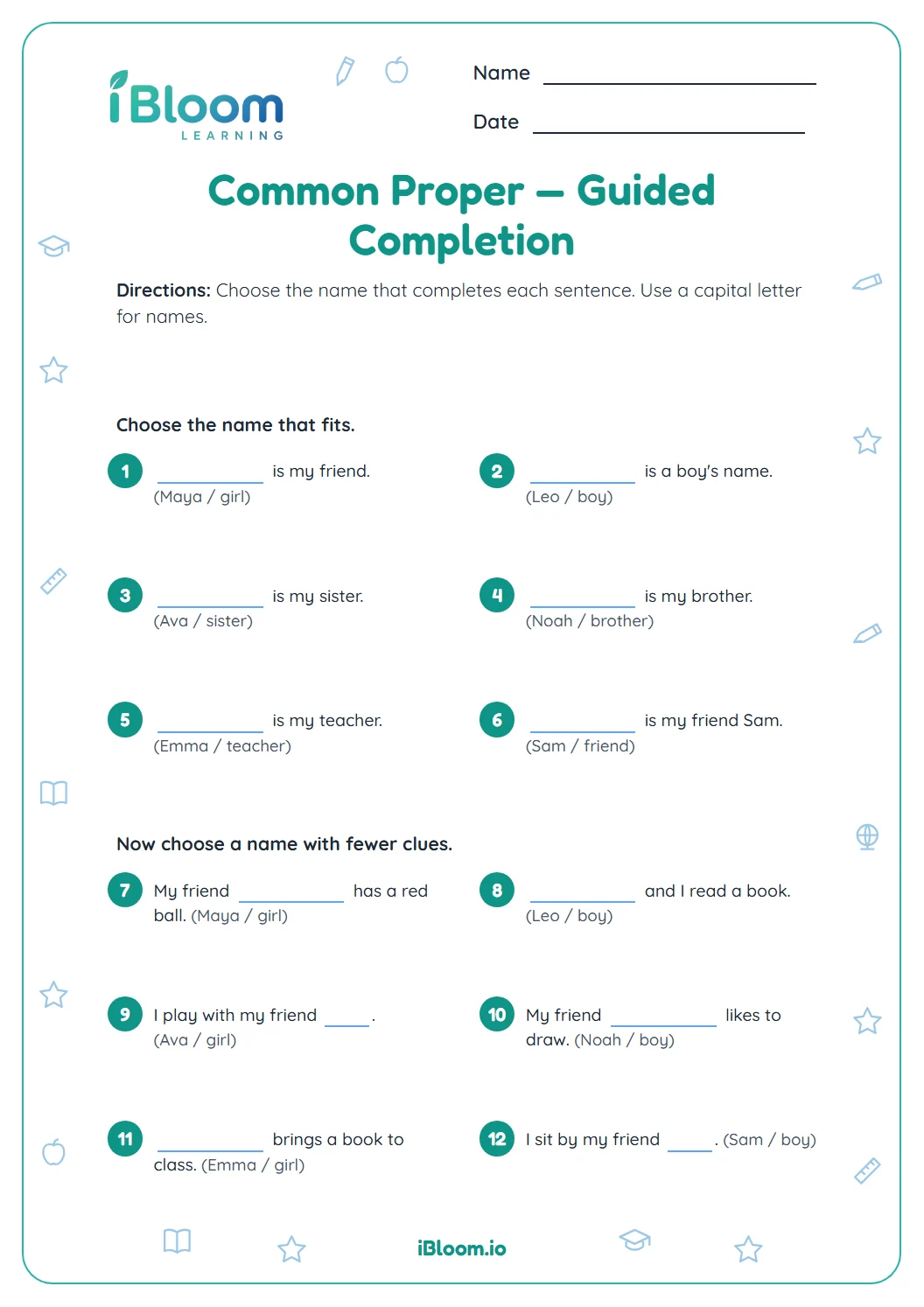
Can you choose the correct name?
Choose the correctly capitalized person or place name in each sentence.
A particular person or place takes capitals; a general family word does not by itself.
- 1___ is my cousin. (lily / Lily) → Lily
How to use this worksheet
- 1Read the whole sentence before deciding which letters need capitals.
- 2Capitalize the first word of each sentence as well as a person’s name.
- 3For a place, capitalize each word that belongs to its proper name.
- 4Capitalize the day name Monday; days of the week are names.
- 5Finish all three parts, then use the key to check each correction.
Common mistakes and quick fixes
The mistake
Capitalizing a name but leaving the sentence’s first word lowercase.
The fix
Check both the first word and every proper name.
The mistake
Writing “mr.” without a capital or leaving “lee” lowercase.
The fix
Write the title and surname as “Mr. Lee.”
The mistake
Capitalizing a general word such as “park” as if it named one place.
The fix
Capitalize the specific name, as in “Lake Erie,” not a general place word.
Common Core alignment
This page practices L.1.2.a through its printed questions.
Capitalize dates and names of people.
On this sheet: The questions ask students to apply proper noun capitals directly.
Show the official wordingHide the official wording
Capitalize dates and names of people.
What to practice next
Make more practice
Further reading
Questions parents and teachers ask
What does this Grade 1 worksheet practice?
This page practices capital letters at the start of sentences and in names of people, days, and specific places. It has 16 items in three parts: corrected sentences, rewriting names, and choosing a correctly capitalized name in context. A separate answer key is included.
How should my child use the answer key?
The key gives the expected corrected sentence or name for all 16 items. Have your child finish a part first, then compare capitalization one word at a time; for example, check both “Mr.” and “Lee” in a title and surname.
How can I help if an answer is wrong?
If a correction is incomplete, reread the full sentence and look for its first word and any person or place name. In “Ben lives near Lake Erie,” both Ben and Lake Erie need capitals, while “lives” and “near” do not.
Can this page be used for independent practice?
Yes. Each part begins with a short direction, and the questions use familiar names and places. A child can complete a part independently, then review the answer key with an adult to explain why each capital belongs. For example, the names in Part C show capitals within complete sentences.
How long should the worksheet take?
Allow about 20 minutes to work through all 16 questions and check the key. The worksheet is two pages, so it can also be completed one page at a time if the student wants a pause between parts.