
About this worksheet
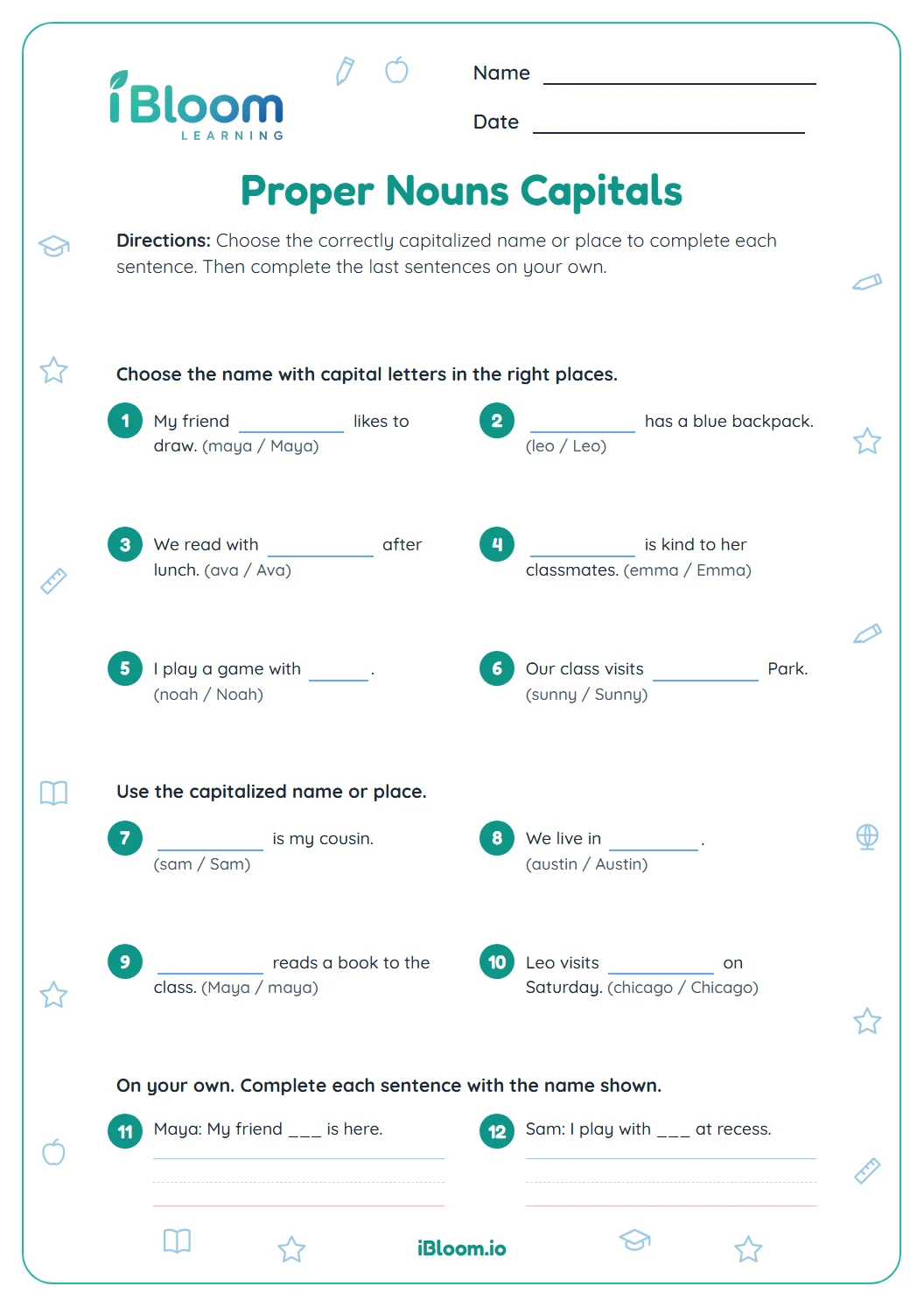
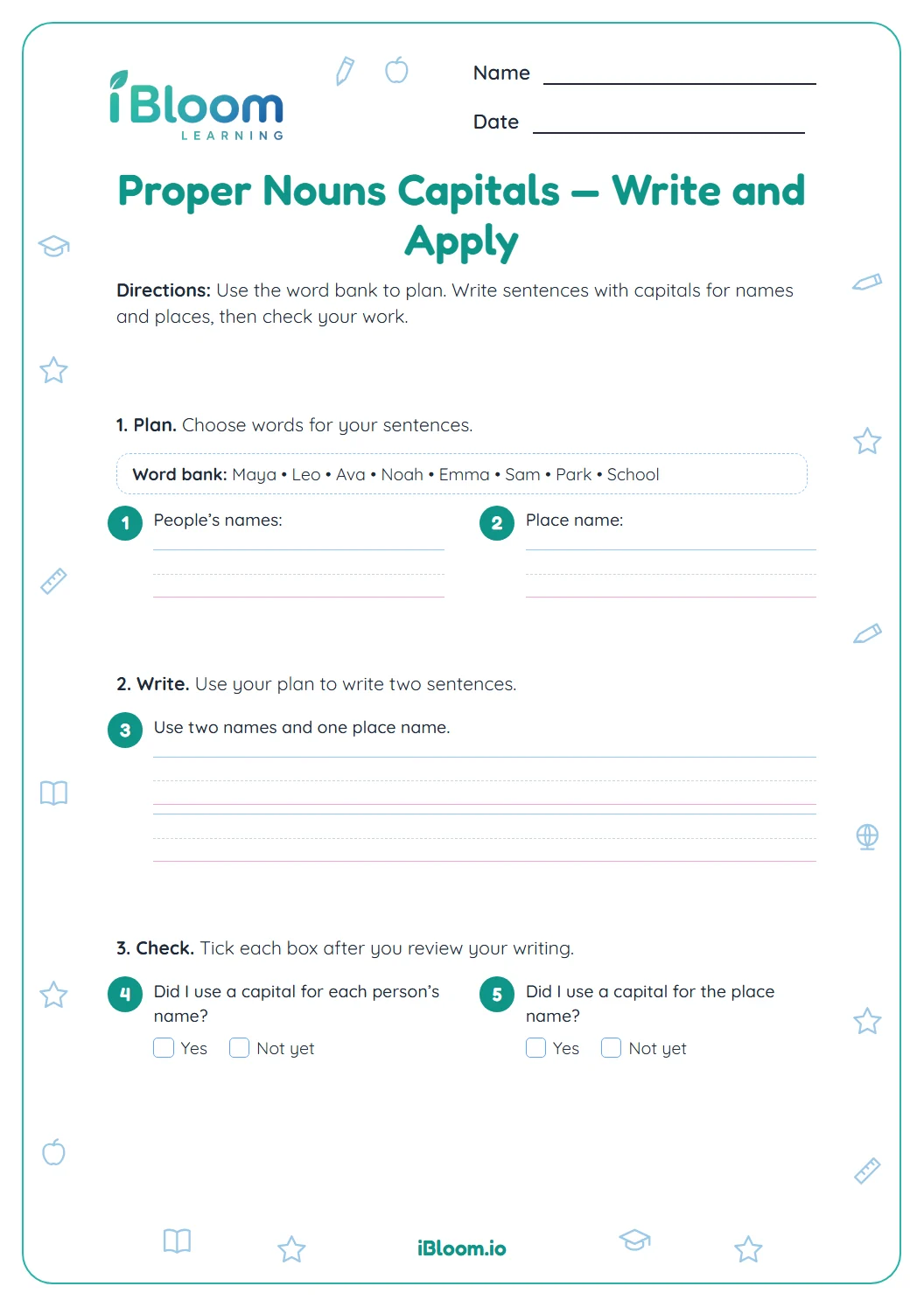
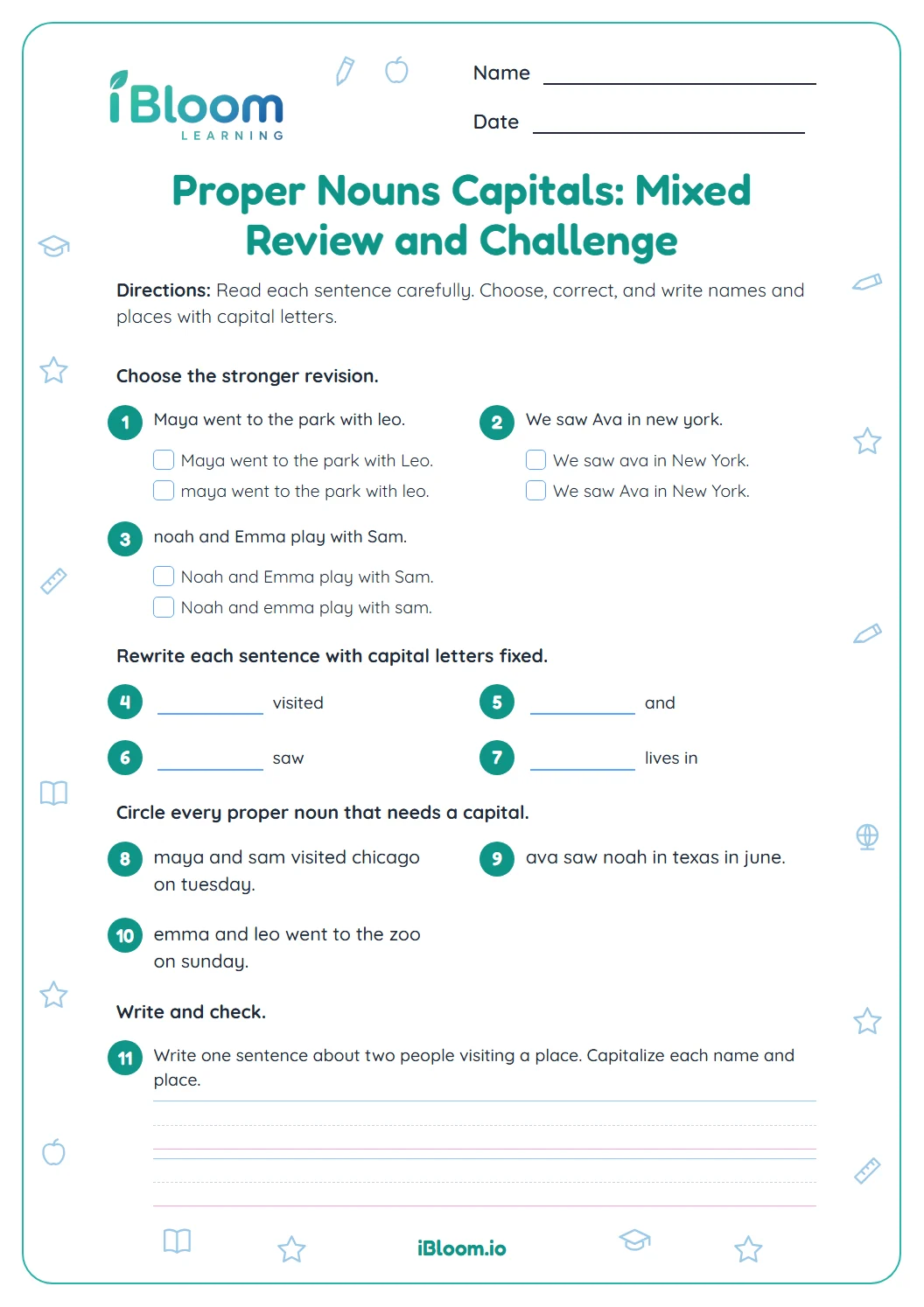
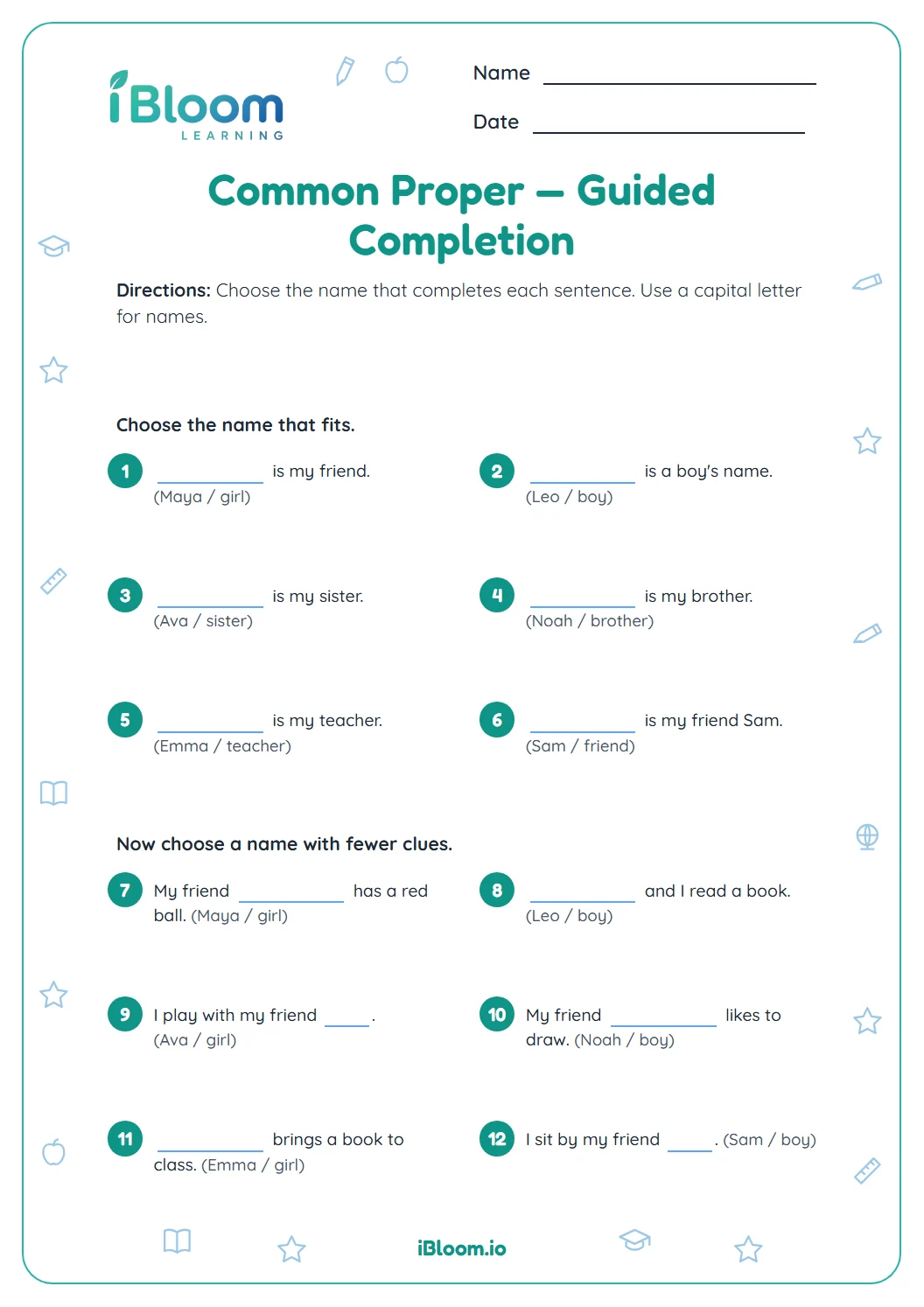
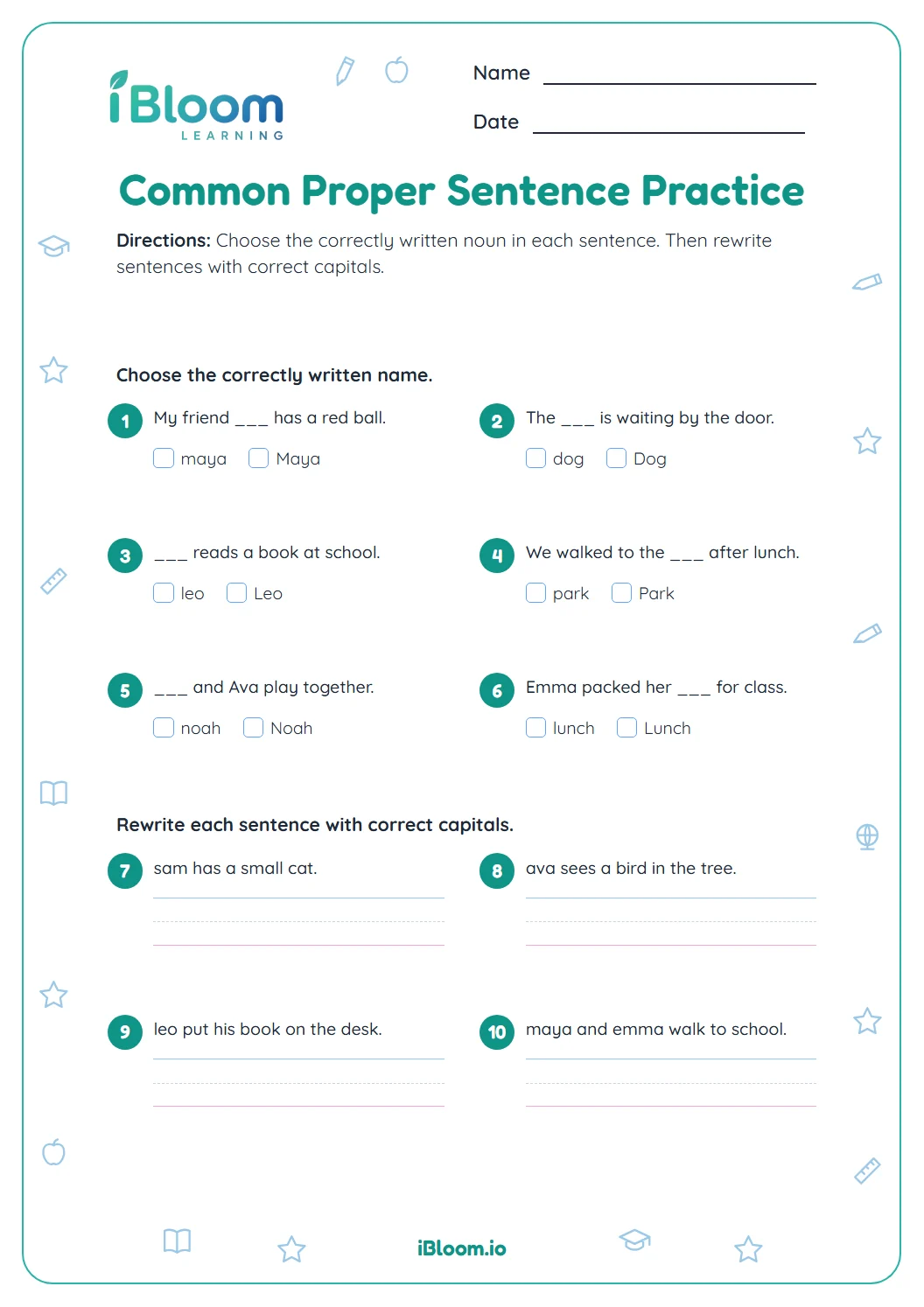
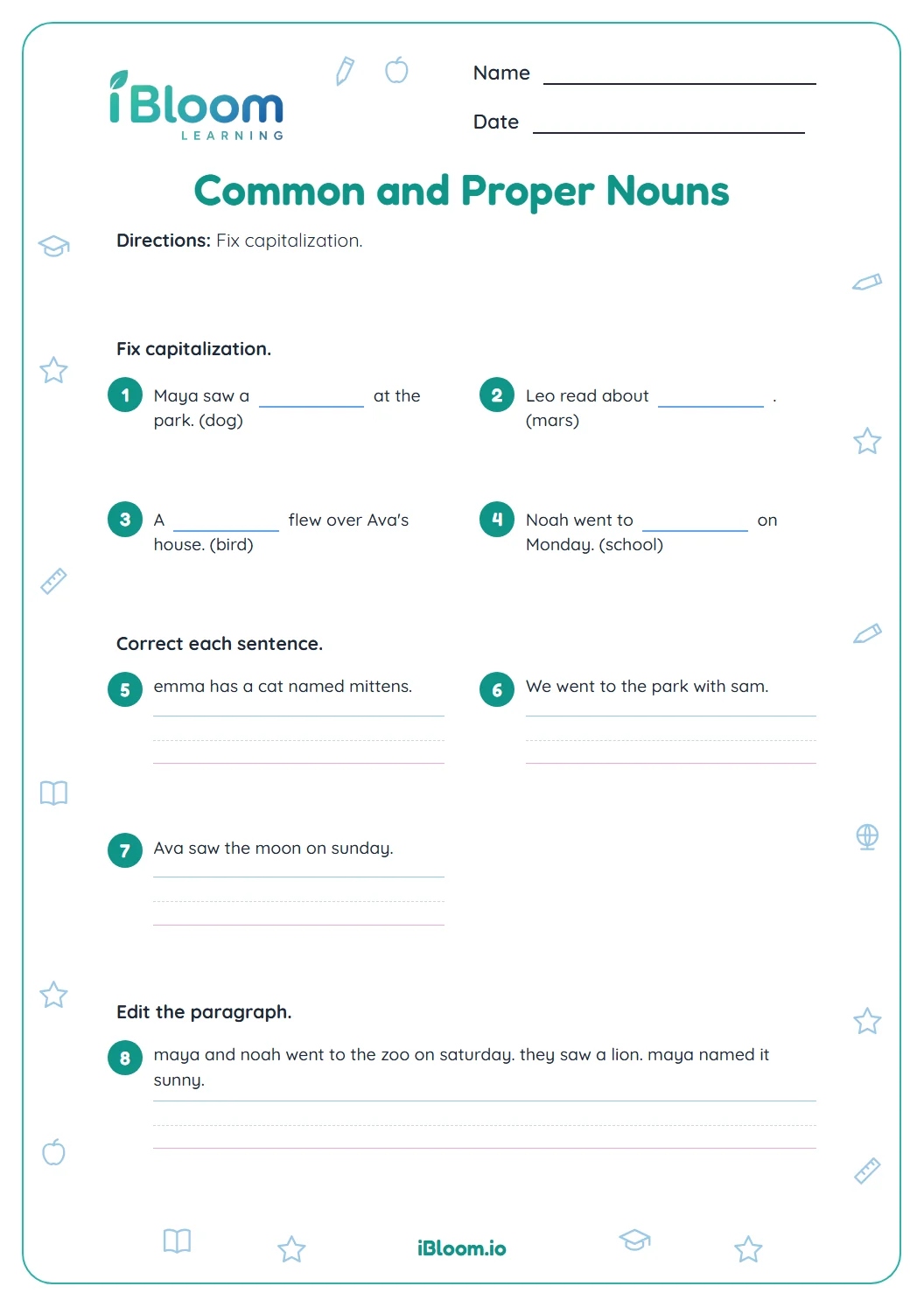
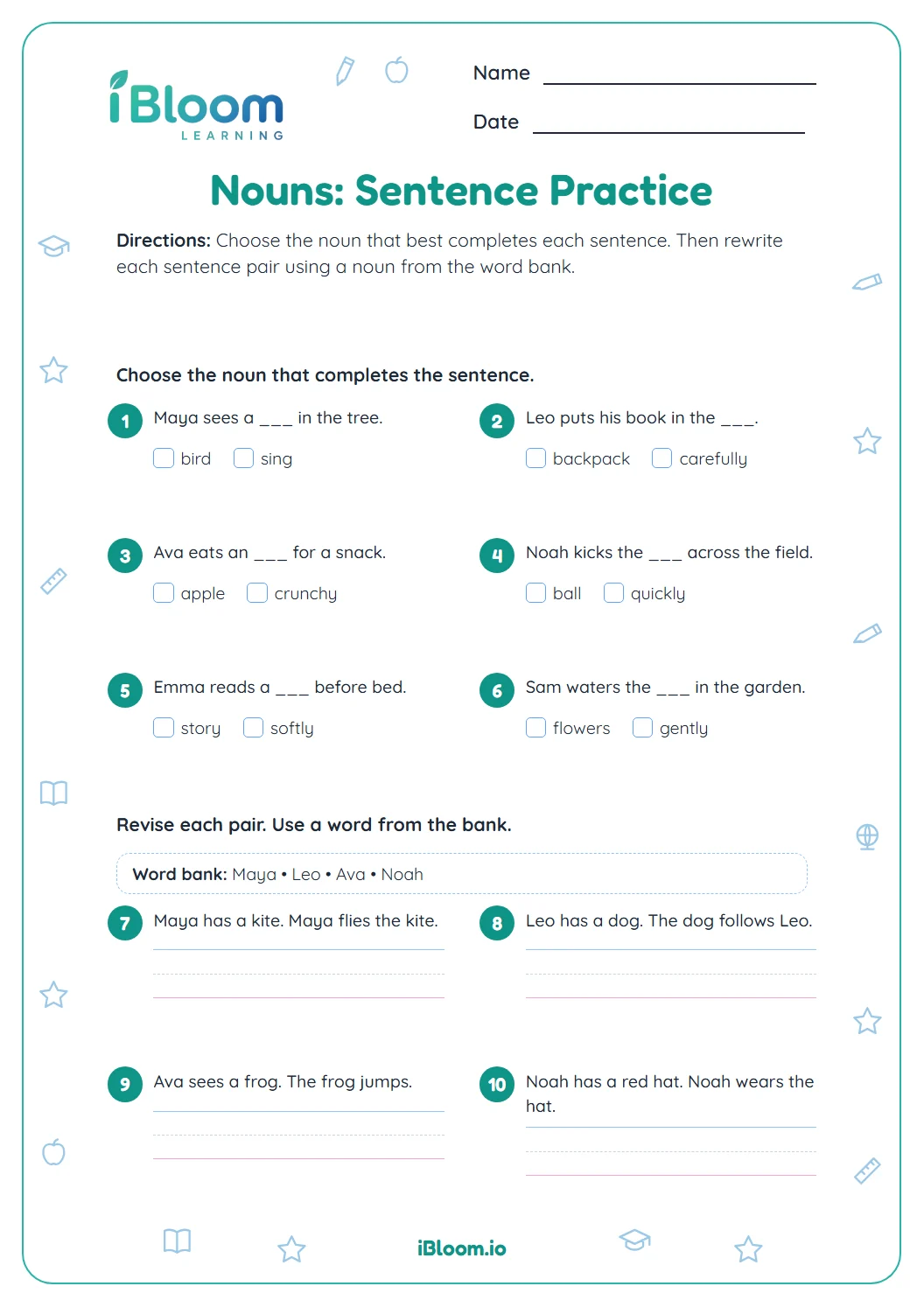
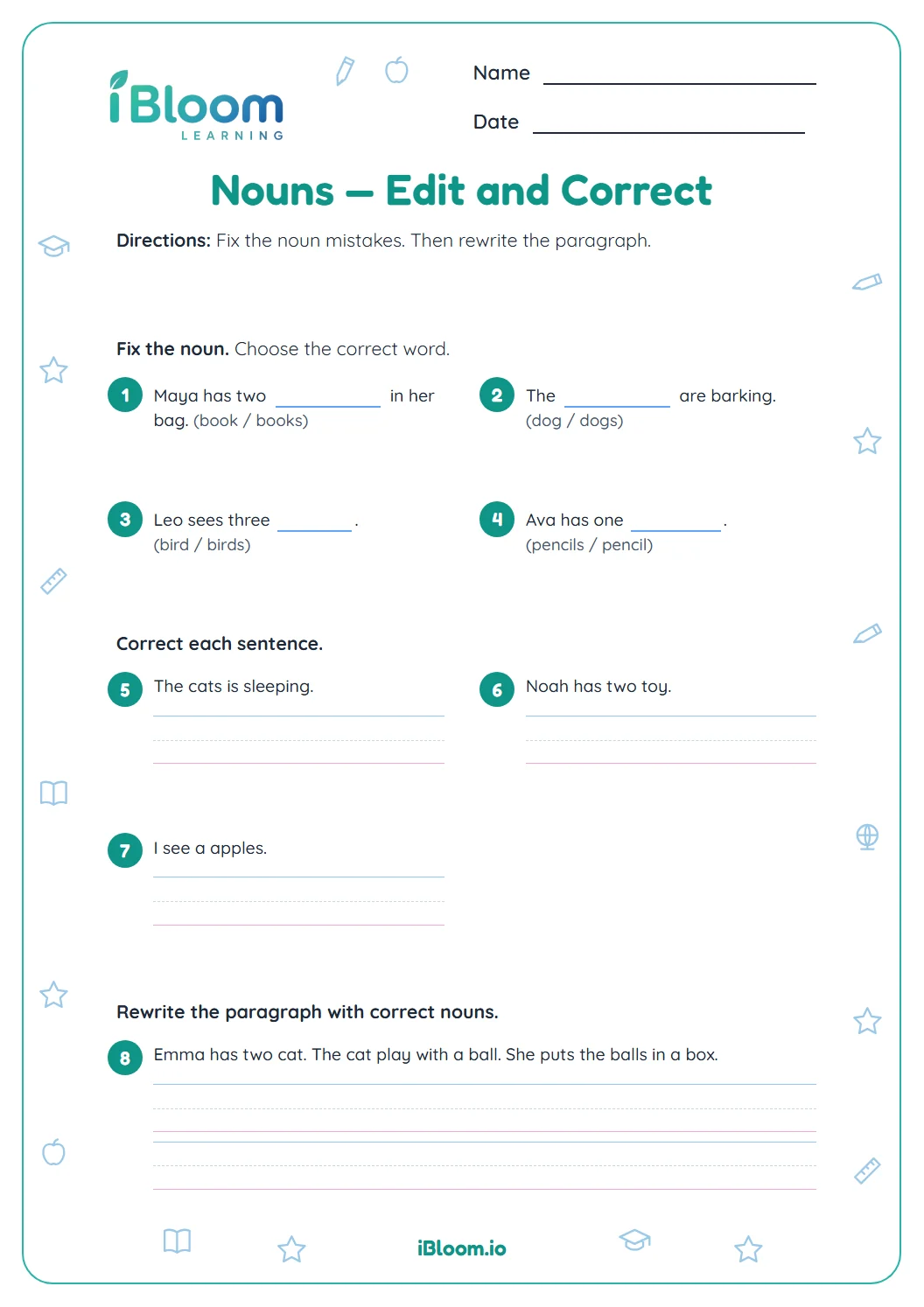
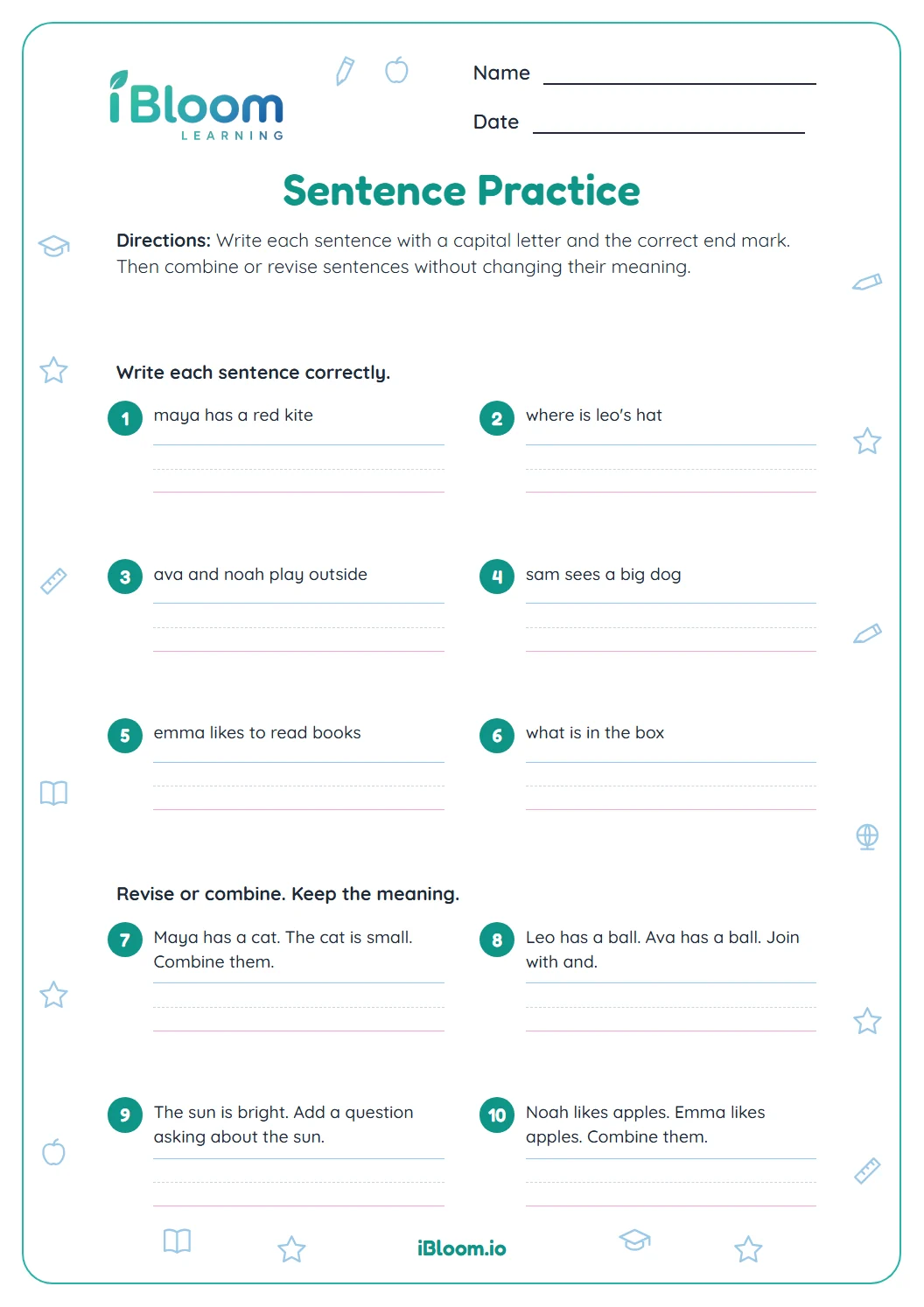
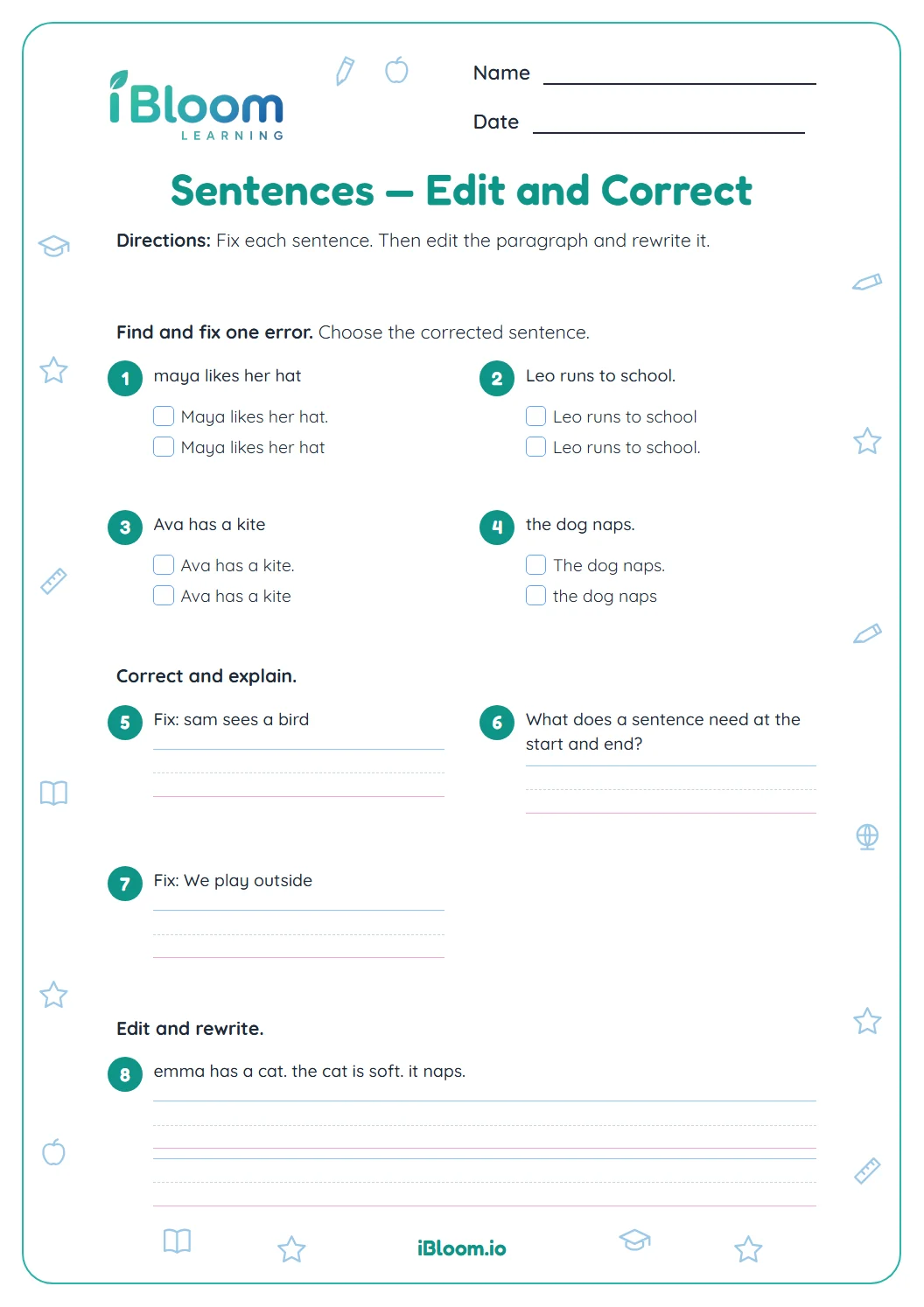
This Grade 1 printable has 8 questions finding people’s names and 8 sentence edits. Children identify proper nouns, then capitalize sentence beginnings, names, weekdays, and months. The separate key shows each name and a corrected sentence.
Aligned to L.1.2.a
What makes a word a proper noun?
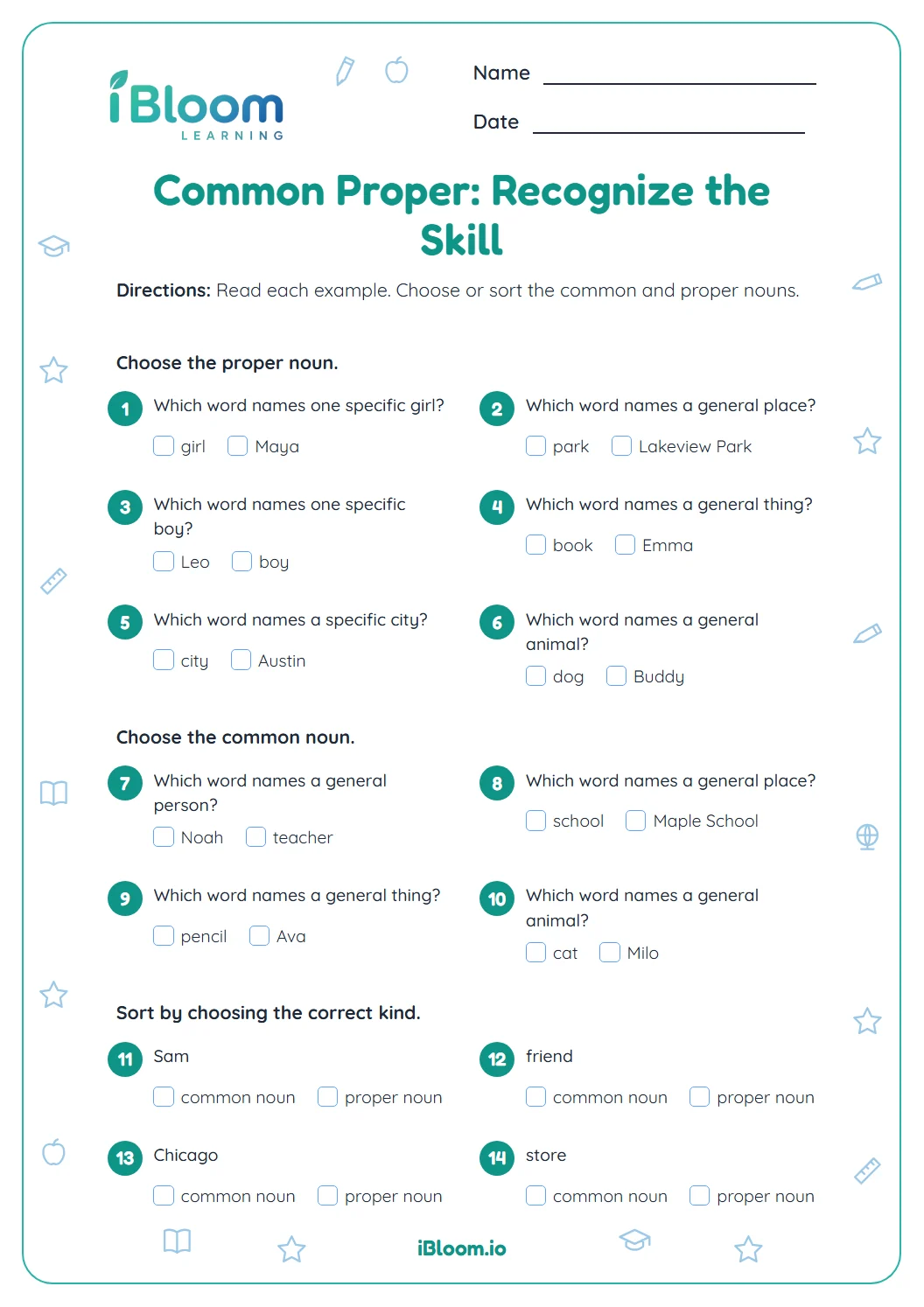
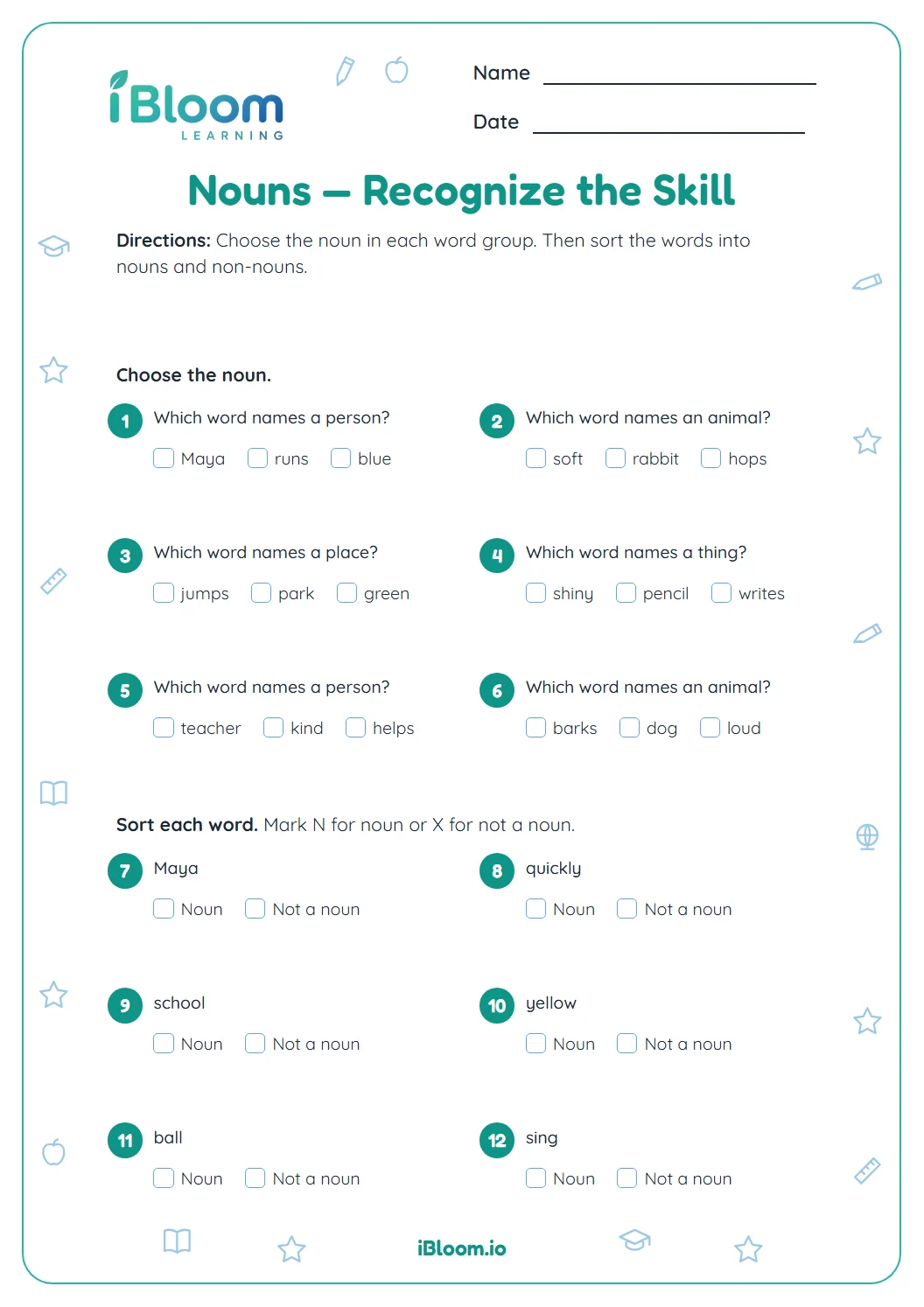
A proper noun gives the specific name of a person. “Mia” identifies one person; “kite” is a general noun.
- 1“Mia has a red kite.” → Mia is the proper noun.
Which date words should begin with capitals?
Part B includes names, weekdays, and months. General nouns stay lowercase.
- 1“we will see ben in june.” → “We will see Ben in June.”
How can a child check a sentence edit?
Part B has six short sentence edits. Scan the first word, each person’s name, and every weekday or month.
- 1“we will see ben in june.” → “We will see Ben in June.”
How to use this worksheet
- 1Read the Part A direction and do one item together.
- 2Ask who is named, then underline that person.
- 3Say each Part B sentence aloud before editing it.
- 4Check the first word, names, weekdays, and months.
Common mistakes and quick fixes
The mistake
Underlining “park” because it names a place.
The fix
Ask whether it names a particular person or a general place; park is a common noun.
The mistake
Capitalizing every noun, including general words like kite.
The fix
Capitalize names and date words, but leave general naming words lowercase.
The mistake
Capitalizing a month but leaving its weekday lowercase.
The fix
Check each weekday and month separately; both need capitals.
Curriculum alignment
This page practices the skill described in the listed standard.
Capitalize people’s names and date words in the sentence edits.
On this sheet: Capitalize people’s names and date words in the sentence edits.
Show the official wordingHide the official wording
Capitalize dates and names of people.
What to practice next
Make more practice
Further reading
Questions parents and teachers ask
How can a child spot a proper noun?
A proper noun names a particular person, day, or month. In Part A, children find names such as Mia or Sam among general nouns such as kite and park. A proper noun begins with a capital letter. Ask the child to point to the exact word or phrase in the sentence that supports the answer before checking the key.
Which words need capitals in Part B?
Capitalize the first word, people’s names, weekdays, and months. General nouns such as library, kite, and cousin stay lowercase unless they begin a sentence. Read the rewritten sentence aloud and scan for each category. Ask the child to point to the exact word or phrase in the sentence that supports the answer before checking the key.
Why rewrite the whole sentence?
Rewriting practices both the first capital and proper nouns inside the sentence. It also gives the child a full answer to compare with the key. Copy the words carefully while changing the capitalization that is needed. Ask the child to point to the exact word or phrase in the sentence that supports the answer before checking the key.
Are weekdays and months capitalized?
Yes. Weekdays such as Monday and Friday and months such as June and April begin with capitals in English. The worksheet includes both so children practice noticing date words in complete sentences. Ask the child to point to the exact word or phrase in the sentence that supports the answer before checking the key.
How can I help without giving the answers?
Ask whether a word names one particular person or is a general word. For Part B, invite your child to check the sentence start, people’s names, weekdays, and months separately, then compare the finished sentence with the key. Ask the child to point to the exact word or phrase in the sentence that supports the answer before checking the key.