


About this worksheet
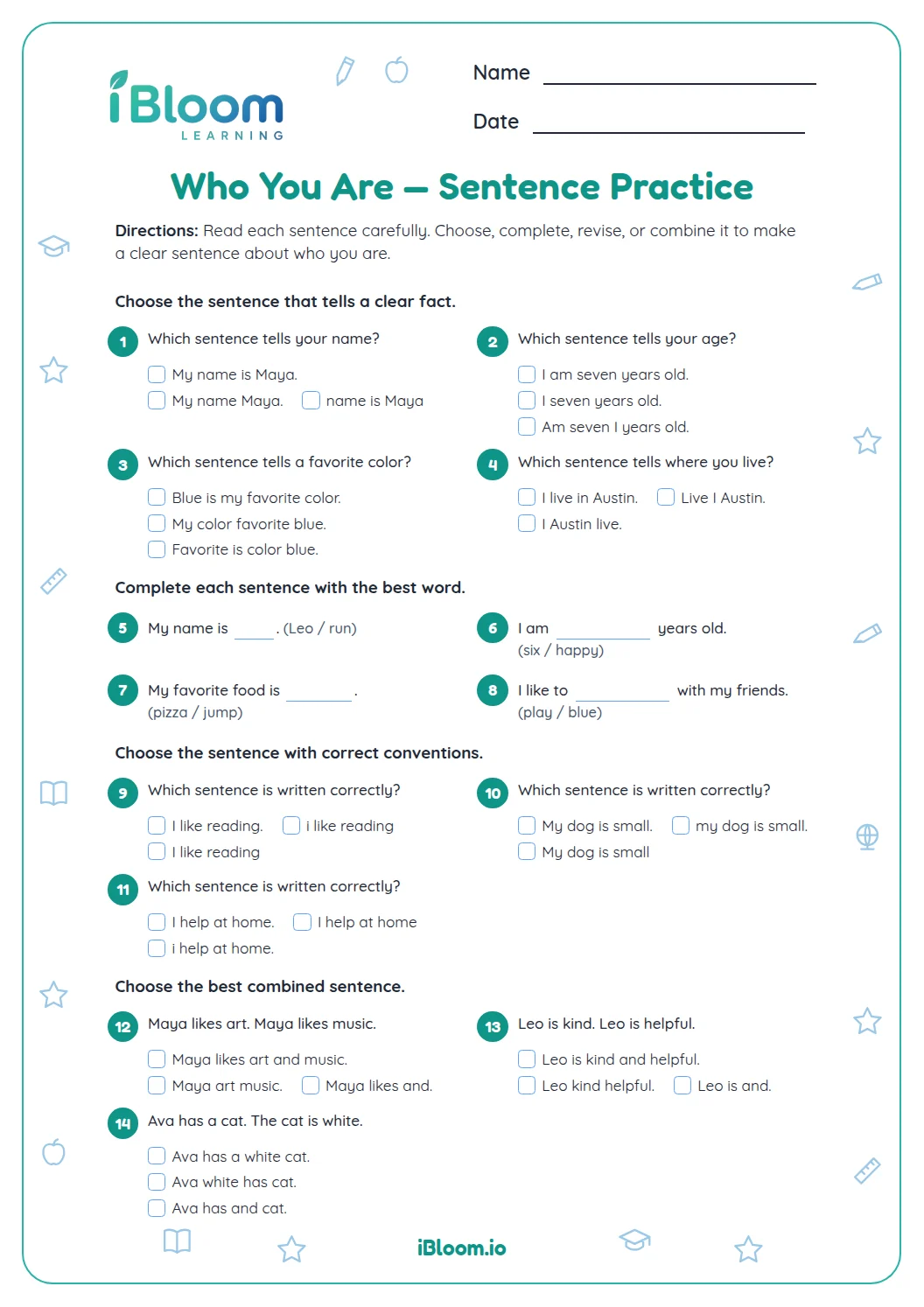
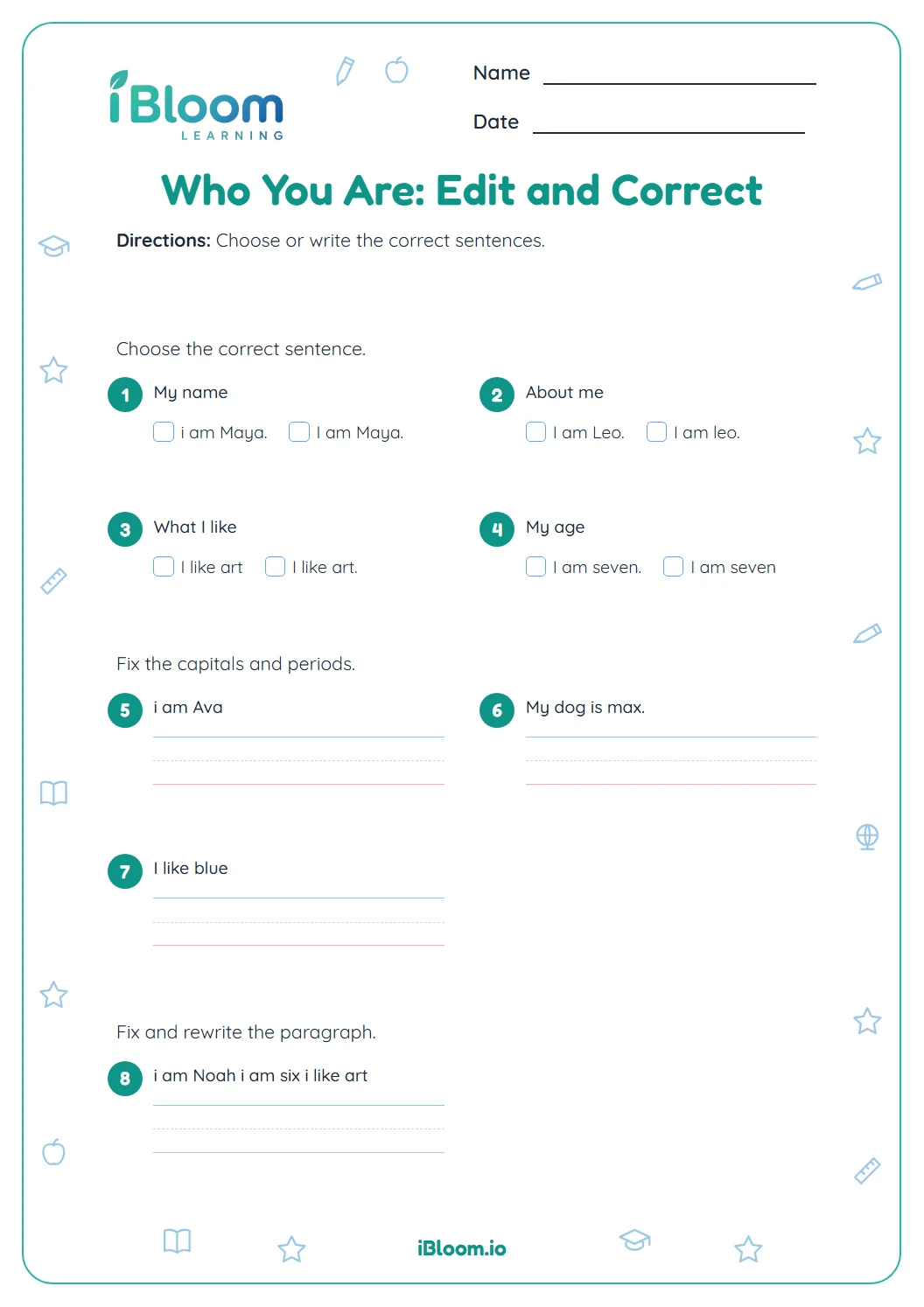
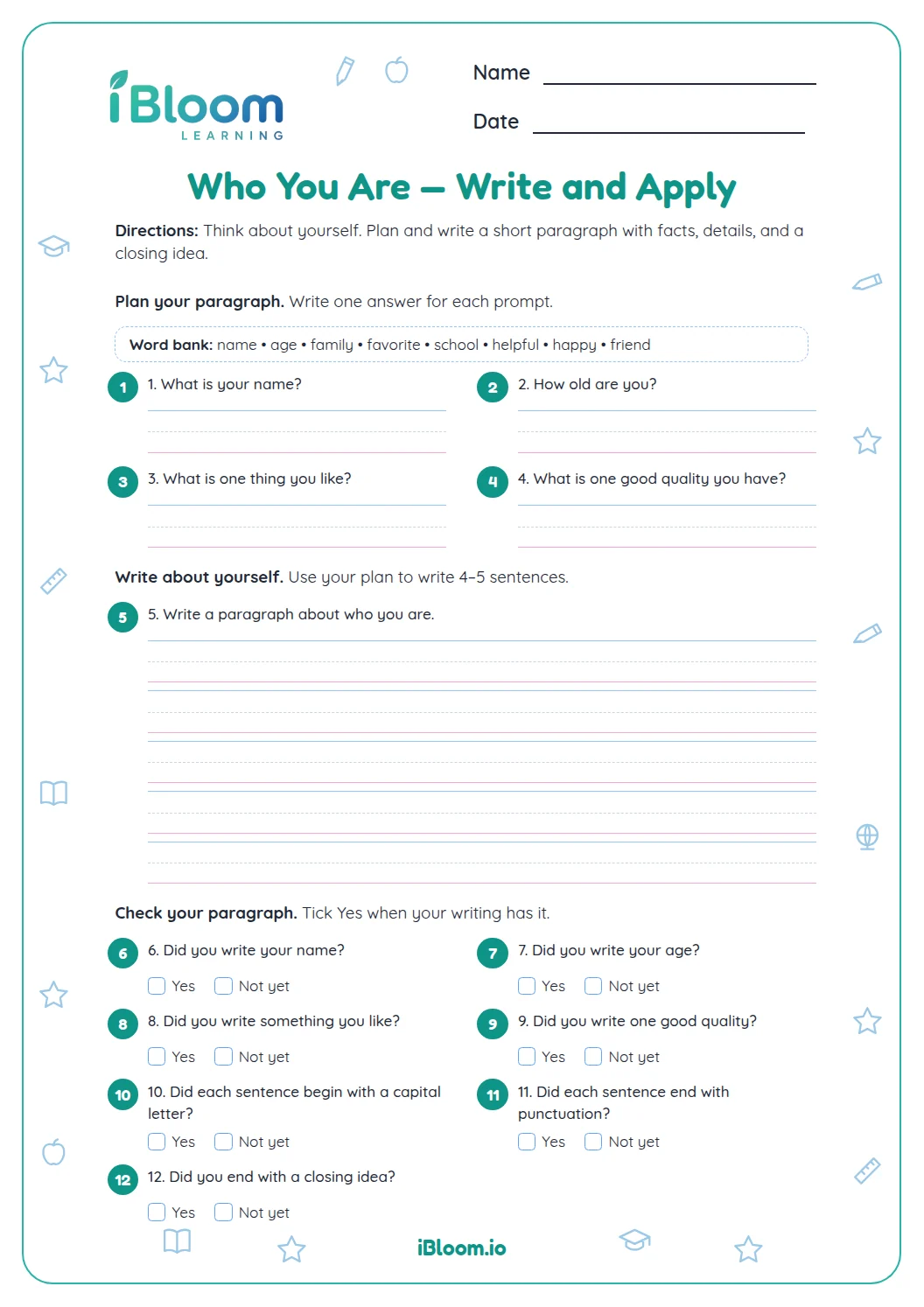
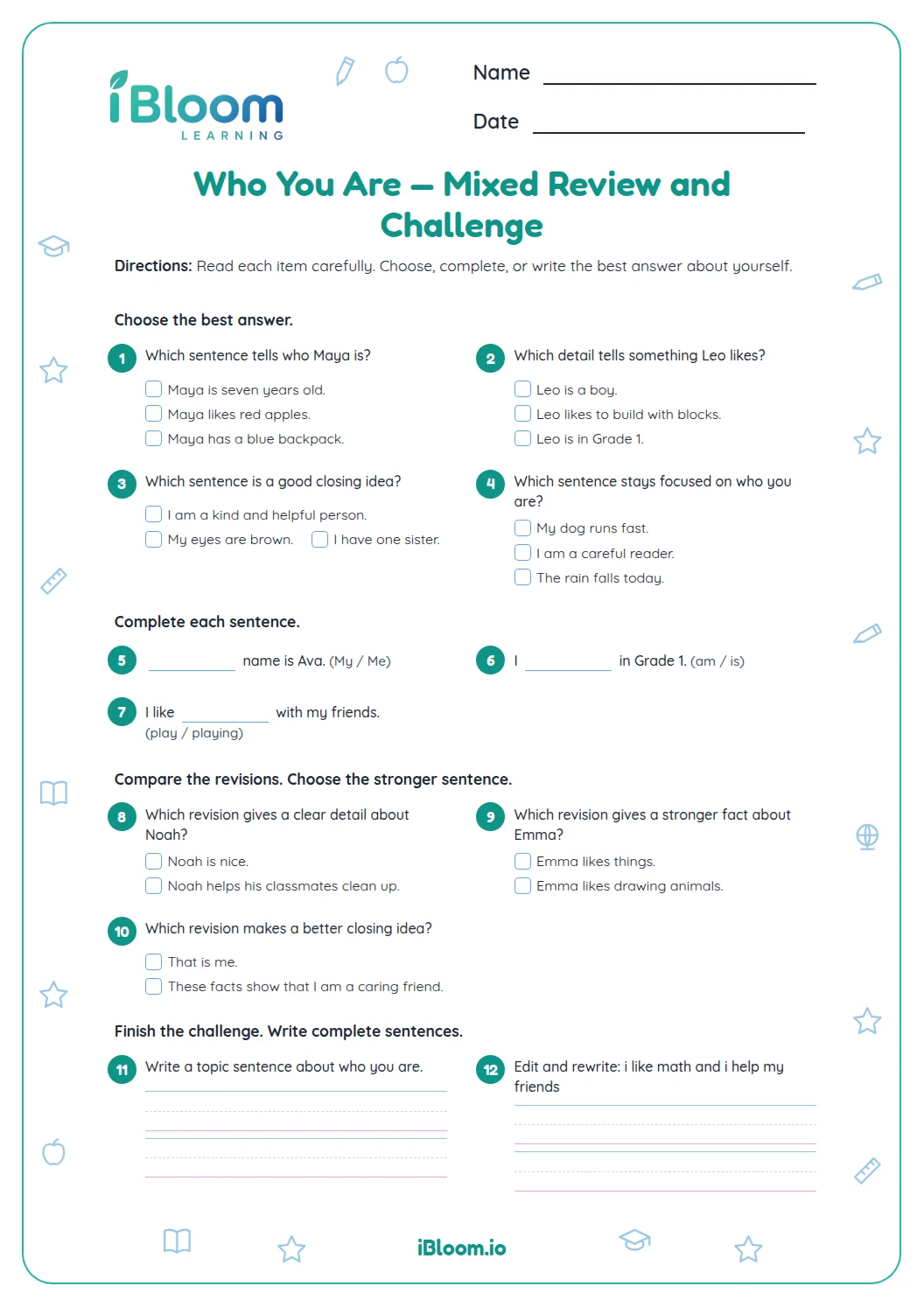
This Grade 1 printable introduces informative writing with a short model paragraph about Nia and 16 recognition questions. Children identify a topic, choose related facts, and recognize closure in simple personal writing. A separate answer key supports review.
What is informative writing?
An informative paragraph tells a reader about a topic. It names the topic, adds facts or details, and may finish with a sentence that brings the ideas to a close. The examples here focus on simple information about a child.
Students can notice the job each sentence does: introduce the topic, give a related detail, or wrap up the paragraph.
How can a detail support the topic?
A detail should tell the reader more about the same subject. For a paragraph about a person, age, family, interests, and helpful actions can all add information. A sentence that suddenly describes an unrelated animal or meal does not support the topic.
- 1Topic: “I am a good helper.”
- 2Detail choice: “I put away the books.”
- 3This action shows one way the writer helps.
- 4Choose the detail that develops the topic.
What will children do on this sheet?
The opening model introduces Nia with a topic and details. Then 16 choices ask students to recognize informative sentences, select details that stay on topic, and notice possible endings and order.
How to use this worksheet
- 1Read the model paragraph aloud.
- 2Name its topic in a few words.
- 3For each choice, ask whether it tells information.
- 4Check that a detail stays with the same topic.
- 5Use the key and explain one answer together.
Common mistakes and quick fixes
The mistake
Choosing a sentence because it is exciting, even if it changes the topic.
The fix
Ask whether the sentence gives information about the stated topic.
The mistake
Treating every true sentence as a supporting detail.
The fix
Check that the detail tells more about this paragraph’s subject.
The mistake
Ending without a closing idea.
The fix
Try a final sentence that gathers or wraps up the details.
What to practice next
Make more practice
Further reading
Questions parents and teachers ask
What is an informative paragraph?
An informative paragraph names a topic and gives facts or details about it. It can end with a sentence that wraps up the ideas. The passage about Nia models those parts, and the questions ask students to recognize them in other short examples.
What does “who you are” mean on this worksheet?
It means sharing a few true details about yourself, such as your age, family, interests, or ways you help. Children recognize which sentences give information and which details belong together in a paragraph about a person. The model paragraph shows one simple example of sharing personal facts.
Can I read the questions aloud?
Yes. An adult can read the short choices aloud while the student listens for information, a related detail, or an ending. This keeps the task focused on recognizing paragraph parts and lets early readers participate without needing to decode every choice independently. Pause after each item and ask which words helped.
How many questions are included?
There are 16 multiple-choice questions in three parts, plus a short model paragraph at the start. The questions move from recognizing informative sentences to choosing related details and checking how paragraph parts fit together. The separate key lists the correct choices.
What is a supporting detail?
A supporting detail gives more information about the paragraph topic. If the topic is being a helpful friend, sharing crayons could be related. A sentence about soup or the weather would shift away from that topic, so it would not support the same idea.
Does this worksheet ask children to write a full paragraph?
The questions focus on recognizing how an informative paragraph works. They use a short model and sentence choices about personal topics, so children can identify a topic, useful facts, and a closing idea before they write a longer paragraph of their own.