

About this worksheet
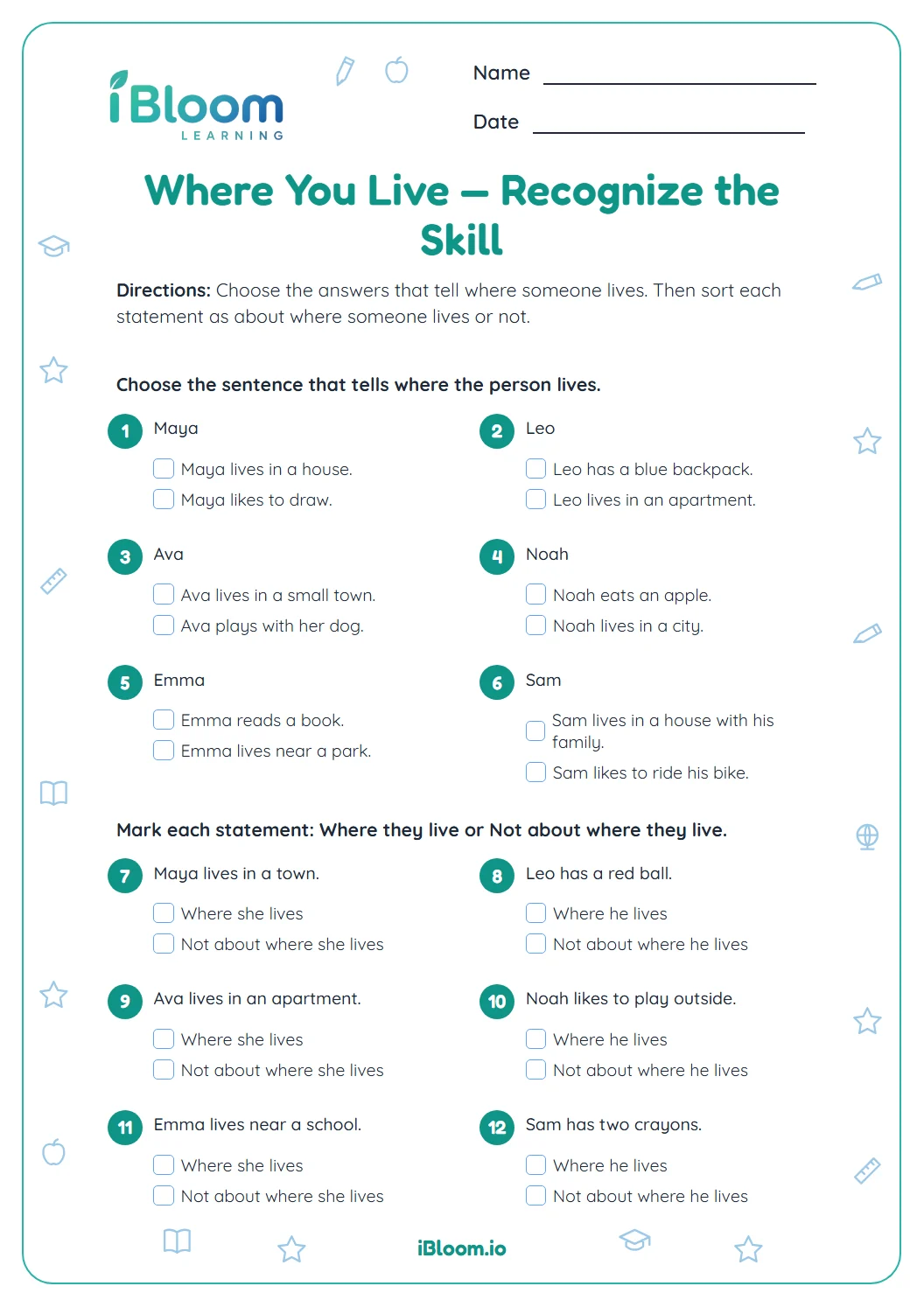
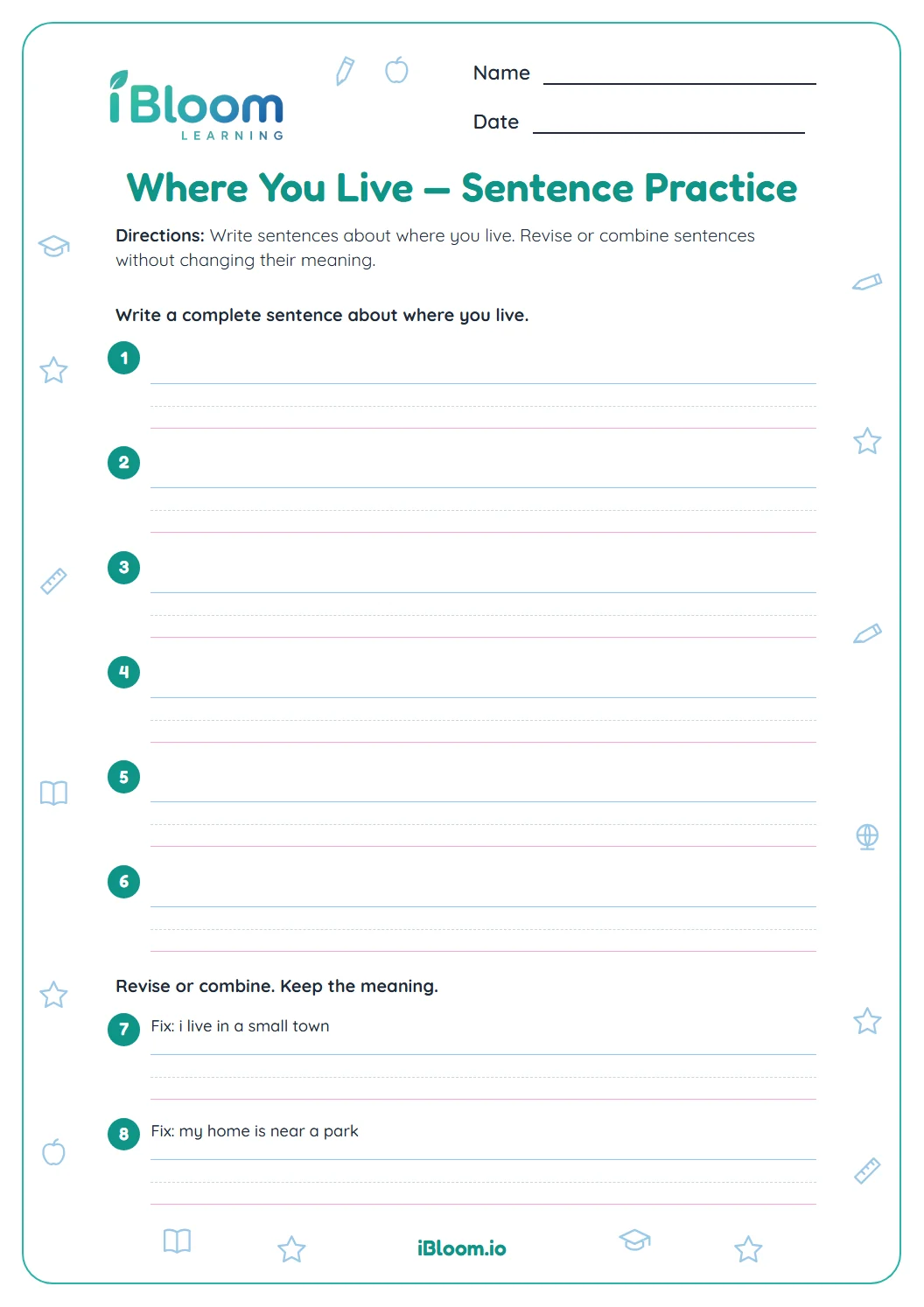
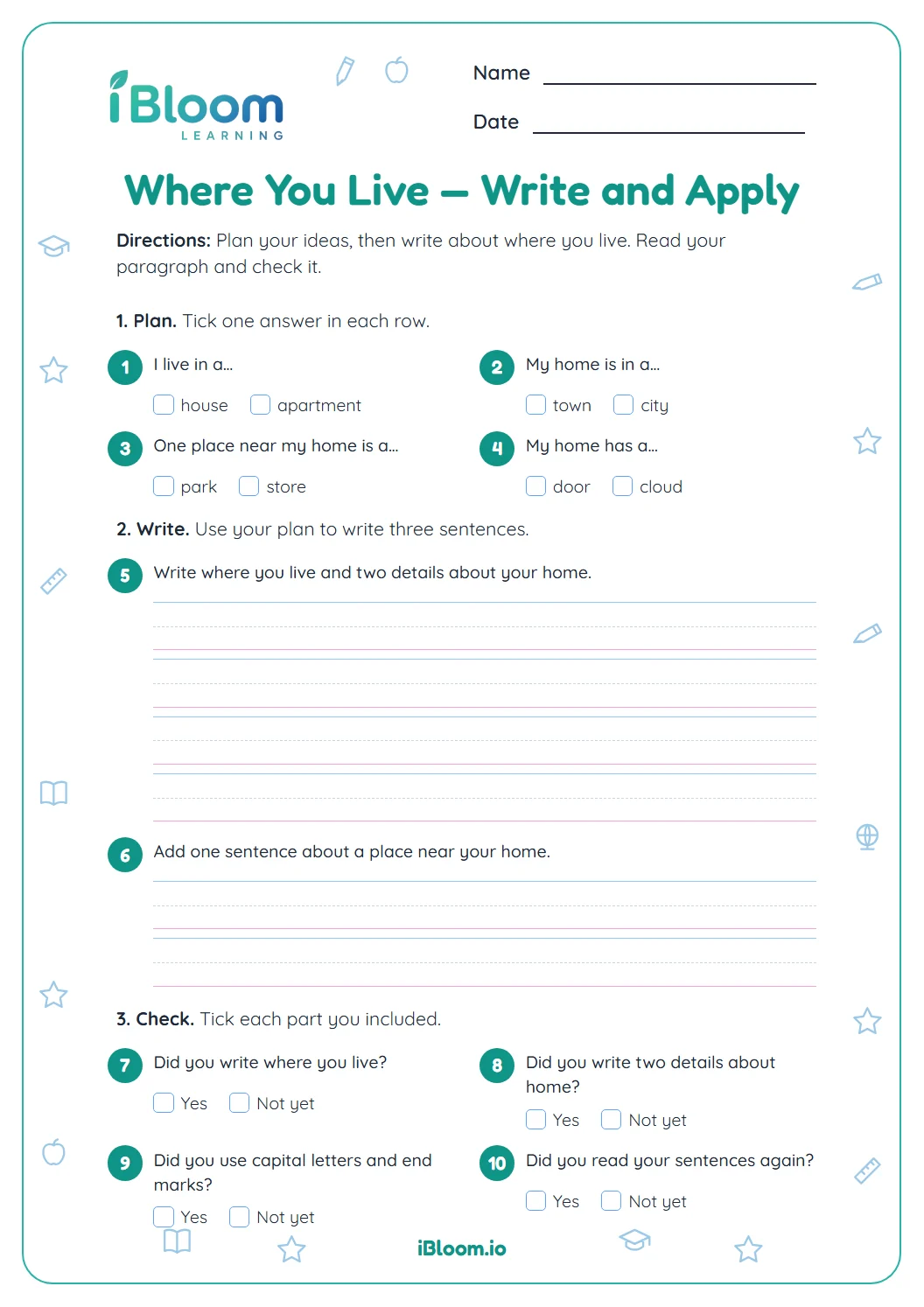
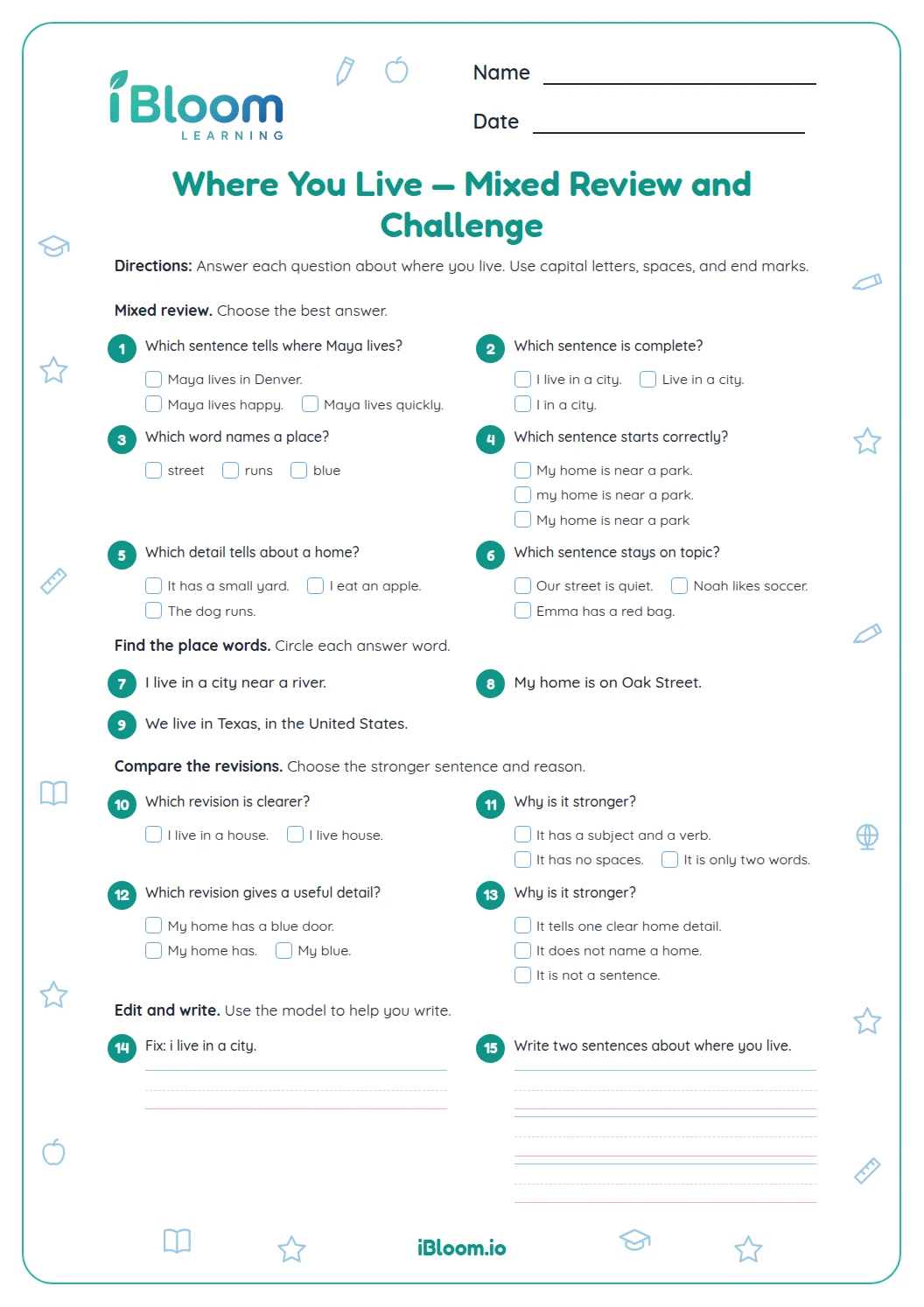
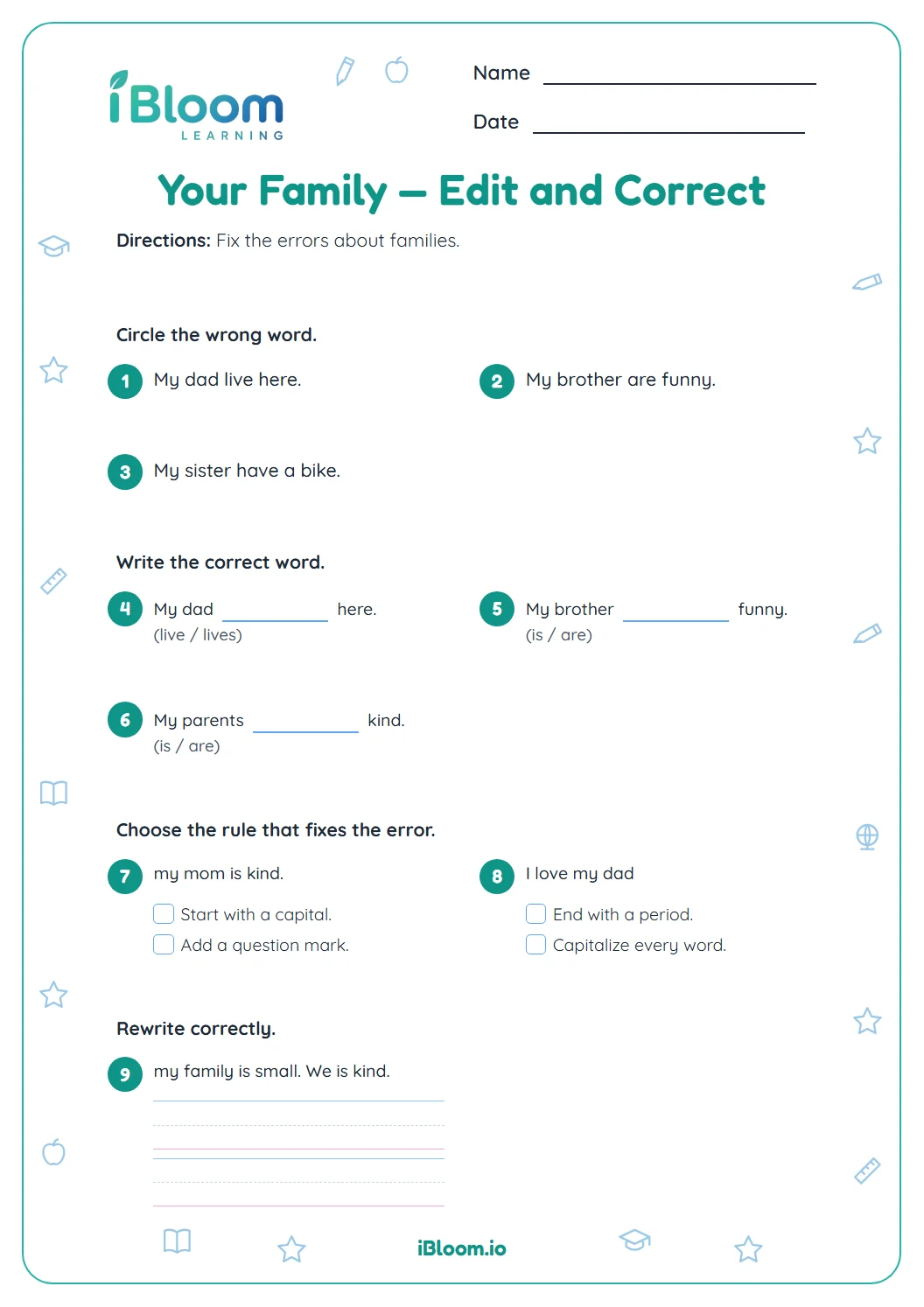
This Grade 1 printable pairs a short neighborhood paragraph with 14 editing questions. Learners practice sentence capitals, proper-name capitals, and ending punctuation while rereading details about a home, park, and library. The separate answer key lists the corrections and passage answers.
Aligned to L.1.2
How do you edit the neighborhood sentences?
Read each sentence aloud and check its first letter, names, and ending mark. Use a capital for the first word and for a street name such as Maple Street. A question asks something and ends with a question mark; a statement ends with a period.
- 1my home is near a small park.
- 2Start the sentence with a capital letter.
- 3My home is near a small park.
What does the paragraph help you practice?
The passage, “A Place to Call Home,” describes a home near a street, park, and library. Part A asks learners to choose correct capitals and punctuation. Part B asks them to correct short sentences and find a passage detail.
How can an adult support a first edit?
Read the sentence once as written and once after the learner’s correction. Ask where a reader hears a pause or a question, and have the learner point to the capitalized first word or name. Use the passage to check that details such as the street name are copied accurately.
How to use this worksheet
- 1Read the passage once to learn the neighborhood details.
- 2For each sentence, check the first word and any proper name.
- 3Read the ending to choose a period or question mark.
- 4Rewrite corrections with spaces between words and a clear ending mark.
- 5Use the passage and answer key to review the responses.
Common mistakes and quick fixes
The mistake
Leaving the first word lowercase.
The fix
Point to the first word and check that it begins with a capital.
The mistake
Capitalizing a common place word instead of the name.
The fix
Capitalize both words in the proper name Maple Street; keep words such as park lowercase.
The mistake
Using a period after a question.
The fix
Read the sentence to decide whether it asks something; use ? for a question.
Common Core alignment
This printable practices the standard below through focused questions.
Use capitals, ending punctuation, and spelling conventions when writing.
On this sheet: The editing prompts focus on capitals and ending punctuation.
Show the official wordingHide the official wording
Demonstrate command of the conventions of standard English capitalization, punctuation, and spelling when writing.
What to practice next
Make more practice
Further reading
Questions parents and teachers ask
How many questions are included?
The worksheet has 14 questions alongside its short passage. Learners choose corrections, rewrite brief sentences, and answer a few questions about the text. It prints on two worksheet pages, followed by a separate answer key for checking.
What does the passage say about where the child lives?
The child lives on Maple Street near a small park with trees and a slide. The passage also mentions a library at the corner. Several questions ask learners to use these details while practicing capitals and punctuation. Learners can reread the passage whenever they need to confirm a detail.
Which words in the street name need capitals?
Both words in the proper name Maple Street begin with capitals. A common word such as street is usually lowercase, but it is capitalized here because it is part of the name. Question 9 asks learners to spot Maple in a sentence where it was written lowercase.
When should a sentence end with a question mark?
Use a question mark when the sentence asks something, such as “Do you like your neighborhood?” A statement that gives information ends with a period. The page includes both kinds, so learners can use the meaning of each sentence to choose the mark.
Is there an answer key?
Yes. A separate answer key gives a correction for each item, including the corrected sentences and passage details. For questions with more than one possible correct way to phrase an answer, compare the learner’s response with the intended convention or detail shown in the key.