




About this worksheet
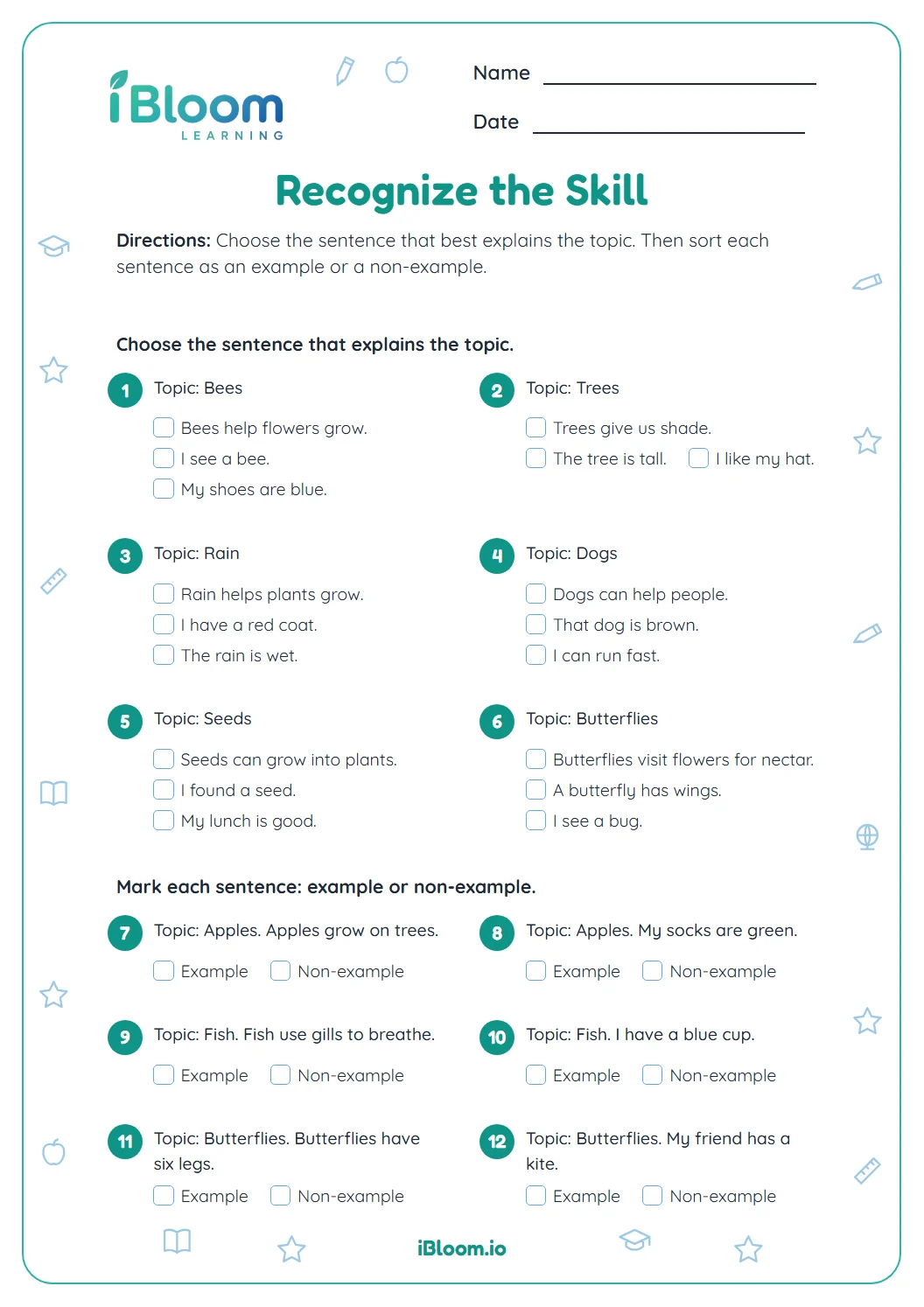
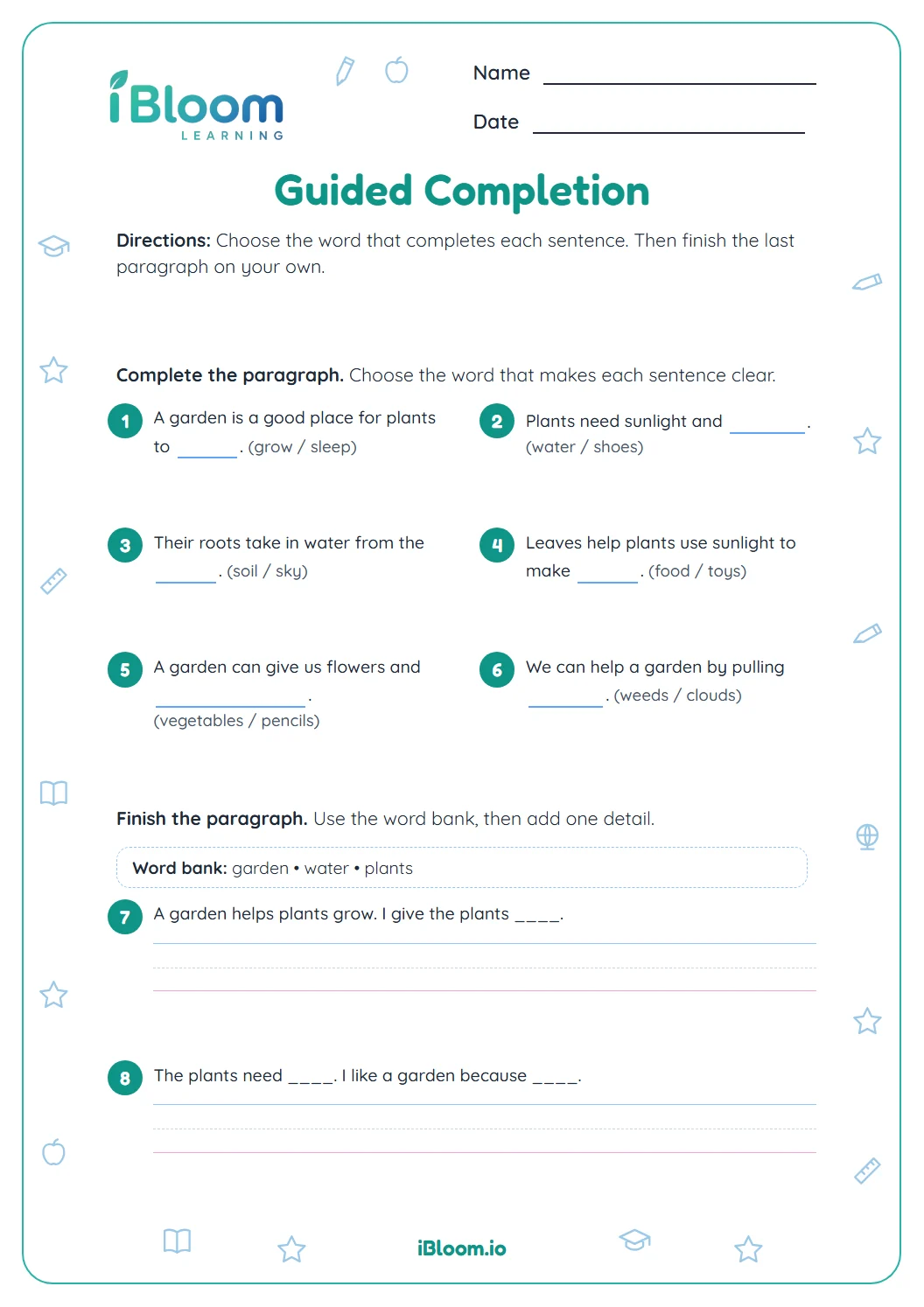
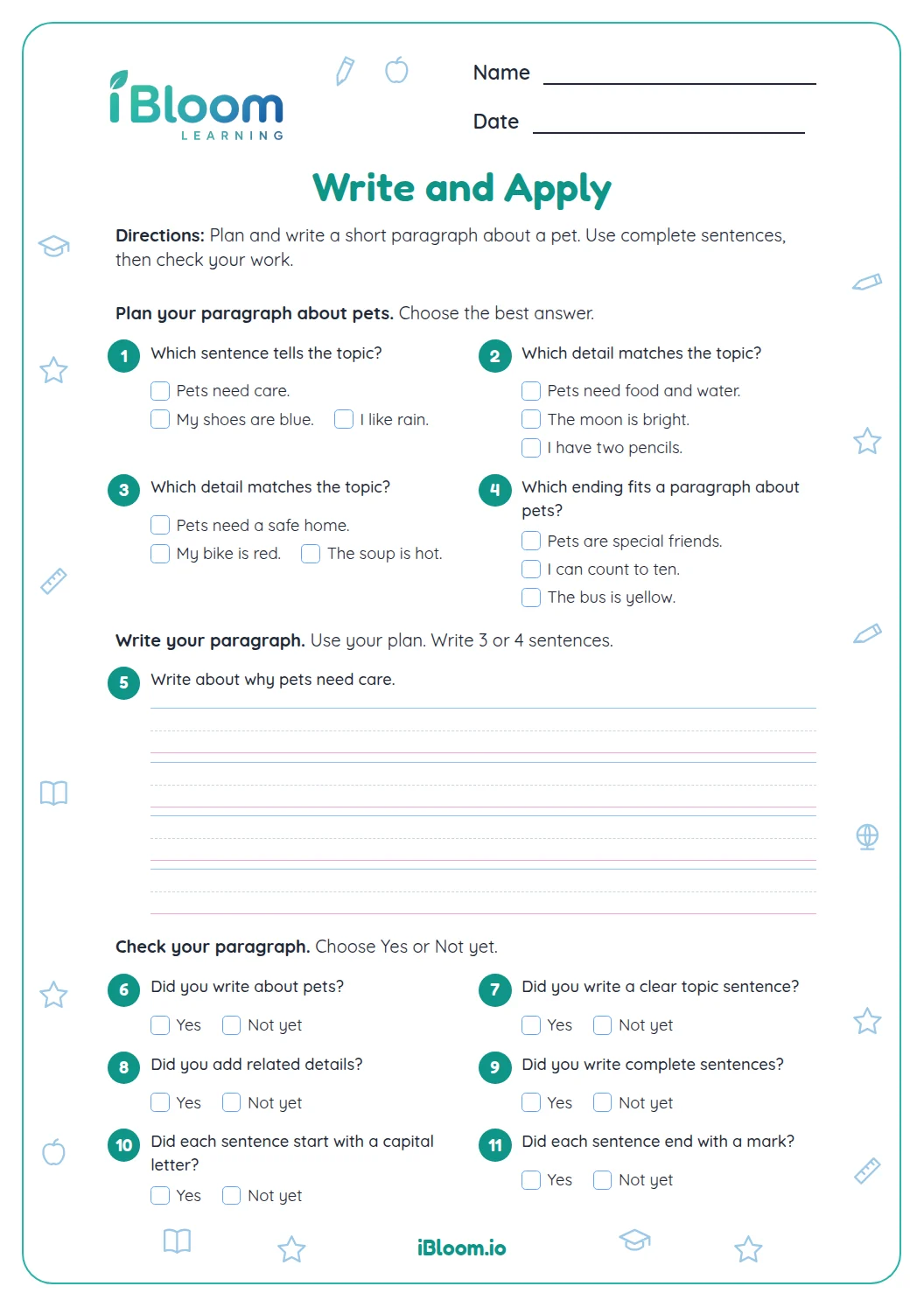
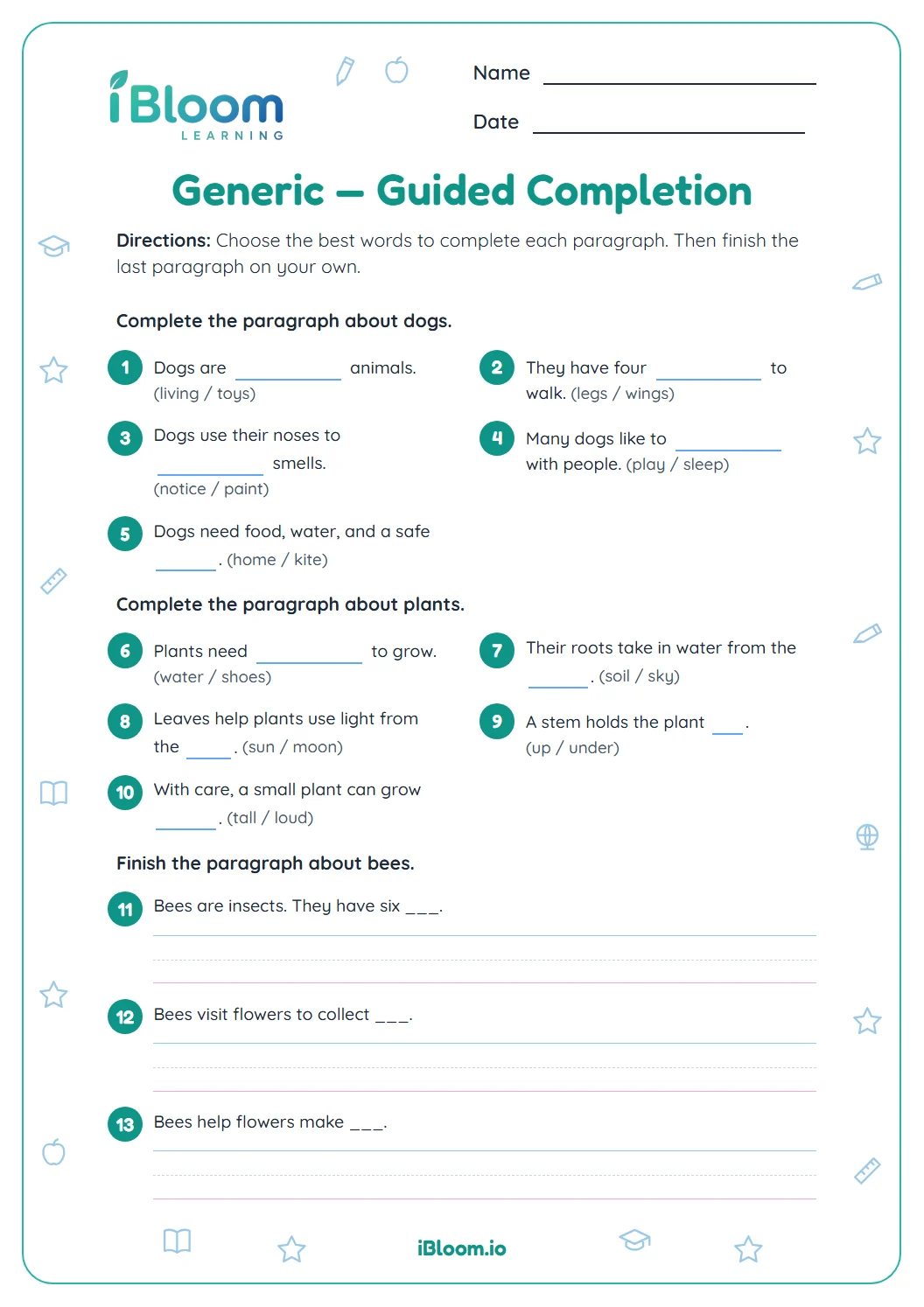
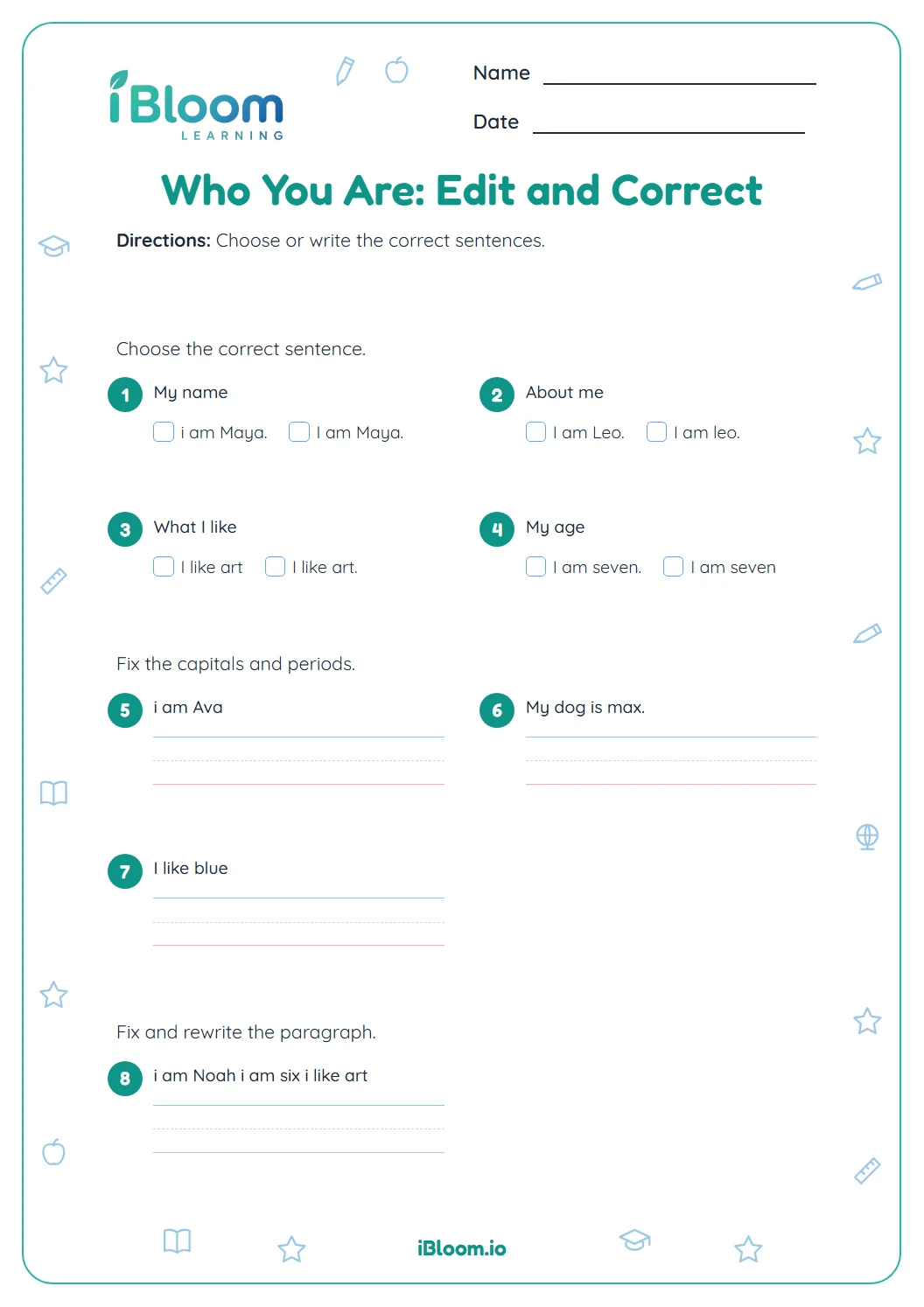
This Grade 1 printable helps children edit sentence conventions and improve simple informational paragraphs. Part A asks them to choose a sentence with correct capitalization and end punctuation. Part B has them fix one error in a sentence. Part C asks them to order sentences or choose relevant facts for a paragraph. The separate answer key provides corrected sentences and sample details. It practices CCSS W.1.5 by focusing writing on a topic and adding details with support.
Aligned to W.1.5
What should a child check when editing?
Start each sentence with a capital letter and finish it with an end mark. Part A compares a sentence with its corrected version. Part B asks children to write a missing mark or corrected sentence.
- 1“my dog is small.” needs a capital M.
- 2Correct sentence: My dog is small.
How do you order paragraph sentences?
Read the sentences and find the one that introduces the topic. Then place the supporting details after it. Part C asks children to build a short paragraph from topic facts.
What makes a useful paragraph detail?
A useful detail adds a true fact about the same topic. In Part C, children add an on-topic detail about a seed or dog and finish a paragraph about rain.
How can I use this worksheet?
- 1Read each sentence aloud to hear where it begins and ends.
- 2Check the first letter for a capital.
- 3Choose or add the punctuation that completes the thought.
- 4For paragraph items, identify the topic and make sure the order or added detail stays with it.
- 5Use the answer key to compare corrections and discuss alternate details.
What mistakes should I watch for?
The mistake
Starting a sentence with a lowercase letter.
The fix
Check the first word after every period and capitalize its first letter.
The mistake
Leaving off a period at the end of a statement.
The fix
Read the sentence aloud and add an end mark when the thought is complete.
The mistake
Adding a detail about a different topic.
The fix
Repeat the paragraph topic and make sure the new fact explains it.
Common Core alignment
The sentence edits and paragraph additions give children practice revising writing with guidance.
With support, revise a topic-focused piece by adding useful details.
On this sheet: Children correct sentence conventions and add or order details that strengthen a simple informational paragraph.
Show the official wordingHide the official wording
With guidance and support from adults, focus on a topic, respond to questions and suggestions from peers, and add details to strengthen writing as needed.
What to practice next
Make more practice
Further reading
Questions parents and teachers ask
What does a child practice on this sheet?
Children edit capitalization and punctuation, correct simple sentences, and organize or add details to short informational paragraphs. The sequence starts with sentence-level edits and moves toward paragraph-level thinking. The final part moves from editing individual sentences to shaping a focused paragraph.
How many questions are included?
There are 14 questions in three parts: six edit choices, four sentence fixes, and four paragraph tasks. The answer key provides the corrected form or a sample response for each item. The answer key gives corrected forms and sample paragraph responses.
What is a good paragraph detail?
A good detail tells the reader more about the paragraph topic. For a paragraph about a dog, a sentence about its food or water fits; a sentence about a sunny day may not. The prompt asks for one true fact that belongs with the topic.
Can a child write a different answer from the key?
Yes. Several prompts ask for an original fact or detail. The key’s sample is one possible response; accept another sentence if it is clear, accurate, and stays on the topic. Keep the response clear, true, and connected to the named topic.
How can I help without giving the answer?
Ask the child to read the sentence aloud and point to its first and last marks. For paragraph prompts, ask what the topic is and whether each sentence gives information about it. For the writing prompts, ask the child to explain how each detail fits.
How long should it take?
Plan for about 20 minutes. The choice questions are brief, while writing and ordering paragraph details take more time. The parts can be completed in separate short sessions. Pause after the sentence edits if the writing section needs more time.