





About this worksheet
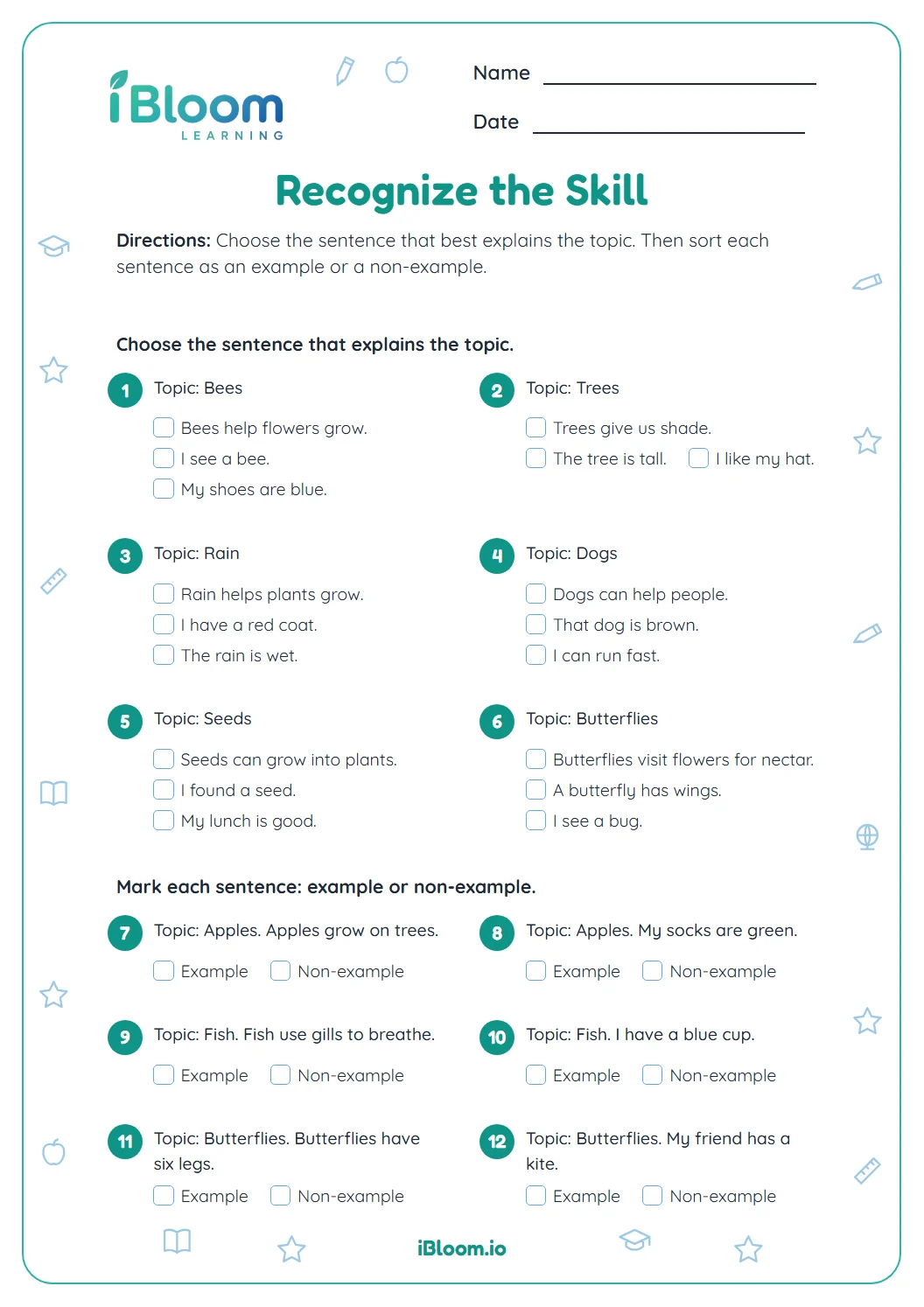
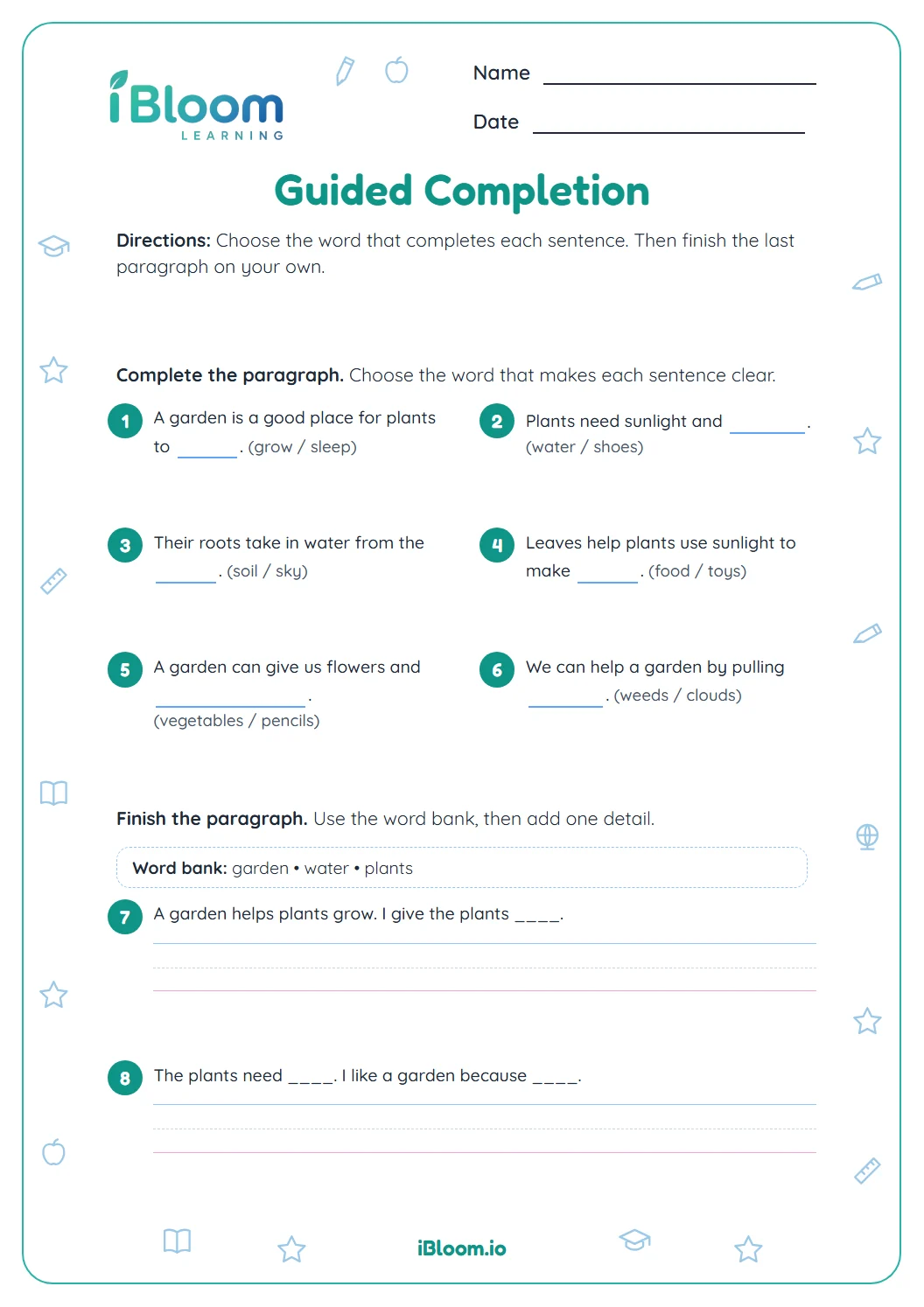
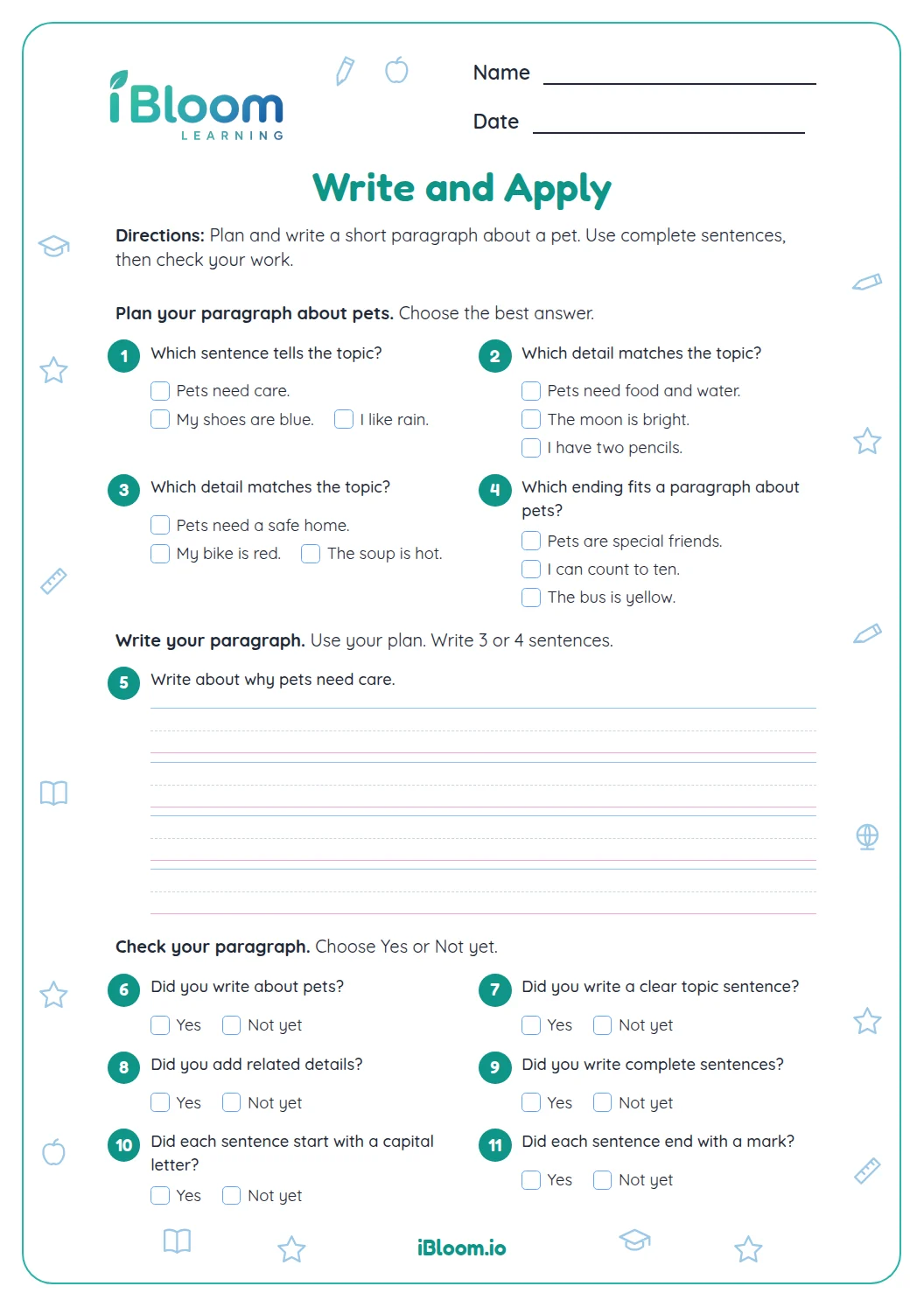
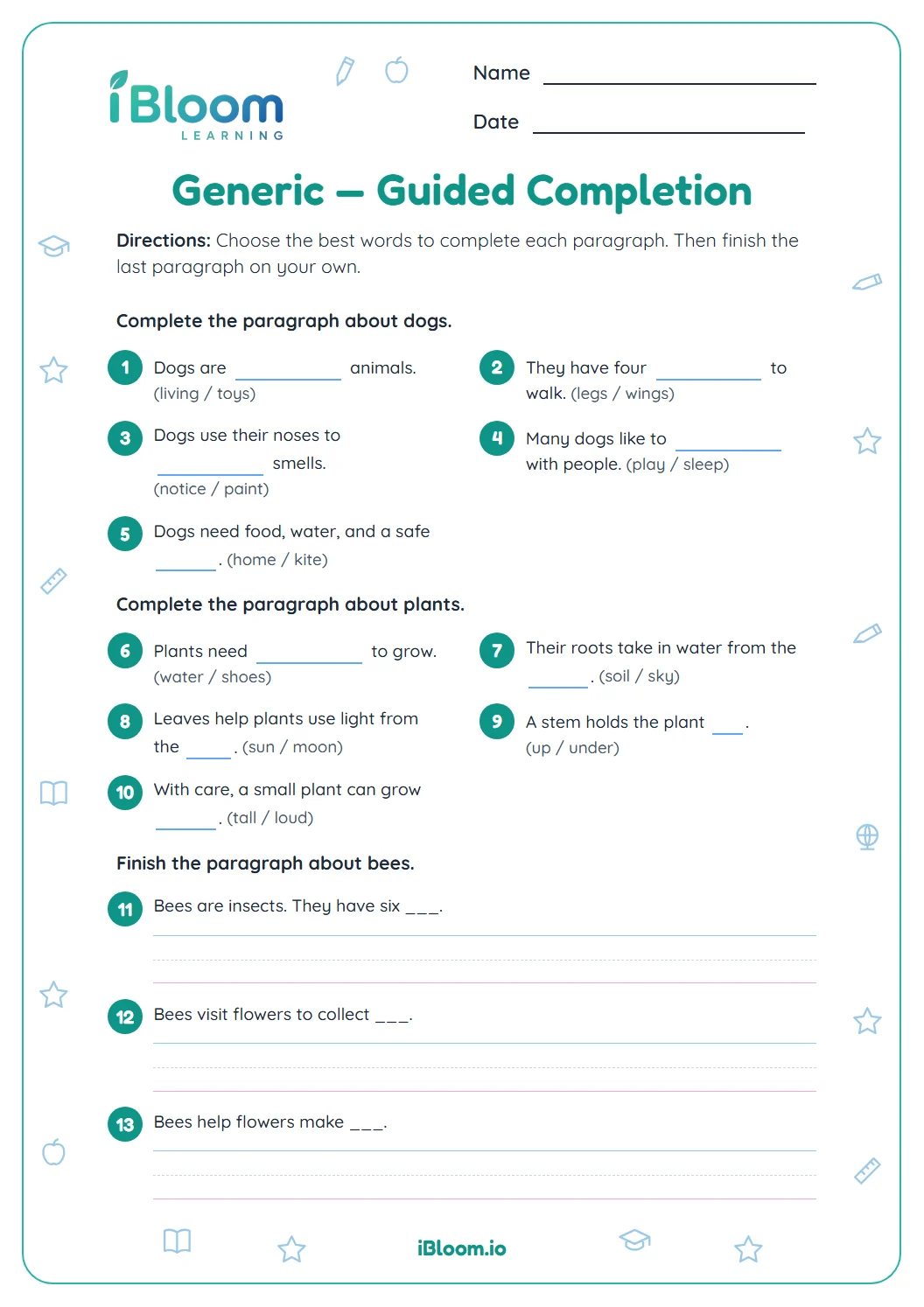
This Grade 1 printable helps children build the parts of a short informational paragraph. Across 14 questions, students identify topics, choose facts that fit, complete simple connections, select closings, and write two short responses. Pictures support early questions about familiar subjects such as plants, pets, seeds, and books. The page practices CCSS W.1.2: naming a topic, supplying facts, and providing a sense of closure.
Aligned to W.1.2
What does an informational paragraph teach?
An informational paragraph names a subject and gives facts that help a reader learn about it. On this page, children practice identifying a topic, choosing a detail that belongs, connecting ideas with simple words, and writing a final sentence.
Picture clues support early questions about gardens, puppies, and bees.
How do you choose a fact that fits the topic?
Read the topic sentence first, then ask which choice teaches something about that subject. A detail can be true but still belong to another topic.
- 1Topic: “Bees help flowers.”
- 2Fact: “Bees carry pollen between flowers.”
- 3This fact explains one way bees help flowers.
What does a closing sentence do?
A closing gives the paragraph a finished feeling. It can remind the reader why the topic matters. It does not need to repeat every detail. Questions 13 and 14 ask children to choose a closing for a small group of facts.
How can a first grader write a short information paragraph?
Start by naming one subject. Add facts that teach about it, then finish with a sentence that sounds complete. The final two questions invite original writing: one short information paragraph and one pet fact. The key gives sample responses.
How to use this worksheet
- 1Look at the picture clues and read each sentence aloud.
- 2Choose the sentence that names the subject or teaches a fitting fact.
- 3Complete the connection words and choose a closing that sounds finished.
- 4For the writing prompts, say the fact aloud before writing it.
- 5Check that each fact stays with its topic, then use the key together.
Common mistakes and quick fixes
The mistake
Choosing a sentence because it is true, even if it is off topic.
The fix
Ask whether the sentence teaches about the subject named in the prompt.
The mistake
Repeating the topic without adding information.
The fix
Add a fact that tells what the subject does, needs, or has.
The mistake
Stopping after the facts without a finished thought.
The fix
Add a final sentence that reminds the reader why the topic matters.
Common Core alignment
Children name topics, choose factual details, and practice a sense of closure.
Name a topic, give facts, and add a closing idea.
On this sheet: Students identify topics and related facts, then compose a short paragraph with facts and a closing.
Show the official wordingHide the official wording
Write informative/explanatory texts in which they name a topic, supply some facts about the topic, and provide some sense of closure.
What to practice next
Make more practice
Further reading
Questions parents and teachers ask
What does “expository” mean for a first grader?
Expository or informational writing teaches about a subject. A first grader can name a topic, add facts, and finish with a closing idea. This worksheet practices those parts with familiar subjects such as plants, pets, bees, seeds, books, and trees.
How many questions are on the page?
There are 14 questions in four parts: four topic sentence completions, two supporting-fact choices, six fact or closing completions, and two written responses. Picture clues accompany three questions about a garden, puppies, and bees. The answer key includes sample models for the written answers.
Why are there pictures beside some questions?
Pictures give young writers a concrete clue about a subject before they read. This sheet pairs a garden sentence with flowers, carrots, and a bee; a puppy sentence with a dog, bowl, and house; and a bee fact with bees and a flower. Children still choose or complete answers by reading the sentences.
What makes a detail a supporting fact?
A supporting fact teaches something about the topic sentence. For example, “Bees carry pollen between flowers” supports the idea that bees help flowers. A detail can be true but unrelated, so children should check whether it explains or adds information about the named subject.
How long should the written answers be?
Question 13 asks for a short paragraph with a topic, two facts, and a closing. Question 14 asks for one fact about a pet. A complete sentence is a good goal for both; a parent can help the child say each idea aloud, then write it clearly. The key gives one sample for each.
How can I help my child check the paragraph?
Read each sentence together and ask whether it stays with the topic. Look for a fact that teaches something, then check that the last sentence sounds finished. The answer key offers examples, while other accurate facts about the child’s chosen subject are also acceptable.