








About this worksheet
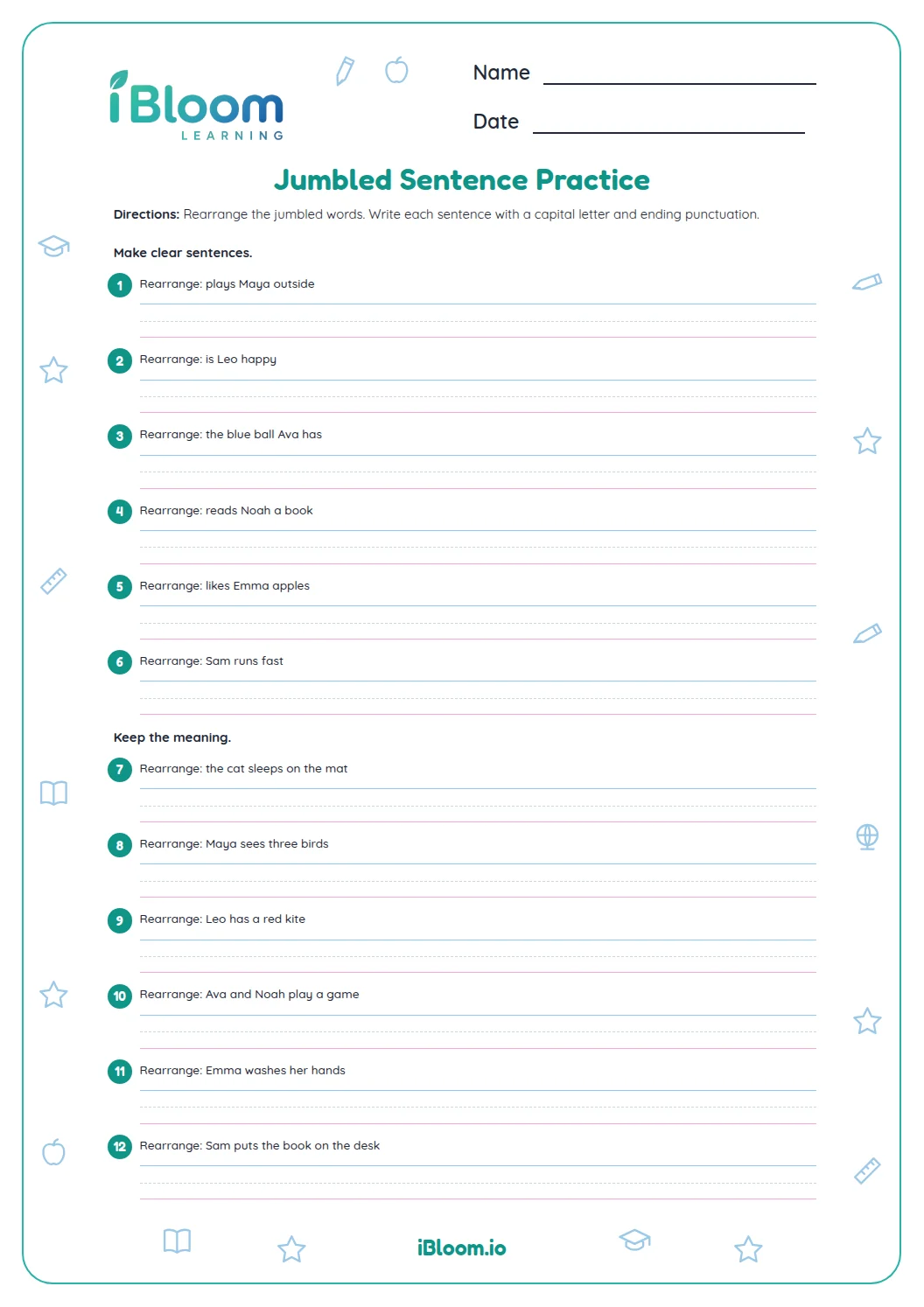
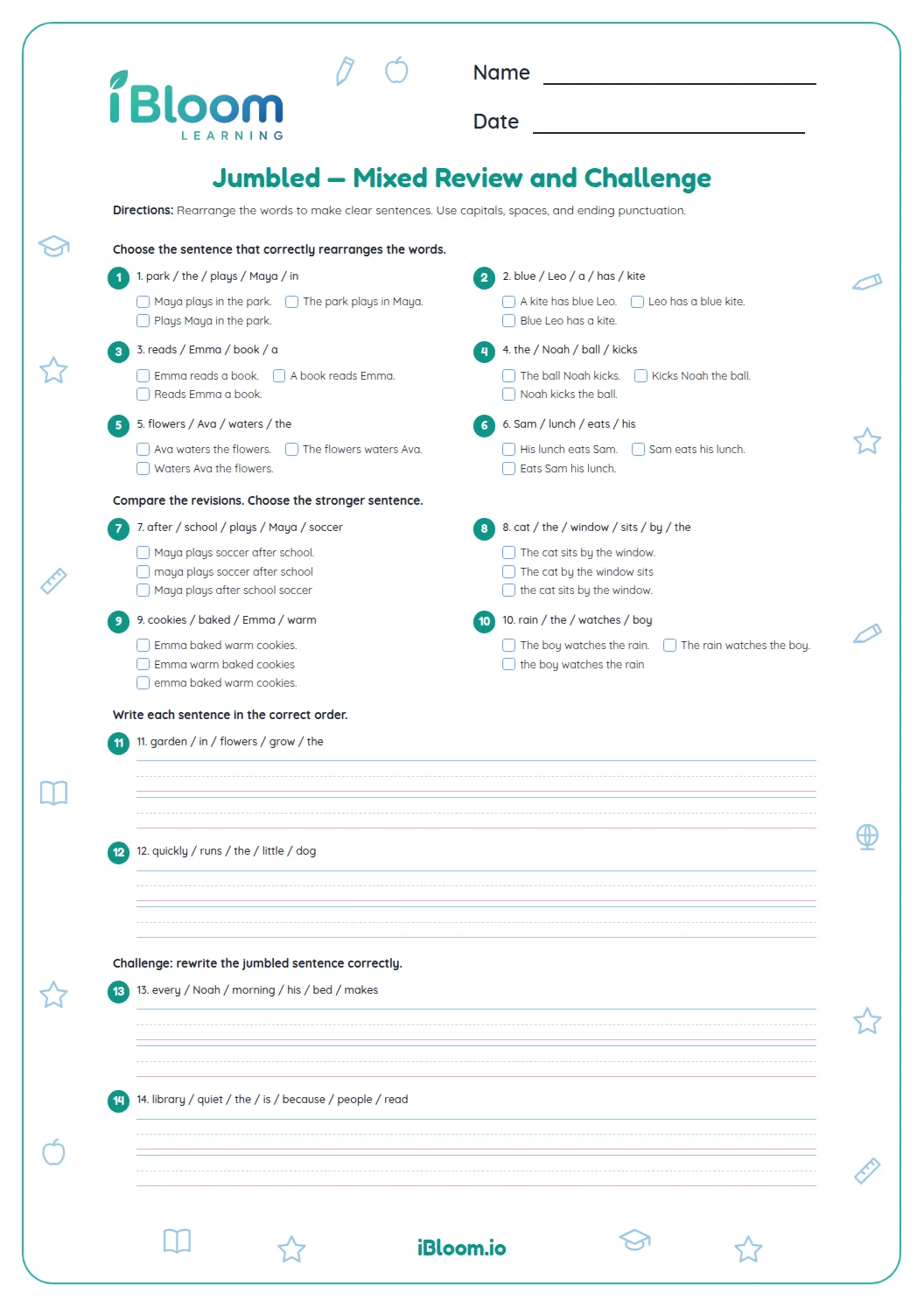
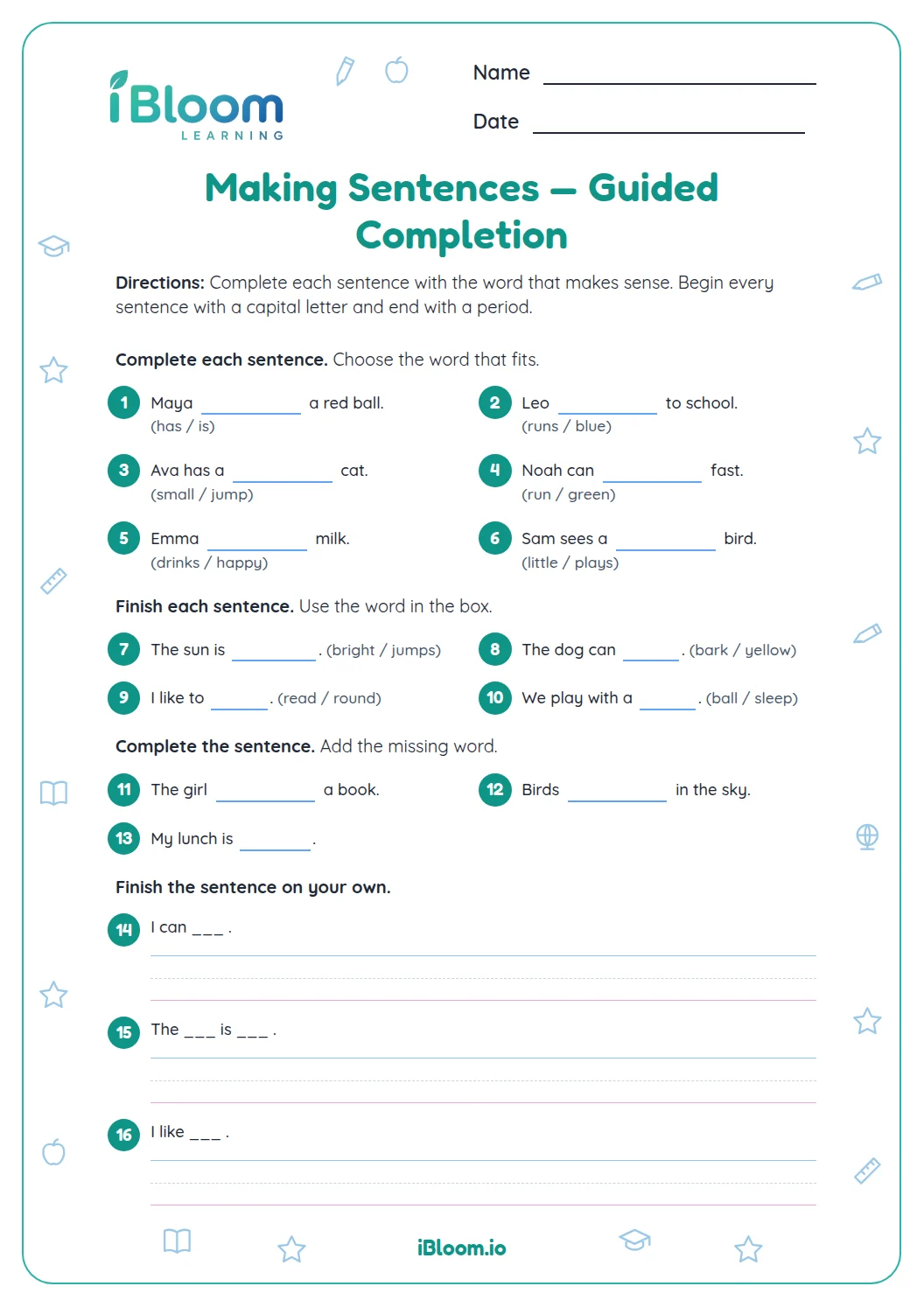
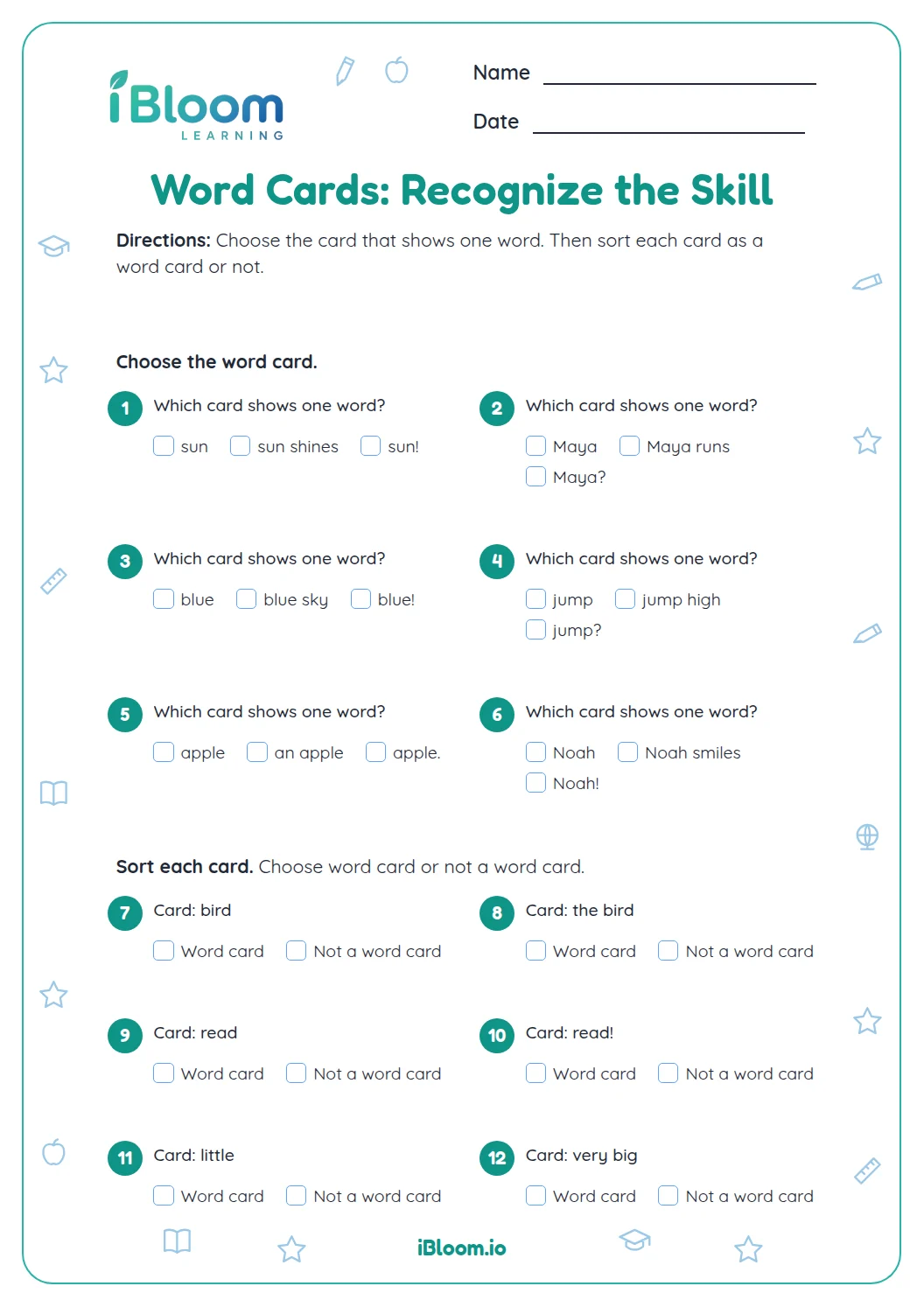
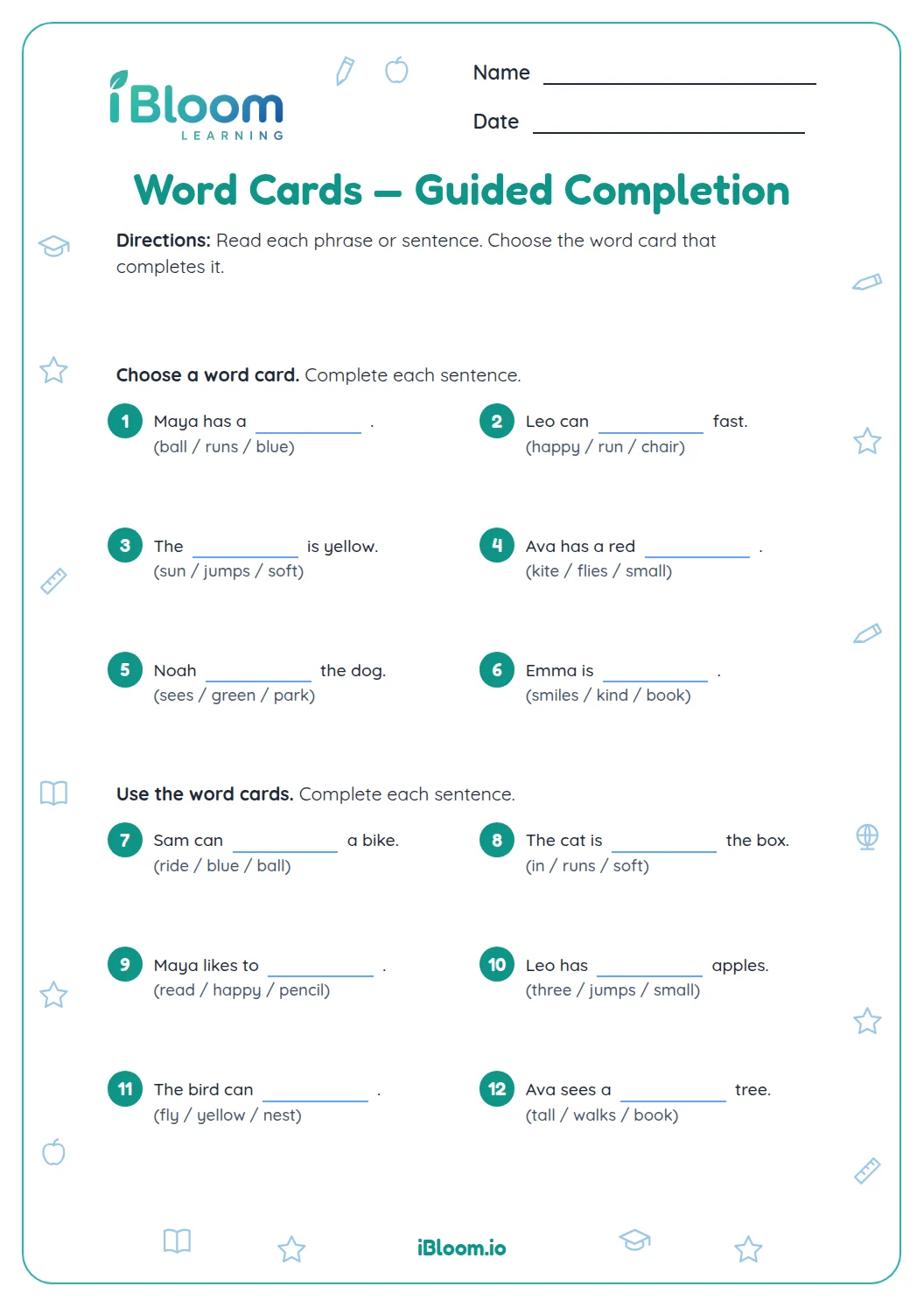
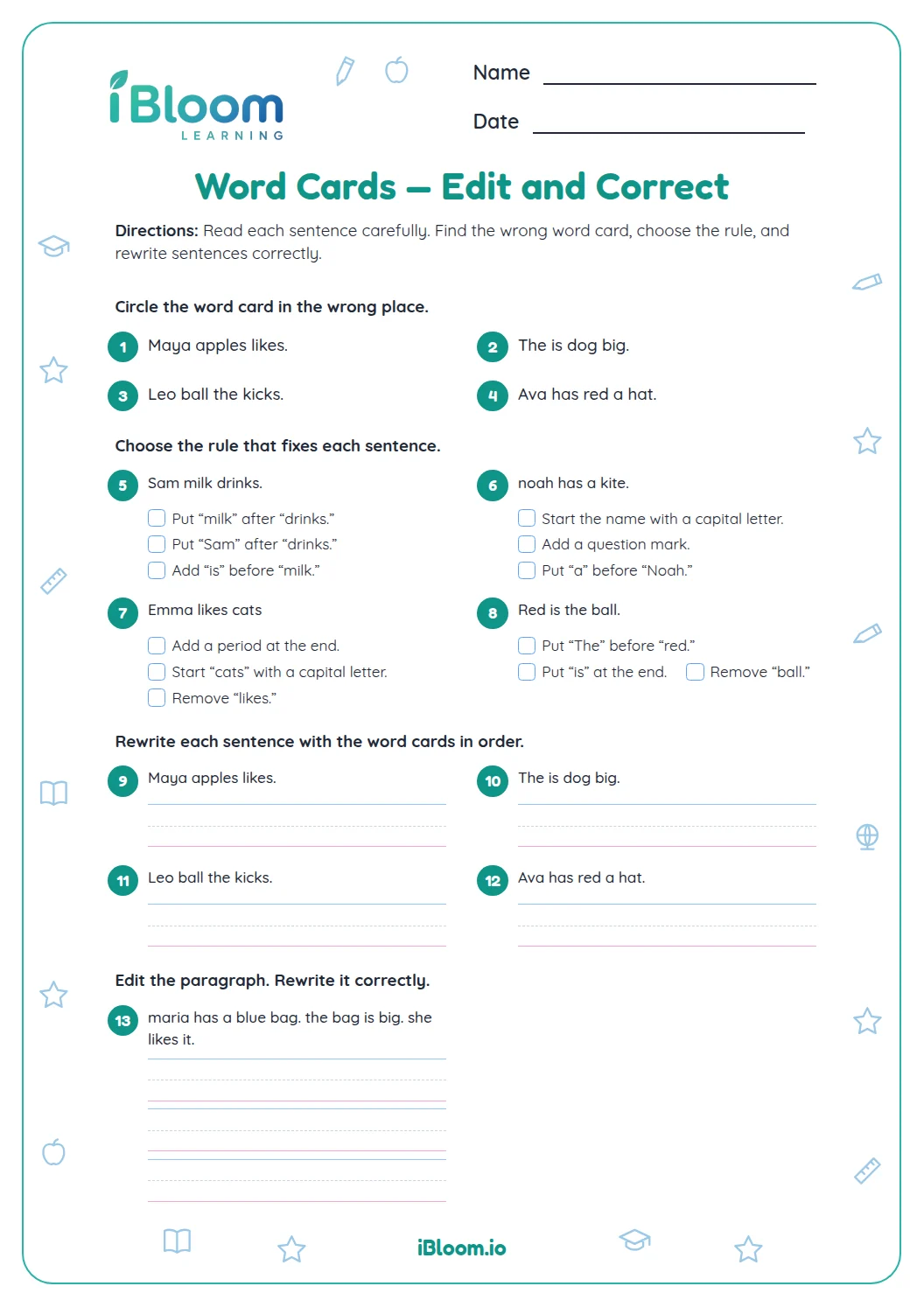
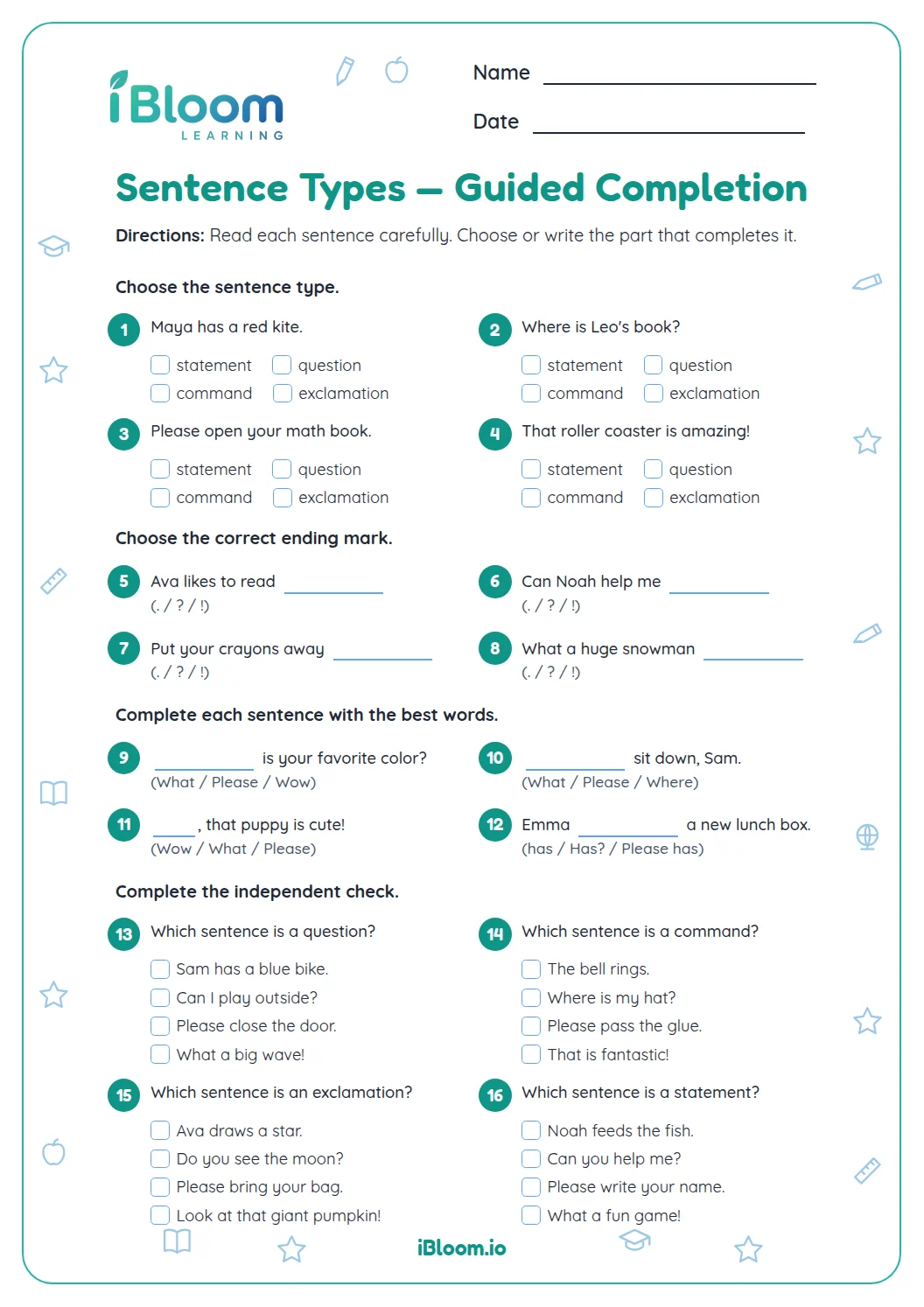
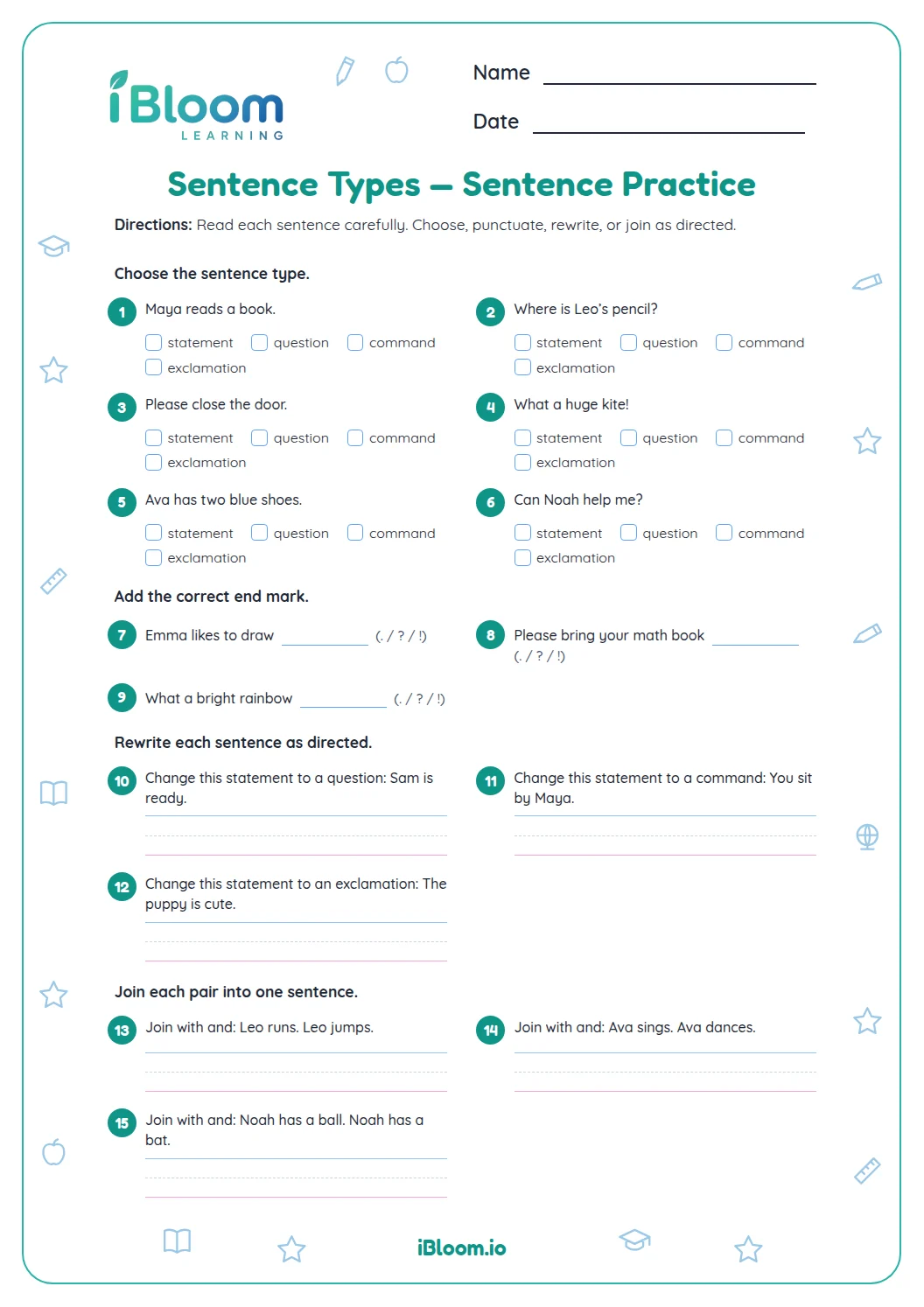
This Grade 1 worksheet helps children recognize whether familiar words are in clear sentence order or jumbled. The first part asks them to pick the jumbled group from a pair; the second asks them to classify short examples. A separate answer key identifies the correct choice for all 16 questions.
How can you spot a jumbled group?
Read the words in their printed order and listen for a complete thought. In Question 1, “Maya reads a book” is clear; “reads Maya book a” is out of order.
- 1Maya reads a book. — clear
- 2reads Maya book a. — jumbled
What clues show that word order is clear?
A clear sentence puts its words in a sensible order so the reader can follow the idea. Look for who or what the sentence is about and what the rest tells about it.
Why read the whole group aloud?
Reading aloud can reveal when words do not fit together. “The cat sleeps” makes a clear thought; “runs the rabbit fast” does not use the usual word order.
What does this worksheet ask children to do?
The first six questions compare pairs and ask children to select the jumbled group. The last ten ask whether each short example is clear or jumbled.
How to use this worksheet
- 1Read all the words in the order they appear.
- 2Find who or what the group is about.
- 3Check whether the rest of the words make a complete thought.
- 4Read the group aloud to hear whether the order makes sense.
- 5Choose “clear” or “jumbled” based on the whole group.
Common mistakes and quick fixes
The mistake
Choosing a group because it starts with a lowercase letter.
The fix
Judge the word order first; the task is to notice whether the words make a clear thought.
The mistake
Reading only the first two words.
The fix
Read the complete group before deciding whether its meaning is clear.
The mistake
Calling a short sentence jumbled because it has few words.
The fix
A short sentence can be clear if the words express a complete thought, as in “The cat sleeps.”
What to practice next
Make more practice
Further reading
Questions parents and teachers ask
What does “jumbled” mean on this worksheet?
A jumbled group has familiar words in an order that does not make a clear sentence. “Reads Maya book a” is jumbled, while “Maya reads a book” is clear. Children choose or classify the group based on its full word order. Reading all the words helps them notice the difference.
How should a child decide whether a group is clear?
Read the whole group and ask whether the words make a complete thought in a sensible order. Finding who or what the group is about can help. The worksheet uses short examples so children can focus on the order. Reading the group aloud is one useful check.
Does the worksheet ask children to rewrite the groups?
No. Children recognize the word order by selecting the jumbled group or marking an example clear or jumbled. The answer key gives the correct choice for each item. This keeps practice focused on recognizing the skill shown on the original sheet.
How many questions are included?
There are 16 questions. Six ask children to choose the jumbled group from a pair, and ten ask them to classify a group as clear or jumbled. The two formats give children repeated practice noticing whether word order makes a complete thought.
Is an answer key included?
Yes. A separate answer key marks the jumbled choice or the clear-or-jumbled classification for all 16 questions. Children can explain which words made a group easy or hard to read. The key also confirms the complete-sentence choice in Question 1.