

About this worksheet
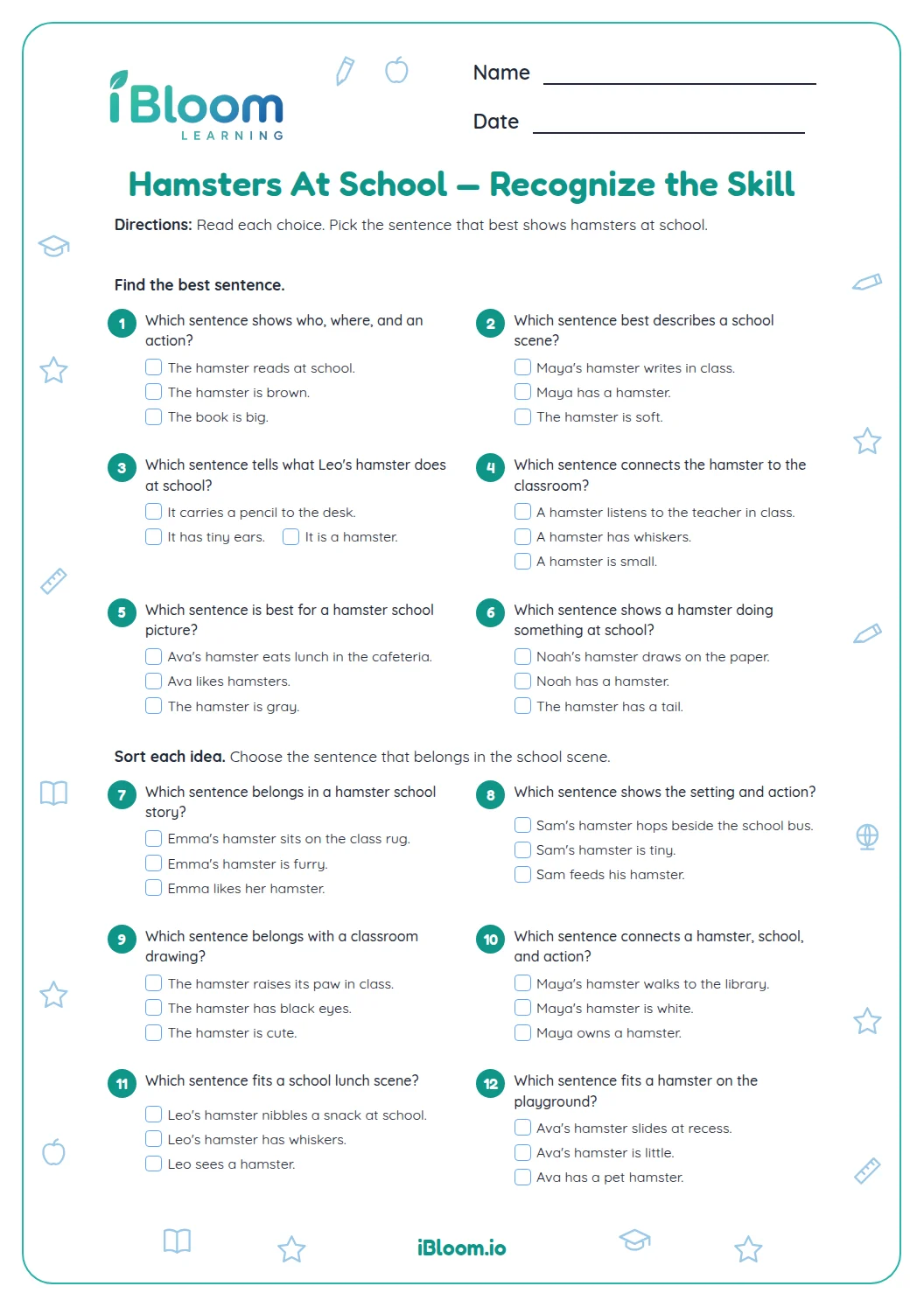
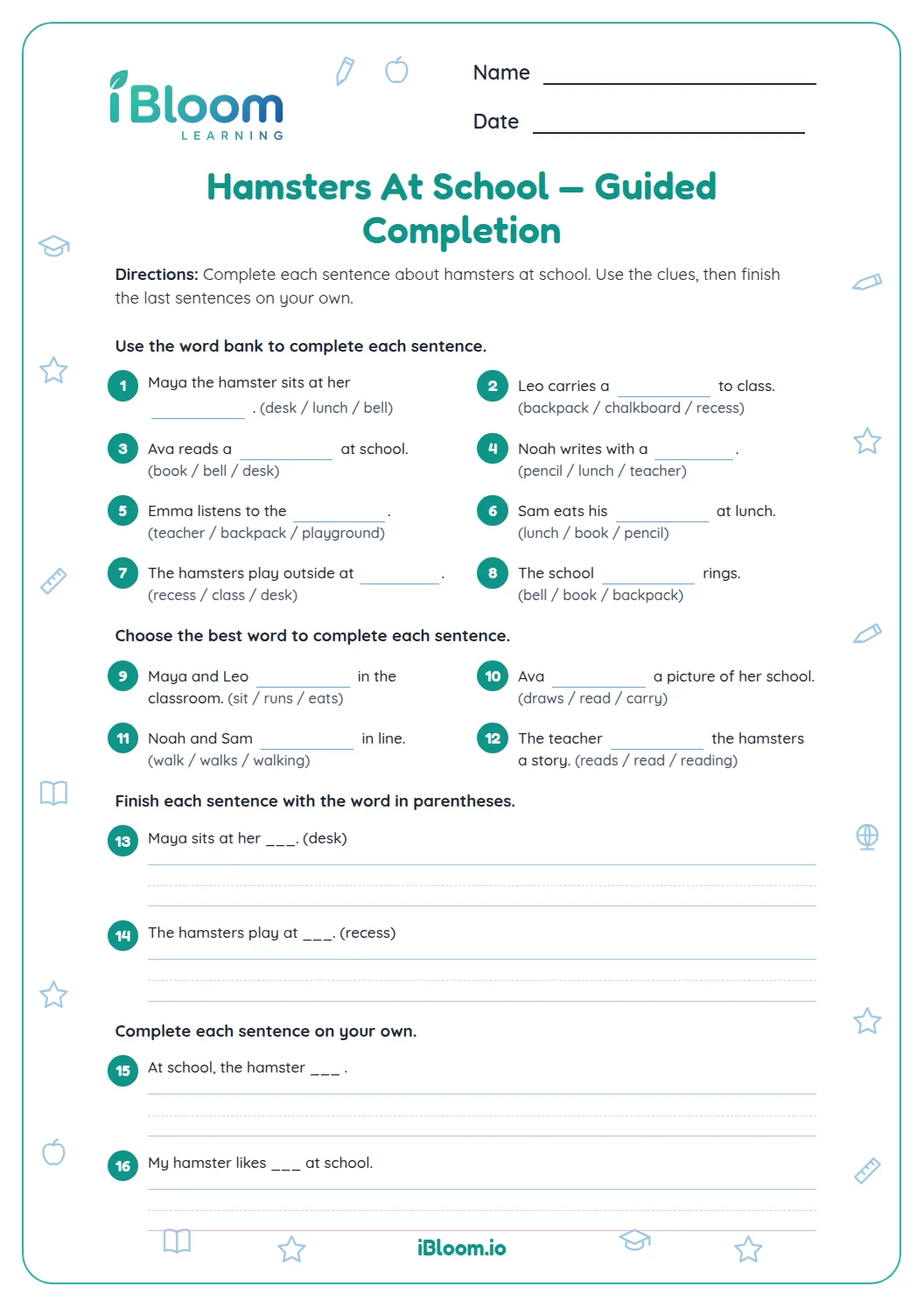
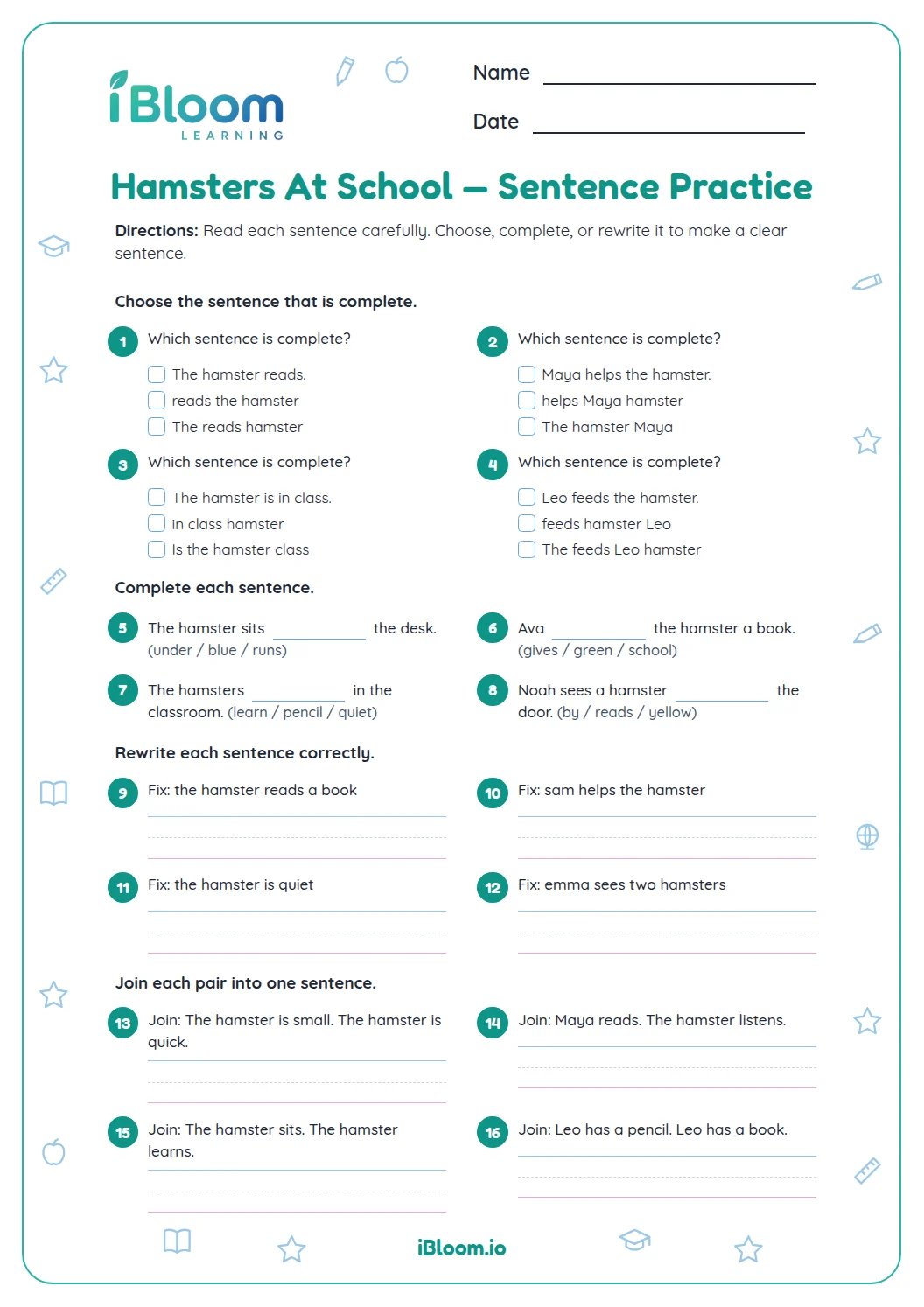
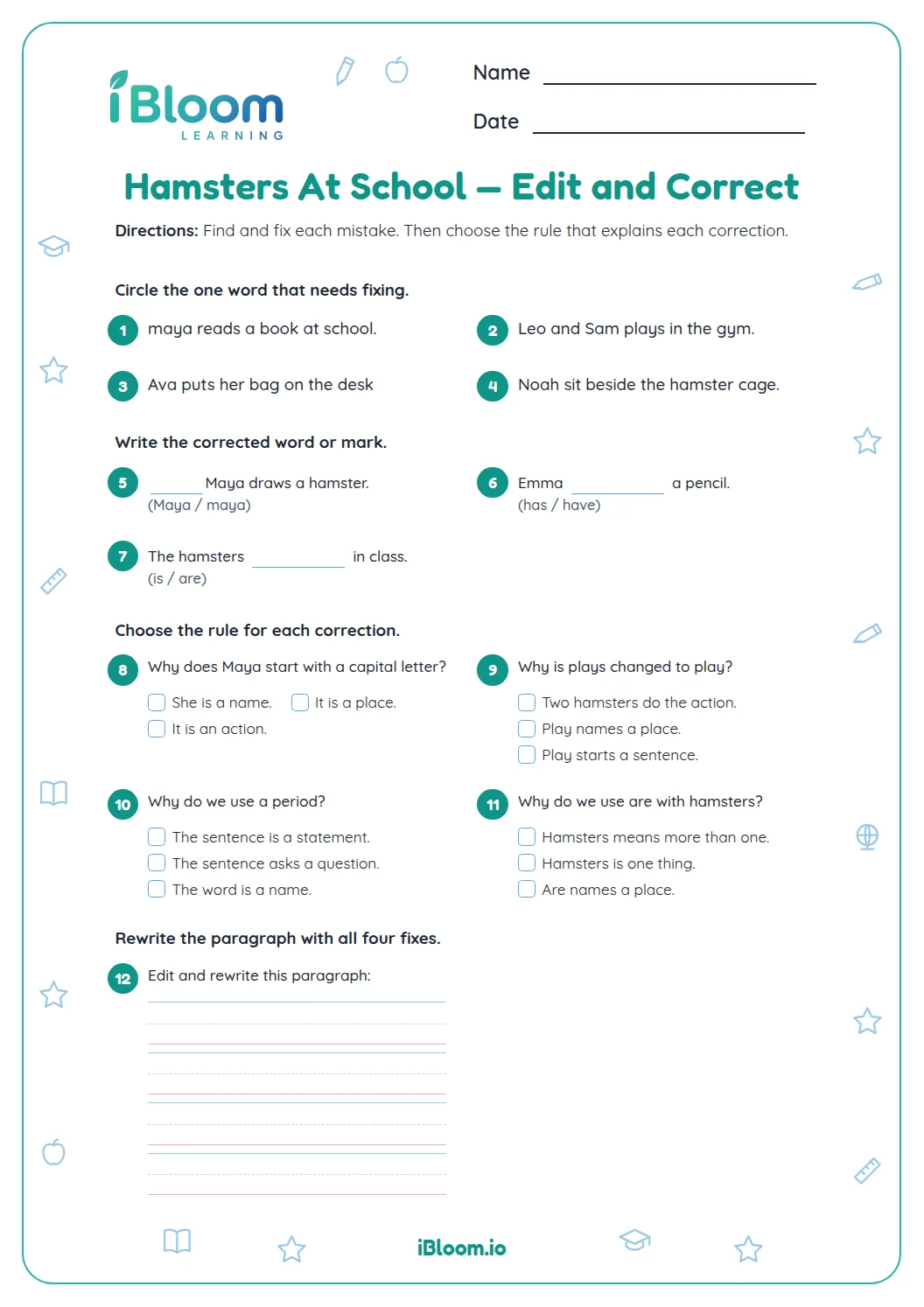
This Grade 1 worksheet pairs a short original story about Milo and Pip visiting Room 4 with questions and sentence writing. Children recall details, write complete thoughts, draw a hamster exploring a classroom, and describe the picture. The story gives young writers concrete actions and details to use.
Aligned to W.1.3
Read for details about Milo and Pip
The story gives young writers details they can use: Milo sniffs a cardboard tunnel, Pip runs through it, and the class speaks softly. A clear answer can name the hamster or repeat one action from the story.
A complete sentence tells a whole thought. “Pip runs through the tunnel.” tells who and what happened. “Through the tunnel” is only a phrase, so it needs more words to become a sentence.
- Part A: read the classroom story and answer about its details.
- Part B: complete thoughts about hamster actions and the classroom.
Draw first, then write
A picture can help you decide what your sentence will say. Include one hamster, one classroom object, and an action. Then write a sentence that matches the picture, such as “Pip explores a book corner.”
Add a detail that helps a reader imagine the scene. A describing word like tiny or a place phrase like beside the desk makes the sentence clearer.
- Part C: draw a hamster exploring a classroom.
- Write one sentence that matches your drawing.
How to work through this page
- 1Read the story once to learn the hamsters’ names and actions.
- 2Answer with a short word or a complete sentence, as directed.
- 3Sketch the classroom adventure, then write a sentence that describes something in the picture.
- 4Reread each sentence to check its first letter and ending punctuation.
Common mistakes and how to check
The mistake
Writing a fragment instead of a complete thought
The fix
Read the words aloud. “The hamster in the room” does not tell what the hamster does. Add an action: “The hamster rests in the room.”
The mistake
Writing about something not in the picture
The fix
Make sure the sentence matches the hamster, place, and action you drew. Add one visible detail instead of starting a different story.
Curriculum alignment
This worksheet practices a specific Common Core skill for this grade.
Hamster Writing
On this sheet: Students write a short narrative sentence about a hamster event and add a relevant detail.
Show the official wordingHide the official wording
W.1.3
What to practice next
Make more practice
Questions parents and teachers ask
What is the story about?
Milo and Pip visit a classroom where children watch them explore a cardboard tunnel and rest in a quiet corner. The class keeps their voices soft so the hamsters can relax. The story gives young writers details to use in complete sentences.
What makes a sentence complete?
A complete sentence tells a whole thought, usually naming who or what and telling what happens. For example, “Milo runs” has a subject and an action. On this worksheet, children write their own sentence about Milo and a sentence to match their hamster drawing.
What should I draw for the writing prompt?
Draw a hamster exploring a classroom, perhaps beside a book, desk, or tunnel. Then write a sentence that tells what the hamster does or notices. The worksheet leaves room for a child’s own idea, and the answer key gives one sample sentence rather than a required picture.
How can I make my sentence more interesting?
Add one describing word or a detail about where the action happens. For example, instead of “Pip runs,” a writer could say “Pip runs through a long cardboard tube.” Keep the sentence clear and use an ending period.