



About this worksheet
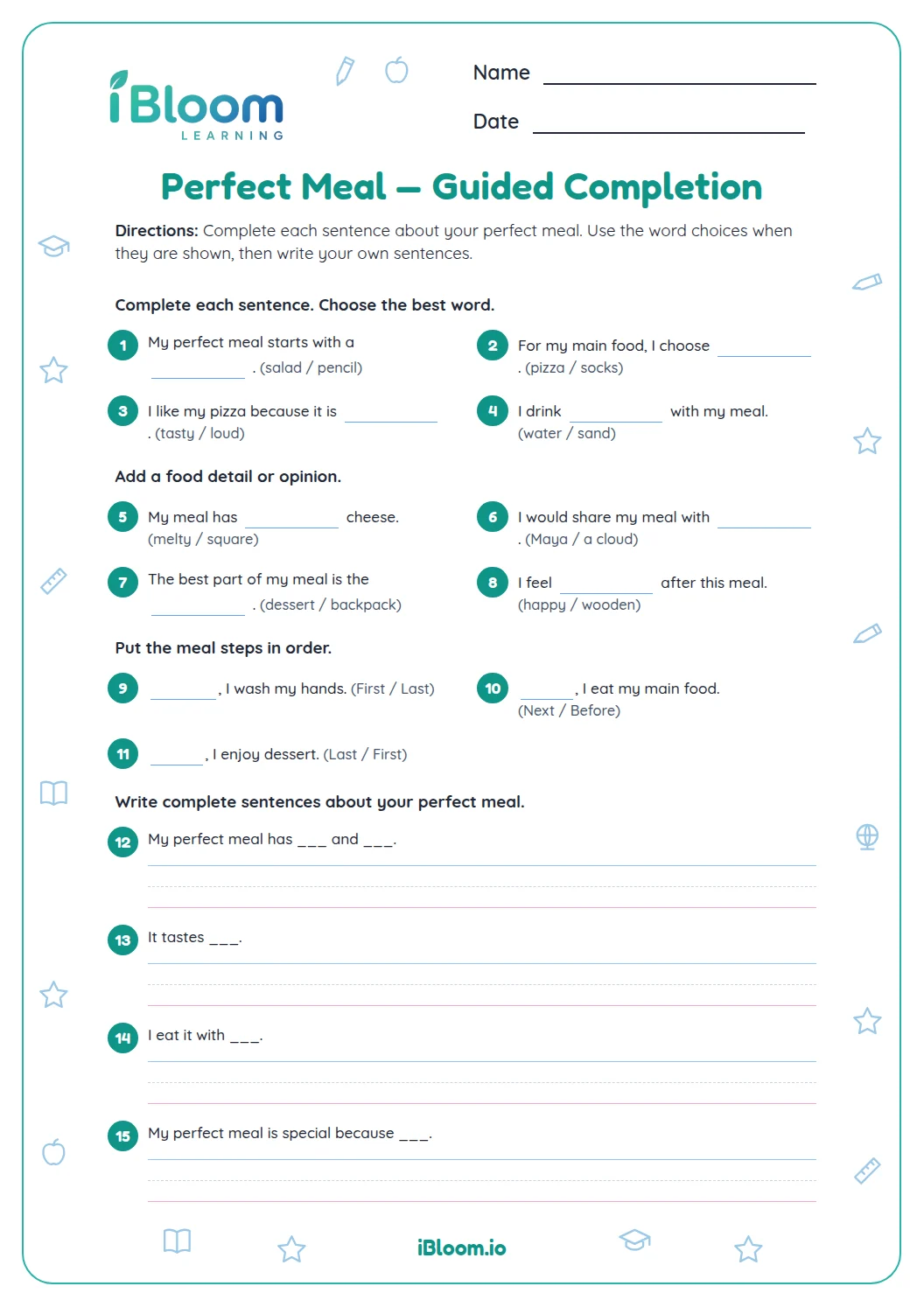
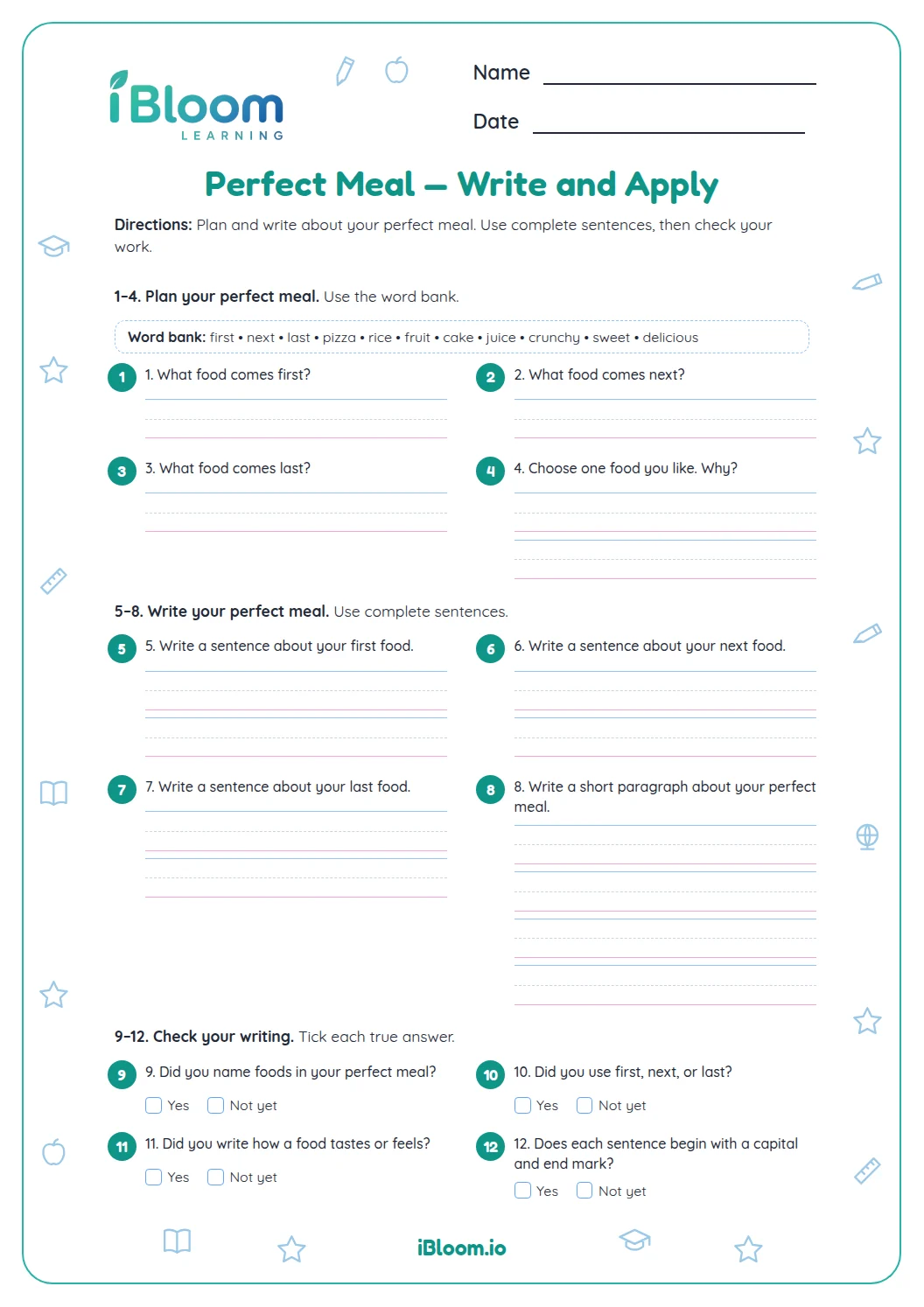
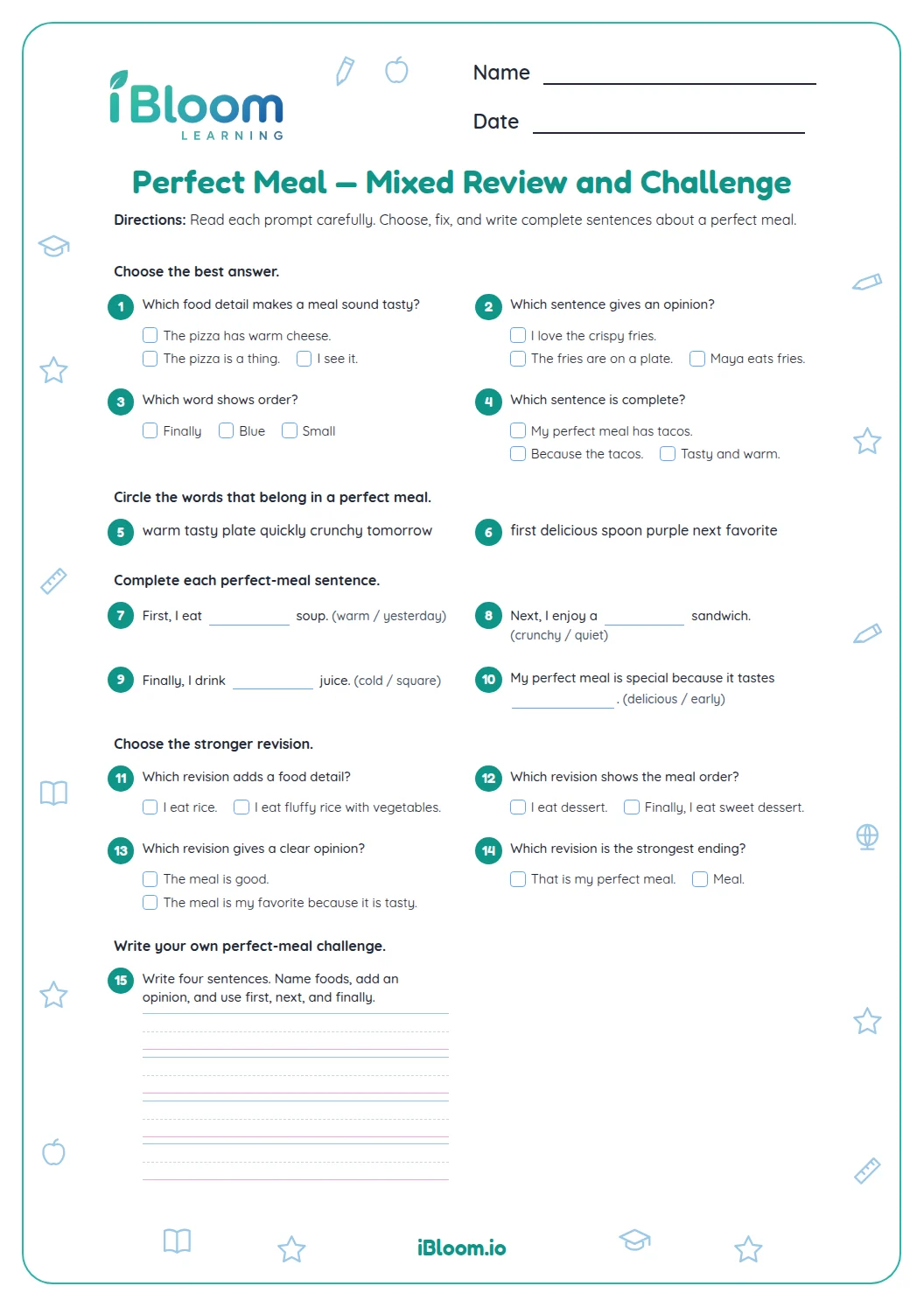
This Grade 1 printable uses 15 short sentences about meals to practice beginning capitals and end punctuation. Children rewrite each sentence, checking whether it tells something or asks a question; the separate answer key shows a corrected version for every item.
Aligned to L.1.2
What will children edit on this page?
The 15 prompts are all short sentence corrections. Part A works through sentence capitals and periods or question marks; Part B revisits the same checks in mixed sentences. The foods keep the examples connected to the Perfect Meal topic.
- Part A: correct the first capital and ending mark
- Part B: apply both checks to mixed meal sentences
- A separate key gives a corrected sentence for every prompt
How can a child check a sentence?
Read the sentence and find its first word. Start that word with a capital letter. Then listen to the sentence: if it asks something, use a question mark; if it tells something, use a period.
What does a correction look like?
For “we eat soup.”, change the first letter to a capital: “We eat soup.” The ending period already matches a sentence that tells something. Check both places before moving on.
A simple editing routine
- 1Read the whole sentence aloud.
- 2Check the first letter and capitalize it if needed.
- 3Decide whether the sentence tells or asks.
- 4Choose a period for a statement or a question mark for a question.
- 5Compare the corrected sentence with the answer key.
Editing slips to watch for
The mistake
Leaving the first word lowercase.
The fix
Check the very first letter after deciding what the sentence says.
The mistake
Putting a period after a question.
The fix
Read the sentence aloud and use a question mark when it asks something.
The mistake
Changing a correct food word while editing punctuation.
The fix
Keep the sentence meaning and food detail; fix only the capital or ending mark requested.
Common Core alignment
This worksheet practices Grade 1 capitalization and punctuation in sentences.
Use capitalization and punctuation in writing.
On this sheet: Children correct sentence capitals and ending punctuation.
Show the official wordingHide the official wording
Demonstrate command of the conventions of standard English capitalization, punctuation, and spelling when writing.
What to practice next
Make more practice
Further reading
Questions parents and teachers ask
What skills does the worksheet practice?
It practices capital letters at sentence beginnings and end marks. Children rewrite short meal sentences, choosing a period for a statement and a question mark for a question. The practice stays with sentence-level editing, so each correction has a clear target.
How many sentences are on the page?
There are 15 editing prompts split into two parts. Each prompt asks the child to rewrite a sentence, and the answer key provides a corrected version for checking. The two parts move from individual checks to sentences that need both.
Why are some prompts questions?
A question needs a question mark at the end. Reading the sentence aloud can help a child hear that it asks for information, then check that the final mark matches. The ending mark should match the sentence meaning, not just the final word.
Can a child change the meal details?
For this editing exercise, keep the original food and sentence meaning while fixing capitals and punctuation. Afterward, a child can write a new meal sentence and use the same editing check. The same check can be used with another sentence after this practice.
How should families use the answer key?
Compare the rewritten sentence with the key after the child finishes. If a mark differs, reread the sentence together and ask whether it tells something or asks a question before making a correction. A reread makes it easier to hear whether the sentence tells or asks.