




About this worksheet
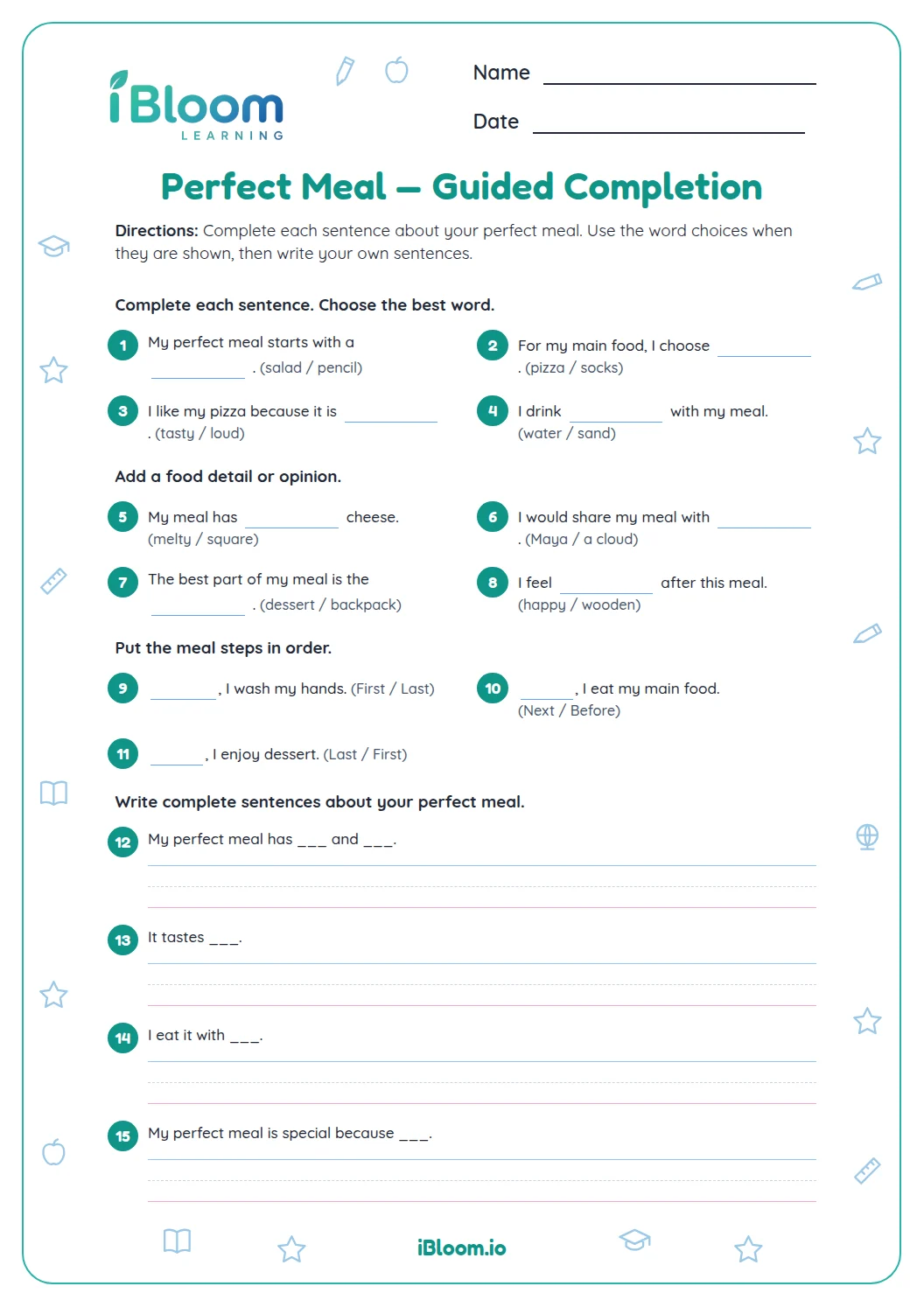
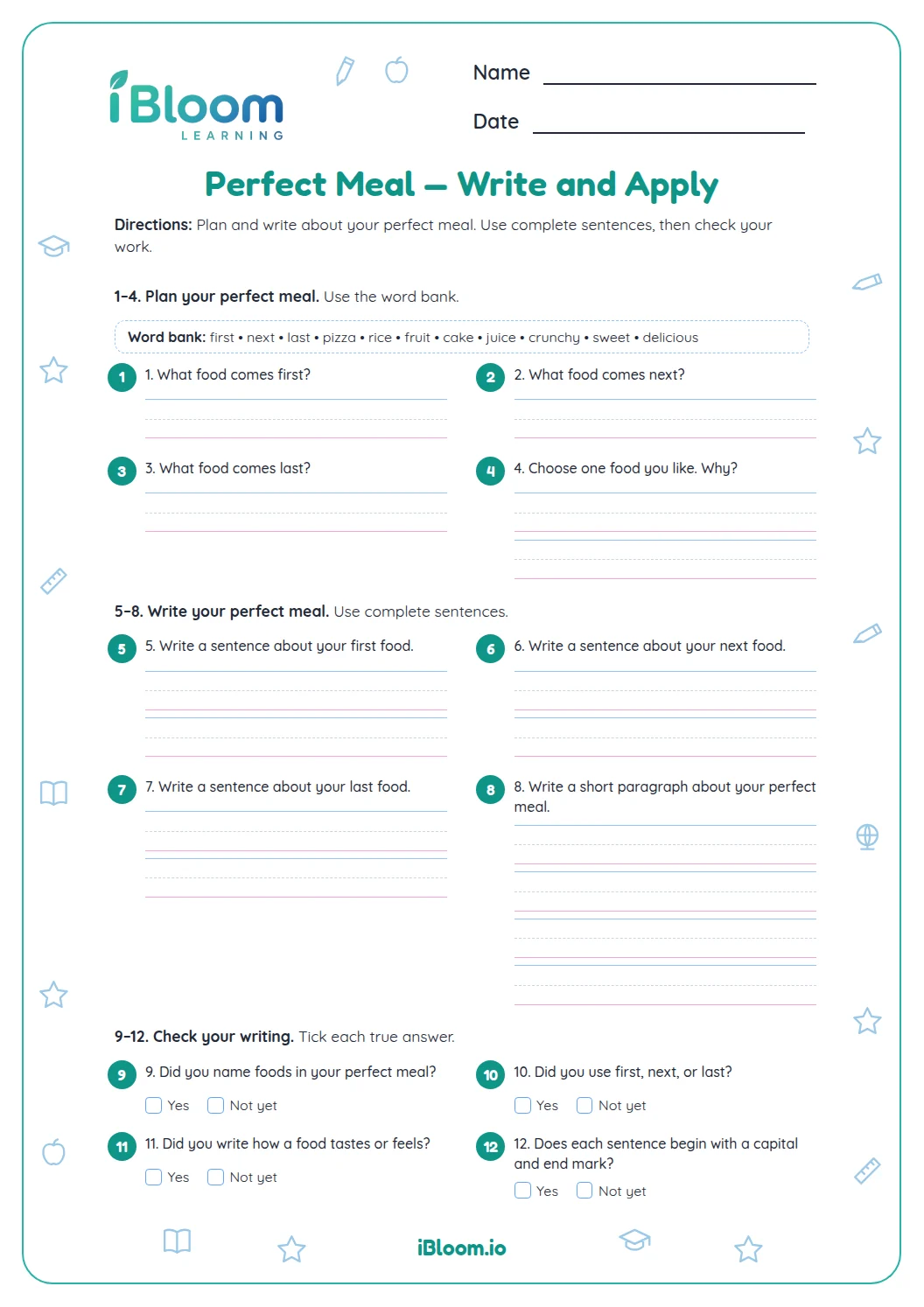
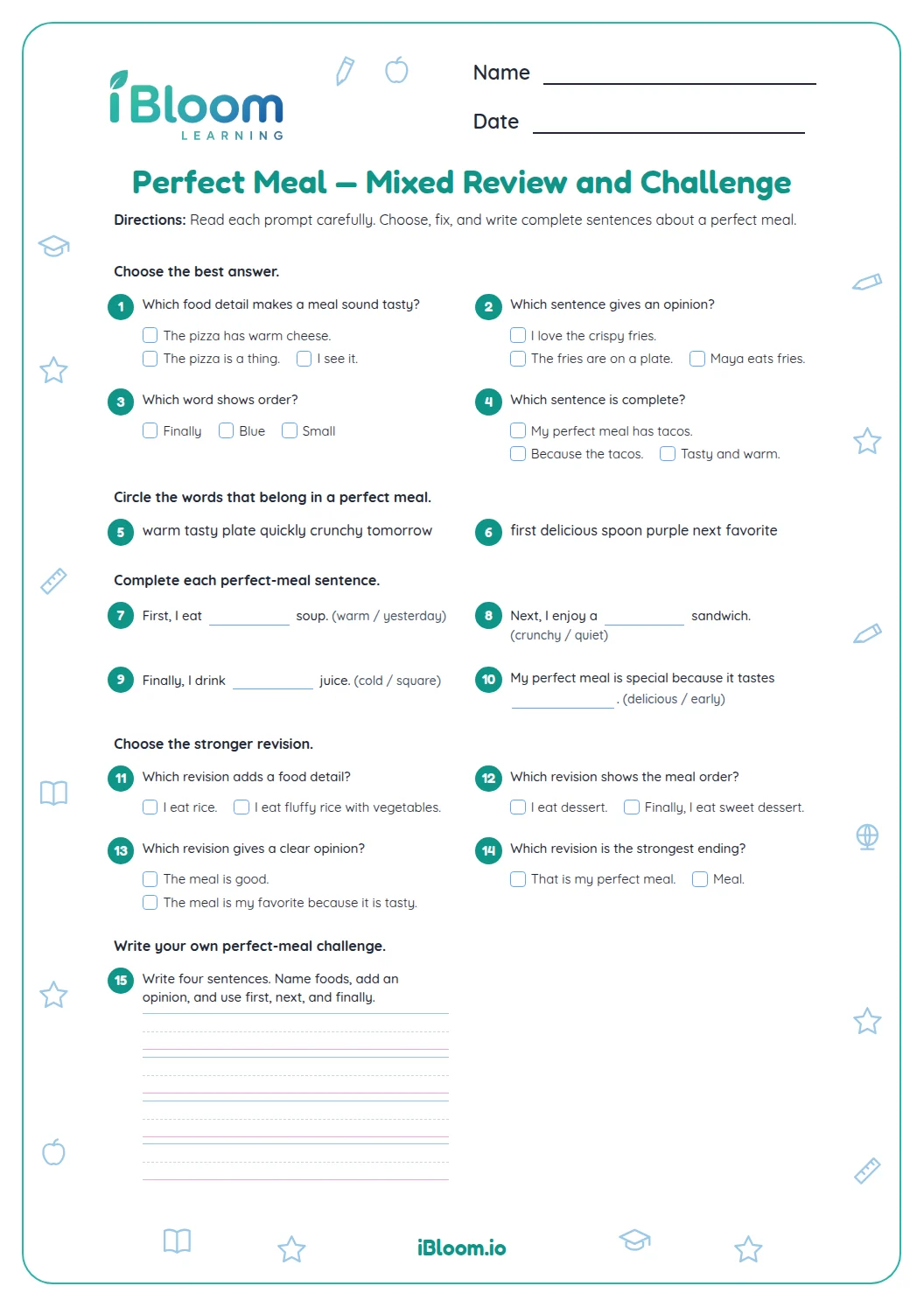
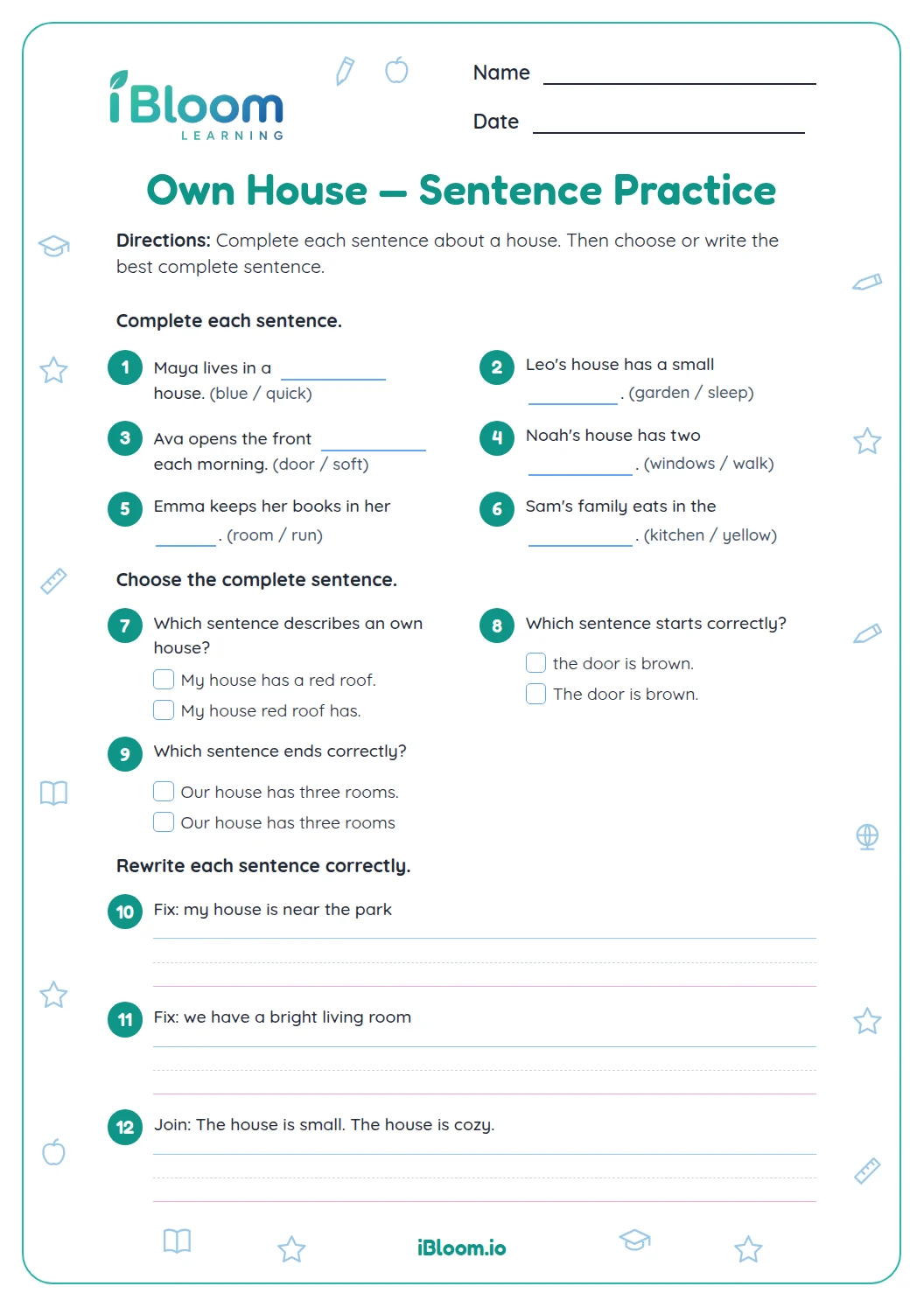
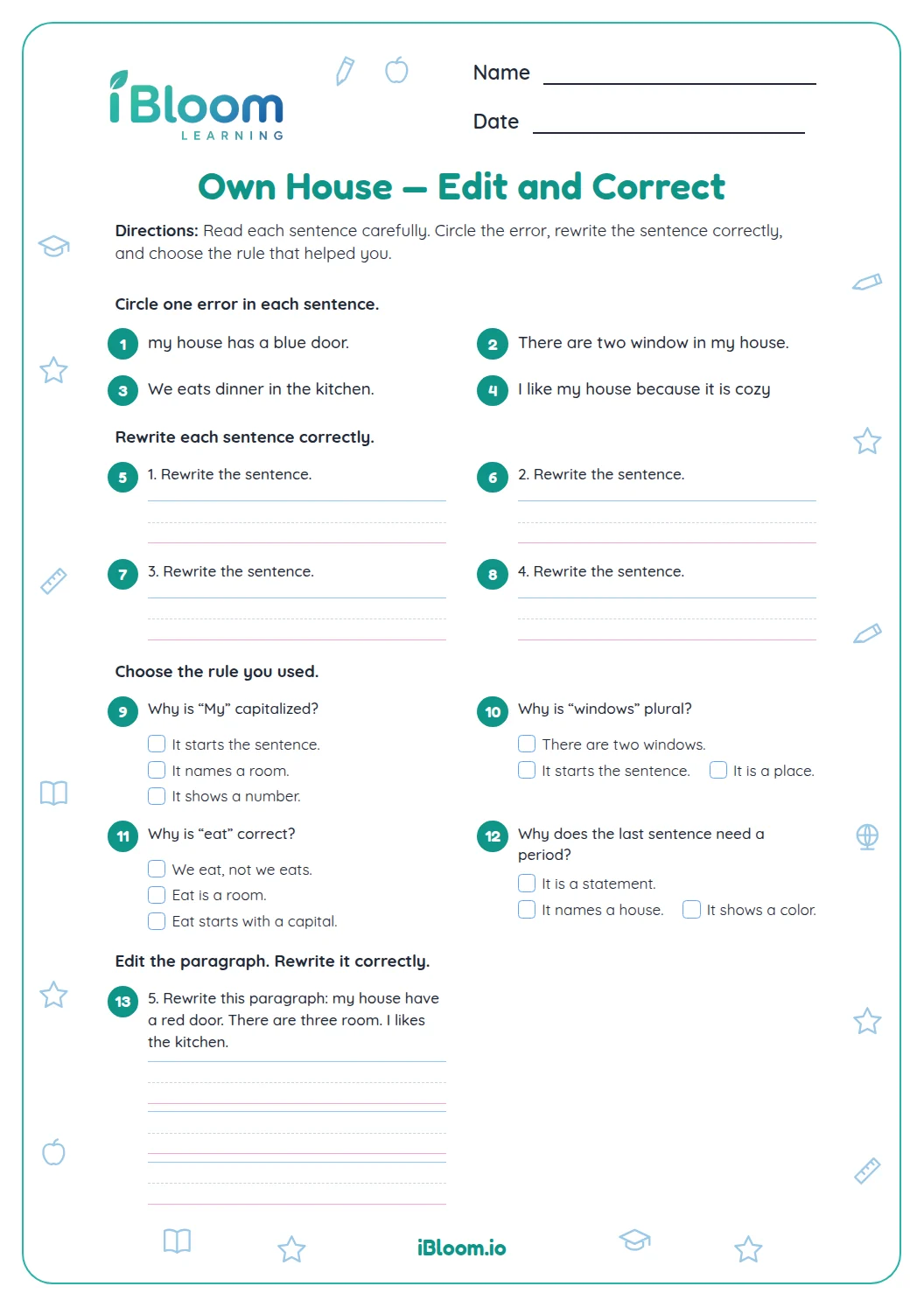
This Grade 1 printable worksheet practices perfect meal. It has 14 questions across 2 parts and a separate answer key. Students use the page’s directions to work through the target skill, then check and correct their responses.
How does the worksheet practice perfect meal?
The page moves from choose a strong sentence toward independent application. The separate answer key lets students check the same skill after completing the questions.
- 1Which sentence gives an opinion? → I think mango tastes best.
How to use this worksheet
- 1Read the direction for choose a strong sentence before starting.
- 2Work through each question without checking the key yet.
- 3Use the page’s directions to show or select each response.
- 4Check completed work with the separate answer key.
- 5Return to any missed item and explain the correction.
Common mistakes and quick fixes
The mistake
Choosing a sentence that is only about food
The fix
Check that it is a complete thought and answers the perfect-meal prompt.
The mistake
Calling a fragment a sentence
The fix
Read it aloud and check that it tells who or what and what happens.
The mistake
Missing order words
The fix
Look for words such as first and next to show sequence.
What to practice next
Make more practice
Questions parents and teachers ask
What does this perfect meal worksheet include?
The printable has 14 questions in 2 parts, followed by a separate answer key. The problems use the target skill in several formats so students can practice a method, check the result, and explain their thinking where the page provides space.
How should students use the answer key?
Finish the worksheet before checking the key. For any mismatch, return to the exact question and redo the step that led to the answer; the key gives a check, while the student’s own working shows how the result was reached.
How can an adult support this practice?
Read the worksheet direction together, then ask the student to describe the clue, operation, or relationship they will use. Give help with the first example if needed, and let the student complete the remaining questions before discussing the key.
Can students complete this independently?
Students who can read the directions and work at the target level can try it independently. An adult can also read directions aloud or pause after each part to discuss the strategy; the answer key supports checking after the work is complete.
What should a student do after an incorrect answer?
Look back at the words, numbers, or shape information in the prompt and find the step that needs another try. Rework that step, compare it with the answer key, and explain why the corrected response fits the question.