






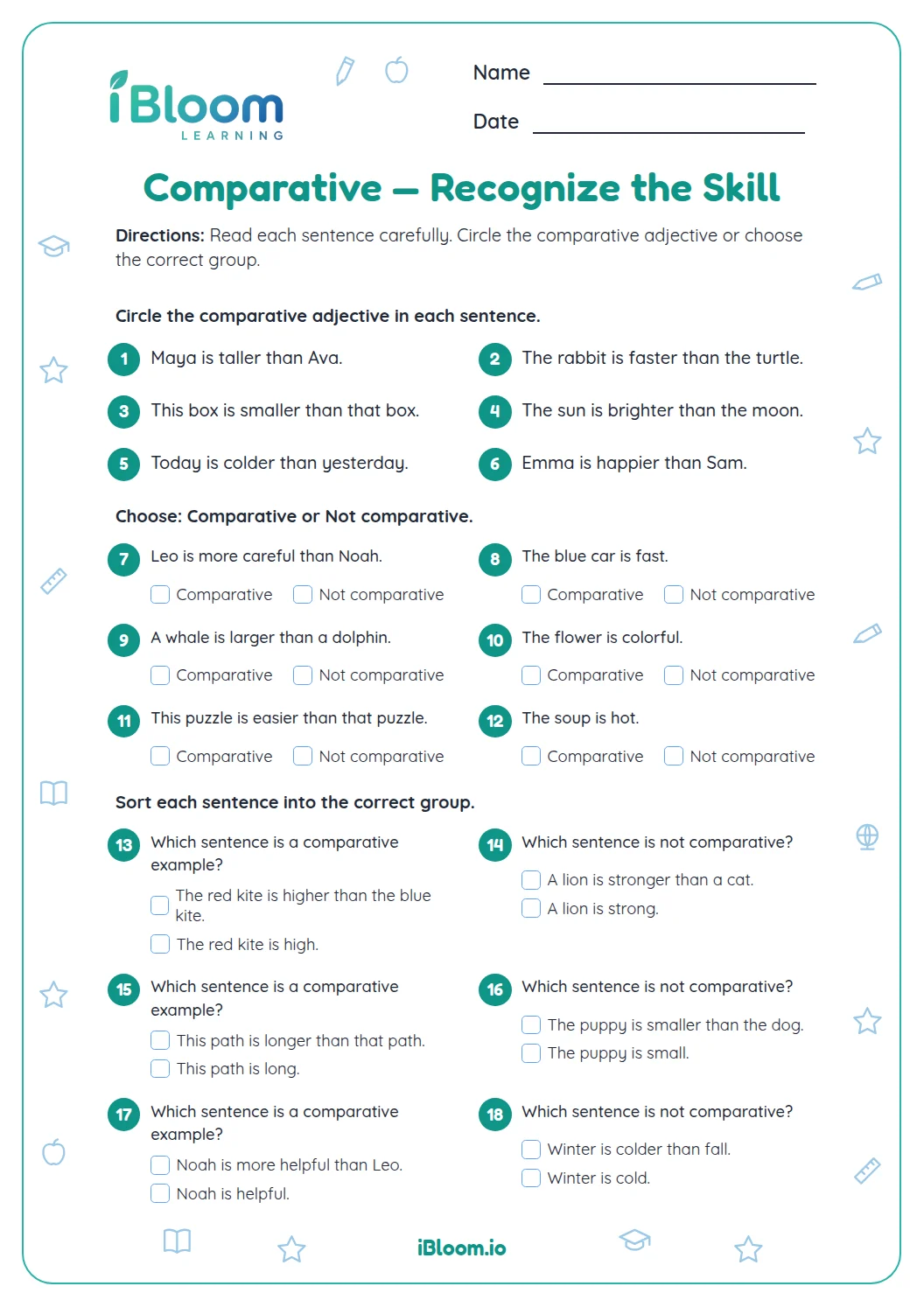


About this worksheet
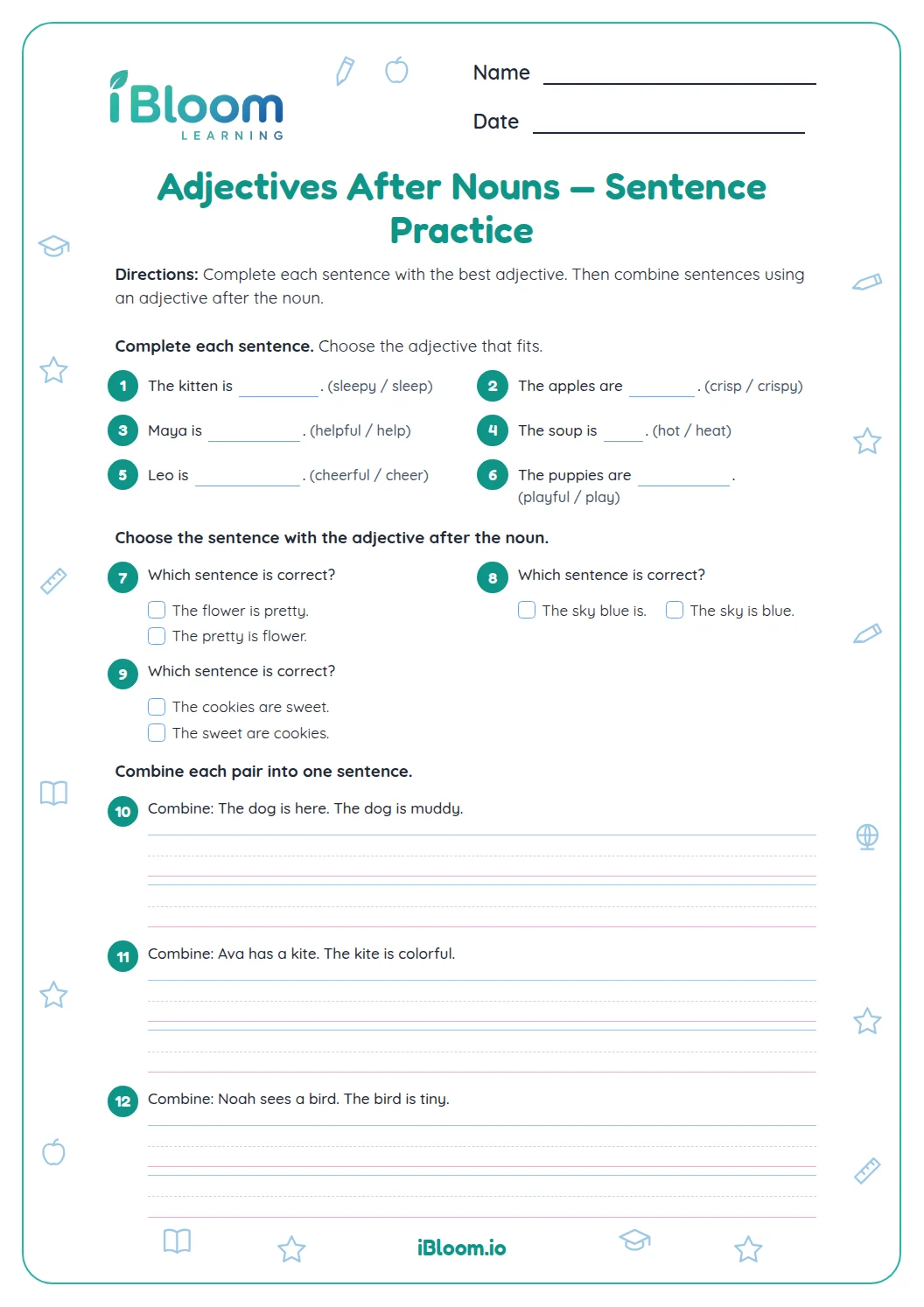
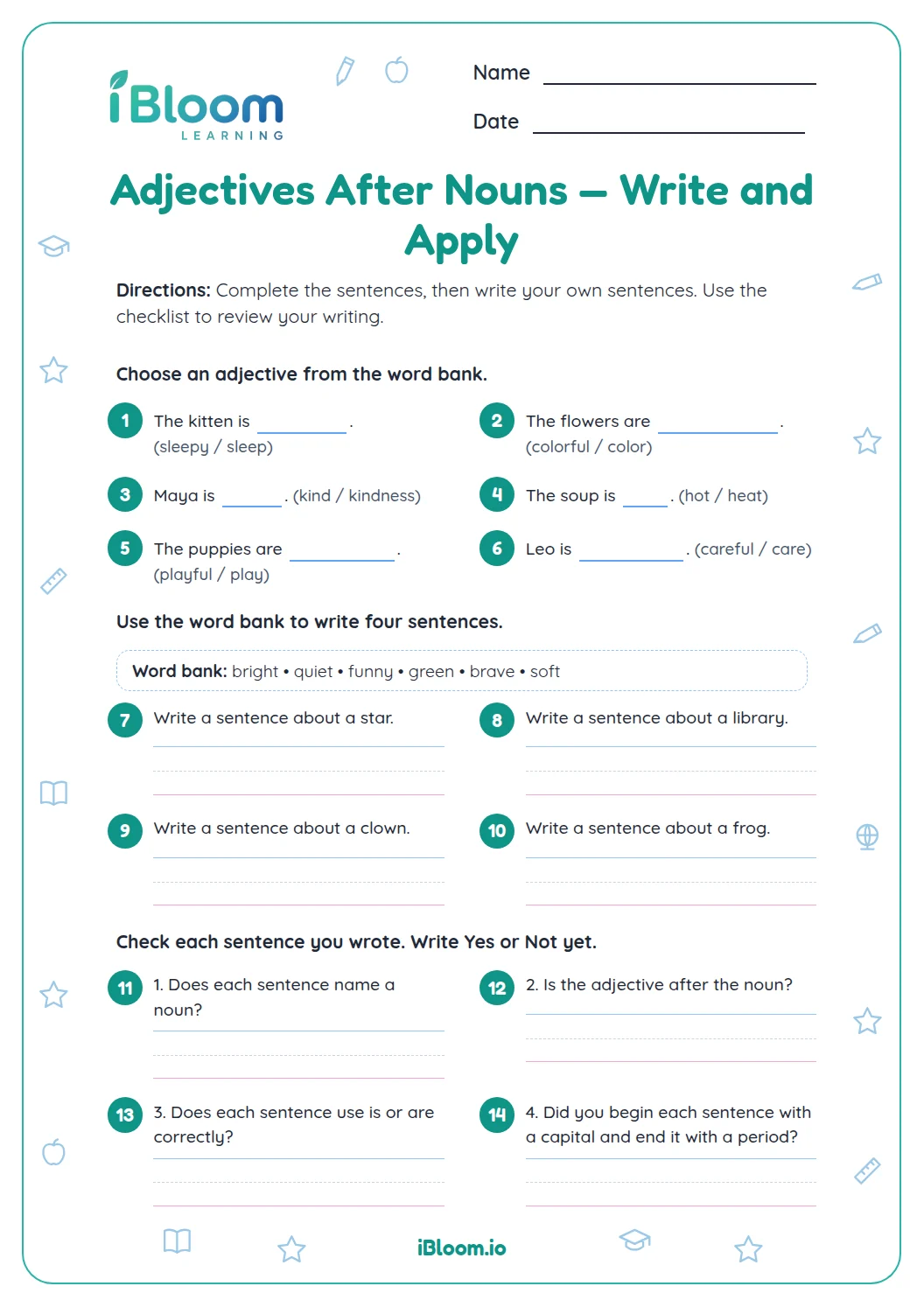
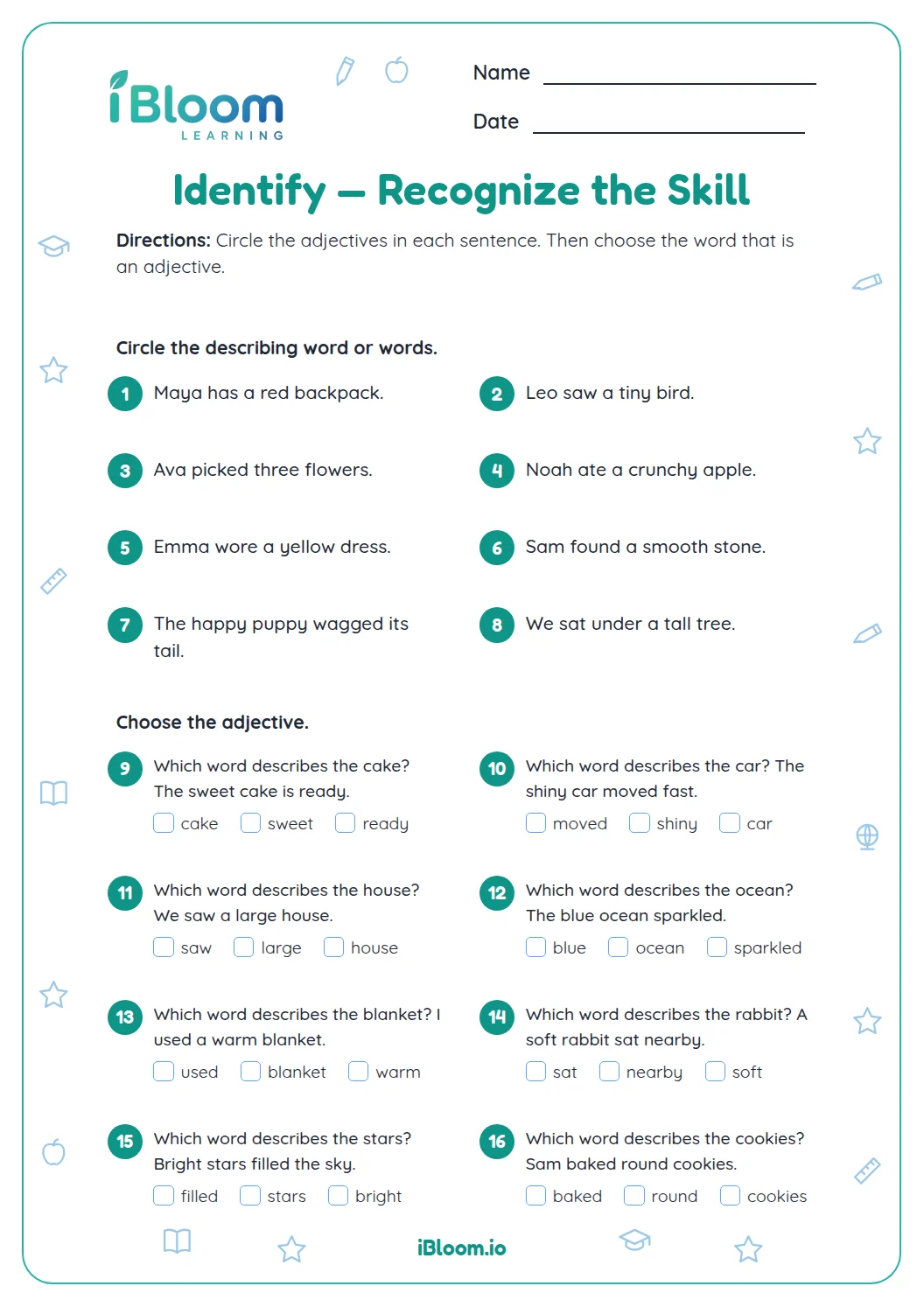
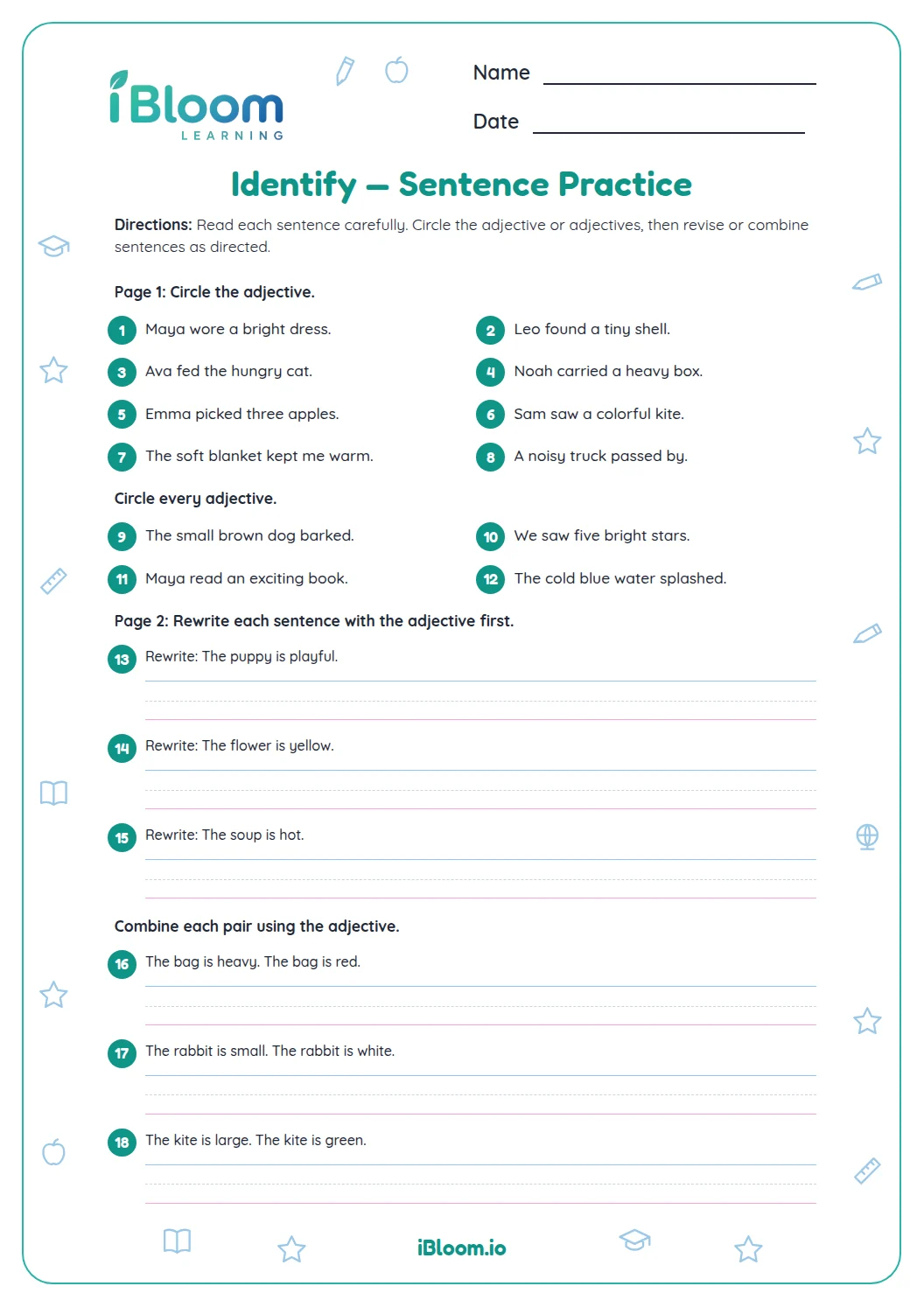
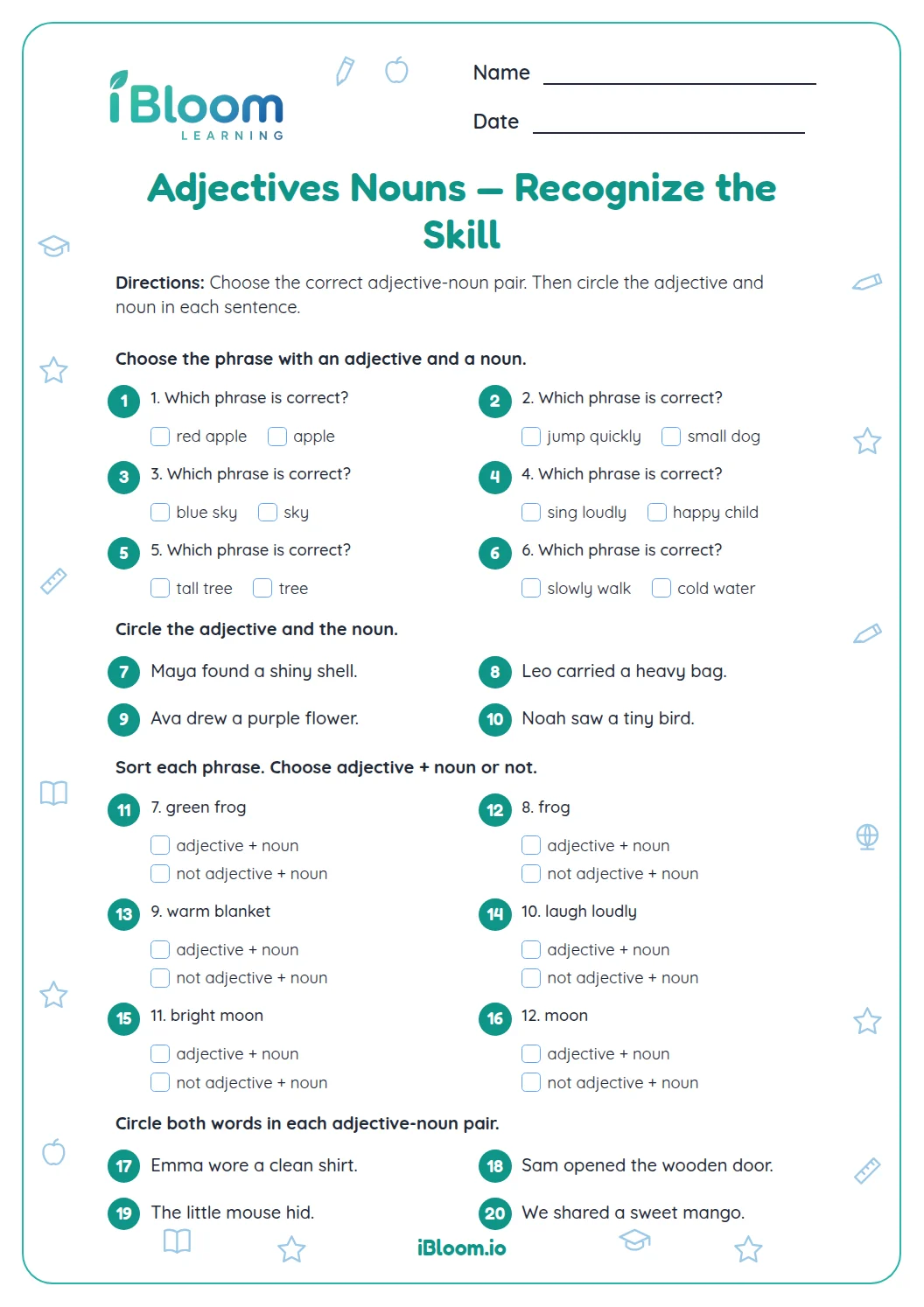
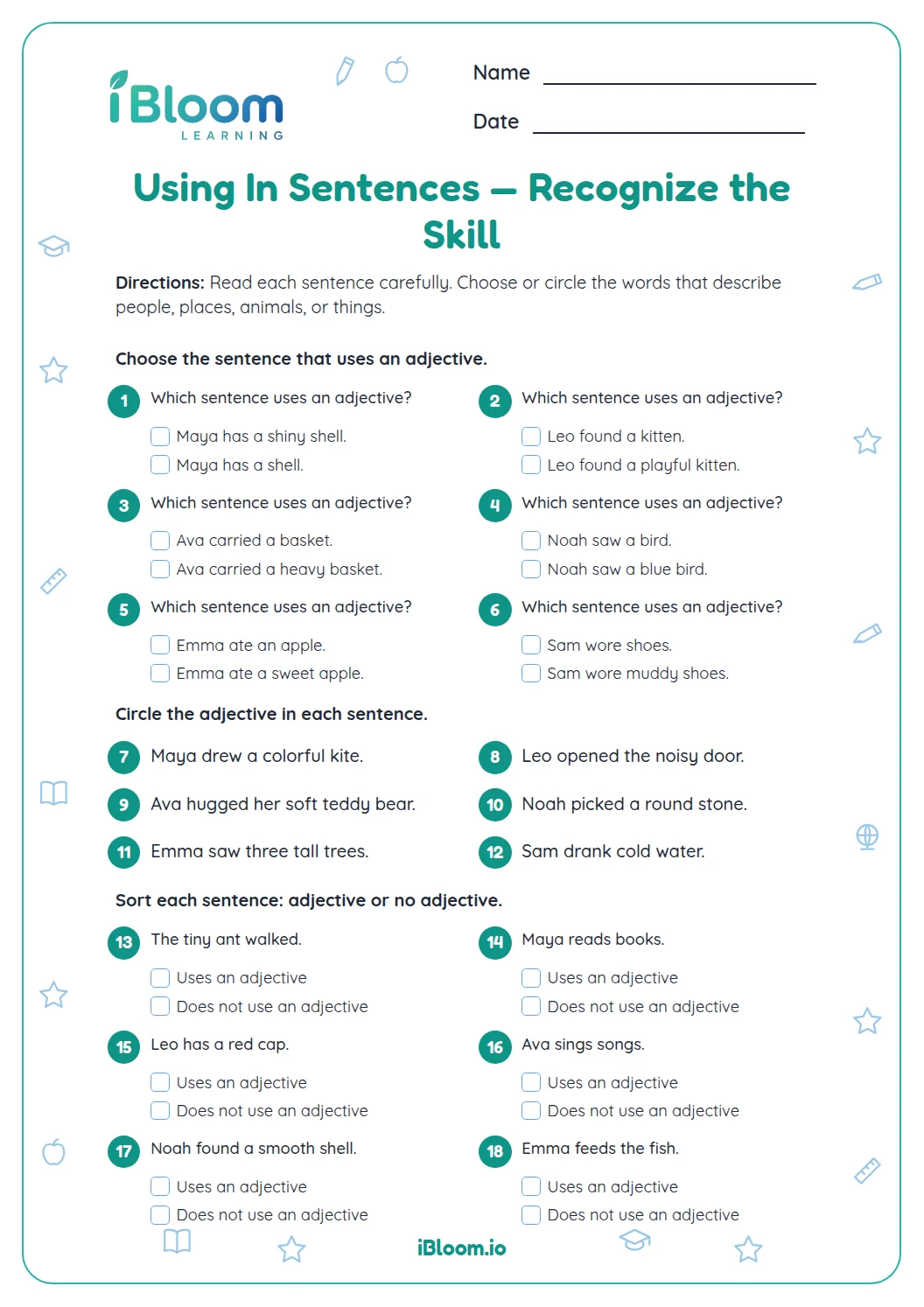
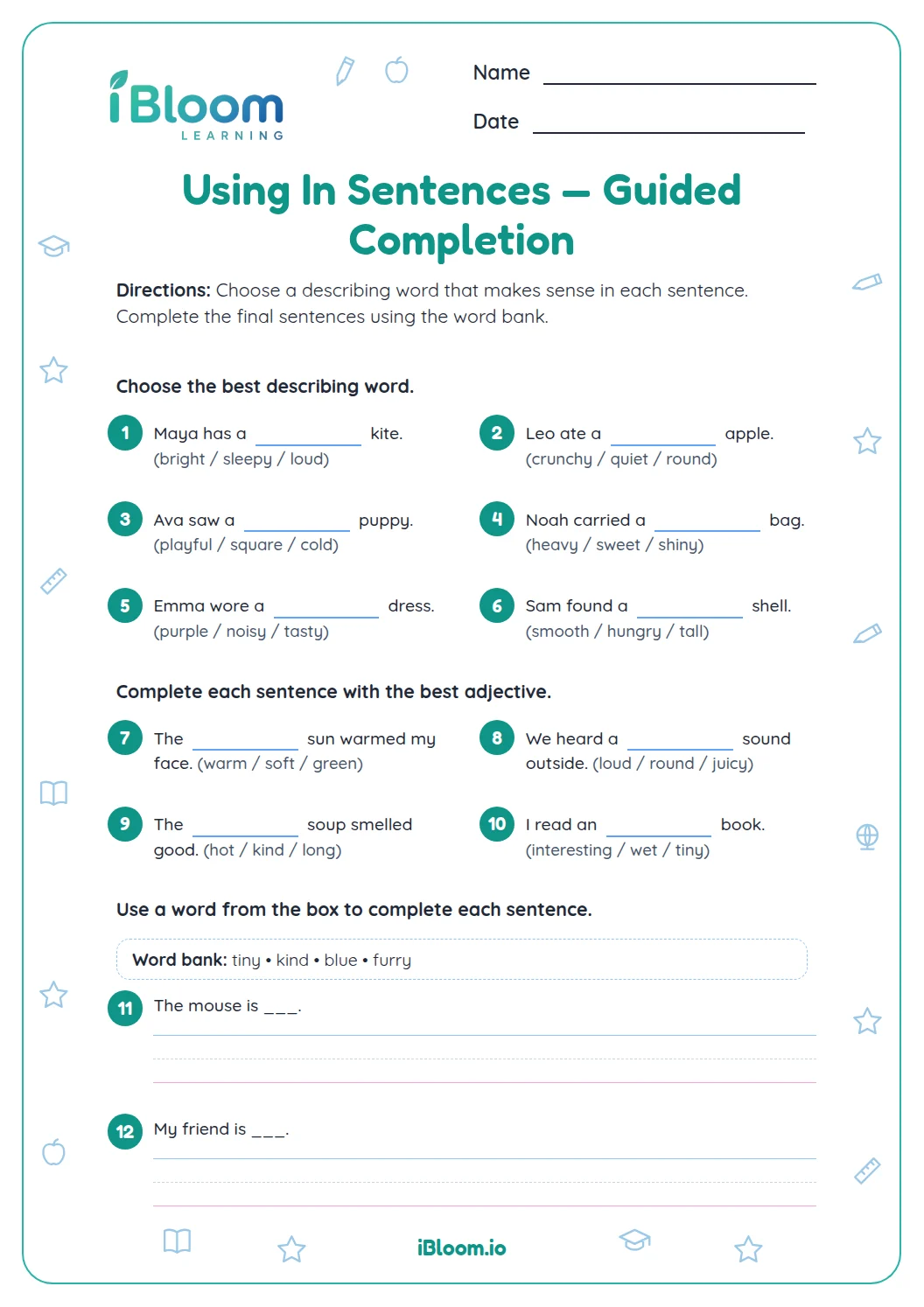
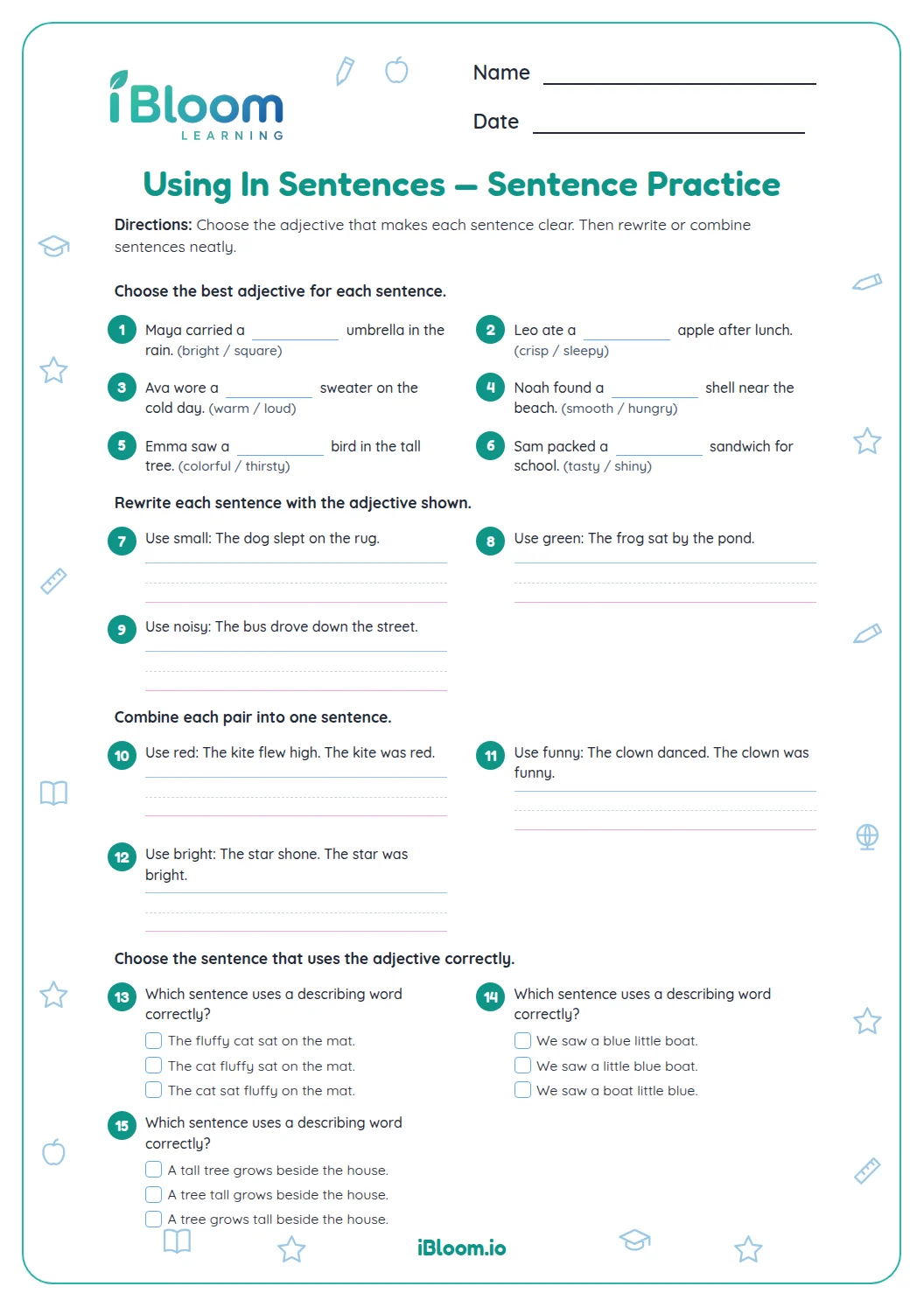
This free printable Grade 2 grammar worksheet practices adjectives after nouns. Students identify a describing word in a sentence, choose a sentence with the adjective after its noun, and correct an awkward word order. Four final questions contrast adjectives that describe nouns with adverbs that describe actions. The 16 questions are split into three parts and come with a separate answer key. The contrast practice aligns with CCSS L.2.1.e, using adjectives and adverbs according to what each modifies.
Aligned to L.2.1.e
How can you spot an adjective after a noun?
Parts A and B use sentences such as “The soup is warm.” Find the noun first, then ask what it is like. Warm describes soup and follows the noun through the linking verb is.
- 1The shell is shiny.
- 2Shell is the noun. Shiny tells what the shell is like, so shiny is the adjective after the noun.
How do you fix the adjective order?
Part B asks students to repair a sentence where the adjective is placed awkwardly. Keep the noun and its idea, then move the describing word after a linking verb: “The cookie smells sweet.”
When does a sentence need an adverb instead?
Part C contrasts describing a noun with describing an action. In “The kitten seems playful,” playful describes the kitten. In “The puppy barks loudly,” loudly tells how the puppy barks.
How can the answer key support practice?
Check each part after it is finished. When a choice is missed, identify the noun or action word and ask what the describing word modifies. That helps explain why the sentence needs an adjective or adverb.
Read each sentence for what is being described
- 1Find the noun or action named in the sentence.
- 2Ask whether the missing word describes the noun or tells how an action happens.
- 3Check the word’s position after the noun or action.
- 4For a correction, read the full sentence aloud in the new order.
- 5Finish a part before comparing answers with the key.
Adjective and adverb mix-ups
The mistake
Choosing an adverb after a linking verb, as in “The kitten seems playfully.”
The fix
The word describes the kitten, so use the adjective: playful.
The mistake
Choosing an adjective to tell how an action happens, as in “The puppy barks loud.”
The fix
The word describes how the puppy barks, so use loudly.
The mistake
Leaving an adjective before the noun when the question asks for it after the noun.
The fix
Use a linking verb and read the sentence: “The sky looks blue.”
Common Core alignment
Students choose adjectives and adverbs according to the words they describe.
Choose adjectives or adverbs based on whether they modify a noun or action.
On this sheet: Students choose adjectives that describe nouns and adverbs that describe actions.
Show the official wordingHide the official wording
Use adjectives and adverbs, and choose between them depending on what is to be modified.
What to practice next
Make more practice
Further reading
Questions parents and teachers ask
What is an adjective after a noun?
It is an adjective that comes after the noun it describes, usually after a linking verb. In “The shell is shiny,” shell names the thing and shiny describes it. The first two parts of this worksheet ask students to recognize and use that sentence pattern.
How many questions are on this worksheet?
There are 16 questions in three parts. Students spot adjectives after nouns, choose or repair sentences, and finish by selecting adjectives or adverbs according to what the word modifies. The answer key is separate and gives the correct choice for each item.
What is the difference between an adjective and an adverb?
An adjective describes a noun, as playful describes the kitten in “The kitten seems playful.” An adverb can tell how an action happens, as loudly describes barking in “The puppy barks loudly.” Part C contrasts both uses and asks students to notice what each word describes.
What grade is this adjective worksheet for?
It is written for Grade 2 and focuses on adjectives and adverbs in sentences. The final part practices CCSS L.2.1.e by asking which kind of word modifies a noun or action. Earlier questions keep attention on adjectives following nouns, a pattern students can recognize in complete sentences.
How can I explain a missed answer?
Ask what the word describes. If it tells what the noun is like, use an adjective, as in “The rose smells sweet.” If it tells how an action happens, use an adverb, as in “The bird sings beautifully.” Read the sentence aloud after choosing.