





About this worksheet
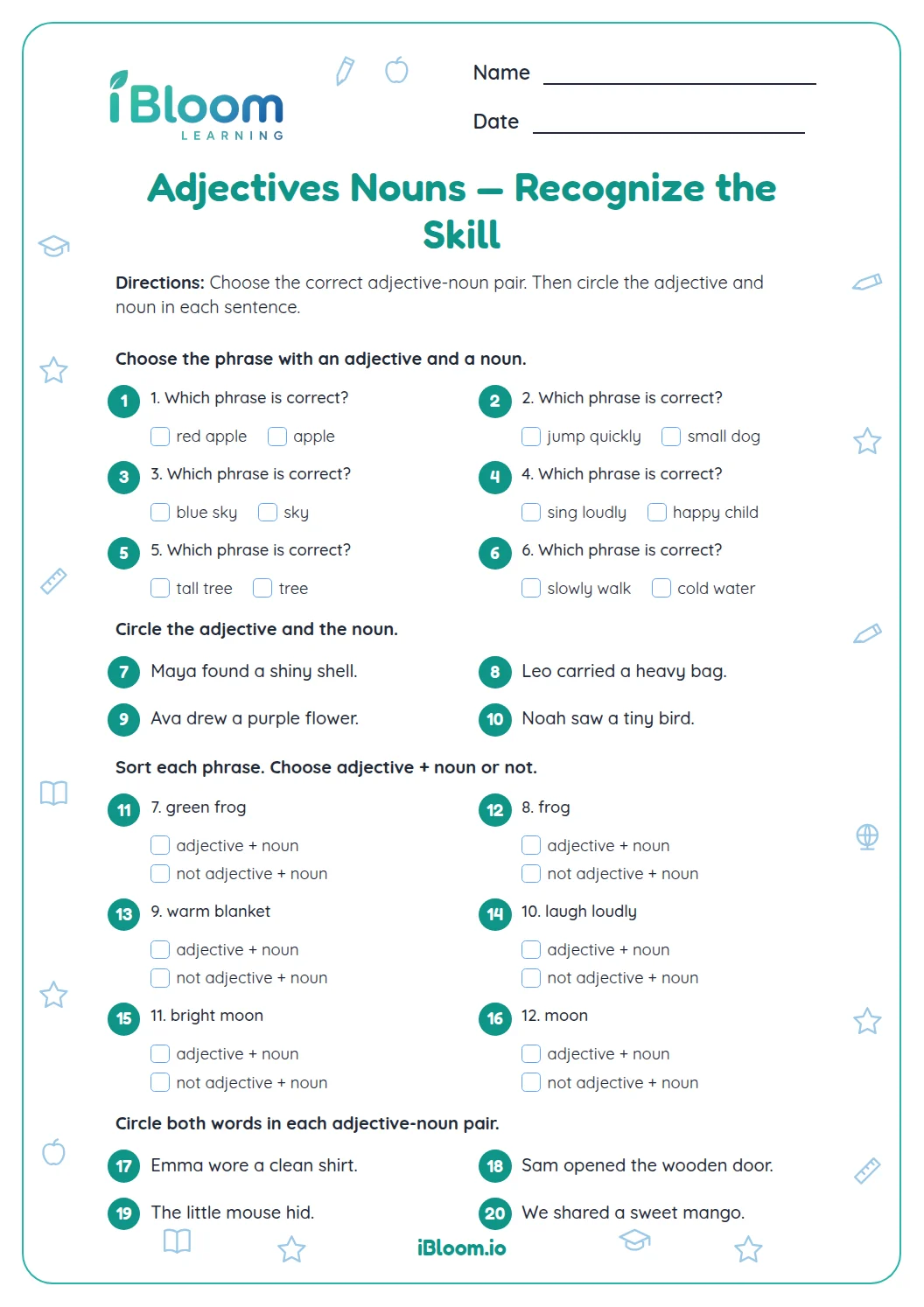
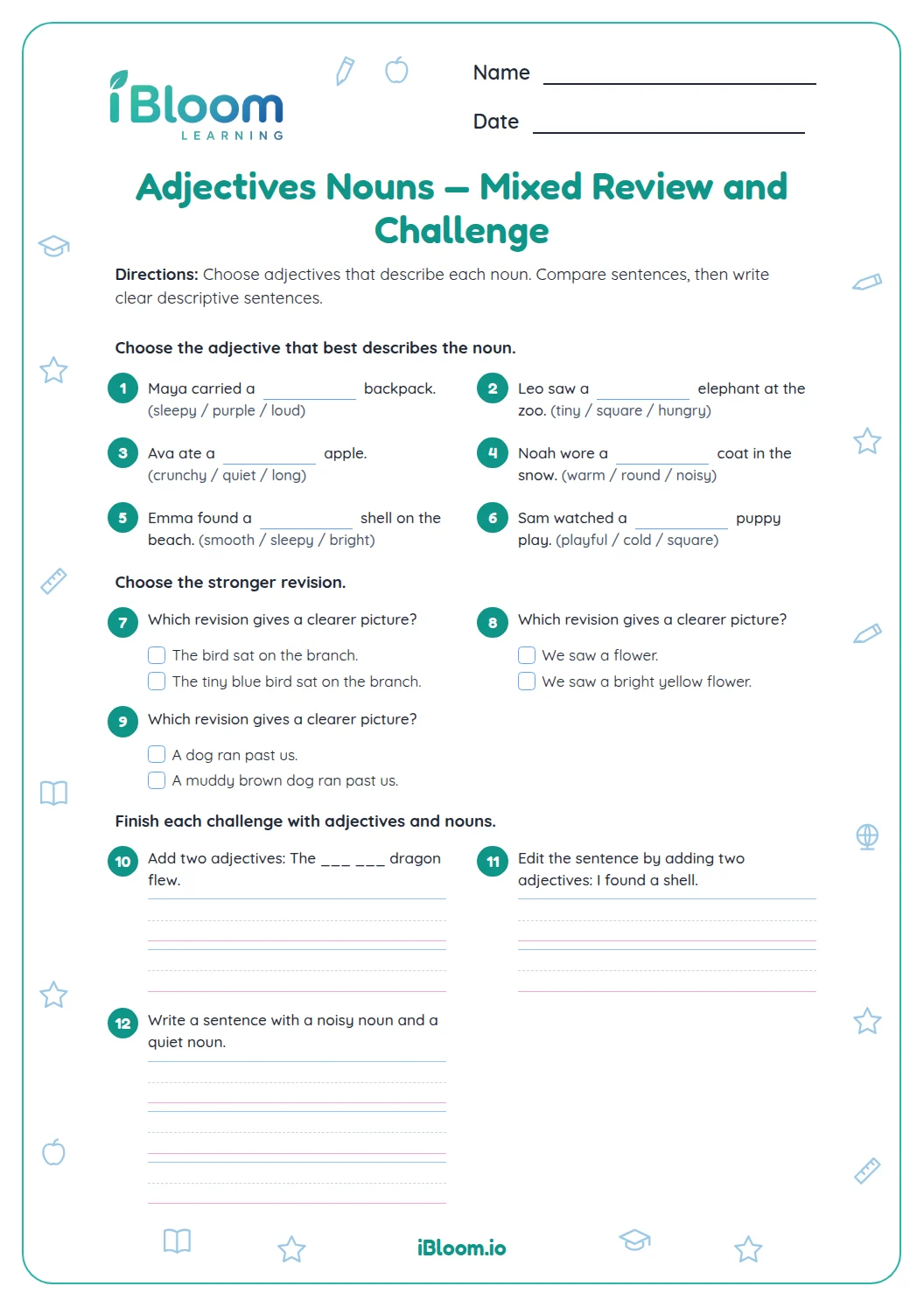
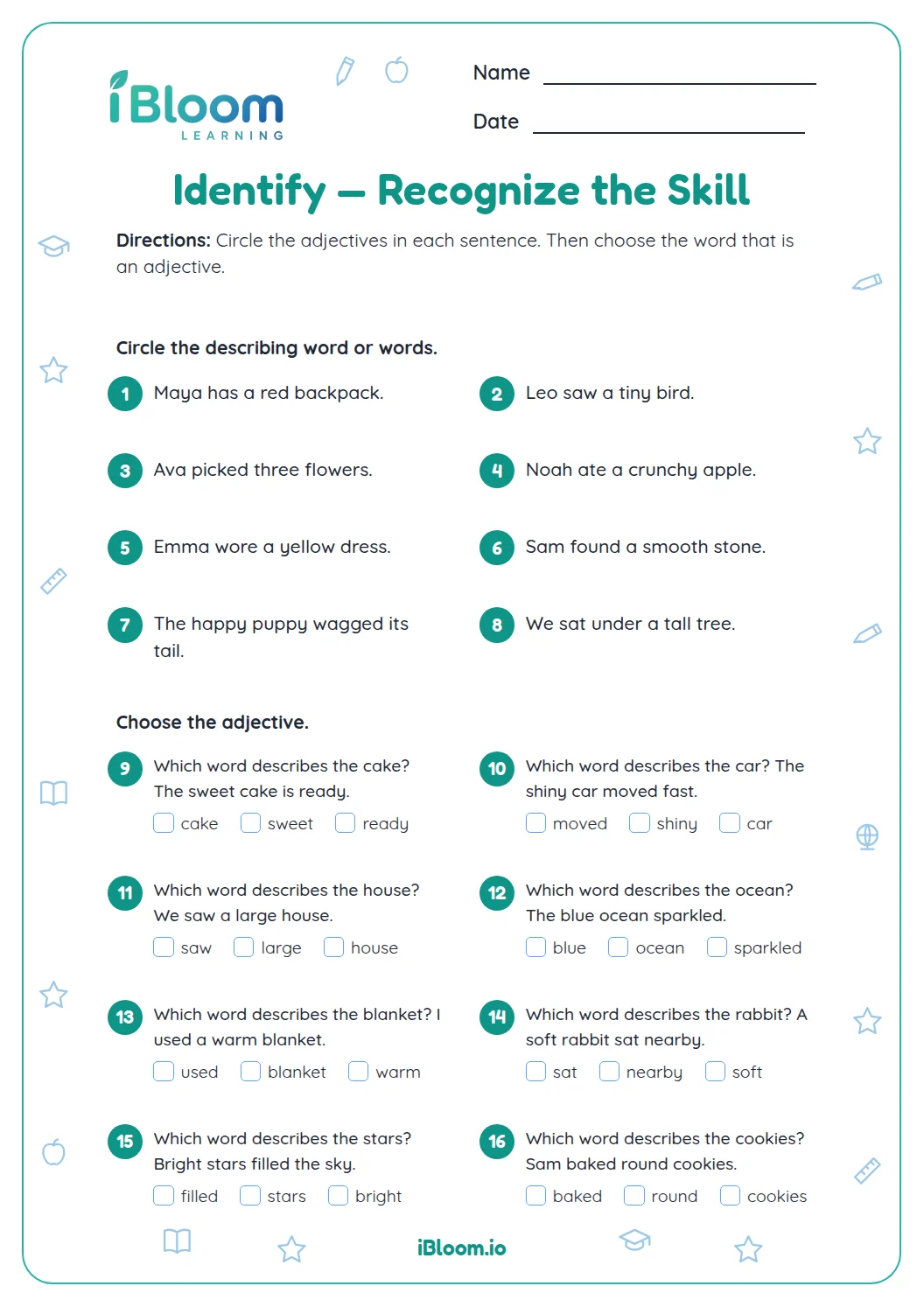
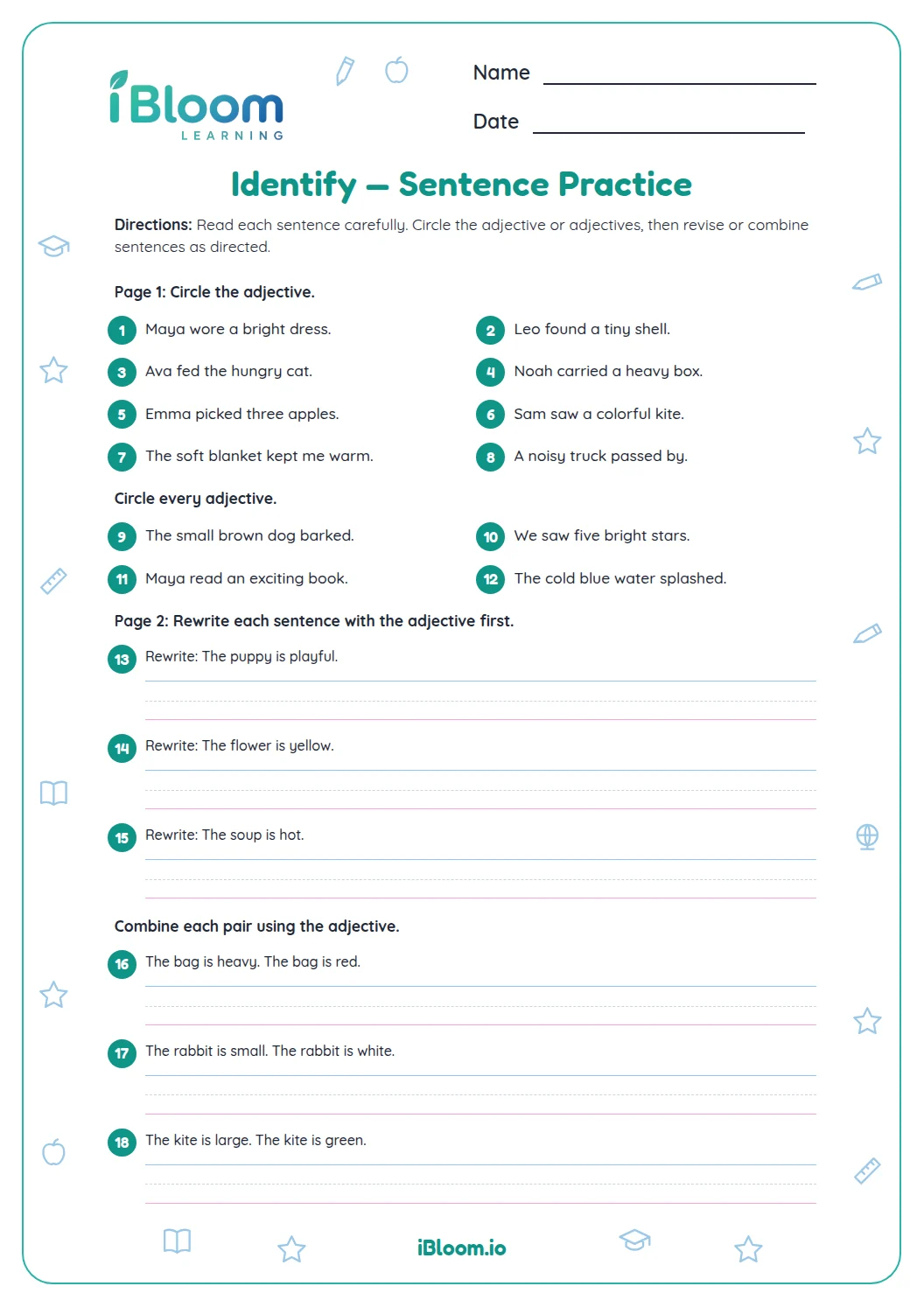
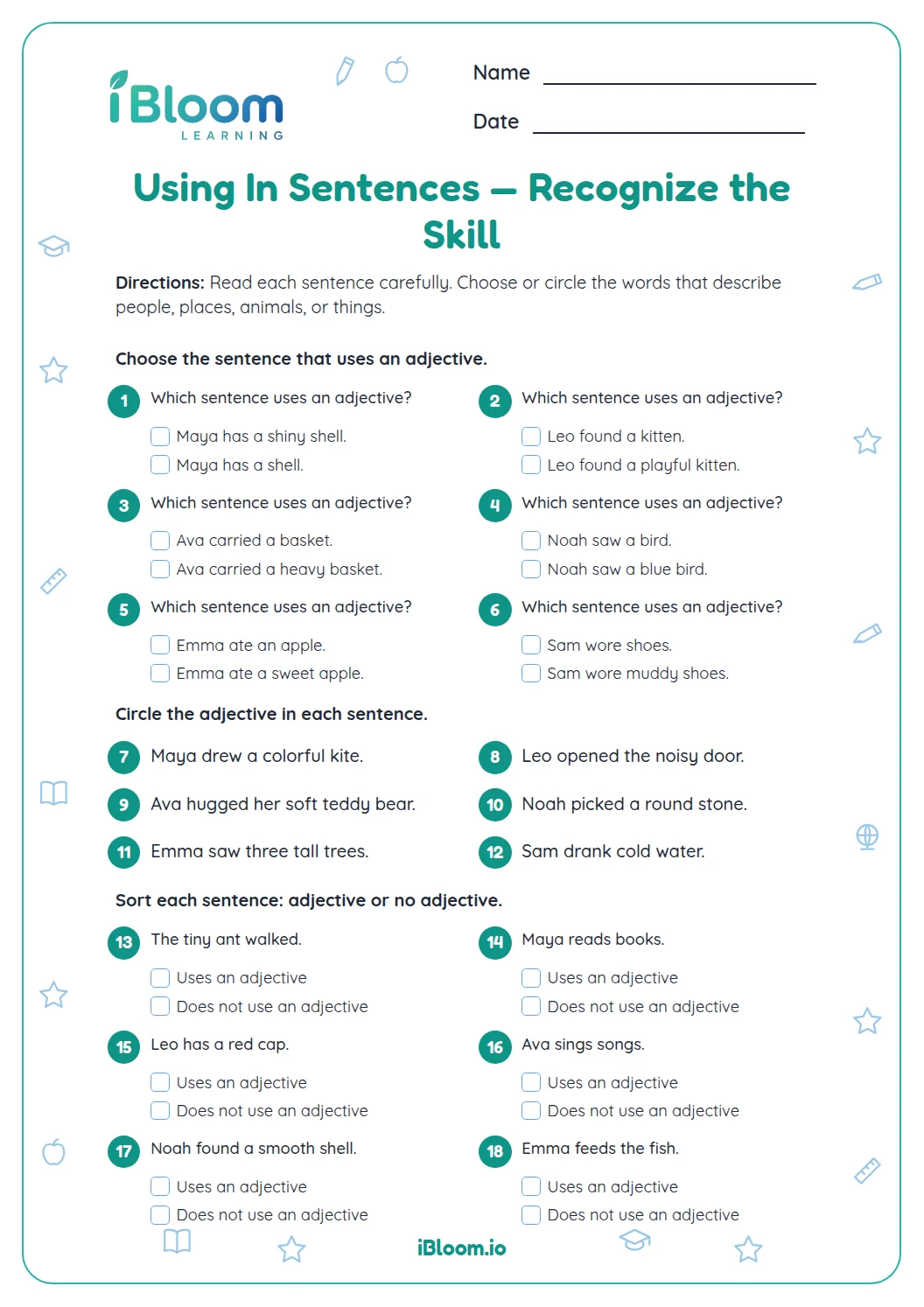
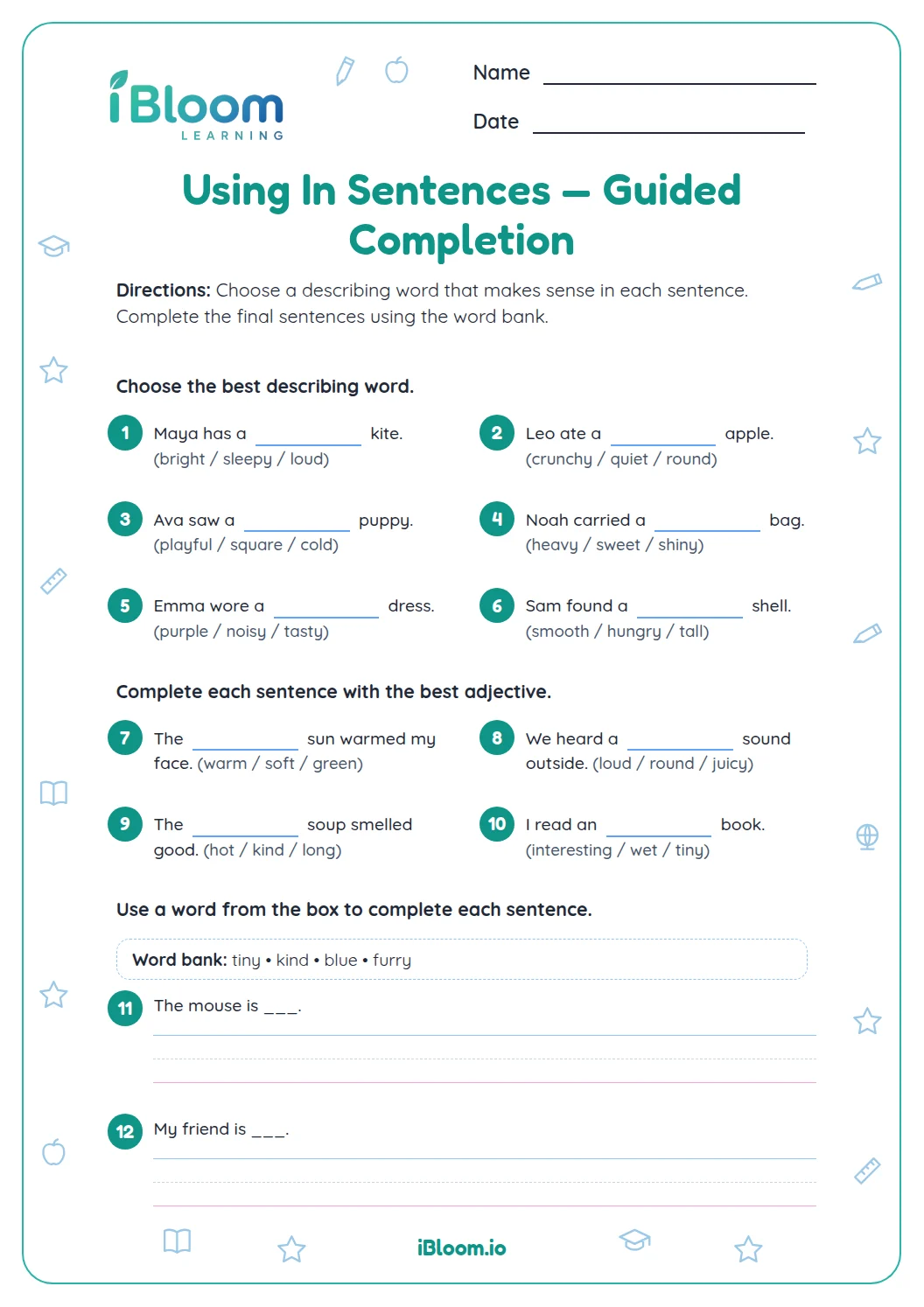
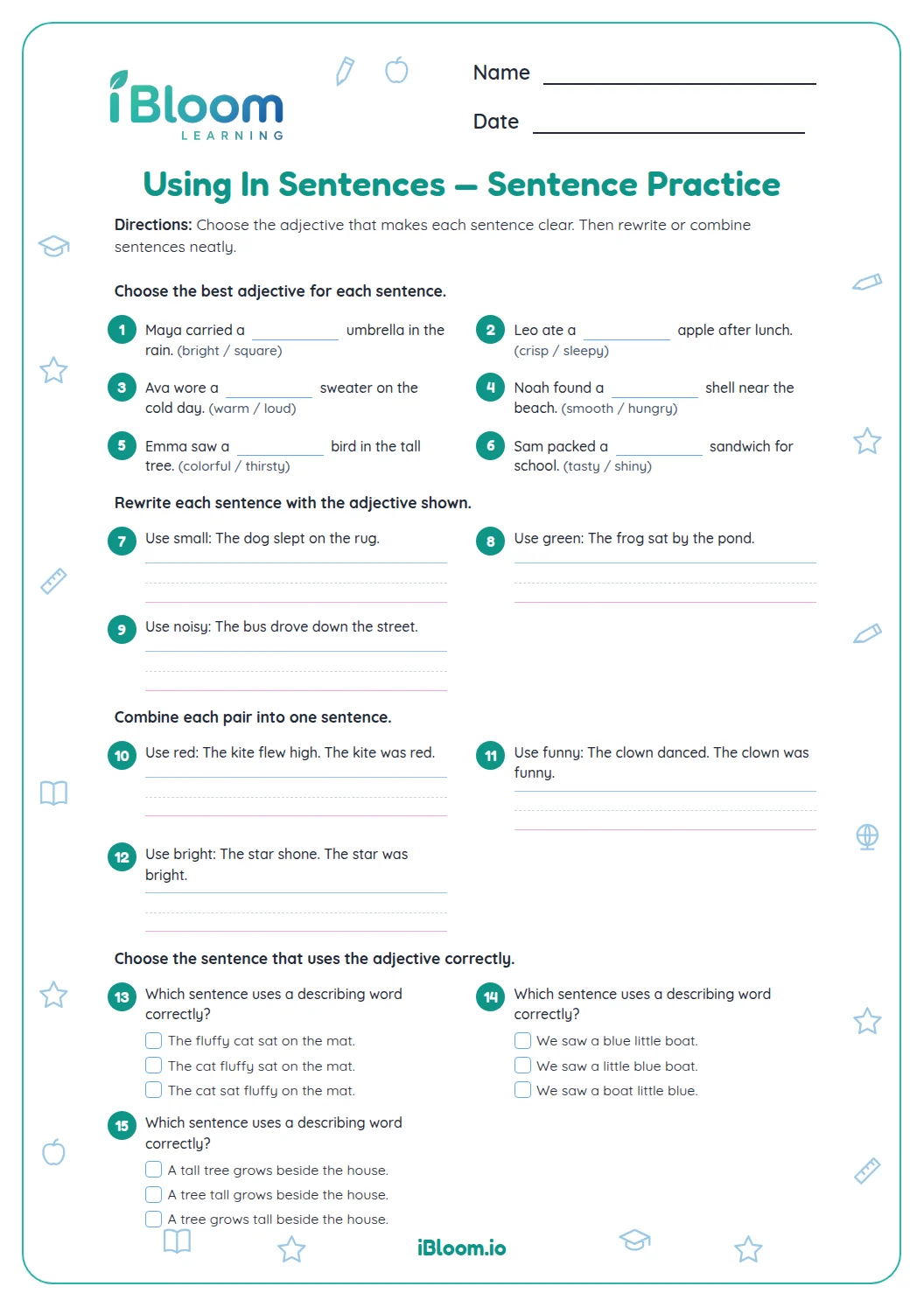
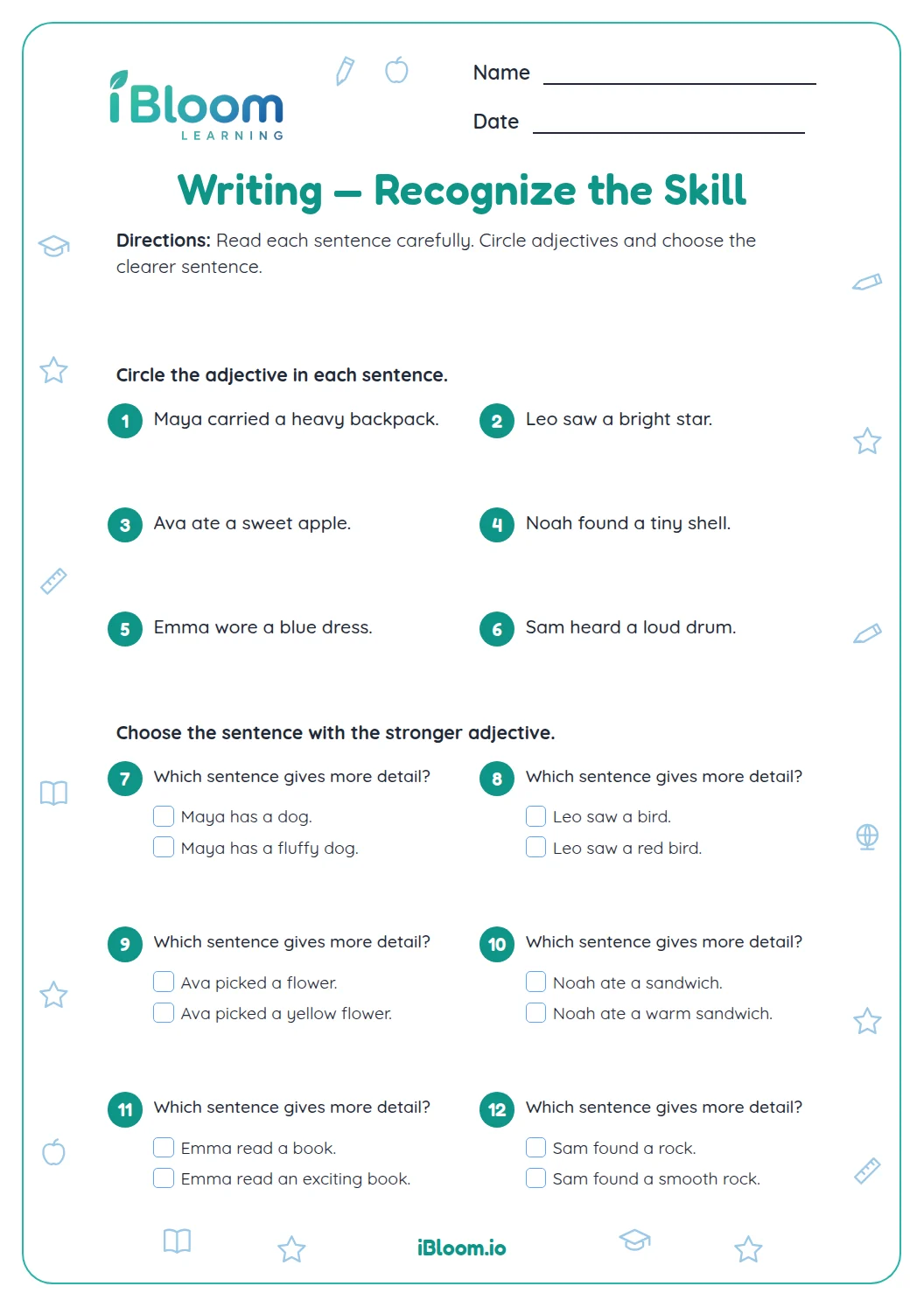
This Grade 2 worksheet builds adjective and noun skills through several kinds of editing. Students identify describing words and the nouns they describe, correct adjective placement in sentences, explain why an adjective needs a noun, and revise a short paragraph. Fourteen questions move from word recognition to sentence and paragraph editing. The answer key includes corrected examples and a sample paragraph rewrite.
Aligned to L.2.1.e
How do adjectives describe nouns?
The first eight items ask children to identify either the adjective or its noun. Then they repair phrases where the adjective is misplaced or the noun is missing.
- 1Kitten names the animal; fluffy describes the kitten.
How can you fix adjective placement?
Find the describing word and the noun it belongs with. In “The brown ran fast dog,” brown describes dog, so put the pair together: “The brown dog ran fast.”
- 1The adjective brown describes dog. Move them together: “The brown dog ran fast.”
How do you edit a whole paragraph?
Check each describing word and make sure it has a noun. Move adjectives before their nouns, then reread each sentence so the paragraph still makes sense.
- 1A shell shiny becomes a shiny shell.
How to use this worksheet
- 1Find the noun named in each question.
- 2Choose the word that describes the noun.
- 3Move adjectives before their nouns when editing sentences.
- 4Add a noun when a describing word has no word to modify.
- 5Reread the paragraph and check every adjective-noun pair.
Common mix-ups and quick fixes
The mistake
Choosing the action word instead of the adjective.
The fix
Find the noun first, then look for the word that describes it.
The mistake
Leaving an adjective without a noun, as in “a crunchy.”
The fix
Add a noun that makes sense, such as “a crunchy apple.”
The mistake
Moving an adjective but changing the sentence meaning.
The fix
Reread the whole sentence after editing and check that the right noun is described.
Common Core alignment
This worksheet practices L.2.1.e through focused, grade-level work.
Identify adjectives and nouns, then edit phrases to put describing words before nouns.
On this sheet: The questions ask students to practice the skill described in L.2.1.e.
Show the official wordingHide the official wording
Use adjectives and adverbs, and choose between them depending on what is to be modified.
What to practice next
Make more practice
Further reading
Questions parents and teachers ask
What is an adjective?
An adjective describes a noun, and a noun names a person, place, thing, or animal. In “The fluffy kitten slept,” kitten is the noun and fluffy describes it. The worksheet asks students to identify both word roles before they edit.
What is a noun?
A noun names a person, place, thing, or animal. In question 1, kitten is the noun because it names the animal. The describing word fluffy tells what kind of kitten, so it is the adjective. The worksheet asks children to distinguish both parts.
What does the edit section ask students to do?
Students identify adjectives and nouns, rewrite sentences so the adjective sits with its noun, explain why a phrase is incomplete, and edit a short paragraph. For example, “The brown ran fast dog” becomes “The brown dog ran fast.”
Can more than one answer work for a sample sentence?
Yes. Items marked with “Sample” allow different clear sentences, as long as the requested adjective appears before the named noun. For example, a child may add a sensible describing word to “kite” and write a phrase or sentence that reads naturally.
How can I help my child check an edit?
Ask your child to point to the noun first, then identify the adjective that describes it. Have them read the corrected sentence or paragraph aloud and check that each adjective has a noun. The key shows corrected sentences and a sample paragraph revision.