







About this worksheet
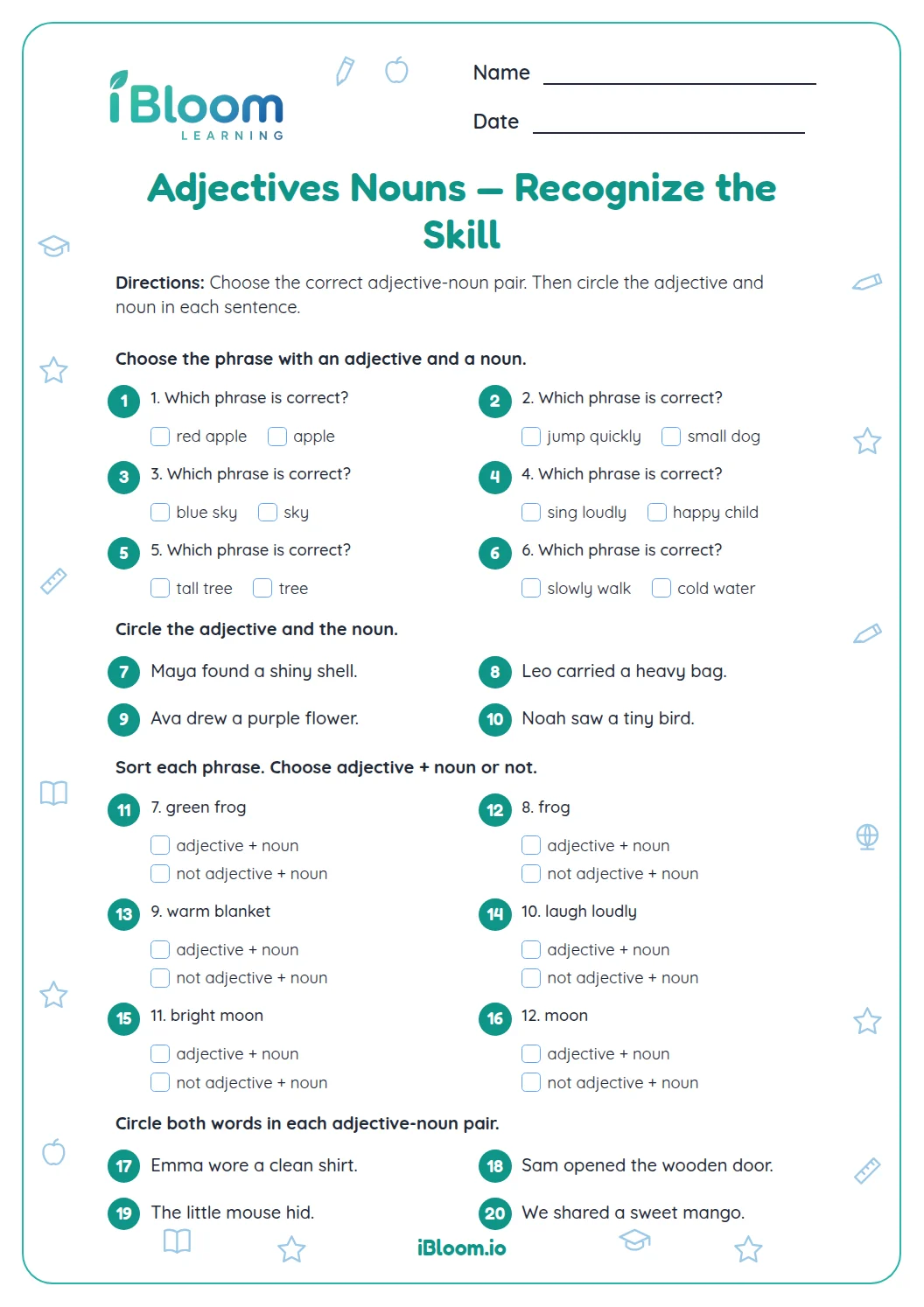
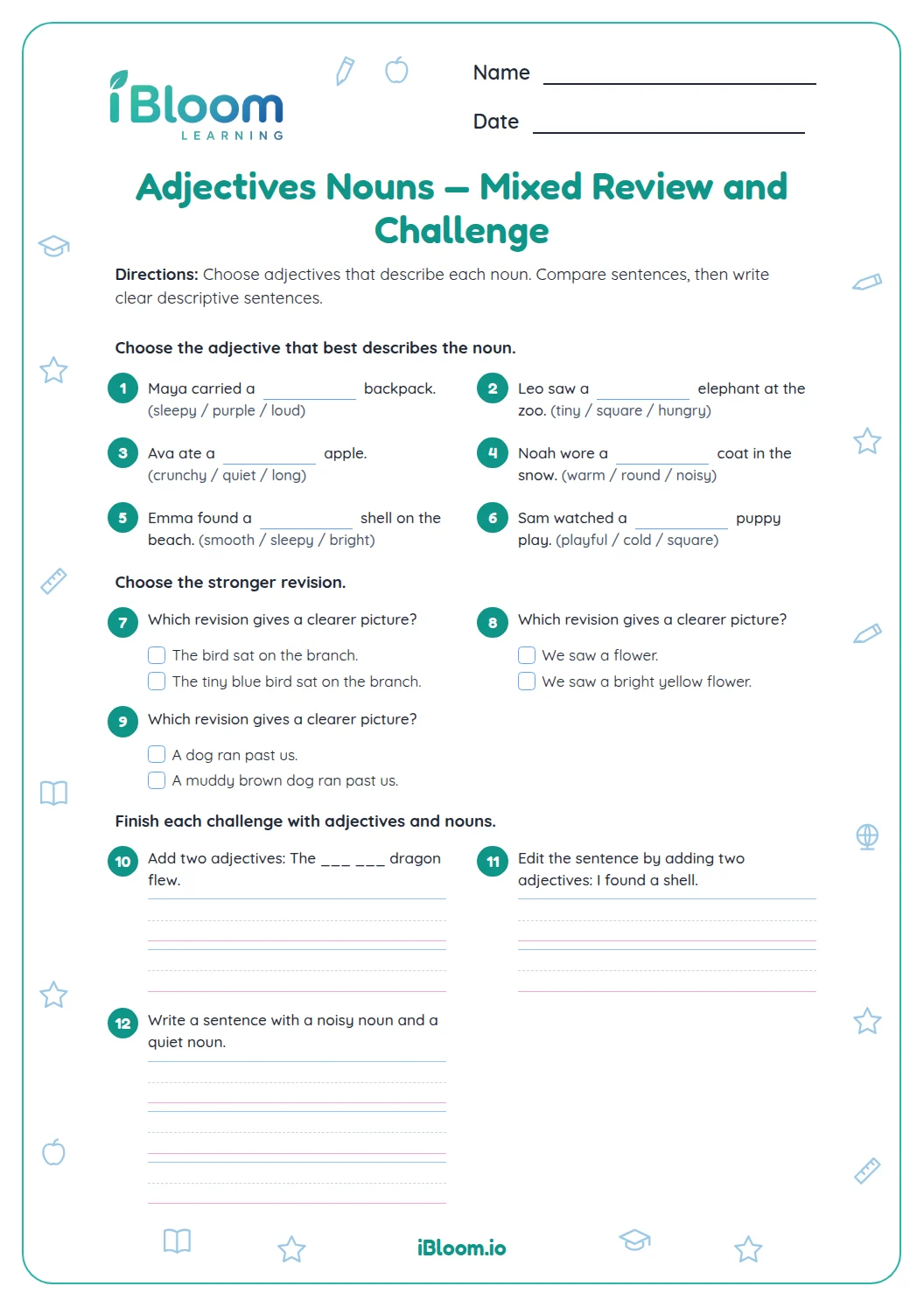
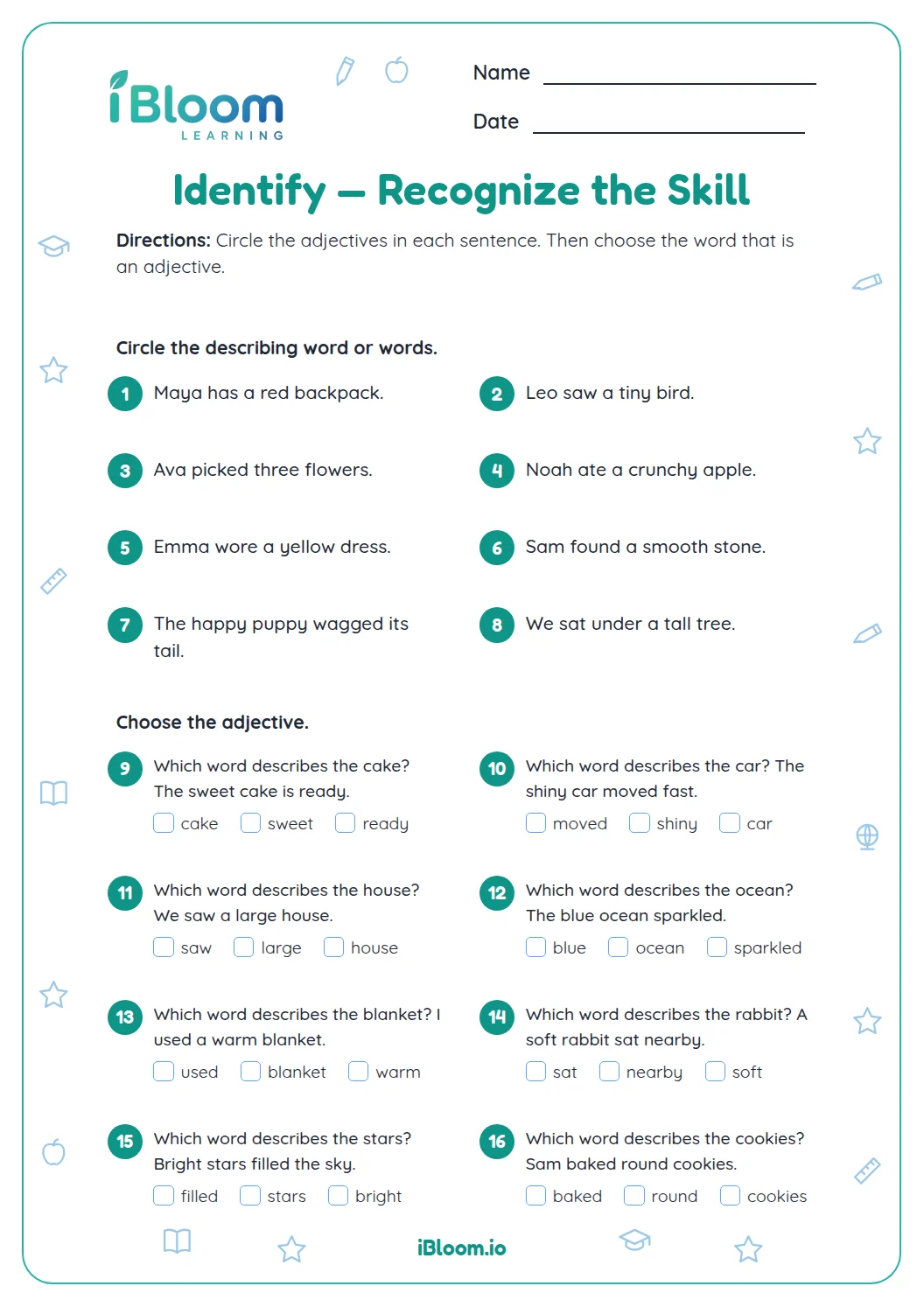
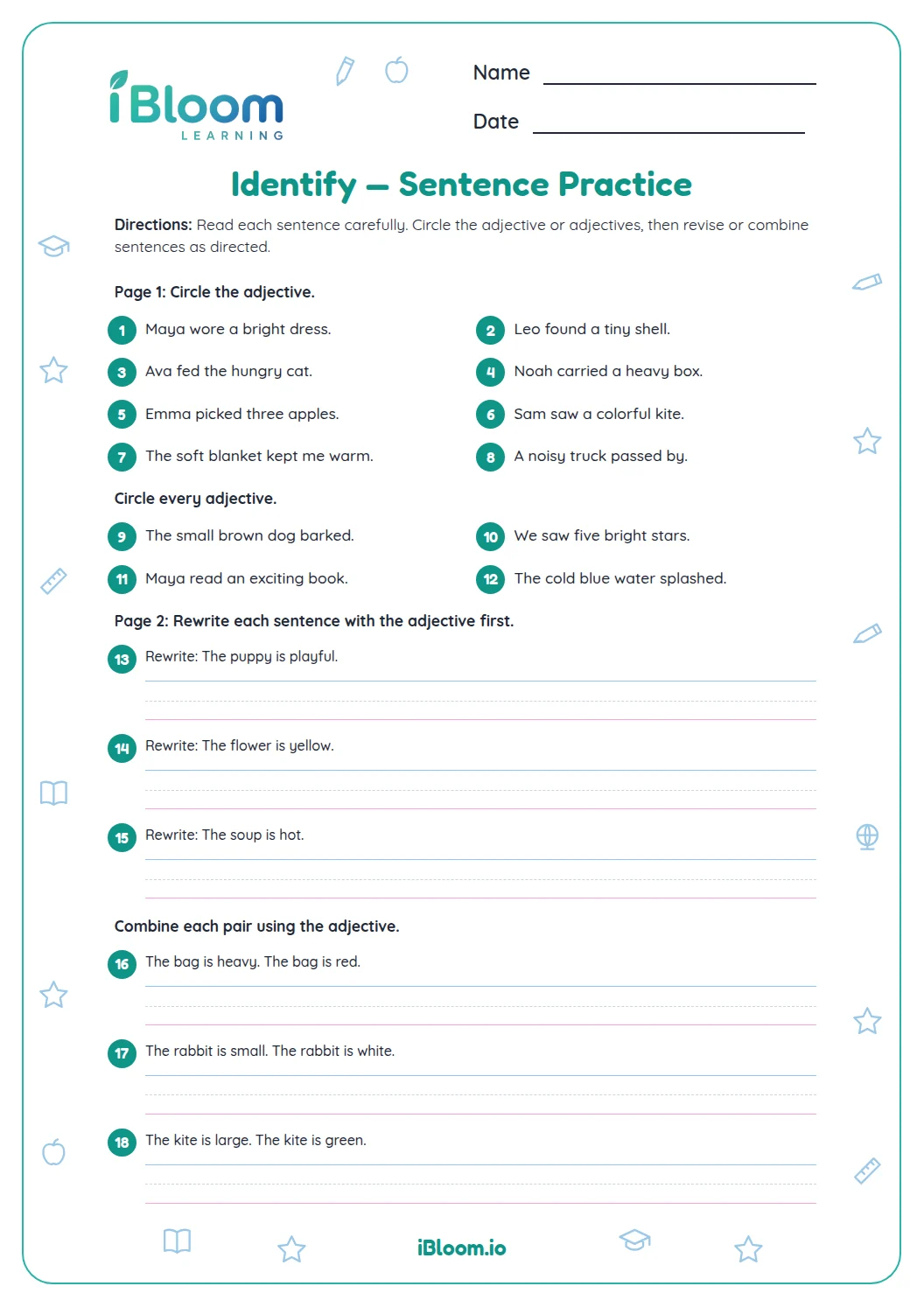
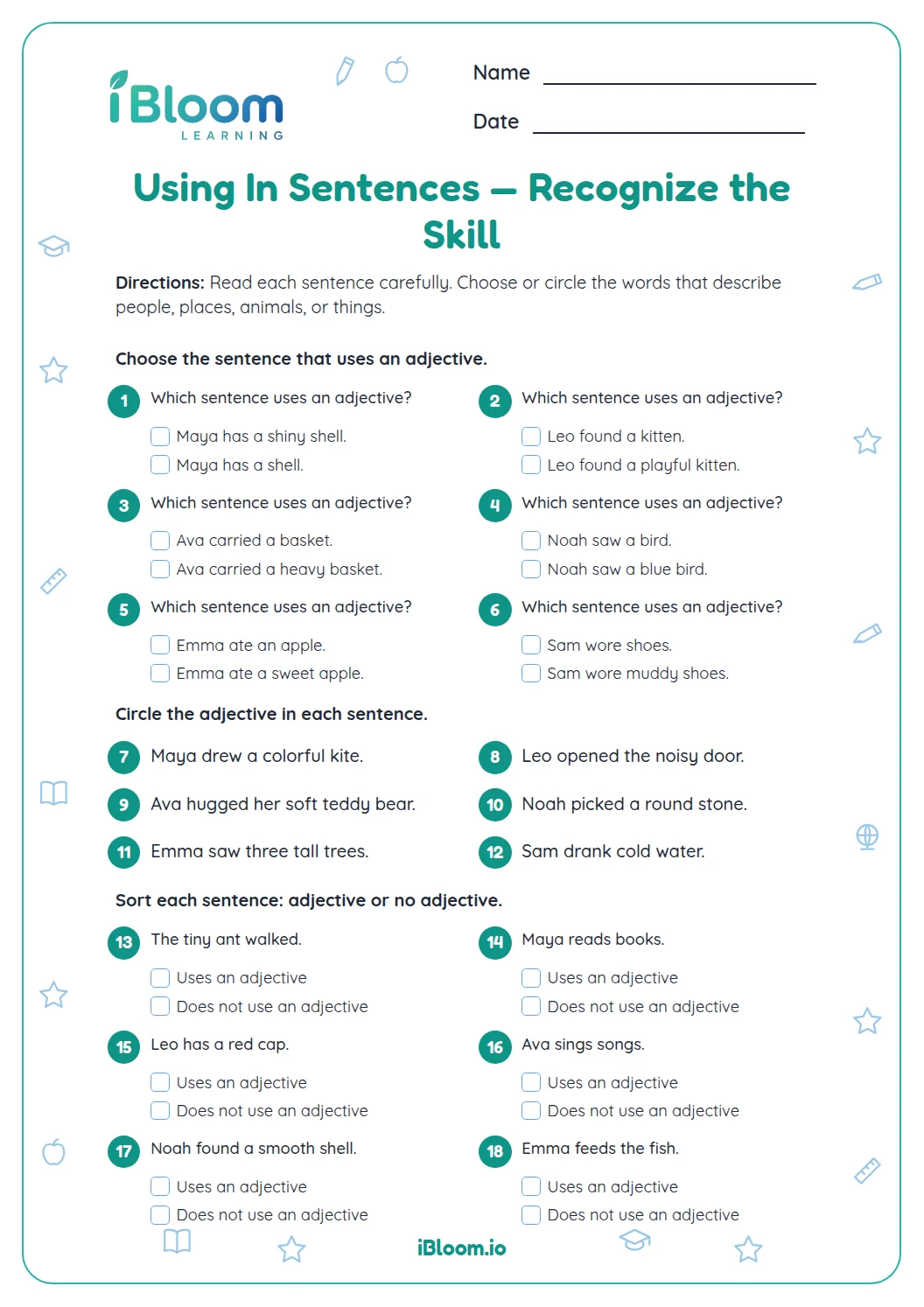
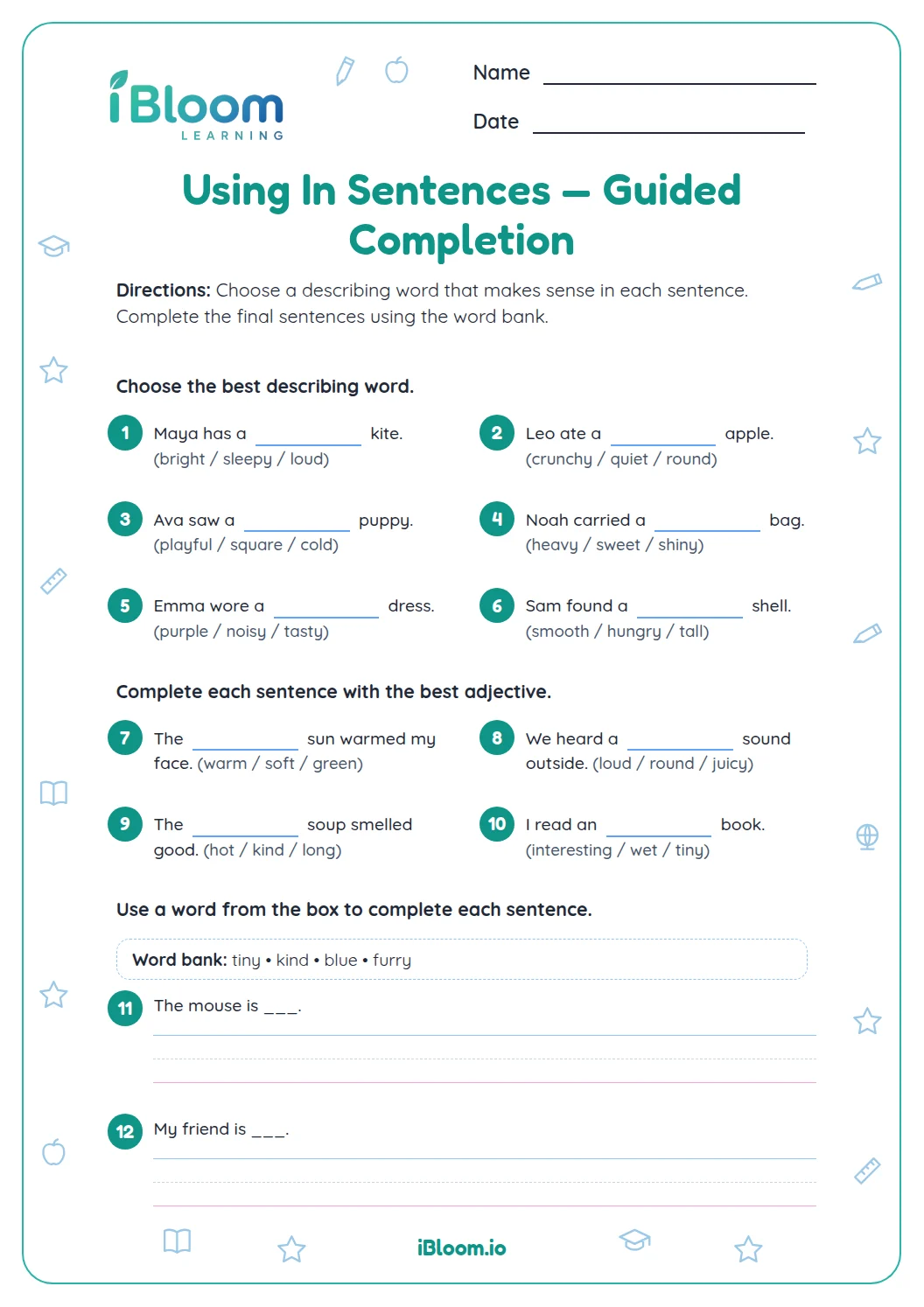
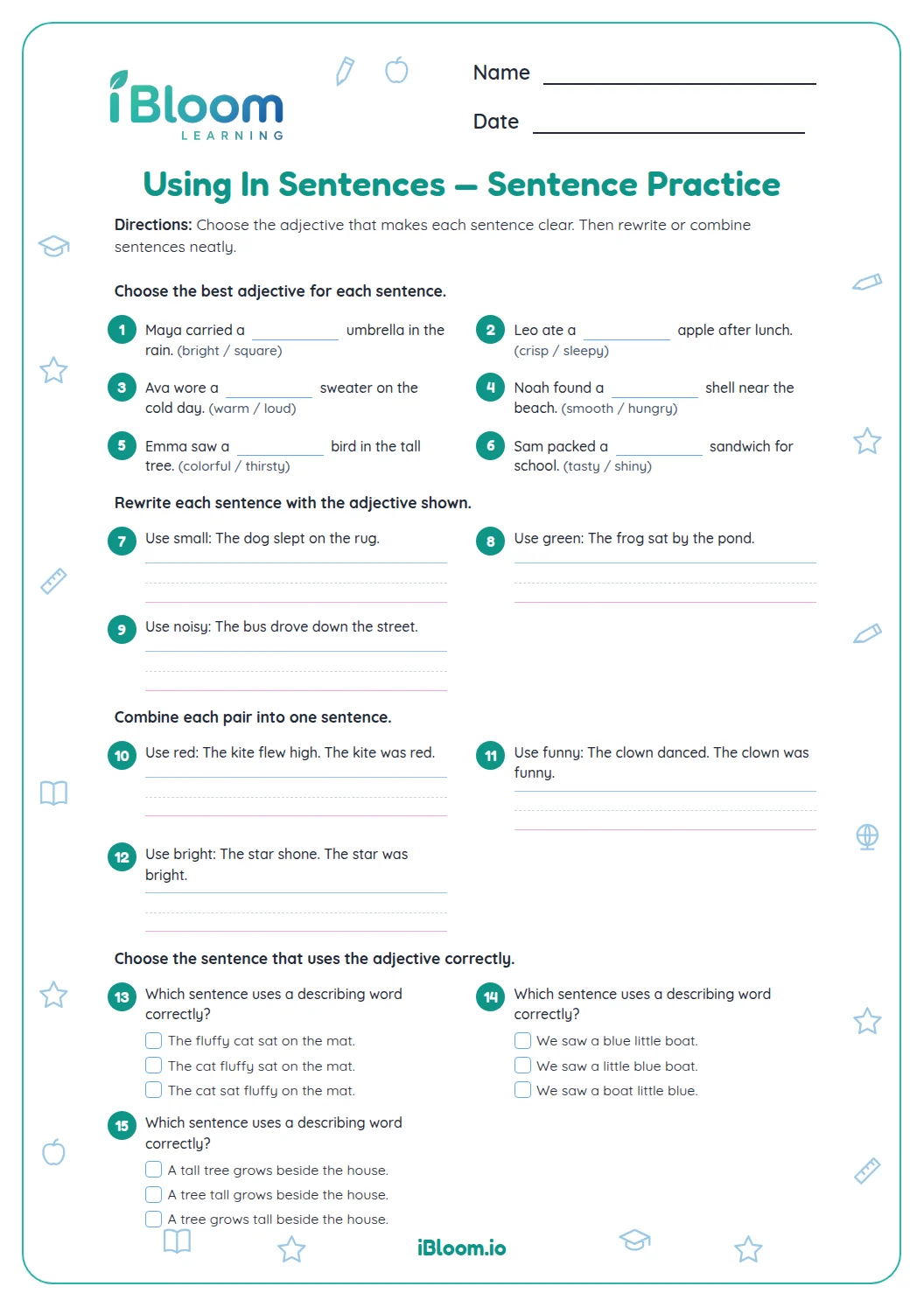
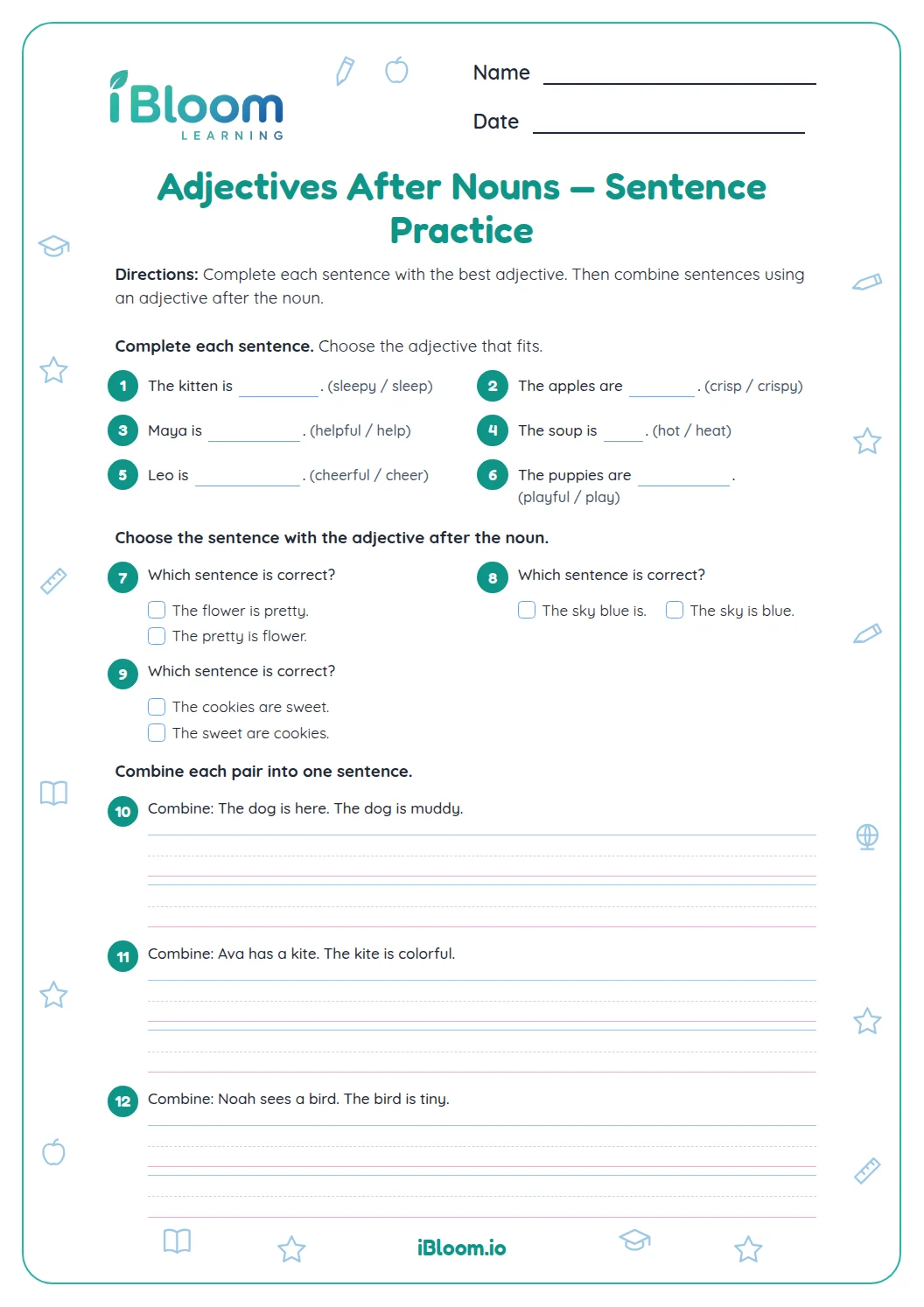
This Grade 2 worksheet moves from noticing adjectives to using them in original sentences. Children circle describing words in four short sentences, choose adjectives that tell about nouns, and then write six responses of their own. The prompts include adjectives before and after nouns, helping learners use describing words in complete sentences. The answer key lists the identification answers and sample sentences. It practices Common Core L.2.1e through adjective use and choice.
Aligned to L.2.1e
How do you spot an adjective?
Find the noun first, then ask what it is like. In “The tiny mouse hid,” mouse names an animal and tiny describes it. The circle-word questions ask children to identify that describing word.
How do you match an adjective to a noun?
Try the word in context and check that it describes the naming word. A word such as green can describe an apple; eat is an action and does not tell what the apple is like.
- 1Question: Which adjective tells about the apple?
- 2green describes the apple.
- 3“Crunch” and “eat” do not describe what kind of apple it is.
How can you use an adjective in your own sentence?
Choose a noun, add a word that tells what it is like, and read the sentence aloud. For example, “A small bird landed” names the bird and describes its size.
How to use this worksheet
- 1Read the whole sentence before circling a word.
- 2Find the naming word, then ask “What kind?”
- 3For choices, test whether each word describes a noun.
- 4For writing prompts, pick a familiar noun and one fitting adjective.
- 5Write a complete thought with a capital letter and ending mark.
- 6Use the key for the fixed answers and compare writing with the sample.
Common mistakes and quick fixes
The mistake
Circling a noun such as mouse instead of tiny.
The fix
Ask what kind of mouse; the word that answers is the adjective.
The mistake
Choosing an action word such as eat to describe an apple.
The fix
Check whether the word tells about the noun or tells what someone does.
The mistake
Writing a describing word without a complete sentence.
The fix
Add a noun and tell what it does or is, then reread the whole sentence.
Common Core alignment
Choose adjectives that describe nouns and use them in clear sentences.
On this sheet: Children identify adjectives, connect them to nouns, and apply them in their own sentences.
Show the official wordingHide the official wording
Use adjectives and adverbs, and choose between them depending on what is to be modified.
What to practice next
Make more practice
Further reading
Questions parents and teachers ask
How many questions are included?
There are 16 questions in three parts. Children circle four adjectives, choose an adjective in six multiple-choice items, and write six sentences or sentence completions. The answer key identifies the first ten answers and offers sample responses for the writing prompts.
What counts as an adjective here?
The worksheet focuses on words that describe nouns, such as tiny, red, warm, and smooth. Children first find these words in short sentences, then choose a fitting adjective and use one in a sentence of their own. The key helps check the work.
Can my child use a different adjective than the sample?
Yes. The last part invites original writing, so more than one adjective or sentence may work. The word should describe the noun clearly and the response should answer the prompt. The answer key gives one possible response as a model.
Why does the worksheet ask for complete sentences?
Putting an adjective into a full sentence shows how it connects to a noun. The writing prompts let children practice that connection, including one adjective after “is.” Encourage a capital letter and ending mark as part of the complete thought.
How can I help a child who confuses adjectives and nouns?
Ask the child to name the person, place, animal, or thing first. Then ask what kind it is. In “The tiny mouse hid,” mouse is the noun and tiny tells what kind of mouse. Repeat that question with familiar objects around the room.