



About this worksheet
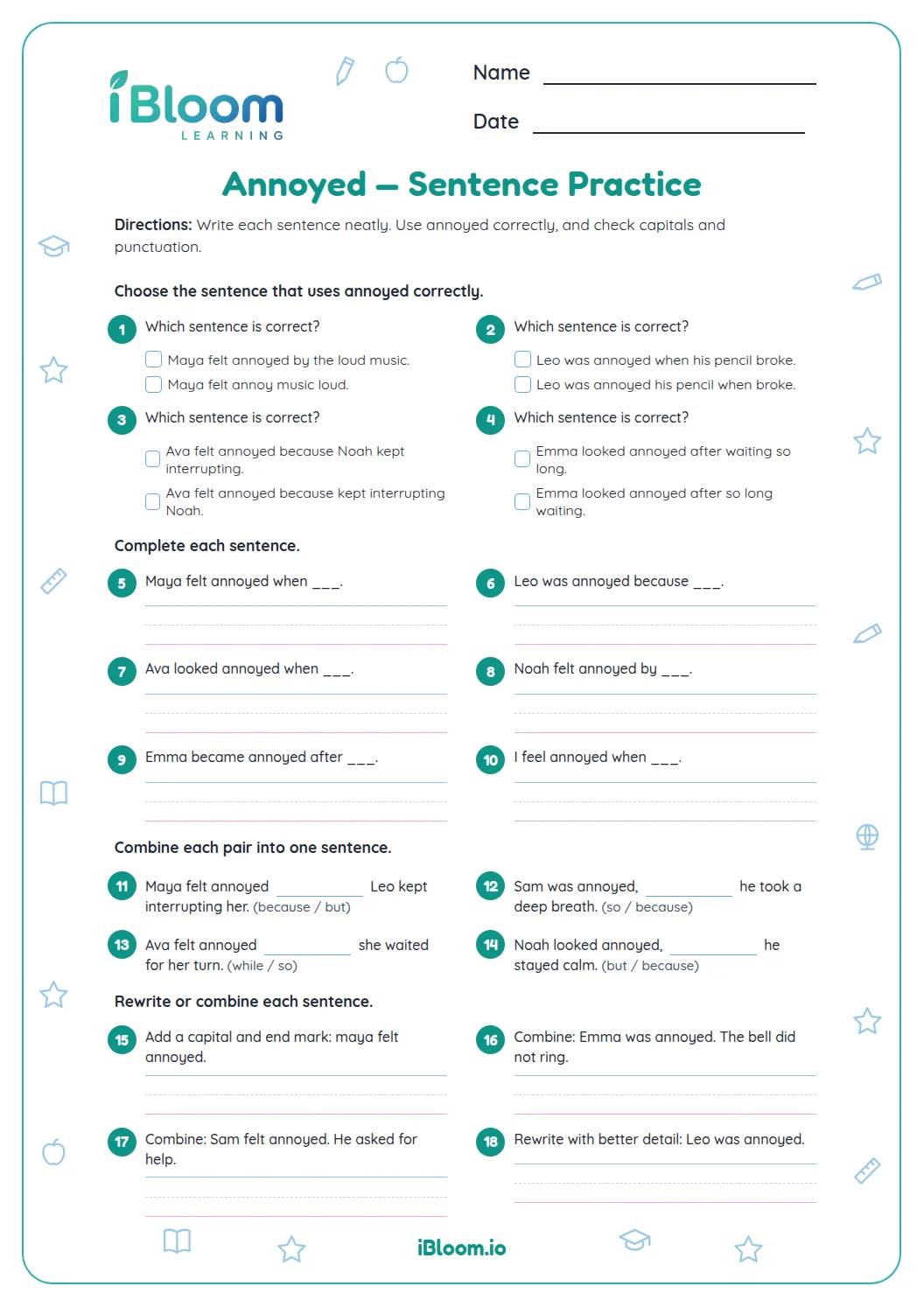
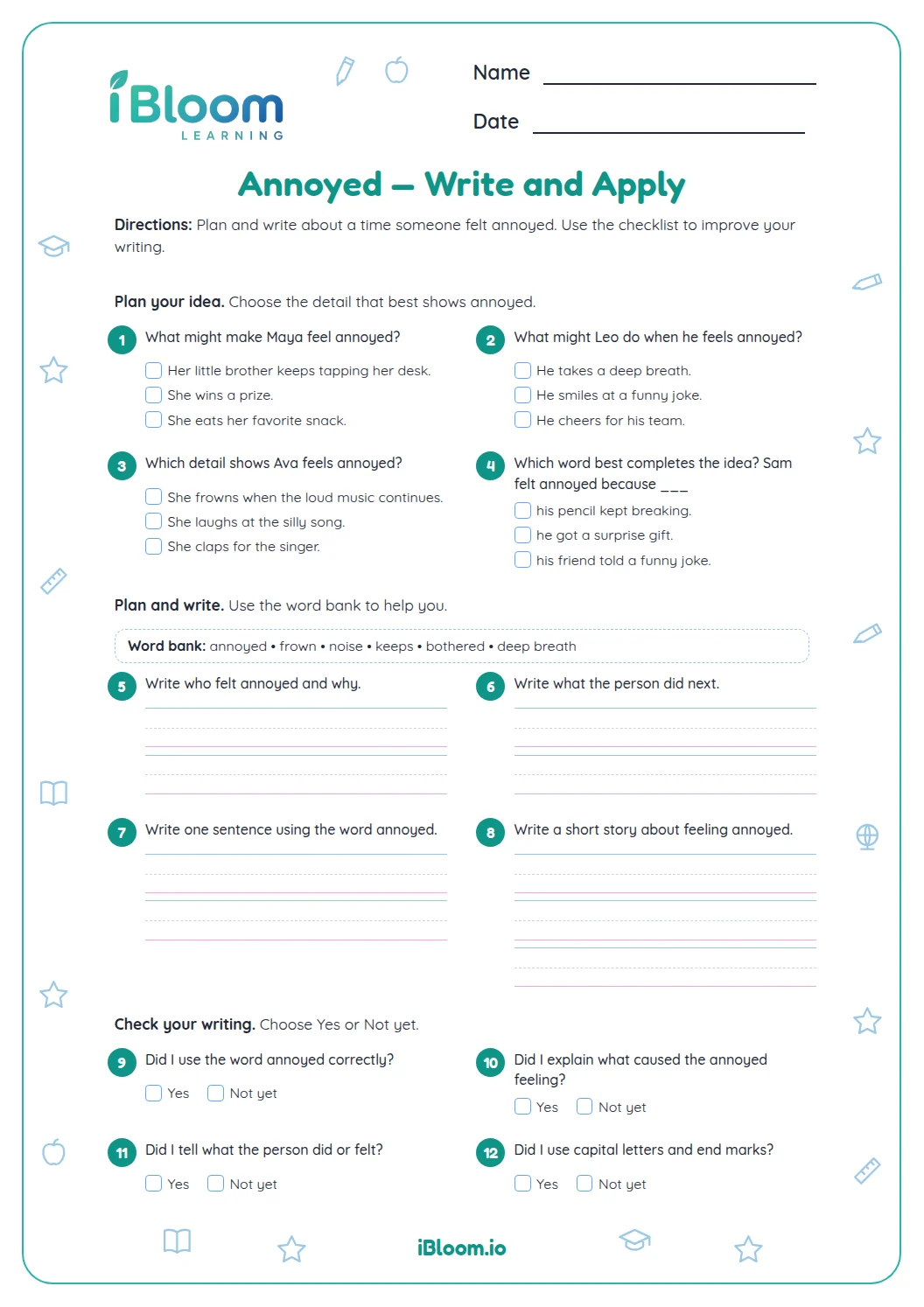
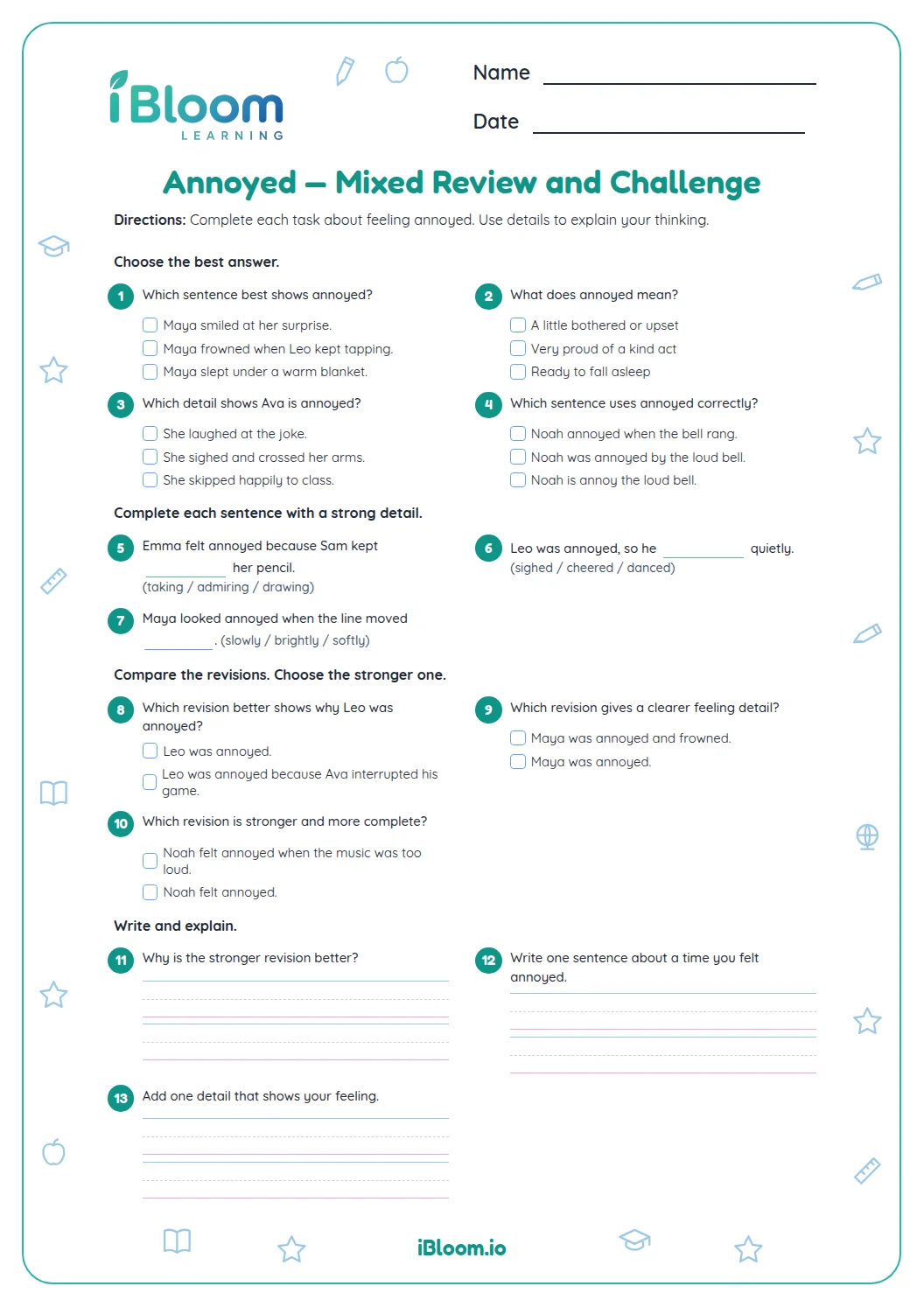
This Grade 2 worksheet gives students sentence starters for describing annoyance and choosing a calm response. They complete 15 short thoughts and finish with a two-sentence reflection. Sample answers show possible details while allowing students to write about their own experiences.
How do students describe annoyance?
The first prompts ask students to name a situation, describe a possible feeling in the body, and choose words for the experience. Each starter gives a clear place to add a detail.
What calm responses can they write?
Later starters invite students to pause, breathe, ask for help, or use calm words. A student can choose a response that fits the situation they describe.
How can a student complete a starter?
For “Instead of shouting, I could ___,” one fitting completion is “ask for a turn.” It names a specific action that can help with the problem.
How to use this worksheet
- 1Read each sentence starter.
- 2Think of a detail that fits the situation.
- 3Complete the sentence in your own words.
- 4Choose a calm action for the response prompts.
- 5Write two connected sentences for the final reflection.
Sentence completion checks
The mistake
Writing a response that does not finish the thought.
The fix
Read the full sentence with your words added.
The mistake
Naming a feeling without a situation.
The fix
Add what happened to make the feeling clear.
The mistake
Choosing an action that does not address the problem.
The fix
Name one helpful step, such as asking, pausing, or trying again.
What to practice next
Make more practice
Questions parents and teachers ask
What does this guided writing sheet cover?
Students complete sentence starters about situations that can feel annoying, how the feeling might show up, and what calm response could help. The final prompt asks for two sentences about an experience and what helped, with sample answers in the key.
How many sentence prompts are included?
There are 16 items across four parts. Fifteen are sentence completions, and the last is a two-sentence reflection. The answer key offers sample completions for all items while leaving room for students’ own experiences and details. Students can compare their own responses with these models.
Are the sample answers the only correct responses?
No. The sentence starters allow many sensible responses. A student’s completion should make the whole sentence clear and fit the situation. The samples model one possible idea, such as taking a breath or asking for a turn, that a child can adapt.
How can a student use the calm-response prompts?
A student can think of a small problem, then choose a helpful action or words that fit it. The prompts offer room to write about pausing, asking for help, or trying again after calming down, with sample ideas in the key.
What should the final response include?
The last item asks for two sentences: one about a time the student felt annoyed and one about what helped. A specific situation and a helpful next step make the reflection easy to understand and give the student a complete thought to share.