



About this worksheet
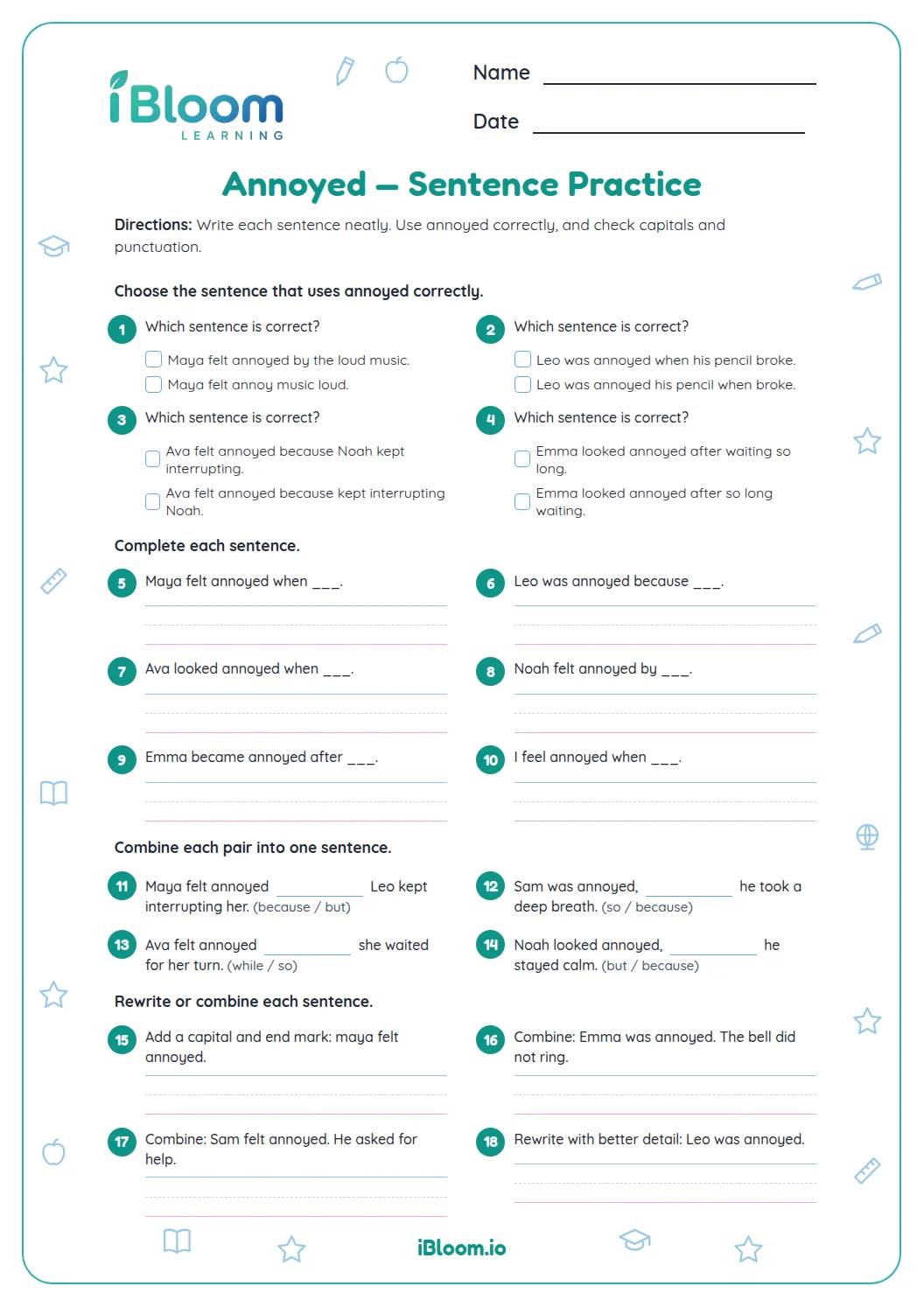
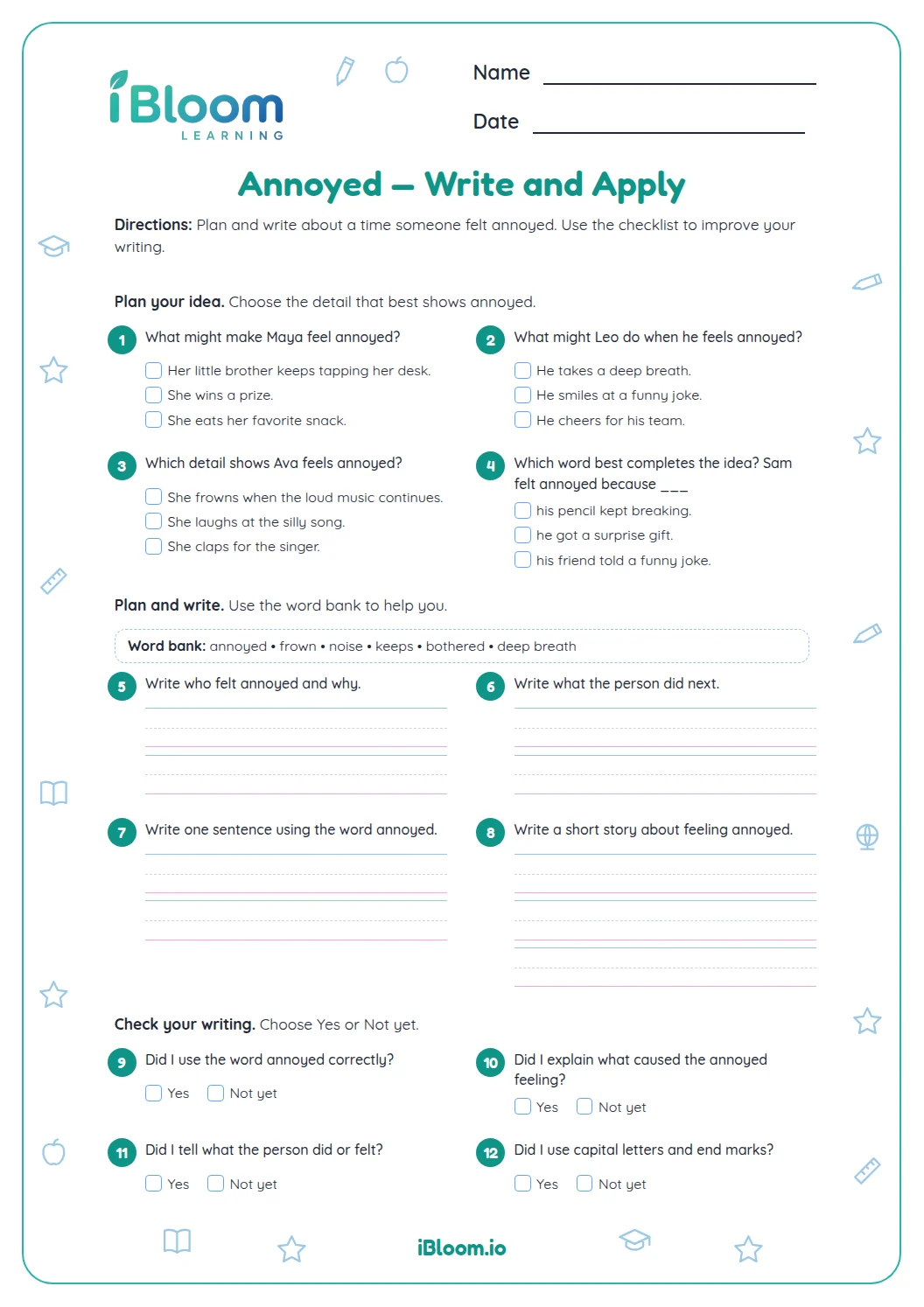
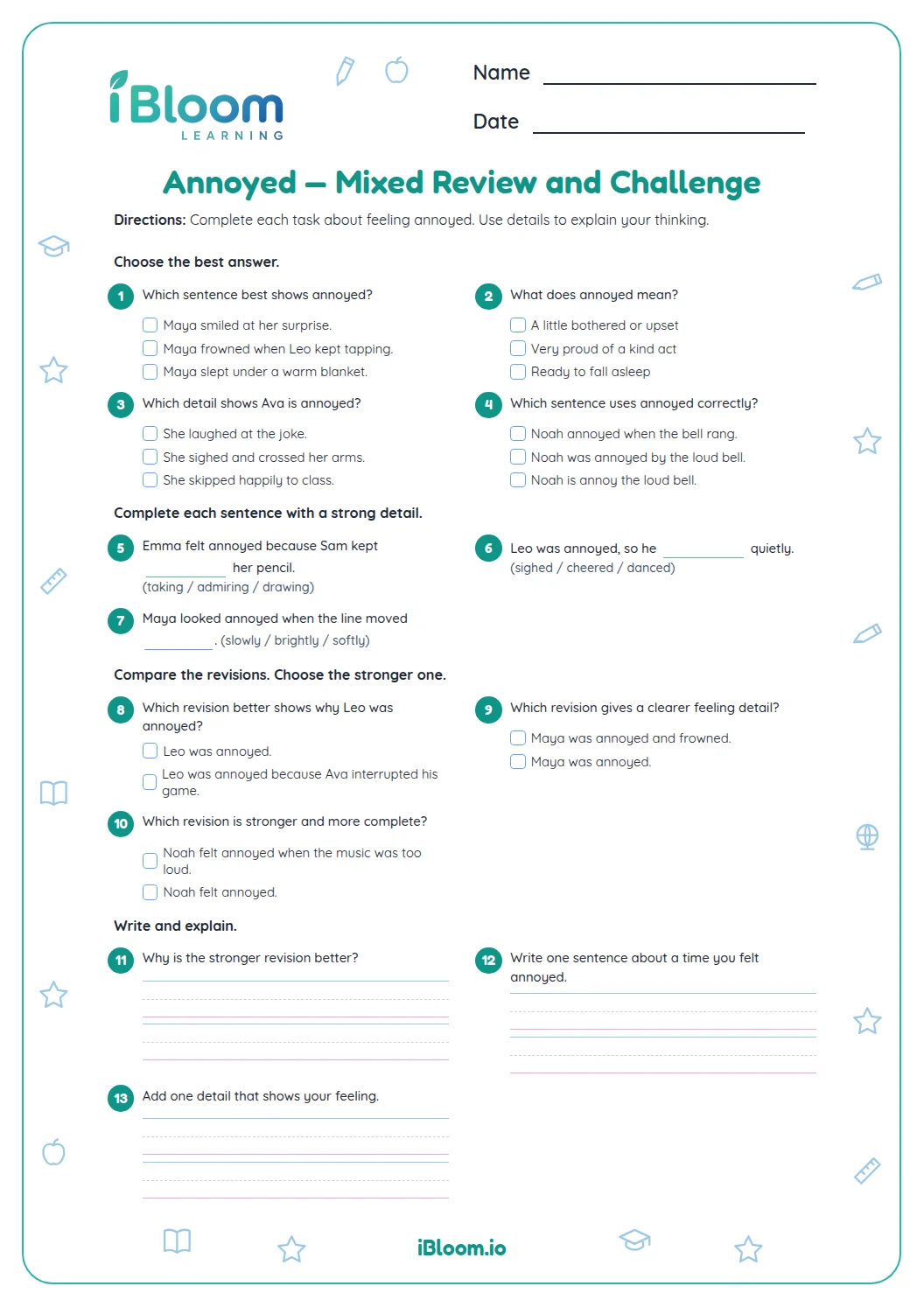
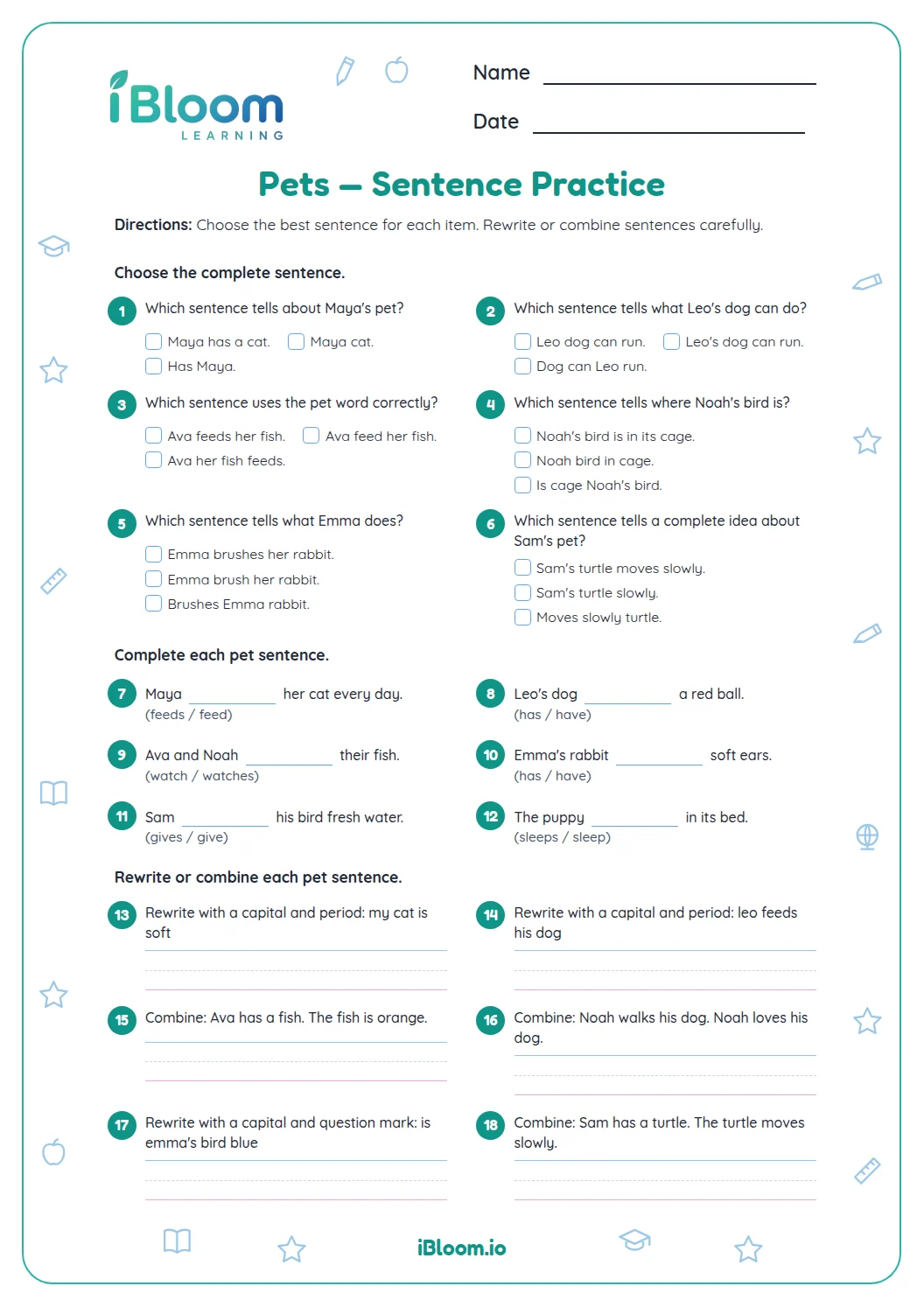
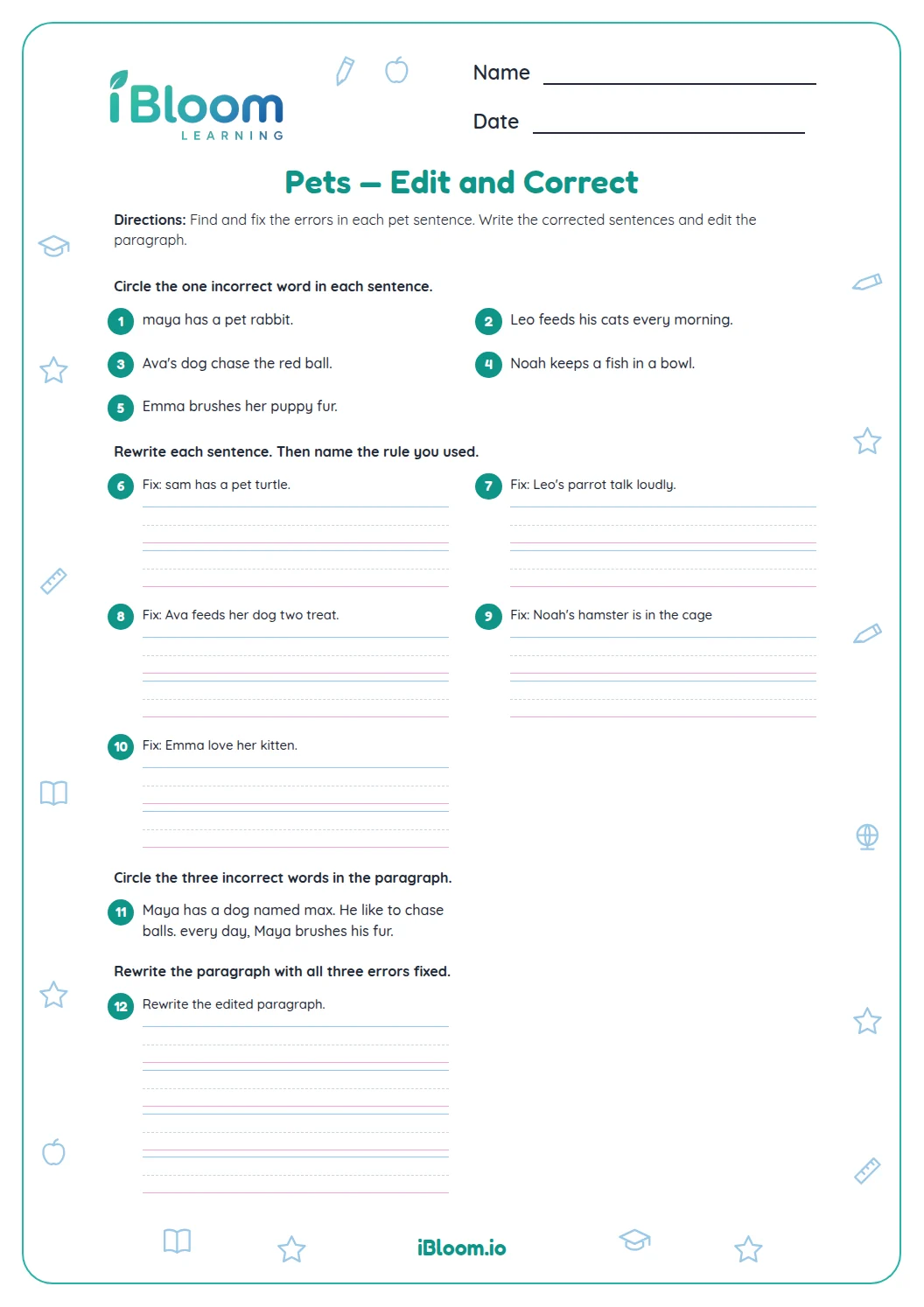
This free Grade 2 worksheet focuses throughout on the difference between annoyed and annoying. Fourteen multiple-choice questions ask children to identify the person’s feeling or the cause, choose each form in a sentence, and compare correct and incorrect uses. A separate answer key marks the correct choices.
How do annoyed and annoying differ?
Annoyed describes a person who feels bothered. Annoying describes the sound, action, or object that causes the feeling. The worksheet keeps this distinction in view from its first sentence to its final comparison.
How can context guide the choice?
Find the person or thing described. If the sentence names someone’s feeling, choose annoyed. If it describes the cause of that feeling, choose annoying.
- 1Ava felt ___ as buzzing continued.
- 2Correct choice: annoyed
- 3The word describes Ava’s feeling.
How can a child check a word choice?
Read the whole sentence and ask what the adjective describes. “The buzzing was annoying” describes the cause; “Ava felt annoyed” names her response.
How to use this worksheet
- 1Find the person or thing described.
- 2Ask whether it feels bothered or causes bother.
- 3Use annoyed for the person’s feeling.
- 4Use annoying for the cause.
- 5Reread the sentence to check the meaning.
Common mistakes and quick fixes
The mistake
Calling a sound annoyed.
The fix
Use annoying because the sound causes the feeling.
The mistake
Calling a person annoying when you mean bothered.
The fix
Use annoyed to name the person’s feeling.
The mistake
Choosing by word ending alone.
The fix
Check what noun the adjective describes.
What to practice next
Make more practice
Questions parents and teachers ask
What is the main difference between annoyed and annoying?
Annoyed describes a person’s feeling; annoying describes something that causes that feeling. For example, Ava may feel annoyed when a buzzing sound is annoying. The questions repeatedly ask children to identify the person or the cause. Ask the child to point to the clue that makes the choice fit.
Does the worksheet practice other editing skills?
The questions stay focused on choosing annoyed or annoying. Children read sentences for meaning, identify whether the word describes a person or a cause, and choose the form that fits. Each item practices this same word-choice distinction. Ask the child to point to the clue that makes the choice fit.
How many questions are on the page?
There are 14 multiple-choice questions. They include short sentence completions, word-use comparisons, and explanations of why a form fits. The answer key marks one correct choice for every question. Ask the child to point to the clue that makes the choice fit.
What is a useful clue for choosing the word?
Look at the person or thing the adjective describes. If a person feels bothered, use annoyed. If a sound or action causes that feeling, use annoying. Reading the whole sentence helps reveal which meaning fits. Ask the child to point to the clue that makes the choice fit.
How does the answer key help?
The key marks the correct form for every item. Ask the child to name the person or cause in a sentence before checking the answer. That quick explanation reinforces why annoyed or annoying fits the context. Ask the child to point to the clue that makes the choice fit.