



About this worksheet
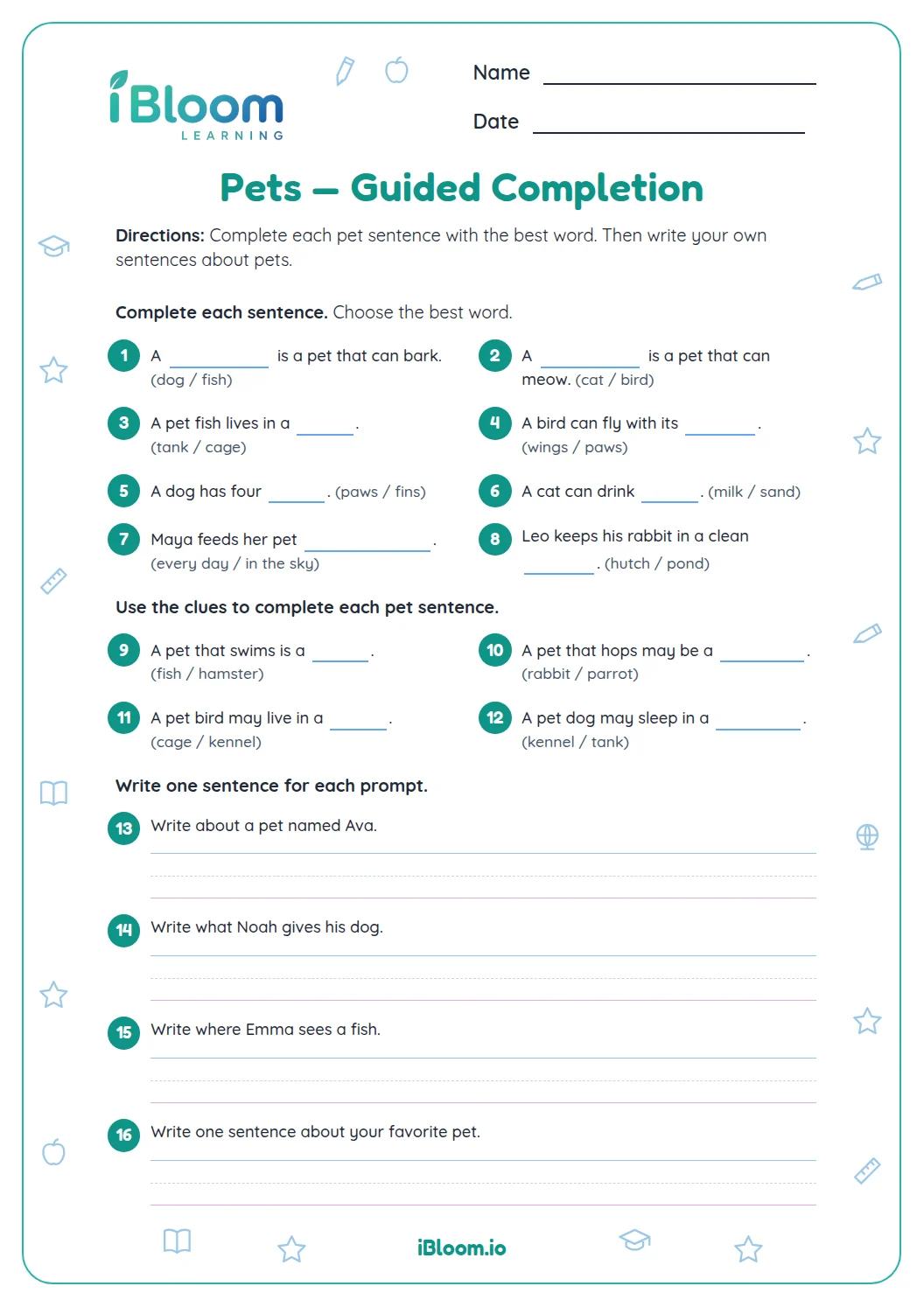
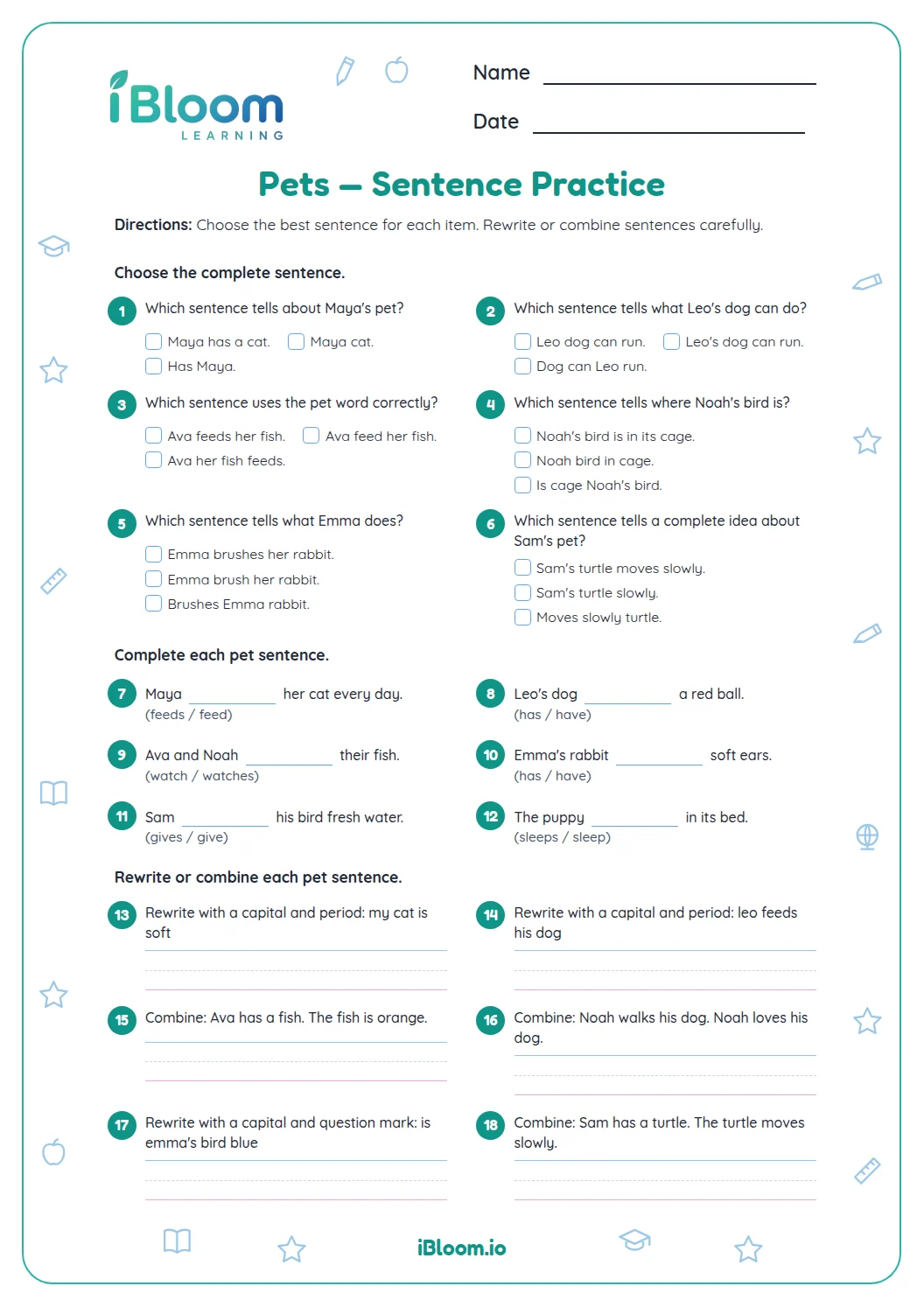
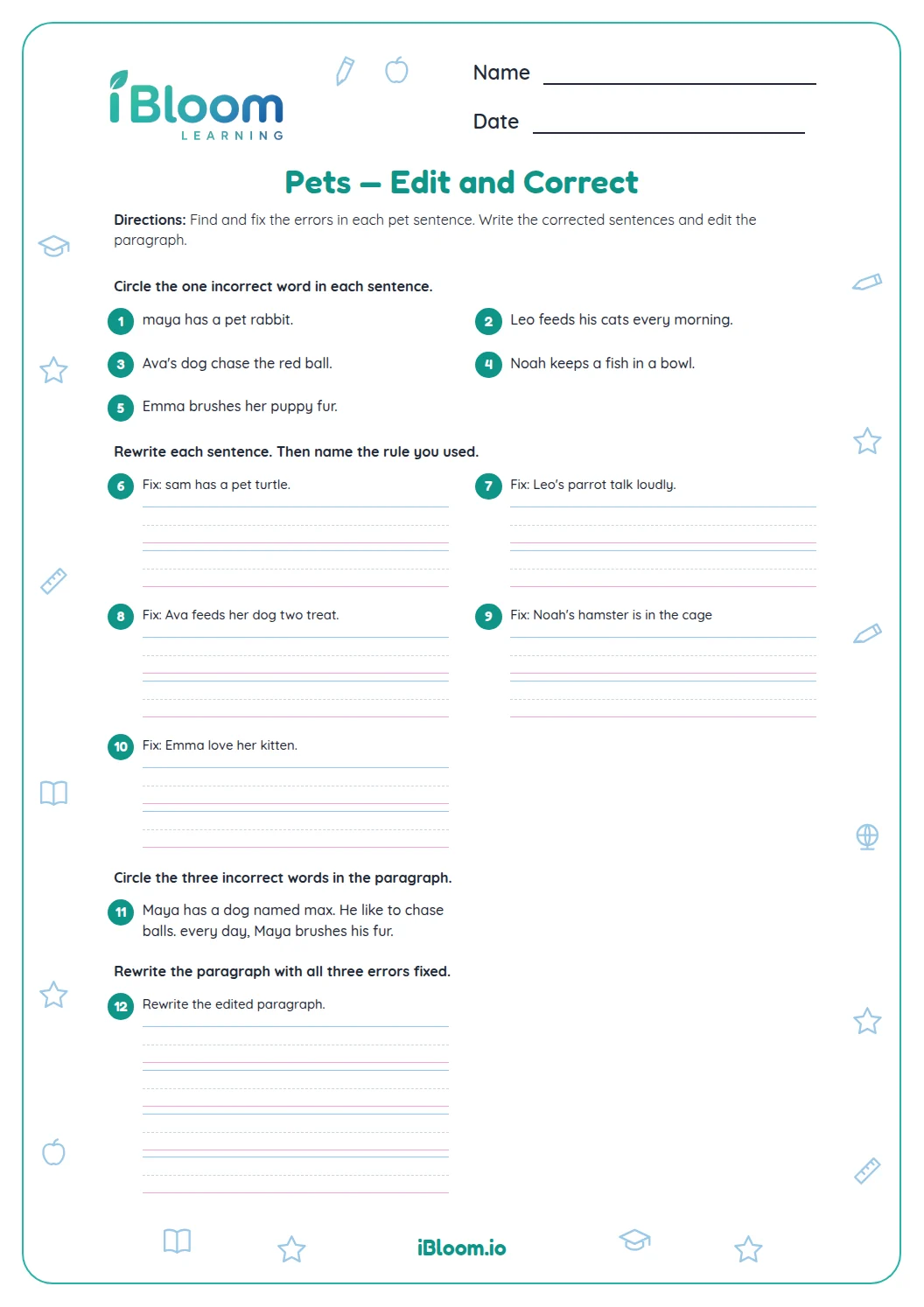
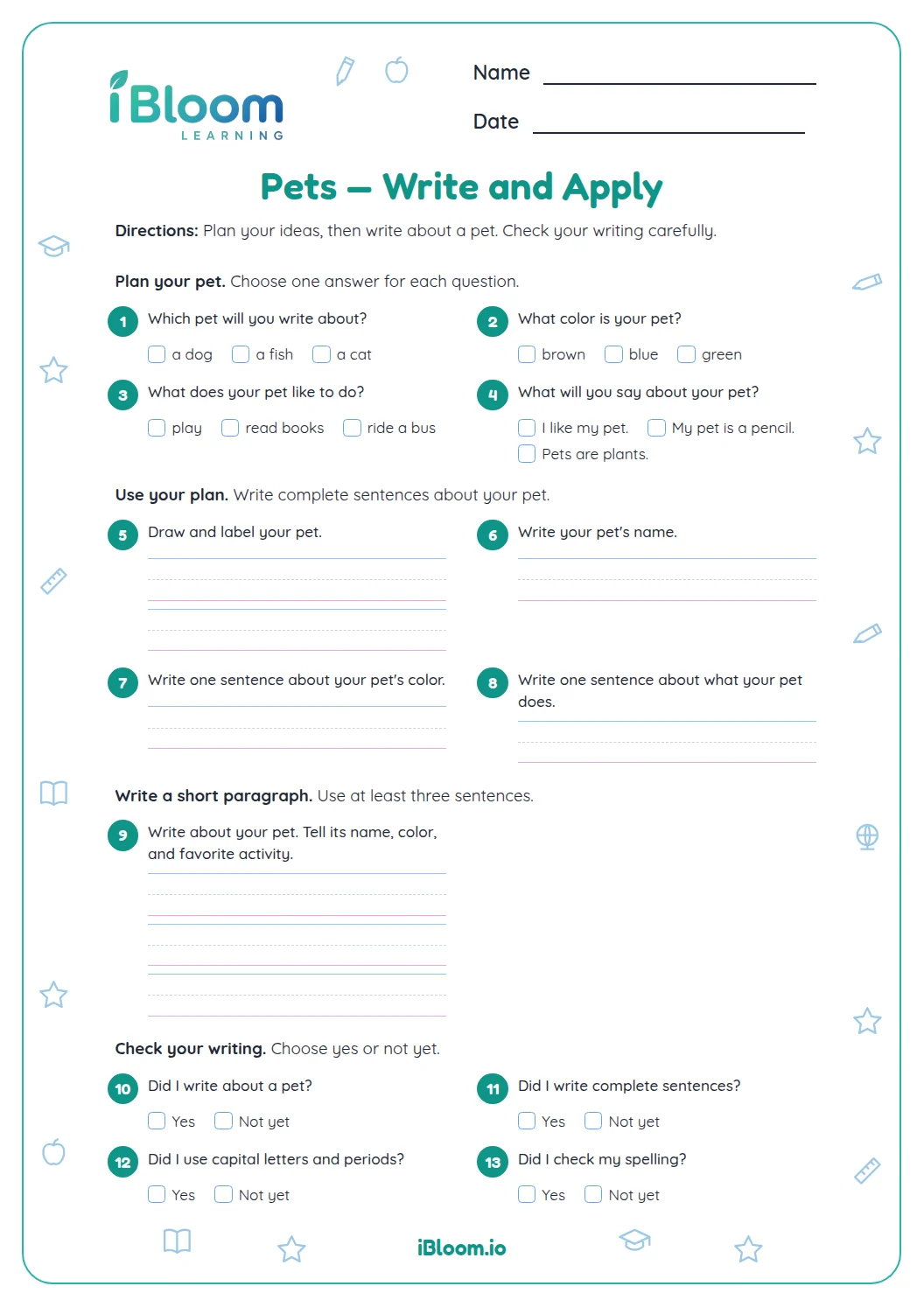
This Grade 2 printable pairs pet-themed sentence choices with a drawing prompt and sentence writing. Learners first notice clear, observable details, then plan a pet scene and write about actions, appearance, places, and sounds. It has 15 numbered tasks across three parts; the writing prompts invite original answers, with sample responses in the answer key.
What makes a pet detail useful?
A detail gives the reader something concrete to imagine, such as a striped tail or muddy paws. The first six items ask learners to distinguish specific details and complete sentences from vague or incomplete choices.
- 1Which sentence gives a pet a clear action?
- 2Answer: The puppy trots to the gate.
How does the drawing support writing?
The drawing prompt asks for a pet resting in a cozy place. Learners can use their own picture plan as a starting point for the later prompts about toys, color, actions, and resting places.
What counts as a complete response?
A complete sentence names a subject and tells something about it. For example, “My puppy bats a red ball across the rug” names the pet and describes an action with details.
How to use this worksheet
- 1Read each choice and look for a complete idea.
- 2Notice which details a reader could picture or observe.
- 3Draw a pet resting in a cozy place.
- 4Use a capital letter and ending punctuation in each sentence.
- 5Check the sample answers for ideas, then accept other sensible responses.
Common mistakes and quick fixes
The mistake
Choosing a vague detail such as “It is nice.”
The fix
Name an observable feature or action, such as a striped tail or wagging tail.
The mistake
Writing a sentence fragment such as “My brown dog.”
The fix
Add what the pet does or has: “My brown dog naps.”
The mistake
Copying a sample sentence even when a different answer fits.
The fix
Use the key as a model; the prompts allow other complete, relevant sentences.
What to practice next
Make more practice
Questions parents and teachers ask
What skills does this pet worksheet combine?
The page combines sentence recognition, drawing, and descriptive writing. Learners choose clear pet details, draw a pet in a cozy place, and write sentences about actions, color, sounds, and settings. The answer key offers sample responses for the open-ended writing prompts.
How many tasks are on the printable?
There are 15 numbered tasks in three parts: six sentence choices, one drawing prompt, and eight writing prompts. The parts move from recognizing clear details to creating a picture plan and composing original sentences. This printable is ready to use at home or in a classroom with the separate answer key.
Does the drawing need to match a sample?
No sample picture is required. The prompt asks the learner to draw a pet resting in a cozy place, and the later writing prompts invite details from the learner’s own ideas. The key describes the kind of response rather than requiring one exact drawing.
How should adults use the writing answer key?
The key includes sample sentences, not the only acceptable answers. Check that a learner’s response addresses the prompt, forms a complete sentence, and uses clear details. Accept other sensible sentences that fit the question. This printable is ready to use at home or in a classroom with the separate answer key.
Can learners write about an imagined pet?
Yes. The prompts refer to “your pet,” but a learner may describe an imagined or favorite animal when they do not have a pet. The goal is to write a complete, specific sentence that answers each prompt. This printable is ready to use at home or in a classroom with the separate answer key.