




About this worksheet
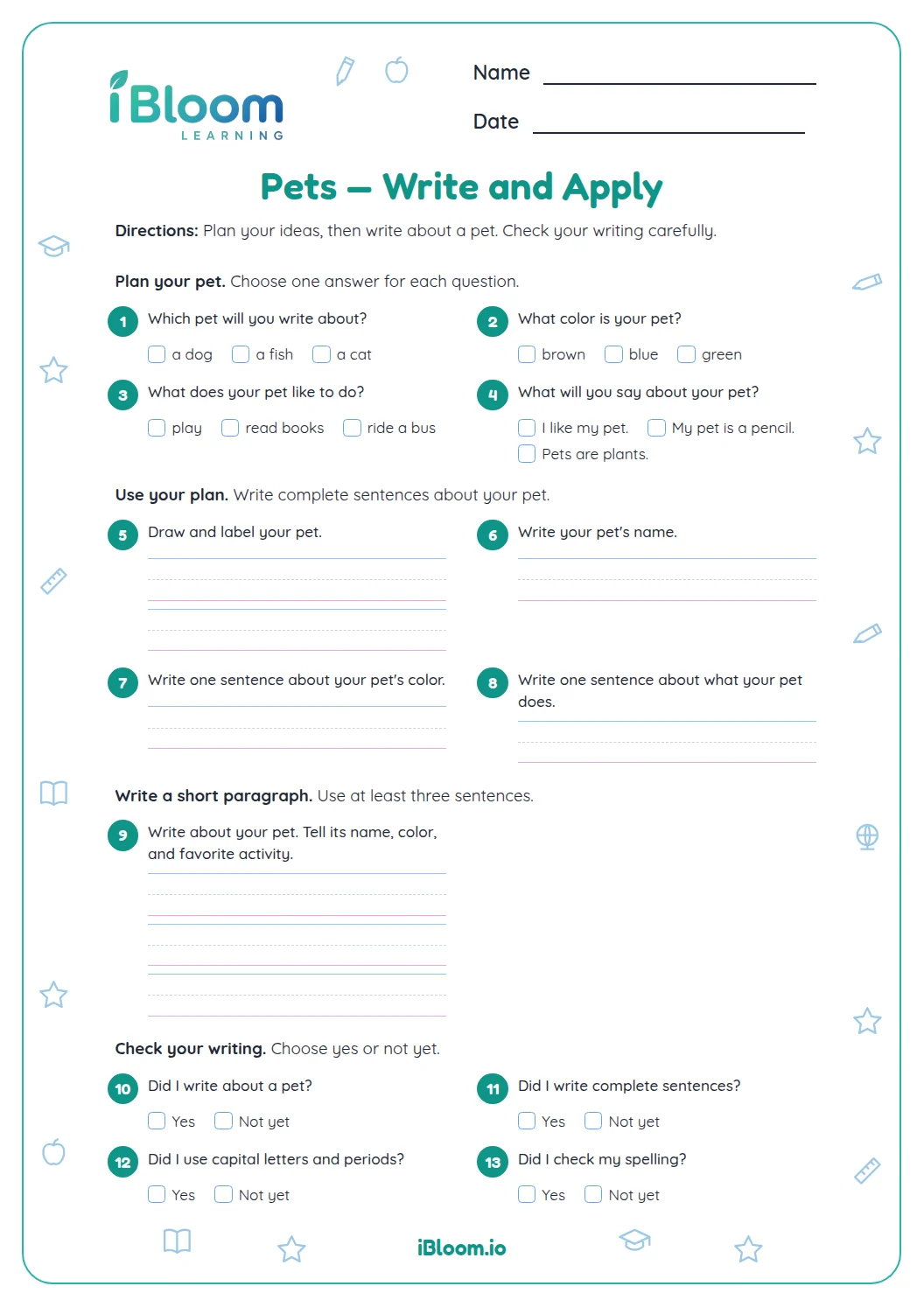
This free Grade 2 draw-and-write worksheet combines sentence review with a short description of a pet. Twelve tasks include four choices about clear pet sentences and details, three planning answers, one drawing, and four connected written sentences. Children introduce a real or imagined pet, describe its appearance, explain one way to care for it, and write a closing. The challenge is to carry a visible detail from the drawing into the description. This practices Common Core W.2.2, introducing a topic, giving facts, and closing the writing. A separate answer key includes fixed answers and samples.
Aligned to W.2.2
What do the review questions prepare children to write?
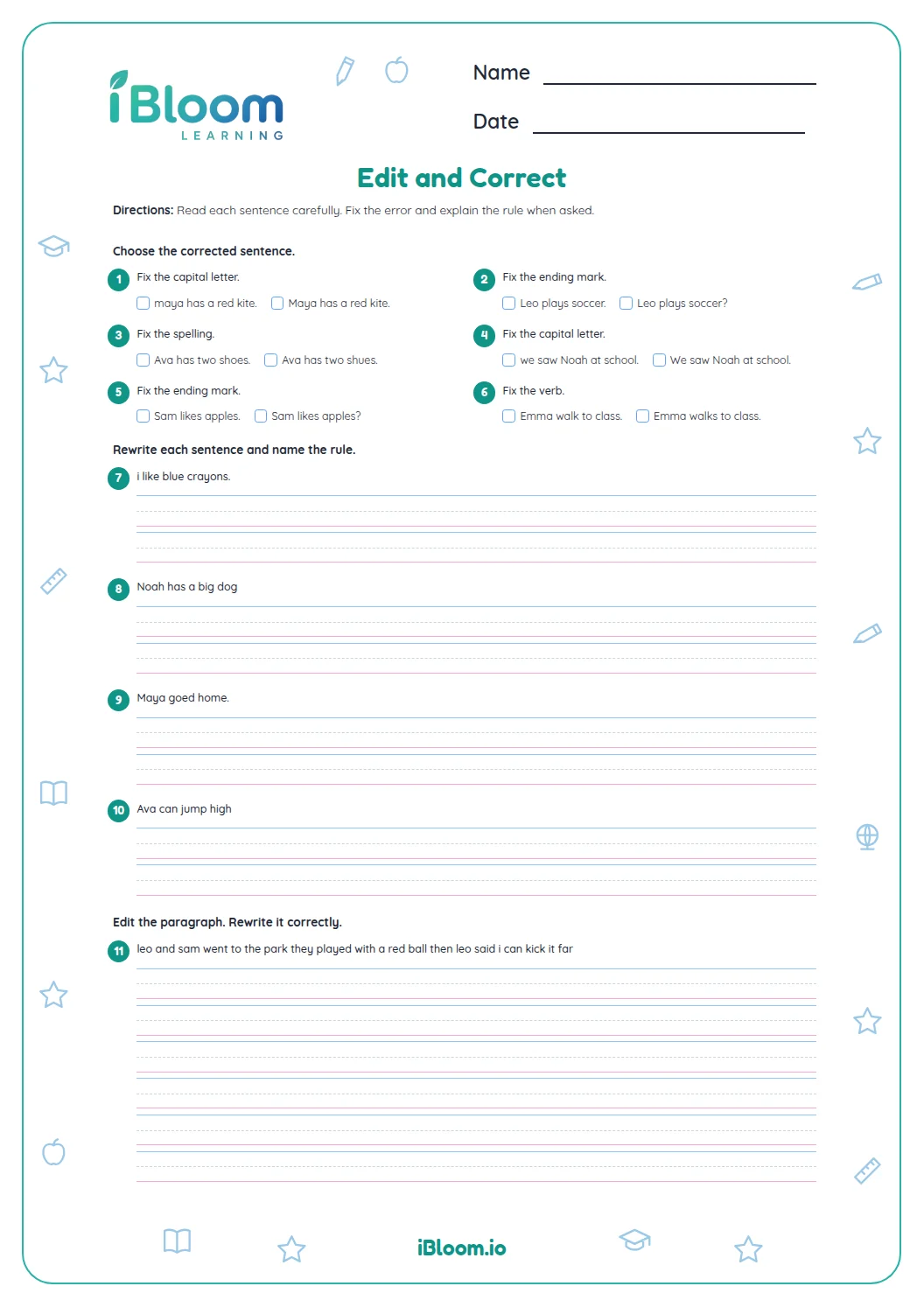
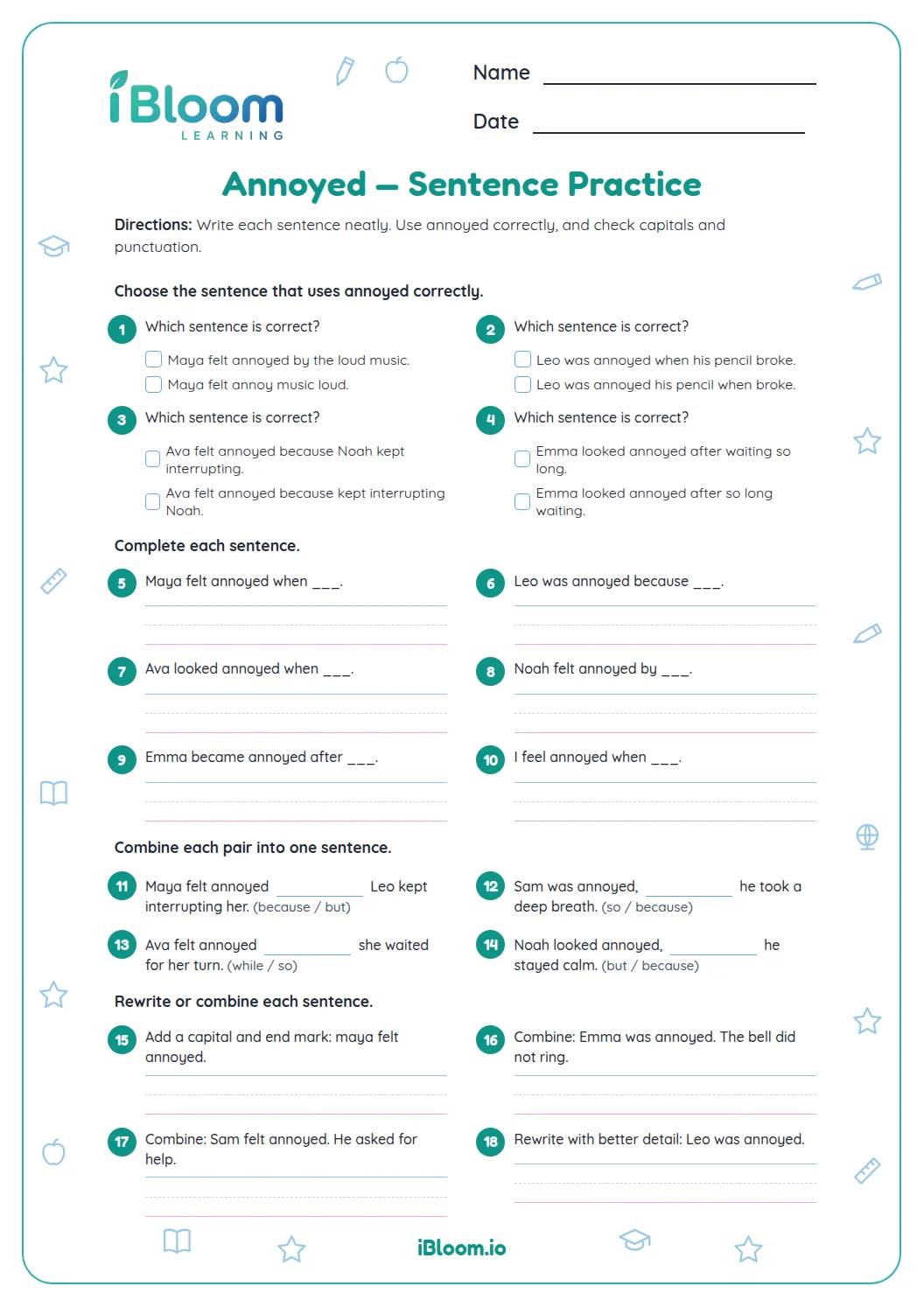
Part A reviews a correctly formed sentence, a specific detail, a pet-care fact, and a clearer description. Children compare choices before making similar decisions in their own writing.
Part B asks for the pet’s kind and name, a feature to describe, and one way to care for it. A few words are enough for the plan. A child can use a familiar pet or imagine one, then check its care needs with an adult.
What belongs in the drawing box?
Part C asks children to draw the pet they planned and include a feature they can describe. A fish could have orange fins; a dog could have a long tail. The detail should be visible enough for the child to point to it while talking.
Simple shapes are fine. Use the drawing to choose words for the description, and include that same feature in question 10.
- 1Drawing idea: a brown dog with a long tail.
- 2Question 10 asks for a visible detail from the drawing.
- 3Sample: Pip has brown fur and a long tail.
- 4The fur color and tail connect the sentence to the drawing.
How do the four sentences make one description?
Part D begins by naming the pet and saying what kind of animal it is. The next sentence describes a drawing detail. The third gives a care fact. The final sentence closes the description by returning to the same pet.
Read all four sentences together. Check that they stay about one pet and that the appearance detail matches the drawing. Help the child check any care fact they are unsure about before copying it into the final sentence.
How to work through this worksheet
- 1Read the four Part A questions and discuss which words make each answer correct or specific.
- 2Choose one pet for Part B; name it and plan a visible feature and a care fact.
- 3Draw the pet with the planned feature, then point to the detail you will describe.
- 4Write the introduction, feature, care, and closing sentences in Part D.
- 5Read the description aloud and check complete sentences, matching details, capitals, and end marks.
Mistakes to notice and ways to help
The mistake
Writing “My little dog” as the introduction.
The fix
Name the pet and tell what it is: “My pet Pip is a dog.”
The mistake
Drawing a dog with a long tail but describing a short tail.
The fix
Point to the feature and change the drawing or sentence so the two match.
The mistake
Repeating “My pet is nice” instead of giving a detail or care fact.
The fix
Name something a reader could see, such as brown fur, or one care action, such as giving fresh water.
Common Core alignment
Introduce a pet, describe its features and care, and write a closing.
On this sheet: The four written sentences introduce one pet, develop details about it, and close the description.
Show the official wordingHide the official wording
Write informative/explanatory texts in which they introduce a topic, use facts and definitions to develop points, and provide a concluding statement or section.
What to practice next
Make more practice
Further reading
Questions parents and teachers ask
Can children describe an imaginary pet?
Yes, children can imagine a pet if they do not have one. Choose a familiar kind of animal so its appearance and care are easy to describe. Keep that same pet in the plan, drawing, and four sentences. An adult can help check the care fact.
How detailed should the drawing be?
The drawing needs a pet and a visible feature the child can describe. Simple shapes are enough if the child can point to that feature. A long tail, brown fur, or orange fins gives the writer something specific to include in question 10, linking the picture and words.
What makes the last part a challenge?
The challenge is turning the plan and drawing into four connected sentences about one pet. Children introduce the animal, include a visible drawing detail, explain its care, and write a closing. This goes beyond naming the animal because each sentence has a different job in the description.
Does my child have to copy the sample dog description?
No, the dog description shows one way to follow the directions. A description of a rabbit, fish, cat, or another pet can work too. Check that the child introduces the animal, describes a feature from the drawing, gives a suitable care fact, and ends with a closing sentence.
How can I help if my child gets stuck after drawing?
Ask your child to name the pet and point to one feature in the drawing. Then ask how someone would care for that animal. Rehearse each answer aloud before writing it as a complete sentence. Finish by asking for one sentence that brings the description back to the pet.