






About this worksheet
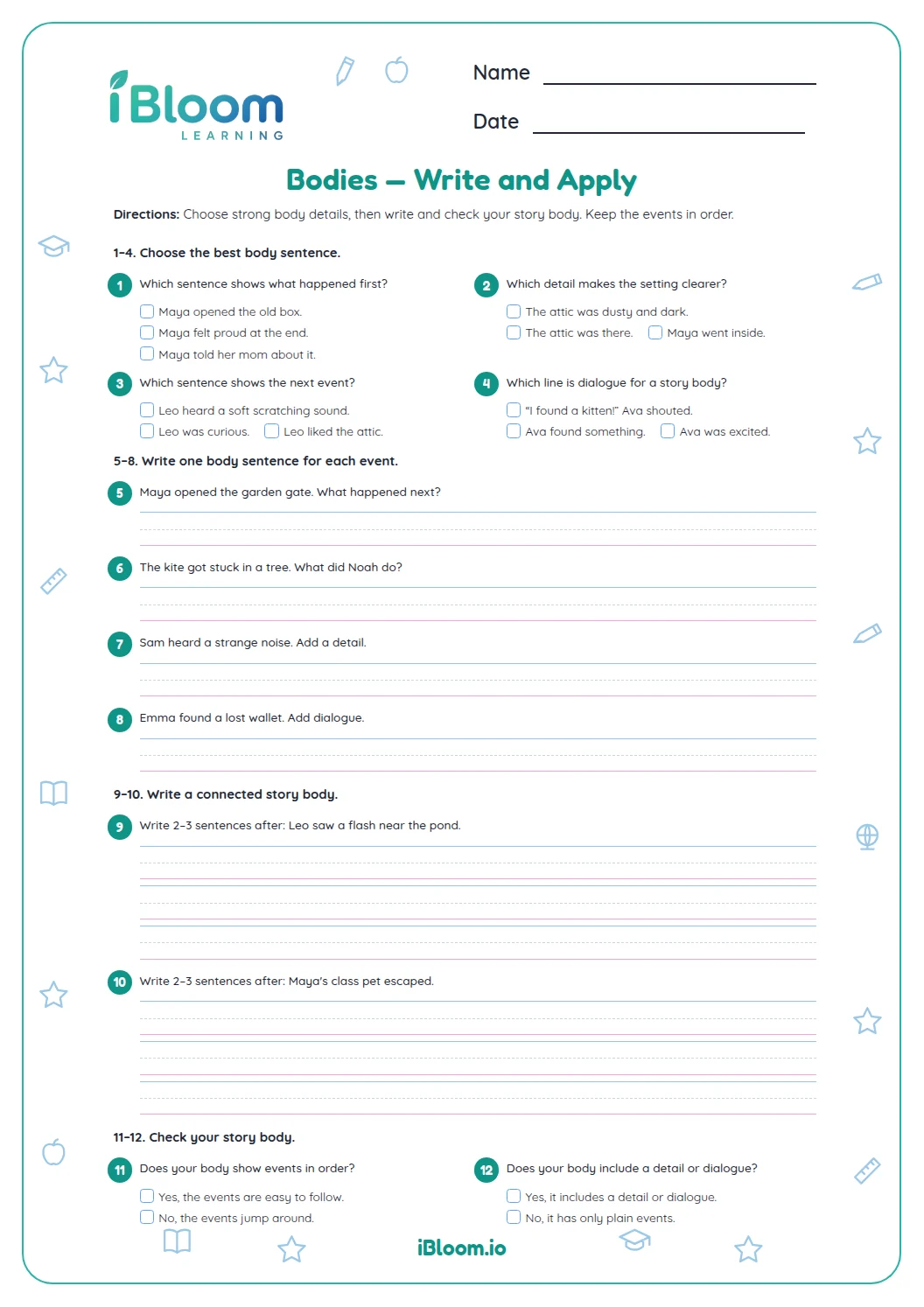
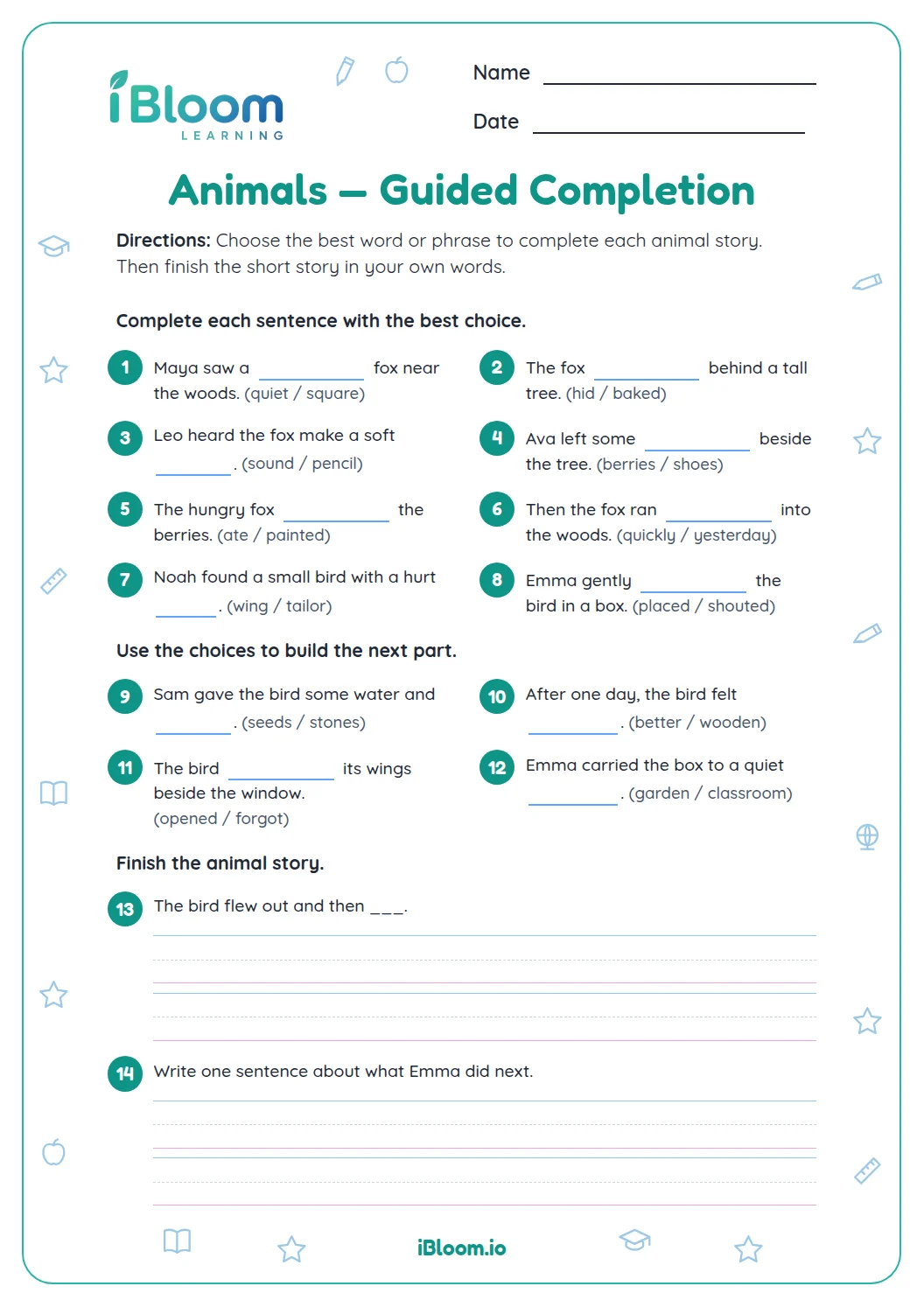
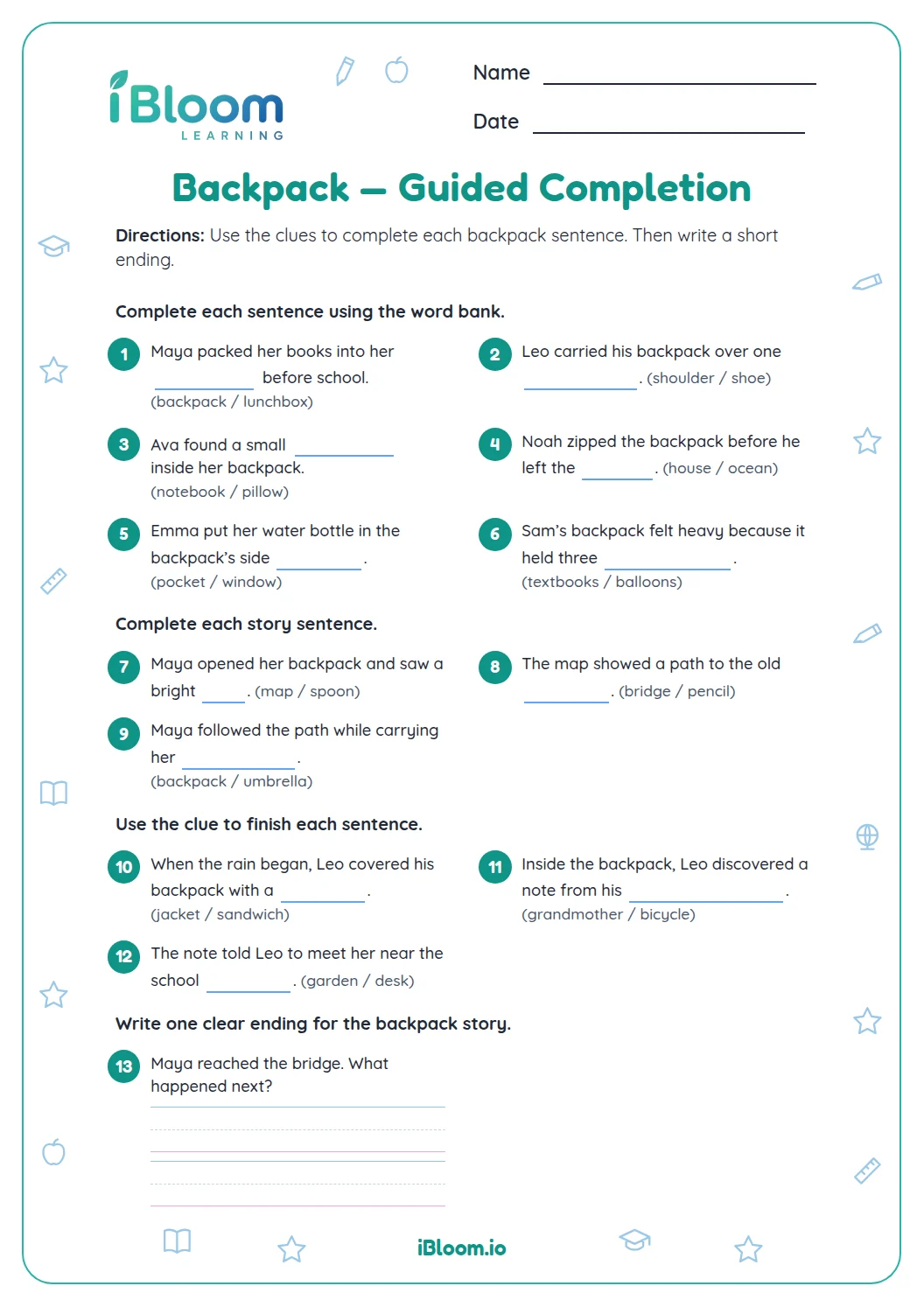
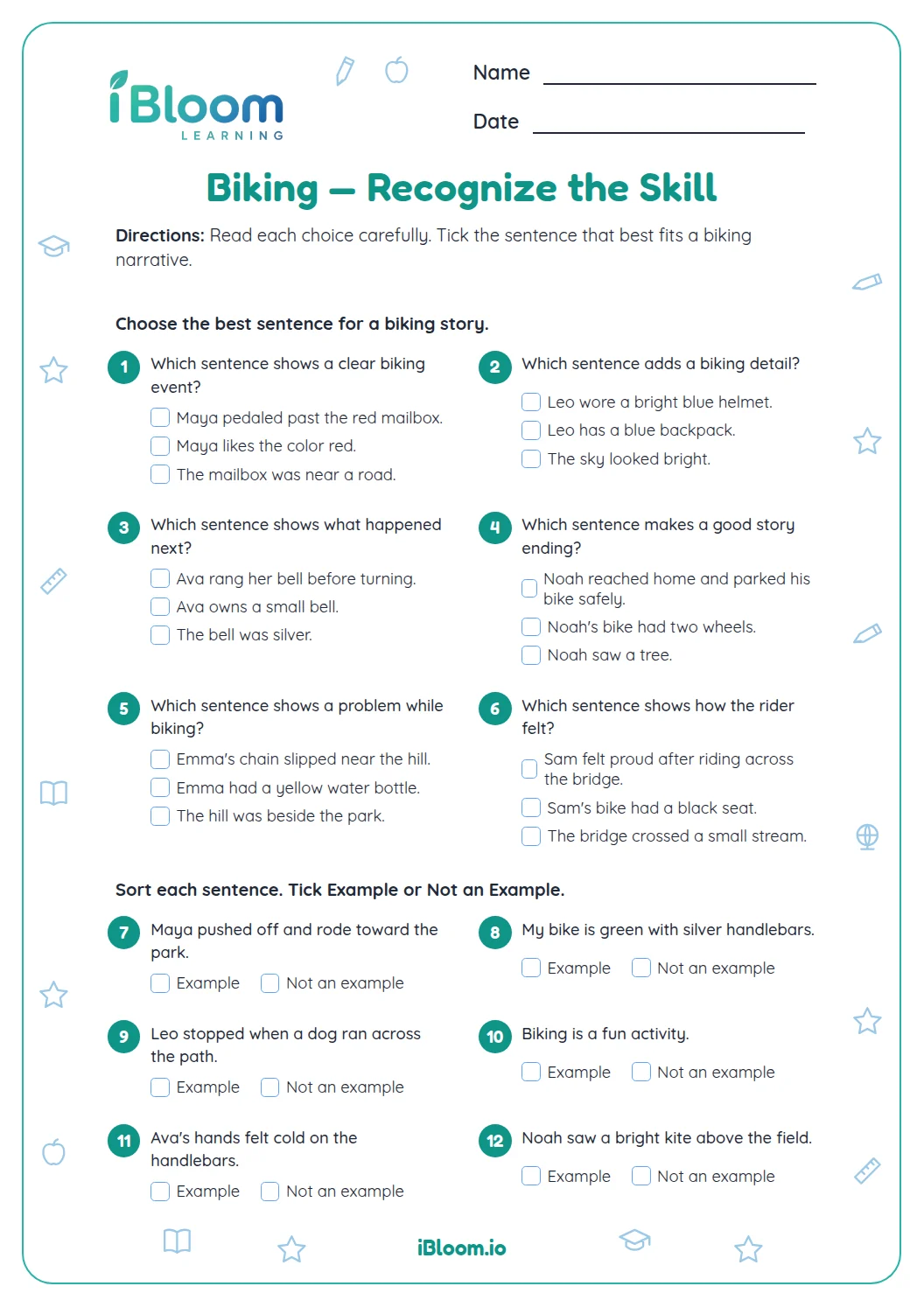
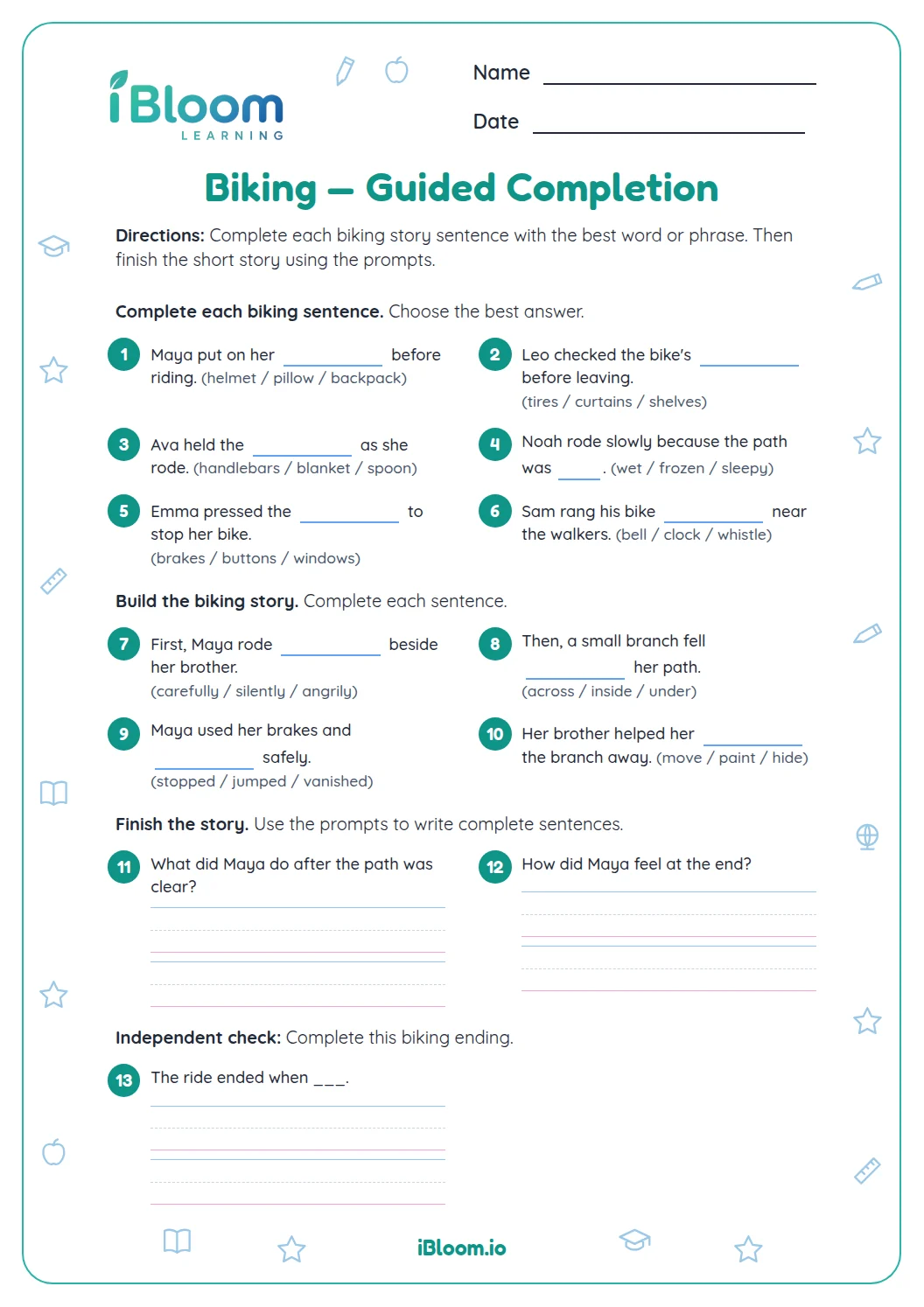
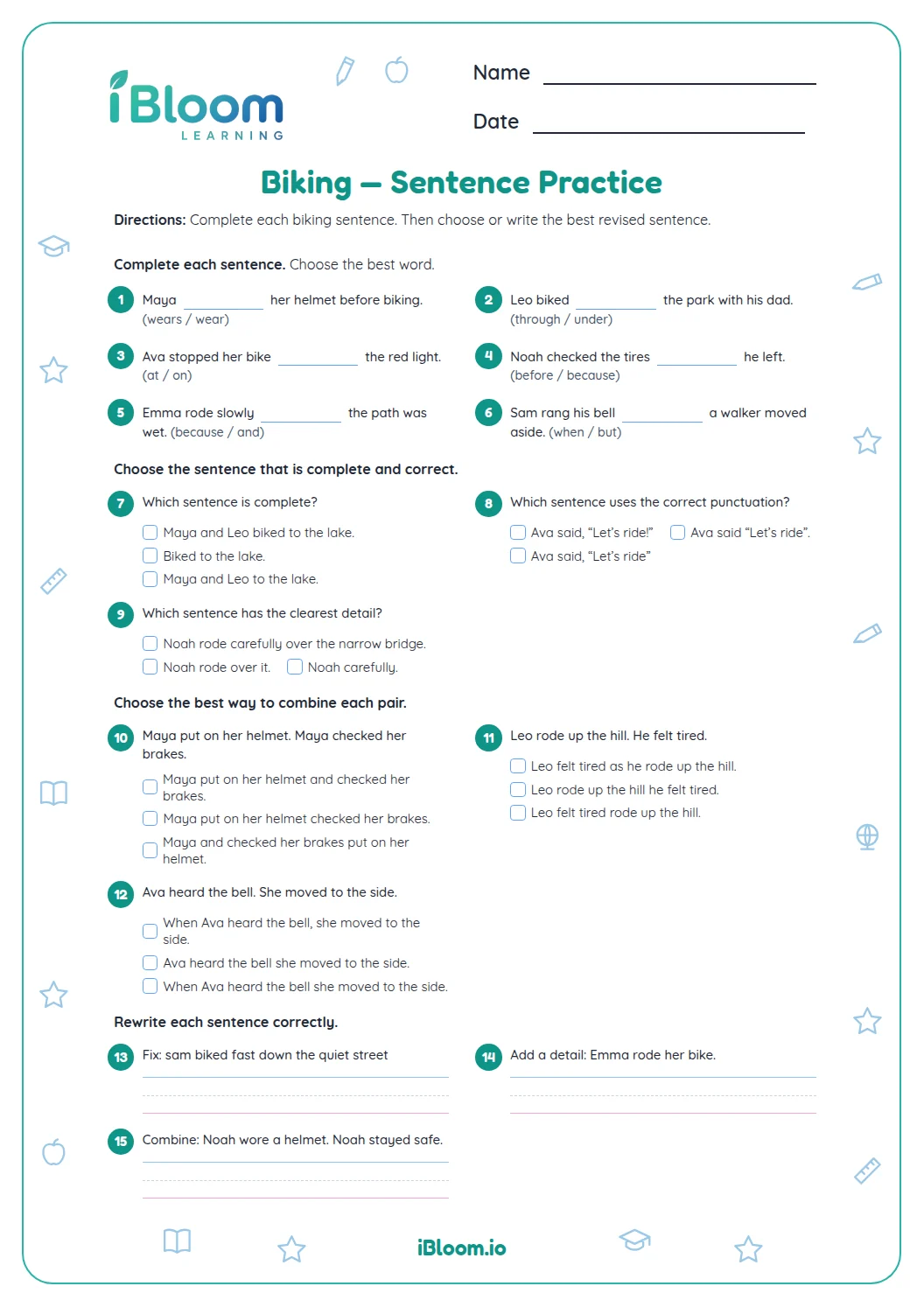
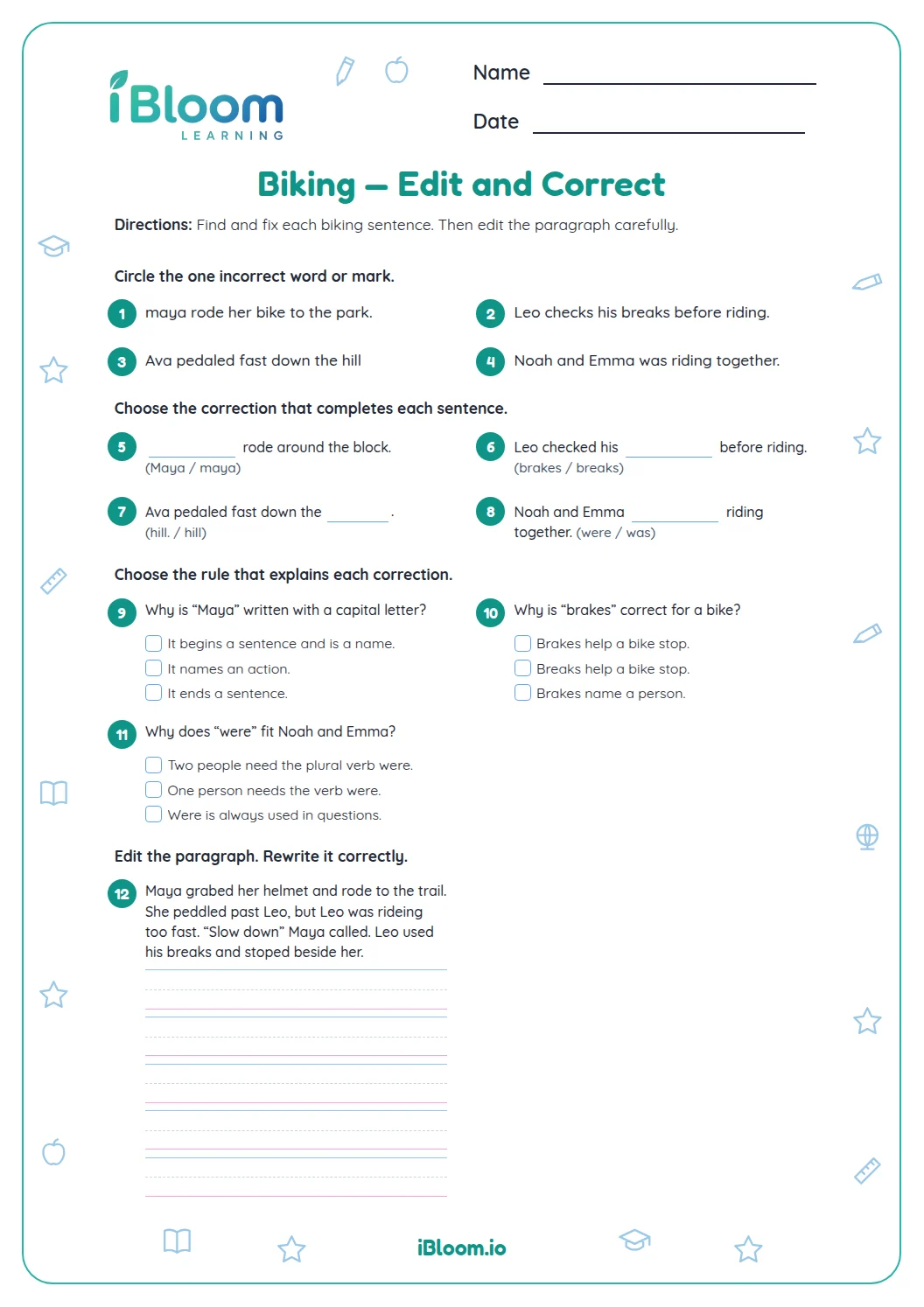
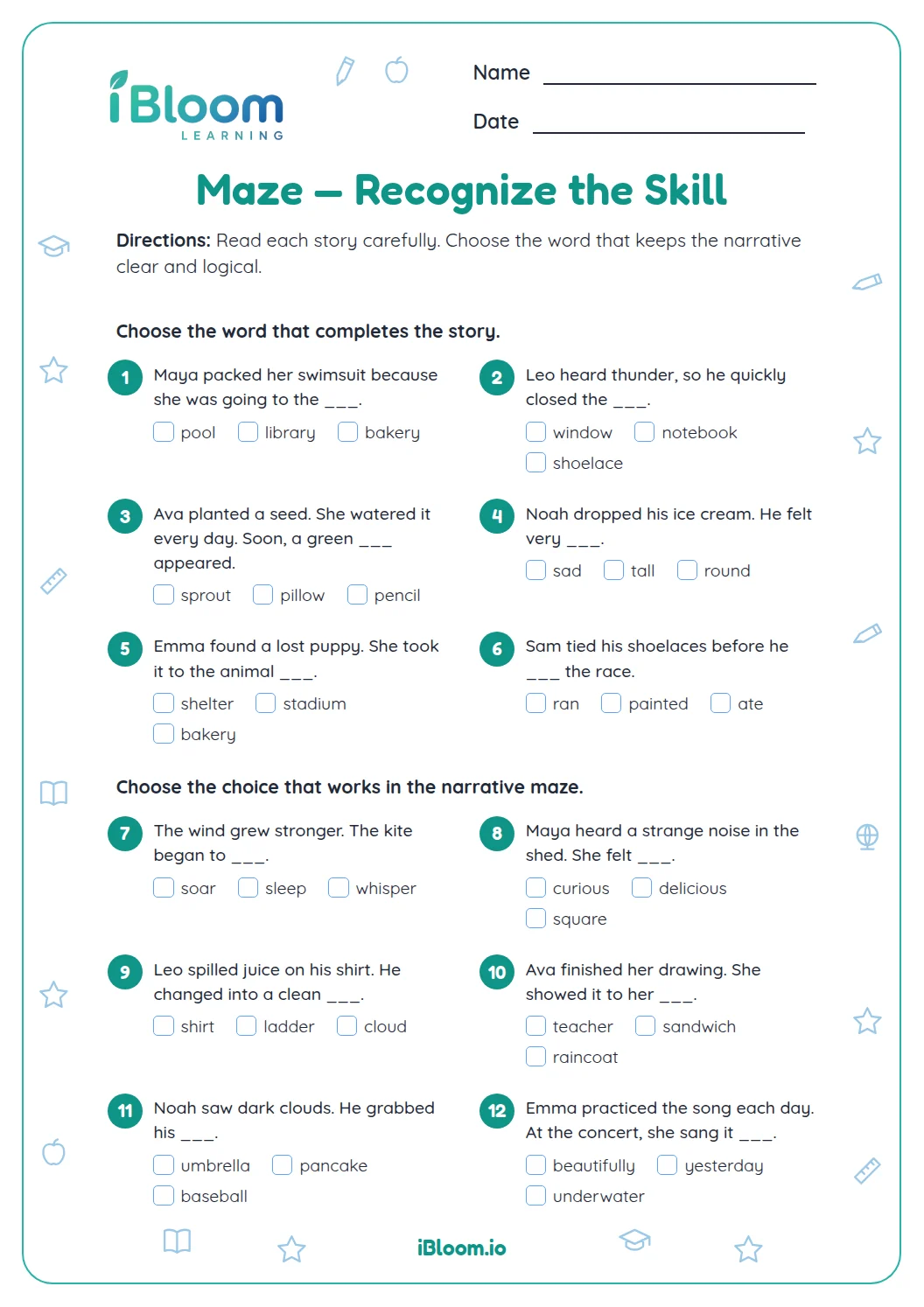
This Grade 3 narrative writing worksheet helps students revise the body of a story. They choose logical event order, select details that help readers picture actions, edit dialogue, and write a clear ending. A short revision task brings the skills together. The work connects to Common Core narrative writing: students develop events with details, use dialogue, and show event order.
Aligned to W.3.3
How do events make a story body easy to follow?
Readers need to know what happened first and what happened next. Time words such as after, then, and at last make the order clear. Check whether one action needs to happen before another.
- 1“Nora put on her boots. She saw rain outside.”
- 2First she saw rain; next she put on boots.
- 3The revision makes the cause and action easy to follow.
What details make a story feel real?
A specific action or description helps readers picture a moment. Dialogue shows a character speaking and uses quotation marks around the spoken words. Choose details that add information instead of repeating the same idea.
What makes an ending feel complete?
A story ending shows what happens after the main event or how the problem is resolved. It should connect to the events already in the story, rather than introduce a new problem.
How to use this worksheet
- 1Read the sentence pair and ask what must happen first.
- 2Choose details that add an action or a clear image.
- 3Put quotation marks around the words a character says.
- 4Use time words to help connect events.
- 5Reread the story ending to see whether it resolves the moment.
Common mistakes and fixes
The mistake
Putting events in the order they appear even when the order is impossible.
The fix
Ask what must happen before the next action.
The mistake
Adding a detail that repeats the same information.
The fix
Choose a detail that shows an action, sound, or appearance.
The mistake
Putting dialogue words outside quotation marks.
The fix
Place quotation marks around exactly what the character says.
Common Core alignment
The revision tasks practice sequencing events and adding details to a narrative.
Develop a narrative with actions, details, dialogue, and event order.
On this sheet: Students reorder events and add actions, descriptive details, dialogue, and an ending.
Show the official wordingHide the official wording
Write narratives to develop real or imagined experiences or events using effective technique, descriptive details, and clear event sequences.
What to practice next
Make more practice
Further reading
Questions parents and teachers ask
What is the body of a narrative?
The body is the middle of a story, where events develop between the beginning and ending. This worksheet practices ordering actions, adding details and dialogue, and writing an ending that follows from what happened. Students should check that each new sentence follows naturally from the one before it.
How many questions are included?
There are 14 questions: five multiple-choice and nine written-response items. They move from choosing a clear event or detail to editing dialogue and revising short narrative moments. Choice items check order, detail, dialogue punctuation, endings, and event links.
Does the worksheet use one long story?
No. Students work with short sentence pairs and brief narrative situations, then revise a compact story moment. This keeps attention on the writing choices named in each prompt rather than on recalling a separate passage. Each prompt gives a small context so students can focus on narrative choices.
What does the answer key show for writing questions?
The key provides sample revisions for open-ended prompts. Students may give different answers if their event order is logical, their added details fit the scene, and their dialogue or ending is clear. A different revision is fine when it keeps the meaning and improves the story.
How can a student make an ending fit?
Reread the events just before the ending and ask what would naturally happen next. The ending should complete that moment or resolve its problem; it should not suddenly introduce an unrelated event. A specific action or image is more useful than repeating that a character did something.