




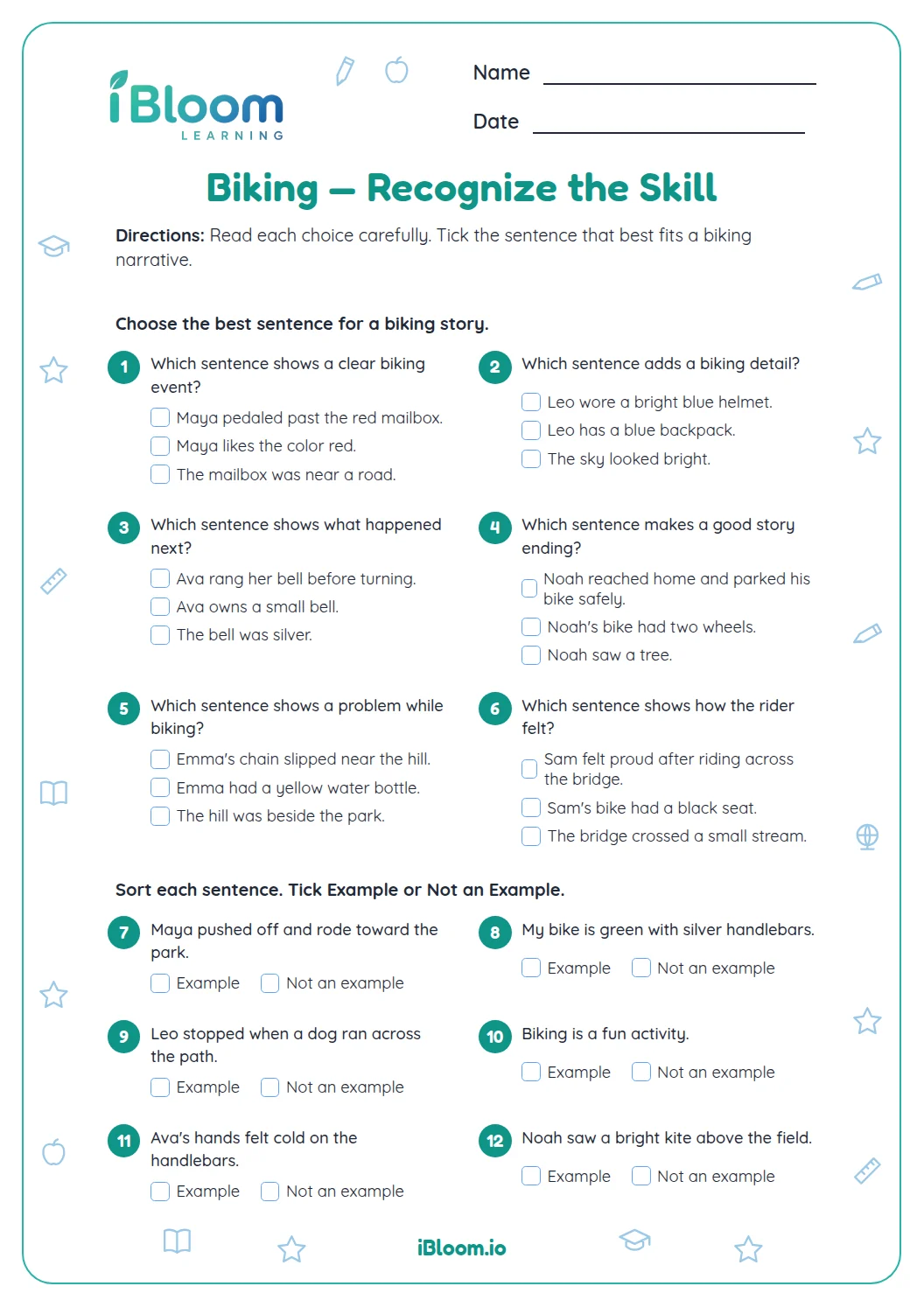
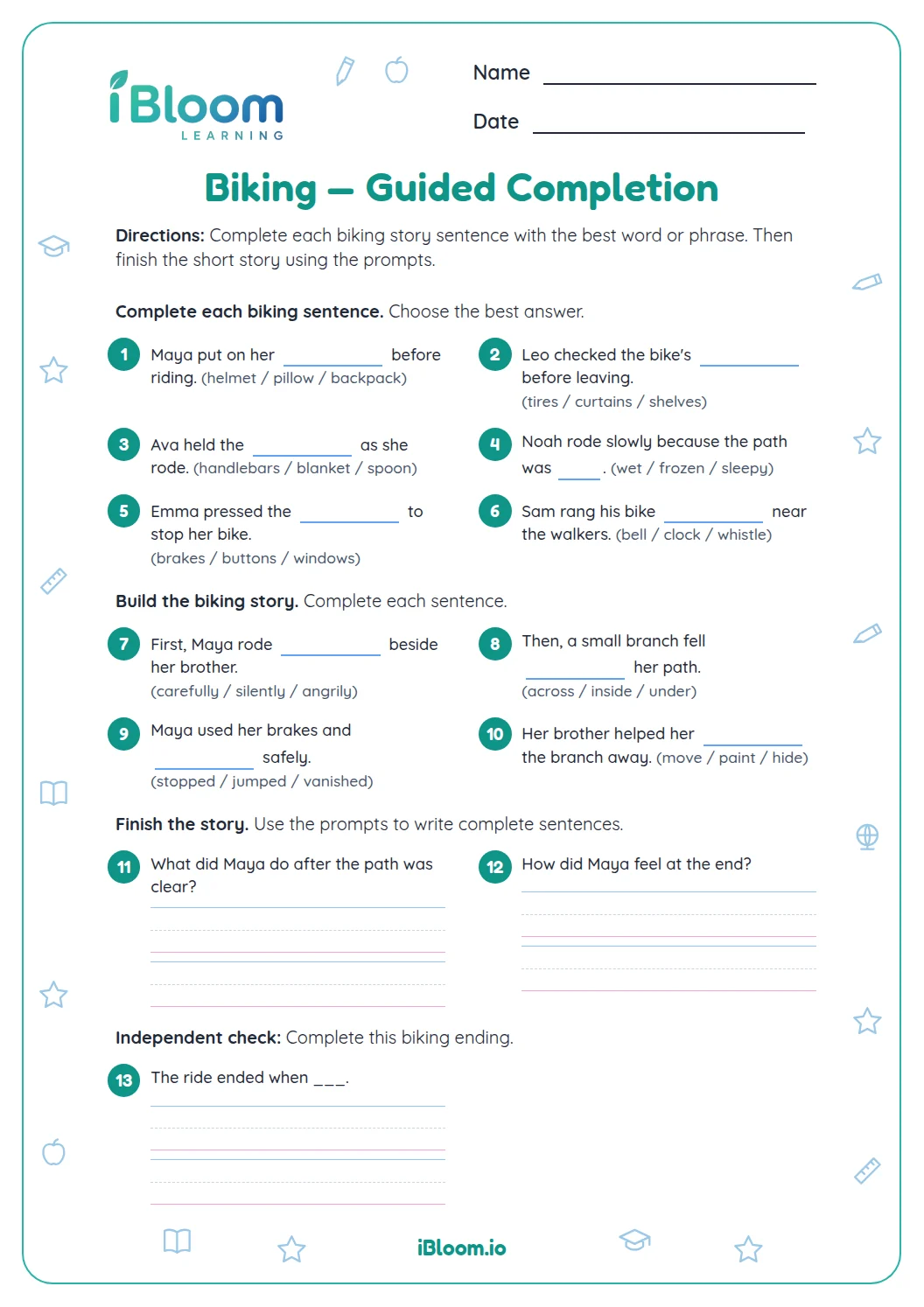
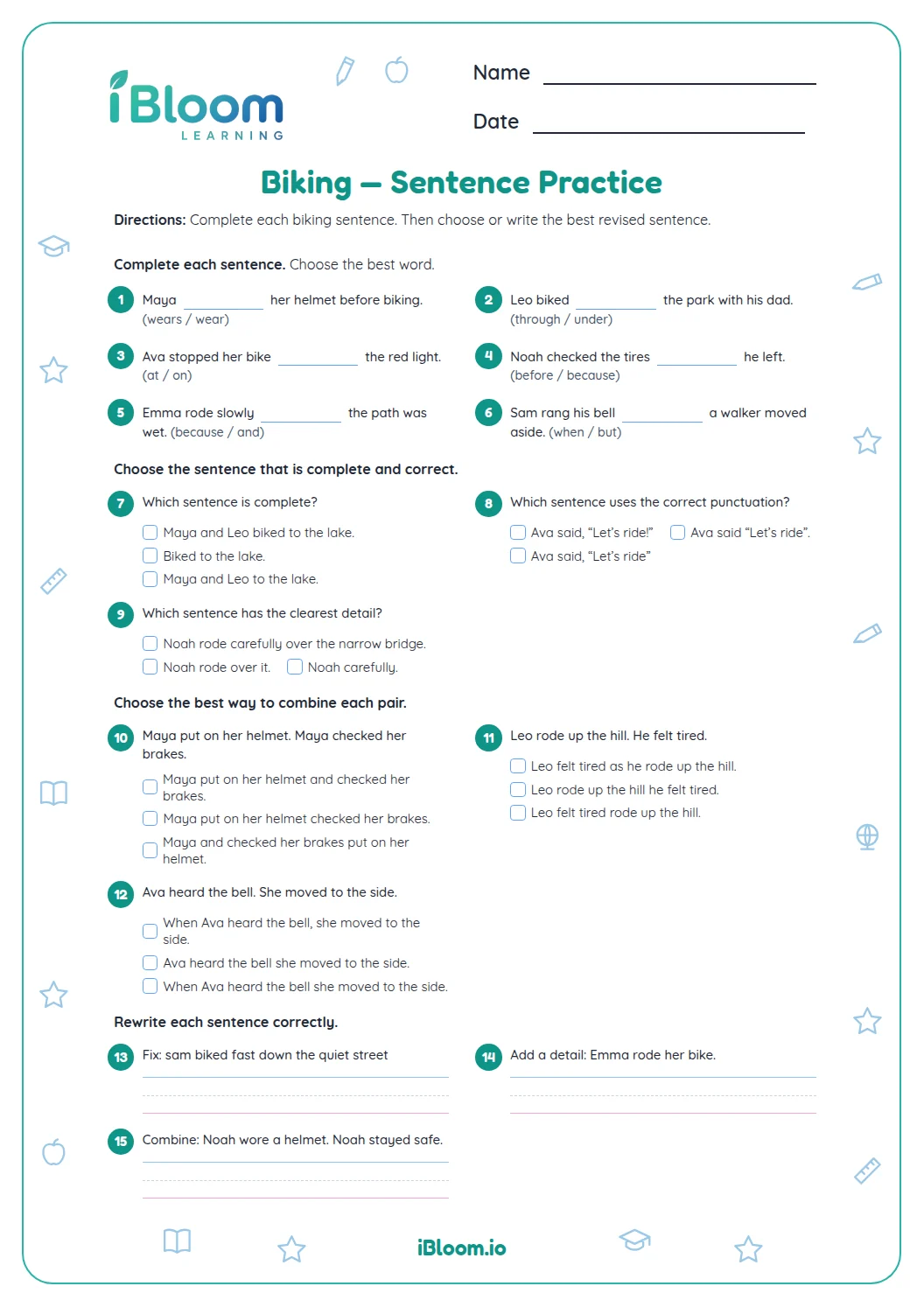
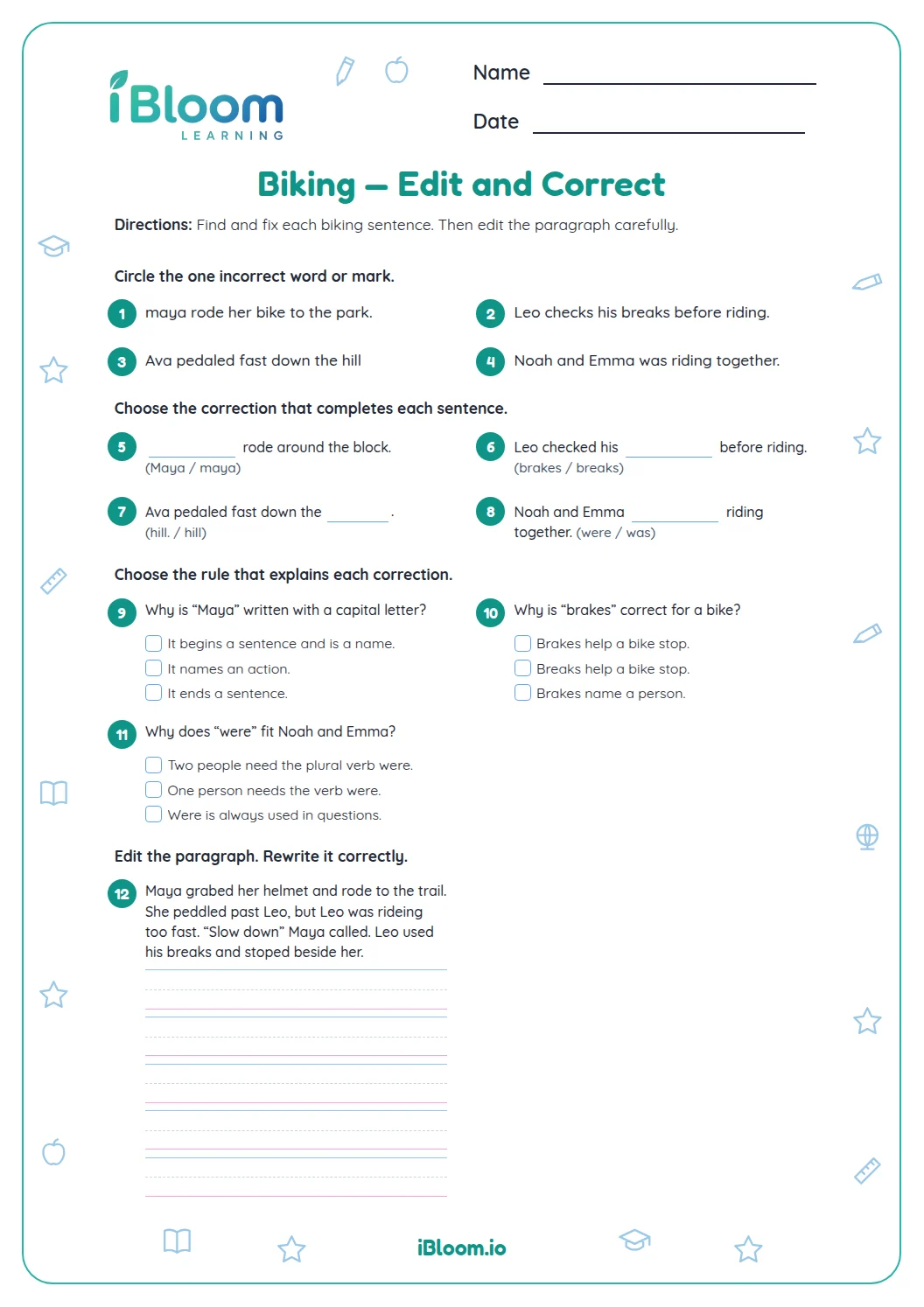
About this worksheet
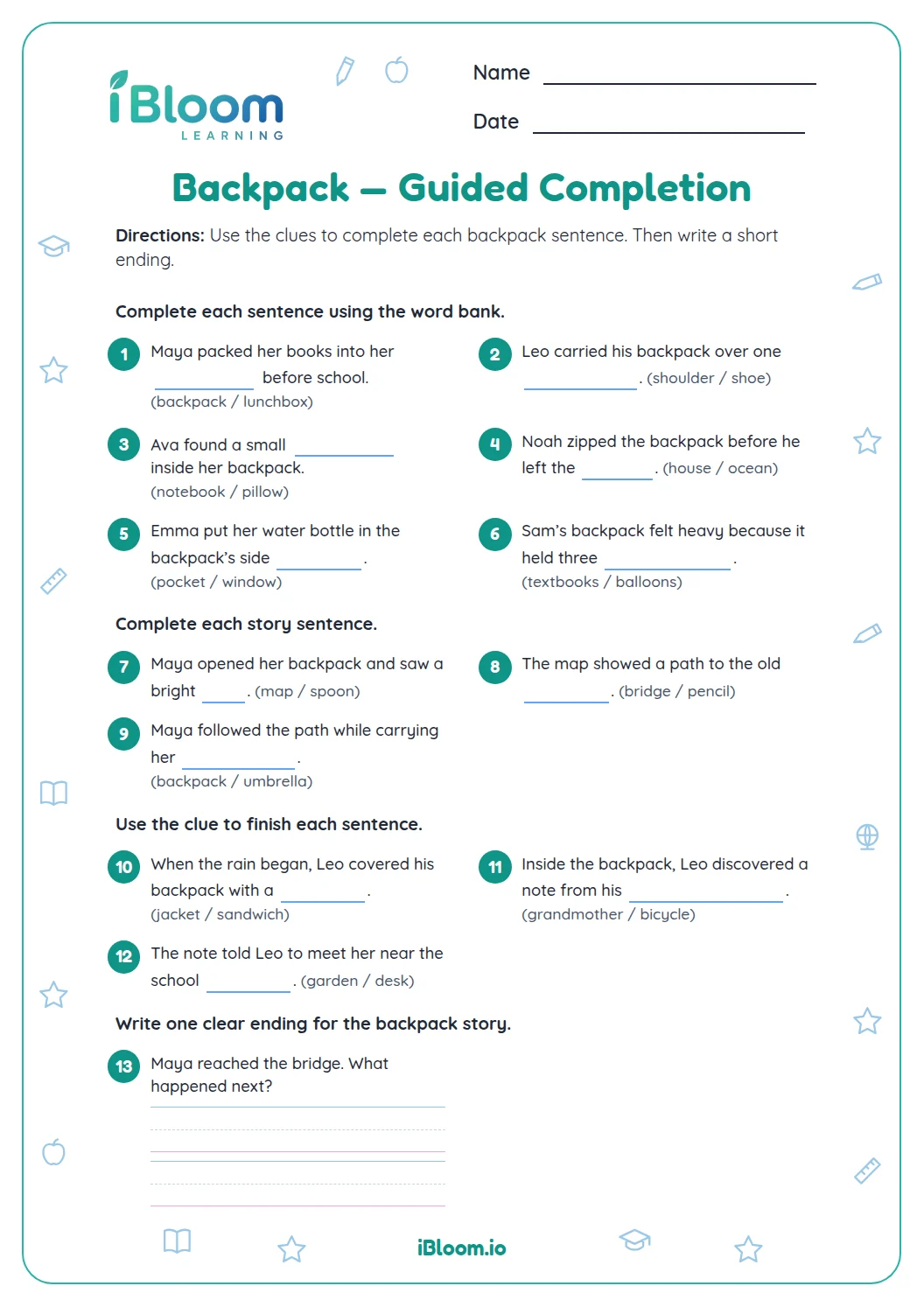
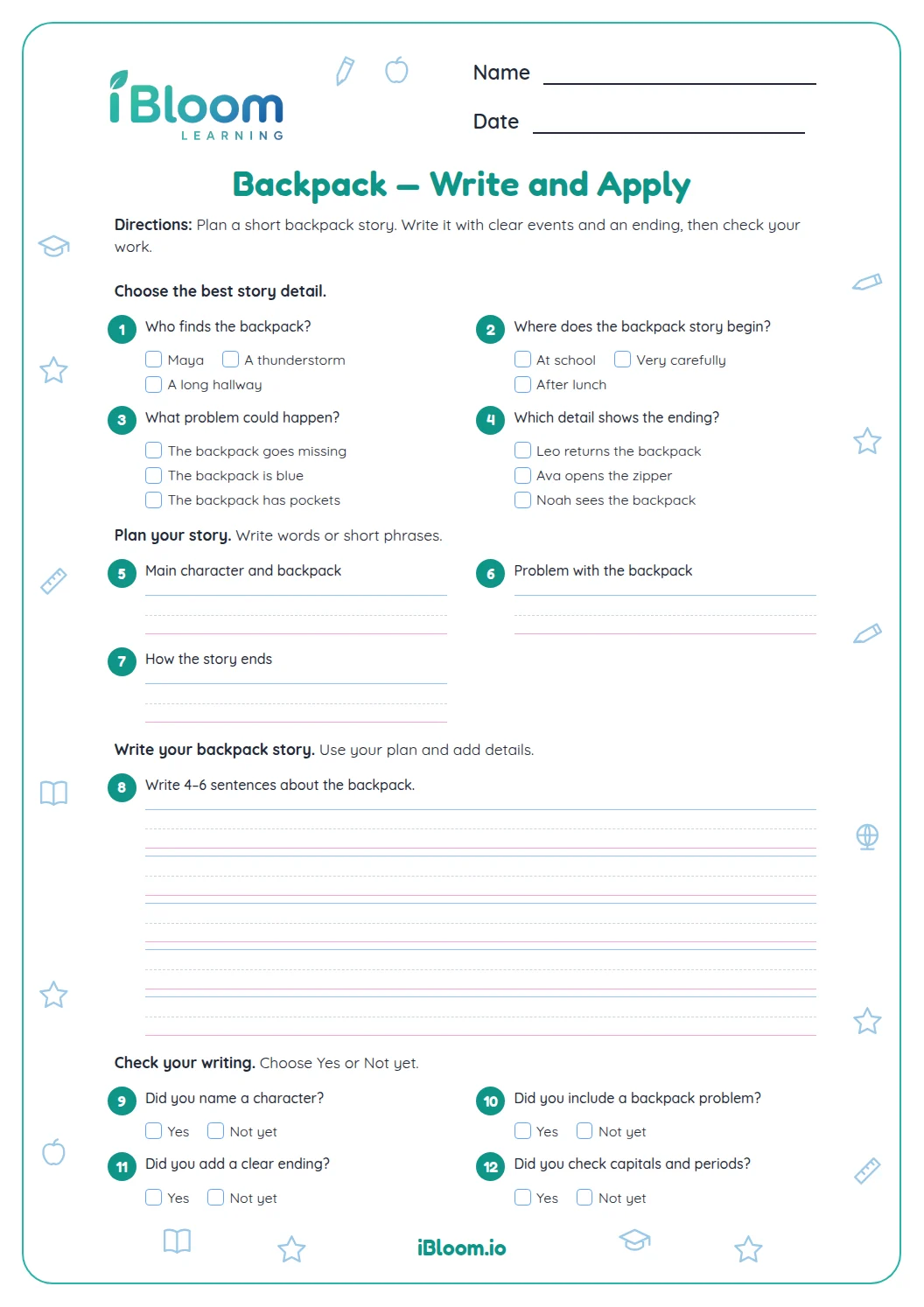
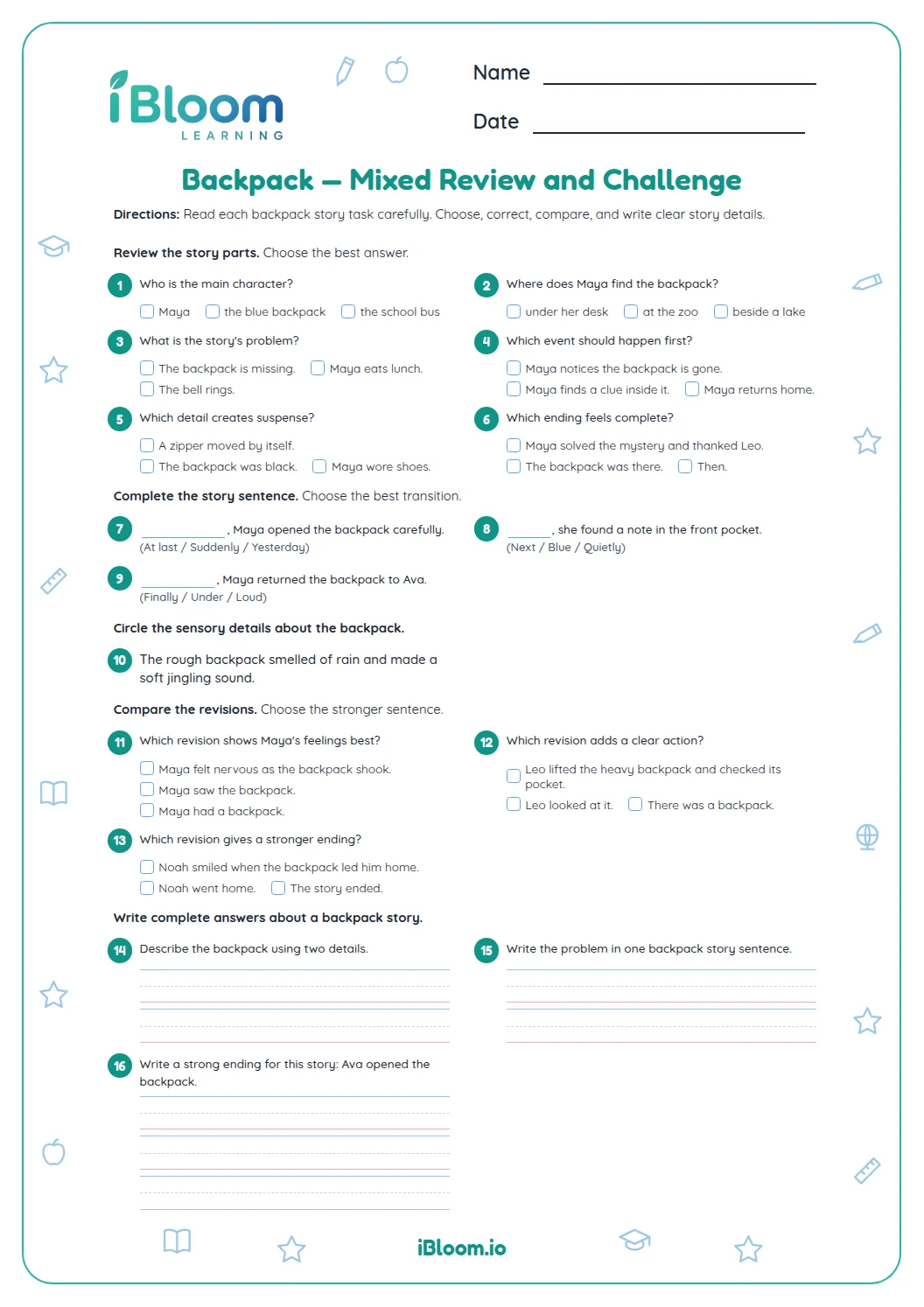
This free Grade 3 printable asks students to edit sentences from a backpack-themed narrative. Across 15 questions, students choose complete and correctly punctuated sentences, fix spelling and verb forms, improve sentence boundaries, and write a fitting story ending. The answer key includes sample responses for open-ended edits.
Aligned to 3.L.2
How does the practice build?
Work through the parts in order. Each group uses the same core skill in a different way, and the answer key gives a quick check after the student has tried each item.
- Read the part direction first.
- Use the passage, model, or sentence clues.
- Check answers after finishing each part.
How can you check one answer?
For example, q13 asks students to correct “Jo packed a map she packed a snack.” One clear edit is “Jo packed a map. She packed a snack.” The period separates two complete thoughts.
How to use this worksheet
- 1Read each sentence aloud to hear whether it is complete.
- 2Check capitals at the start of sentences and in names.
- 3Look for spelling, verb tense, and punctuation clues.
- 4Separate complete thoughts that run together.
- 5Use the sample key to discuss more than one possible story ending.
Editing checks to remember
The mistake
Leaving a sentence fragment without a complete thought.
The fix
Check that the sentence tells who or what and what happened.
The mistake
Writing two complete thoughts with no punctuation between them.
The fix
Use a period or a joining word with the needed comma.
The mistake
Forgetting the apostrophe in a name showing ownership.
The fix
Write “Joe’s backpack” to show the backpack belongs to Joe.
Curriculum alignment
This worksheet gives students practice with the skills named in the standards below.
Students edit capitalization, punctuation, and spelling in sentences.
On this sheet: Students correct capitals, spelling, punctuation, and sentence boundaries.
Show the official wordingHide the official wording
Demonstrate command of the conventions of standard English capitalization, punctuation, and spelling when writing.
What to practice next
Further reading
Questions parents and teachers ask
What editing skills does this sheet practice?
Students check complete sentences, punctuation, spelling, capitals, past-tense verbs, pronouns, and sentence boundaries. Each item uses details from a backpack story so the editing practice stays connected to one topic. Ask the student to point to the matching clue before checking the answer key.
How many questions are included?
There are 15 questions on two worksheet pages, followed by a separate answer-key page. The final section includes sentence revision and an open-ended story ending. Ask the student to point to the matching clue before checking the answer key.
Does the key give one answer for every question?
The multiple-choice items and short corrections have direct answers. For questions that allow different correct sentences, the answer key starts with “Sample” and gives one acceptable version. Ask the student to point to the matching clue before checking the answer key.
How can students spot a run-on sentence?
Read the sentence and look for two complete thoughts joined without punctuation or a connecting word. In q13, “Jo packed a map” and “she packed a snack” can each stand alone, so a period can separate them. Ask the student to point to the matching clue before checking the answer key.
What makes a good ending for the backpack story?
A fitting ending tells what Jo does after packing and connects to the story’s events. Students may write different sentences, as long as the ending makes sense and uses correct sentence conventions. Ask the student to point to the matching clue before checking the answer key.