





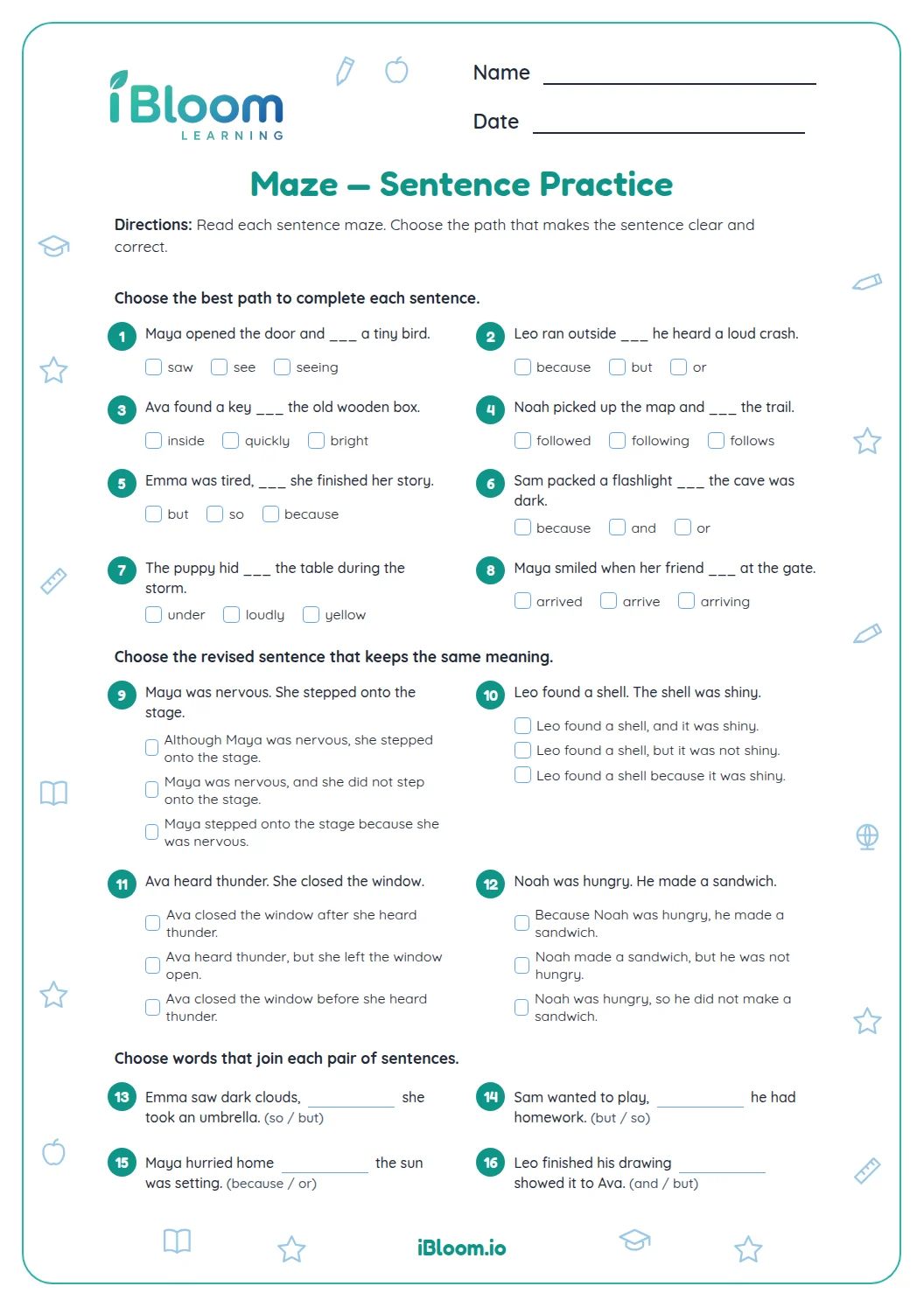
About this worksheet
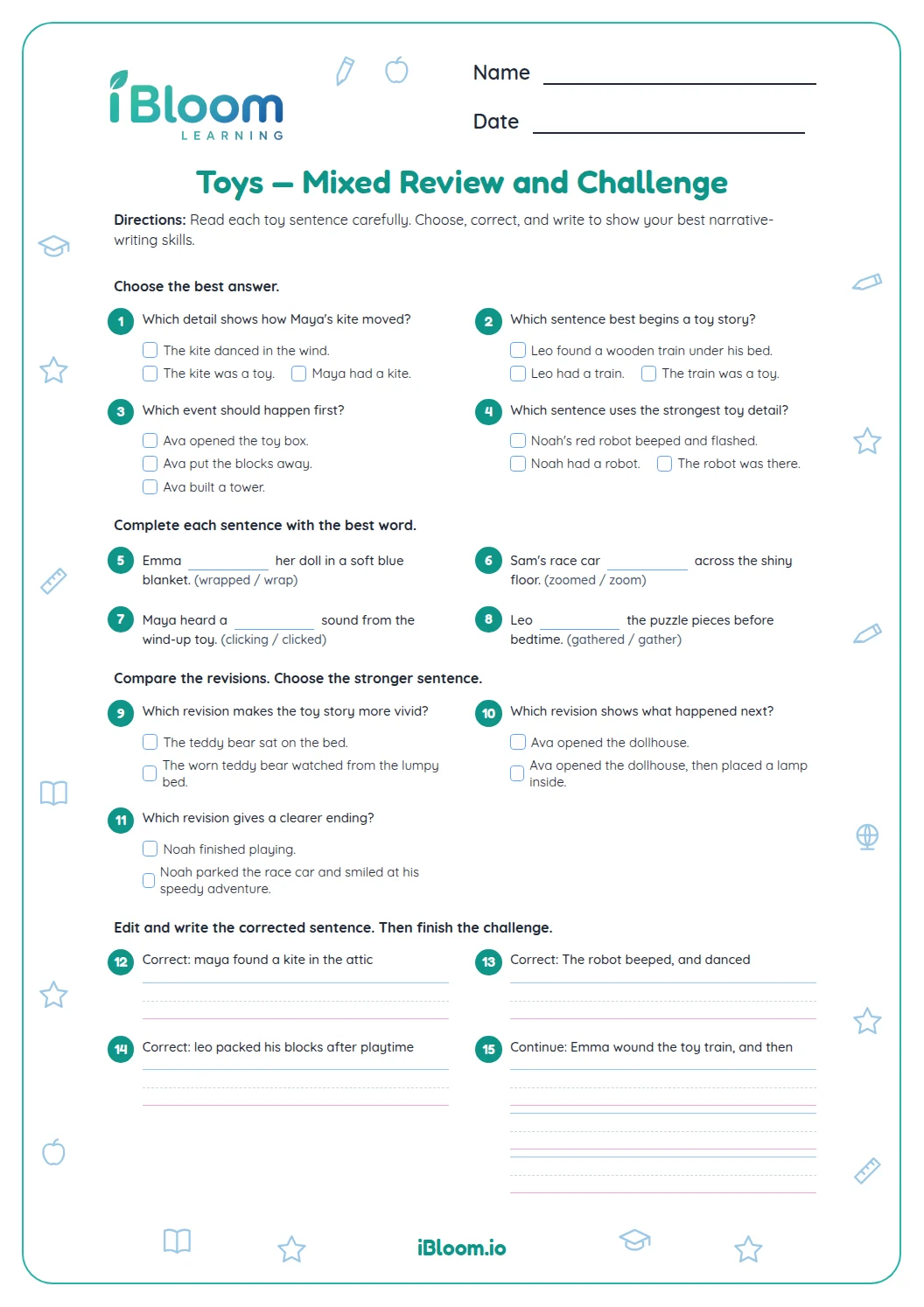
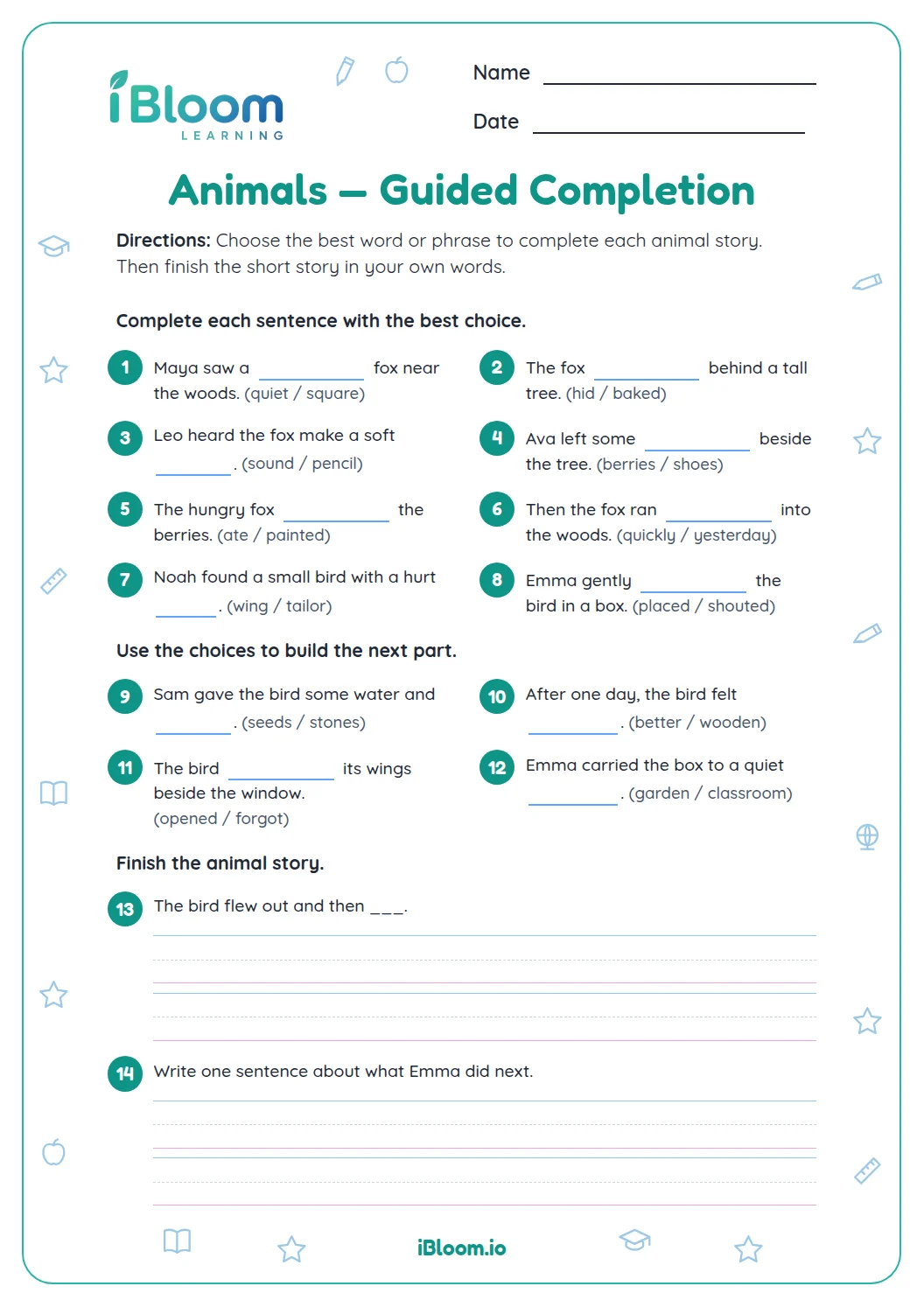
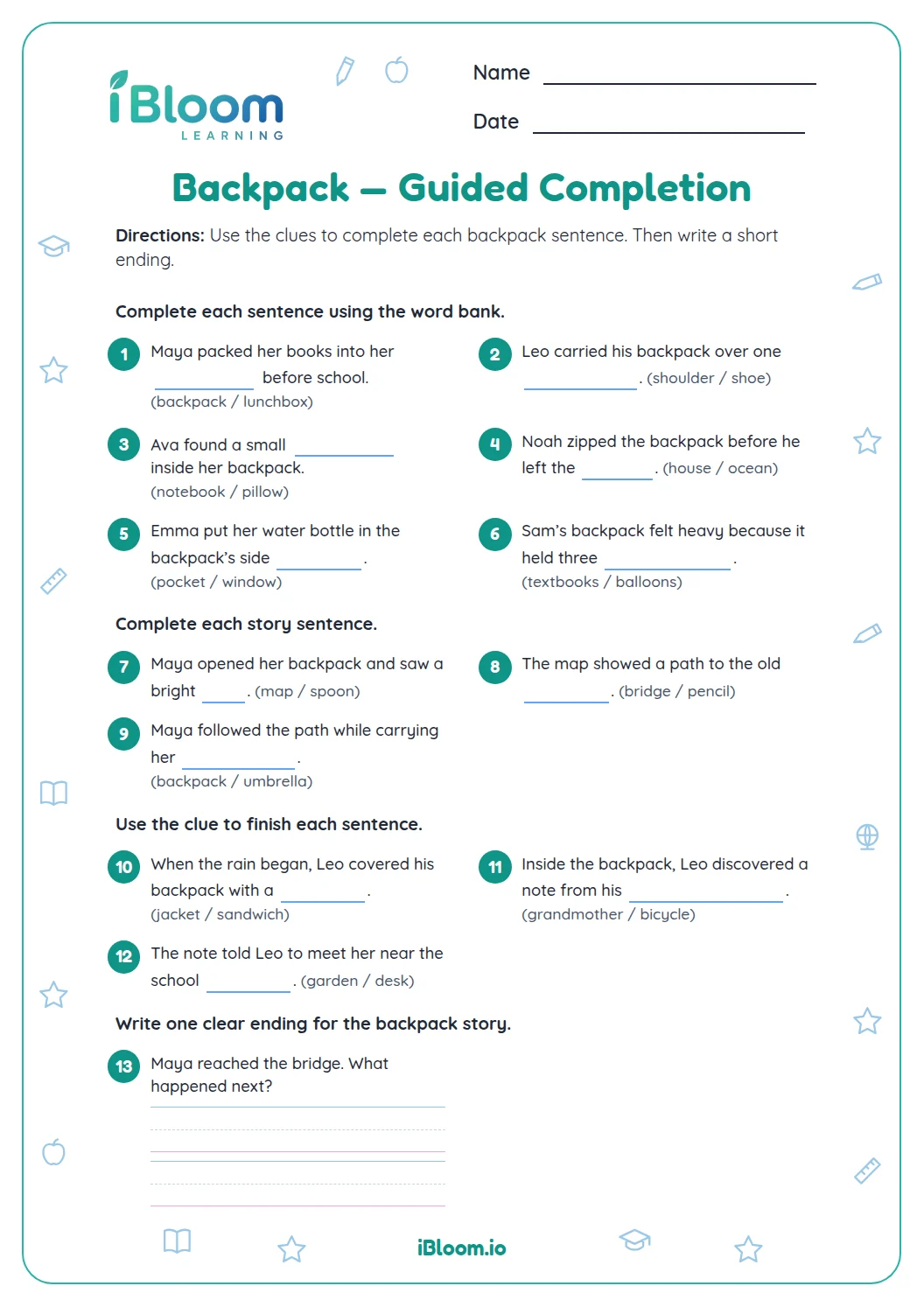
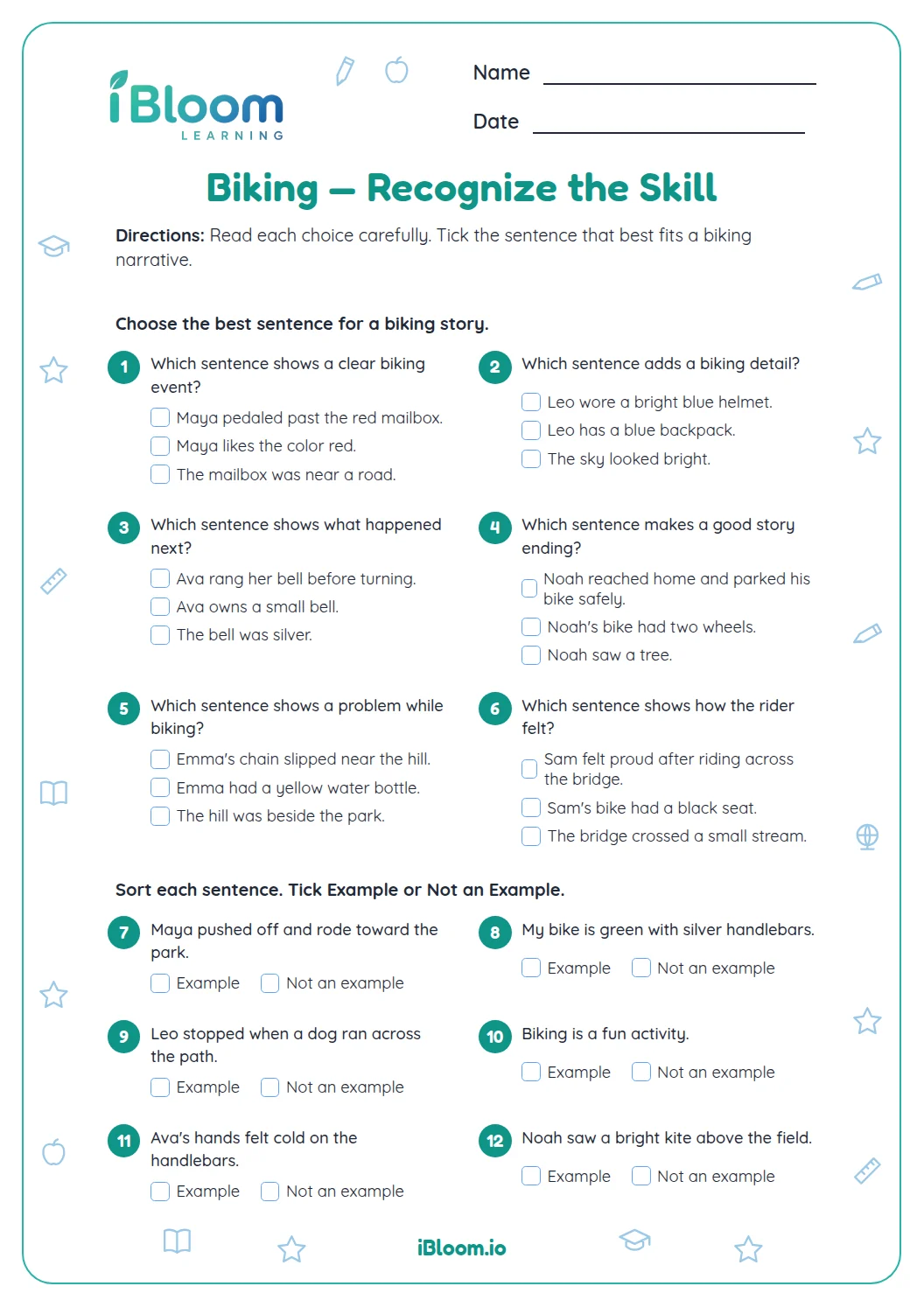
This printable Grade 3 worksheet uses toy-themed sentences to practice editing and correcting. Students identify errors, complete corrections, choose a corrected sentence, and supply missing verbs or punctuation. The work connects to Common Core L.3.2 and W.3.5. There are 16 questions in four parts, with a separate answer key.
Aligned to L.3.2 and W.3.5
What editing practice is included?
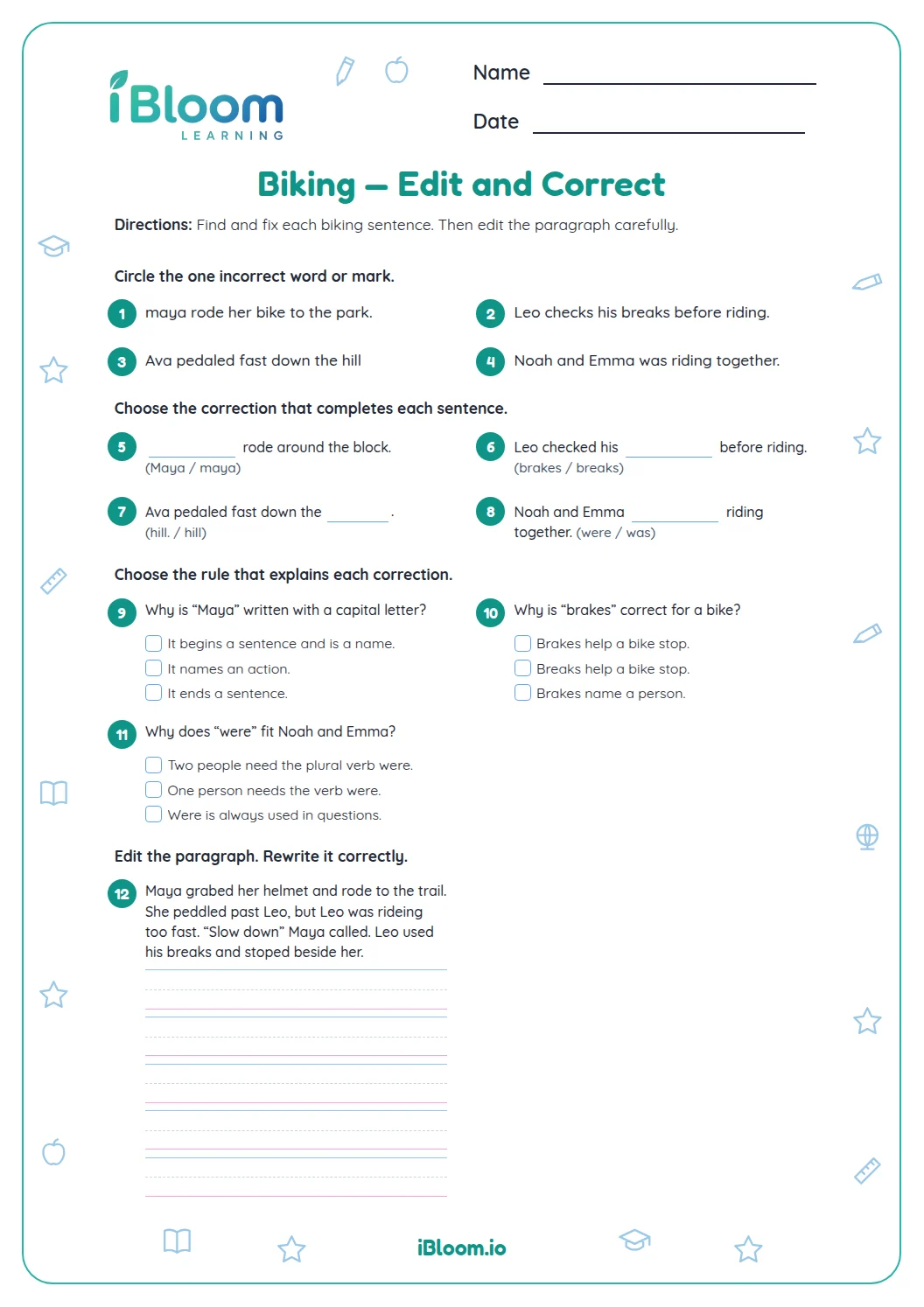
Part A asks students to select the incorrect word in each sentence. Part B gives five correction blanks, Part C asks students to choose a corrected sentence, and Part D has four more correction blanks.
The 16 questions move from spotting an error to making a correction. The answer key lists each response.
How can a student check subject-verb agreement?
Find the subject first, then check its verb. One person or thing may use a different form from two people or things: “Ava has” but “Ava and Sam have.” Read the complete sentence to make sure the verb matches the subject.
- 1Ava have a bright red kite.
- 2Ava is one person, so have should change to has.
- 3Corrected: Ava has a bright red kite.
What should students check when proofreading?
Look for a capital letter at the beginning, a verb that matches its subject and time, and end punctuation. Then read the sentence again to see whether it expresses a complete thought. In a run-on, add punctuation and a conjunction or split the ideas into complete sentences.
How to use this worksheet
- 1Read the whole sentence before editing.
- 2Find the subject and check whether the verb matches.
- 3Look for capitals, plural endings, and end punctuation.
- 4Choose the correction that keeps the intended meaning.
- 5For Parts B and D, write the missing correction; in Part C, choose the corrected sentence.
- 6Reread each sentence and compare it with the answer key.
Common mistakes and quick fixes
The mistake
Changing a verb without checking its subject.
The fix
Find who or what acts first, then choose a matching verb.
The mistake
Adding an apostrophe or extra ending to every plural.
The fix
Use a plural noun after a number such as two toy cars.
The mistake
Fixing one word but leaving a sentence fragment or run-on.
The fix
Read the complete line and check that each thought has clear punctuation.
Common Core alignment
The practice connects the page activities to these Common Core skills.
Edit sentences for standard capitalization, punctuation, and spelling.
On this sheet: Students edit capitalization, punctuation and plural spelling in sentences.
Show the official wordingHide the official wording
Demonstrate command of the conventions of standard English capitalization, punctuation, and spelling when writing.
Strengthen writing by revising and editing toy-story sentences.
On this sheet: Students revise and edit short narrative sentences and a short story.
Show the official wordingHide the official wording
With guidance and support from peers and adults, develop and strengthen writing as needed by planning, revising, and editing.
What to practice next
Make more practice
Further reading
Questions parents and teachers ask
What kinds of errors do students edit?
The 16 questions practice verb agreement, plural nouns, capitalization, punctuation, past-tense forms, and complete sentences. Toy-story examples keep the edits connected to a narrative setting. The answer key gives the selected corrections and the words or punctuation marks needed in the blanks.
How many questions are on the page?
There are 16 questions across four parts. Part A has six error choices, Part B has five correction blanks, Part C asks students to choose one corrected sentence, and Part D has four more blanks. The separate key lists each answer.
Why does “Ava have a kite” need an edit?
Ava is one person, so the present-tense verb should be has: “Ava has a bright red kite.” The subject and verb need to agree. Looking first for who is doing or having something helps students decide whether the verb form fits.
Can students write a different correction than the key?
Some corrections can be expressed in different ways, but the blanks and choice items have a clear expected answer. The answer key lists each correction. Students should keep the toy-story meaning, correct the targeted grammar or punctuation issue, and reread the full sentence.
How can a child check a corrected sentence?
Read the sentence aloud and check who or what the sentence is about. Then look for a verb that fits that subject, a capital letter at the start, and punctuation at the end. For dialogue and run-on items, check that the punctuation matches the sentence meaning.