




About this worksheet
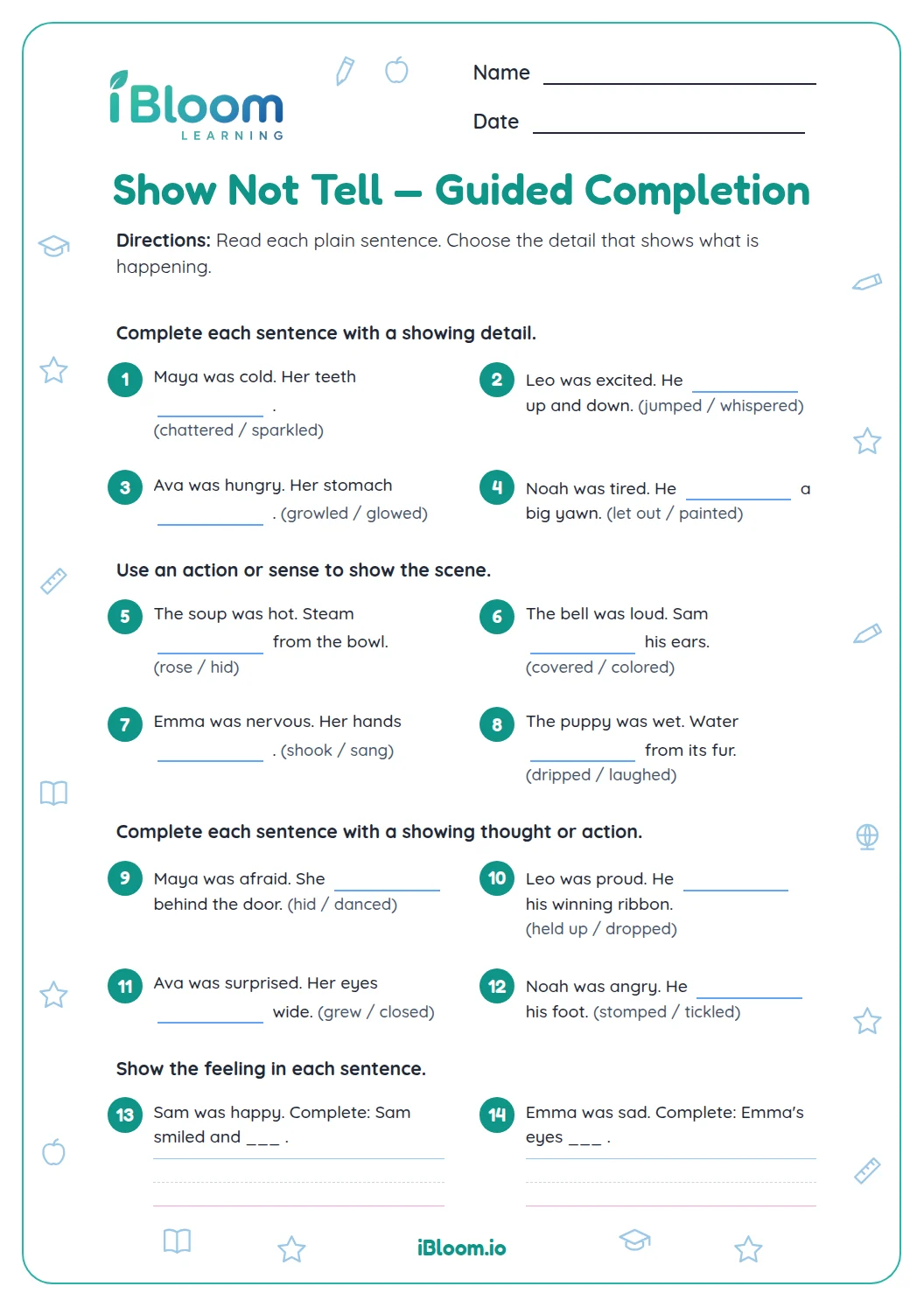
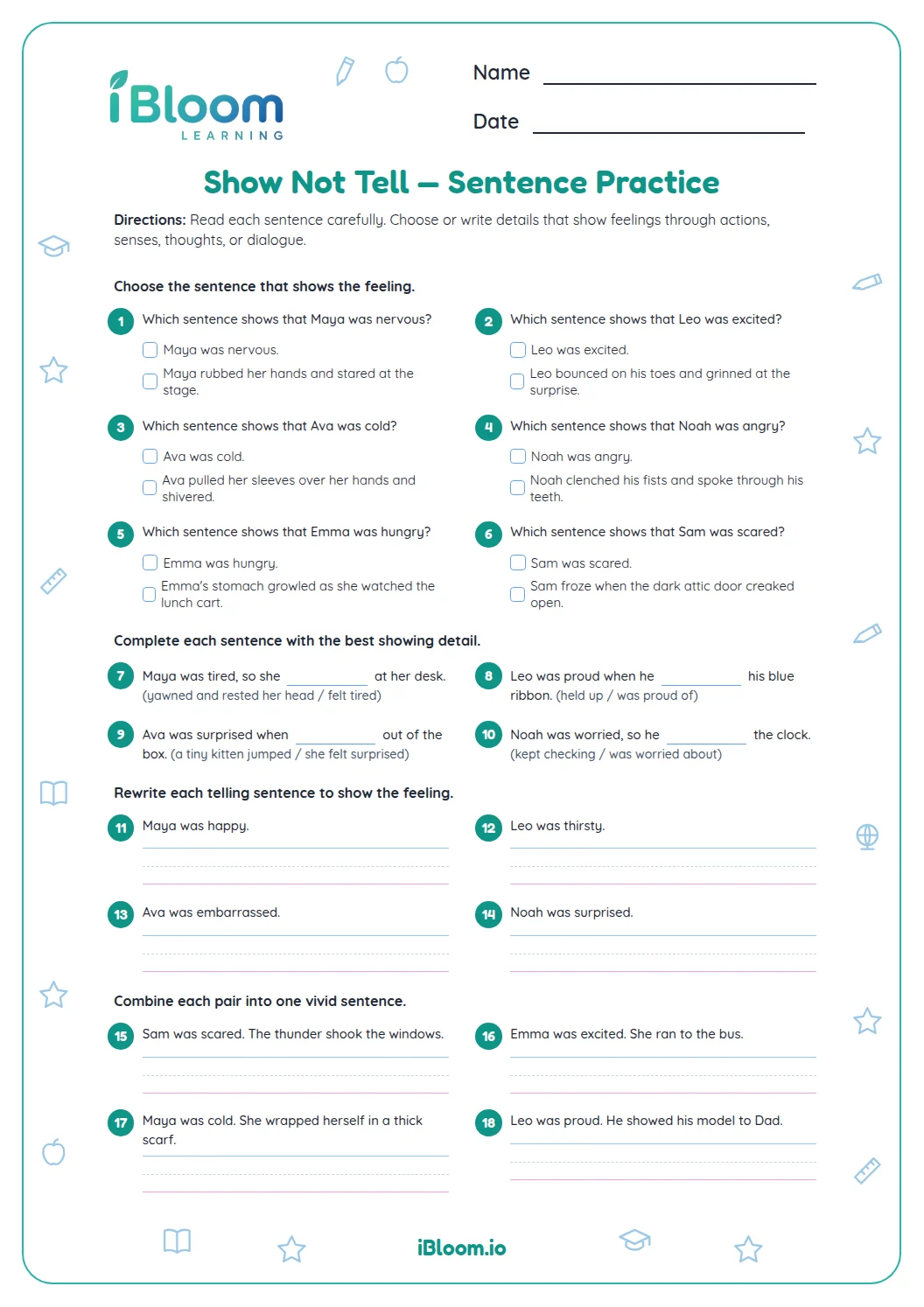
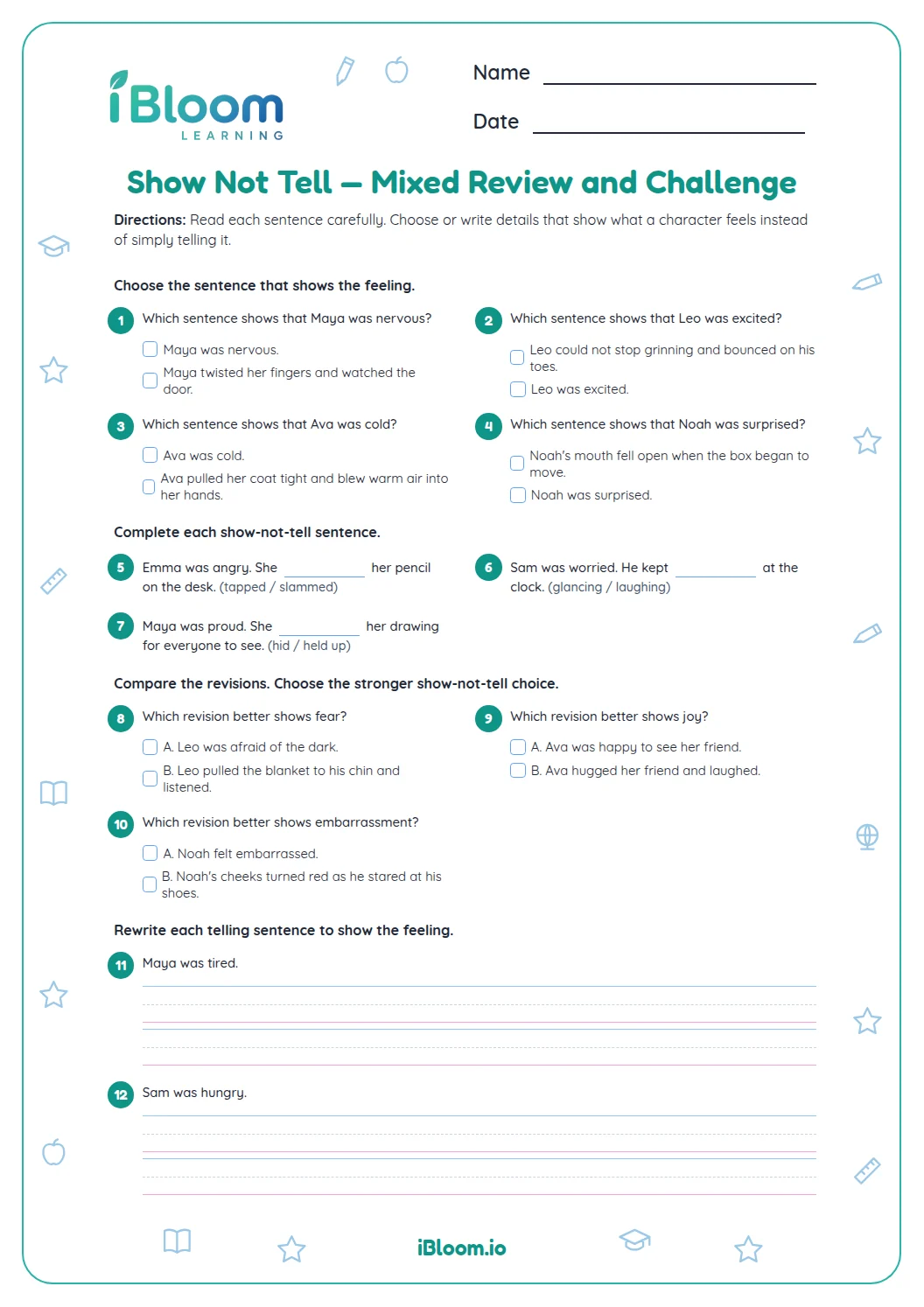
This Grade 3 printable practices show not tell in narrative writing. Learners identify telling and showing, choose details that reveal feelings and events, then write one original example. The other items use compact choices to keep practice varied across two worksheet pages. A separate answer key includes the selected responses and a sample sentence.
Aligned to W.3.3
How do learners recognize show not tell?
Part A starts with clear examples of show not tell. Learners look for the feature that makes each response fit the task.
- 1___ The puppy was scared.
- 2Answer: Tell
How does Part B build practice?
Part B asks learners to use the same clue in new examples. Encourage them to reread the whole prompt before answering.
- 1___ Socks covered the floor, and books leaned in a crooked pile.
- 2Answer: Show
How can learners check their work?
The final items ask learners to choose a vivid detail or write an original sentence. Compare choices with the key and discuss which words reveal the feeling.
How to use the worksheet
- 1Read the one-line directions together.
- 2Complete Part A and name the clue in each item.
- 3Work through Part B without rushing.
- 4Try Part C independently where possible.
- 5Use the answer key to check and discuss any differences.
Common mistakes and quick fixes
The mistake
Answering before reading the whole prompt.
The fix
Reread the sentence or word and look for the specific clue.
The mistake
Choosing an answer because it sounds familiar.
The fix
Point to the part of the prompt that supports the choice.
The mistake
Treating a sample response as the only possible wording.
The fix
Accept another clear response that does the same job.
Common Core alignment
This practice connects to the listed Common Core skill.
Add dialogue or description to show how characters respond.
On this sheet: The worksheet questions practice this skill directly.
Show the official wordingHide the official wording
Develop real or imagined experiences or events using effective technique, descriptive details, and clear event sequences.
What to practice next
Make more practice
Further reading
Questions parents and teachers ask
What does this worksheet practice?
This worksheet has 14 questions on show not tell. Learners identify examples, choose details that reveal feelings or events, and write one original sentence. The answer key lists the choices and a sample response for the writing item.
How many questions are included?
There are 14 questions in four parts. Learners identify telling and showing, choose details that reveal feelings or events, and write one original sentence. The first items build recognition; later choices ask learners to apply the same idea in new examples.
How should we use the answer key?
Have the learner try each item before looking at the key. Compare selected choices with the marked answers, then ask which words reveal the feeling or event. For the written sentence, treat the key as a model and accept other clear show-not-tell responses.
How long does the worksheet take?
Plan for about 15 minutes, allowing a little extra time to write and check the final sentence. Learners can complete the identification and choice questions first, then reread the sentence they wrote and check whether it shows the feeling through an action or detail.
What can I do if an answer is different from the key?
Ask the learner to point to the words that support the choice. In the final writing item, check whether an action, sense detail, thought, or dialogue helps the reader infer the feeling. A different sentence can still work when it shows the feeling clearly.