






About this worksheet
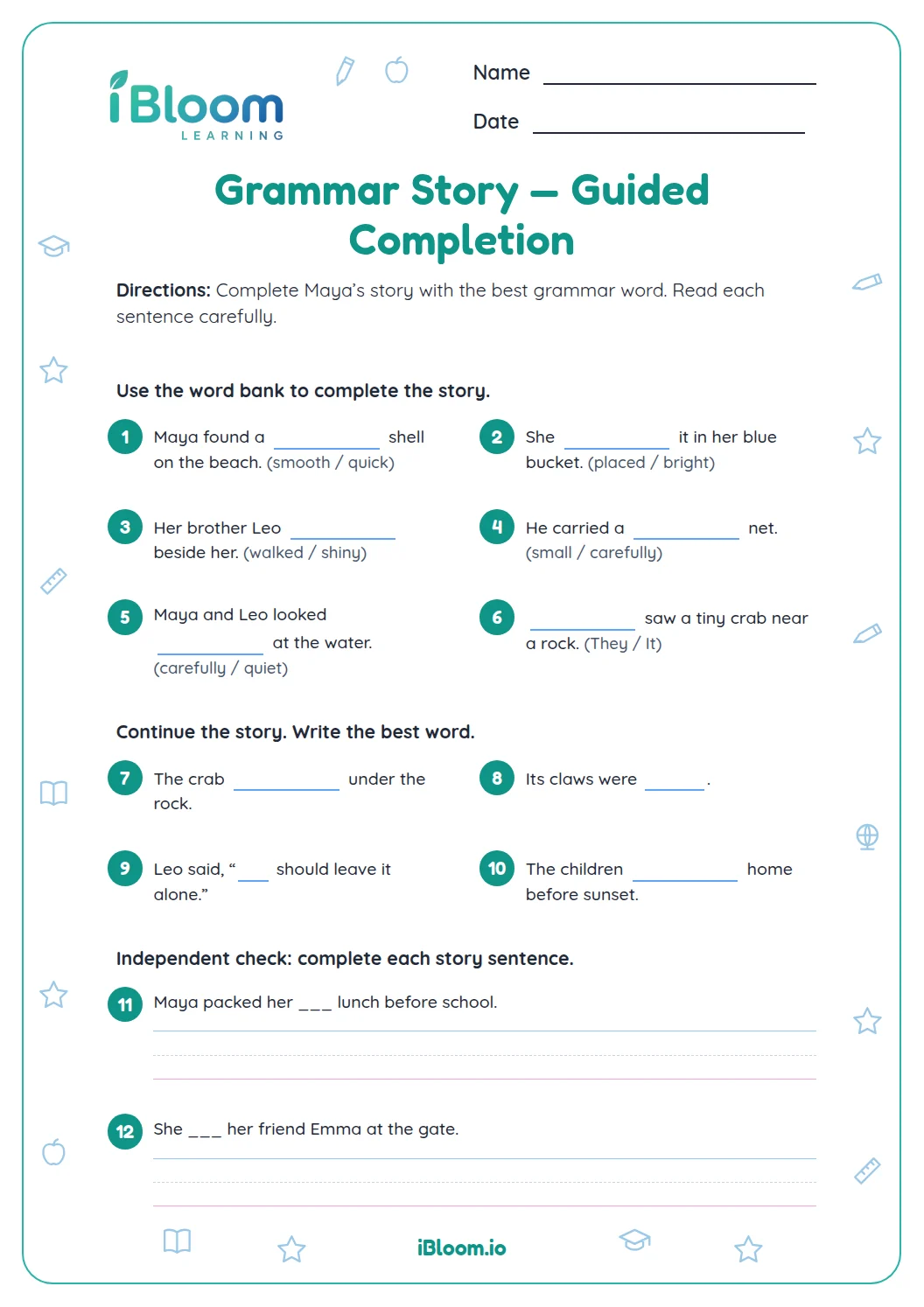
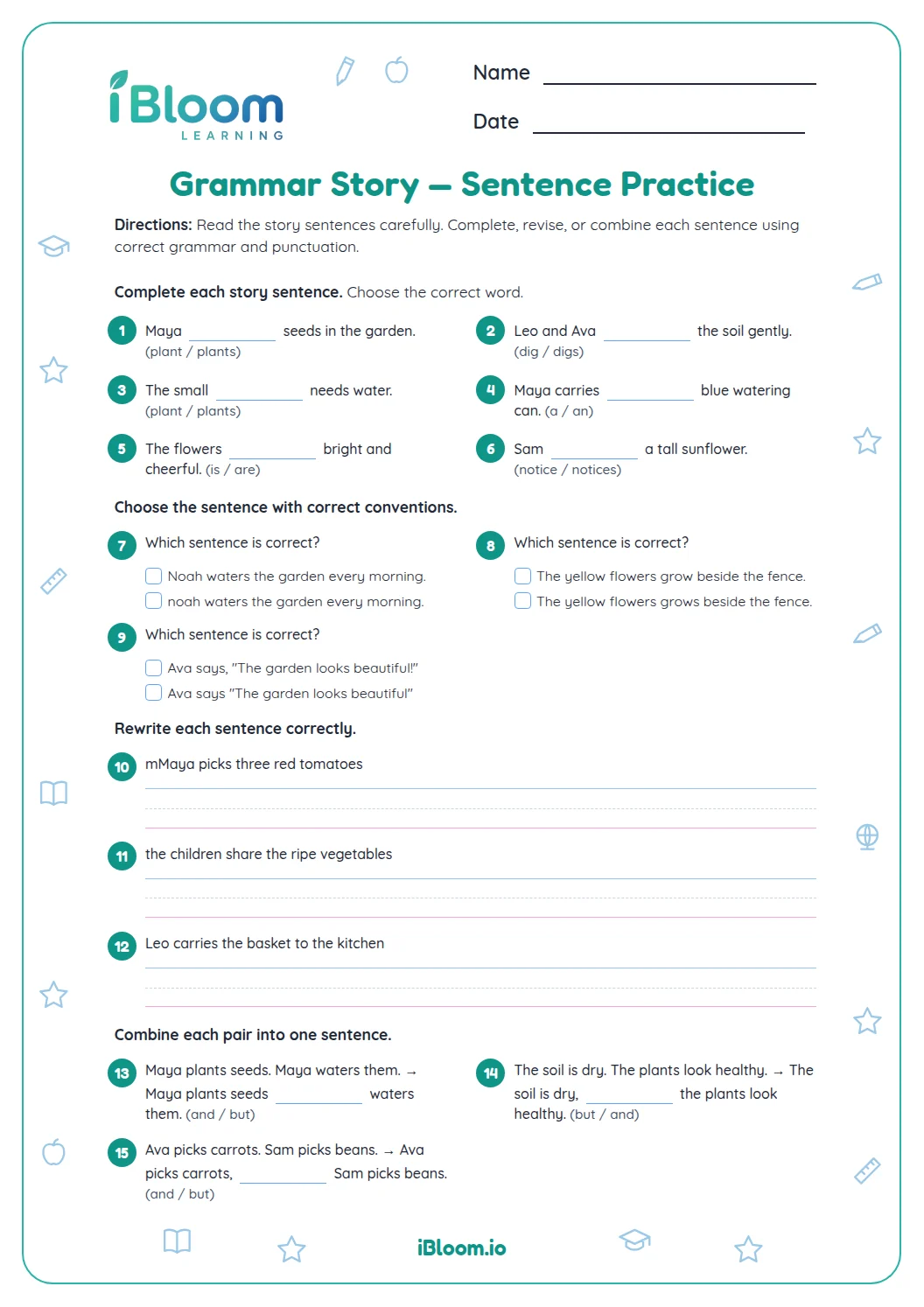
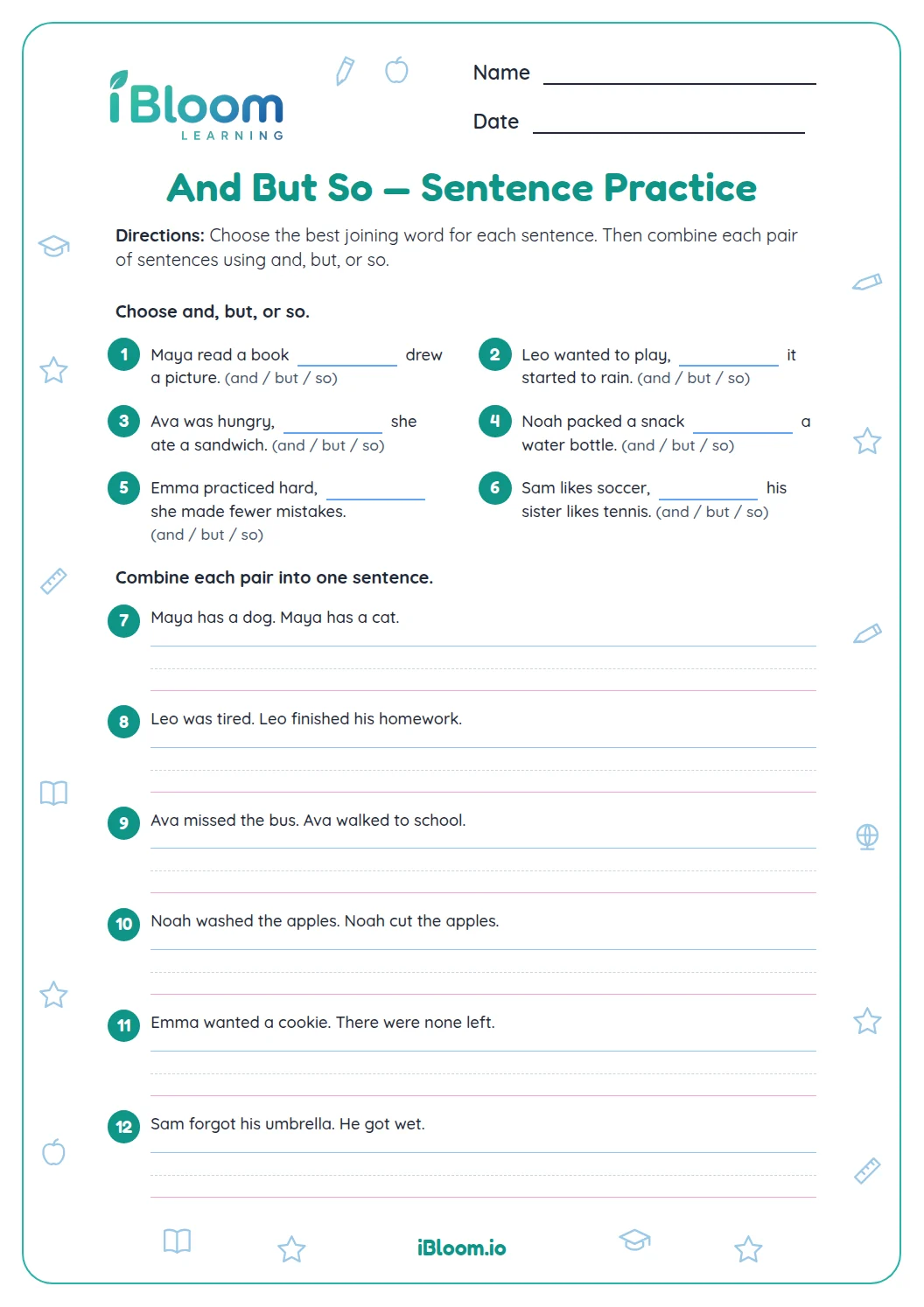
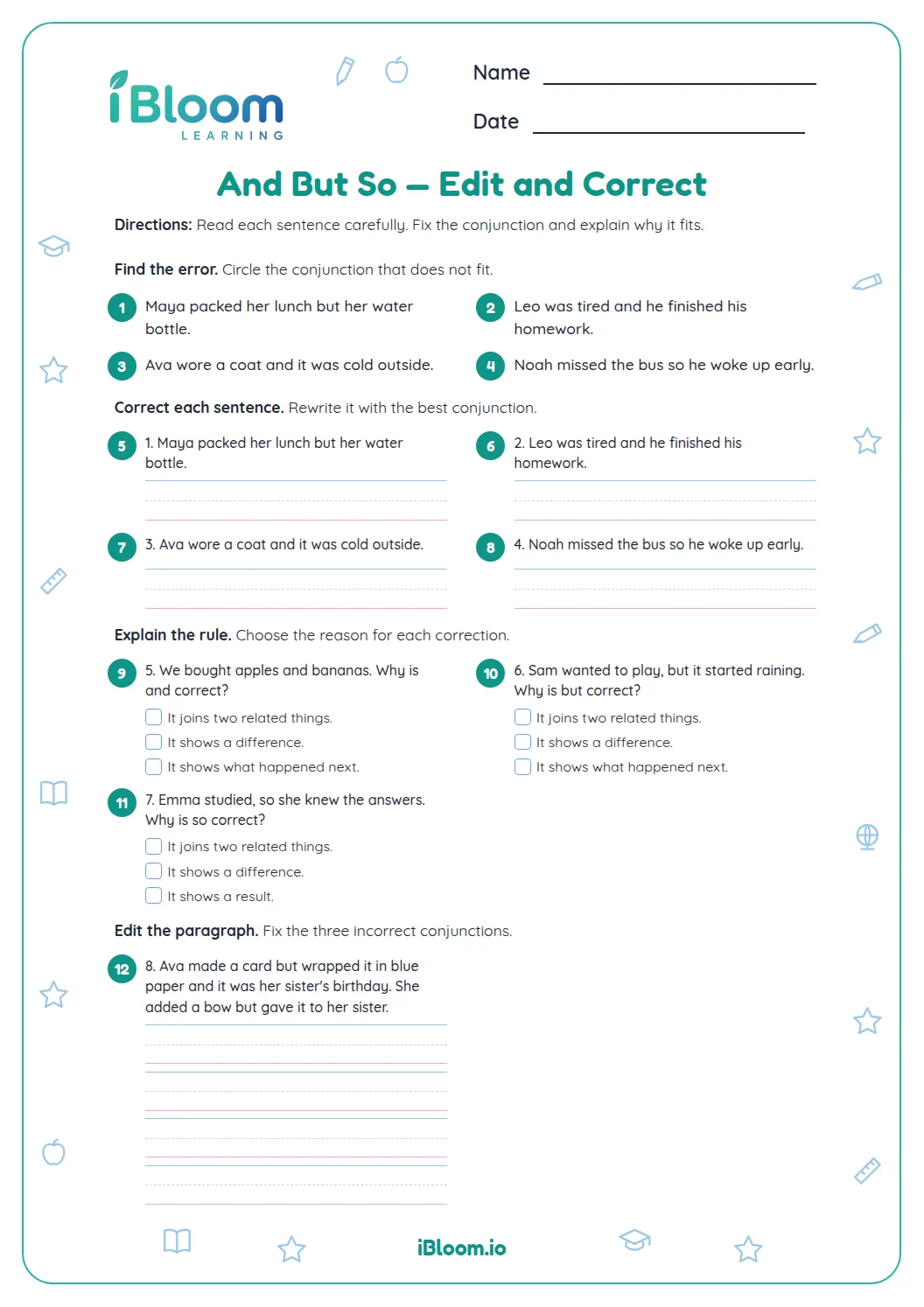
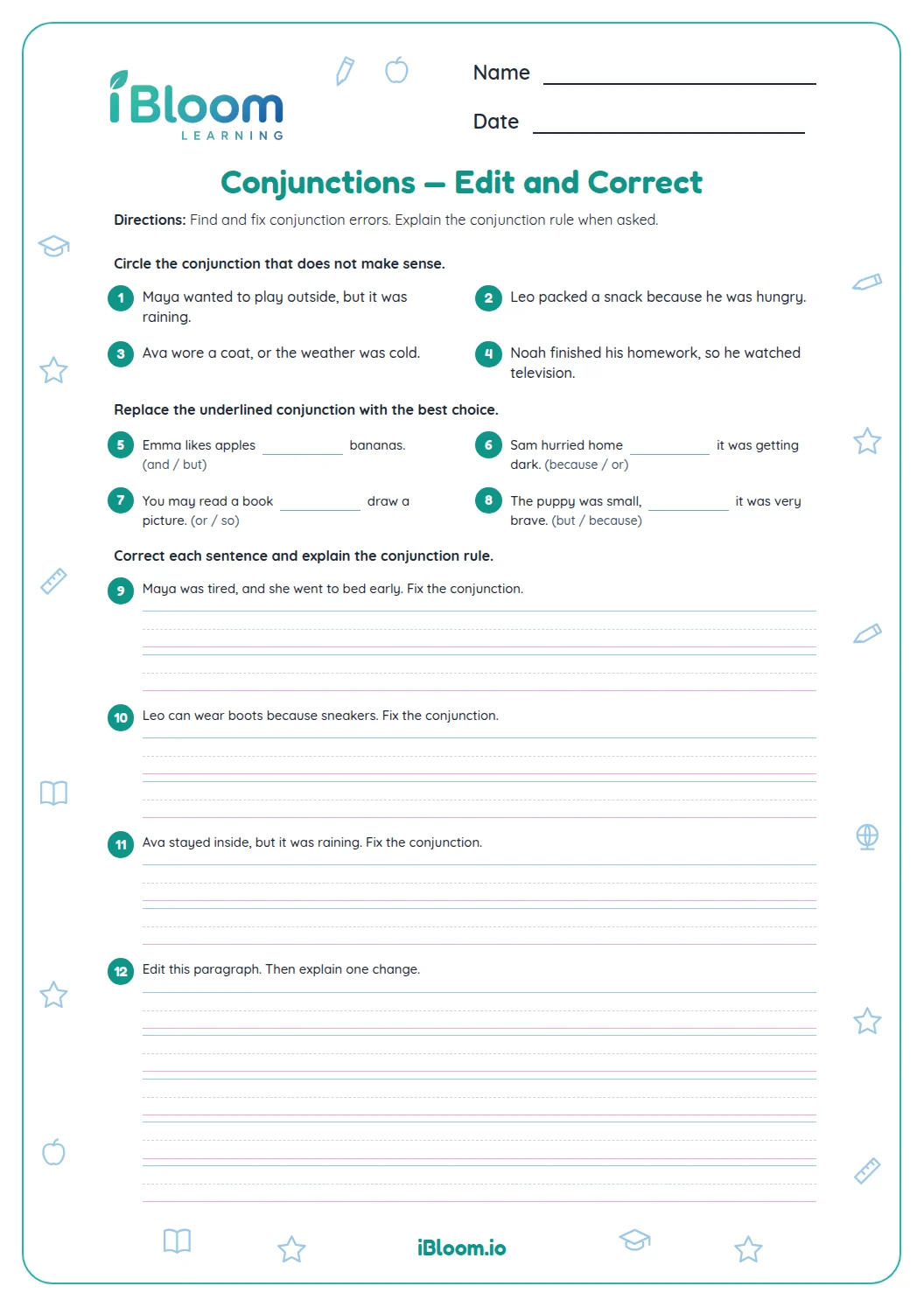
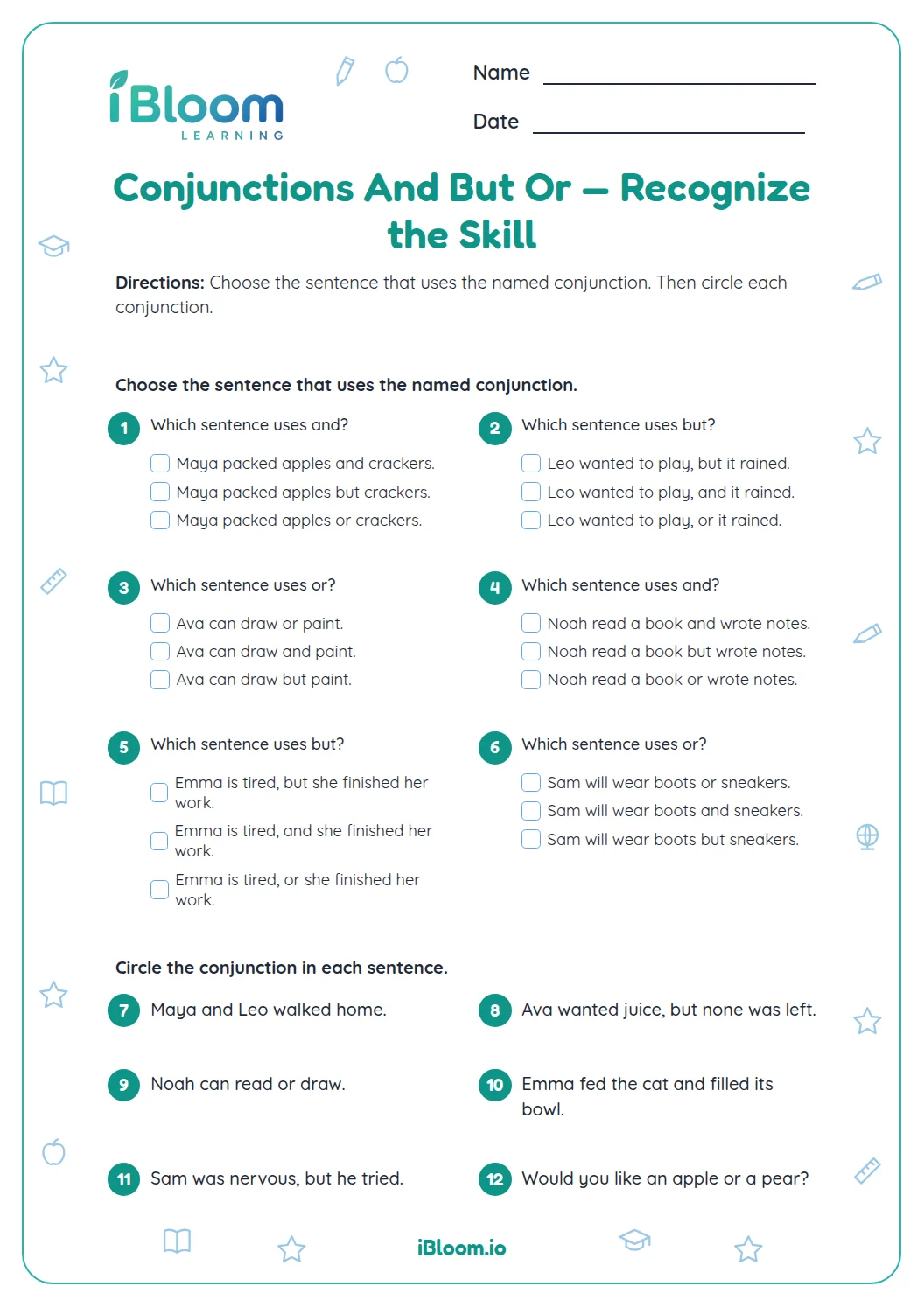
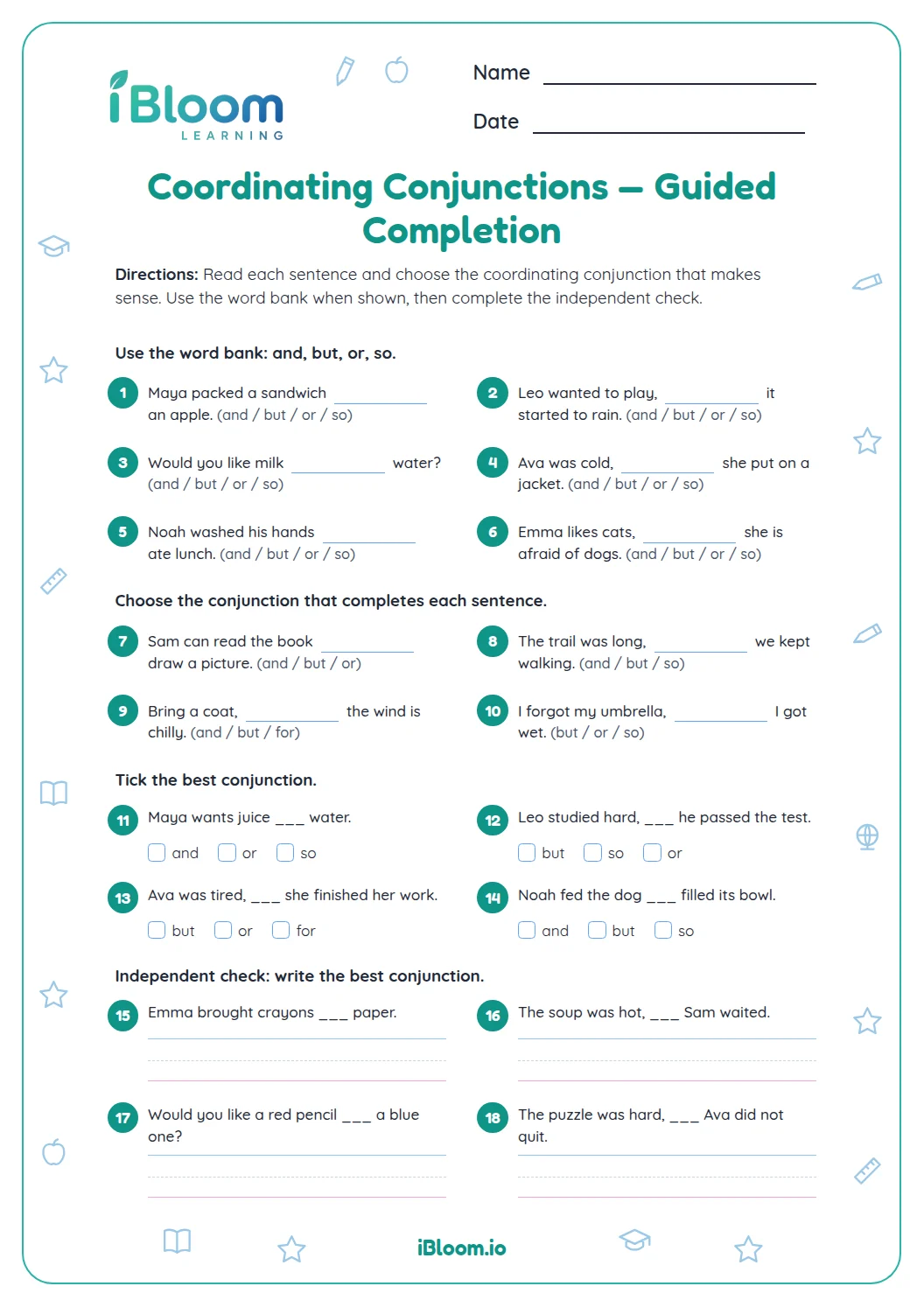
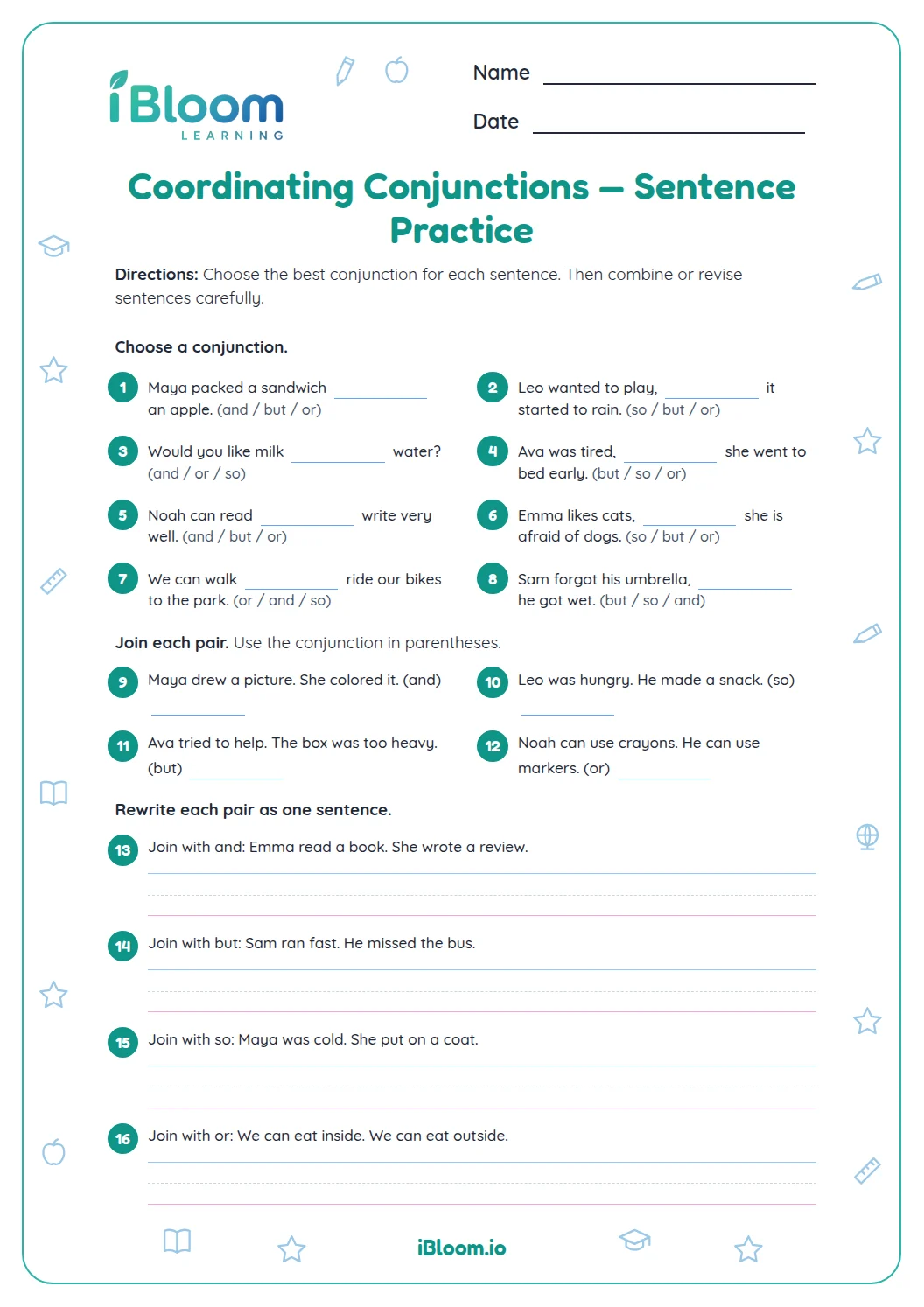
This Grade 3 printable uses a garden story setting to practice nouns, verbs, adjectives, adverbs, and conjunctions. Learners identify words in sentences, complete sentence blanks with a named part of speech, and write three original lines. The answer key lists the fixed answers and sample sentences. The sheet practices Common Core standards L.3.1a and L.3.1h by working with word functions and conjunctions.
Aligned to L.3.1a and L.3.1h
How can a sentence show a word’s job?
In “Milo carried the basket,” carried tells what Milo did, so it is the verb. The first six items ask learners to identify a named word type in a complete sentence.
How do word choices complete the story?
The next five prompts name the needed part of speech. For “Rain ___ on the garden gate,” a verb such as tapped makes a complete sentence; the key offers one fitting answer.
How can learners write with these words?
The final three prompts ask learners to make sentences using a noun and verb, an adjective with its noun, and a conjunction joining ideas. Encourage a complete thought in each line.
How to use this worksheet
- 1Read the whole sentence before choosing a word.
- 2Ask what job the target word does: naming, action, describing, or joining.
- 3For a blank, check that the word fits both the named part of speech and the sentence.
- 4In your own sentence, include the required word types.
- 5Reread each sentence to check that it makes sense.
Common mistakes and quick fixes
The mistake
Calling an action word a noun because it names something in the story.
The fix
Ask whether the word names a person, place, thing, or action.
The mistake
Choosing an adjective where the blank needs an adverb.
The fix
An adjective describes a noun; an adverb can describe how an action happens.
The mistake
Using a conjunction without joining two ideas.
The fix
Check that the word connects words or complete ideas in the sentence.
This page practices a skill named in the Common Core State Standards.
Identify and use nouns, verbs, adjectives, adverbs, and conjunctions in sentences.
On this sheet:
Show the official wordingHide the official wording
Explain the function of nouns, pronouns, verbs, adjectives, and adverbs in general and their functions in particular sentences.
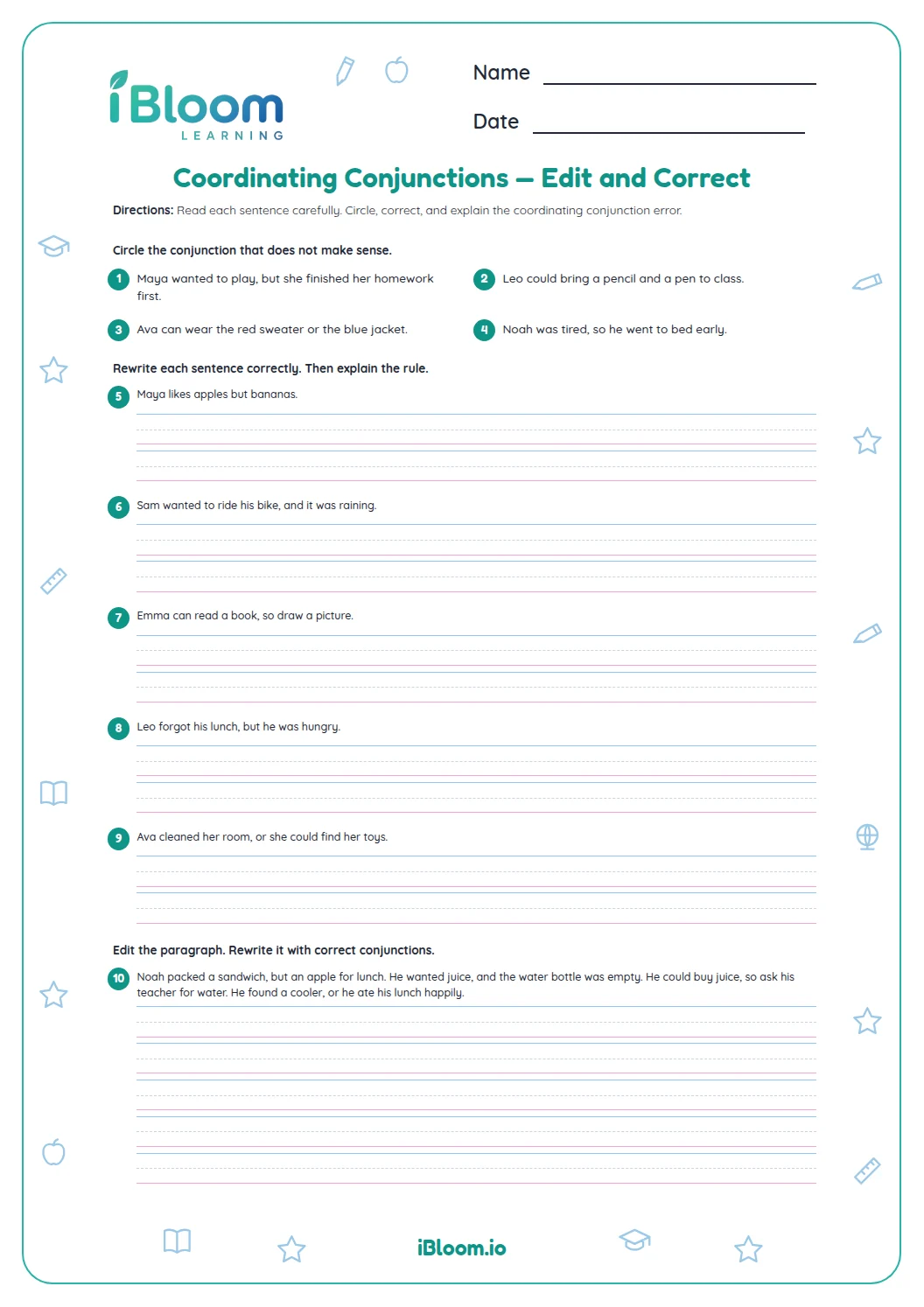
Use coordinating conjunctions to join ideas in sentences.
On this sheet:
Show the official wordingHide the official wording
Use coordinating and subordinating conjunctions.
What to practice next
Make more practice
Further reading
Questions parents and teachers ask
What does this parts-of-speech grammar worksheet practice?
This printable has six word-identification questions, five sentence completions, and three writing prompts for Grade 3 learners. It moves from spotting the skill to using it in context, with an answer key for checking fixed answers and comparing open responses. Use the prompts to talk through the choices and the evidence behind them.
How should we use the answer key?
Have the learner finish a part before checking its key page. For a written response, compare the child’s idea with the sample and the story or sentence; the wording does not need to match exactly. Invite the learner to revise one answer after checking.
Can I use this printable at home or in class?
Yes. Print the worksheet pages for independent practice, a small group, or a short lesson. The key pages are for the adult or teacher. A pencil is enough for the activities, and the writing prompts can be completed at the learner’s own pace.
How long will the worksheet take?
Plan for about 20 minutes, allowing extra time for the open-response items. The page is divided into short parts, so a learner can pause after a section and return to the remaining questions later. Time will vary with reading and writing speed.
What if a written answer differs from the key?
Check whether the response meets the prompt and uses the relevant sentence or story detail. The key gives a sample for answers that can vary, so equivalent wording may be correct. For a fixed answer, revisit the item together and look for the clue that settles it.