



About this worksheet
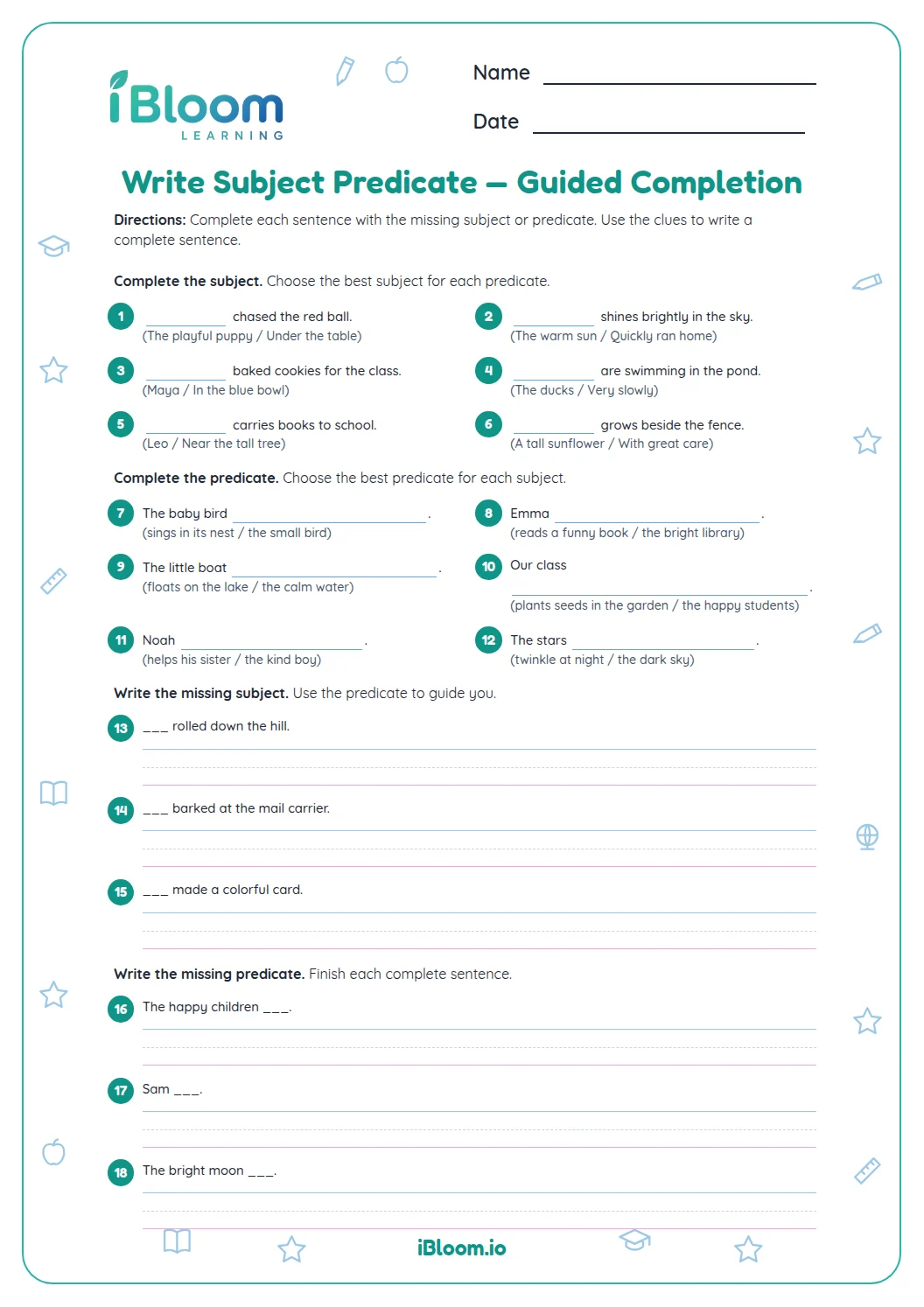
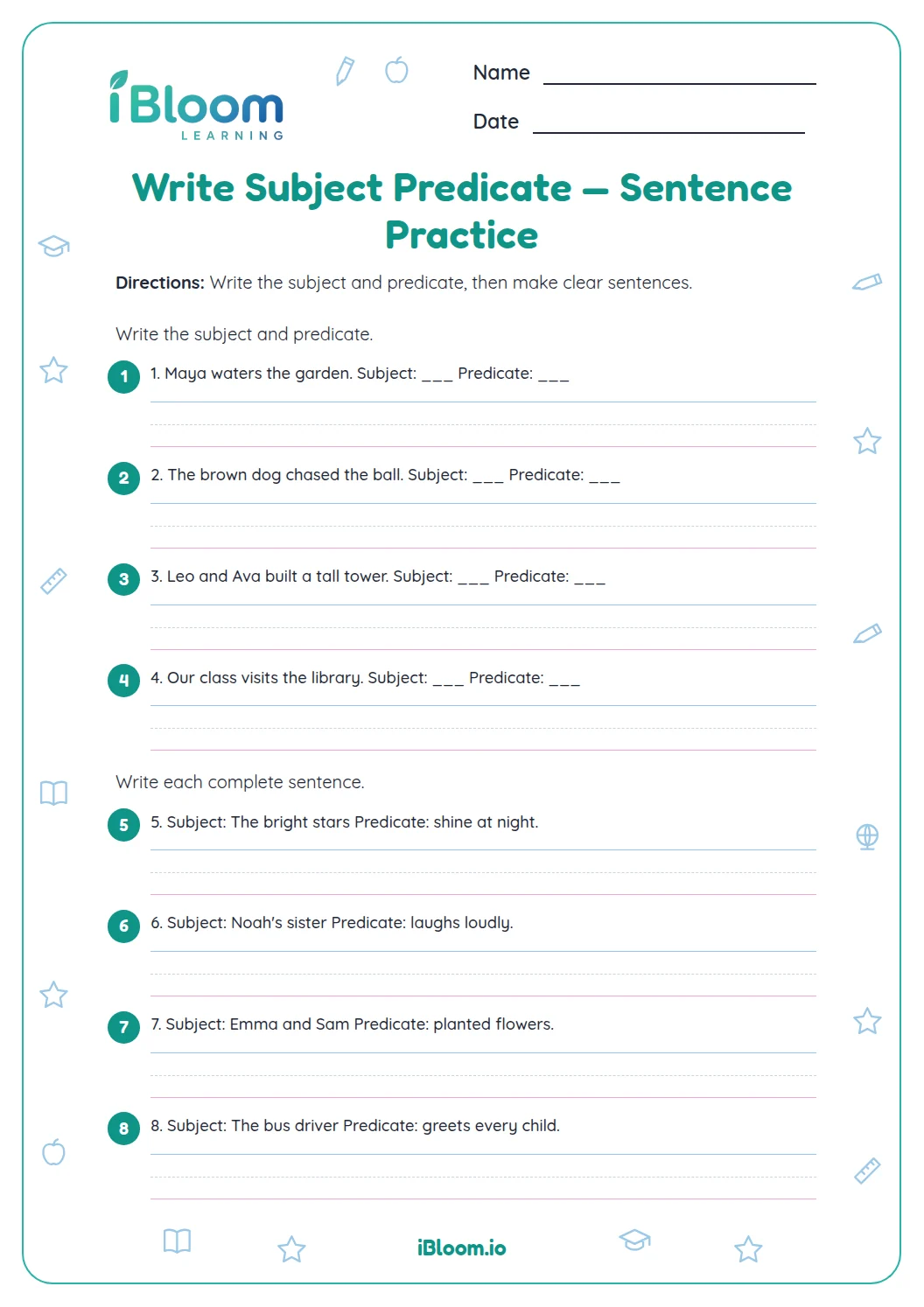
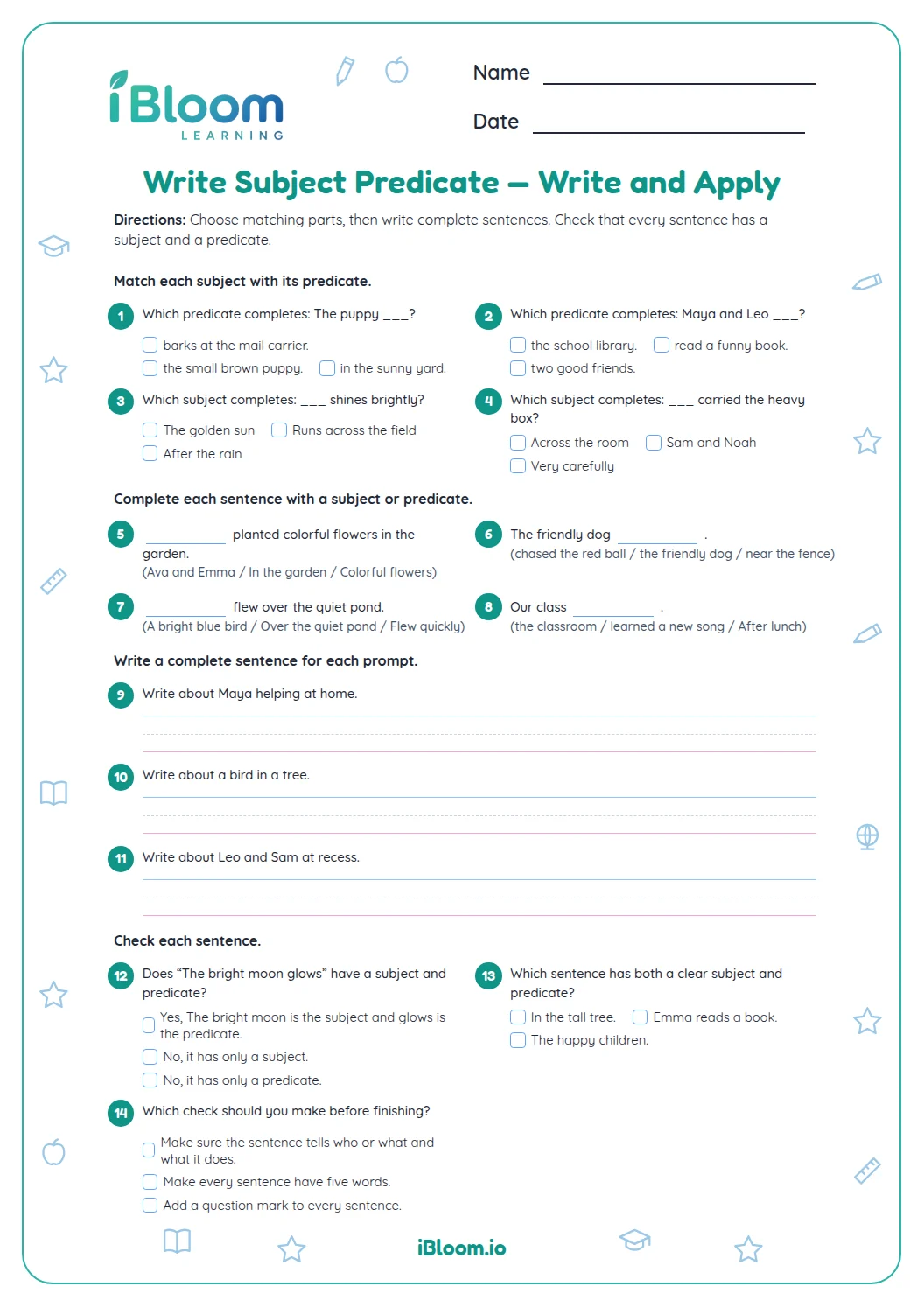
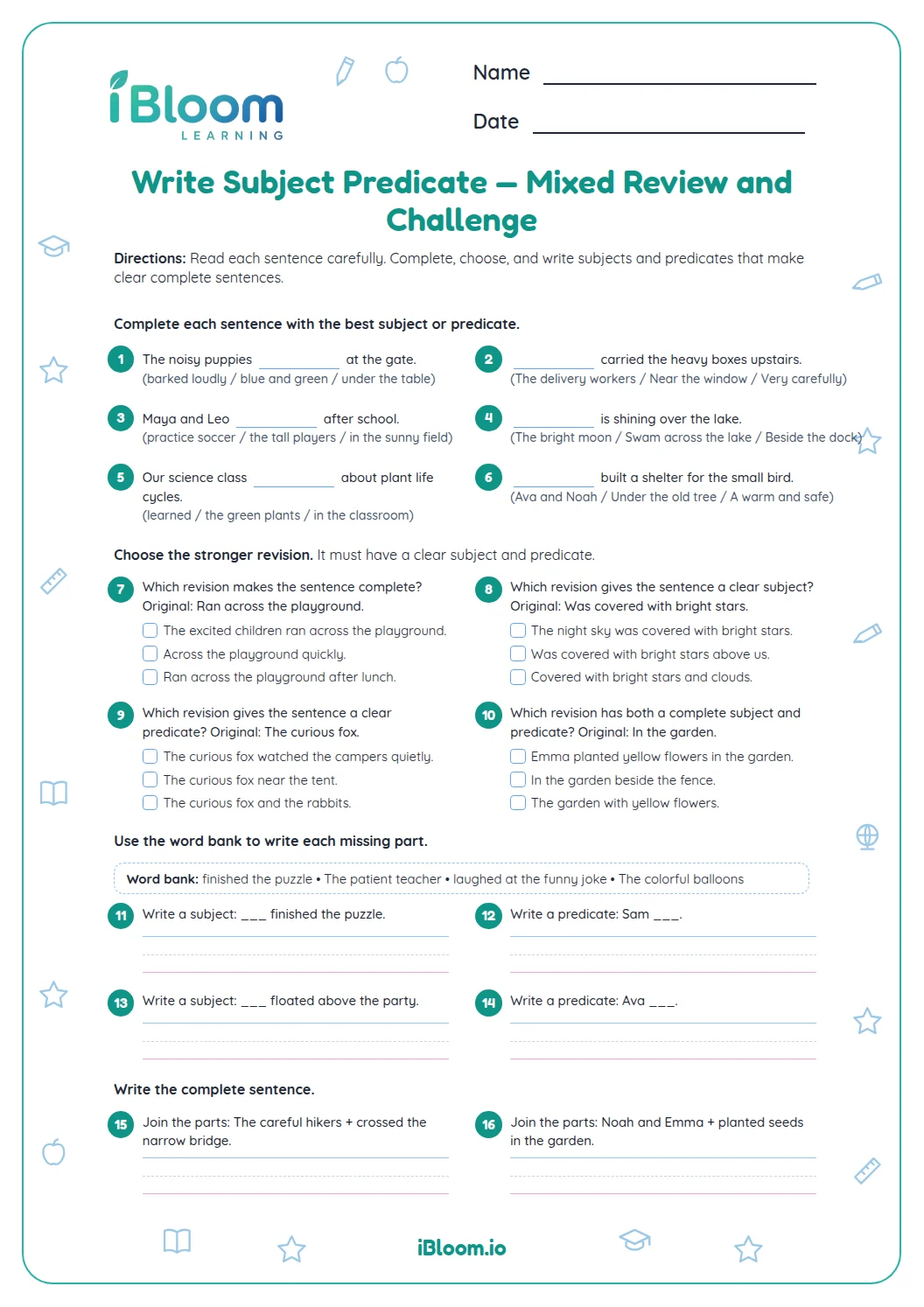
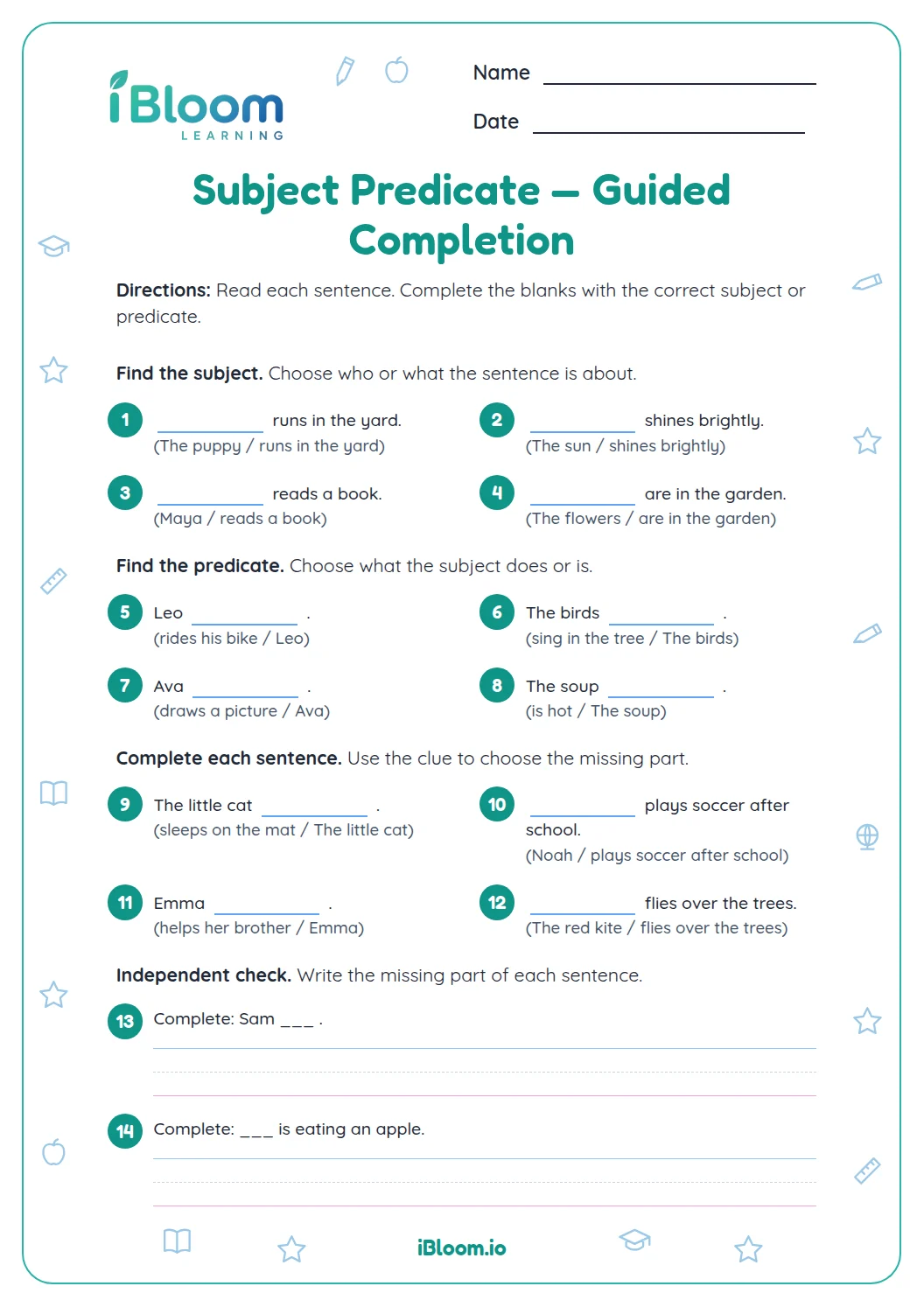
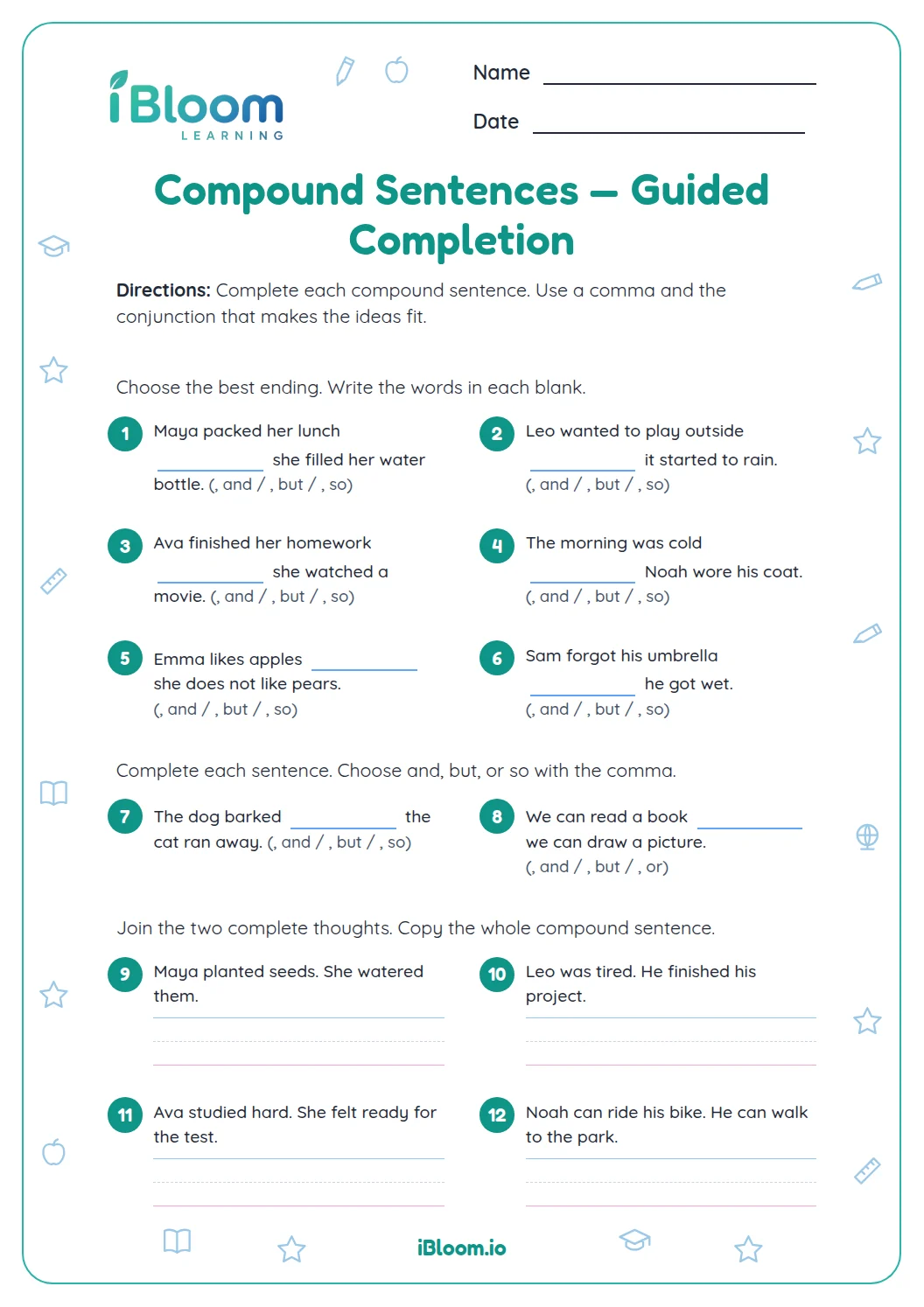
This free Grade 3 worksheet practices finding and repairing missing subjects and predicates. Six choices identify a missing part or recognize a complete sentence; four choose a subject or predicate to complete a fragment; two explain what is missing; and two select a repair for connected sentences. The separate key marks each answer. It practices CCSS L.3.1i.
Aligned to L.3.1i
Which part is missing from a fragment?
A subject names who or what the sentence is about. A predicate tells what that subject does or is. “Ran across the playground” gives an action but not who ran.
How can a fragment become a complete sentence?
Keep the given words and choose the missing part. “The bright yellow bird” needs a predicate that tells what the bird does or is.
- 1Fragment: “Ran across the playground.”
- 2Add a subject: “The children.”
- 3The completed sentence has a subject and predicate.
How do the final choices connect sentences?
The last two questions give a complete thought and a fragment. Choose a repair that makes the fragment a complete sentence and keeps the ideas sensible together.
How to use this worksheet
- 1Read the words and identify who or what they describe.
- 2Look for a verb or linking verb in the predicate.
- 3Choose the missing part or neither.
- 4Add a subject or predicate while keeping the given words.
- 5Reread both connected sentences for sense.
Common mistakes and quick fixes
The mistake
Calling an action phrase a complete sentence.
The fix
Ask who performed the action and add that subject.
The mistake
Adding a subject to “The bright yellow bird.”
The fix
Add a predicate that tells what it does or is.
The mistake
Forgetting a linking verb in “The stone smooth.”
The fix
Add was to connect the subject with its description.
Common Core alignment
Write complete simple sentences with a subject and a predicate.
On this sheet: Parts B and D ask children to supply missing subjects or predicates and write complete simple sentences.
Show the official wordingHide the official wording
Produce simple, compound, and complex sentences.
What to practice next
Make more practice
Further reading
Questions parents and teachers ask
What are the subject and predicate?
The subject tells who or what the sentence is about. The predicate tells what the subject does or is. A complete sentence needs both, which is why “Our new puppy” needs more information. Ask the child to point to the clue that makes the choice fit.
Is every sentence in the first part a fragment?
No. One choice is already complete: “Maya reads a book.” It has the subject Maya and the predicate reads a book. Children should check for both parts before deciding whether a sentence needs repair. Ask the child to point to the clue that makes the choice fit.
How do the repair choices work?
The repair questions show a fragment and offer choices for the missing part. Choose a subject for an action fragment or a predicate for a subject phrase. The final pair asks children to select a repair that completes connected sentences.
How many questions are included?
There are 14 multiple-choice questions: six sentence-part diagnoses, four fragment repairs, two explanations, and two connected-sentence edits. The answer key marks the correct choice for each item. Ask the child to point to the clue that makes the choice fit.
What should the final two answers include?
Each should preserve the complete sentence and repair the fragment beside it. “He played near swings” completes the park example, while “The stone was smooth” adds the missing verb to the description. Ask the child to point to the clue that makes the choice fit.