





About this worksheet
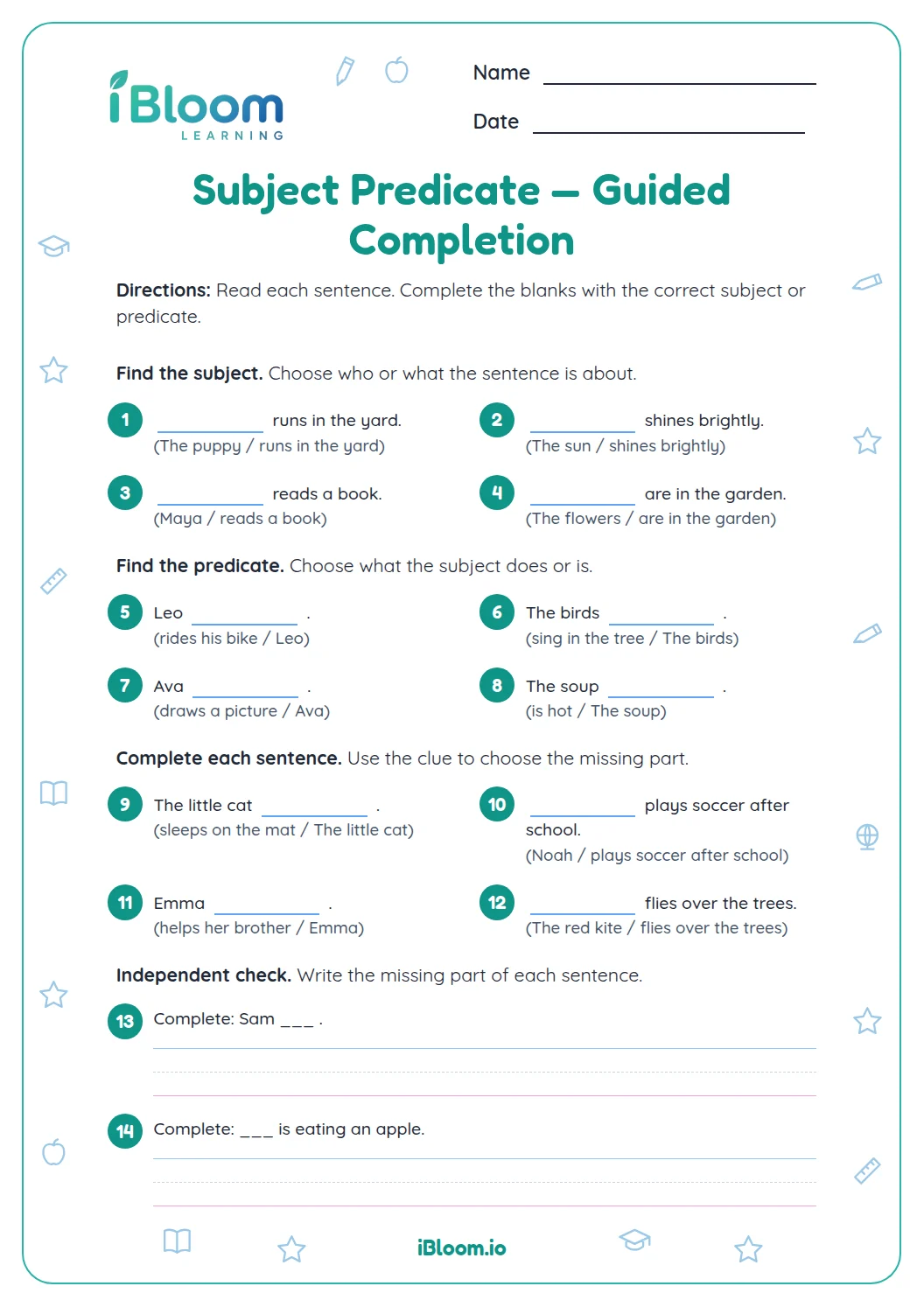
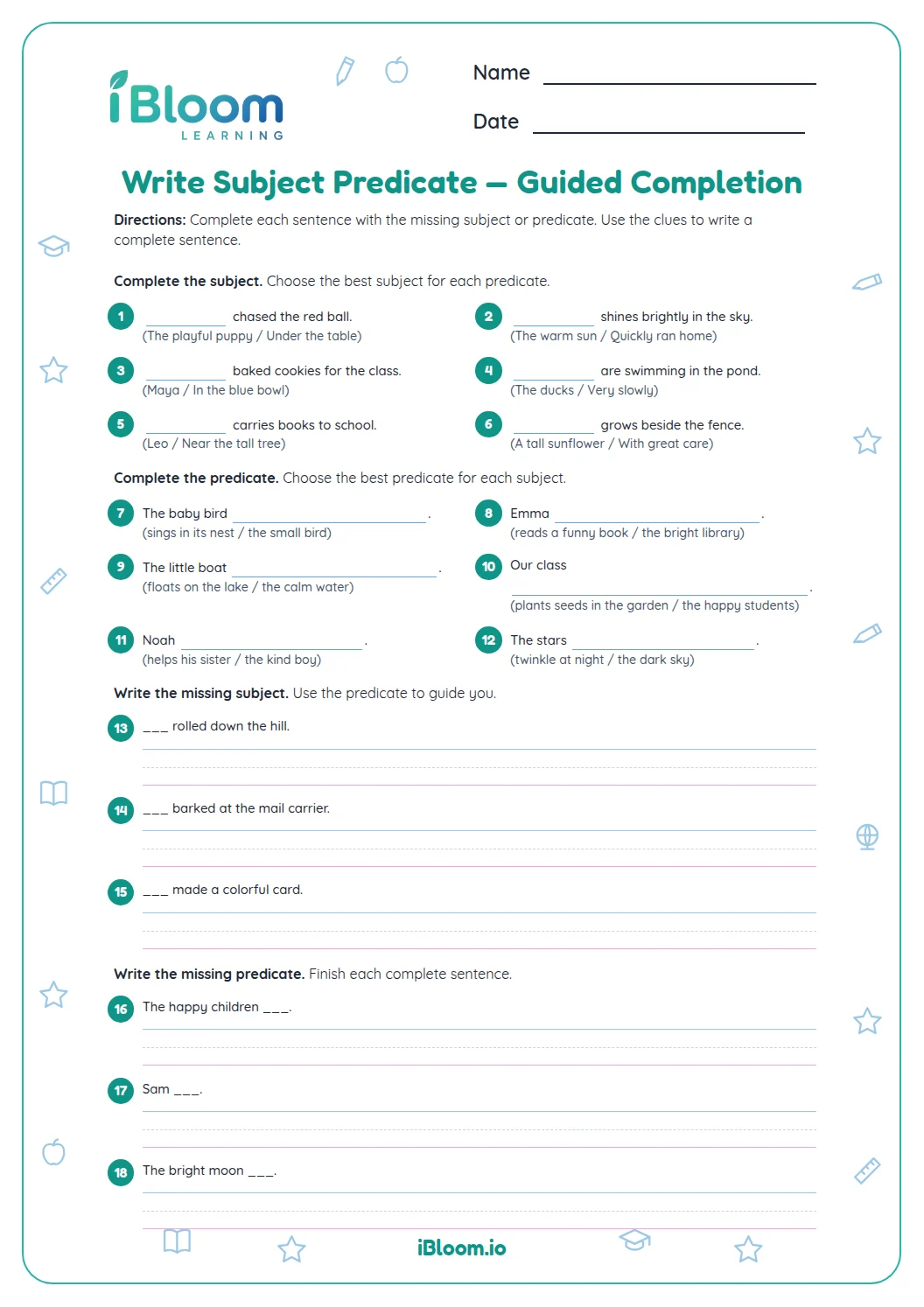
This Grade 3 printable gives students practice identifying complete subjects and predicates in sentences. The 14 questions include seven subject blanks and seven predicate blanks; a separate answer key shows the target phrases. Students can use the who-or-what clue for the subject and the action or state clue for the predicate.
What does this worksheet include?
The worksheet has 14 sentence frames: seven ask for a subject and seven for a predicate. Students write the requested phrase in each blank.
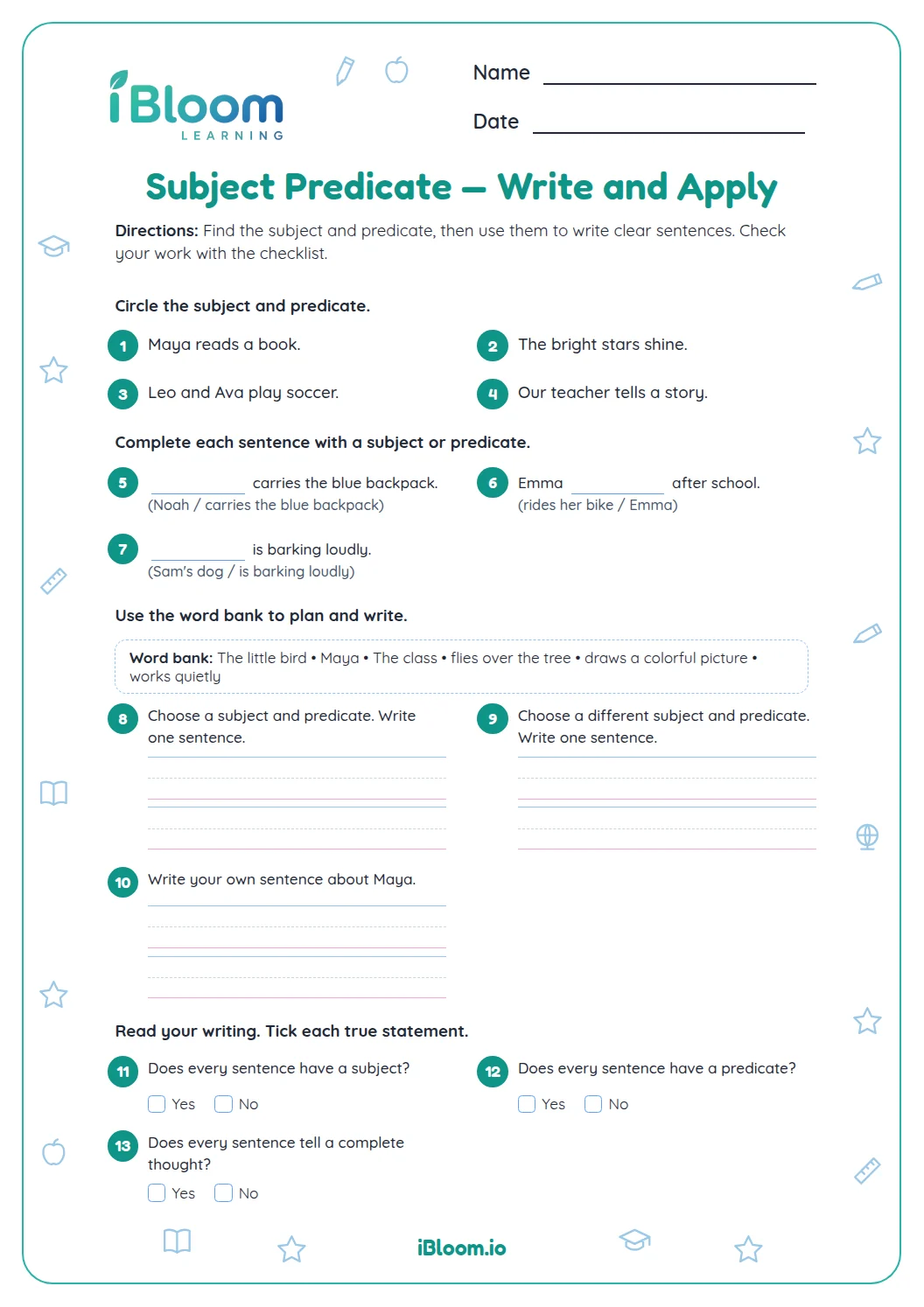
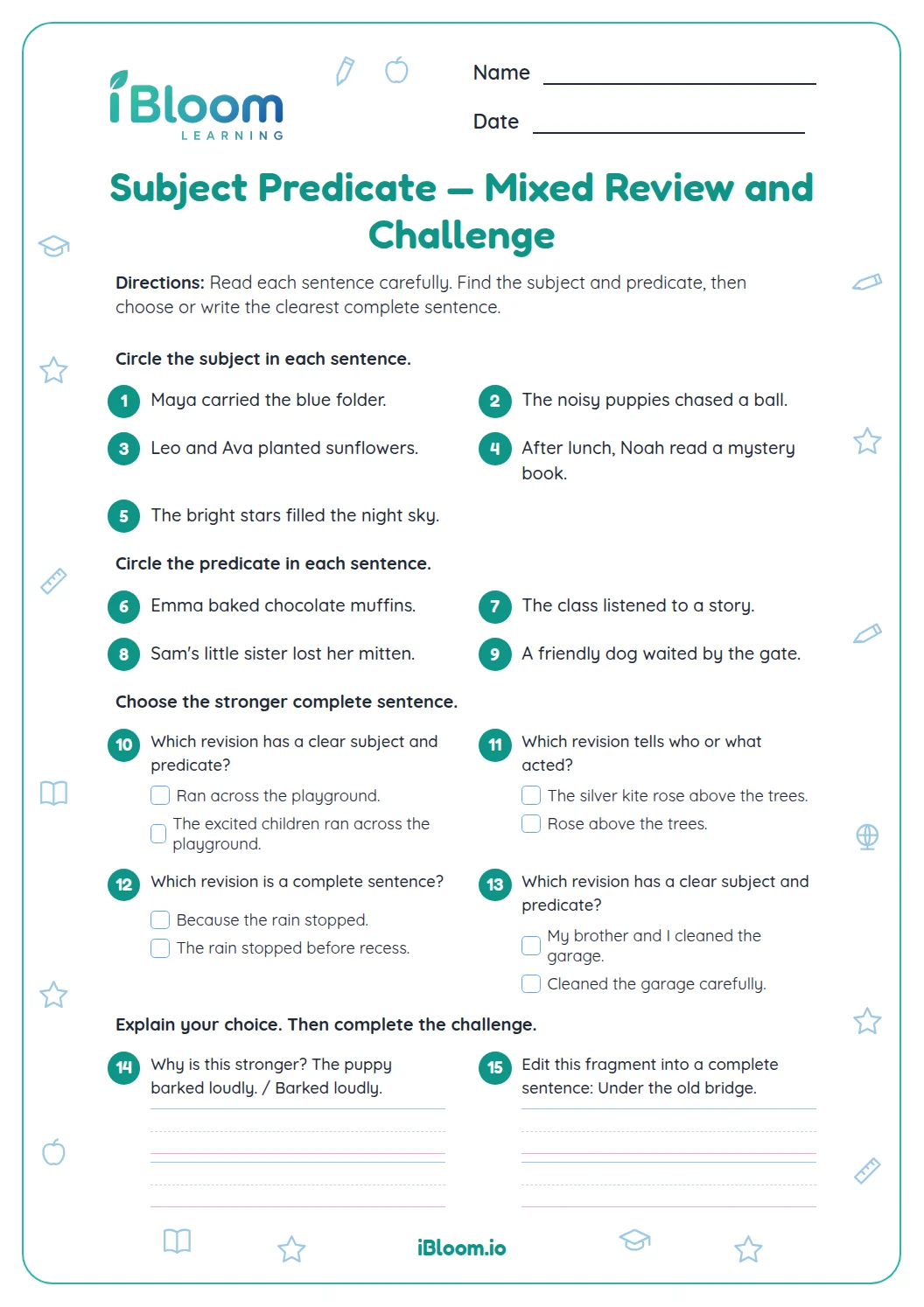
A subject tells who or what the sentence is about. A predicate tells what that subject does or is.
- 14 sentence frames
- 7 subject blanks and 7 predicate blanks
- Separate answer key
How can students work through an example?
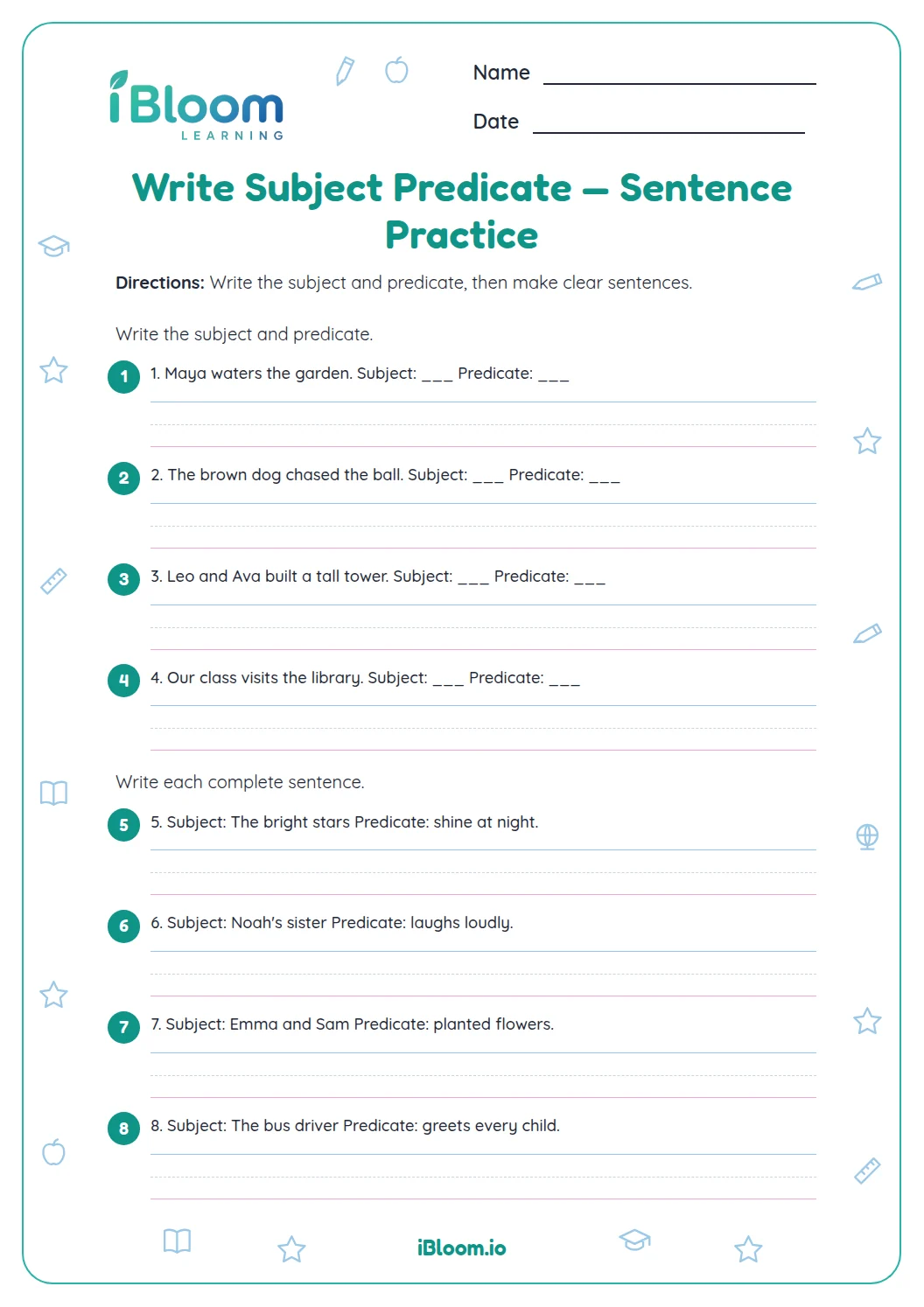
In “The bus stopped beside the school,” the subject is “The bus” and the predicate is “stopped beside the school.”
- 1The bus stopped beside the school.
- 2Subject: The bus. Predicate: stopped beside the school.
How can students check their work?
For a subject blank, ask who or what the sentence is about. For a predicate blank, find the verb and include the words that complete its thought.
How can practice build accuracy?
The key lists the intended phrase for every sentence frame. Reread each completed sentence to make sure the phrase fits its meaning.
How to use this worksheet
- 1Read the whole sentence before filling the blank.
- 2For a subject blank, ask who or what the sentence is about.
- 3For a predicate blank, include the verb and its completing words.
- 4Keep every word in the requested phrase.
- 5Reread the completed sentence to check its meaning.
Common mistakes and quick fixes
The mistake
Leaving part of a complete subject out.
The fix
Include the full group of words naming who or what.
The mistake
Writing only the verb for a predicate.
The fix
Add the words that finish the thought.
The mistake
Joining two thoughts without a connector.
The fix
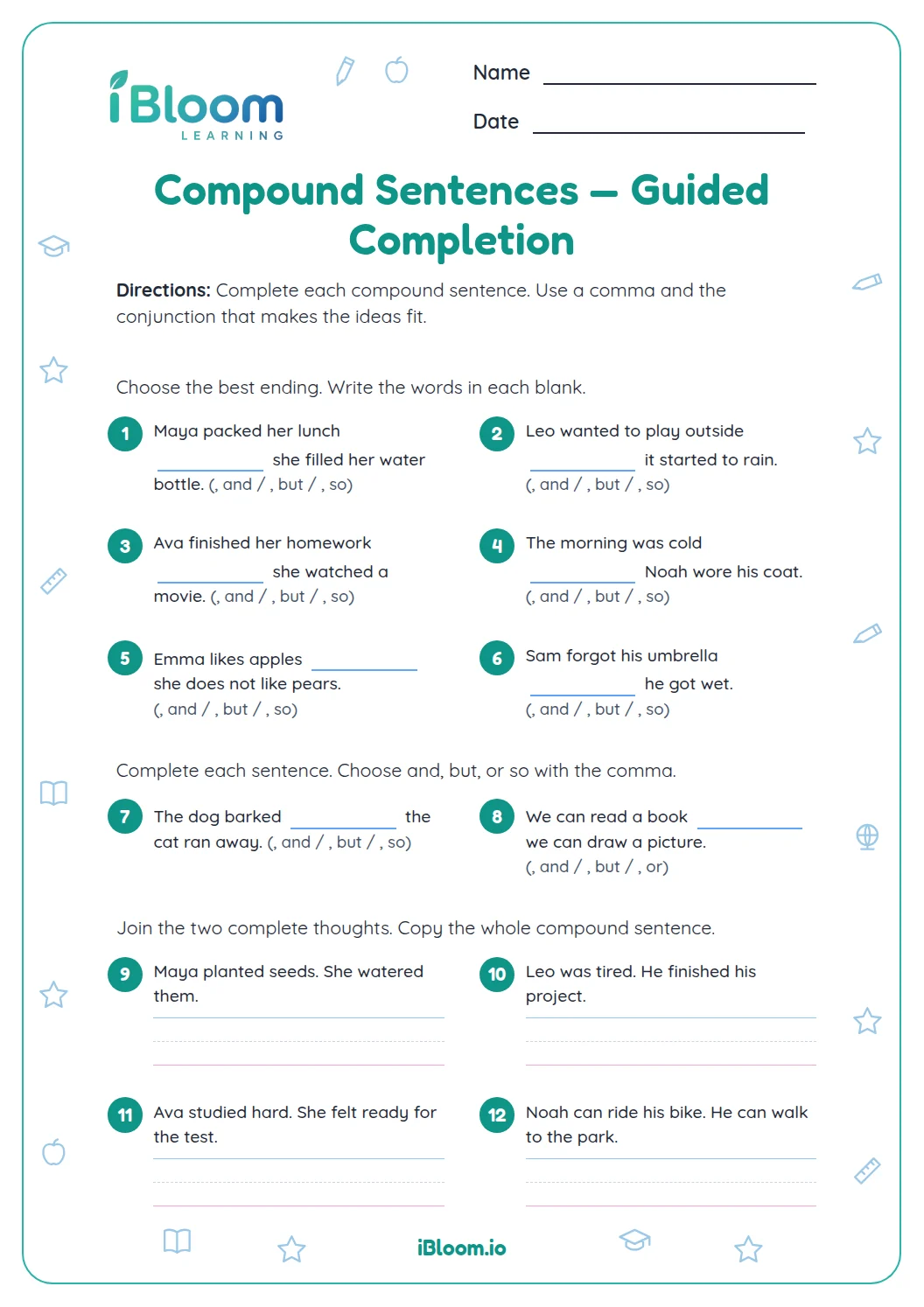
Use a conjunction such as and, then reread the combined sentence.
What to practice next
Make more practice
Questions parents and teachers ask
What does the subject tell?
The subject tells who or what a sentence is about. In “Those bright stars twinkle at night,” the complete subject is “Those bright stars.” The first part asks students to supply subjects that fit their sentences, so include the full naming phrase rather than just its main noun.
What belongs in a predicate?
A predicate tells what the subject does or is. It includes a verb and may include words that complete the thought. In “The bus stopped beside the school,” the predicate is “stopped beside the school.” The worksheet has seven predicate blanks to complete.
How many questions are on the worksheet?
There are 14 questions in two parts: seven subject blanks and seven predicate blanks. Students complete each sentence with the requested phrase. A separate answer key lists target phrases so families can check the work after the student has tried each item.
Does the sheet ask students to write full sentences?
The 14 prompts are sentence frames: seven ask students to supply the subject, and seven ask for the predicate. Students write the missing phrase on each line rather than composing new sentences. The key lists the intended phrase for every frame.
Can a subject or predicate answer vary?
The first 12 sentence frames point to a specific missing phrase, so the key gives a target answer for each. The final two combination items allow different correct wording. Check that both original ideas remain and that the new sentence reads as one complete thought.