



About this worksheet
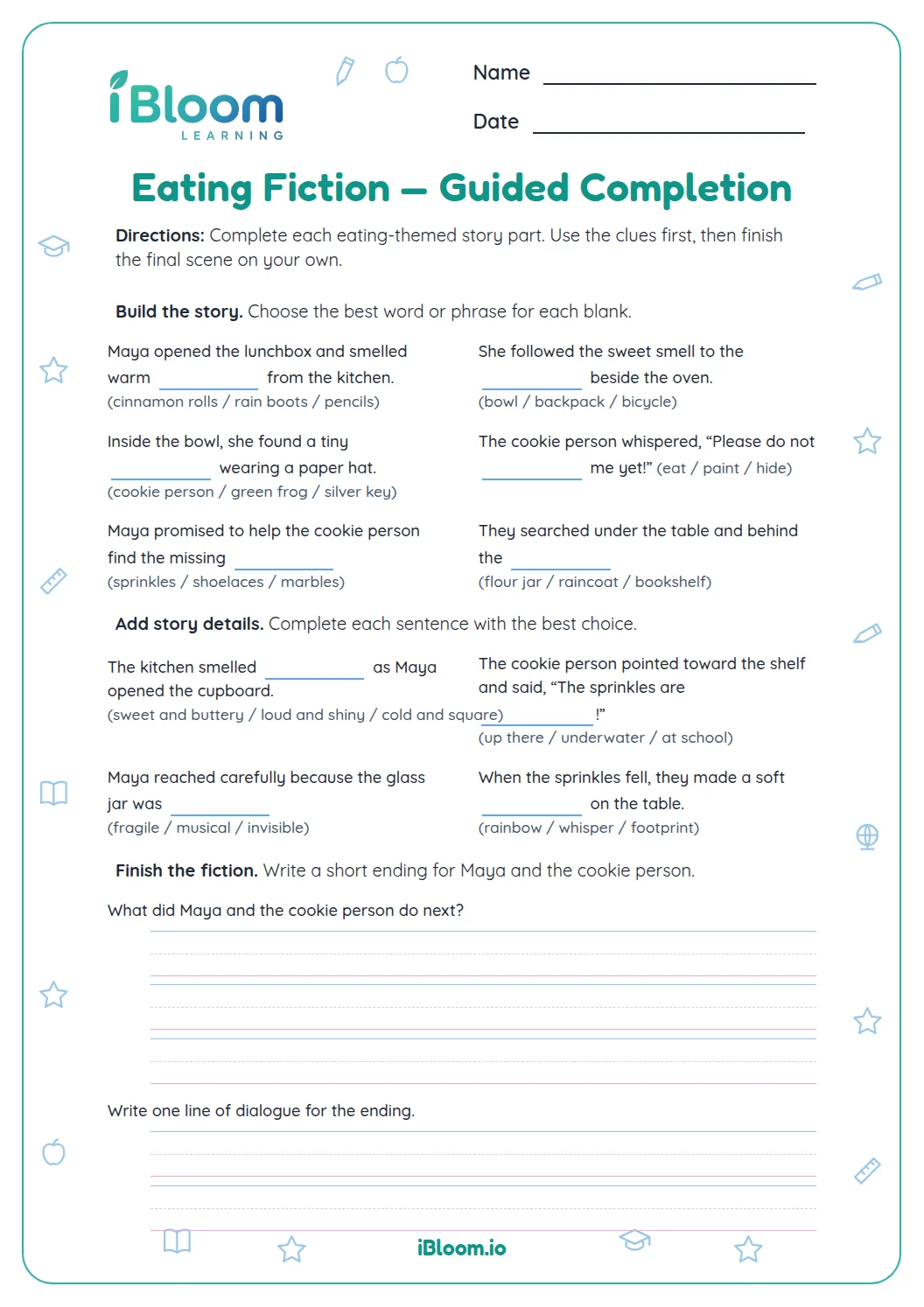
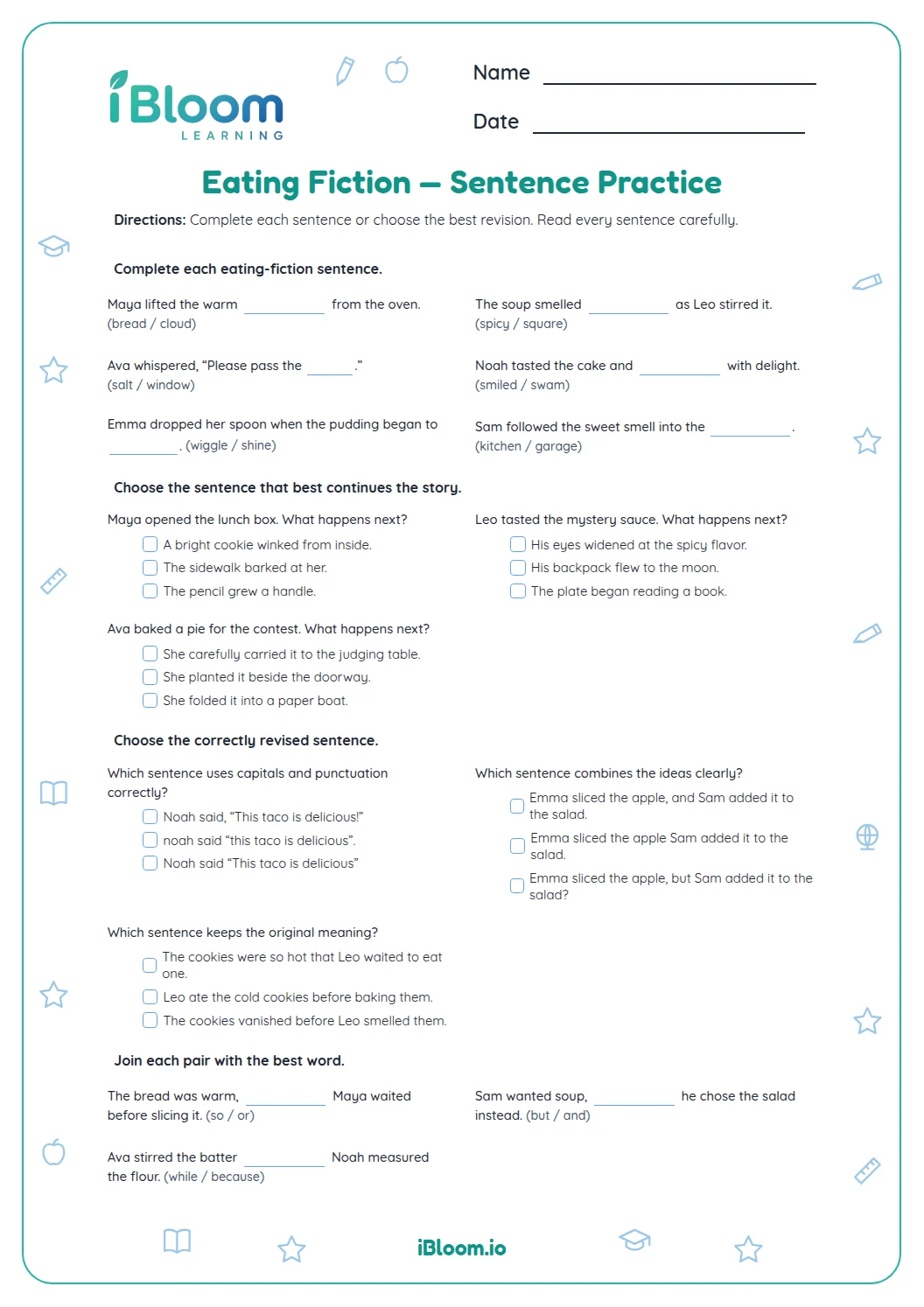
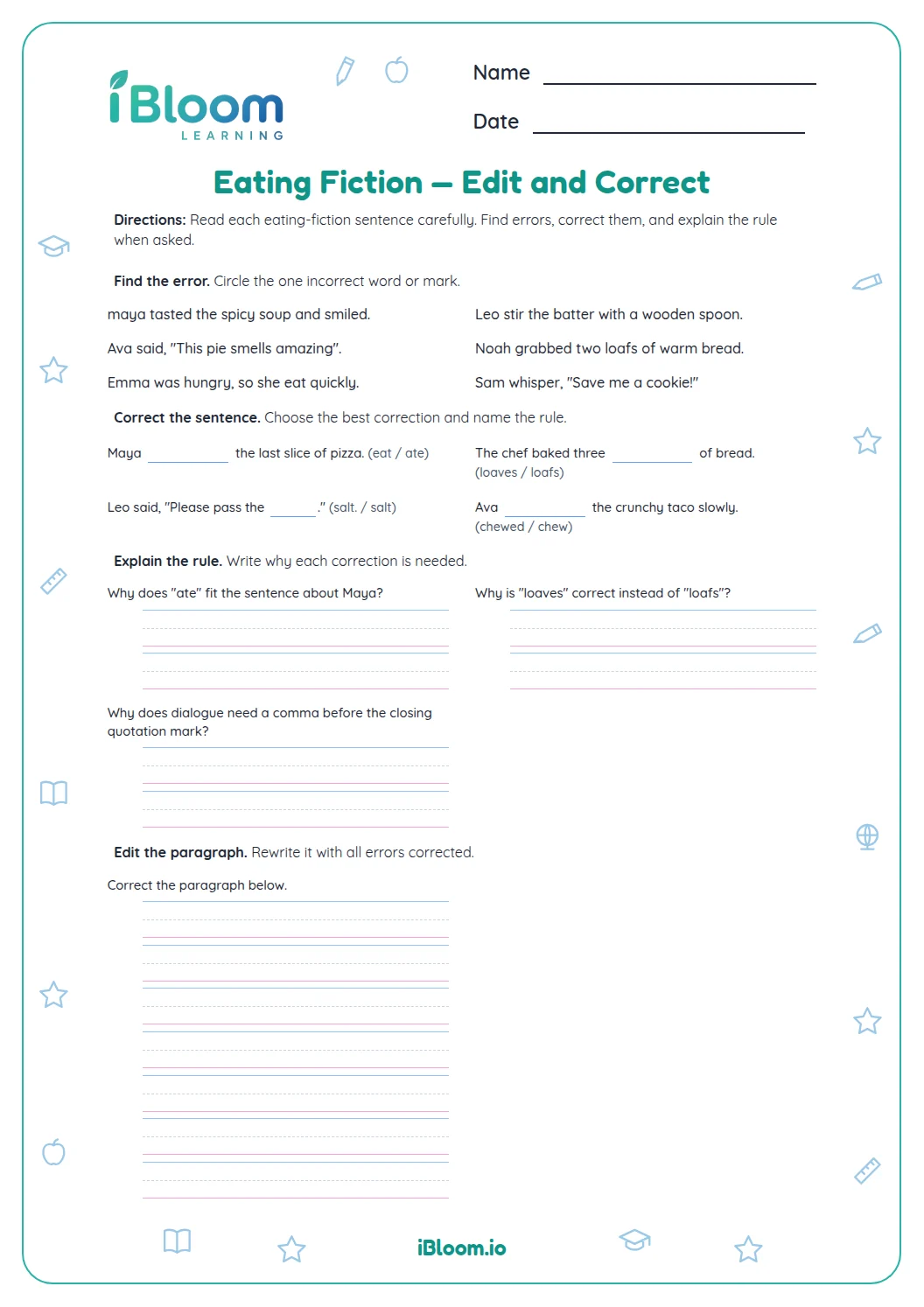
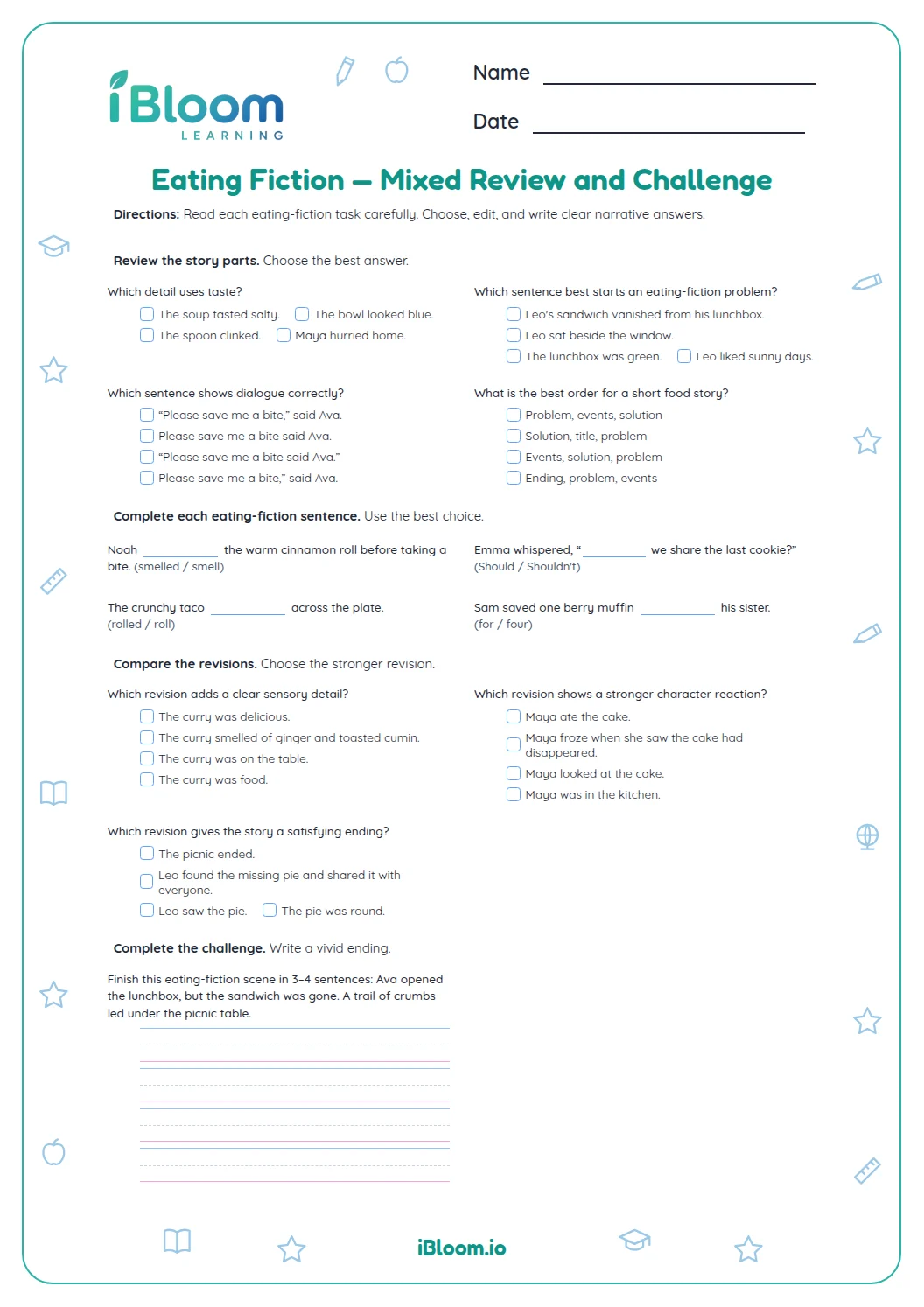
This Grade 4 printable supports the “Eating Fiction” narrative-prompt skill by asking students to recognize an imagined food event among ordinary events. Across 14 paired sentences, students look for clues such as food that talks, travels by itself, or changes into something impossible. The two parts move from identifying a clear fantasy event to comparing more varied story details. A separate answer key identifies the make-believe choice in every pair.
What makes a food event fictional?
A food sentence is fictional when it describes an invented event, especially one that could not happen in real life. Mentioning food alone does not make a sentence imaginary.
- Notice what the food or character does
- Compare the event with something possible in everyday life
How can you compare the two choices?
Read both sentences all the way through and focus on the action. A familiar food can appear in either a realistic or an imaginary event.
- 1“The pie whispered a clue” gives a pie a human action.
- 2“Mia cut the pie into six slices” could happen in real life.
- 3Choose the whispering pie as the make-believe event.
Why read the whole sentence?
A sentence may include ordinary details alongside one impossible action. The action is the clue: a sandwich can be carried, but it cannot sail itself across a pond.
How to use this worksheet
- 1Read both choices without stopping at the food word.
- 2Underline the action in each sentence.
- 3Ask whether each event could happen in real life.
- 4Choose the sentence with an invented or impossible event.
- 5Use the key to explain the clue in each answer.
Common mistakes and quick fixes
The mistake
Choosing every sentence that mentions food.
The fix
Check the event, not just the noun. Ordinary food can appear in a realistic sentence.
The mistake
Picking the sentence with the funniest wording.
The fix
Ask whether its event could actually happen, rather than whether it sounds amusing.
The mistake
Reading only the first few words.
The fix
Read to the end so the action that makes the event imaginary is clear.
What to practice next
Make more practice
Questions parents and teachers ask
What is eating fiction?
Eating fiction is an imagined narrative about food or a food event. This worksheet asks students to recognize an impossible event, such as a pie whispering or an apple opening a tiny door, among realistic alternatives. The action in each sentence gives a clue.
How can my child tell a food fact from a fantasy?
Focus on the action and ask whether it could happen in everyday life. In question 1, slicing a pie is possible, but a pie whispering is an imagined event. Read both choices fully before selecting the one that belongs in fiction.
Does every sentence about food count as fiction?
No. A sentence can mention food and describe an ordinary event, such as washing an apple or slicing a pie. The student should identify the event that could happen only in an imagined story. Question 14 contrasts washing an apple with an apple opening a door.
What changes in the second part?
The second part keeps the same recognition task but varies the foods and actions, including a sandwich sailing and dough bouncing like a rabbit. Students still compare two choices and select the impossible event. The food changes, so they must read the action.
Is an answer key included?
Yes. A separate key names the make-believe choice in each of the 14 sentence pairs. Ask the student to explain which action makes that event impossible in real life. This explanation shows how they used the sentence instead of choosing by the food word.